
Acropolis Athens Complete Guide 2026: Ultimate UNESCO Experience
Planning your 2026 visit to the Acropolis requires strategic preparation. The site opens year-round with extended summer hours, and recent infrastructure improvements have enhanced visitor accessibility while protecting the ancient monuments. US travelers benefit from visa-free entry to Greece for stays up to 90 days within a 180-day period, making the Acropolis an accessible destination for American heritage enthusiasts.
Key Takeaways
- Book 3-6 months ahead for optimal 2026 travel rates and avoid peak summer crowds in July-August
- Entry costs €20 for adults with combo tickets available at €30 covering seven archaeological sites
- Visit early morning (8 AM) or late afternoon (after 3 PM) for fewer crowds and better photography lighting
- Budget €150-200 daily including accommodation, meals, site visits, and local transportation in Athens
- Spring (April-May) and Fall (September-October) offer ideal weather conditions and manageable tourist volumes
- Advance online booking required through official Hellenic Ministry of Culture website for guaranteed entry
Introduction
The Acropolis of Athens stands as the defining symbol of ancient Greek civilization and Western culture. This UNESCO World Heritage Site, inscribed in 1987, towers 150 meters above sea level on a limestone rock formation that has witnessed over 3,400 years of continuous human presence. The crown jewel of the Acropolis, the Parthenon temple dedicated to goddess Athena, represents the apex of Classical Greek architecture and attracts over 3 million visitors annually.
This complete guide provides authoritative information for experiencing the Acropolis in 2026. From practical entry details and optimal visiting times to budget planning and photography strategies, you’ll find decisive guidance for creating an unforgettable UNESCO heritage experience. The Acropolis combines historical significance, architectural brilliance, and panoramic Athens views into a single destination that justifies its status as one of humanity’s greatest cultural treasures.
People Also Ask About Acropolis Athens 2026
When is the best time to visit the Acropolis in 2026?
The best time to visit the Acropolis is April-May and September-October when temperatures range 18-25°C (64-77°F) and crowds are manageable. For US travelers, booking flights 2-3 months ahead secures better pricing. Early morning visits at 8 AM opening or late afternoon after 3 PM provide optimal conditions with fewer tourists and excellent natural lighting for photography.
How much does it cost to visit the Acropolis in 2026?
Acropolis entrance costs €20 for adults, with reduced rates at €10 for seniors over 65 and students. The combo ticket at €30 covers seven major archaeological sites including Ancient Agora and Roman Forum, valid for five consecutive days. Budget €150-200 per day including accommodation (€80-120), meals (€40-60), and transportation (€10-20) for a complete Athens experience.
Do I need advance booking for the Acropolis?
Advance booking is required for the Acropolis. Purchase tickets online through the official Hellenic Ministry of Culture website to guarantee entry at your preferred time slot. Skip-the-line tickets are available through authorized tour operators for €35-45. During peak summer months (June-August), same-day tickets sell out quickly, making advance booking essential.
What’s the easiest way to get to the Acropolis?
Take Athens Metro Line 2 (red line) to Acropoli station, located 400 meters from the entrance. Metro tickets cost €1.40 for single journeys. From Syntagma Square, the walk takes 20 minutes uphill. Taxis from Athens International Airport cost €35-45 and take 40-50 minutes. The pedestrianized Dionysiou Areopagitou Street provides direct access from the Acropolis Museum.
Extended multi-day tours – 5+ days
Featured Athens Multi-Day Tour Packages
3 days
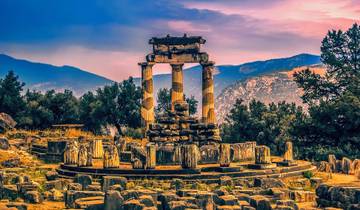
Prehistoric Tour of Greece – 3 days
- ✓ Comprehensive Athens tour
- ✓ Expert local guides included
- ✓ All accommodation arranged
- ✓ Transportation provided
3 days
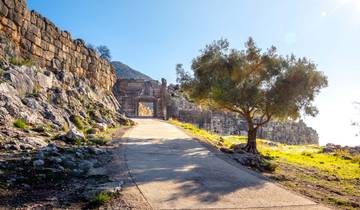
Mycenae, Olympia & Delphi: 3-Day Private Tour with Local Tastings
- ✓ Comprehensive Athens tour
- ✓ Expert local guides included
- ✓ All accommodation arranged
- ✓ Transportation provided
2 days
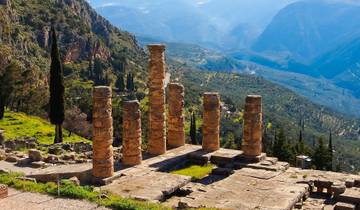
Delphi Two Days Tour from Athens
- ✓ Comprehensive Athens tour
- ✓ Expert local guides included
- ✓ All accommodation arranged
- ✓ Transportation provided

3 days
The Peloponnese wine roads (3 days – small group, escorted, cultural, culinary
- ✓ Comprehensive Athens tour
- ✓ Expert local guides included
- ✓ All accommodation arranged
- ✓ Transportation provided
Multi-day tour packages powered by TourRadar. Prices and availability subject to change.
Essential Visiting Information for the Acropolis
Opening Hours and Seasonal Schedule
The Acropolis operates year-round with seasonal hour variations. Summer hours (April 1 – October 31) run 8 AM to 8 PM daily, with last entry at 7:30 PM. Winter hours (November 1 – March 31) operate 8 AM to 5 PM, with last entry at 4:30 PM. The site closes on January 1, March 25, May 1, Easter Sunday, and December 25-26. Extended hours during summer months allow for sunset visits, creating spectacular photography opportunities with golden light illuminating the Parthenon’s marble columns.
Plan 2-3 hours for a thorough Acropolis visit. The uphill walk from the entrance to the summit takes 15-20 minutes on well-maintained pathways. Adding the Acropolis Museum visit extends your experience by 2 additional hours. Morning visits before 10 AM or afternoon visits after 3 PM encounter significantly fewer crowds, particularly during peak tourist season from June through August.
Ticket Pricing and Entry Options
Standard adult admission costs €20 from April through October and €10 during winter months (November-March). The multi-site combo ticket at €30 provides exceptional value, granting access to seven archaeological sites: Acropolis, Ancient Agora, Roman Agora, Hadrian’s Library, Olympieion, Kerameikos, and Aristotle’s Lyceum. This ticket remains valid for five consecutive days from first use.
Free entry benefits include EU citizens under 25 years with valid ID, children under 6 from any country, and visitors on specific free admission days (March 6, April 18, May 18, last weekend of September, October 28, and every first Sunday from November through March). Reduced rates at €10 apply to seniors over 65 from EU countries and international students with valid ISIC cards.
Accessibility and Visitor Facilities
The Acropolis provides elevator access for visitors with mobility limitations, located on the north side of the hill. Reserve wheelchair-accessible entry in advance through the site management office. Restroom facilities are available at the entrance area and at the summit near the Parthenon. Water fountains operate throughout the site during summer months.
Cloakroom services store large bags and backpacks for €2 per item. The site prohibits large luggage, professional photography equipment without permits, drones, and selfie sticks. Wear comfortable walking shoes with good grip as ancient marble surfaces become slippery. Sun protection is essential during summer visits—bring hats, sunscreen, and water bottles as shade is limited on the exposed hilltop.
Complete Monument Guide: What to See at the Acropolis
The Parthenon: Athena’s Masterpiece
The Parthenon dominates the Acropolis summit, built between 447-432 BCE during Pericles’ golden age. This Doric temple dedicated to Athena Parthenos measures 69.5 meters long and 30.9 meters wide, featuring 46 exterior columns and innovative architectural refinements that create optical perfection. The subtle curvature of horizontal lines and inward column inclination compensate for natural visual distortions, demonstrating ancient Greek mathematical precision.
While scaffolding covers portions of the Parthenon during ongoing restoration work, this presents opportunities to observe conservation techniques protecting the 2,500-year-old structure. The eastern facade offers the classic view featured in photographs worldwide. Walk around the entire perimeter to appreciate how ancient architects positioned the temple to dominate sightlines from all approaching angles.
The Propylaea: Monumental Gateway
The Propylaea serves as the ceremonial entrance to the Acropolis, constructed 437-432 BCE by architect Mnesicles. This imposing gateway features a central building flanked by two wings, combining Doric and Ionic columns in harmonious architectural transition. Ancient pilgrims passed through this monumental entrance during the Panathenaic procession, Athens’ most important religious festival.
The north wing houses the Pinakotheke, an ancient art gallery that displayed paintings and welcomed official visitors. Marble steps ascending through the Propylaea show wear patterns from millions of footsteps over 2,400 years. Stand beneath the central passageway to experience the dramatic reveal as the Parthenon comes into full view—the same vista that awed ancient Athenians.
The Erechtheion: Sacred Complexity
The Erechtheion showcases Ionic order elegance, built 421-406 BCE on the Acropolis’s most sacred ground. This unique temple accommodates multiple levels due to sloping terrain and houses shrines to Athena Polias, Poseidon, and legendary king Erechtheus. The famous Caryatid Porch features six female figures serving as architectural columns, though the current versions are protective copies—five originals reside in the Acropolis Museum while the sixth is held by the British Museum.
The Erechtheion’s north porch presents perfectly preserved coffered ceilings decorated with gilded bronze rosettes and stars against blue backgrounds. Ancient olive trees grow near the western facade, descendants of Athena’s sacred olive that sprouted during her contest with Poseidon for Athens’ patronage. This building’s asymmetrical design and exquisite decorative details contrast beautifully with the Parthenon’s austere grandeur.
The Temple of Athena Nike: Victory Monument
The compact Temple of Athena Nike perches on a bastion overlooking Athens, built 427-424 BCE to commemorate Greek victories over Persia. This Ionic temple measures just 8 meters by 5.5 meters, yet its strategic position and elegant proportions create powerful visual impact. Four columns on each facade support the entablature, which originally featured a continuous sculptural frieze depicting battle scenes.
The temple’s parapet once displayed relief sculptures of Nike figures preparing victory sacrifices, now displayed in the Acropolis Museum. This monument embodies Athens’ confidence during its imperial zenith, standing as architectural evidence of the city-state’s military and cultural supremacy in the 5th century BCE.
Practical Planning for Your Acropolis Visit
Strategic Timing for Optimal Experience
Arrive at 8 AM opening during peak season (June-August) to experience the Acropolis with minimal crowds for 90 minutes before tour groups arrive. Alternative late afternoon visits after 5 PM during summer months offer cooler temperatures and stunning sunset lighting. The golden hour before closing creates spectacular photography conditions as warm light enhances the Pentelic marble’s honey-colored tones.
Shoulder season months (April-May and September-October) provide ideal visiting conditions. April weather averages 18°C (64°F) with occasional spring rain, while September maintains summer warmth at 24°C (75°F) with reduced tourist numbers. October delivers comfortable 20°C (68°F) temperatures and crystal-clear visibility for panoramic Athens views. Winter visits (December-February) encounter few crowds and crisp light perfect for photography, though temperatures drop to 10-12°C (50-54°F).
What to Bring for Comfort and Safety
Wear sturdy walking shoes with excellent grip—ancient marble surfaces become extremely slippery, particularly after rain or morning dew. Athletic shoes or hiking boots provide necessary traction on polished stone pathways. Avoid sandals, flip-flops, or shoes with smooth soles that offer no grip on marble.
Bring at least one liter of water per person during warm months as summer temperatures exceed 35°C (95°F) with no shade on the exposed summit. Sunscreen SPF 50+, wide-brimmed hats, and sunglasses protect against intense Mediterranean sun. A small backpack carries water, snacks, and sun protection while keeping hands free for photography and navigating uneven terrain.
Photography Guidelines and Best Spots
Photography for personal use is permitted throughout the Acropolis. The southeast corner of the Parthenon provides the iconic view with all eight columns of the facade and Athens sprawling behind. The Propylaea steps offer excellent wide-angle perspectives capturing the entire Parthenon in context. Dawn and dusk provide optimal natural lighting, avoiding harsh midday shadows that flatten architectural details.
The northwestern edge delivers spectacular panoramic views encompassing modern Athens, Lycabettus Hill, and the Saronic Gulf. Telephoto lenses capture architectural details of capitals, metopes, and carved elements. Tripods are permitted for personal photography but prohibited for commercial shoots without advance permits from the Hellenic Ministry of Culture.
Where to Stay and How to Get Around Athens
Strategic Accommodation Areas for Acropolis Access
The Plaka neighborhood offers the closest hotels to the Acropolis, located 5-10 minutes walking distance from the entrance. Mid-range hotels in Plaka cost €100-150 per night, featuring traditional Greek architecture and rooftop terraces with Parthenon views. Monastiraki district provides budget-friendly options at €60-90 per night with direct metro connections and vibrant street life.
Syntagma Square area delivers upscale accommodations at €150-250 per night, combining luxury amenities with excellent metro access and proximity to major attractions. Koukaki neighborhood, located south of the Acropolis, has emerged as a trendy area with boutique hotels at €80-120 per night, authentic tavernas, and local atmosphere away from tourist crowds.
Book accommodation 3-4 months ahead for spring and fall travel when Athens experiences peak demand. Summer rates increase 20-30% during July-August despite intense heat. Winter months (November-March) offer significant discounts of 30-40% with many hotels reducing rates to €50-100 per night for quality mid-range properties.
Public Transportation and Getting Around
Athens Metro provides efficient, affordable transportation throughout the city. Single journey tickets cost €1.40, valid for 90 minutes including transfers. Daily tickets at €4.50 offer unlimited travel on metro, buses, and trams. Three-day tourist tickets cost €22 and include airport express service. Metro Line 2 (red) stops at Acropoli station, delivering direct access 400 meters from the entrance.
Airport Express Bus X95 connects Athens International Airport to Syntagma Square in 60-90 minutes for €5.50. Metro Line 3 reaches the airport in 40 minutes for €9. Taxis from the airport use fixed rates of €38 daytime (5 AM-midnight) and €54 nighttime, accommodating up to four passengers with luggage.
Walking remains the best option for exploring central Athens. The pedestrianized Dionysiou Areopagitou Street connects the Acropolis with Syntagma Square, Ancient Agora, and the Acropolis Museum. This marble-paved promenade offers shade trees, cafes, and continuous views of ancient monuments. Most significant archaeological sites cluster within 2 kilometers, making central Athens remarkably walkable for heritage tourism.
Guided Tours and Enhanced Experiences
Guided Tour Options and Pricing
Professional guided tours provide historical context and architectural insights that transform the Acropolis visit. Standard 2-hour guided tours cost €45-55 per person, including skip-the-line entry and licensed archaeological guides. Small group tours (maximum 12 people) run €65-75, offering more intimate experiences with increased interaction opportunities.
Combination tours pairing the Acropolis with the Acropolis Museum cost €75-90 for 4-hour experiences. These tours maximize understanding by connecting architectural fragments in the museum with their original positions on the monuments. Audio guide rentals available at the entrance cost €5, providing 45-minute narrated tours in 10 languages with detailed explanations at each monument.
Photography Workshops and Specialized Tours
Photography-focused tours scheduled during golden hour cost €120-150 for 3-hour sessions with professional photographers. These workshops teach architectural photography techniques while guiding participants to optimal shooting locations. Sunrise photography tours beginning at 7:30 AM capture the Acropolis bathed in soft morning light before crowds arrive.
Archaeological specialist tours led by graduate-level experts cost €200-250 for private 3-hour sessions. These in-depth experiences examine specific aspects like sculptural programs, architectural innovation, or restoration techniques. Private family tours at €180-220 include child-friendly narratives and interactive elements that engage younger visitors with ancient Greek civilization.
Acropolis Museum: Essential Complement
The Acropolis Museum, located 300 meters from the Acropolis entrance, houses over 4,000 artifacts found on the sacred rock. Entry costs €10 (€5 in winter), with free admission for visitors under 18. Open 8 AM to 8 PM daily, the museum presents chronological exhibitions from Bronze Age through Roman periods across three floors.
The Parthenon Gallery on the third floor displays original sculptures from the temple frieze, metopes, and pediments at the exact scale and orientation of the Parthenon itself. Floor-to-ceiling windows frame the actual Acropolis, allowing visitors to connect artifacts with their architectural context. Budget 2-3 hours for comprehensive museum exploration, ideally visiting after the Acropolis to understand restoration decisions and see original sculptural elements.
Planning Your 2026 Visit
Optimal Booking Timeline
Book international flights to Athens 2-3 months before travel for optimal pricing. Spring (April-May) and fall (September-October) flights from US East Coast cities cost $600-900 roundtrip, while summer rates increase to $900-1,200. West Coast departures add $200-300 to these base fares. Tuesday and Wednesday departures typically offer lower rates compared to weekend travel.
Reserve hotels 3-4 months ahead for shoulder season travel and 4-6 months ahead for April-May and September-October when Athens experiences peak demand. Booking directly with hotels often provides better rates than third-party platforms, with many properties offering 10-15% discounts for direct bookings. Flexible cancellation policies prove valuable given potential travel disruptions.
Itinerary Planning Strategies
Dedicate minimum 3-4 days to Athens for comprehensive Acropolis exploration plus other major archaeological sites. Day 1 focuses on the Acropolis morning visit followed by the Acropolis Museum in the afternoon. Day 2 explores Ancient Agora, Roman Agora, and Hadrian’s Library using the multi-site combo ticket. Day 3 covers the National Archaeological Museum (€12 entry) and Panathenaic Stadium (€5 entry).
Extended 5-7 day Athens itineraries add day trips to Cape Sounion (Temple of Poseidon), Delphi archaeological site, or Nafplio and Mycenae. These excursions cost €45-120 per person depending on group size and transportation method. Building rest time into busy sightseeing schedules prevents fatigue and allows for spontaneous discoveries in Athens’ vibrant neighborhoods.
Budget Planning for 2026
Budget €150-200 daily per person for mid-range Athens travel. Accommodation consumes €80-120 of daily budget, with meals requiring €40-60 (breakfast €5-8, lunch €12-18, dinner €20-30). Archaeological site entries using the combo ticket average €6 per day over five days. Local transportation costs €5-10 daily using metro and walking.
Luxury travelers should budget €300-400 daily, allocating €200-250 for upscale hotels with Acropolis views, €80-100 for fine dining experiences, and €50-80 for private tours and premium experiences. Budget travelers can manage €80-100 daily by choosing hostels or budget hotels (€40-50), eating at local tavernas and markets (€20-30), and using free museum days strategically.
2026 Updates and Current Information
Ongoing Restoration Projects
The Parthenon restoration program continues with scaffolding covering portions of the north colonnade through 2026. These conservation efforts protect ancient marble from pollution damage while replacing previous incorrect repairs with archaeologically accurate restoration. Visitors can observe conservation teams at work, providing unique insights into monument preservation techniques.
The Erechtheion recently completed exterior restoration, revealing cleaned marble surfaces and restored architectural details. New LED lighting installed in 2025 illuminates the Acropolis monuments during evening hours, creating spectacular nighttime views from surrounding neighborhoods. These improvements enhance the visitor experience while protecting the ancient structures for future generations.
Enhanced Accessibility Features
Recent pathway improvements include slip-resistant treatments on marble surfaces and enhanced handrails along steep sections. The elevator serving mobility-impaired visitors operates daily during site hours with advance reservation recommended during peak season. Accessible restroom facilities and designated viewing areas provide improved experiences for visitors with disabilities.
Current Visitor Management
The Acropolis maintains timed entry slots during peak summer months (June-August) to manage crowd flow. Online booking through the official Hellenic Ministry of Culture website guarantees entry at your selected time. Walk-up tickets remain available but sell out quickly during busy periods. Booking 2-4 weeks ahead ensures preferred entry times.
Maximum visitor capacity limits protect both monuments and visitor experience. Early morning slots (8-10 AM) and late afternoon slots (after 4 PM) encounter lower demand, providing more spacious conditions for exploration and photography. Mid-morning slots (10 AM-1 PM) experience highest congestion as tour groups converge on the site.
Understanding the Acropolis: Historical and Cultural Context
Ancient Athens and the Golden Age
The Acropolis monuments represent Athens’ golden age during the 5th century BCE when the city-state dominated Greek culture, politics, and military power. Pericles, Athens’ visionary leader from 461-429 BCE, directed construction of the Parthenon using tribute from the Delian League, transforming military alliance funds into cultural supremacy.
Classical Greek democracy, philosophy, drama, and art flourished in Athens during this period. The Acropolis served as both religious sanctuary and political symbol, embodying Athenian wealth, power, and cultural achievement. The Panathenaic Festival, held every four years, culminated with a grand procession ascending the Acropolis to present Athena with a new peplos (sacred robe), immortalized in the Parthenon frieze.
Architectural Innovation and Influence
Acropolis architects perfected optical refinements that compensate for visual distortions created by human perception. The Parthenon’s columns lean slightly inward, horizontal lines curve upward in the center, and corner columns are thicker than others—subtle adjustments that create visual perfection when viewed from ground level. These innovations influenced Western architecture for 2,500 years.
The Parthenon’s 4:9 ratio (four columns wide by nine columns long) establishes proportional harmony that Renaissance architects later codified as ideal mathematical relationships. Every dimension relates proportionally to others through geometric precision, creating aesthetic unity that transcends individual elements. This architectural philosophy profoundly influenced neoclassical buildings worldwide, from the US Capitol to the British Museum.
UNESCO World Heritage Significance
UNESCO inscribed the Acropolis of Athens on the World Heritage List in 1987 under criteria (i), (ii), (iii), (iv), and (vi)—recognizing it as a masterpiece of human creative genius, an outstanding example of architectural ensemble, and a monument of universal symbolic value. The designation acknowledges both physical monuments and their profound influence on global culture.
The Acropolis symbolizes the birth of democracy, rational philosophy, and scientific thinking that formed Western civilization’s intellectual foundations. These monuments represent humanity’s artistic and intellectual achievements at a pivotal moment in history, making the Acropolis one of UNESCO’s most culturally significant heritage sites.
Beyond the Acropolis: Expanding Your Athens Experience
Complementary Archaeological Sites
The Ancient Agora, located northwest of the Acropolis, served as Athens’ commercial, political, and social center for 600 years. The reconstructed Stoa of Attalos houses the Agora Museum displaying artifacts from everyday ancient life. Entry costs €10 individually or is included in the €30 combo ticket. Allocate 2-3 hours exploring this 12-hectare site where Socrates taught and democracy developed.
The Temple of Olympian Zeus, Athens’ largest ancient temple, stands southeast of the Acropolis with 15 surviving columns from the original 104. Built over 700 years from 515 BCE to 131 CE, this massive structure demonstrates Roman ambition in finishing a Greek project. Hadrian’s Arch marks the boundary between ancient Athens and the Roman city extension. Entry costs €6 with 45-minute visit duration.
National Archaeological Museum
The National Archaeological Museum houses the world’s greatest collection of ancient Greek artifacts across 8,000 square meters of exhibition space. Entry costs €12 with visits requiring 3-4 hours to appreciate highlights including the Mask of Agamemnon, Antikythera Mechanism, and Poseidon of Artemision bronze statue. Open 8 AM to 8 PM daily from April-October, winter hours reduce to 1 PM closing.
Local Neighborhoods and Authentic Experiences
Plaka’s narrow pedestrian streets preserve traditional Greek village atmosphere within Athens, featuring neoclassical architecture, family-run tavernas, and artisan shops. Monastiraki flea market operates Sundays with antiques, vintage items, and local crafts. Psiri neighborhood offers contemporary Athens with street art, craft breweries, and modern Greek cuisine in renovated neoclassical buildings.
Anafiotika neighborhood clings to the Acropolis’s northeast slope, built by stonemasons from Anafi island in the 1860s. These whitewashed houses and narrow lanes recreate Cycladic island architecture in Athens’ heart. Exploring these quiet streets provides peaceful contrast to tourist-heavy areas below while offering unique Parthenon perspectives.
Frequently Asked Questions About the Acropolis
Is the Acropolis wheelchair accessible?
Yes, the Acropolis provides elevator access for visitors with mobility limitations. The elevator is located on the north side of the hill and must be reserved in advance through the site management office. Wheelchair-accessible pathways connect major monuments. Contact accessibility services at +30 210 3214172 for advance arrangements.
Can I bring food and drinks to the Acropolis?
Water bottles are permitted and strongly recommended, particularly during summer months. Small snacks in bags are allowed. Large picnic setups, alcoholic beverages, and meals are prohibited. Eat substantial meals before or after your visit at nearby restaurants in Plaka or Monastiraki neighborhoods.
How difficult is the walk up to the Acropolis?
The uphill walk from entrance to summit takes 15-20 minutes on well-maintained pathways with moderate incline. Ancient marble surfaces can be slippery—wear shoes with excellent grip. Several rest areas with benches allow breaks during the ascent. Physical fitness requirements are moderate, suitable for most visitors with reasonable mobility.
What should I wear when visiting the Acropolis?
Wear comfortable athletic shoes or hiking boots with excellent traction. Avoid sandals, flip-flops, or smooth-soled shoes. Dress modestly covering shoulders and knees—while not strictly enforced, respectful attire suits the sacred nature of the site. Bring wide-brimmed hats and sunglasses for sun protection. Layered clothing accommodates temperature changes between ground level and exposed summit.
Are guided tours worth the extra cost?
Guided tours significantly enhance understanding and appreciation of Acropolis architecture and history. Professional archaeological guides explain sculptural programs, architectural innovations, and historical context that independent visitors often miss. Tours costing €45-65 provide excellent value for 2 hours of expert interpretation. Audio guides at €5 offer budget-friendly alternative with detailed monument descriptions.
Can I visit the Acropolis and museum in one day?
Yes, visiting both the Acropolis and Acropolis Museum in one day is practical and recommended. Visit the Acropolis early morning (8-11 AM), then spend afternoon at the museum (2-3 hours). This sequence allows you to see monuments first, then understand them more deeply through museum artifacts and architectural fragments. Total time commitment is 5-6 hours including breaks.
What’s included in the combo ticket?
The €30 combo ticket covers seven major archaeological sites: Acropolis, Ancient Agora, Roman Agora, Hadrian’s Library, Temple of Olympian Zeus, Kerameikos, and Aristotle’s Lyceum. The ticket remains valid for five consecutive days from first use. This represents exceptional value compared to individual site tickets totaling €54.
How crowded does the Acropolis get?
The Acropolis receives 3 million annual visitors with peak congestion during summer months (June-August) from 10 AM to 2 PM. Early morning visits (8-10 AM) or late afternoon (after 4 PM) encounter significantly fewer crowds. Spring and fall shoulder seasons (April-May, September-October) offer optimal conditions with manageable visitor numbers and comfortable weather.
Is there shade on the Acropolis?
Very limited shade exists on the Acropolis summit. The exposed hilltop provides minimal tree cover, though some areas near the Erechtheion and Propylaea offer partial shade. Bring hats, sunscreen, and water for sun protection. Summer temperatures exceed 35°C (95°F) with intense sun exposure—plan visits during cooler morning or evening hours.
Do US citizens need visas for Greece?
US citizens do not need visas for Greece for tourist stays up to 90 days within a 180-day period under the Schengen Agreement. Passports must remain valid for at least three months beyond planned departure from the Schengen area. No advance visa applications or fees apply for standard tourism purposes.
Final Recommendations for Your 2026 Acropolis Visit
The Acropolis of Athens delivers an unmatched cultural heritage experience combining architectural magnificence, historical significance, and stunning panoramic views. Success requires strategic planning: book tickets 2-4 weeks ahead through official channels, visit during shoulder season months (April-May or September-October) for optimal conditions, and arrive early morning or late afternoon to avoid peak crowds.
Invest in the €30 combo ticket providing access to seven archaeological sites over five days. Pair your Acropolis visit with the Acropolis Museum to gain comprehensive understanding of ancient Greek civilization. Wear appropriate footwear for slippery marble surfaces and bring sun protection for exposed conditions.
Budget €150-200 daily for mid-range Athens travel including quality accommodation, authentic dining, and archaeological site access. Allow 3-4 days to experience Athens beyond just the Acropolis, exploring complementary sites like Ancient Agora and the National Archaeological Museum. The Acropolis rewards thoughtful preparation with memories of humanity’s greatest cultural achievements standing magnificent against Mediterranean sky.