
Aachen Cathedral: Germany’s First UNESCO Site Guide
Key Takeaways
- Aachen Cathedral stands as Germany’s first UNESCO World Heritage Site, recognized in 1978 for its exceptional architectural and historical significance
- Charlemagne’s Palatine Chapel, completed in 805, represents the most important example of Carolingian architecture surviving in Europe
- The cathedral treasury houses one of the world’s most significant collections of medieval sacred art and religious artifacts
- Over 600 years of architectural evolution created a masterpiece blending Carolingian, Gothic, and Baroque elements
- Thirty German kings were crowned at Aachen Cathedral between 936 and 1531, establishing it as the coronation church of the Holy Roman Empire
- The octagonal central chapel inspired architectural designs across medieval Europe and remains an engineering marvel of the early Middle Ages
Introduction: Germany’s Crown Jewel of Medieval Architecture
Aachen Cathedral rises from the heart of Germany’s westernmost city as a testament to over twelve centuries of European history, faith, and architectural innovation. As Germany’s first UNESCO World Heritage Site, designated in 1978, this extraordinary complex represents far more than a place of worship—it stands as the physical embodiment of Charlemagne’s vision for a unified Christian Europe and the birthplace of the Holy Roman Empire’s coronation tradition.
The cathedral’s significance extends across multiple dimensions of cultural heritage. Architecturally, the Palatine Chapel at its core represents the finest surviving example of Carolingian architecture, demonstrating the sophisticated engineering capabilities of early medieval builders. Historically, the cathedral served as the coronation church for German kings for nearly 600 years, hosting more royal coronations than any other European cathedral. Artistically, its treasury contains some of the most important medieval sacred artifacts in existence, including relics associated with Charlemagne himself and the crown jewels of the Holy Roman Empire.
What makes Aachen Cathedral particularly remarkable is its architectural complexity—a harmonious fusion of styles spanning six centuries. The original octagonal chapel, completed in 805, was progressively enlarged with Gothic choir, numerous chapels, and Baroque modifications, creating a architectural palimpsest that reveals the evolving aesthetic and engineering capabilities of medieval and early modern Europe. This continuous building tradition, rather than diminishing the structure’s coherence, enhanced its grandeur while preserving the spiritual and political significance of Charlemagne’s original vision.
Visitors approaching the cathedral encounter a building that defies simple categorization. The imposing Gothic choir rises 32 meters above the historic marketplace, while the original octagonal chapel remains visible through its distinctive cupola. The western towers, added in various periods, frame the entrance to a space where Roman columns support Carolingian arches, where Byzantine mosaics gleam beside Gothic stained glass, and where the throne of Charlemagne still occupies its original position in the upper gallery. This is not merely a cathedral to observe—it is a three-dimensional chronicle of European civilization, a place where architecture becomes history made tangible.
People Also Ask About Aachen Cathedral
What makes Aachen Cathedral architecturally significant?
Aachen Cathedral’s architectural significance rests primarily on its Palatine Chapel, the only surviving intact monumental building from Charlemagne’s era and the most important example of Carolingian architecture in existence. The octagonal central space demonstrates sophisticated understanding of geometry, acoustics, and structural engineering that was revolutionary for the early 9th century. The builders employed Roman columns and capitals imported from Italy—many salvaged from ancient Roman structures in Rome and Ravenna—supporting a double-story octagonal arcade that rises to a soaring cupola.
The chapel’s design draws direct inspiration from the Byzantine church of San Vitale in Ravenna, which Charlemagne visited and admired during his Italian campaigns. However, the Aachen builders adapted the Byzantine model to northern European conditions and Carolingian imperial symbolism. The octagon measures 14.46 meters across the interior, with the ambulatory adding an additional outer ring. The proportions follow precise mathematical relationships—the height of the cupola equals its diameter, creating perfect geometric harmony. Eight massive pillars support the upper gallery where Charlemagne’s throne sits, positioned so the emperor faced east toward the altar and Jerusalem during religious services.
The Gothic choir, added between 1355 and 1414, represents another architectural milestone. At 32 meters high with walls composed almost entirely of stained glass, the choir stands as one of the tallest Gothic structures in Germany and demonstrates the culmination of Gothic engineering. The fourteen glass panels, each 27 meters high and spanning the entire height between floor and vault, create an effect of dematerialized walls—a Gothic ideal of transforming solid stone into transparent light. This daring structural approach required intricate buttressing systems and represented cutting-edge technology for 14th-century builders.
The cathedral also showcases remarkable architectural continuity across centuries. Rather than replacing earlier structures, successive generations added to and enhanced the original chapel, creating a complex architectural dialogue between Carolingian, Romanesque, Gothic, and Baroque elements. The Hungarian Chapel (1367), the Chapel of St. Nicholas (1487), and numerous other additions demonstrate how medieval builders respected Charlemagne’s original vision while incorporating contemporary architectural innovations. This additive approach created a building of extraordinary complexity where each era’s contribution remains legible and harmonious with the whole.
Who built Aachen Cathedral and when?
Charlemagne commissioned the Palatine Chapel around 790-792 as the centerpiece of his palace complex in Aachen, which he established as the permanent capital of his Frankish Empire. The architect is traditionally identified as Odo of Metz, though historical evidence for his existence remains limited and debated among scholars. What is certain is that the project required extraordinary organizational capabilities, gathering skilled craftsmen from across Charlemagne’s empire and beyond, importing materials from Italy, and coordinating one of the most ambitious building projects of the early Middle Ages.
Construction proceeded remarkably quickly for such an innovative and complex structure. The chapel was sufficiently complete for consecration in 805 by Pope Leo III, though decorative work and refinements continued for several more years. The speed of construction suggests a well-organized building site with significant resources—Charlemagne’s court chronicles record substantial expenditures for materials and craftsmen’s wages. The project drew on the finest materials available: marble columns from Italy, bronze doors and railings cast on site, gold and precious stones for mosaics and decorations, and expert stone masons capable of executing the complex geometry of the octagonal design.
The Gothic choir construction began in 1355 under the direction of master builder Jakob von Bueren, continuing until 1414 under successive master builders. This 59-year construction period reflects both the technical challenges of the design and the economic fluctuations affecting medieval building projects. The choir builders worked in the High Gothic style then prevalent in northern France and the Rhineland, creating a dramatic contrast with Charlemagne’s Carolingian chapel while carefully integrating the new structure with the sacred octagon.
Subsequent modifications and additions continued over centuries, each contributing to the cathedral’s architectural complexity. The western towers underwent multiple reconstructions following fires and structural failures, achieving their current form in the 18th and 19th centuries. The Hungarian Chapel (1367) was commissioned by Duke Louis of Hungary as a thanksgiving for his victory at the Battle of Pavia. The Chapel of Charles the Bald dates from 1455-1474. Each addition represents a distinct building campaign with its own master builders, patrons, and architectural character, yet all were executed with careful attention to preserving and honoring Charlemagne’s original chapel at the heart of the complex.
What art collections can you see at Aachen Cathedral?
The Aachen Cathedral Treasury ranks among the most significant collections of medieval sacred art in Europe, containing over 100 works spanning goldsmith work, textiles, reliquaries, and manuscripts from the Carolingian period through the Baroque era. The collection’s foundation rests on relics and liturgical objects associated with Charlemagne himself, supplemented by donations from subsequent German kings, emperors, and pilgrims over twelve centuries.
The most famous objects include the Bust Reliquary of Charlemagne, created around 1350 and containing portions of the emperor’s skull. This extraordinary work of Gothic goldsmith art features a crown given by Emperor Charles IV and demonstrates the exceptional craftsmanship of 14th-century metalworkers. The Karlsschrein (Charlemagne Shrine), completed in 1215, is a monumental reliquary containing Charlemagne’s bones, decorated with scenes from his life and coronation. This masterpiece of Romanesque goldsmith work measures 204 cm long and features gilded copper relief work of exceptional quality.
The Marienschrein (Shrine of Mary), completed in 1239, houses the four great relics of Aachen: the cloak of the Virgin Mary, the swaddling clothes of Jesus, the loincloth worn by Christ on the cross, and the cloth associated with John the Baptist’s beheading. These relics attracted millions of pilgrims to Aachen during the Middle Ages, and the shrine that houses them represents one of the finest examples of medieval goldsmith art. The shrine’s elaborate decoration includes 91 figures, complex enamel work, and precious gems, demonstrating the wealth and artistic ambition of 13th-century Aachen.
The treasury also contains numerous liturgical textiles of exceptional quality and historical importance. The Coronation Gospels, an Ottonian manuscript from the late 10th century, was used during coronation ceremonies with new kings swearing their oaths upon this sacred book. The hunting horn of Charlemagne, actually an 11th-century Byzantine ivory elephant tusk carved with hunting scenes, illustrates the complex provenance of many treasury objects and the legendary associations that developed around items connected to the great emperor. The collection of liturgical vestments includes rare examples of Byzantine silk, Carolingian embroidery, and Gothic ecclesiastical textiles that provide invaluable evidence of medieval textile arts and liturgical practices.
What’s the best way to photograph Aachen Cathedral?
Photographing Aachen Cathedral presents both exceptional opportunities and significant challenges due to the building’s architectural complexity, urban setting, and lighting conditions. The most successful approach combines exterior shots that capture the cathedral’s relationship to the historic city center with interior photography that reveals the extraordinary architectural and decorative details.
For exterior photography, the cathedral’s position in Aachen’s historic marketplace means that obtaining comprehensive views requires careful positioning. The best external vantage points include the Katschhof, the public square between the cathedral and city hall, which provides direct views of the Gothic choir’s southern facade. Morning light illuminates this side most effectively, revealing the intricate tracery of the Gothic windows and the choir’s soaring vertical lines. The northeastern corner, accessible from Klosterplatz, offers views of the octagonal chapel with its distinctive cupola and the contrast between Carolingian and Gothic architectural elements.
The cathedral’s western facade, though modified in later centuries, provides striking compositions when photographed from the marketplace. Late afternoon light creates dramatic shadows that emphasize the architectural details and the relationship between the towers and the central octagon. For capturing the cathedral’s integration into Aachen’s urban fabric, elevated positions in surrounding buildings or the nearby Lousberg hill provide broader contextual views showing how the cathedral dominates the historic city center.
Interior photography requires sensitivity to both technical challenges and cathedral regulations. The octagonal chapel’s multi-level architecture creates complex lighting conditions with strong contrasts between the darker lower ambulatory and the brighter upper gallery illuminated by cupola windows. Wide-angle lenses (16-24mm for full-frame cameras) are essential for capturing the spatial complexity of the octagon, but careful attention to distortion correction maintains architectural accuracy. The Byzantine-style mosaics in the cupola photograph best during midday when natural light from the cupola windows illuminates them directly.
The Gothic choir presents different photographic opportunities and challenges. The massive stained glass windows create extraordinary light effects, particularly during morning hours when sunlight streams through the eastern windows, filling the space with colored light. Photographing the windows themselves requires exposure bracketing to capture both the brilliant glass and the architectural details of the tracery. The choir’s height demands tilt-shift lenses or perspective correction in post-processing to maintain vertical lines, especially when attempting to capture the full extent of the glass walls rising 27 meters to the vaults.
Detail photography of the cathedral’s artistic treasures—mosaics, metalwork, sculptural elements—benefits from moderate telephoto lenses (70-200mm) that allow close examination of craftsmanship while maintaining respectful distance from sacred objects. The throne of Charlemagne in the upper gallery requires permission and special access to photograph directly, but telephoto lenses from the ambulatory can capture this historically significant object from the lower level. The intricate Carolingian bronze railings, medieval frescoes, and Gothic sculptures reward patient observation and careful composition that isolates individual elements while suggesting their integration into the larger architectural whole.
Extended multi-day tours – 5+ days
Featured Aachen Multi-Day Tour Packages
6 days
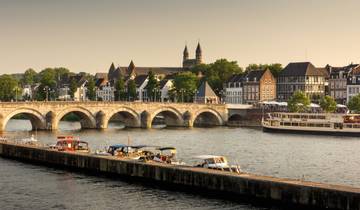
Aachen, Maastricht & Liège City Break
- ✓ Comprehensive Aachen tour
- ✓ Expert local guides included
- ✓ All accommodation arranged
- ✓ Transportation provided
Multi-day tour packages powered by TourRadar. Prices and availability subject to change.
Historical Background: From Charlemagne’s Vision to Germany’s Coronation Church
The Carolingian Foundation
Aachen Cathedral’s story begins with Charlemagne’s decision to establish a permanent capital for his expanding Frankish Empire. Around 790, after decades of military campaigns that brought much of western and central Europe under his control, Charlemagne chose Aachen for his palace complex due to its strategic location, natural hot springs, and position at the crossroads of important trade routes. The Palatine Chapel formed the spiritual heart of this ambitious project, conceived as both a royal chapel for the emperor’s private worship and a public church demonstrating the sacred nature of Carolingian imperial authority.
Charlemagne’s vision for the chapel drew on the imperial Christian architecture he encountered during his Italian campaigns, particularly the 6th-century church of San Vitale in Ravenna with its octagonal design and Byzantine mosaics. However, the Aachen chapel represented more than architectural imitation—it embodied Charlemagne’s political theology of the Christian Roman Empire renewed under Frankish leadership. The octagon symbolized perfection and resurrection in Christian numerology, while the throne positioned in the western gallery placed the emperor literally at the intersection between heaven (represented by the cupola mosaics depicting Christ and the heavenly host) and earth (the congregation assembled below).
The chapel’s completion in 805 coincided with the consolidation of Charlemagne’s power and his coronation as Holy Roman Emperor by Pope Leo III in Rome on Christmas Day 800. The consecration ceremony, performed by the pope himself during a visit to Aachen, sanctified the building as a sacred space worthy of imperial liturgy and symbolically blessed Charlemagne’s claim to be the legitimate successor of the Roman emperors. The chapel immediately became the center of religious life at Charlemagne’s court, hosting daily liturgies celebrated with exceptional musical and ceremonial elaboration that established Aachen as one of the most important religious centers in medieval Europe.
Charlemagne died in 814 and was buried in the chapel he built, though the exact location of his original tomb remains uncertain. Medieval sources describe a burial in a Roman sarcophagus, seated on a throne, dressed in imperial regalia—a burial that symbolically united the Christian emperor with the ancient Roman tradition. The tomb became an object of pilgrimage and veneration, contributing to Charlemagne’s eventual canonization in 1165 by the anti-pope Paschal III (though never officially recognized by Rome). This canonization transformed the chapel from a royal chapel into a pilgrimage church centered on Charlemagne as saint and protector, establishing a cult that persisted throughout the Middle Ages and contributed to Aachen’s importance as a pilgrimage destination.
The Imperial Coronation Church
The transformation of Aachen Cathedral into the coronation church of the Holy Roman Empire began in 936 with the crowning of Otto I on Charlemagne’s throne. This coronation established a precedent that endured for nearly 600 years—between 936 and 1531, thirty German kings received their crowns at Aachen, linking their authority to Charlemagne’s legacy and the sacred space of his chapel. The coronation ceremony followed an elaborate ritual that combined religious consecration with political symbolism, demonstrating the sacred nature of imperial power in medieval political theology.
The coronation ritual began with the king-elect’s procession from the royal palace to the cathedral, accompanied by the secular and ecclesiastical princes who had elected him. In the octagonal chapel, the candidate knelt before the altar while the Archbishop of Cologne performed the consecration ceremony, anointing the new king with holy oil, investing him with the imperial regalia (crown, scepter, orb, and sword), and celebrating a coronation Mass. Following the consecration, the newly crowned king ascended to Charlemagne’s throne in the upper gallery, symbolically taking the seat of the great emperor and claiming legitimacy through this physical connection to Carolingian authority.
Each coronation brought significant economic and cultural benefits to Aachen. The gathering of princes, bishops, and nobility from across the empire created occasions for political negotiation, legal proceedings, and cultural exchange. Coronation festivities extended for days or weeks, involving tournaments, banquets, religious processions, and public celebrations. The new king distributed gifts and privileges to Aachen’s citizens and churches, ensuring loyalty and supporting the city’s economic prosperity. Records of coronation expenses reveal the enormous wealth circulating during these events—thousands of pounds of food consumed, wine flowing from public fountains, new clothing distributed to citizens, and construction projects commissioned to enhance the cathedral and city for the occasion.
The final coronation at Aachen occurred in 1531 when Ferdinand I, brother of Emperor Charles V, was crowned German king. The shift of coronations to Frankfurt after 1562 reflected changing political circumstances in the Holy Roman Empire, but Aachen’s status as the symbolic birthplace of German kingship remained unchallenged. The coronation tradition left lasting architectural impacts on the cathedral—the Gothic choir was expanded specifically to provide more space for coronation ceremonies and the assembled princes. The treasury acquired coronation regalia and liturgical objects used in the ceremonies. The church’s decorative program incorporated imperial symbolism and references to Charlemagne that reinforced the building’s identity as the sacred center of German kingship.
Medieval Expansion and Pilgrimage
The 12th through 15th centuries witnessed dramatic expansion of the original Palatine Chapel as Aachen evolved from royal chapel to major pilgrimage destination. The acquisition of important relics, particularly the four great relics of Aachen (traditionally associated with the Virgin Mary and Christ’s Passion), attracted hundreds of thousands of pilgrims beginning in the 14th century. The display of these relics every seven years created one of medieval Europe’s largest pilgrimage events, rivaling Rome, Santiago de Compostela, and Jerusalem in importance and drawing pilgrims from across Europe.
The architectural response to pilgrimage demands drove the cathedral’s expansion. The Gothic choir, begun in 1355, provided vastly increased space for liturgical celebrations and pilgrimage activities. With walls of nearly pure glass rising 32 meters, the choir created a magnificent setting for displaying the reliquaries containing the sacred relics. The vast space could accommodate thousands of pilgrims during peak pilgrimage seasons, while the height and light symbolized the heavenly Jerusalem promised in scripture. The fourteen glass panels depicted scenes from the life of Christ, the Virgin Mary, and Charlemagne, creating a comprehensive visual theology that educated illiterate pilgrims while glorifying the cathedral’s sacred history.
Numerous chapels added during the 14th and 15th centuries served specific devotional and memorial functions. The Hungarian Chapel (1367), commissioned by Duke Louis of Hungary, provided a private space for Hungarian nobles visiting Aachen while displaying Louis’s gratitude for military victory. The Chapel of St. Nicholas (1487) served the wealthy merchants’ guild of Aachen, demonstrating how civic groups contributed to the cathedral’s elaboration while gaining eternal memorial for their donations. Each chapel addition required negotiation between donors, cathedral chapter, and city authorities, creating complex patronage relationships that shaped the building’s evolution.
The pilgrimage economy profoundly influenced Aachen’s urban development. Streets approaching the cathedral filled with hostels, taverns, and shops serving pilgrims’ needs. Artisans produced pilgrimage badges, mirrors (used during relic displays to capture the relics’ spiritual power), and souvenirs that pilgrims purchased as proof of their journey. The cathedral chapter regulated access to the relics and managed pilgrimage crowds, developing sophisticated crowd control and liturgical scheduling to accommodate mass pilgrimage while maintaining religious decorum. Income from pilgrimage offerings funded artistic commissions, architectural projects, and charitable works, creating a virtuous cycle that enhanced both the cathedral’s grandeur and Aachen’s prosperity.
Post-Medieval Transformations
The Protestant Reformation and Catholic Counter-Reformation created new challenges and opportunities for Aachen Cathedral. While the city itself adopted Protestantism briefly in the 16th century, the cathedral remained Catholic under the protection of the cathedral chapter and Spanish Habsburg authority in the region. The Counter-Reformation brought renewed emphasis on elaborate liturgy, musical performance, and visual splendor designed to demonstrate Catholic faith’s vitality against Protestant austerity. Baroque modifications to the cathedral’s interior reflected these priorities, adding ornate altars, gilded decorations, and dramatic sculptural programs that enhanced the building’s already impressive artistic richness.
The French Revolution and Napoleonic period brought existential threats to the cathedral. French revolutionary forces occupied Aachen in 1794, and revolutionary authorities viewed the cathedral’s treasures as national property to be confiscated for the French state. Many precious objects were seized and sent to Paris, though local citizens and clergy managed to hide some of the most important relics and liturgical items. Napoleon himself visited Aachen and expressed admiration for Charlemagne’s chapel, seeing himself as Charlemagne’s legitimate successor as ruler of a unified Europe. Napoleonic officials proposed dismantling the chapel and reconstructing it in Paris, a plan abandoned only due to practical difficulties and Napoleon’s eventual defeat.
The 19th century witnessed major restoration campaigns that saved the cathedral from structural deterioration while reflecting contemporary attitudes toward medieval architecture. The Gothic Revival movement valued medieval architecture as authentic expressions of Christian faith and national heritage, leading to restoration approaches that sometimes created “improved” medieval designs rather than faithful historical reconstruction. The octagonal chapel’s mosaics underwent complete replacement in the 1880s-1900s, substituting modern designs inspired by Byzantine art for the fragmentary original mosaics. While controversial among purists, these new mosaics demonstrated exceptional craftsmanship and created a visually coherent decorative program that enhanced the chapel’s interior while preserving its Carolingian spatial design.
The two World Wars brought new dangers and conservation challenges. World War I saw Aachen occupied by Allied forces, but the cathedral suffered no significant damage. World War II proved far more devastating—Allied bombing raids damaged the cathedral structure, destroyed medieval glass, and threatened the building’s stability. Preservation authorities had evacuated the most valuable treasury objects before the bombing, saving Charlemagne’s shrine, the Marienschrein, and other irreplaceable artifacts. Post-war reconstruction extended for decades, involving structural stabilization, roof reconstruction, and gradual restoration of damaged decorative elements. This work established modern conservation standards that continue to guide the cathedral’s maintenance and preservation.
Architectural Significance: A Monument to Medieval Engineering
The Carolingian Octagon: Geometry and Symbolism
The Palatine Chapel’s octagonal design represents a masterpiece of early medieval geometry and structural engineering. The plan employs a double-octagon structure: the inner octagon defines the central worship space while the outer octagon creates an ambulatory for processions and pilgrim circulation. This arrangement draws on Byzantine architectural models, particularly San Vitale in Ravenna, but executes the design with distinctively Carolingian modifications that adapted Mediterranean forms to northern European building traditions and materials.
The central octagon measures 14.46 meters in diameter, with proportions carefully calculated according to geometric relationships that medieval builders considered spiritually significant. The height to the cupola equals the diameter, creating a perfect cube inscribed within the octagonal plan—a geometric form associated with the heavenly Jerusalem described in the Book of Revelation. Each face of the octagon measures approximately 5.34 meters, with the overall design employing a module based on the Carolingian foot (approximately 33.3 cm), allowing proportional relationships to be maintained throughout the structure’s complex geometry.
The structural system supporting the cupola demonstrates sophisticated understanding of thrust distribution and load bearing. Eight massive pillars anchor the inner octagon, carrying arcades to the upper gallery and then continuing to support the cupola drum. Between these primary pillars, secondary columns—many salvaged from Roman buildings—create an elegant two-story arcade that divides the vertical space while maintaining visual connection between upper and lower levels. The upper gallery, where Charlemagne’s throne sits, serves both liturgical functions (as a space for the emperor and court during religious services) and structural purposes (providing lateral bracing for the cupola thrust).
The cupola itself represents one of the most technically ambitious elements of Carolingian architecture. Rising approximately 31 meters above the floor, the cupola employs a complex system of arches and pendentives to transform the octagonal plan into a circular drum supporting the crowning dome. The builders used lighter materials in upper sections to reduce structural loads, employed iron chains to counteract lateral thrust, and designed the cupola windows to provide both illumination and weight reduction. The cupola’s mosaic decoration, though replaced in the 19th century, follows the medieval design concept of depicting heaven above the worshipers below, with Christ in majesty surrounded by the twenty-four elders of the Apocalypse.
Gothic Innovation: The Glass Cathedral
The Gothic choir, constructed 1355-1414, represents one of the most daring structural achievements of medieval architecture. At 32 meters high with walls composed almost entirely of glass, the choir pushed Gothic engineering to its practical limits. The design required solving extraordinary structural challenges—how to support a stone vault at extreme height while minimizing solid wall surfaces and maximizing glazed openings. The solutions developed by the Aachen master builders influenced subsequent Gothic construction throughout the Rhine region and demonstrated the culmination of High Gothic structural sophistication.
The choir plan follows a simple but elegant geometric scheme: a rectangular bay measuring approximately 25 meters long and 13 meters wide, terminating in a seven-sided polygonal apse. The walls consist of fourteen massive glass panels, each approximately 27 meters high and 4-5 meters wide, separated by slender stone mullions and anchored by external flying buttresses. The buttressing system employs double-tier flying buttresses—an upper tier at the vault spring line and a lower tier at the triforium level—that transfer roof and vault loads to massive external buttress piers. These piers, reinforced with pinnacles and decorative Gothic tracery, stand outside the glass walls and define the choir’s dramatic external silhouette.
The glass itself represents an extraordinary achievement of medieval craftsmanship. The original medieval glass, though largely destroyed during World War II, employed deep jewel tones characteristic of 14th-century glazing—ruby reds, sapphire blues, emerald greens—created using metal oxide pigments in molten glass. The glass painters depicted elaborate biblical narratives, figures of saints and prophets, and scenes from Charlemagne’s life in windows organized to create a comprehensive theological program. Reading from bottom to top, the windows progressed from earthly events (Old Testament stories, saints’ lives) to heavenly realities (Christ, Virgin Mary, celestial visions), guiding worshipers’ contemplation from material to spiritual realms.
The vault structure crowning the choir demonstrates Gothic builders’ mastery of ribbed vaulting technology. The vaults employ a sophisticated pattern of ribs—diagonal ribs spanning corner to corner, transverse ribs defining bay divisions, and intermediate ribs creating complex geometric patterns—that subdivide the vault surface into smaller cells. This ribbed construction allowed builders to erect vaults of extraordinary height and span while maintaining structural stability and visual elegance. The rib intersection points feature carved bosses depicting religious symbols, heraldic devices, and decorative motifs that add visual interest while marking the structural logic of the vault system.
Architectural Additions and Harmonization
The numerous chapels and additions constructed between the 14th and 18th centuries created architectural challenges of harmonization—how to add new structures to Charlemagne’s octagon and the Gothic choir while respecting the existing buildings’ integrity and creating aesthetic coherence. Medieval and early modern builders approached this challenge through careful attention to proportional relationships, material compatibility, and symbolic connections that linked new construction to the cathedral’s historical and spiritual significance.
The Hungarian Chapel (1367) exemplifies successful architectural addition. Attached to the southern side of the octagon, the chapel employs High Gothic design elements—pointed arches, ribbed vaults, tracery windows—that complement the Gothic choir while maintaining appropriate scale relationships with the Carolingian octagon. The chapel’s exterior presents elaborate Gothic decoration including sculptural programs depicting the chapel’s patron saint and heraldic devices of Duke Louis of Hungary, while the interior creates an intimate worship space that contrasts with but doesn’t compete with the grandeur of the main church spaces.
The Chapel of St. Nicholas (1487) demonstrates late Gothic architectural refinement with its complex star vault and delicate tracery patterns. Positioned on the cathedral’s north side, the chapel employs architectural details that reference both Carolingian and Gothic elements of the main cathedral while introducing contemporary late Gothic decorative vocabulary. The star vault pattern creates geometric complexity that rewards careful observation, while the chapel’s more modest scale serves its function as a guild chapel and burial monument without disrupting the cathedral’s overall architectural hierarchy.
The western towers underwent multiple reconstructions following fires and structural problems, achieving their present form through 18th and 19th-century interventions. These towers frame the main entrance facade and provide vertical elements that balance the choir’s eastern elevation. Though built in periods when Gothic architecture was no longer contemporary, the towers respect Gothic proportional systems and employ Gothic decorative elements that maintain visual unity with the medieval structures. The towers’ height (approximately 60 meters) creates an appropriate visual transition from the surrounding urban fabric to the cathedral’s monumental scale, announcing the building’s importance to approaching visitors while establishing Aachen’s skyline.
Materials, Craftsmanship, and Conservation
The cathedral’s construction employed materials sourced from across Europe, reflecting Charlemagne’s political connections and economic resources. The columns supporting the octagon’s arcades came from Italy—marble and granite columns salvaged from Roman buildings and transported across the Alps in an extraordinary logistical achievement for the early 9th century. Many columns bear Latin inscriptions identifying their Roman origins, creating visual and historical connections between Charlemagne’s empire and the ancient Roman Empire he claimed to renew. The capitals crowning these columns vary in style from Roman Corinthian to Byzantine basket capitals to Carolingian adaptations, creating an eclectic but visually rich ensemble that demonstrates the range of artistic influences shaping Carolingian culture.
The bronze works created for the octagon represent some of the finest metalwork of the Carolingian period. The bronze doors at the western entrance, cast around 800, employ sophisticated casting techniques to create large panels decorated with lion-head ring handles based on Roman models. The bronze railings that once enclosed the upper gallery feature complex geometric patterns and demonstrate mastery of bronze working rarely achieved in early medieval metalwork. The bronze pine cone that originally topped the chapel’s exterior (now in the cathedral treasury) shows technical virtuosity in hollow casting of complex organic forms. These bronze objects required workshop facilities capable of producing large-scale castings, suggesting Aachen hosted one of early medieval Europe’s most sophisticated metalworking centers.
The mosaic programs decorating the octagon and cupola underwent complete replacement in the late 19th century under the direction of Italian mosaic workshops. While the original medieval mosaics had deteriorated beyond preservation, medieval descriptions and fragments provided guidance for the replacement program. The new mosaics employ traditional Byzantine techniques—tiny glass tesserae (individual mosaic pieces) set in plaster beds, with gold-leaf glass creating shimmering backgrounds and detailed figural work rendering Christ, the Virgin Mary, saints, and the twenty-four elders of Revelation. The mosaics cover approximately 1,000 square meters and employed millions of individual tesserae, demonstrating the persistence of ancient mosaic traditions into the modern era and creating visual splendor that enhances the chapel’s spiritual atmosphere.
Conservation of Aachen Cathedral presents ongoing challenges requiring expertise in multiple architectural periods and construction technologies. Stone deterioration from air pollution and weathering affects the cathedral’s exterior surfaces, requiring regular monitoring and intervention to prevent structural damage. The Gothic choir’s glass windows need periodic restoration to address lead deterioration and glass weathering that threatens the medieval glazing. The vaults require structural monitoring to detect settlement or movement that could indicate developing problems. Modern conservation standards emphasize minimal intervention, reversibility of repairs, and documentation of all work—principles that ensure the cathedral’s preservation for future generations while respecting the building’s historical integrity and accumulated layers of construction and modification.
Cultural Impact: Symbol of European Unity and Sacred Power
Charlemagne’s Legacy and Imperial Identity
Aachen Cathedral’s cultural significance extends far beyond its architectural merits, serving as the physical embodiment of Charlemagne’s vision for Christian European unity under imperial authority. The decision to build the Palatine Chapel as the centerpiece of a permanent imperial capital represented a fundamental shift in European political geography—for the first time since the Roman Empire’s fall, a ruler based in northern Europe claimed universal authority over Christendom and constructed architectural symbols to legitimize this claim. The chapel became the stage for enacting this imperial ideology through liturgy, coronation rituals, and courtly ceremony that fused Christian sacrality with imperial majesty.
The cultural impact of this Carolingian synthesis persisted long after Charlemagne’s death and empire’s fragmentation. Medieval German kings and emperors looked to Charlemagne as the archetypal Christian ruler, the model for how earthly authority should serve divine purposes. The coronation ceremony at Aachen enacted this ideological continuity—by sitting on Charlemagne’s throne, new rulers claimed not just political succession but spiritual mandate to rule as Charlemagne had ruled, uniting temporal power with sacred responsibility. This created a political culture in which legitimacy derived not from conquest or heredity alone but from religious consecration and connection to Charlemagne’s sacred memory.
The chapel’s architecture reinforced this imperial ideology through sophisticated visual symbolism. The throne’s position in the western gallery placed the emperor between heaven (the cupola mosaics depicting Christ in majesty) and earth (the congregation below), literally mediating between divine and human realms as medieval political theology claimed emperors should. The octagonal geometry evoked both the Jerusalem temple and the cosmic order, suggesting the empire replicated divine patterns in earthly organization. The reuse of Roman columns connected Charlemagne’s empire to Roman precedents while also demonstrating triumph over pagan Rome through Christian appropriation of classical forms. Every architectural element contributed to communicating imperial authority’s sacred character and cosmic significance.
This symbolic program influenced European political culture for centuries. Other rulers built palace chapels modeled on Aachen’s octagon, creating architectural genealogies that legitimized their authority through formal connections to Charlemagne. The Holy Roman Empire, though often weak politically, maintained extraordinary ideological power precisely because places like Aachen Cathedral gave material form to ideas about Christian universal monarchy. Even after the Empire’s dissolution in 1806, Charlemagne remained culturally potent as the founder of European unity, and his chapel continues serving as a pilgrimage destination for those seeking connection to this legendary figure. The European Union has appropriated Charlemagne as a symbol of European integration, awarding the annual Charlemagne Prize in Aachen—demonstrating how the cathedral and its imperial associations continue shaping European cultural identity into the contemporary period.
Religious Devotion and Pilgrimage Culture
The transformation of Aachen Cathedral from royal chapel to pilgrimage destination created one of medieval Europe’s most important religious cult centers. The four great relics of Aachen—the cloak of the Virgin Mary, Christ’s swaddling clothes, the loincloth from the crucifixion, and the cloth associated with John the Baptist’s beheading—attracted millions of pilgrims during the Middle Ages and established pilgrimage patterns that continue today. The relics’ public display every seven years created massive pilgrimage events that shaped regional culture, economy, and religious practice across northern Europe.
The relics’ legendary origins connect them to Charlemagne’s reign, though historical evidence suggests acquisition during the 12th and 13th centuries. According to tradition, Charlemagne brought the relics from Jerusalem and Constantinople as gifts from Byzantine emperors or as spoils from his eastern campaigns. While these origin stories lack historical foundation, they served important cultural functions—linking Aachen to Christianity’s Holy Land origins, demonstrating Charlemagne’s piety and divine favor, and establishing the relics’ authenticity through connection to the venerated emperor. The relics’ enshrinement in elaborate Gothic shrines transformed them into spectacular visual objects that combined religious devotion with aesthetic display, creating multi-sensory pilgrimage experiences that engaged sight, sound, smell, and ritualized movement through sacred space.
Pilgrimage to Aachen developed complex cultural practices surrounding relic veneration. Pilgrims purchased special mirrors designed to reflect the relics’ spiritual power during their exhibition, believing these mirrors absorbed sacred virtues that pilgrims could carry home. The cathedral developed elaborate ritual for displaying the relics from the choir gallery, with liturgical processions, musical performances, and ceremonial unveiling that built dramatic tension before pilgrims glimpsed the sacred objects. The crowds during pilgrimage years numbered in hundreds of thousands, creating logistical challenges that required sophisticated crowd management, security arrangements, and provision of food and lodging for this influx of visitors.
The pilgrimage economy profoundly shaped Aachen’s urban culture. The city’s merchant guilds specialized in producing pilgrimage souvenirs—badges depicting the cathedral or relics, small mirrors for relic reflection, blessed candles and oils, and replicas of the relics themselves. Hostels and taverns catered to pilgrims’ needs, creating service economies that depended on the seven-year pilgrimage cycle. Religious confraternities organized group pilgrimages from distant cities, creating networks of devotion that linked Aachen to communities across Germany, the Low Countries, and beyond. These pilgrimage connections facilitated cultural exchange, merchant relationships, and political alliances that extended far beyond religious devotion to shape European cultural geography.
Artistic Patronage and Cultural Production
Aachen Cathedral served as a major center for artistic production and patronage throughout the Middle Ages and early modern period. The cathedral’s importance attracted the finest artists, architects, and craftsmen, creating artistic workshops that influenced regional artistic development and trained generations of skilled artisans. The continuous building campaigns—from Carolingian construction through Gothic expansion to Baroque modifications—ensured steady demand for skilled labor and maintained Aachen’s position as an artistic center even during periods when the city’s political importance declined.
The Carolingian scriptorium at Aachen produced some of the most important illuminated manuscripts of the early Middle Ages. The Palace School style, characterized by classicizing figural art and elaborate decorative programs, influenced manuscript production across Charlemagne’s empire and established standards of artistic quality that shaped medieval book arts for centuries. The Coronation Gospels, though produced later, exemplifies this tradition of luxury manuscript production associated with imperial patronage. The cathedral treasury preserves numerous manuscripts demonstrating the range and quality of Aachen’s manuscript tradition, from liturgical books to chronicles to theological texts that document intellectual life at the imperial court and cathedral.
Metalwork production at Aachen achieved exceptional sophistication, particularly in goldsmith work and bronze casting. The Shrine of Charlemagne and Shrine of Mary represent pinnacles of medieval metalwork artistry, employing techniques including repoussé (hammered relief), champlevé enamel, filigree decoration, and gem setting that required decades of training to master. These shrines served not just religious functions but also demonstrated Aachen’s artistic capabilities and attracted commissions from wealthy patrons seeking comparable quality. The workshops producing these masterpieces trained craftsmen who spread throughout Europe, carrying Aachen techniques and aesthetic standards to other artistic centers and creating networks of artistic influence radiating from the cathedral.
The Gothic building campaigns attracted master builders, stonemasons, and glass painters from across northern Europe. The cathedral’s construction sites functioned as training grounds where apprentices learned advanced techniques in Gothic architecture—complex rib vaulting, flying buttress systems, intricate window tracery—that they later employed on other projects. The sculpture workshops producing the cathedral’s decorative programs developed distinctive styles that influenced regional artistic production. The glass painters working on the choir windows mastered techniques of glass composition, cutting, painting, and leading that represented cutting-edge technology in 14th-century glass production. This concentration of artistic expertise made Aachen a crucible for artistic innovation that shaped the broader development of Gothic art and architecture.
Educational and Intellectual Influence
Charlemagne established educational institutions at Aachen that made the palace complex one of early medieval Europe’s most important intellectual centers. The Palace School gathered leading scholars from across Europe—including Alcuin of York, Theodulf of Orléans, Paul the Deacon, and others—who developed educational curricula, produced scholarly works, and trained the next generation of ecclesiastical and secular leaders. While the cathedral itself was not primarily an educational institution, it housed libraries, supported scholarly activity, and maintained the intellectual traditions established during Charlemagne’s reign long after the palace schools’ dissolution.
The cathedral library preserved crucial texts that transmitted classical and early Christian learning through the Middle Ages. Carolingian scholars at Aachen developed standardized scripts (Carolingian minuscule) that made texts more legible and facilitated wider dissemination of learning. They produced corrected editions of classical texts, biblical manuscripts, and patristic writings that became authoritative versions shaping European intellectual culture. They developed educational theories about the seven liberal arts (grammar, rhetoric, logic, arithmetic, geometry, music, astronomy) that structured medieval education for centuries. Though much of this intellectual production occurred in palace schools rather than the cathedral itself, the cathedral’s association with Charlemagne and the scholarly culture of his court gave it intellectual prestige that attracted students, scholars, and book collectors long after the Carolingian period ended.
The cathedral chapter—the community of clergy responsible for cathedral administration and liturgy—maintained educational traditions and intellectual activity throughout the Middle Ages. Chapter members included learned clergy who produced theological works, historical chronicles, and liturgical compositions. The chapter school trained boys for ecclesiastical careers, providing Latin instruction, musical training, and theological education that prepared students for university studies or immediate entry into church service. The cathedral’s role in royal coronations brought chapter clergy into contact with the empire’s leading political and ecclesiastical figures, facilitating intellectual exchange and keeping Aachen connected to broader currents in European thought and culture.
The cathedral’s architectural and artistic heritage has made it an object of scholarly study since the Renaissance. Architectural historians have analyzed its construction techniques, proportional systems, and design sources, producing extensive scholarship on Carolingian and Gothic architecture. Art historians have studied its mosaics, metalwork, and manuscripts, illuminating medieval artistic production and patronage patterns. Historians have used cathedral records to reconstruct medieval political ceremonies, liturgical practices, and social structures. This scholarly attention has made Aachen Cathedral one of the most thoroughly documented medieval buildings, creating knowledge that enhances our understanding of medieval European civilization while contributing to the building’s continued cultural relevance in contemporary academic and public discourse.
Legends and Stories: Sacred History and Popular Imagination
The Devil’s Thumb
Among Aachen Cathedral’s many legends, the story of the Devil’s Thumb remains the most famous and visually memorable. According to the tale, the cathedral’s medieval builders faced financial difficulties during construction and accepted a bargain with the Devil. The Devil agreed to provide funding for the cathedral’s completion in exchange for the first soul to enter the finished building. The builders agreed to this diabolical contract but devised a clever trick to fulfill the letter of the agreement while avoiding damnation.
On the day of the cathedral’s completion and dedication, the builders released a wolf into the cathedral before any human entered. The Devil, expecting a human soul, appeared to claim his prize only to find he had been deceived with an animal soul instead. Enraged by the trick, the Devil slammed the cathedral door with such force that his thumb became trapped, leaving an impression in the bronze door that remains visible today. Furious and humiliated, the Devil departed, vowing revenge but unable to reclaim his bargain or destroy the cathedral.
Visitors to Aachen Cathedral can indeed find a thumb-shaped indentation in the bronze door at the western entrance, physical evidence that has sustained the legend across centuries. While the actual cause of the indentation likely involves metalworking techniques or subsequent damage to the door, the legend serves important cultural functions. It dramatizes the eternal struggle between good and evil, demonstrates the value of clever thinking in overcoming demonic threats, and explains unusual architectural features through entertaining narrative. The legend also reflects medieval attitudes toward church building as spiritual warfare—the construction of sacred space necessarily provoked demonic opposition that required both divine protection and human ingenuity to overcome.
The persistence of this legend demonstrates how popular culture interacted with official religious narratives in medieval Christianity. While church authorities promoted theological explanations for the cathedral’s significance centered on Charlemagne’s piety and imperial authority, popular culture developed alternative narratives emphasizing trickery, supernatural intervention, and dramatic conflict. These popular legends did not contradict official teachings but supplemented them with stories that engaged imagination and provided more accessible entry points into sacred history for ordinary people who might find theological and political explanations less immediately compelling.
Charlemagne’s Crown and Throne
Numerous legends surround Charlemagne’s throne, which remains in its original position in the upper gallery of the octagonal chapel. According to medieval accounts, the throne possesses miraculous properties derived from Charlemagne’s sanctity and the sacred rituals performed there. Pilgrims who visited the throne reported experiencing visions, miraculous healings, and spiritual revelations. The throne’s stone composition was said to include stones from Solomon’s Temple in Jerusalem, creating physical connection between Charlemagne and the biblical king whose wisdom and just rule provided the model for Christian kingship.
The throne’s simple design—a stone seat with low sides and back, lacking elaborate decoration—contrasts sharply with the ornate Gothic shrines and Baroque embellishments elsewhere in the cathedral. Medieval interpreters read this simplicity as evidence of Charlemagne’s humility and spiritual authenticity, preferring the plain throne of a true Christian emperor to the gilded seats of worldly rulers. The throne’s elevation in the upper gallery, however, conveyed power—the emperor sat above the congregation, closer to heaven, positioned as mediator between divine authority and earthly subjects. This combination of humble materials and elevated position perfectly expressed medieval political theology’s understanding of Christian rulership as service rendered from a position of God-granted authority.
Stories circulated about rulers who sat on Charlemagne’s throne during coronations and experienced supernatural confirmation of their right to rule. Some accounts describe divine light illuminating particular candidates, while others tell of unworthy candidates who attempted to sit on the throne only to be struck by paralysis or spiritual terror that revealed their unfitness for rule. These legends reinforced the throne’s role in determining legitimate succession—not through political negotiation alone but through divine judgment manifested in the sacred space of Charlemagne’s chapel. The throne thus functioned as more than furniture; it was a spiritual technology for discerning God’s will regarding royal succession.
The Karlsschrein Miracles
The reliquary containing Charlemagne’s remains, known as the Karlsschrein, became the center of numerous miracle accounts during the medieval period. Pilgrims who approached the shrine with faith and proper ritual preparation reportedly experienced healings from diseases, solutions to seemingly impossible problems, and spiritual transformations. The cathedral’s clergy carefully documented these miracles, creating written records that served both devotional and promotional purposes—demonstrating Charlemagne’s sanctity while advertising Aachen as a pilgrimage destination worthy of the journey’s time, expense, and danger.
Particular miraculous stories achieved widespread circulation and contributed to popular understanding of Charlemagne’s posthumous power. One account tells of a merchant facing bankruptcy who prayed before the Karlsschrein and subsequently discovered unexpected resources that saved his business—a miracle demonstrating Charlemagne’s concern for commercial prosperity and willingness to intervene in worldly affairs. Another story describes a woman suffering from blindness who received vision after touching the shrine and dedicating herself to pilgrimage in thanksgiving—a healing miracle conforming to established hagiographic patterns while emphasizing the importance of gratitude and continued devotion following miraculous intervention.
Military miracles attributed to Charlemagne’s intercession played important roles in medieval political culture. German rulers facing battles or political crises sometimes prayed before the Karlsschrein, seeking Charlemagne’s spiritual support for their campaigns. Subsequent victories were attributed to the saint-emperor’s supernatural assistance, creating narratives that linked contemporary military success to Carolingian precedent. These military miracles served ideological functions, legitimizing wars as continuations of Charlemagne’s campaigns to defend and extend Christian civilization. The shrine thus functioned as a site where political authority sought supernatural validation and where military ventures acquired sacred sanction through connection to Christianity’s militant tradition embodied in Charlemagne’s conquests.
The Holy Lance and Imperial Regalia
Though the Holy Lance (believed to be the spear that pierced Christ’s side during crucifixion) and other imperial regalia were kept primarily in Vienna and Nuremberg rather than Aachen, legends connected these sacred objects to the cathedral and Charlemagne’s spiritual authority. According to tradition, Charlemagne possessed the Holy Lance during his military campaigns, and its spiritual power ensured his victories over pagans and enemies of Christendom. The lance supposedly conferred invincibility on its bearer, making Charlemagne unstoppable in battle and guaranteeing the success of his mission to Christianize Europe.
These legends about the lance and other regalia (crown, sword, orb) served to sacralize Carolingian and subsequent German imperial authority. If Charlemagne’s power derived from divinely granted sacred objects rather than merely superior military force or political cunning, then his conquests represented God’s will enacted through chosen instruments. The transfer of these objects to successive rulers symbolized the transmission of divine mandate, ensuring continuity of sacred authority across dynastic changes. Coronation ceremonies at Aachen incorporated these objects into elaborate rituals that dramatized this transfer of power, with new kings receiving the regalia as physical proof of their right to rule.
The regalia’s association with Christ’s Passion through the Holy Lance created powerful symbolic connections between imperial authority and Christian salvation. Just as Christ’s suffering achieved humanity’s redemption, so the emperor bearing Christ’s lance would endure suffering in service of Christian civilization’s defense and expansion. This typological relationship between Christ and Christian emperor provided theological justification for imperial warfare, suggesting that military campaigns against pagans and heretics replicated Christ’s victory over sin and death. The cathedral, housing Charlemagne’s memory and hosting coronation rituals involving these sacred objects, became the spatial center of this imperial theology, the place where political authority and religious devotion merged in ceremonies that sanctified power while demanding rulers’ subordination to divine purpose.
Photography Guide: Capturing Architectural Magnificence
Equipment Recommendations and Technical Considerations
Photographing Aachen Cathedral successfully requires thoughtful equipment selection balancing the building’s architectural complexity, lighting challenges, and visitor regulations. A versatile camera system capable of handling high-contrast situations and low-light conditions proves essential for capturing both exterior and interior subjects. Full-frame cameras with good high-ISO performance (ISO 3200-6400) allow handheld shooting in the dimly lit ambulatory and chapels, while mirrorless systems’ electronic viewfinders help expose properly in the challenging lighting of the Gothic choir.
Lens selection should prioritize three focal length ranges. Wide-angle lenses (14-24mm for full-frame, 10-20mm for APS-C) are essential for capturing the octagonal chapel’s spatial complexity and the Gothic choir’s dramatic height. These extreme wide angles can introduce distortion that requires correction in post-processing, but they enable comprehensive views impossible with longer focal lengths. Standard zoom lenses (24-70mm) provide versatility for architectural details, human-scale compositions incorporating visitors in sacred space, and transitional spaces where extreme wide angles prove excessive. Telephoto lenses (70-200mm or longer) excel at isolating architectural details—the cupola mosaics, carved capitals, stained glass panels—from distance while compressing perspective to emphasize decorative complexity.
Specialized equipment merits consideration for photographers pursuing technically advanced images. Tilt-shift lenses enable perspective correction in-camera, maintaining vertical lines without post-processing while allowing selective focus for emphasizing specific architectural elements. Tripods, though often restricted in heavily visited areas, can be used during quieter periods with permission, enabling long exposures that smooth visitor movement into ethereal blur while maintaining architectural sharpness. Neutral density filters allow longer exposures even in well-lit areas, though cathedral regulations require asking permission before using tripods or specialized equipment that might obstruct other visitors.
Exterior Photography: Urban Context and Architectural Form
The cathedral’s position within Aachen’s dense historic center presents both challenges and opportunities for exterior photography. The building cannot be photographed in isolation—surrounding structures, streets, and urban features inevitably appear in compositions, requiring thoughtful approaches to incorporating this context productively. The Katschhof, the public square between the cathedral and city hall, offers the most open views of the Gothic choir’s southern facade. Morning and midday light illuminates this elevation effectively, revealing the intricate stone tracery separating glass panels and the flying buttresses extending from the choir walls.
Approaching the choir from different angles within the Katschhof creates varied compositional possibilities. Wide-angle views including both the Gothic choir and portions of the octagonal chapel demonstrate the architectural relationship between these major structural components, showing how Gothic builders integrated their soaring choir with Charlemagne’s lower, more massive octagon. Longer focal lengths isolate the choir’s vertical lines, emphasizing the walls’ dematerialization into glass and the buttressing system’s structural elegance. Including people in the square establishes scale, making the choir’s 32-meter height comprehensible to viewers who have not experienced the building directly.
The cathedral’s western facade, facing the marketplace, presents different photographic challenges and opportunities. This elevation features the main entrance doors (with their legendary Devil’s Thumb indentation), the western towers, and the relationship between cathedral and civic space. Late afternoon light creates strong shadows that articulate architectural details and emphasize the depth of entrance portals and decorative niches. The marketplace itself hosts regular markets and events that can either enhance compositions by showing the cathedral’s integration into daily urban life or complicate photography by introducing crowds and temporary structures that obscure architectural views.
Elevated viewpoints provide valuable perspectives showing the cathedral’s relationship to Aachen’s urban fabric. The nearby Lousberg, a hill on the city’s edge, offers distant views showing the cathedral dominating the historic center’s skyline, with the Gothic choir and western towers creating vertical accents above surrounding buildings. Rooftop terraces in nearby hotels or public buildings (when accessible) provide closer elevated views revealing the complexity of the cathedral’s roof structure—multiple roof levels corresponding to the octagon, choir, and various chapels create a complex topography that rewards aerial observation. These elevated perspectives work particularly well during evening’s blue hour when cathedral floodlighting creates dramatic contrast with the darkening sky while maintaining detail in the illuminated building.
Interior Photography: Sacred Space and Architectural Detail
The octagonal chapel presents the cathedral’s most challenging and rewarding interior photographic subject. The space’s vertical complexity—low ambulatory, upper gallery, and soaring cupola—requires wide-angle lenses to capture comprehensively. The optimal position for comprehensive views lies near the center of the octagon, shooting upward to include the arcade system, gallery, and cupola in a single composition. This viewpoint reveals the space’s geometric clarity while showing how Carolingian builders created visual connection between levels through repetitive arching patterns and coordinated decorative programs.
Lighting in the octagon creates dramatic contrasts between the relatively dark lower ambulatory and the brighter upper gallery and cupola illuminated by windows. Bracketing exposures allows combining multiple shots in post-processing to achieve high dynamic range images showing detail in both shadowed areas and brightly lit sections. Alternatively, photographers can embrace the contrast, creating dramatic images where light cascading from above suggests divine presence illuminating sacred space—an effect that resonates with medieval liturgical understanding of light as symbol of divine grace.
The cupola mosaics reward dedicated photographic attention. These intricate artworks, though 19th-century replacements of medieval originals, demonstrate exceptional craftsmanship in their golden backgrounds, detailed figural work, and symbolic programs. Telephoto lenses allow close examination from the floor level, though the extreme upward angle creates distortion that affects figures’ proportions. The gallery level provides closer access to the mosaics, enabling more direct views that reduce distortion while maintaining sufficient distance for compositional perspective. Midday sunlight through cupola windows illuminates the mosaics most effectively, making the gold-leaf glass tesserae shimmer with light that enhances the mosaics’ intended visual impact.
The Gothic choir offers dramatically different photographic opportunities centered on light, color, and vertical space. The enormous stained glass panels create extraordinary effects when backlit by sunlight, filling the choir with colored light that transforms the space’s spiritual atmosphere. Morning light through the eastern windows produces the most dramatic effects, with sun angles creating focused beams of colored light that stream across the choir’s interior. Photographing the windows themselves requires careful exposure management—exposing for the brilliant glass overexposes the stone tracery, while exposing for the tracery renders the glass as glowing but detail-less color fields. Most effective are compositions that embrace this contrast, allowing the glass to glow intensely while maintaining just enough detail in the tracery to show the windows’ structural organization.
Detail Photography: Craftsmanship and Artistic Heritage
The cathedral’s artistic treasures—mosaics, metalwork, sculpture, architectural details—reward close photographic examination that reveals craftsmanship often invisible to casual observers. Detail photography serves both documentary functions (recording specific artistic features for study) and aesthetic purposes (creating compelling images that honor artisans’ skill and vision). Success requires balancing technical precision with artistic sensitivity, producing images that are both accurate records and beautiful photographs in their own right.
The bronze doors at the western entrance feature large panels with lion-head ring handles that demonstrate early medieval metalworking sophistication. Photographing these doors requires managing reflections from the bronze surface while capturing the relief details and the legendary Devil’s Thumb indentation. Overcast days or shaded conditions reduce harsh reflections that can obscure surface details, while polarizing filters help control reflective glare. The doors’ dark bronze and the shaded entrance create low-light conditions requiring steady hand technique or tripod support for sharp images at base ISO settings that minimize noise.
Charlemagne’s throne in the upper gallery presents significant photographic challenges due to restricted access and the need to photograph from the lower ambulatory using telephoto lenses. The throne’s simple stone construction lacks elaborate decoration, making composition and lighting crucial for creating visually interesting images. Side lighting that creates shadows emphasizing the stone’s texture and the throne’s geometric form produces more successful results than flat frontal lighting. Including enough surrounding context to show the throne’s position in the gallery while maintaining emphasis on the throne itself requires careful framing that balances foreground and background elements.
The medieval capitals crowning the octagon’s columns showcase varied carving styles from Roman antiquity through Carolingian adaptation. These capitals reward close examination revealing acanthus leaves, geometric patterns, and occasionally figural elements. Moderate telephoto lenses (85-135mm) provide sufficient working distance while allowing detailed views that show individual carving techniques. The capitals’ elevation requires shooting upward, creating perspective distortion that can be embraced as part of the composition or minimized through careful positioning and lens selection. Multiple shots of different capitals reveal the variety of styles within the octagon, demonstrating the eclectic artistic sources Carolingian builders drew upon.
Photographic Ethics and Visitor Consideration
Photographing Aachen Cathedral requires balancing personal artistic goals with respect for the building’s sacred function and consideration for other visitors. The cathedral remains an active place of worship hosting regular liturgies, and photographers must avoid disrupting religious services or interfering with worshipers’ spiritual practices. During services, photography should be minimal, discreet, and from positions that don’t obstruct participants’ views or distract from liturgical actions. Flash photography during services is particularly intrusive and should be completely avoided.
Visitor traffic creates both challenges and opportunities for photography. Crowds during peak tourist seasons and pilgrimage periods make isolation shots of architectural features difficult, but including visitors in compositions can convey the cathedral’s continuing vitality and social function. Respectful photographs showing people engaged with sacred space—contemplating artworks, lighting candles, sitting in prayer—document the cathedral’s living tradition while creating more humanly engaging images than empty architectural views. Obtaining permission when photographing individuals identifiably requires courtesy and respect for privacy, particularly during religious observances.
Special access for serious photography projects sometimes becomes available through arrangements with cathedral authorities. Professional photographers and researchers can apply for permission to photograph during closed hours, use tripods in areas where they’re otherwise restricted, or access normally closed spaces like the upper gallery or treasury. Such permissions require demonstrating serious purpose, providing examples of previous work, and sometimes paying access fees. Cathedral authorities evaluate requests based on the project’s scholarly or artistic merit and the photographer’s demonstrated ability to work respectfully and professionally in sacred space.
Conservation Efforts: Preserving a Millennium of Heritage
Structural Stabilization and Maintenance
Conserving Aachen Cathedral requires ongoing attention to structural stability, environmental conditions, and material deterioration that threaten the building’s integrity. The cathedral’s great age—with core elements over 1,200 years old—creates unique conservation challenges. Materials age at different rates, earlier repairs sometimes prove incompatible with original construction, and modern environmental conditions (air pollution, acid rain, tourism impacts) accelerate deterioration in ways unknown to medieval builders. Contemporary conservation practice balances multiple imperatives: maintaining structural safety, preserving historic fabric, ensuring accessibility for worship and tourism, and planning interventions that respect the building’s accumulated history while employing current technical knowledge.
The octagonal chapel’s structural system requires regular monitoring to detect movement, settlement, or deterioration in the massive pillars supporting the cupola. Stone weathering from exposure to atmospheric pollutants creates surface deterioration that can penetrate deeply, weakening structural integrity if left untreated. Conservation teams conduct regular condition assessments using both traditional methods (visual inspection, measurement of cracks and movement) and advanced technologies (ground-penetrating radar, 3D laser scanning, structural modeling) that reveal developing problems before they become critical. When intervention becomes necessary, conservators employ reversible techniques that can be removed if future knowledge suggests better approaches, avoiding the irreversible alterations that characterized some earlier restoration campaigns.
The Gothic choir presents particular conservation challenges due to its daring structural design and extensive glazing. The flying buttresses require monitoring for settlement and deterioration in the stone and mortar joints that could compromise their ability to counteract vault thrust. The enormous glass panels face weathering that gradually weakens the glass itself and corrodes the lead framework holding glass pieces together. Wind loading on these vast glass surfaces creates structural stresses requiring careful analysis to ensure the tracery mullions and buttressing system maintain adequate strength. Conservation work on the choir often requires extensive scaffolding that can take months to erect, creating temporary disruption to visitors but enabling access for detailed examination and treatment of deteriorated elements.
Glass Conservation and Restoration
The cathedral’s stained glass windows represent both priceless artistic heritage and vulnerable materials requiring specialized conservation expertise. The Gothic choir’s medieval glass (much destroyed during World War II and subsequently replaced) faces ongoing deterioration from environmental factors including atmospheric pollutants that chemically attack glass surfaces, moisture cycles that promote corrosion, and biological growth (lichen, algae) that colonizes exterior surfaces. Modern conservation approaches to historic glass balance competing priorities: maintaining original material as much as possible, ensuring structural stability of the windows, and managing deterioration through controlled environments and protective measures.
Current conservation practice for the choir windows employs external protective glazing installed several centimeters outside the medieval glass. This protective layer shields historic glass from direct weather exposure while creating a ventilated cavity that allows air circulation preventing moisture accumulation. The protective glass filters ultraviolet radiation that degrades glass and paint, extends the medieval glass’s lifespan, and can be replaced more easily than restoring deteriorated historic glass. Installation of protective glazing requires careful detailing to maintain visual clarity—the protective glass must not introduce distortions or reflections that diminish the medieval glass’s appearance while providing effective environmental buffering.
Glass panels requiring active conservation treatment undergo removal from their openings for workshop treatment. Conservation workshops employ methods including careful cleaning to remove accumulated dirt and corrosion products, stabilization of flaking paint through consolidation with specially formulated adhesives, and replacement of failed lead framework with new leading that maintains historical appearance while providing improved structural support. The most severely deteriorated medieval glass pieces sometimes require replacement with new glass carefully matched to the original in color, texture, and optical properties. Documentation throughout the conservation process—detailed photography, written condition reports, material analysis—creates permanent records preserving knowledge about each panel’s condition and treatment history.
Mosaic Preservation
The cupola mosaics, though 19th-century creations rather than medieval originals, require conservation attention to maintain their structural integrity and visual brilliance. Mosaic conservation addresses issues including tesserae loss from adhesive failure, plaster bed deterioration, and accumulation of dirt that dulls the mosaics’ colors and reduces light reflection from gold-leaf glass. The mosaics’ location high in the cupola creates access challenges requiring extensive scaffolding for close examination and treatment, making conservation campaigns major logistical undertakings that occur at multi-year intervals rather than annually.
Conservation treatment begins with comprehensive condition assessment documenting areas of active deterioration, tesserae at risk of detachment, and overall structural stability of the plaster beds supporting the tesserae. Conservators map deterioration patterns across the mosaic surfaces, creating detailed diagrams that guide treatment planning and provide baseline documentation for monitoring future changes. Treatment typically involves cleaning to remove dirt accumulation, consolidation of unstable tesserae through injection of carefully selected adhesives, and replacement of lost tesserae with new pieces precisely matched to surrounding original tesserae in size, color, and surface texture.
Environmental control plays crucial roles in mosaic preservation. The cupola space experiences temperature and humidity fluctuations due to heating the cathedral interior during winter while the cupola area remains largely unheated. These fluctuations create expansion and contraction cycles that stress the mosaic and its supporting structure. Modern conservation includes monitoring environmental conditions and working with building managers to minimize harmful fluctuations through controlled heating and ventilation systems. Climate control must balance conservation needs with the building’s religious function and visitor access—overly controlling the environment might preserve materials optimally but render the space uncomfortable for worship and tourism that justify preservation efforts and fund ongoing conservation work.
Stone Conservation and Cleaning
The cathedral’s exterior stone surfaces face continuous deterioration from environmental exposure creating conservation needs that will persist indefinitely. Atmospheric pollution deposits corrosive compounds on stone surfaces, rainwater washes soluble salts into stone pores where crystallization cycles cause mechanical damage, and biological colonization (algae, moss, lichen) creates both aesthetic issues and physical deterioration. Stone conservation requires understanding the specific stone types, their deterioration mechanisms, and appropriate treatment approaches that address problems without causing additional damage through over-aggressive intervention.
Different stone types used throughout the cathedral’s construction exhibit varied deterioration patterns requiring specific conservation approaches. The sandstone used extensively in Gothic construction absorbs water readily, making it vulnerable to freeze-thaw damage and salt crystallization. Limestone elements deteriorate through dissolution by acidic rainwater, creating surface erosion that gradually obscures carved details. Granite and marble elements imported for the octagon’s columns resist weathering better but can develop surface crusts from pollution deposition. Conservation treatment must account for these material differences, selecting cleaning methods, consolidation treatments, and protective measures appropriate for each stone type’s properties and condition.
Stone cleaning represents one of the most visible conservation activities but requires careful execution to avoid damaging historic surfaces. Over-aggressive cleaning can remove original stone surfaces along with dirt, destroying patinas that represent part of the building’s history and potentially exposing fresh stone to accelerated weathering. Contemporary conservation practice favors gentle cleaning methods—low-pressure water washing, poultices that draw dirt from stone pores, careful mechanical cleaning with soft tools—that remove harmful deposits while preserving as much original surface as possible. Cleaning campaigns typically proceed in test areas where different methods are evaluated before selecting approaches for treating larger surfaces, ensuring chosen techniques achieve desired results without causing unacceptable damage.
Treasury Conservation
The cathedral treasury’s collection of medieval metalwork, textiles, and manuscripts presents diverse conservation challenges requiring specialized expertise for each material type. These objects’ small scale compared to the building itself enables more controlled conservation environments, but their artistic complexity, material fragility, and historical significance demand exceptional care in handling, storage, display, and treatment. The treasury maintains professional conservation studios where specialists work on collection objects, employing methods ranging from traditional crafts techniques to cutting-edge analytical technologies.
Metalwork conservation addresses issues including corrosion, structural weakness, and loss of decorative elements. The Shrine of Charlemagne and Shrine of Mary undergo regular conservation assessment to monitor their condition and plan interventions when necessary. These shrines combine multiple materials—gilded copper, enamel, gems, ivory—each with distinct deterioration patterns and conservation requirements. Conservators must understand medieval metalworking techniques to make informed decisions about treatment approaches that respect original construction while addressing current condition issues. Treatment might include removing harmful corrosion products, stabilizing structural weaknesses, and occasionally replacing lost decorative elements with carefully documented reconstructions based on surviving evidence.
Textile conservation protects the treasury’s collection of liturgical vestments, including rare examples of Byzantine silk, medieval embroidery, and Gothic ecclesiastical textiles. Textiles deteriorate through multiple mechanisms: fiber degradation from age and light exposure, insect and mold damage, and mechanical stress from folding and handling. Conservation storage employs acid-free supports, controlled environmental conditions (moderate temperature, low humidity, minimal light exposure), and protective housings that minimize handling and provide physical protection. When textiles require display, conservators limit exhibition duration and light levels, create supportive mounts that distribute weight and prevent stress, and develop exhibition designs that allow viewing while minimizing harmful light exposure.
UNESCO Recognition: World Heritage Significance
Criteria for UNESCO Designation
Aachen Cathedral received UNESCO World Heritage designation in 1978, becoming one of the first twelve sites inscribed on the World Heritage List and the first German site to receive this recognition. The designation acknowledges the cathedral’s outstanding universal value under multiple UNESCO criteria, specifically Criterion I (masterpiece of human creative genius), Criterion II (interchange of human values), Criterion IV (outstanding example of architectural ensemble), and Criterion VI (directly associated with events of outstanding universal significance).
Under Criterion I, the cathedral qualifies as a masterpiece of creative genius through its revolutionary Carolingian architecture that synthesized Roman, Byzantine, and northern European building traditions into an original design representing the highest achievement of early medieval architecture. The octagonal chapel’s sophisticated geometry, structural innovation, and symbolic program demonstrate exceptional creative vision and technical execution. The Gothic choir similarly represents a masterpiece of High Gothic architecture, pushing stone and glass construction techniques to practical limits while creating spaces of transcendent beauty that inspire awe and contemplation.
Criterion II recognizes the cathedral’s role in facilitating interchange of human values across cultural and temporal boundaries. The Palatine Chapel’s construction brought together craftsmen, materials, and artistic influences from across Charlemagne’s empire and beyond—Roman columns from Italy, Byzantine mosaics techniques, Germanic construction methods, and liturgical traditions from Rome and the Eastern Church. This cultural synthesis created a model that influenced subsequent architectural development throughout medieval Europe. The chapel’s octagonal design was copied in numerous palace chapels and churches across the Carolingian Empire and beyond, spreading architectural and political ideas that shaped European cultural development for centuries.
Under Criterion IV, the cathedral represents an outstanding example of an architectural and artistic ensemble illustrating significant stages in human history. The building physically embodies the Carolingian Renaissance, the development of Gothic architecture, and the evolution of European imperial ideology across a millennium. Each architectural layer—Carolingian octagon, Gothic choir, Renaissance and Baroque chapels—represents distinct cultural moments while contributing to a harmonious architectural whole. The cathedral’s artistic treasury further enhances its significance, preserving exceptional examples of medieval metalwork, textiles, and manuscripts that illuminate artistic development and religious culture across centuries.
Criterion VI acknowledges the cathedral’s direct association with events and traditions of outstanding universal significance. The cathedral’s role as coronation church for the Holy Roman Empire connected it directly to European political development and the ideal of Christian universal monarchy that shaped European political culture from the 9th through early modern periods. The building’s association with Charlemagne—one of European history’s most influential rulers—gives it symbolic significance extending far beyond architectural merit. The cathedral embodies ideas about Christian imperial authority, European unity, and the relationship between spiritual and temporal power that remain culturally potent in contemporary debates about European identity and integration.
Conservation Standards and World Heritage Obligations
UNESCO World Heritage designation carries both prestige and responsibilities. Listed sites must maintain their outstanding universal value through appropriate conservation practices, protective legal frameworks, and management strategies that ensure preservation for future generations. Germany, as the state party responsible for Aachen Cathedral, has implemented comprehensive protection through national heritage laws, state-level conservation regulations, and local planning controls that restrict development in the cathedral’s vicinity and ensure resources for ongoing conservation work.
The cathedral operates under a detailed management plan establishing conservation priorities, monitoring protocols, and intervention guidelines. This plan balances competing demands: maintaining the building’s religious function, accommodating visitor access and tourism, preserving historical fabric, and adapting infrastructure for contemporary needs while respecting heritage values. The management plan undergoes periodic review and updating to reflect evolving conservation knowledge, changing conditions, and new challenges including climate change impacts, increasing tourism pressures, and technological opportunities for enhanced conservation and presentation.
Regular reporting to UNESCO on the site’s condition demonstrates Germany’s fulfillment of World Heritage obligations. These reports detail conservation projects undertaken, threats to the site’s integrity, visitor statistics and management approaches, and planned future work. UNESCO’s periodic examination of World Heritage sites provides external accountability ensuring that heritage protection meets international standards and that sites maintain the outstanding universal value justifying their inscription. This international oversight helps ensure that short-term pressures—political, economic, social—don’t compromise long-term heritage preservation.
Educational and Cultural Outreach
World Heritage status elevates the cathedral’s educational mission, encouraging development of programs that communicate the site’s significance to diverse audiences. The cathedral and city of Aachen have developed interpretive materials, guided tours, educational programs for schools, and public events that help visitors understand why this building merits World Heritage recognition and what responsibilities this status entails. These educational efforts extend the cathedral’s impact beyond religious and tourist functions to serve broader cultural education goals.
Visitor interpretation employs multiple approaches to accommodate varied interests and learning styles. Audio guides provide detailed architectural and historical information for independent visitors preferring self-paced exploration. Guided tours led by trained docents offer personalized experiences with opportunities for questions and discussion. Special programs for school groups align with educational curricula, using the cathedral as a teaching resource for medieval history, architectural development, religious studies, and art history. Digital technologies including virtual reality, interactive displays, and mobile applications provide innovative interpretation methods that engage contemporary audiences while respecting the sacred space’s physical integrity.
The cathedral serves as a venue for cultural events extending its role beyond religious worship to embrace broader cultural programming. Concerts featuring sacred music, lectures by scholars addressing topics related to the cathedral’s history and significance, temporary exhibitions exploring aspects of the cathedral’s heritage, and symposia bringing together conservation professionals and researchers all contribute to cultural vitality while educating publics about World Heritage values. These programs demonstrate how heritage sites can remain dynamic centers of cultural production rather than static museums, maintaining relevance to contemporary society while preserving historical significance.
International Cooperation and Knowledge Exchange
World Heritage designation connects Aachen Cathedral to an international network of heritage sites, conservation professionals, and cultural institutions. This network facilitates knowledge exchange about conservation techniques, management practices, interpretation strategies, and research methodologies that benefit all participating sites. Aachen’s conservation team shares expertise gained from working on the cathedral’s unique preservation challenges while learning from colleagues addressing similar issues at other World Heritage sites.
International conferences and workshops focused on cathedral conservation, medieval architecture preservation, and World Heritage management bring together professionals from multiple countries to exchange knowledge and develop best practices. These gatherings address both technical conservation issues (stone deterioration, glass conservation, structural stabilization) and broader management challenges (balancing tourism and preservation, funding conservation work, interpreting complex sites). Aachen’s participation in these international forums contributes to advancing conservation knowledge while ensuring the cathedral benefits from cutting-edge expertise developed globally.
Collaborative research projects involving international teams of scholars, conservators, and scientists generate new knowledge about the cathedral while developing methodologies applicable at other heritage sites. Archaeological investigations exploring the palace complex surrounding the chapel, art historical research examining the treasury’s collections, architectural history studies analyzing construction techniques and design sources, and material science research characterizing historic materials and deterioration mechanisms all produce scholarly publications and technical reports that enhance understanding of medieval European culture while informing contemporary conservation practice. This research demonstrates how heritage sites function as laboratories generating knowledge that benefits both scholarly understanding and practical preservation work.
Visitor Experience: Planning Your Cathedral Visit
Access and Orientation
Aachen Cathedral occupies a central position in the historic city center, easily accessible on foot from the main railway station and surrounding neighborhoods. The main entrance faces the marketplace (Markt), marked by the western towers and the bronze doors bearing the legendary Devil’s Thumb. Visitors approach through the marketplace, a lively public square hosting regular markets, outdoor cafes, and the impressive Aachen City Hall directly opposite the cathedral. This urban setting creates a vivid contrast between sacred and civic spaces, with the cathedral’s monumental architecture rising dramatically from the bustling marketplace.
Upon entering through the western doors, visitors find themselves in the ambulatory encircling the central octagon. The spatial experience proves immediately striking—the relatively low ambulatory opens upward to the soaring cupola, creating vertical drama that draws the eye upward while the curved ambulatory path invites movement around the central space. The acoustics in the octagon enhance this spatial experience, with voices and sounds gaining resonance and depth from the stone surfaces and cupola form. Moving slowly around the ambulatory allows appreciation of changing perspectives as different angles reveal the octagon’s geometry, the arcade system’s rhythm, and the relationship between floor-level experience and the elevated throne in the upper gallery.
The transition from the octagon to the Gothic choir creates one of the cathedral’s most powerful spatial experiences. Moving from the relatively enclosed octagon into the choir’s vast height and luminosity provides dramatic contrast that emphasizes the different architectural characters of these spaces. The choir’s glass walls flood the space with light, creating an atmosphere of openness and transcendence that contrasts with the octagon’s more enclosed, mysterious character. This spatial sequence—from marketplace to ambulatory to octagon to choir—creates a carefully orchestrated experience that gradually intensifies the sense of sacred space and spiritual elevation.
Guided Tours and Audio Guides
Professional guided tours provide the most comprehensive way to understand the cathedral’s complex architecture, history, and artistic treasures. Tours led by knowledgeable guides offer insights into details easily missed during independent visits, explain the historical and religious significance of architectural features and artworks, and answer questions about specific interests. Tours accommodate varied interests—some focus on architecture and construction techniques, others emphasize religious history and liturgical use, while specialized tours might address artistic treasures or Charlemagne’s historical significance. Group tour schedules vary seasonally, with more frequent tours during peak tourist seasons and limited availability during religious holidays or special events.
Audio guides offer flexible alternatives to scheduled group tours, allowing visitors to explore at their own pace while accessing detailed commentary. The audio guide system provides numbered stops corresponding to significant features throughout the cathedral—the octagon’s arcade, Charlemagne’s throne, the Gothic choir, various chapels and artworks—with commentary explaining each element’s significance. Multiple language options serve international visitors, while specialized audio programs cater to children, architecture enthusiasts, or those interested in particular aspects of the cathedral’s heritage. Audio guides prove especially valuable for visitors whose schedules don’t align with tour times or who prefer independent exploration to group experiences.
Treasury Access and Special Visits
The cathedral treasury requires separate admission from the main church and maintains distinct visiting hours. Located adjacent to the cathedral in specially designed exhibition spaces, the treasury displays the most precious objects from the cathedral’s collections in climate-controlled environments with security systems protecting these priceless artifacts. The treasury visit provides intimate encounters with medieval art and craftsmanship impossible in the cathedral’s vast spaces—viewers can examine details of goldsmith work, textile weaving, manuscript illumination, and gem setting that require close viewing to appreciate fully.
The treasury’s exhibition design balances conservation requirements with visitor access. Display cases maintain controlled light levels, temperature, and humidity that preserve fragile materials while allowing clear viewing. Interpretive materials explain each object’s historical context, artistic significance, and material composition, helping visitors understand both the technical craftsmanship and cultural meanings of these artifacts. The Shrine of Charlemagne and Shrine of Mary, though now permanently displayed in the cathedral choir rather than the treasury, receive detailed interpretation explaining their construction, iconographic programs, and role in medieval pilgrimage culture.
Special access programs offer enhanced experiences beyond standard visits. Reserved group tours can include treasury access outside normal public hours, providing more intimate viewing conditions and extended time with individual objects. Photography permissions (which generally prohibit flash photography and tripods without special arrangement) can sometimes be obtained for serious research or artistic projects. Scholar access to objects not normally displayed provides opportunities for detailed study supporting research projects. These special access options require advance arrangement with cathedral authorities and typically involve fees supporting conservation and educational programs.
Liturgical Services and Religious Observance
Aachen Cathedral maintains an active schedule of religious services, with daily Mass, Sunday liturgies, and special services during major religious festivals. Visitors interested in experiencing the cathedral as a living place of worship rather than merely an architectural monument can attend these services, participating in or respectfully observing Catholic liturgical tradition in the space for which it was designed. The cathedral’s exceptional acoustics enhance musical elements of the liturgy—choir singing, organ music, congregational hymns—creating powerful auditory experiences that complement the visual splendor of the architecture and decorative arts.
Major religious festivals—Christmas, Easter, Pentecost, and the feast of Charlemagne (January 28)—feature especially elaborate liturgies that might include orchestral music, special decorations, and ceremonies particular to these celebrations. These festival liturgies attract large congregations requiring early arrival to secure seating, but they provide exceptional opportunities to experience the cathedral’s religious function at its most elaborate. The Feast of Charlemagne holds particular significance at Aachen, celebrating the cathedral’s founder with services that emphasize the connection between contemporary religious life and the building’s 1,200-year history.
Visitors attending services should observe appropriate behavior respecting the religious nature of these events. Dress modestly, silence mobile phones, refrain from photography during services, and avoid moving around or departing during liturgical actions. Those unfamiliar with Catholic liturgy can generally follow the congregation’s lead—standing, sitting, kneeling as others do—though visitors not receiving Communion should remain seated when congregants approach the altar. This respectful participation allows visitors to experience the cathedral’s spiritual dimension while honoring the faith community that maintains this sacred space and keeps its religious traditions alive.
Frequently Asked Questions
When is Aachen Cathedral open to visitors?
Aachen Cathedral maintains generous opening hours accommodating both religious services and visitor access. The cathedral opens daily from 7:00 AM to 7:00 PM during summer months (April through October) and 7:00 AM to 6:00 PM during winter (November through March). These hours allow morning visits before crowds arrive, midday exploration during peak hours, and late afternoon visits as light changes create different atmospheric effects. The cathedral may close temporarily during religious services, particularly on Sundays and major religious holidays when liturgical celebrations take precedence over tourism access.
The treasury maintains more restricted hours than the main cathedral, opening Monday through Saturday 10:00 AM to 6:00 PM and Sunday 12:30 PM to 6:00 PM. These hours reflect the treasury’s specialized exhibition requirements and the need for staff supervision of valuable collections. Last admission occurs 30 minutes before closing to allow sufficient viewing time. The treasury closes on major religious holidays including Christmas, New Year’s Day, and Good Friday, when the cathedral focuses entirely on liturgical functions rather than tourism.
Is there an admission fee for the cathedral?
Entry to the main cathedral church is free, reflecting the building’s primary function as a place of worship open to all. Visitors can explore the ambulatory, view the octagon from floor level, and appreciate the Gothic choir without purchasing tickets. This free access ensures that those visiting for religious purposes or those with limited budgets can experience the cathedral’s essential spaces regardless of financial resources. The free admission policy aligns with Catholic tradition of churches as public sacred spaces accessible to all seeking spiritual experience or architectural appreciation.
The cathedral treasury requires separate admission with fees supporting the specialized conservation and security requirements for these valuable collections. Adult admission costs €6, with reduced rates (€4) for students, seniors, and groups. Children under 12 enter free when accompanied by adults. These fees contribute to treasury conservation, climate control systems, security measures, and educational programming. Combined tickets offering both guided tours and treasury access provide better value for those wanting comprehensive cathedral experiences. Photography permits, when granted for specific projects, may incur additional fees.
How long should I plan for a cathedral visit?
A basic self-guided visit allowing time to walk through the ambulatory, appreciate the octagon and choir, and observe major architectural features requires approximately 30-45 minutes. This provides sufficient time for initial impressions and photographic documentation of major spaces without detailed examination of individual artworks or architectural details. Visitors on tight schedules can gain meaningful experience of the cathedral’s essential character within this timeframe, though such brief visits necessarily omit much of the building’s complexity and artistic richness.
A more thorough visit incorporating treasury access, detailed observation of architectural features, and time for contemplation and photography requires 90 minutes to 2 hours. This allows unhurried movement through spaces, close examination of mosaics, metalwork, and sculptural details, and visits to individual chapels often overlooked during rushed tours. Adding a guided tour extends visit duration by 60-90 minutes but substantially enhances understanding of historical context, architectural innovations, and artistic significance. Photography enthusiasts or architecture students might spend half a day or longer exploring the building, documenting details, and studying the interaction between different architectural periods and styles.
Are there restrictions on photography inside the cathedral?
Photography for personal, non-commercial purposes is permitted in the main cathedral spaces without flash or tripods. Visitors can photograph the octagon, choir, chapels, and architectural details using available light and handheld cameras. This policy balances visitor desires to document their experiences with conservation concerns (flash photography can damage fragile materials) and respect for the sacred space (tripods and elaborate photography setups can obstruct other visitors and disrupt the contemplative atmosphere). The cathedral requests that visitors avoid photographing during religious services out of respect for worshipers and the sacred character of liturgical celebrations.
The treasury maintains stricter photography policies due to the extreme value and conservation sensitivity of displayed objects. Photography in the treasury is generally prohibited to prevent potential damage from flash exposure and because close viewing conditions make photography disruptive to other visitors. Exceptions may be granted for scholarly research or professional artistic projects through advance arrangement with cathedral authorities. Such permissions typically require demonstrating legitimate scholarly or artistic purpose, providing examples of previous work, and agreeing to specific conditions regarding image usage and publication credits.
What accessibility features are available for visitors with disabilities?
Aachen Cathedral faces significant accessibility challenges due to its medieval construction and historic preservation requirements. The main entrance through the western doors involves several steps making wheelchair access difficult. An accessible entrance located on the cathedral’s north side provides level access through a dedicated doorway, though visitors must request assistance from cathedral staff to utilize this entrance. Once inside, the floor-level spaces including the ambulatory and the view into the octagon and choir are accessible to wheelchair users, though some areas with steps (the upper gallery with Charlemagne’s throne, some chapels) cannot accommodate wheelchairs due to historic stairways that cannot be altered without compromising architectural integrity.
The treasury, housed in a modern facility adjacent to the cathedral, meets contemporary accessibility standards with elevator access, wide corridors, and display cases positioned for wheelchair users’ viewing comfort. Audio guides include specialized versions for visitors with visual impairments, featuring extended verbal descriptions of architectural features and artistic objects that supplement the visual experience. Tactile models of the cathedral’s architecture provide alternative means for visually impaired visitors to understand spatial relationships and structural systems. Service dogs assisting visitors with disabilities are permitted throughout the cathedral and treasury.
Can I attend a religious service at the cathedral?
Aachen Cathedral welcomes visitors to attend religious services, maintaining its primary identity as an active place of Catholic worship alongside its role as a heritage site and tourist destination. Daily Mass occurs at varying times depending on the day of week and season, with Sunday Mass celebrated at 10:00 AM and 6:00 PM. These services follow traditional Catholic liturgy celebrated in German, though occasional services incorporate Latin hymns and responses reflecting the cathedral’s historical traditions. The musical quality of Sunday services often includes the cathedral choir and organ, creating powerful acoustic experiences that demonstrate how the building’s architecture enhances liturgical celebration.
Major religious festivals feature especially elaborate celebrations that might include the bishop of Aachen as celebrant, full choir and orchestral performances, and ceremonies particular to these feast days. Easter and Christmas liturgies attract large congregations requiring early arrival to secure seating. The Feast of Charlemagne (January 28) holds special significance for the cathedral, celebrating the founder with services that honor both religious devotion and historical memory. Visitors attending these festival services experience the cathedral’s religious function at its most elaborate, witnessing traditions that connect contemporary worship to centuries of liturgical practice in this sacred space.
What are the most important things to see during a visit?
The octagonal Palatine Chapel represents the cathedral’s historical and architectural core, the space where Charlemagne worshiped and where German kings received their crowns for nearly 600 years. Standing in the ambulatory and looking up through the arcade system to the cupola provides immediate understanding of Carolingian architectural achievement—the sophisticated geometry, the reused Roman columns, the soaring vertical space crowned by Byzantine-inspired mosaics. Charlemagne’s throne in the upper gallery, though visible only from a distance for most visitors, represents one of Europe’s most historically significant objects, the physical seat of imperial power where medieval rulers enacted coronation rituals linking their authority to Charlemagne’s legacy.
The Gothic choir demonstrates medieval architecture at its most daring, with walls of nearly pure glass rising 32 meters and creating space flooded with colored light. The fourteen enormous glass panels represent one of the largest medieval glazing projects in Germany, and experiencing the choir’s interior when sunlight streams through the eastern windows reveals the Gothic ideal of transforming architecture into light. The contrast between the Carolingian octagon’s enclosed mystery and the Gothic choir’s vertical luminosity demonstrates how successive generations added to the cathedral while respecting its sacred core.
The cathedral treasury provides intimate access to artistic masterpieces including the Shrine of Charlemagne, the Shrine of Mary, and numerous liturgical objects demonstrating medieval craftsmanship at its finest. These objects reveal details of goldsmith technique, enamel work, gem setting, and textile arts that reward close examination impossible in the cathedral’s monumental spaces. The treasury visit complements the architectural experience by showing the smaller-scale artistic production that filled medieval churches with beauty while serving liturgical and devotional functions. Together, the cathedral architecture and treasury collections provide comprehensive understanding of medieval religious culture’s visual splendor and spiritual significance.