Visiting Machu Picchu needs careful planning, like choosing between sunrise or sunset. Travelers want the best views and must pick the right time. This UNESCO World Heritage site is a must-see.
Deciding when to visit Machu Picchu can change your trip. It’s open from 6:00 AM to 5:00 PM every day. This gives you chances to see it in different lights.
Knowing the difference between sunrise and sunset at Machu Picchu is key. It matters for photographers, history buffs, and adventure lovers. Each time offers a special view of this amazing site.
Key Takeaways
- Machu Picchu visits are limited to 3-4 hours per ticket
- Sunrise viewing requires early arrival and advanced planning
- Sunset occurs around 5:30 p.m. with decreasing tourist crowds
- Recommended booking at least 6-8 months in advance
- Best months to visit: Late March to May and September to mid-December
- Contact us for a comfortable and personalized itinerary (Free Service)
Understanding Machu Picchu’s Daily Light Patterns
The ancient citadel of Machu Picchu shows a mesmerizing light display that changes all day. Visitors see unique light patterns that show the site’s beauty and design in new ways every hour.
Machu Picchu’s location creates amazing light conditions that attract photographers and travelers. The Andean mountains around it are key in how sunlight hits the ancient stones.
Annual Sunrise Times at Machu Picchu
Knowing when the sun rises at Machu Picchu is key for a great visit. The sunrise changes a lot throughout the year:
- Earliest sunrise: 5:12 AM in November
- Latest sunrise: 6:13 AM in July
- Average sunrise duration: About 45 minutes
Seasonal Variations in Sunset Times
The sunset at Machu Picchu also offers stunning light shows. The changes are small but important:
- Earliest sunset: 5:29 PM in June
- Latest sunset: 6:24 PM in January
- Peak golden hour: Usually 30-45 minutes before sunset
Impact of Mountain Geography on Light
The mountains around Machu Picchu create unique microclimate conditions that affect light quality. The steep walls and narrow valleys direct sunlight in amazing ways. This creates magical moments that highlight the Inca stonework.
Visitors should visit during the dry season (May to September) for the best light at Machu Picchu.


The Magic of Machu Picchu at Sunrise
The Machu Picchu sunrise is a sight to behold. It turns the ancient site into a stunning display of light and history. An early visit lets travelers see this wonder in its most magical moments.
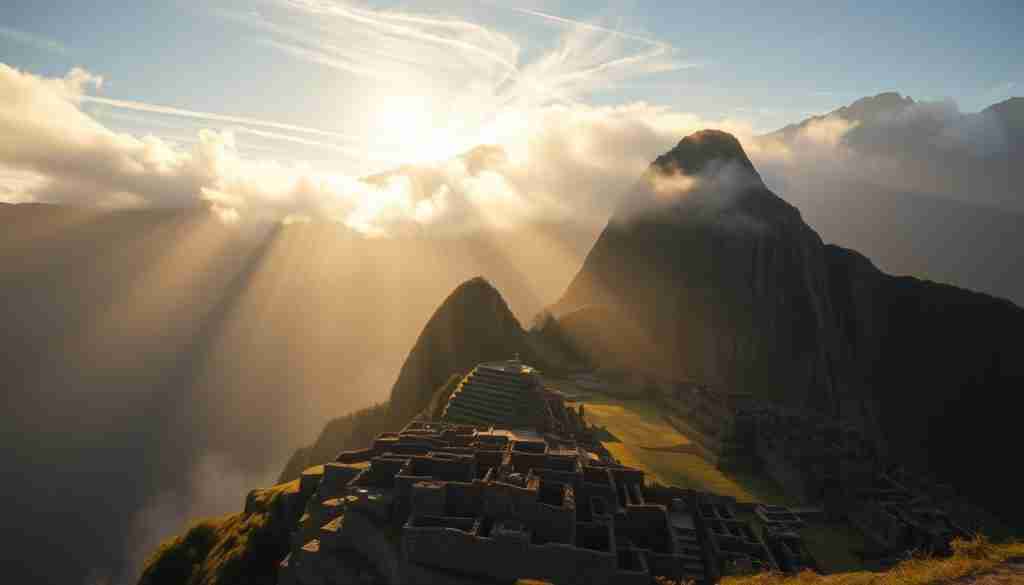
When the sun first touches the mountains, the ancient stones glow with a golden luminescence. The morning light slowly shows off the terraces’ fine details. These are often hidden during other times.
- First bus to Machu Picchu departs at 5:30 AM
- Earliest entry time is 6:00 AM
- Best months for sunrise visits: Late April to September
Visitors who come early will find many benefits:
| Sunrise Experience Benefits | Details |
|---|---|
| Crowd Levels | Significantly fewer tourists compared to midday |
| Photography Conditions | Soft, dramatic lighting ideal for capturing stunning images |
| Temperature | Cooler, more comfortable exploring conditions |
Seeing the sun rise over Machu Picchu is unforgettable. Huayna Picchu mountain stands out against the dawn, making it a moment of pure magic. It’s a memory that stays with travelers forever.
A sunrise at Machu Picchu is not just a view—it’s a spiritual journey through time and light.
Navigating Morning Crowds and Entry Times
Seeing Machu Picchu at sunrise needs careful planning. The magical morning moments require understanding entry times and how to get there.
Early Morning Bus Schedule
For those facing morning crowds, knowing the bus schedule from Aguas Calientes is key. Buses start at 5:30 AM, taking 20-25 minutes to reach the site. Here are important details to remember:
- First bus departure: 5:30 AM
- Average bus fare: $12 per trip
- Travel time to site: 20-25 minutes
Queue Management Tips
Getting into Machu Picchu early needs planning. Pro tip: Get to the bus station 90 minutes before you want to enter. Here are some tips:
- Purchase tickets weeks in advance
- Stay in Aguas Calientes the night before
- Have your passport and ticket ready
Best Entry Points for Sunrise Views
Choosing the right spot is crucial for sunrise views. The Sun Gate and Guardhouse offer stunning views. Circuits 1 and 2 are great for exploring in 2-3 hours.
“The early morning light transforms Machu Picchu into a mystical landscape of shadows and brilliance.” – Peruvian Travel Experts
Photography Opportunities During Golden Hour

Capturing Machu Picchu during the golden hour is a unique experience. The soft, warm light turns the ancient Incan citadel into a stunning scene. It’s a time when light really brings out the site’s details.
The golden hour at Machu Picchu is special. Sunrise, from 6:00 a.m. to 7:30 a.m., is magical. It lights up the site with a soft, golden glow.
- Recommended camera settings for golden hour photography:
- Use a wide-angle lens (16-35mm) for landscape shots
- Set ISO between 100-400 for optimal image quality
- Choose aperture around f/8 for maximum depth of field
- Utilize spot metering to capture intricate stone details
When taking photos during golden hour, think about your composition. The light and shadow create amazing contrasts. These contrasts really show off the Incan stonework.
| Photography Element | Recommended Technique |
|---|---|
| Lens Choice | Wide-angle (16-35mm) for landscapes |
| Best Shooting Time | 6:00 a.m. – 7:30 a.m. (sunrise) |
| Ideal Season | April to October (dry season) |
Pro tip: While capturing stunning images, remember to also immerse yourself in the awe-inspiring atmosphere of this UNESCO World Heritage site.
“Photography is about capturing souls, not just images” – Unknown Photographer
Machu Picchu: Sunrise or Sunset – Which Offers the Best Experience?
Deciding between sunrise and sunset at Machu Picchu can change your trip. Our experts say sunrise is better for its magic and photos. The morning light shows the ancient Incan city in a stunning way.
Light Quality Comparison
The sunrise at Machu Picchu is perfect for photos. From May to August, the morning light is amazing:
- First sun rays paint the clouds at 5:55 am
- Sunlight progressively illuminates different site sections
- Full site illumination occurs around 7:20 am
Crowd Levels Throughout the Day
Sunrise is great for a quiet Machu Picchu visit. The morning has fewer people, making it peaceful for exploring and photos.
| Time Period | Crowd Density | Viewing Experience |
|---|---|---|
| 5:30 am – 7:00 am | Minimal | Quiet, Serene |
| 7:00 am – 10:00 am | Low to Moderate | Comfortable |
| 10:00 am – 3:00 pm | High | Crowded |
Optimal Viewing Locations
For the best sunrise, check out these spots:
- Sun Gate (Inti Punku) – Offers panoramic sunrise perspectives
- Guardhouse Terrace – Classic postcard view of the citadel
- Huayna Picchu Mountain base – Stunning alternative angle
Our top pick for visiting Machu Picchu is early morning, May to November. The light, few people, and fresh air make it unforgettable.
Weather Considerations and Visibility Factors
Planning a trip to Machu Picchu? Knowing the weather is key. The site’s mountain setting means the weather can change fast. This can make your visit unforgettable.
The visibility at Machu Picchu changes with the seasons. The best time to visit depends on what you want to see. Do you prefer clear skies or mystical clouds?
| Season | Visibility | Temperature Range |
|---|---|---|
| Dry Season (May-November) | High Clarity | 50-75°F (12-24°C) |
| Rainy Season (December-April) | Intermittent Cloud Cover | 46-69°F (8-21°C) |
In the dry season, the views are stunning. About 93% of days are clear. The humidity is low, making it perfect for photos and exploring.
- Rainy season brings morning mists
- Clouds can hide the mountains every 3-4 days
- February is the wettest month, affecting views
Pro tip: Bring layers and waterproof items for Machu Picchu’s changing weather.
Evening Experience at Machu Picchu
As the day ends, Machu Picchu turns into a magical place. The late afternoon is perfect for a special visit. It’s a time when the ancient citadel feels more intimate.
Late Afternoon Light Conditions
The golden hour at Machu Picchu is truly special. It brings out the site’s details with dramatic shadows and light. From 2 PM to 5:30 PM, the light is softer, making the stones glow.
Sunset Viewing Restrictions
Machu Picchu has strict sunset rules. It closes at 5:30 PM, so you can’t see the sunset. This rule affects the circuit system, making planning key for late-afternoon visits.
- Closing time: 5:30 PM
- Last entry: Approximately 4:00 PM
- Recommended arrival time for afternoon tickets: 2:00 PM
Circuit System Impact
The circuit system shapes evening visits. Visitors must follow set paths, limiting spontaneity. These paths help preserve the site and offer a structured visit.
| Time Period | Visitor Experience | Lighting Conditions |
|---|---|---|
| 2:00 PM – 4:00 PM | Peak afternoon visiting hours | Warm, directional light |
| 4:00 PM – 5:30 PM | Reduced crowds, soft lighting | Golden hour photography |
For those wanting fewer crowds, the late afternoon is perfect. It’s an ideal window to see Machu Picchu’s beauty without many tourists.
Strategic Planning for Time-Slot Selection
Planning your visit to Machu Picchu is all about choosing the right time slots and entry tickets. The ancient citadel offers unique experiences based on when you visit.
- Consider buying multiple entry tickets for different days
- Look for various time slots for different lighting conditions
- Plan for the best viewing experiences based on your preferences
Choosing the right time slot is key. Machu Picchu entry tickets are limited, with only 4,500 daily visitors starting January 2024. This makes planning ahead essential.
“Timing is everything when exploring this ancient wonder.”
Here are some strategies for picking the best time slot:
- Book tickets early, even more so during peak season (May to September)
- Go for morning slots for cooler weather and misty views
- Afternoon slots offer softer light and fewer people
Our experts recommend exploring different circuits and time slots. Being flexible in planning your Machu Picchu visit can make your experience unforgettable.
Essential Photography Tips for Both Times
Capturing the magic of Machu Picchu is more than just taking pictures. Our guide will help you make your photos unforgettable.
When planning your Machu Picchu photo spots, consider these critical camera settings for optimal results:
- Use an aperture of f/8 to capture detailed landscapes
- Keep ISO between 100-200 for clean, noise-free images
- Bring a sturdy tripod for low-light conditions
The best camera settings for Machu Picchu depend on the time of day. During sunrise (around 7 AM), use slower shutter speeds to capture soft morning light. For sunset shots between 4-5:30 PM, adjust settings to handle rapidly changing light conditions.
| Time of Day | Recommended Settings | Best Circuit |
|---|---|---|
| Sunrise (6 AM) | f/8, ISO 100, Slow Shutter | Circuit 2A |
| Sunset (2-3 PM) | f/8, ISO 200, Fast Shutter | Circuit 2A |
Pro tip: Don’t limit yourself to a single shot. Create a time-lapse by taking multiple photos from different angles within your allotted time. Remember, rangers guide visitors towards exits before 5:30 PM, so plan your shots well.
Photography is about capturing the soul of a place, not just its surface.
Prepare for variable weather by bringing versatile gear. A wide-angle lens will capture Machu Picchu’s vast landscape. A polarizing filter can enhance sky and stone textures during your photographic journey.
Conclusion
Planning a trip to Machu Picchu needs careful thought. You can choose between sunrise or sunset for a unique view. Your experience depends on what you like, your travel plans, and when you go.
Travel tips say visit from May to September for the best weather. June to August is busy with clear skies but lots of people. Shoulder seasons in April, May, September, or October are quieter.
Planning well is important. Buy tickets early since only 4,500 people can visit daily. Remember to get used to the high altitude in Cusco before you go. Be flexible with your plans and ready for weather changes.
Machu Picchu is truly special, no matter when you visit. It offers a journey through history, nature, and human achievement. Your adventure is waiting among Peru’s misty mountains.
