3 Days in New Orleans: Complete Itinerary 2026
New Orleans offers a perfect three-day escape blending vibrant French Quarter culture, legendary cuisine, and distinctive Southern charm. This comprehensive itinerary guides first-time visitors through the city’s essential experiences while providing practical budget planning, insider tips, and flexible day-by-day schedules that maximize your time in America’s most unique cultural destination.
Key Takeaways for Your 3-Day New Orleans Trip 2026
- Budget Planning 2026: Budget travelers spend $125-195 per person daily, mid-range visitors $225-355, and luxury travelers $450-715. Three-day totals range from $375-585 (budget), $675-1,065 (mid-range), to $1,350-2,145 (luxury), all assuming two people sharing accommodation.
- Best Base Location 2026: The French Quarter provides walkable access to 80 percent of major attractions, iconic restaurants, live music venues, and the historic riverfront. Bourbon Street hotels place you in the center of nightlife, while Royal Street and Chartres Street properties offer quieter alternatives with equal proximity to Jackson Square and Café du Monde.
- Essential Transportation 2026: Purchase a 3-day Jazzy Pass for $9 covering unlimited streetcar and bus rides. The St. Charles streetcar connects the French Quarter to the Garden District and Uptown mansions, while the Canal Street line reaches City Park and the New Orleans Museum of Art.
- Must-Experience Activities 2026: Jackson Square and St. Louis Cathedral anchor Day 1 French Quarter exploration. Day 2 combines Garden District architecture via streetcar with evening live music on Frenchmen Street. Day 3 ventures to swamp tours, plantation visits, or City Park depending on your interests, with final evening dining in the Warehouse District.
- Culinary Priorities 2026: Reserve one breakfast at Café du Monde for beignets, schedule at least two traditional Creole restaurant dinners (gumbo, jambalaya, étouffée), sample po-boys from neighborhood shops, and allocate budget for one upscale dining experience at establishments like Commander’s Palace or Brennan’s.
- Money-Saving Strategies 2026: Visit free attractions including the Historic New Orleans Collection, Louis Armstrong Park, and French Market. Walk the French Quarter grid rather than taking taxis. Book accommodations outside peak Mardi Gras and Jazz Fest periods (February-May) when hotel rates drop 40-50 percent. Purchase Jazzy Pass rather than individual streetcar rides.
People Also Ask About New Orleans 2026
How Much Does a 3-Day Trip to New Orleans Cost in 2026?
Three days in New Orleans costs $375-585 per person for budget travelers, $675-1,065 for mid-range comfort, and $1,350-2,145 for luxury experiences, all assuming two people sharing accommodation. Budget travelers stay in French Quarter guesthouses at $120-180 per night (split between two), eat po-boys and casual Creole meals totaling $45-75 daily, use the $9 three-day Jazzy Pass for unlimited streetcar access, and prioritize free museums and self-guided walking tours. Mid-range visitors book boutique hotels at $200-300 nightly, dine at established restaurants with meals totaling $80-130 per person daily, combine streetcars with occasional rideshare services, and enjoy paid attractions like the National WWII Museum and guided walking tours. Luxury travelers select historic hotels like Hotel Monteleone at $400-600 per night, reserve tables at acclaimed restaurants spending $145-240 daily per person, utilize private transportation, and book premium experiences including swamp boat tours, plantation visits with private guides, and VIP jazz club access.
What’s the Best Time to Visit New Orleans in 2026?
September through November 2026 offers the best value combination of pleasant weather, lower hotel rates, and authentic local atmosphere. Fall temperatures range 70-85 degrees with reduced humidity compared to summer months, while hotel prices drop 40-50 percent below peak Mardi Gras and Jazz Fest rates. October features Halloween festivities and the Voodoo Music + Arts Experience without overwhelming crowds. February through April brings peak pricing as Mardi Gras (March 4, 2026) and Jazz Fest (late April) draw massive crowds, with French Quarter hotel rates reaching $400-800 per night and advance reservations required months ahead. Summer (June-August) delivers oppressive heat and humidity exceeding 90 degrees with afternoon thunderstorms, though hotel bargains emerge for heat-tolerant travelers willing to navigate intense weather between air-conditioned venues.
Is 3 Days Enough Time in New Orleans?
Three days provides sufficient time to experience New Orleans’ essential character, core attractions, and distinctive culture for first-time visitors following a focused itinerary. Day 1 covers French Quarter exploration including Jackson Square, St. Louis Cathedral, Royal Street galleries, and evening Bourbon Street nightlife. Day 2 expands to Garden District mansion viewing via St. Charles streetcar, Magazine Street shopping, and Frenchmen Street live jazz venues. Day 3 accommodates one major excursion (swamp tour, plantation visit, or City Park) plus final French Quarter dining and souvenir shopping. This three-day framework captures the city’s French-Spanish colonial architecture, Creole cuisine fundamentals, live music diversity, and Mississippi River heritage without feeling rushed. However, serious food enthusiasts, jazz aficionados, and history buffs discover that five to seven days allow deeper neighborhood exploration, multiple plantation comparisons, comprehensive museum visits, and opportunities to attend cooking demonstrations, ghost tours, cemetery walks, and extended swamp expeditions.
Where Should I Stay in New Orleans for 3 Days in 2026?
The French Quarter provides the optimal base for a three-day visit, placing you within walking distance of Jackson Square, Bourbon Street, Frenchmen Street, and the riverfront while offering diverse accommodation options from $120 budget guesthouses to $500 luxury boutique hotels. Royal Street and Chartres Street hotels deliver quieter environments one block from Bourbon Street chaos while maintaining easy access to Café du Monde, the French Market, and evening jazz clubs. Budget travelers ($60-90 per person nightly, two sharing) find French Market Inn and similar properties offering clean rooms, courtyard pools, and free WiFi without resort fees. Mid-range visitors ($100-150 per person, two sharing) select historic properties like Place d’Armes Hotel or Bourbon Orleans Hotel combining period architecture with modern amenities, balconies overlooking courtyards, and complimentary breakfast. Luxury travelers ($200-300 per person, two sharing) reserve suites at Hotel Monteleone (operating its iconic rotating Carousel Bar since 1949) or The Roosevelt providing full-service spas, rooftop pools, renowned restaurants, and valet parking. The nearby Warehouse District offers contemporary alternatives 10 minutes from the French Quarter with lower rates, while the Garden District requires streetcar commutes but provides mansion-viewing opportunities from your accommodations.
Extended multi-day tours – 5+ days
Featured New Orleans Multi-Day Tour Packages
9 days
From Jazz to Country: America's Deep South
- ✓ Comprehensive New Orleans tour
- ✓ Expert local guides included
- ✓ All accommodation arranged
- ✓ Transportation provided
15 days
New Orleans and Surrounding Cities
- ✓ Booking needs min. 2 travelers

8 days
America's Music Cities Holiday featuring New Orleans, Memphis & Nashville (New Orleans, LA to Nashville, TN, 2026)
- ✓ Comprehensive New Orleans tour
- ✓ Expert local guides included
- ✓ All accommodation arranged
- ✓ Transportation provided

8 days
Sounds of the South New Orleans to Atlanta – 8 days
- ✓ Comprehensive New Orleans tour
- ✓ Expert local guides included
- ✓ All accommodation arranged
- ✓ Transportation provided
Multi-day tour packages powered by TourRadar. Prices and availability subject to change.
Introduction: Planning Your Perfect 3-Day New Orleans Experience in 2026
New Orleans stands alone among American cities—a vibrant collision of French, Spanish, African, and Caribbean cultures producing architecture, cuisine, music, and traditions found nowhere else in the United States. Three days allows first-time visitors to capture the essence of this 308-year-old port city while experiencing its legendary food, world-class jazz, historic French Quarter, antebellum mansions, and surrounding bayous.
The French Quarter forms the heart of most three-day itineraries. This 13-block-by-7-block National Historic Landmark preserves Spanish colonial architecture from the late 1700s featuring cast-iron balconies, hidden courtyards, and gas streetlamps unchanged for two centuries. Jackson Square anchors the riverfront district, flanked by St. Louis Cathedral (America’s oldest continuously active cathedral), the Cabildo and Presbytere museums, and artist-filled pedestrian zones. Royal Street parallels Bourbon Street one block inland, offering antique shops, art galleries, and street performers without the raucous bar scene. The French Market stretches six blocks from Café du Monde to the Farmers Market, providing produce, crafts, and local food vendors operating since 1791.
Beyond the Quarter, the St. Charles Avenue streetcar carries riders 6 miles through the Garden District and Uptown neighborhoods, passing mansions built between 1840-1900 by cotton and sugar barons. Magazine Street runs parallel for 6 miles offering 140+ independent shops, restaurants, and galleries in converted 19th-century storefronts. City Park spans 1,300 acres featuring centuries-old live oak trees, the New Orleans Museum of Art, and the Sydney and Walda Besthoff Sculpture Garden with 90 modern sculptures displayed throughout 11 acres.
New Orleans cuisine represents its own reason to visit. Creole cooking—refined French techniques applied to local ingredients including Gulf seafood, Creole tomatoes, and Louisiana spices—produced signature dishes found throughout the city. Gumbo combines okra-thickened stew with chicken, sausage, or seafood served over rice. Jambalaya delivers Spanish-influenced rice dishes with meat and vegetables. Étouffée smothers shellfish in thick sauce. Red beans and rice appear on Monday menus citywide, a tradition dating to washday when women cooked slow-simmering beans requiring minimal attention. Po-boys stuff French bread with fried seafood, roast beef, or other fillings, while muffulettas layer Italian meats and olive salad on round sesame bread. Beignets—square French doughnuts buried in powdered sugar—require pilgrimage to Café du Monde operating 24 hours daily since 1862.
Live music permeates New Orleans more than any American city. Jazz was born here around 1900 when African American musicians blended blues, ragtime, and brass band traditions. Today, Preservation Hall maintains traditional jazz in an intimate French Quarter venue. Frenchmen Street concentrates modern jazz clubs, funk bands, and brass ensembles in a three-block stretch east of the Quarter. Bourbon Street delivers cover bands and party atmosphere in massive venues. Street performers occupy Jackson Square, Royal Street, and Frenchmen Street corners throughout daylight hours.
This three-day itinerary balances iconic experiences with neighborhood exploration, structured touring with flexible wandering, and budgeted planning with spontaneous discovery. Day 1 establishes your French Quarter foundation, Day 2 expands to surrounding neighborhoods and live music venues, and Day 3 ventures outside the city to swamps, plantations, or extensive green spaces before concluding with final French Quarter dining. Budget breakdowns account for accommodation sharing, meal diversity, transportation efficiency, and attraction priorities appropriate for first-time visitors seeking authentic New Orleans culture without tourist-trap expenses.
Understanding New Orleans Costs and Budget Planning for 2026
Three days in New Orleans delivers exceptional cultural experiences at costs ranging from budget-friendly to luxury depending on accommodation choices, dining preferences, and activity selections. This section provides detailed budget tier breakdowns with specific costs enabling accurate trip planning for 2026.
Budget Traveler Daily Costs 2026 ($125-195 Per Person)
Budget-conscious visitors experience authentic New Orleans culture while minimizing expenses through strategic accommodation selection, casual dining emphasis, public transportation reliance, and free attraction prioritization. Daily costs per person assuming two sharing accommodation range $125-195 with the following breakdown.
Accommodation forms the largest expense at $60-90 per person nightly when splitting double-occupancy rooms. French Quarter budget properties including French Market Inn, HI New Orleans hostel, and India House Hostel provide clean rooms with basic amenities from $120-180 per night total. These properties typically feature courtyard pools, free WiFi, and locations within 3-8 blocks of Jackson Square, though rooms may be compact without balconies or premium bedding. Guesthouses along Esplanade Avenue bordering the French Quarter offer similar rates with more character in converted 19th-century buildings.
Meals cost $45-75 daily through emphasis on local casual restaurants rather than tourist-oriented establishments. Breakfast at neighborhood cafes like The Ruby Slipper or Petite Amelie runs $10-15 for eggs, grits, and coffee. Lunch po-boys from Johnny’s, Parkway Bakery, or Domilise’s cost $13-20 for overstuffed sandwiches with chips. Dinner at casual Creole restaurants like Coop’s Place, Port of Call, or Neyow’s delivers gumbo, jambalaya, or red beans and rice for $20-35 including beverages. A morning beignet stop at Café du Monde adds $8-10. Street food from French Market vendors supplements main meals economically.
Transportation via the 3-day Jazzy Pass costs just $9 total, providing unlimited streetcar and bus access throughout your visit. This pass eliminates per-ride costs while encouraging neighborhood exploration beyond walking distance. The French Quarter itself requires no transportation budget given its 0.5-square-mile walkable grid.
Attraction costs remain minimal at $15-25 daily by prioritizing New Orleans’ exceptional free offerings. The Historic New Orleans Collection provides comprehensive city history through multiple galleries without admission charge. Louis Armstrong Park, the French Market, and riverfront walking paths cost nothing. Jackson Square street performers entertain for tips. Self-guided architectural walks through the French Quarter and Garden District require only curiosity. One paid attraction daily—perhaps the National WWII Museum at $32 or a Cemetery No. 1 tour at $25—adds educational depth without budget strain.
Mid-Range Traveler Daily Costs 2026 ($225-355 Per Person)
Mid-range visitors balance comfort and experience through boutique hotel selection, established restaurant dining, mixed transportation options, and comprehensive attraction access. Daily per-person costs assuming two sharing rooms range $225-355 representing the majority of New Orleans visitors.
Accommodation at $100-150 per person nightly (from $200-300 total per room) secures boutique properties throughout the French Quarter and nearby districts. Place d’Armes Hotel, Bourbon Orleans Hotel, and Hotel Provincial offer period architecture with modern renovations, balconies overlooking courtyards or streets, complimentary breakfast, and pool access. Rooms feature upgraded bedding, historically appropriate decor, and locations within 2-5 blocks of Jackson Square. Many properties occupy former 19th-century townhouses or converted commercial buildings providing authentic French Quarter character.
Meals total $80-130 daily emphasizing established restaurants with local reputations. Breakfast at Court of Two Sisters or Brennan’s runs $15-25 for jazz brunch or eggs Sardou. Lunch at Acme Oyster House, Central Grocery (muffuletta), or K-Paul’s costs $25-40 for signature dishes. Dinner reservations at mid-tier establishments like Tableau, Sylvain, or Toup’s Meatery deliver $40-65 meals including appetizers, entrees, and cocktails. This budget accommodates one upscale dining experience at restaurants like Commander’s Palace or Arnaud’s where prix fixe dinners reach $75-95 per person.
Transportation combines the $9 Jazzy Pass with occasional rideshare services totaling $13-23 daily. While streetcars serve most destinations, rideshares provide evening convenience returning from Frenchmen Street to French Quarter hotels ($12-18) or reaching remote restaurants in Mid-City or Uptown ($15-25 each way).
Attractions at $30-50 daily enable comprehensive museum visits, guided tours, and unique experiences. The National WWII Museum costs $32 including the Beyond All Boundaries 4D film. Guided walking tours (French Quarter history, ghost tours, cemetery tours) range $25-35. Swamp boat tours with transportation reach $65-85. Jazz club cover charges on Frenchmen Street add $10-20 per venue. This budget supports 2-3 paid activities daily beyond free attractions.
Luxury Traveler Daily Costs 2026 ($450-715 Per Person)
Luxury visitors prioritize historic flagship hotels, acclaimed restaurant reservations, private transportation, and premium experiences showcasing New Orleans at its finest. Daily costs per person with two sharing rooms range $450-715 for three days of exceptional service and unforgettable experiences.
Accommodation commands $200-300 per person nightly (from $400-600 total per room) at legendary properties including Hotel Monteleone (operating since 1886), The Roosevelt Waldorf Astoria, The Ritz-Carlton, and Windsor Court Hotel. These establishments provide 24-hour concierge service, full-service spas, rooftop pools, renowned on-site restaurants, valet parking, and premium suite options. Rooms feature luxury bedding, marble bathrooms, balconies with city or river views, and historical significance—Hotel Monteleone’s Carousel Bar rotates slowly while mixing classic cocktails, while The Roosevelt occupies a 1893 Beaux-Arts masterpiece hosting presidents and celebrities.
Meals reach $145-240 daily through acclaimed restaurant selection and wine pairings. Breakfast at hotel restaurants or Antoine’s runs $25-40. Lunch at upscale casual venues like Cochon or Emeril’s costs $45-75 including appetizers and cocktails. Dinner reservations at destination restaurants—Commander’s Palace, Galatoire’s, Restaurant August, or Brennan’s—deliver $75-125 per person for multi-course meals with wine. Afternoon cocktails at historic bars like Sazerac Bar or the French 75 Bar add $15-25 per round.
Transportation via private car service or premium rideshare eliminates streetcar dependency at $30-50 daily. Black car services provide airport transfers ($75-95 each way), point-to-point French Quarter to Garden District runs ($25-35), and evening transportation to Frenchmen Street or Uptown destinations ($20-40 per trip). Valet parking at hotels and restaurants supplements transportation costs.
Premium experiences and VIP access cost $75-125 daily. Private swamp tour guides deliver personalized wildlife education beyond group boat experiences ($150-200 per couple). VIP jazz club seating guarantees optimal sightlines with dedicated service ($40-60 per person). Plantation tours with private guides and champagne receptions reach $125-175. Cooking classes at the New Orleans School of Cooking or Langlois Culinary Crossroads provide hands-on instruction for $100-150 per person.
Day 1 French Quarter Immersion and Bourbon Street Introduction 2026
Your first day establishes New Orleans fundamentals through comprehensive French Quarter exploration, iconic culinary experiences, and evening Bourbon Street immersion. This itinerary prioritizes walkability, allowing jet lag recovery while covering essential attractions within a compact historic district.
Morning: Jackson Square, St. Louis Cathedral, and Beignets (8:00 AM – 12:00 PM)
Begin at Café du Monde by 8:00 AM to avoid peak crowds at New Orleans’ most famous breakfast destination. Order beignets ($8 for three sugar-covered squares) and café au lait ($4) at the counter, secure a table under the green-and-white striped awning, and watch Mississippi River barge traffic while powdered sugar blankets your clothing. Café du Monde operates 24 hours daily except Christmas, serving only beignets, coffee, and juice since 1862. The outdoor seating provides optimal people-watching as joggers, workers, and early tourists populate the French Market.
Walk one block to Jackson Square by 9:00 AM when street artists begin setting up portrait easels and caricature stations along the iron fence surrounding this National Historic Landmark. The square honors Andrew Jackson’s 1815 Battle of New Orleans victory, commemorated in the central equestrian statue where Jackson perpetually tips his hat. St. Louis Cathedral dominates the square’s upriver side—America’s oldest continuously active Roman Catholic cathedral, rebuilt in 1850 after earlier structures dating to 1727. Free admission allows interior viewing of altar paintings, stained glass, and baroque architectural details. Arrive before 10:00 AM to photograph the cathedral’s triple spires without crowd obstruction.
The Cabildo and Presbytere museums flank the cathedral, housing Louisiana State Museum collections. The Cabildo (left side) presents Louisiana history from Native American periods through Reconstruction, displayed in the building where the Louisiana Purchase transfer occurred in 1803. The Presbytere (right side) explores Mardi Gras traditions and Hurricane Katrina impacts through artifacts, costumes, and multimedia exhibits. General admission costs $8 per building ($15 combination ticket), though you can skip these if budget-conscious given upcoming museum opportunities. Both buildings showcase Spanish colonial architecture with arcaded galleries overlooking Jackson Square.
Royal Street begins at Jackson Square’s downriver corner, providing New Orleans’ premier antique and art gallery corridor. Walk Royal Street from Jackson Square toward Esplanade Avenue through six blocks of 19th-century commercial buildings converted to galleries showcasing Louisiana artists, furniture dating to colonial periods, rare books, estate jewelry, and Civil War memorabilia. Most galleries welcome browsers without pressure, and many buildings feature courtyards visible through open carriageways. Street performers position themselves every 2-3 blocks—saxophone players, jazz trios, tap dancers, living statues—creating musical soundtrack to your browsing. No admission fees apply to Royal Street galleries, making this essential free entertainment.
Afternoon: French Quarter Architecture and Historic New Orleans Collection (12:00 PM – 5:00 PM)
Lunch at 12:30 PM requires choosing between casual po-boy shops and sit-down Creole restaurants. Johnny’s Po-Boys on St. Louis Street delivers authentic sandwiches ($13-18) stuffed with fried shrimp, oysters, or roast beef debris in converted corner grocery settings. Central Grocery on Decatur Street created the muffuletta—a 10-inch round sandwich layering Genoa salami, ham, mortadella, Swiss, provolone, and olive salad ($18-20)—in 1906, and their version remains definitive. For seated Creole lunch, Gumbo Shop on St. Peter Street serves gumbo ($9-12), jambalaya ($16-20), and red beans with sausage ($14-18) in a 1795 building with courtyard dining.
The Historic New Orleans Collection at 520 Royal Street provides the French Quarter’s best free museum experience. Three floors of changing exhibitions explore New Orleans history, Louisiana cultural traditions, and Gulf South heritage through artifacts, manuscripts, and artwork. Recent exhibitions have featured Storyville photography, Mardi Gras costume evolution, and Mississippi River flood management. Plan 60-90 minutes for comprehensive viewing. Guided tours of the adjacent Williams Residence ($10) showcase how wealthy 19th-century French Quarter residents lived, though the free galleries alone deliver substantial educational value. The museum shop offers quality books on New Orleans history, architecture, and culture.
Self-guided architectural walking continues through the French Quarter’s residential blocks between Royal and Bourbon Streets. Key architectural elements to observe include Spanish colonial influence despite the name “French” Quarter—most buildings date to Spanish period rebuilding after devastating 1788 and 1794 fires destroyed French colonial structures. Cast-iron balconies manufactured in the 1850s-1860s feature ornate patterns with botanical and geometric motifs. Carriageways (narrow passages between buildings) lead to hidden courtyards providing cool retreats in summer heat. Creole townhouses stack commercial ground floors below residential upper stories accessed by external staircases.
Notable architectural examples cluster near the 700 block of Royal Street. The Cornstalk Hotel at 915 Royal Street displays the Quarter’s most photographed iron fence depicting cornstalks, morning glories, and other vegetation painted in natural colors. Lafitte’s Blacksmith Shop at 941 Bourbon Street preserves an 18th-century structure (possibly 1722) with thick brick walls and timber framing, now operating as a dimly-lit bar. The Court of Two Sisters at 613 Royal Street showcases a 19th-century courtyard restaurant beneath a 1832 building.
Afternoon refreshment around 3:00 PM calls for frozen café au lait at Café Beignet (multiple locations) or Pimm’s Cup (gin-based citrus cocktail) at Napoleon House, a crumbling baroque building at 500 Chartres Street that refused Napoleon’s 1821 rescue plan. Both venues provide air conditioning relief during warm afternoons.
Evening: Bourbon Street Experience and French Quarter Dining (5:00 PM – 11:00 PM)
Early dinner at 5:30 PM positions you ahead of peak 7:00-9:00 PM rush at popular restaurants. For traditional Creole dining, consider these established venues. Brennan’s at 417 Royal Street (reopened 2014 after renovations) delivers refined Creole cuisine including signature dishes like eggs Hussarde and bananas Foster in elegant pink building with courtyard seating—expect $50-75 per person for dinner. Court of Two Sisters at 613 Royal Street offers daily jazz brunch and dinner buffets ($45-55 per person) featuring 80+ Creole dishes in romantic courtyard setting beneath 200-year-old wisteria. Muriel’s Jackson Square at 801 Chartres Street combines ghost stories (the building’s haunted reputation) with upscale Creole dishes ($35-55 entrees) in a 1718 building overlooking Jackson Square.
Budget diners should target Coop’s Place at 1109 Decatur Street—a locals’ favorite dive bar serving massive portions of jambalaya ($15), red beans ($14), and fried chicken ($16) in no-frills environment with strong drinks and zero pretension. Alternatively, Felix’s Restaurant & Oyster Bar at 739 Iberville Street delivers raw oysters ($14-18 per dozen), seafood platters ($22-32), and po-boys ($14-18) in casual setting competing with neighboring Acme Oyster House.
Bourbon Street exploration begins around 8:00 PM when the street reaches full energy but before overwhelming midnight crowds. Bourbon Street spans 13 blocks from Canal Street to Esplanade Avenue, though the core entertainment district concentrates between Canal and St. Ann Streets (roughly 8 blocks). The street operates as pedestrian-only in evenings, and New Orleans law permits carrying alcoholic beverages in plastic “go-cups” throughout the Quarter.
Bourbon Street delivers drastically different experiences depending on your bar selection. Massive venues like Cat’s Meow karaoke bar, Tropical Isle (home of the potent Hand Grenade drink), and The Beach present spring-break party atmosphere with dance floors, loud music, and minimal cover charges. Jazz clubs like Maison Bourbon and Fritzel’s European Jazz Pub maintain traditional New Orleans music in smaller spaces with $5-10 cover charges. Gay bars concentrate on the lower Bourbon Street blocks toward Esplanade Avenue, including Oz and the Bourbon Pub complex.
Pat O’Brien’s at 718 St. Peter Street (technically one block off Bourbon) created the Hurricane cocktail in the 1940s, and visiting the bar’s dueling piano room and tropical courtyard represents a New Orleans rite of passage despite tourist-heavy crowds. Cover charges vary by night ($10-15 typical) but include one Hurricane in a souvenir glass. The courtyard features a flaming fountain and live music creating more pleasant atmosphere than the cramped piano bar.
Alternative evening options include Preservation Hall at 726 St. Peter Street, where traditional jazz performs in intimate 1803 building without air conditioning, amplification, or bar service. Shows run one hour with three sets nightly (doors at 5:00, 6:00, 8:00, 9:00, and 10:00 PM), and tickets ($25-45 depending on seating) sell out days ahead during peak season—reserve through their website. The venue holds 100 people standing or on bench seating, creating authentic speakeasy atmosphere that contrasts sharply with Bourbon Street commercialism.
Conclude your first evening with a French Quarter nightcap before midnight. The Carousel Bar at Hotel Monteleone (214 Royal Street) rotates slowly while serving classic cocktails ($15-20) in circus-themed setting that’s operated since 1949. Lafitte’s Blacksmith Shop Bar (941 Bourbon Street) provides candlelit ambiance in the Quarter’s oldest structure, serving cheap drinks ($6-10) to neighborhood regulars and tourists in equal measure. The Napoleon House (500 Chartres Street) offers classical music, Pimm’s Cups, and crumbling elegance closing at midnight.
Day 1 Sample Budget Breakdown
Budget traveler: Café du Monde breakfast $12, Johnny’s po-boy lunch $16, Coop’s Place dinner $28, streetcar rides $3 (or use Jazzy Pass), Bourbon Street drinks $18. Total approximately $77 per person plus accommodation ($60-90 per person, two sharing).
Mid-range traveler: Café du Monde breakfast $12, Central Grocery muffuletta $20, Brennan’s dinner $65, Historic New Orleans Collection tour $10, Pat O’Brien’s Hurricane experience $15. Total approximately $122 per person plus accommodation ($100-150 per person, two sharing).
Luxury traveler: Hotel breakfast $35, Commander’s Palace lunch $75, Restaurant August dinner $125, private French Quarter walking tour $150, premium cocktails at Carousel Bar $40. Total approximately $425 per person plus accommodation ($200-300 per person, two sharing).
Day 2 Garden District, Magazine Street, and Frenchmen Street Jazz 2026
Day 2 expands beyond the French Quarter to explore antebellum mansions, local shopping districts, and authentic jazz venues favored by locals and musicians. This itinerary balances structured touring with flexible browsing while introducing New Orleans neighborhoods beyond tourist concentrations.
Morning: St. Charles Streetcar and Garden District Mansions (8:00 AM – 12:00 PM)
Breakfast at your hotel or a neighborhood cafe by 8:00 AM prepares you for active morning exploration. The Ruby Slipper Cafe (multiple locations including one at 200 Magazine Street) delivers contemporary Southern breakfast including shrimp and grits ($16), pain perdu (French toast) with bananas foster sauce ($14), and various egg dishes ($12-18) in casual bright setting. Alternatively, Surrey’s Juice Bar near Magazine Street serves healthy options and hangover remedies ($10-15) popular with locals.
Board the St. Charles streetcar at Canal Street by 9:30 AM, riding the dark green historic car through 6 miles of New Orleans’ most beautiful neighborhoods. Purchase your Jazzy Pass if you haven’t already, or pay $1.25 per ride in exact change. The streetcar operates in vintage Perley Thomas cars built in the 1920s, featuring wooden seats, open windows, and nostalgic brass fittings. Rides take approximately 40 minutes from Canal Street to the Carrollton terminus, though you’ll disembark earlier in the Garden District.
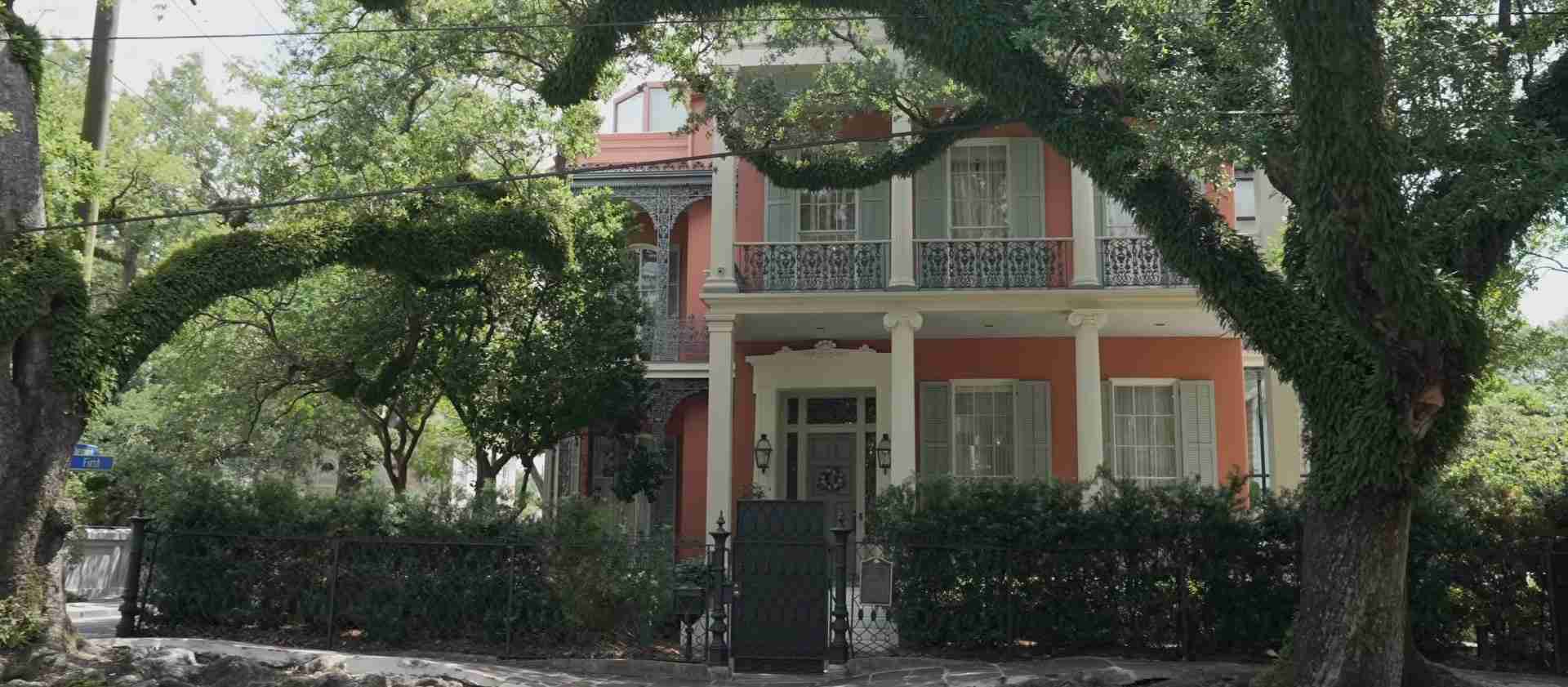
Exit at Washington Avenue (approximately 20 minutes from Canal Street) to begin Garden District exploration. This neighborhood developed during the 1840s-1850s when wealthy American businessmen purchased former sugar plantations upriver from the French Quarter, building grand mansions in Greek Revival, Italianate, and Second Empire styles contrasting with French Quarter’s Spanish colonial architecture. The district occupies roughly 24 blocks bounded by Magazine Street, Louisiana Avenue, St. Charles Avenue, and Jackson Avenue.
Self-guided walking tours follow several excellent routes. Begin at Washington Avenue and Prytania Street, walking toward First Street to view the Brevard-Mahat-Rice House at 1239 First Street—an 1857 raised Greek Revival mansion painted periwinkle blue and featured in Anne Rice’s Witching Hour novel. The house remains privately owned but its exterior exemplifies Garden District grandeur. Continue to Colonel Short’s Villa at 1448 Fourth Street, famous for its cornstalk fence nearly identical to the one on Royal Street in the French Quarter. Commander’s Palace restaurant occupies the corner of Washington Avenue and Coliseum Street in a Victorian mansion painted robin’s egg blue with white trim.
Lafayette Cemetery No. 1 at 1400 Washington Avenue offers the Garden District’s most atmospheric stop. This above-ground cemetery dating to 1833 contains 1,100 family tombs arranged in rows like a miniature city of the dead. New Orleans’ high water table prevents traditional below-ground burials, leading to these elaborate tomb structures where multiple family members rest in oven-like crypts stacked several high. Walk the cemetery’s paths observing architectural styles ranging from simple brick structures to ornate marble monuments with wrought-iron decorations. The cemetery inspired numerous vampire and ghost stories given its Gothic atmosphere and crumbling tombs overgrown with vines. Free admission allows independent exploration, though guided tours ($25) provide historical context and family stories behind notable tombs.
Afternoon: Magazine Street Shopping and City Park Option (12:00 PM – 5:00 PM)
Magazine Street runs parallel to St. Charles Avenue for 6 miles from the French Quarter through the Garden District and Uptown, lined with 140+ independent shops, restaurants, galleries, and cafes occupying converted 19th-century storefronts. The street rewards browsing with vintage clothing boutiques, antique stores, used bookshops, art galleries, and home decor stores. Key shopping districts cluster around the 1900 block (Lower Garden District), 3000 block (Garden District proper), and 4300 block (Uptown), connected by the Magazine Street bus if distances exceed walking tolerance.
Lunch on Magazine Street offers diverse options beyond French Quarter tourist pricing. Parasol’s Restaurant at 2533 Constance Street (one block off Magazine) delivers legendary roast beef po-boys ($14-17) in neighborhood bar atmosphere. Dat Dog at 5030 Freret Street serves gourmet hot dogs ($8-12) with creative toppings. Mahony’s Po-Boy Shop at 3454 Magazine Street provides upscale po-boy variations ($15-20) including blackened alligator and crawfish étouffée versions. For sit-down casual, Avo at 5908 Magazine Street features avocado-centric dishes ($14-22) in bright contemporary space.
Alternative afternoon plans include City Park exploration via Canal Street streetcar from your Garden District location. This 1,300-acre park contains centuries-old live oak trees, the New Orleans Museum of Art, and Sydney and Walda Besthoff Sculpture Garden. The sculpture garden displays 90 modern and contemporary sculptures throughout 11 acres of landscaped grounds surrounding lagoons—admission remains free, making this exceptional value. The New Orleans Museum of Art houses 40,000 objects spanning 5,000 years including significant French, American, African, and Japanese collections. General admission costs $15 (free Thursday 10:00 AM-noon for Louisiana residents, though tourists pay standard rate). Plan 2-3 hours for museum and sculpture garden combination.
Return to the French Quarter by 4:00 PM via St. Charles streetcar, allowing hotel rest before evening activities. Many New Orleans visitors find mid-afternoon breaks essential during warm weather, using this time for pool relaxation, room cooling, or power naps before late-night music venues.
Evening: Frenchmen Street Jazz Clubs and Local Music Scene (6:00 PM – 12:00 AM)
Frenchmen Street delivers New Orleans’ most authentic contemporary music scene three blocks downriver from the French Quarter in the Faubourg Marigny neighborhood. While Bourbon Street caters to tourists with cover bands and party atmosphere, Frenchmen Street attracts locals and musicians to intimate venues featuring jazz, funk, brass bands, and blues. The three-block stretch from Decatur Street to Chartres Street contains a dozen clubs operating nightly with music starting around 8:00-9:00 PM.
Arrive by 6:30 PM for early dinner at restaurants near Frenchmen Street. The Praline Connection at 542 Frenchmen Street serves soul food and Creole classics including fried chicken ($18), smothered pork chops ($20), and bread pudding ($8) in casual atmosphere. Adolfo’s at 611 Frenchmen Street (upstairs from The Spotted Cat) delivers Italian-Creole fusion including signature duck pasta ($24) and veal dishes ($26-32) in tiny dining room requiring advance phone reservations. Three Muses at 536 Frenchmen Street combines small plates ($12-18), craft cocktails, and nightly live music without cover charge, serving until late.
The Spotted Cat Music Club at 623 Frenchmen Street represents Frenchmen Street’s essence—no cover charge, cash-only bar, cramped floor space packed with dancers, and rotating bands playing jazz, blues, and swing from 4:00 PM until 2:00 AM. Arrive by 8:30 PM to secure standing room near the small stage, or embrace the scene from the crowded bar. Drinks run $6-10, and musicians appreciate tips in the jar near the stage.
Snug Harbor Jazz Bistro at 626 Frenchmen Street provides more formal jazz club experience with table seating, full restaurant service, and two nightly performances (8:00 PM and 10:00 PM typically). Cover charges range $15-35 depending on the headliner, with reservations recommended for popular acts. The venue presents established jazz artists in a traditional club setting contrasting with Frenchmen Street’s party atmosphere outside.
D.B.A. at 618 Frenchmen Street occupies the middle ground between The Spotted Cat’s casual energy and Snug Harbor’s formal presentations. The venue features funk bands, brass ensembles, and modern jazz with cover charges $5-15, full bar, and small stage visible throughout the room. Music runs late (until 1:00-2:00 AM), and the venue attracts diverse crowds mixing tourists and locals.
Blue Nile at 532 Frenchmen Street books reggae, world music, and funk alongside traditional jazz, offering second-floor balcony overlooking the street where you can rest between sets. Cover charges rarely exceed $10, and the relaxed atmosphere welcomes conversation alongside music appreciation.
Street performers position themselves on Frenchmen Street sidewalks between venues, creating a free outdoor music festival atmosphere. Brass bands, solo guitarists, and small jazz combos perform for tips, and several spots feature spontaneous dancing. The street’s bar-hopping culture encourages sampling multiple venues throughout the evening, purchasing drinks at each club to support the music.
The Frenchmen Art Market operates nightly in the vacant lot at 619 Frenchmen Street, displaying local artists selling jewelry, paintings, photography, and crafts under tent canopies. Prices range from affordable souvenir items ($10-25) to serious artwork ($100-500), with artists present to discuss their work.
Day 2 Sample Budget Breakdown
Budget traveler: Cafe breakfast $12, po-boy lunch $16, Praline Connection dinner $22, Lafayette Cemetery free, Frenchmen Street cover charges $10, drinks $18. Total approximately $78 per person plus accommodation ($60-90 per person, two sharing).
Mid-range traveler: Ruby Slipper breakfast $16, Mahony’s lunch $20, Three Muses dinner $35, NOMA admission $15, Snug Harbor jazz show $25, cocktails $25. Total approximately $136 per person plus accommodation ($100-150 per person, two sharing).
Luxury traveler: Hotel breakfast $35, Commander’s Palace lunch $85 (including jazz brunch upgrade), private Garden District tour $125, Adolfo’s dinner $55, VIP Snug Harbor seating $50, premium cocktails $30. Total approximately $380 per person plus accommodation ($200-300 per person, two sharing).
Day 3 Swamp Tours, Plantations, or City Park with Final French Quarter Evening 2026
Your final day branches into three distinct options depending on interests—swamp ecosystem exploration, plantation history tours, or extended City Park time. Each option concludes with final French Quarter dining and souvenir shopping before departure.
Option A: Swamp Tour and Bayou Wildlife (8:00 AM – 2:00 PM)
Louisiana swamp tours provide access to wetland ecosystems impossible to experience independently, showcasing cypress forests, wildlife including alligators and wading birds, and Cajun cultural heritage. Most tour operators include round-trip transportation from French Quarter hotels.
Jean Lafitte Swamp Tours departs from Crown Point (30 minutes south of New Orleans) offering 2-hour boat tours through cypress swamps for $29 per person. Tours run multiple times daily beginning 9:00 AM. Guides navigate narrow waterways explaining wetland ecology, pointing out alligators basking on logs or swimming near the boat, and identifying birds including egrets, herons, and roseate spoonbills. Many tours include opportunities to hold baby alligators and learn about commercial alligator farming. Transportation packages from hotels add $35-45 per person or you can drive yourself saving that cost.
Dr. Wagner’s Honey Island Swamp Tours explores the Honey Island Swamp (45 minutes northeast of New Orleans) in smaller boats allowing closer approach to wildlife. Tours cost $50 per person for 2-hour excursions, with hotel pick-up available for additional $35 per person. This swamp remains more primitive than Jean Lafitte areas, increasing wildlife observation opportunities though reducing certainty of alligator sightings.
Airboat tours deliver higher-speed, more thrilling experiences compared to traditional flat-bottom boats. Airboat Adventures operates from LaPlace (30 minutes west of New Orleans) charging $65 per person for 1.5-hour tours including hotel transfers. The elevated fan-powered boats access shallow water areas, though engine noise limits guide narration and may disturb wildlife.
Budget-conscious alternatives include kayak rentals ($40-50 per person) from Bayou Barn in Jean Lafitte allowing self-guided paddling through designated water trails. This option eliminates guide fees and tour structure but requires confidence navigating waterways and identifying wildlife independently.
Option B: Plantation Tours and Antebellum History (8:00 AM – 3:00 PM)
Louisiana plantation tours examine the state’s complex history of sugar and cotton agriculture built on enslaved labor. Multiple plantation properties preserve antebellum mansions, slave quarters, and agricultural buildings within an hour’s drive from New Orleans.
Laura Plantation in Vacherie (1 hour west on the Mississippi River’s west bank) provides the most historically comprehensive tour examining both plantation owners’ lives and enslaved people’s experiences. The 1805 Creole plantation house tells stories of four generations of slaveholding families alongside detailed narratives of enslaved workers who maintained the sugar operation. Tours cost $25 per person for 70-minute guided experiences departing hourly. The property preserves slave cabin structures and documents original African American folktales including Br’er Rabbit stories that originated here. Transportation requires rental car or tour package from New Orleans operators adding $50-75 per person.
Oak Alley Plantation in Vacherie presents the iconic image of 28 live oak trees forming a quarter-mile canopy leading to a Greek Revival mansion built in 1839. The property emphasizes architectural grandeur and landscape beauty though recent exhibits address slavery’s central role in plantation operations. General admission costs $25 including mansion tour and grounds access. The property includes restaurant, gift shop, and overnight accommodations in cottages on the grounds. Combined Laura and Oak Alley tours make efficient use of travel time given their proximity (10 minutes apart).
Whitney Plantation in Wallace (45 minutes west) focuses exclusively on slavery’s history through museum exhibits, memorial sculptures, and preserved slave quarters. This is Louisiana’s only plantation museum dedicated primarily to enslaved people’s perspectives rather than mansion architecture. Admission costs $25 for guided tours departing hourly. The emotionally powerful experience includes the Wall of Honor listing 350,000+ enslaved individuals documented in Louisiana, memorial sculptures of enslaved children, and original church building where enslaved people worshipped. Plan 2.5-3 hours for comprehensive touring.
Organized tour packages combining transportation and admission run $85-125 per person depending on plantation selections and group size. Gray Line, Cajun Encounters, and Tours by Isabelle operate well-reviewed plantation tours from French Quarter hotels departing 8:30-9:00 AM and returning by 3:00-4:00 PM. These packages eliminate rental car expense and driving responsibility while providing guide commentary during transit.
Option C: Extended City Park and Museum District (9:00 AM – 3:00 PM)
City Park’s 1,300 acres provide comprehensive morning-through-afternoon exploration for visitors prioritizing green space, art museums, and New Orleans’ largest collection of centuries-old live oak trees over swamp or plantation excursions.
The New Orleans Museum of Art anchors the park’s cultural offerings with collections spanning 5,000 years of human creativity. Highlights include significant French Impressionist paintings (Degas, Monet, Renoir), American art featuring Louisiana artists, extensive glass collections, African tribal art, and Japanese ceramics. Admission costs $15 for adults. Museum hours run 10:00 AM-6:00 PM Tuesday-Sunday. Plan 2-3 hours for thorough viewing without rushing galleries.
The Sydney and Walda Besthoff Sculpture Garden surrounding the museum displays 90 sculptures throughout 11 acres of landscaped grounds featuring lagoons, footbridges, and ancient oak trees. Artists including Henry Moore, Auguste Rodin, and contemporary sculptors contribute works ranging from classical bronze figures to massive abstract installations. Free admission makes this exceptional value, and self-guided viewing requires 1-2 hours at a contemplative pace. The garden opens at 9:30 AM, allowing early arrival before museum opening.
City Park Botanical Garden covers 10 acres including themed gardens (rose garden, camellia collection, herb garden) and the Pavilion of Two Sisters conservatory filled with tropical plants. Admission costs $8 for adults. The garden provides peaceful wandering through mature plantings and seasonal flower displays.
Storyland and Carousel Gardens Amusement Park occupy the park’s northwest section, featuring a 1906 carousel, small roller coaster, and storybook-themed playground sculptures. This area targets families with young children. Admission runs $5, with ride tickets priced separately ($3-4 per ride).
Morning Call Coffee Stand in City Park replicates the cafe that operated in the French Market before relocating here in 2012. They serve beignets ($8 for three) and coffee drinks in the same tradition as Café du Monde, providing alternative beignet experience in green park setting rather than French Quarter crowds.
Afternoon and Evening: Final French Quarter Time and Departure Preparation (3:00 PM – 10:00 PM)
Return to the French Quarter by 3:00-4:00 PM allowing time for final activities, shopping, and departure preparation. Most hotel checkouts occur by 11:00 AM, so guests should arrange luggage storage with hotel front desks or utilize paid storage lockers at major tourist sites.
Souvenir shopping concentrates on several French Quarter streets. Royal Street galleries sell serious art, antiques, and jewelry commanding substantial prices ($100-10,000+). Chartres Street between Jackson Square and Esplanade Avenue features smaller shops offering Mardi Gras masks, voodoo dolls, hot sauce collections, and New Orleans-themed artwork in the $15-50 range. The French Market shops between Café du Monde and Esplanade Avenue provide crafts, T-shirts, spices, and tourist items from vendor stalls. Avoid high-pressure sales in obvious tourist trap stores clustering near Bourbon Street—legitimate shops throughout the Quarter offer better value and quality.
Recommended New Orleans souvenirs include Tony Chachere’s Creole Seasoning and other Louisiana spice blends (available at French Market or grocery stores for $5-8 per container), pralines from Southern Candymakers or Aunt Sally’s ($10-15 per box), hot sauces from Tabasco to artisan small-batch varieties ($8-20 per bottle), and coffee from Café du Monde or Community Coffee ($8-12 per bag). These food items pack well, represent authentic local products, and cost significantly less than decorative items while delivering real New Orleans flavor to recipients.
Final dinner deserves special consideration as your last New Orleans meal. For traditional Creole fine dining, consider Antoine’s (established 1840, oldest family-run restaurant in America) serving classic dishes in multiple ornate dining rooms—expect $60-95 per person for dinner. Galatoire’s maintains white-tablecloth Friday lunch tradition and delivers impeccable Creole service Friday-Sunday with dinner entrees $38-65. Restaurant August from chef John Besh presents contemporary Louisiana cuisine with French technique in elegant Warehouse District setting—dinner runs $75-125 per person with wine.
Budget alternatives for final dinner include Verti Marte (1201 Royal Street) serving massive overstuffed po-boys and plate lunches from a corner deli until early morning ($12-20), Port of Call (838 Esplanade Avenue) famous for huge hamburgers and loaded baked potatoes ($15-22), or Coop’s Place for final gumbo and jambalaya servings ($14-18). Each option provides authentic New Orleans food without tourist-inflated pricing.
Final evening drinks call for returning to favorite bars discovered earlier or trying remaining classics. Lafitte’s Blacksmith Shop provides candlelit atmosphere in the Quarter’s oldest structure. The Dungeon on Toulouse Street features three-story bar built in former jail cells beneath a hotel. Pat O’Brien’s courtyard offers final Hurricane while flaming fountain creates ambiance. Chart Room Bar at 300 Chartres Street serves dive bar drinks ($5-8) to service industry workers and price-conscious tourists in no-frills setting.
Day 3 Sample Budget Breakdown
Budget traveler (swamp tour option): Hotel breakfast $10, swamp tour without transport $29, po-boy lunch $16, dinner at Coop’s $22, drinks $15. Total approximately $92 per person plus accommodation ($60-90 per person, two sharing).
Mid-range traveler (plantation tour option): Breakfast cafe $16, plantation tour with transport $95, City Park NOMA visit $15, dinner at Restaurant August $85, cocktails $20. Total approximately $231 per person plus accommodation ($100-150 per person, two sharing).
Luxury traveler (private plantation option): Hotel breakfast $35, private plantation tour $175, lunch at Oak Alley restaurant $45, final dinner at Galatoire’s $110, premium cocktails and nightcap $40. Total approximately $405 per person plus accommodation ($200-300 per person, two sharing).
Transportation and Getting Around New Orleans 2026
New Orleans’ compact French Quarter and excellent streetcar system make the city remarkably navigable without rental cars. This section details optimal transportation choices for three-day visits.
Airport Transfers from Louis Armstrong International Airport 2026
Louis Armstrong New Orleans International Airport sits 11 miles west of downtown, requiring 25-35 minutes transfer time via various options. The Airport Shuttle service operates shared van rides departing every 15-20 minutes from baggage claim to French Quarter hotels for $24 per person one-way, $44 roundtrip. Vans drop passengers directly at hotel doors, though multiple stops extend total journey to 40-50 minutes. Book through Airport Shuttle or purchase tickets at baggage claim kiosks.
Rideshare services (Uber, Lyft) charge $35-48 for standard cars carrying up to four passengers with luggage, with pickup from designated rideshare zones outside baggage claim. Premium vehicles and surge pricing can increase costs to $60-80 during peak arrival times. Rideshares deliver fastest service (25-30 minutes direct) but cost more than shuttles for solo travelers.
Taxis queue outside baggage claim charging flat $36 for 1-2 passengers to downtown destinations, $15 per additional passenger beyond two. Flat rates eliminate meter uncertainty and provide competitive pricing for couples or groups.
The Airport Express bus (Route 202) connects the airport to downtown stopping at Elk Place at Tulane Avenue and the Union Passenger Terminal for $2 per person. Buses depart every 60-70 minutes throughout the day, requiring 35-45 minutes total journey time plus potential waiting. This option suits budget travelers comfortable navigating bus transfers to final hotel destinations.
Streetcar System and Jazzy Pass Value 2026
New Orleans operates five streetcar lines providing essential tourist transportation at minimal cost. Single rides cost $1.25 exact change only (drivers cannot make change). The 1-day Jazzy Pass costs $3, 3-day pass $9, and 31-day pass $55, all providing unlimited rides on all streetcar and bus lines. For three-day visits, the $9 pass delivers clear value—three single rides would cost $3.75, meaning the pass pays for itself after the fourth ride while eliminating exact change requirements.
Purchase Jazzy Passes through the LePass mobile app (most convenient), at RTA ticket vending machines near major streetcar stops, or at select retailers including Walgreens stores. The LePass app allows instant purchase and activation, displaying digital passes on smartphones that conductors scan when boarding.
The St. Charles Avenue streetcar (dark green cars) runs 6 miles from Canal Street through the Garden District and Uptown to the Carrollton terminus, operating vintage 1920s Perley Thomas cars. Service runs every 15-20 minutes throughout the day, with 40-minute rides covering the entire route. Key stops include Lee Circle, St. Charles at Jackson Avenue (Garden District), and Carrollton Avenue terminus.
The Canal Street line (red cars) operates two branches—one serving City Park reaching the New Orleans Museum of Art, the other terminating at the historic cemeteries. Trains depart every 15 minutes with 25-35 minute rides to endpoints. Board at Canal Street at Carondelet (near the French Quarter) selecting cars marked “City Park” or “Cemeteries” on front signs.
The Riverfront line (red cars) runs 2 miles along the Mississippi River from the French Market (near the French Quarter) to the Convention Center, with stops at Harrah’s Casino and the Aquarium of the Americas. This short route suits visitors exploring riverfront attractions.
Walking the French Quarter and Nearby Neighborhoods 2026
The French Quarter occupies a compact 13-block-by-7-block grid perfectly suited to walking. Jackson Square to Bourbon Street measures roughly 0.3 miles (5-minute walk). The French Quarter’s furthest corners (Esplanade Avenue to Canal Street, Mississippi River to Rampart Street) span approximately 1.5 miles total. Comfortable walking shoes prove essential given uneven brick sidewalks, stone curbs, and extended time on your feet exploring streets, museums, and restaurants.
Frenchmen Street sits three blocks downriver (east) from the French Quarter’s Esplanade Avenue boundary, requiring 8-10 minute walks from most French Quarter hotels. The route along Decatur Street or Esplanade Avenue provides well-lit evening walking, though rideshares offer convenient late-night returns for $8-12.
The Warehouse District lies 6-8 blocks upriver (west) from Jackson Square along Magazine Street and Julia Street, housing the National WWII Museum, contemporary art galleries, and upscale restaurants. Walking requires 15-20 minutes from the French Quarter, or streetcar service via the Canal Street or St. Charles lines reduces journey to 5-7 minutes.
When Rideshare Makes Sense 2026
Rideshare services supplement streetcars for specific situations where walking proves impractical and streetcar routes don’t align with destinations. Evening returns from Frenchmen Street to uptown hotels cost $15-22, while French Quarter to Magazine Street Restaurant District runs $12-18. Plantation tour returns or swamp tour drop-offs may necessitate rideshares if not included in tour packages.
Avoid surge pricing during major events (Mardi Gras, Jazz Fest, major convention arrivals) when normal $10-15 rides can spike to $40-60. During these periods, wait 20-30 minutes for surge to subside or opt for traditional taxis maintaining consistent metered rates.
Accommodation Strategies and Hotel Selection for 3 Days in New Orleans 2026
Where you sleep dramatically affects your New Orleans experience, as French Quarter properties place you steps from attractions while distant hotels require transportation and time. This section details strategic hotel selection maximizing convenience and value.
French Quarter Location Advantages and Considerations 2026
The French Quarter provides optimal positioning for first-time three-day visits, offering walking access to 80 percent of major attractions, restaurants, and evening entertainment. Hotels throughout the Quarter’s 13-by-7 block grid rarely sit more than 0.5 miles from Jackson Square, Bourbon Street, or Frenchmen Street. This centrality eliminates transportation costs for most activities while allowing quick hotel returns for midday rest breaks.
French Quarter hotels divide into distinct location personalities. Upper Decatur Street properties near the French Market ($120-180 per night budget range) place you closest to Café du Monde, Jackson Square, and river views while offering relative quiet compared to Bourbon Street. Royal Street hotels ($180-350 mid-range) provide refined atmosphere on the Quarter’s gallery and antique corridor, with courtyard properties delivering peaceful oases despite central location. Bourbon Street hotels ($150-280 range) position you in maximum nightlife chaos—convenient for bar access but potentially noisy until 3:00 AM. Lower French Quarter properties near Esplanade Avenue ($140-220 range) offer closer proximity to Frenchmen Street jazz venues while reducing Bourbon Street noise.
Consider noise tolerance when selecting French Quarter locations. Hotels with rooms facing Bourbon Street or other major nightlife strips experience 24-hour activity including loud music, crowd noise, and occasional disturbances. Properties advertising “quiet courtyard rooms” or locations on Royal, Chartres, and Dauphine Streets deliver better sleep while maintaining French Quarter convenience. Request upper floor rooms facing courtyards rather than streets when booking Bourbon Street properties if light sleeper.
Budget Hotel Options ($120-180 Per Night / $60-90 Per Person Two Sharing) 2026
French Market Inn at 501 Decatur Street offers 68 rooms in the heart of the French Quarter with outdoor pool, free WiFi, and complimentary continental breakfast. Rooms feature basic amenities without luxury details, though cleanliness and location deliver strong value at $118-145 per night. The hotel sits one block from Café du Monde and Jackson Square.
India House Hostel at 124 South Lopez Street provides dormitory beds ($30-45 per person) and private rooms ($80-120 per night) in a converted 19th-century mansion outside the French Quarter in Mid-City. The hostel features pool, kitchen facilities, social common areas, and the cheapest accommodation in New Orleans. However, the location requires 20-30 minute streetcar rides to reach French Quarter attractions.
HI New Orleans Hostel in the Central Business District (2253 Carondelet Street) offers dormitory accommodations ($35-50 per person) and private rooms ($90-130 per night) with kitchen access, social events, and hostel community atmosphere. The location sits 15 minutes walking from the French Quarter or quick streetcar ride on St. Charles line.
Budget travelers should consider guesthouses on Esplanade Avenue bordering the French Quarter. Properties including Lamothe House and Olivier House Hotel provide period architecture, courtyard settings, and French Quarter adjacency for $120-160 per night, offering more character than chain hotels at similar prices.
Mid-Range Boutique Hotels ($200-300 Per Night / $100-150 Per Person Two Sharing) 2026
Place d’Armes Hotel at 625 St. Ann Street occupies historic buildings surrounding courtyards with pool in the French Quarter’s quieter residential blocks. The 84 rooms blend period details with updated bathrooms, WiFi, and complimentary continental breakfast. Rates run $195-265 per night positioning the property in comfortable mid-range without luxury pricing. The location sits two blocks from Jackson Square with balcony rooms overlooking courtyard pools.
Bourbon Orleans Hotel at 717 Orleans Street combines 1817 Orleans Ballroom history with 222 renovated rooms featuring balconies, high ceilings, and period furniture. The hotel provides pool, fitness center, on-site restaurant, and location in the French Quarter’s center near both Bourbon Street and Royal Street shopping. Expect $220-295 per night depending on season and room category.
Hotel Provincial at 1024 Chartres Street offers 92 rooms in five restored buildings featuring courtyards, balconies, and antique furnishings replicating 19th-century New Orleans. Two pools, free WiFi, and complimentary breakfast accompany rooms priced $185-245 per night. The location provides French Quarter convenience on a quieter street.
Maison Dupuy at 1001 Toulouse Street delivers 200 rooms surrounding tropical courtyard with pool in converted 1860s cotton warehouse. The property balances historic character with modern amenities including fitness center, business services, and on-site bar. Rates span $210-280 per night with location convenient to both Bourbon Street and Royal Street attractions.
Luxury Historic Hotels ($400-600 Per Night / $200-300 Per Person Two Sharing) 2026
Hotel Monteleone at 214 Royal Street represents the French Quarter’s most iconic property—a family-operated 1886 hotel housing 570 rooms, the rotating Carousel Bar, rooftop pool, and full-service spa. Rooms feature luxury bedding, marble bathrooms, and period furnishings with modern conveniences. Expect $425-595 per night depending on room category and season. The location on Royal Street provides quiet elegance while maintaining steps-away access to Jackson Square and Bourbon Street.
The Roosevelt New Orleans Waldorf Astoria occupies a 1893 Beaux-Arts landmark on Baronne Street at the edge of the French Quarter. The 504 rooms showcase opulent decor, the famous Sazerac Bar, acclaimed restaurant Domenica, rooftop pool, and comprehensive spa facilities. Rates begin $385 and reach $625 per night for standard rooms, with suites commanding premium pricing. The hotel hosted presidents, celebrities, and society events throughout its history.
The Ritz-Carlton New Orleans at 921 Canal Street delivers 527 rooms in a converted 1908 department store combining historic architecture with contemporary luxury. The property features Davenport Lounge for afternoon tea, M bistro restaurant, rooftop pool, and full-service spa. Room rates span $395-575 per night with location on Canal Street providing easy streetcar access while sitting one block from the French Quarter.
Alternative Neighborhoods and When They Make Sense 2026
The Warehouse District offers contemporary hotels near the National WWII Museum with rates often 20-30 percent below comparable French Quarter properties. The area suits business travelers and museum enthusiasts, requiring 10-15 minute walks or quick streetcar rides to reach French Quarter attractions. Properties including Higgins Hotel and The Chloe provide modern amenities with lower pricing.
Garden District accommodations deliver mansion-adjacent stays in residential neighborhoods showcasing New Orleans architecture. However, these locations require streetcar transportation to reach French Quarter dining and nightlife, adding 20-30 minutes to evening returns. Consider Garden District hotels for extended stays beyond three days when you’ve exhausted French Quarter offerings.
Mid-City properties near City Park suit visitors prioritizing green space, museum access, and local neighborhood atmosphere over tourist-district convenience. These hotels require streetcar commutes (20-30 minutes) to reach French Quarter attractions, making them better suited to five-to-seven-day visits allowing time for multiple neighborhood explorations.
Dining Strategies and Must-Try New Orleans Cuisine 2026
New Orleans cuisine represents America’s most distinctive regional food tradition, blending French techniques, Spanish influences, African ingredients, and local seafood into dishes found nowhere else. This section prioritizes authentic experiences over tourist traps while respecting various budget levels.
Essential Creole Dishes Every Visitor Should Try
Gumbo anchors New Orleans cuisine—a thick stew combining dark roux (flour and oil cooked until chocolate brown), okra or filé powder for thickening, and various proteins including chicken and andouille sausage or seafood combinations. Restaurants serve gumbo as appetizers ($9-15 per bowl) or main courses with rice ($16-24). Quality gumbo requires hours of preparation and complex layered flavors, making restaurant versions far superior to hotel versions. Try gumbo at Dooky Chase’s Restaurant (Creole soul food legend), Gumbo Shop in the French Quarter, or Mr. B’s Bistro for upscale interpretation.
Jambalaya delivers Spanish paella influence adapted to Louisiana ingredients—rice cooked with meat, vegetables, and spices in one-pot preparation. Traditional versions feature chicken and sausage or seafood combinations with Creole tomatoes contributing red color. Restaurants price jambalaya $16-28 for main course portions. The dish appears on virtually every Creole menu citywide.
Étouffée translates as “smothered” and typically features crawfish or shrimp in thick sauce over rice. The dish showcases Louisiana crawfish during spring season (February-May) when mudbugs reach peak availability. Expect $18-32 for étouffée entrees depending on seafood selection and restaurant tier.
Po-boys represent New Orleans’ quintessential sandwich—French bread filled with fried seafood (shrimp, oysters, catfish), roast beef with debris gravy, or other traditional fillings. The bread’s critical importance—crusty exterior, pillowy interior—separates authentic po-boys from submarine sandwiches. Traditional po-boy shops “dress” sandwiches with lettuce, tomato, pickles, and mayonnaise unless requested otherwise. Po-boy prices range $13-22 depending on filling and location. Johnny’s Po-Boys, Parkway Bakery and Tavern, and Domilise’s Po-Boy and Bar represent legendary po-boy destinations operating decades in neighborhood locations.
Red beans and rice appears on Monday menus throughout New Orleans—a tradition dating to washday when women cooked slow-simmering beans requiring minimal attention. The dish combines red kidney beans, Creole seasoning, andouille sausage, and vegetables served over rice. Most restaurants price red beans and rice $14-20 for generous portions. Try this Monday staple at Jacques-Imo’s Cafe, Coop’s Place, or casual neighborhood restaurants rather than upscale dining rooms.
Beignets require no explanation beyond “French doughnuts buried in powdered sugar” served with café au lait (chicory coffee with hot milk). Café du Monde operates 24 hours at 800 Decatur Street serving only beignets ($8 for three), coffee drinks, and orange juice since 1862. The experience—powdered sugar coating your clothing, Mississippi River views, street musician soundtrack—matters as much as the actual food. Morning visits (7:00-9:00 AM) avoid peak crowds. Café Beignet and Morning Call Coffee Stand provide similar products in alternative locations for visitors seeking less touristy atmospheres.
Budget Dining Strategies ($45-75 Per Person Daily)
Budget travelers maintain authentic New Orleans dining experiences through strategic restaurant selection and meal timing. Breakfast at neighborhood cafes costs $10-15—The Ruby Slipper, Petite Amelie, or Cake Cafe + Bakery deliver quality eggs, grits, and biscuits in casual settings frequented by locals. Avoid hotel continental breakfasts when possible, as French Quarter breakfast options exceed typical chain hotel offerings while costing similar amounts.
Lunch represents optimal timing for po-boy shops operating since family businesses since 1920s-1950s. Parkway Bakery and Tavern (538 Hagan Avenue in Mid-City) serves legendary roast beef po-boys ($14-16) in converted corner tavern requiring short streetcar ride from French Quarter. Domilise’s Po-Boy and Bar (5240 Annunciation Street Uptown) maintains 1918 original atmosphere with prices ($13-18) reflecting neighborhood location rather than tourist positioning. These destinations deliver superior quality at lower costs than similar French Quarter shops.
Dinner at casual Creole restaurants keeps costs $20-35 per person while delivering authentic cuisine. Coop’s Place (1109 Decatur Street) operates dive bar atmosphere serving massive jambalaya portions ($15), red beans ($14), and blackened fish ($22) with strong drinks and zero pretension. The restaurant lacks air conditioning and accepts cash only, but locals pack the place nightly for good reason. Port of Call (838 Esplanade Avenue) delivers enormous hamburgers ($16-20) and loaded baked potatoes alongside strong drinks in dark neighborhood bar. Neyow’s Creole Cafe (3332 Bienville Street in Mid-City) serves traditional Creole plates under $30 in authentic neighborhood setting.
Happy hour specials throughout the city provide upscale dining at reduced prices. Brennan’s offers Bubbles at Brennan’s Monday-Thursday 2:00-6:00 PM with $9 champagne cocktails in their courtyard. Sylvain’s happy hour (Monday-Friday 5:00-7:00 PM) features half-price small plates and discounted drinks. Many restaurants post happy hour menus on websites, enabling strategic planning around these windows.
Lunch at casual restaurants often provides identical food to dinner service at 25-40 percent lower prices. Commander’s Palace serves the same kitchen’s food at lunch ($35-50 per person) versus dinner ($75-95). This strategy applies throughout upscale establishments, allowing budget travelers to experience renowned restaurants without dinner pricing.
Mid-Range Dining Selections ($80-130 Per Person Daily)
Mid-range budgets enable comprehensive New Orleans dining including upscale casual restaurants, one fine dining experience, and established institutions. Reserve breakfast at Court of Two Sisters for jazz brunch buffet ($45-55 per person) featuring 80+ Creole dishes, live jazz, and courtyard seating in 1832 building. Alternatively, Brennan’s delivers refined breakfast dishes including eggs Sardou and pain perdu (French toast) for $15-30 per person.
Lunch at Acme Oyster House provides raw oysters ($14-18 per dozen), chargrilled oysters ($18-22 per dozen), and classic seafood in French Quarter institution operating since 1910. The restaurant maintains counter seating where shuckers open oysters to order, creating entertainment alongside exceptional seafood. Expect $25-40 per person including oysters and main courses.
Dinner reservations at established Creole restaurants represent mid-range highlight experiences. Tableau (616 St. Peter Street) serves contemporary Creole cuisine in elegant Jackson Square setting with balcony seating overlooking the square—expect $40-65 entrees. Sylvain (625 Chartres Street) delivers French Quarter casual elegance in converted 1796 building with garden courtyard—entrees run $35-55. Toup’s Meatery (845 North Carrollton Avenue) showcases Cajun butcher heritage with house-made charcuterie and nose-to-tail preparations—dishes range $28-48.
One upscale dining experience fits mid-range budgets strategically. Commander’s Palace (1403 Washington Avenue in the Garden District) serves refined Creole cuisine in Victorian mansion—the 25-cent martini lunch special (Monday-Friday, limit three) makes upscale dining accessible while prix fixe menus run $45-75 per person. Arnaud’s (813 Bienville Street) delivers old-line Creole elegance with tableside preparations and classic dishes—expect $60-95 per person for dinner.
Luxury Dining Experiences ($145-240 Per Person Daily)
Luxury budgets enable comprehensive fine dining showcasing New Orleans’ acclaimed restaurant scene. Breakfast at Hotel Monteleone’s restaurants or Antoine’s (established 1840) runs $25-40 featuring traditional Creole preparations and refined service.
Lunch at Emeril’s (800 Tchoupitoulas Street in the Warehouse District) delivers celebrity chef Emeril Lagasse’s contemporary Creole cuisine with wine pairings—expect $45-75 per person. GW Fins (808 Bienville Street) specializes in fresh seafood preparations changing daily based on sustainable catches—lunch runs $40-65 per person.
Dinner at destination restaurants represents luxury visit highlights. Restaurant August (301 Tchoupitoulas Street) showcases chef John Besh’s French technique applied to Louisiana ingredients through multi-course tasting menus ($125-175 per person) and wine pairings. Galatoire’s (209 Bourbon Street) maintains white-tablecloth Friday lunch tradition while serving classic Creole dishes in dining rooms unchanged since 1905—dinner reaches $75-110 per person. Brennan’s dinner service delivers refined Creole cuisine in pink mansion with courtyard—expect $75-125 per person including cocktails and signature desserts.
Wine pairings, premium cocktails, and after-dinner drinks add $40-75 to dinner costs but enhance upscale dining experiences. New Orleans bartenders pioneered classic cocktails including the Sazerac, Ramos Gin Fizz, and Vieux Carré—ordering these at source bars like the Sazerac Bar or Carousel Bar completes the experience.
Money-Saving Tips and Hidden Costs to Avoid 2026
New Orleans rewards informed budgeting while penalizing tourists unaware of hidden fees, seasonal pricing swings, and strategic timing opportunities. These strategies minimize expenses without sacrificing authentic experiences.
Seasonal Pricing Variations Worth Understanding 2026
Hotel rates fluctuate dramatically based on event calendars and seasonal demand. Mardi Gras season (typically February-early March, with Mardi Gras Day March 4 in 2026) drives French Quarter hotels to $400-800 per night versus $150-250 normal rates. Jazz Fest (late April-early May 2026) creates similar pricing spikes. These 6-8 week periods generate 40 percent of annual tourism revenue, meaning hotels charge premium rates when demand permits.
Summer months (June-August) deliver lowest hotel rates despite oppressive heat and humidity. French Quarter properties drop 40-50 percent below winter rates as heat-averse travelers avoid 90+ degree temperatures with 80+ percent humidity. Budget travelers comfortable navigating heat between air-conditioned venues find exceptional hotel values during these months. September presents transitional period with rates rising as fall weather improves but still offering 20-30 percent discounts versus peak winter months.
Fall (September-November) provides optimal value-weather combination. Temperatures moderate to 70-85 degrees with reduced humidity, while hotel rates remain 30-40 percent below Mardi Gras peaks. October features Halloween festivities and Voodoo Music + Arts Experience without overwhelming crowds. November delivers Thanksgiving period increases but otherwise maintains shoulder season pricing.
Book accommodations 60-90 days ahead for best availability and rates outside peak periods. French Quarter properties offer limited rooms compared to demand, and popular hotels sell out weekends months in advance. Midweek stays (Sunday-Thursday) deliver 20-35 percent lower rates than Friday-Saturday nights even during peak seasons.
Free and Low-Cost Attractions Providing Real Value 2026
New Orleans provides exceptional free cultural experiences often superior to paid tourist attractions. The Historic New Orleans Collection (520 Royal Street) offers comprehensive Louisiana history through multiple galleries without admission charge. Louis Armstrong Park (701 North Rampart Street) honors the jazz legend with statues, Congo Square (site of 18th-19th century slave gatherings where African music traditions merged into early jazz), and beautiful landscaping. The French Market operates free entry for browsing produce, crafts, and food vendors since 1791.
Self-guided architecture walks through the French Quarter and Garden District cost nothing beyond comfortable shoes and curiosity. The Garden District Association provides free downloadable walking tour maps identifying significant mansions and architectural styles. French Quarter self-guided tours covering Royal Street galleries, Jackson Square, and riverfront paths deliver comprehensive neighborhood understanding without tour fees.
The Sydney and Walda Besthoff Sculpture Garden at City Park displays 90 modern sculptures throughout 11 acres of landscaped grounds—free admission makes this world-class collection accessible to all visitors. The sculpture garden rivals paid museums in many cities while costing nothing.
Street performers throughout Jackson Square, Royal Street, and Frenchmen Street provide free entertainment. Many musicians maintain professional quality rivaling paid venue acts. Jackson Square artists create quick portraits and caricatures (negotiate prices in advance, typically $30-50) while musicians play jazz, blues, and contemporary music for tips.
Transportation Costs: When Walking Beats Paying
The French Quarter’s compact 13-by-7 block grid makes walking faster and more convenient than rideshares for most destinations. Jackson Square to Bourbon Street requires 0.3 miles (5-minute walk), while French Quarter end-to-end spans roughly 1.5 miles (20-25 minutes at casual pace). Visitors booking rideshares for French Quarter internal trips waste $10-15 per ride on journeys walkable in under 10 minutes.
The Jazzy Pass ($3 daily, $9 for three days) provides unlimited streetcar and bus access eliminating per-ride decisions. Three streetcar round trips ($1.25 each way) total $7.50, meaning the 3-day pass pays for itself after two days of moderate use. The pass encourages spontaneous streetcar rides to explore neighborhoods like the Garden District and Uptown without budget concerns.
Late-night rideshares from Frenchmen Street ($12-18) make sense given distance and late hours, but daytime returns via 10-minute walk save money while providing architectural viewing opportunities along Esplanade Avenue residential blocks.
Hidden Costs and Fees to Anticipate 2026
Hotel parking fees catch car renters by surprise. French Quarter properties charge $35-58 per night for valet parking given limited garage space. Street parking throughout the French Quarter operates metered system ($3 per hour) with street cleaning twice weekly (Tuesday and Thursday 8:00 AM-noon) requiring relocation or tickets. Visitors arriving by car should factor $40-60 daily parking costs into budgets or skip rental cars entirely in favor of rideshares and streetcars.
Restaurant automatic gratuity appears on checks for parties of six or more (typically 18-20 percent) and sometimes for all checks at tourist-heavy establishments. Review bills carefully to avoid double-tipping. Louisiana sales tax on restaurant meals reaches 9.45 percent in Orleans Parish, adding 10 percent to menu prices before tip.
French Quarter ATM fees often reach $4-6 per transaction as privately-owned machines charge premium rates in tourist areas. Use bank ATMs on Canal Street or withdraw larger amounts reducing per-transaction costs. Many restaurants and bars accept credit cards, though some traditional establishments (Coop’s Place, Verti Marte) operate cash-only requiring advance planning.
Bourbon Street drink prices vary wildly. Massive party venues charge $8-12 for beer and $15-20 for cocktails made with bottom-shelf liquor. Daiquiri shops sell potent frozen drinks for $10-18, while upscale hotel bars charge $15-25 for craft cocktails. Research happy hour specials and neighborhood bar alternatives to avoid $100+ bar tabs for basic drinks.
Safety, Practical Tips, and What to Pack for New Orleans 2026
New Orleans presents unique challenges including weather extremes, street safety considerations, and cultural customs that visitors should understand before arrival. This section addresses practical matters affecting trip success.
Safety Awareness and Street Smarts for Tourists 2026
The French Quarter maintains significant police presence during daylight and evening hours, with mounted patrols, bicycle officers, and street patrols concentrating on Jackson Square, Bourbon Street, and major tourist corridors. These areas deliver relative safety for tourists exercising basic precautions. However, violent crime does occur in New Orleans including in tourist areas, requiring awareness rather than paranoia.
Avoid deserted streets late at night. Stick to well-lit major streets (Royal, Bourbon, Decatur) rather than cutting through dark blocks. Walk in groups when possible after midnight, and use rideshares for late-night returns from Frenchmen Street rather than walking through empty residential blocks. Bourbon Street maintains crowds until 2:00-3:00 AM providing safety in numbers, though intoxication increases vulnerability to pickpockets and scam artists.
The French Quarter’s borders require particular attention. Rampart Street forms the French Quarter’s lakeside boundary and transitions to significantly higher-crime neighborhoods beyond. Do not walk past Rampart Street except when heading to Louis Armstrong Park during daylight hours. The Treme neighborhood beyond Rampart has higher crime rates despite recent development. Similarly, the French Quarter’s downriver boundary at Esplanade Avenue leads to Faubourg Marigny (safer, gentrifying) and eventually the Bywater neighborhood (mixed safety).
Common scams target tourists throughout the French Quarter. The “I bet I can tell you where you got your shoes” scam involves hustlers approaching tourists, answering “on your feet on Bourbon Street” when the mark accepts the bet, then demanding $20. Politely decline any street bets or games. Street peddlers selling “authentic voodoo” items, overpriced beads, or pressuring tourists into unwanted purchases concentrate on Bourbon Street—ignore aggressive sales tactics and walk away from pressure situations.
Secure valuables in hotel safes rather than carrying everything daily. Pickpockets work crowded Bourbon Street areas and Jackson Square, targeting tourists carrying visible cameras, open purses, and back pockets containing wallets. Use front pockets for phones and wallets, wear cross-body bags, and maintain awareness in crowds.
Weather Preparation and Seasonal Clothing 2026
New Orleans weather ranges from oppressive summer heat to mild winter chill, requiring specific preparation depending on visit timing. Summer (June-August) delivers daily high temperatures exceeding 90 degrees with humidity frequently above 80 percent. The combination creates heat index values reaching 100-105 degrees making outdoor activity exhausting. Pack lightweight, breathable clothing including shorts, tank tops, and moisture-wicking fabrics. Sunscreen (SPF 30+), sunglasses, and wide-brimmed hats prevent sunburn during Jackson Square and French Market outdoor time.
Afternoon thunderstorms occur almost daily during summer months, typically between 2:00-5:00 PM. Carry compact umbrellas or disposable rain ponchos, and plan museum visits during afternoon storm periods. The storms rarely last more than 30-60 minutes but deliver intense rainfall flooding low-lying streets temporarily.
Fall and spring (September-November, March-May) provide optimal weather with temperatures ranging 65-85 degrees and lower humidity. Light layers work best as mornings cool to 60s while afternoons warm to 80s. Pack long pants and light jackets for evening restaurants and air-conditioned museums, while maintaining shorts and T-shirts for daytime exploring.
Winter (December-February) delivers mild temperatures rarely dropping below freezing but occasionally requiring light jackets or sweaters. Daily highs range 55-70 degrees with cool evenings reaching 40-50 degrees. Pack jeans, long-sleeve shirts, and light jacket sufficient for New Orleans winters. True cold weather gear proves unnecessary except during rare cold snaps when temperatures drop into the 30s for 1-2 days.
Comfortable walking shoes represent the single most important packing item regardless of season. The French Quarter’s brick sidewalks, uneven stone curbs, and extensive walking require supportive footwear. Sandals and flip-flops prove inadequate for full-day exploration. Broken-in walking shoes or athletic sneakers prevent blisters and foot pain ruining your trip.
Cultural Customs and Local Etiquette 2026
New Orleans operates at relaxed Southern pace contrasting with Northern urban efficiency. Restaurant service proceeds slowly by design as meals represent social experiences rather than fuel stops. European visitors recognize this pace, while rushed Americans sometimes misinterpret slow service as poor service. Adjust expectations to New Orleans rhythm—linger over meals, enjoy conversation, and embrace unhurried atmosphere.
Tipping follows standard American customs. Restaurant servers expect 18-20 percent of pre-tax bills for adequate service, 20-25 percent for exceptional service. Bartenders receive $1-2 per drink or 15-20 percent on bar tabs. Hotel valet parking attendants receive $3-5 when retrieving cars. Tour guides expect 15-20 percent of tour costs. Street performers appreciate $1-5 tips when you stop to listen, though no obligation exists for brief passing.
Dress codes at upscale restaurants require business casual minimum. Men need collared shirts and long pants (no shorts or athletic wear), while women should wear dresses, skirts, or dress pants. Commander’s Palace famously prohibits shorts, T-shirts, and athletic wear while “jackets preferred” means most men wear sport coats. Mid-range restaurants accept neat casual clothing, though beachwear and athletic gear remain inappropriate. Bourbon Street bars impose no dress standards beyond shoes and shirts required.
New Orleans permits open containers of alcoholic beverages on streets (plastic “go-cups” only, no glass). This freedom creates unique atmosphere where bars provide to-go cups enabling drinking while walking. However, public intoxication and disturbing the peace remain illegal despite liberal alcohol policies. Consume alcohol responsibly despite permissive environment.
Photography throughout the French Quarter encounters few restrictions. Street performers generally allow photos, though tips prove polite when photographing their acts. Private property including hotel courtyards and restaurant interiors may prohibit photography—ask permission before extensive shooting in these spaces. Jackson Square artists selling work generally permit photography of their art displayed outdoors, though purchasing prints supports their livelihood.
Cell Phone Service, WiFi, and Staying Connected 2026
Major cell carriers (Verizon, AT&T, T-Mobile) provide excellent coverage throughout New Orleans including the French Quarter, Garden District, and City Park. International visitors should verify roaming rates or purchase temporary SIM cards at airport kiosks to avoid excessive charges.
Free WiFi appears throughout the French Quarter. Nearly all hotels provide complimentary WiFi to guests. Cafes including Envie Espresso Bar, Café Beignet, and CC’s Coffee House offer WiFi to customers. Jackson Square and many tourist areas provide public WiFi though connection quality varies. Rely on hotel WiFi for uploading photos and extended internet use rather than public networks.
Download the LePass app before arrival for convenient Jazzy Pass purchases and streetcar tracking. The RTA GoMobile app provides real-time streetcar locations and schedules. Google Maps works excellently for navigation and walking directions throughout the city. Uber and Lyft apps function normally for rideshare requests.
Frequently Asked Questions About Visiting New Orleans 2026
Can I Walk Everywhere in New Orleans or Do I Need Transportation?
The French Quarter’s compact 13-by-7 block grid makes walking ideal for most tourist destinations including Jackson Square, Bourbon Street, Royal Street, and the French Market. However, the Garden District, Magazine Street shopping, City Park, and Frenchmen Street require streetcar rides or rideshares from French Quarter hotels. The $9 three-day Jazzy Pass provides unlimited streetcar access eliminating per-ride costs while encouraging neighborhood exploration beyond walking distance. Walking covers 60-70 percent of typical three-day itineraries with streetcars handling the remaining 30-40 percent. Rental cars prove unnecessary and expensive given parking fees ($35-58 nightly at French Quarter hotels) and limited street parking.
Is New Orleans Safe for Tourists in 2026?
The French Quarter maintains significant police presence during daylight and evening hours creating relatively safe environment for tourists exercising basic precautions. Stick to well-lit major streets (Royal, Bourbon, Decatur) rather than empty residential blocks late at night. Avoid walking past Rampart Street beyond the French Quarter’s boundary where neighborhoods transition to higher-crime areas. Secure valuables in hotel safes and maintain awareness of pickpockets working crowded Bourbon Street and Jackson Square areas. Walk in groups after midnight when possible, or use rideshares for late-night returns from Frenchmen Street. Violent crime does occur in New Orleans including tourist areas, but awareness and reasonable precautions reduce risks significantly. Most visitors experience zero safety issues during French Quarter-focused three-day visits.
What Should I Pack for Three Days in New Orleans?
Comfortable broken-in walking shoes represent the single most critical packing item regardless of season. The French Quarter’s brick sidewalks and extensive walking require supportive footwear preventing blisters. Summer visits (June-August) demand lightweight breathable clothing, sunscreen (SPF 30+), sunglasses, wide-brimmed hats, and compact umbrellas for afternoon thunderstorms. Fall and spring (September-November, March-May) require light layers as temperatures range 65-85 degrees—pack shorts for daytime, long pants for evenings, and light jacket for air-conditioned restaurants. Winter (December-February) needs jeans, long-sleeve shirts, and light jacket sufficient for mild 55-70 degree days. Business casual clothing (collared shirts, dress pants or skirts) enables upscale restaurant dining at establishments like Commander’s Palace and Arnaud’s. Bring smaller purses or cross-body bags securing valuables against Bourbon Street pickpockets.
How Much Cash Should I Carry Daily in New Orleans?
Carry $60-100 cash daily for street performers, small purchases at the French Market, cash-only establishments like Coop’s Place, and tips at bars preferring cash. Most restaurants and attractions accept credit cards making large cash quantities unnecessary. ATM access exists throughout the French Quarter though fees often reach $4-6 per transaction at tourist-area machines—use bank ATMs on Canal Street or withdraw larger amounts reducing per-transaction costs. Street vendors, po-boy shops, and casual restaurants sometimes offer cash discounts avoiding credit card processing fees. Bourbon Street bars and French Market vendors accept cards but cash expedites transactions during peak hours.
Can I Visit New Orleans During Hurricane Season?
Hurricane season spans June 1 through November 30 with peak activity August through October. Most years produce zero New Orleans hurricane impacts despite season duration. Modern forecasting provides 3-5 days warning before potential strikes allowing evacuation if necessary. Many visitors successfully plan trips during hurricane season without weather disruption by monitoring forecasts starting 7-10 days before arrival and maintaining flexible cancellation policies. Travel insurance covering hurricane-related trip cancellations provides peace of mind for visitors uncomfortable with weather uncertainty. September and October deliver shoulder season hotel rates 30-40 percent below winter peaks despite hurricane season overlap, making this attractive budget window for risk-tolerant travelers.
Do I Need Reservations at New Orleans Restaurants?
Upscale restaurants including Commander’s Palace, Brennan’s, Restaurant August, and Galatoire’s require advance reservations particularly for dinner service and weekend meals. Book these 2-4 weeks ahead during peak season (February-May) or 7-14 days ahead during shoulder season. Mid-range establishments like Tableau, Sylvain, and Acme Oyster House accept walk-ins but expect 30-60 minute waits during peak dinner hours (7:00-9:00 PM) Friday-Saturday. Casual restaurants and po-boy shops operate first-come-first-serve without reservations. Brunch at Court of Two Sisters and similar jazz brunch venues benefits from advance booking especially on weekends. Make upscale restaurant reservations before traveling to secure preferred dining times rather than hoping for walk-in availability.
What’s the Best Way to Experience Live Jazz in New Orleans?
Frenchmen Street delivers the most authentic local jazz scene with a dozen venues featuring live music nightly. The Spotted Cat Music Club, D.B.A., Blue Nile, and Snug Harbor Jazz Bistro present diverse styles from traditional jazz to funk and brass bands. Most venues charge $5-15 cover with music starting around 8:00-9:00 PM and continuing until 1:00-2:00 AM. Bar-hopping between multiple clubs throughout the evening represents classic Frenchmen Street experience. Preservation Hall (726 St. Peter Street in the French Quarter) maintains traditional jazz in intimate 1803 building through one-hour shows starting at 5:00, 6:00, 8:00, 9:00, and 10:00 PM—tickets ($25-45) sell out days ahead requiring advance purchase. Jackson Square and Royal Street feature excellent street musicians performing free for tips throughout daylight hours. Bourbon Street presents party atmosphere with cover bands rather than serious jazz musicianship.
Is Three Days Enough Time in New Orleans or Should I Stay Longer?
Three days captures New Orleans’ essential character, major attractions, and distinctive culture for first-time visitors following focused itineraries. Day 1 covers comprehensive French Quarter exploration, Day 2 expands to Garden District and Frenchmen Street, and Day 3 accommodates one major excursion plus final dining. This framework delivers authentic New Orleans experiences including Creole cuisine, live jazz, architecture, and culture without feeling rushed. However, food enthusiasts, jazz aficionados, history buffs, and neighborhood explorers discover that five to seven days allow deeper experiences including multiple plantation comparisons, comprehensive museum visits, cooking classes, ghost tours, cemetery walks, extended swamp expeditions, and thorough exploration of neighborhoods like Mid-City, Bywater, and Magazine Street districts. Three days provides excellent introduction warranting return visits, while five-plus days enables comprehensive city understanding.
What’s the Drinking Age and Alcohol Rules in New Orleans?
The legal drinking age throughout Louisiana remains 21 years. Bars and restaurants strictly enforce age requirements requesting photo identification from anyone appearing under 30-35 years old. International visitors should carry passports as proof of age. New Orleans permits open containers of alcoholic beverages on streets in plastic “go-cups” (no glass containers), creating unique atmosphere where bars provide to-go cups enabling drinking while walking. However, public intoxication and disturbing the peace remain illegal despite liberal open container policies. Bourbon Street bars operate until 2:00-4:00 AM depending on establishment, while the law permits 24-hour alcohol sales citywide. Responsible consumption proves essential despite permissive environment—New Orleans’ heat, humidity, and strong drinks create dehydration and intoxication risks for visitors unaccustomed to the climate.
Should I Rent a Car for Three Days in New Orleans?
Skip car rentals for French Quarter-based three-day visits. Parking fees at French Quarter hotels reach $35-58 per night, street parking operates metered system ($3 per hour) with twice-weekly street cleaning requiring relocation, and most major attractions sit within walking distance or easy streetcar access. The $9 three-day Jazzy Pass provides unlimited streetcar transportation to the Garden District, City Park, and other neighborhoods for fraction of car rental and parking costs. Rental cars make sense only for visitors planning self-driven plantation tours, multiple swamp tour visits, or extensive exploration of distant neighborhoods beyond public transportation. Most tour operators include round-trip hotel transportation in package prices ($85-125) eliminating rental car necessity even for plantation and swamp excursions. The combination of walkable French Quarter, comprehensive streetcar network, and affordable rideshares for specific trips delivers superior experience to rental car hassles and expenses.