
10 Free Things to Do in Rio de Janeiro 2026: Budget Travel Guide
This guide presents ten exceptional free activities that demonstrate Rio’s generosity to budget travelers. Each experience highlighted here offers genuine cultural immersion, spectacular scenery, or authentic local interaction without admission charges. From sunrise at Copacabana to sunset at Arpoador, from colonial architecture in Centro to contemporary murals in Porto Maravilha, these free experiences create complete Rio de Janeiro adventures that rival expensive tours and attractions. The strategic combination of these activities allows visitors to experience Rio’s essence while maintaining strict budget discipline throughout their 2026 stay.
Key Takeaways
- Rio de Janeiro offers exceptional free experiences including world-famous beaches, stunning viewpoints, and vibrant cultural neighborhoods that rival any paid attractions
- Christ the Redeemer remains visible from multiple free vantage points across the city, eliminating the need for costly mountaintop tickets
- The city’s street art scene, particularly in Santa Teresa and Lapa, provides world-class artistic experiences at no cost
- Free walking tours through historic neighborhoods like Centro and Lapa reveal Rio’s rich architectural and cultural heritage
- Strategic timing allows visitors to experience Rio’s famous Carnival atmosphere and samba culture without expensive event tickets
- Public transportation costs just R$4.70 per metro ride, making exploration of free attractions highly affordable throughout 2026
Introduction: Experiencing Rio de Janeiro Without Breaking the Bank in 2026
Rio de Janeiro stands as one of the world’s most spectacular cities, where dramatic mountains meet pristine beaches and vibrant culture pulses through every neighborhood. While the city’s reputation for high tourism costs concerns budget travelers, Rio offers an extraordinary collection of completely free experiences that showcase its natural beauty, cultural richness, and infectious energy. In 2026, visitors discover that some of Rio’s most memorable experiences—from lounging on Copacabana Beach to watching sunset from Arpoador—cost absolutely nothing.
The city’s geography creates natural advantages for budget travelers. The Atlantic Ocean coastline provides 25 kilometers of free beaches stretching from Leme to Barra da Tijuca, each with distinct character and local culture. The surrounding mountains and hills offer countless free viewpoints where Christ the Redeemer and Sugarloaf Mountain dominate the skyline without requiring admission fees. Historic neighborhoods reveal centuries of colonial and imperial architecture through simple walking tours, while contemporary street art transforms entire districts into open-air galleries accessible to anyone.
Rio’s cultural landscape enhances the free experience spectrum. Samba circles gather spontaneously in Lapa and Pedra do Sal, where locals and visitors dance together under open skies. Street markets fill neighborhoods with color, music, and local crafts throughout the week. The city’s bohemian quarters—Santa Teresa, Lapa, and parts of Centro—maintain authentic Brazilian character where wandering streets reveals architectural treasures, artistic expression, and neighborhood life that guidebooks cannot capture.
People Also Ask About Free Things in Rio de Janeiro 2026
What are the best free beaches in Rio de Janeiro in 2026?
Copacabana, Ipanema, and Leblon beaches remain completely free in 2026, offering world-class beach experiences without any costs. These three beaches provide distinct atmospheres: Copacabana attracts diverse crowds with its iconic promenade and beach volleyball culture, Ipanema draws trendy locals and surfers with its sophisticated vibe and famous Posto 9, while Leblon offers more upscale and family-oriented beach culture. Arpoador Beach, located between Copacabana and Ipanema, provides the city’s most spectacular sunset viewing experience with nightly crowds gathering on its rocks to applaud the sun’s descent. All beaches feature free public facilities including outdoor showers, though visitors should bring their own towels and beach equipment.
Can you see Christ the Redeemer for free in Rio in 2026?
Multiple viewpoints throughout Rio offer spectacular Christ the Redeemer views without admission charges in 2026. Parque das Ruínas in Santa Teresa provides elevated vantage points with the statue prominently visible against mountain backgrounds. Arpoador rock at sunset frames Christ the Redeemer in golden light above the city skyline. The beaches of Copacabana, Ipanema, and Leblon all offer clear views of the iconic statue throughout the day. Lagoa Rodrigo de Freitas presents lakeside perspectives with the statue reflected in water during calm conditions. Mirante Dona Marta viewpoint, accessible by bus, places the statue in dramatic proximity with Sugarloaf and the entire city spread below. While these free perspectives lack the close-up experience of visiting Corcovado summit, they provide powerful visual connections to Rio’s most famous landmark without the R$109-219 ticket cost.
What free cultural activities happen in Rio de Janeiro in 2026?
Rio’s cultural calendar fills with free events throughout 2026, particularly concentrated in Centro, Lapa, and Santa Teresa neighborhoods. Pedra do Sal hosts weekly samba circles every Monday evening where authentic samba de roda performances create infectious dance atmospheres open to all visitors. Lapa Arches area pulses with free street music performances on Friday and Saturday nights, where multiple bands perform simultaneously across the neighborhood. Centro’s cultural centers including Centro Cultural Banco do Brasil and Casa França-Brasil present free exhibitions, though entry may require advance registration. Sunday markets at Praça XV showcase local artisans, musicians, and food vendors in festive street fair atmospheres. The Escadaria Selarón remains accessible at all hours for free exploration of its 215 mosaic-covered steps. Street carnival blocos parade through various neighborhoods in the weeks preceding official Carnival, offering free participation in authentic samba celebrations.
Are walking tours free in Rio de Janeiro in 2026?
Rio offers extensive self-guided walking tour opportunities completely free throughout 2026, though organized “free” walking tours operate on tip-based systems. Self-guided walks through Centro reveal colonial architecture, imperial palaces, churches, and historic squares without any costs beyond metro transportation. Santa Teresa neighborhood provides hillside wandering through bohemian streets filled with art studios, colonial mansions, and spectacular city views entirely for free. Lapa district showcases the famous arches, street art, and nightlife culture through simple neighborhood exploration. The Copacabana-Ipanema-Leblon beach walk extends 8 kilometers along the seafront promenade with ocean views throughout. Organized free walking tours operate daily in Centro and Santa Teresa, typically lasting 2-3 hours and concluding with suggested tips of R$20-50 per person. These tours provide historical context and local insights that enhance self-exploration, though the routes covered remain accessible independently without guides.
Extended multi-day tours – 5+ days
Featured Rio De Janeiro Multi-Day Tour Packages

3 days
Rio De Janeiro 3-Day Discovery Tour
- ✓ Comprehensive Rio De Janeiro experience
- ✓ Expert local guides included
- ✓ All accommodation included
- ✓ Transportation provided

5 days
Rio De Janeiro 5-Day Highlights Experience
- ✓ Comprehensive Rio De Janeiro experience
- ✓ Expert local guides included
- ✓ All accommodation included
- ✓ Transportation provided
7 days
Rio De Janeiro 7-Day Cultural Journey
- ✓ Comprehensive Rio De Janeiro experience
- ✓ Expert local guides included
- ✓ All accommodation included
- ✓ Transportation provided

10 days
Rio De Janeiro 10-Day Complete Adventure
- ✓ Comprehensive Rio De Janeiro experience
- ✓ Expert local guides included
- ✓ All accommodation included
- ✓ Transportation provided
Multi-day tour packages powered by TourRadar. Prices and availability subject to change.
Essential Information for Free Activities in Rio de Janeiro 2026
Transportation Costs for Free Attractions in 2026
While activities themselves cost nothing, transportation between free attractions requires modest investment in Rio’s public transit system. Metro costs R$4.70 per single journey in 2026, with metro coverage reaching major beaches (Ipanema/Copacabana via Line 1), Centro (Line 1 and 2), and some access points to Santa Teresa. Bus fares match metro prices at R$4.70, with extensive routes covering all neighborhoods mentioned in this guide. Combination metro-bus passes cost R$8.45 for journeys requiring transfers.
The RioCard rechargeable transit card eliminates per-ride ticket purchases and provides slight discounts on combination journeys, costing R$3 for the card itself plus desired balance. Many free attractions cluster within walking distance once you reach specific neighborhoods, reducing daily transportation costs. A typical day exploring Centro and Lapa requires 2-4 metro/bus rides (R$9.40-18.80), while beach days eliminate transit costs entirely once you’ve reached the coastline. Budget travelers can minimize transport expenses by concentrating activities within single neighborhoods or areas on each day.
Safety Considerations for Budget Travelers in 2026
Free attractions span diverse neighborhoods with varying safety profiles that budget travelers must navigate carefully. Beach areas (Copacabana, Ipanema, Leblon, Arpoador) maintain high daytime safety with constant crowds and police presence, though valuables require vigilance particularly on weekends when beaches become densely packed. Centro remains safe during business hours Monday-Friday when office workers fill the streets, but empties dramatically after 6 PM and on weekends, requiring heightened awareness or avoidance during these periods.
Santa Teresa demands street awareness due to its hillside location and quieter residential streets, though the main commercial areas around Largo das Neves and Largo dos Guimarães remain reasonably safe during daylight hours. Lapa experiences high safety during daylight exploration but transforms at night when crowded bar scenes attract petty thieves targeting intoxicated tourists—visit Lapa Arches and Escadaria Selarón during morning or afternoon hours for safest experience. Pedra do Sal samba events occur in well-populated areas with police presence, creating safer nighttime environments than isolated street wandering.
General safety protocols apply across all free attractions: carry only necessary cash (R$50-100 maximum), leave expensive jewelry and watches at accommodation, use phone cameras discreetly and put away immediately after photos, avoid displaying expensive camera equipment in crowded areas, travel in groups when possible especially after dark, use official taxis or Uber rather than walking between neighborhoods at night, and maintain awareness of surroundings particularly in transition areas between neighborhoods. These precautions allow safe enjoyment of all listed free activities throughout 2026.
Best Times to Visit Free Attractions in 2026
Timing dramatically affects the quality of free attraction experiences in Rio de Janeiro. Beach visits peak in appeal during summer months (December-March) when water temperatures reach 25-27°C and sunny weather dominates, though these months also bring maximum crowds and highest humidity. Winter months (June-August) offer comfortable temperatures of 20-25°C with fewer crowds at beaches and viewpoints, though ocean temperatures drop to 20-22°C making swimming less appealing for some visitors.
Time-of-day considerations prove equally important. Beaches receive optimal conditions between 8 AM-11 AM and 4 PM-6 PM when sun angles avoid harsh overhead lighting and temperatures moderate from midday peaks. Arpoador sunset viewing requires arrival 30-45 minutes before sunset time to secure good viewing positions on the rocks, with sunset occurring between 5:15 PM (winter) and 7:15 PM (summer). Centro walking tours function best Tuesday-Friday between 10 AM-4 PM when business activity animates the district but lunch crowds have dispersed.
Santa Teresa exploration works well Wednesday-Sunday during daylight hours, avoiding Monday-Tuesday when some studios and cafes close. Lapa street art appreciation suits morning and afternoon visits (9 AM-4 PM) when natural light illuminates the murals and neighborhood safety peaks. Pedra do Sal samba circles begin around 7-8 PM on Monday evenings, creating safe nighttime cultural experiences. Escadaria Selarón receives best photography light in late afternoon (3-5 PM) when sun angles reduce harsh shadows on the colorful tiles. Planning activities around these optimal timing windows maximizes enjoyment without adding any costs to the free experiences.
The 10 Best Free Things to Do in Rio de Janeiro in 2026
1. Copacabana and Ipanema Beaches: World-Class Coastal Experiences
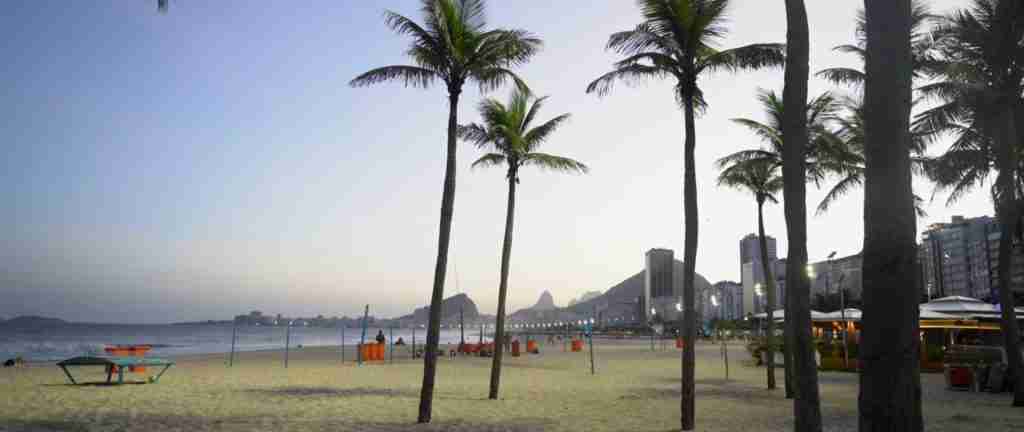
Rio’s most famous beaches—Copacabana and Ipanema—provide completely free world-class beach experiences that define the city’s international reputation. These adjacent stretches of sand offer distinctly different atmospheres while maintaining equally spectacular scenery of mountain-backed coastlines meeting the Atlantic Ocean. Copacabana extends 4 kilometers from Leme to Arpoador, its wide crescent flanked by the iconic black-and-white wave-pattern promenade and backed by a dense wall of high-rise buildings. The beach’s democratic character welcomes all visitors, from Carioca families to foreign tourists, with distinct sections developing unofficial identities: Leme Beach at the northern end attracts older locals and families, central Copacabana draws the broadest mix of people, and the southern end near Arpoador attracts surfers and younger crowds.
Ipanema Beach delivers more sophisticated beach culture across its 2.6-kilometer stretch, divided into “postos” (lifeguard stations) that serve as reference points for different social groups. Posto 9 between Ipanema and Leblon beaches establishes itself as the fashion-conscious, trendy section where Rio’s beautiful people congregate. Posto 10 near Arpoador rock draws surfers who challenge the beach’s consistent waves. The entire Ipanema-Leblon stretch maintains more upscale character than Copacabana, with beach vendors offering higher-quality (and higher-priced) services and the surrounding neighborhood featuring expensive boutiques and restaurants.
Both beaches provide exceptional people-watching opportunities where Rio’s famous beach culture displays itself fully. Vendors circulate endlessly offering cold beer, caipirinhas, fresh coconuts, grilled cheese, and ice cream without requiring beachgoers to leave their towels. Beach sports dominate the sand: volleyball nets fill with games throughout the day, soccer balls fly between players of all skill levels, and frescobol (beach paddleball) demonstrates impressive athleticism as pairs volley in synchronized rhythm. The ocean itself offers excellent swimming conditions with lifeguards stationed along the entire beachfront monitoring conditions and swimmer safety.
The beaches remain accessible 24 hours daily throughout 2026, though optimal beach hours run from early morning through evening. Sunrise visits (6-8 AM) reveal quiet beaches with serious swimmers and walkers claiming the sand before crowds arrive. Mid-morning through afternoon (10 AM-4 PM) brings peak beach energy when the full spectacle of Rio beach culture performs. Late afternoon (4-6 PM) offers softening light and moderating temperatures as locals arrive after work. The promenade alongside both beaches features dedicated bike lanes, wide walking paths, and outdoor exercise equipment, all freely accessible. Public showers and restrooms serve the beaches at regular intervals, though bringing your own towel and basic beach supplies remains necessary.
2. Arpoador Sunset: Rio’s Nightly Natural Spectacle
Arpoador rock, marking the boundary between Copacabana and Ipanema beaches, hosts Rio de Janeiro’s most celebrated free sunset viewing tradition every evening throughout 2026. This massive rock formation juts into the Atlantic Ocean, creating a natural viewing platform where hundreds of locals and tourists gather nightly to watch the sun descend behind the Dois Irmãos (Two Brothers) mountains. The tradition of applauding the sunset—unique to Arpoador—transforms this natural phenomenon into communal celebration where strangers unite in appreciation of Rio’s spectacular geography.
The viewing experience begins 30-45 minutes before sunset when early arrivals claim positions on the rock’s surface and along the adjacent beach. The rock itself provides various viewing levels, from sea-level platforms where waves crash during high tide to elevated positions offering unobstructed horizon views. Sunset times vary throughout 2026 from approximately 5:15 PM in June (winter) to 7:15 PM in January (summer), with exact times available from local weather forecasts or sunset tracking applications.
As sunset approaches, the atmosphere intensifies with more arrivals, some carrying cold beers purchased from nearby beach vendors, others preparing cameras for the golden light moment. The sun’s descent behind the mountains creates dramatic silhouettes of the twin peaks while painting the sky in deepening oranges, pinks, and purples. Christ the Redeemer statue appears prominently in the northeastern sky, illuminated against the darkening twilight. At the exact moment the sun disappears below the horizon, spontaneous applause erupts from the crowd—a tradition representing gratitude for another beautiful day in Rio de Janeiro.
The post-sunset period extends the experience as twilight deepens and city lights begin illuminating the mountain-backed coastline. The rock remains populated for 15-30 minutes after sunset as people gradually disperse to dinner or evening activities. Photography opportunities abound throughout the sunset sequence, with late afternoon light (30 minutes before sunset) providing optimal conditions for capturing the famous Dois Irmãos silhouette, Christ the Redeemer in background, and the curved coastlines of Ipanema and Copacabana beaches extending in opposite directions. The entire experience costs nothing except transportation to reach Arpoador and any drinks or snacks purchased from beach vendors.
3. Escadaria Selarón: World-Famous Mosaic Staircase
The Escadaria Selarón stands as Rio de Janeiro’s most photographed stairway and one of the world’s most spectacular examples of urban art transformed into public monument. This 215-step staircase connects the Lapa and Santa Teresa neighborhoods through a kaleidoscope of colorful tiles, ceramics, and mirrors that Chilean-born artist Jorge Selarón continuously decorated from 1990 until his death in 2013. The steps feature more than 2,000 tiles collected from over 60 countries worldwide, creating an ever-evolving mosaic that reflects the artist’s obsessive dedication to his adopted Brazilian home.
The staircase ascends steeply from Rua Joaquim Silva in Lapa, rising to Rua Pinto Martins in Santa Teresa across approximately 125 meters of vertical elevation. Each step displays unique tile arrangements mixing Brazilian themes (particularly yellow, green, and blue national colors), international contributions, and the artist’s recurring pregnant woman motif symbolizing birth and renewal. The visual intensity overwhelms first-time visitors as patterns shift continuously from step to step, with no two sections identical. Red background colors dominate much of the work, contrasting dramatically with multicolored tile arrangements.
Visiting Escadaria Selarón requires no admission fee and imposes no time restrictions, making it accessible 24 hours daily throughout 2026. Optimal photography conditions occur in late afternoon (3-5 PM) when softer light reduces harsh shadows and illuminates the tiles’ colors more evenly. Morning visits (8-10 AM) offer fewer crowds for photos without people filling every frame. The staircase serves as functional neighborhood connection, so expect local residents climbing steps throughout the day mixed with tourist visitors.
The surrounding Lapa neighborhood enhances the Selarón experience with additional street art, the historic Lapa Arches visible from the staircase’s base, and numerous cafes and bars lining adjacent streets. Many visitors combine Selarón with broader Lapa exploration, examining the extensive street art decorating walls throughout the district. The staircase’s location at the boundary between Lapa and Santa Teresa creates natural walking tour opportunities continuing upward into Santa Teresa’s bohemian hillside neighborhoods or downward into Lapa’s historic center. Security considerations apply: visit during daylight hours and maintain awareness of belongings, particularly when stopped for photographs in crowded moments.
4. Centro Historic Walking Tour: Colonial and Imperial Architecture
Rio de Janeiro’s Centro (downtown) district preserves centuries of Brazilian history through spectacular colonial and imperial architecture available for free exploration throughout 2026. This compact area encompasses approximately 2 square kilometers where pedestrianized streets, grand plazas, baroque churches, and neoclassical palaces reveal Rio’s evolution from Portuguese colonial outpost to Brazilian Empire capital to modern metropolis. A comprehensive self-guided walking tour requires 3-4 hours of steady exploration or can extend across full days for visitors wanting to examine interiors and museums.
The optimal walking route begins at Cinelândia metro station, emerging into Praça Floriano where the Municipal Theater’s magnificent beaux-arts facade dominates the square. This 1909 opera house replicates Paris Opera’s grandeur with its ornate exterior, though interior visits require separate tour bookings. From Cinelândia, walk north along Avenida Rio Branco—Centro’s main thoroughfare—examining the mix of early 20th-century commercial buildings interspersed with modernist architecture. Turn right onto Rua Primeiro de Março to reach Paço Imperial, the former royal palace converted to cultural center with free exhibition spaces and a lovely interior courtyard.
Adjacent Praça XV (Quinze de Novembro Square) serves as historic heart of colonial Rio where the Portuguese royal family first resided after fleeing Napoleon’s invasion. The square’s seafront location once welcomed ships directly to royal doorsteps before land reclamation pushed the coastline further east. The Arco do Teles archway leads into colonial-era narrow streets where restored buildings now house restaurants and bars maintaining 18th-century character. Return to Praça XV and continue north to Candelária Church, Rio’s most imposing religious structure with its baroque-neoclassical hybrid design dominating the square.
From Candelária, walk west on Avenida Presidente Vargas to reach the old Saara commercial district where narrow streets preserve 19th-century Middle Eastern immigrant commercial character. The area’s hundreds of small shops, while not architecturally spectacular, demonstrate authentic Rio commercial culture unchanged by modernization. Loop back toward the bay to explore Rua Gonçalves Dias and surrounding streets filled with Portuguese-tiled building facades, ornate balconies, and art nouveau details. Finish the walk at Colombo Confeitaria, Rio’s historic 1894 cafe with stunning belle époque interior featuring crystal mirrors, stained glass, and rosewood furnishings—enter freely to admire the architecture though purchasing a coffee or pastry supports the preservation.
Centro walking tours function best Tuesday-Friday during business hours (10 AM-4 PM) when office workers animate the streets and shops remain open. Weekends see dramatic reduction in activity with many buildings closed and streets feeling abandoned and unsafe. Self-guided exploration costs nothing beyond metro transportation (R$4.70 each way), with optional expenses for museum entries, cafe stops, or organized free walking tours that provide historical context while following similar routes.
5. Santa Teresa Neighborhood: Bohemian Hillside Exploration
Santa Teresa perches on hills overlooking central Rio de Janeiro, maintaining bohemian character through narrow cobblestone streets lined with colonial mansions, contemporary art studios, and views cascading down to the bay and city below. This neighborhood offers completely free wandering exploration where every corner reveals architectural treasures, street art installations, or spectacular vistas across Rio’s geography. The area’s artistic identity attracts painters, sculptors, musicians, and writers who establish studios in converted colonial houses, creating authentic creative neighborhood culture rare in increasingly commercialized Rio.
The neighborhood’s main access points include historic tram service from Centro (temporarily suspended in 2024, check 2026 status), metro to Cinelândia followed by taxi/bus uphill, or direct Uber/taxi service. Once arrived, the exploration follows no fixed route—wandering at will proves most rewarding. Largo das Neves serves as central reference point where the neighborhood’s main commercial street intersects with residential lanes radiating outward. This small plaza features the Igreja Nossa Senhora das Neves church and several cafes serving as neighborhood gathering spots.
Essential destinations within free Santa Teresa exploration include Parque das Ruínas, a preserved mansion ruin converted to cultural space with rooftop terraces offering spectacular views toward Sugarloaf Mountain, Guanabara Bay, and downtown Rio with Christ the Redeemer visible in the distance. Entry remains free during opening hours (8 AM-6 PM Tuesday-Sunday). The nearby Largo dos Guimarães presents another atmospheric plaza surrounded by restaurants, bars, and the charming yellow cathedral of Santa Teresa, with free access to plaza and church interior.
Street art significantly enhances Santa Teresa’s visual appeal, with large-scale murals decorating building walls throughout the neighborhood. Notable pieces cluster around Rua Almirante Alexandrino (the main street), though smaller works appear on walls throughout residential side streets. The artistic focus includes both political commentary and abstract designs, often incorporating Brazilian cultural themes. Photography enthusiasts find endless subjects in the combination of colorful colonial architecture, artistic interventions, tropical plants overflowing from balconies and gardens, and the views extending between buildings toward the city and bay below.
Timing considerations matter in Santa Teresa: visit Wednesday-Sunday when art studios, galleries, and cafes operate fully. Monday-Tuesday sees reduced activity with some businesses closed. Daylight hours (9 AM-5 PM) offer best safety and optimal photography light. The neighborhood’s hillside location creates significant elevation changes requiring moderate fitness for extended walking. Wear comfortable walking shoes suitable for cobblestone streets and occasional steep inclines. The entire Santa Teresa experience costs nothing beyond transportation to reach the neighborhood and any cafe/meal stops you choose to make.
6. Lapa Arches and Street Art District: Architectural Icon and Urban Galleries
The Lapa Arches (Arcos da Lapa) stand as Rio de Janeiro’s most recognizable architectural landmark beyond Christ the Redeemer, their 42-meter-tall white arches marching across the landscape where Lapa meets Centro. Built in 1750 as an aqueduct carrying water from Santa Teresa hills to downtown fountains, the structure now serves as elevated tram viaduct (when tram service operates) while functioning symbolically as gateway to Rio’s famous nightlife district. The arches provide spectacular free photography subjects day and night, with their illuminated presence after dark creating dramatic urban scenes.
The arches themselves span approximately 270 meters with 42 arches in the double-tier Roman-style structure. Free viewing occurs from multiple perspectives: standing directly beneath the arches looking upward at their massive scale, viewing from the adjacent Passeio Público park, or photographing from surrounding streets where the arches frame backgrounds of colonial buildings and modern cityscape. The structure’s architectural grandeur impresses regardless of angle, particularly when considering its mid-18th-century construction predating most of Rio’s current urban fabric.
The surrounding Lapa neighborhood transforms the area around the arches into Rio’s most concentrated street art district. Every available wall surface displays murals, graffiti, political statements, or artistic expressions creating a constantly evolving open-air gallery. The density of street art rivals internationally famous districts like Buenos Aires’ Palermo or Berlin’s Kreuzberg, with quality ranging from amateur tags to professional commissioned murals executed by Brazil’s most respected street artists. The art reflects Brazilian culture, political commentary, social justice themes, and pure aesthetic expression.
Key street art locations cluster within walking distance of the arches. The streets radiating from the Arcos da Lapa toward Escadaria Selarón feature concentrated mural coverage. Rua Joaquim Silva displays particularly impressive pieces on multi-story building facades. Travessa do Comércio and adjacent historic streets combine colonial architecture with contemporary artistic interventions. The area under and immediately around the arches themselves provides canvas for ever-changing graffiti and paste-up posters creating palimpsest of artistic layers.
Optimal visiting times for Lapa Arches and street art exploration occur during daylight hours (9 AM-5 PM) when natural light illuminates the artwork and neighborhood safety peaks. Morning visits (9-11 AM) offer quiet streets for photography without crowds or parked cars obstructing views. Late afternoon (3-5 PM) provides dramatic side-lighting on the arches and murals. While Lapa becomes famous for nightlife, visiting after dark requires caution due to intoxicated crowds, pickpockets, and more chaotic street scenes—experience Lapa nightlife separately from daytime architectural and artistic appreciation. The entire experience costs nothing, making it essential inclusion in any budget-conscious Rio de Janeiro itinerary throughout 2026.
7. Lagoa Rodrigo de Freitas: Lakeside Path and Mountain Views
Lagoa Rodrigo de Freitas, a massive saltwater lagoon between Ipanema and Jardim Botânico neighborhoods, offers spectacular free recreation centered on its 7.5-kilometer perimeter path circling crystal waters with mountain panoramas on all sides. The lagoon serves as Rio’s central open space for running, cycling, walking, and simply appreciating the natural beauty framed by surrounding favelas climbing hillsides, Christ the Redeemer statue visible atop Corcovado mountain, and the distinctive silhouette of Dois Irmãos peaks. The completely free lakeside experience attracts locals throughout the day executing fitness routines, socializing at waterfront kiosks, or relaxing on grass areas surrounding the water.
The perimeter path provides smooth, well-maintained pavement separated from vehicle traffic with dedicated lanes for pedestrians and cyclists. The flat, easy route accommodates all fitness levels from casual strollers to serious marathon trainers. Starting from any access point, the circuit passes through distinct areas: the eastern shore near Ipanema features dense high-rise development creating urban atmosphere, the northern shore toward Jardim Botânico transitions to lower-density residential character, the western shore reveals favelas climbing steep hillsides creating dramatic contrasts between informal settlements and the manicured lagoon park, and the southern shore returns toward Leblon neighborhood completing the circle.
Multiple access points serve the lagoon from adjacent neighborhoods. Metro service doesn’t reach the lagoon directly, requiring bus connections or Uber/taxi service. From Ipanema or Leblon beaches, the walk to the lagoon requires 10-20 minutes through neighborhood streets. Once at the lagoon, movement around the perimeter costs nothing beyond initial transportation to reach the area. Free exercise equipment stations appear at intervals along the path where locals perform workout routines. Grass areas between the path and water provide spaces for picnics, stretching, or relaxation with views across the water toward the mountains.
The lagoon’s waterfront kiosks sell drinks, snacks, and light meals—these commercial concessions obviously involve costs but the lagoon area itself imposes no admission fees or access charges. Visitors bring their own water and snacks to maintain zero-cost experience. Sunset views from the lagoon rank among Rio’s best free viewing experiences, with Christ the Redeemer statue silhouetted against colorful skies and the entire surrounding mountain ring illuminated in changing light. The lagoon attracts especially high usage during late afternoon and early evening (4-7 PM) when locals finish work and converge on the water for exercise and socializing. Weekend mornings see families, children, and serious athletes populating the perimeter path in roughly equal proportions.
8. Pedra do Sal Samba Circles: Authentic Cultural Experience
Pedra do Sal, a historic neighborhood in the port zone marking the birthplace of samba in Rio de Janeiro, hosts free weekly samba circles every Monday evening that provide authentic cultural immersion unavailable through paid performances. These spontaneous gatherings feature traditional samba musicians forming circles where percussionists, singers, and dancers create infectious rhythms as crowds grow throughout the evening. The events maintain deep cultural significance as direct descendants of African slave communities who created samba in this neighborhood centuries ago, making participation in these circles connection to living Brazilian cultural heritage.
The location itself holds historical importance as the area where enslaved Africans gathered after gaining freedom, establishing the first Afro-Brazilian community in Rio. The name “Pedra do Sal” (Salt Stone) references the massive rocks where salt from Portuguese ships was unloaded and stored during colonial times. These historic stones now serve as natural amphitheater where musicians position themselves while crowds fill surrounding spaces. The entire event occurs outdoors in public space, requiring no tickets, reservations, or admission fees throughout 2026.
Monday evening events begin informally around 7-8 PM as musicians arrive and start playing. The scene builds gradually with more musicians joining, crowds expanding, and energy intensifying through the evening. Peak attendance occurs between 9-11 PM when hundreds of people pack the area creating dense festival atmosphere. The music follows traditional samba de roda (samba circle) format where call-and-response singing accompanies percussion-heavy rhythms produced by surdo drums, tamborins, pandeiros, and cuícas. Dancers move through the crowd while observers clap and sing along with familiar samba standards.
The atmosphere maintains authenticity that contrasts sharply with touristy samba shows in hotels and theaters. Local residents dominate the crowd with tourists forming minority of attendees. Beer vendors circulate selling cold beers and caipirinhas at street prices (R$8-15), with street food vendors offering traditional snacks. The event’s free nature attracts diverse crowds across class lines where wealthy Cariocas from Zona Sul neighborhoods mix with working-class residents from nearby areas in shared appreciation of samba culture.
Security presence and crowd density create reasonably safe environment for these nighttime cultural events, though standard precautions apply: carry minimal cash, keep phones secure and use discreetly for photos, avoid excessive alcohol consumption, stay aware of surroundings, and use Uber or taxis for arrival and departure rather than walking through surrounding port zone streets. The combination of authentic cultural expression, free admission, and powerful samba performances makes Pedra do Sal Monday nights essential experiences for visitors wanting genuine connection to Rio de Janeiro’s African heritage and musical traditions throughout 2026.
9. Fort Copacabana and Military History (Free on Sundays)
Forte de Copacabana, the massive military fort occupying the southern tip of Copacabana Beach, opens free to public entry on Sundays throughout 2026 while charging R$10 admission Tuesday-Saturday. This strategic military installation dating to 1914 combines historical significance, military museum collections, and spectacular coastal views creating comprehensive attraction that rivals paid experiences elsewhere in Rio. The free Sunday admission policy allows budget travelers to explore the fort’s defensive positions, examine vintage artillery pieces, tour museum displays documenting Brazil’s military history, and access the fort’s iconic jutting point where massive boulders meet crashing Atlantic waves.
The fort’s strategic location at Copacabana’s southern extreme placed it as Rio’s primary coastal defense for over a century. The thick concrete walls, underground tunnels, and massive gun emplacements demonstrate early 20th-century military engineering adapted to Rio’s dramatic coastal geography. The preserved fortifications create atmospheric exploration spaces where visitors walk through bunkers, examine firing positions, and imagine the fort’s defensive role protecting the city from naval threats that never materialized.
The interior military museum displays vintage weapons, uniforms, photographs, and artifacts documenting Brazilian military history from colonial times through World War II participation. The collection includes naval equipment, artillery shells, medals, and personal items from soldiers who served at the fort. While museum signage appears primarily in Portuguese, the visual nature of military artifacts communicates clearly regardless of language. The museum’s air-conditioned rooms provide welcome relief from Rio’s heat while offering educational content about Brazil’s military development.
The fort’s external spaces provide the highlight of most visits. The rocky promontory extending into the ocean offers dramatic views in multiple directions: Copacabana Beach curving northward to Sugarloaf Mountain, the open Atlantic stretching infinitely eastward, and the coastline continuing south toward Ipanema and Leblon. Waves crash against rocks directly below viewing positions creating impressive water displays during high tides or stormy weather. The views incorporate many of Rio’s most iconic landscape elements in single panoramas impossible to replicate elsewhere. Photographers find exceptional opportunities throughout the fort’s exterior positions, particularly in late afternoon when sun angles illuminate the coastline and city beautifully.
Sunday visits require arrival before 4 PM when gates close (open 10 AM-4 PM Sundays). The fort’s location at Copacabana’s south end makes it easily accessible by walking along the beach promenade from any Copacabana accommodation or via metro to Siqueira Campos station followed by 15-minute walk. The combination of military history, museum collections, and spectacular views creates substantial attraction that would justify paid admission but costs nothing on Sundays throughout 2026, making it essential inclusion in budget-conscious Rio itineraries.
10. Botanical Garden Main Boulevard (Free Access Area)
The Jardim Botânico (Botanical Garden), while charging admission for full garden access, maintains free entry to its spectacular main palm avenue and immediately surrounding areas throughout 2026. This free access zone includes the garden’s most photographed feature—a 750-meter corridor lined with 134 imperial palms rising 40 meters overhead creating cathedral-like space of extraordinary beauty. The partial free access policy allows budget travelers to experience the garden’s signature attraction without paying the R$61 full admission (check official website for current rates), though the free area represents perhaps 10% of the total garden property.
The palm avenue displays botanical grandeur impossible to experience elsewhere in Rio de Janeiro. The palms, planted in 1842, now reach mature height with their perfectly straight trunks supporting crown clusters of fronds that filter sunlight creating dappled patterns on the ground below. The avenue extends in perfect alignment from the main entrance toward the garden’s interior, with smaller palm varieties, ornamental plants, and tropical vegetation filling spaces between the imperial palms. Early morning light (7-9 AM) provides optimal photography conditions when low sun angles penetrate the length of the avenue and fewer visitors obstruct the view.
The free access area includes not only the palm avenue but also the historic main gate with its elaborate ironwork, the initial section of pathways adjacent to the avenue, and views into the garden’s interior sections. Visitors can walk the length of the palm avenue, photograph from multiple angles, examine the informational plaques describing the palms’ history and species, and appreciate the botanical garden’s role in Rio’s urban landscape without entering the paid sections. The free area remains open during the same hours as the full garden (8 AM-5 PM daily, extended to 6 PM in summer).
The surrounding neighborhood enhances the botanical garden visit with the Jardim Botânico district offering upscale shopping streets, cafes, and the view toward Corcovado mountain visible from the garden entrance. The combination of palm avenue exploration plus neighborhood wandering creates complete morning or afternoon activity that costs nothing beyond transportation. The Jardim Botânico metro station (Line 4) provides convenient access, located approximately 1 kilometer from the garden entrance requiring 10-15 minute walk through pleasant residential streets.
While the free access limitation frustrates some visitors wanting to explore the garden’s complete 137 acres of botanical collections, the palm avenue alone justifies the trip for budget travelers prioritizing free experiences. The combination of historical significance (one of Brazil’s oldest scientific institutions dating to 1808), breathtaking natural beauty, and symbolic importance to Rio’s identity makes the palm avenue essential Rio experience. The free access policy throughout 2026 ensures that financial constraints don’t prevent appreciation of this botanical masterpiece.
Maximizing Free Experiences Throughout Your 2026 Rio Stay
Creating Full Days from Free Activities
Strategic combination of these ten free experiences creates complete Rio de Janeiro days without spending money beyond basic transportation and meals. A typical beach-focused day might begin with morning hours at Copacabana or Ipanema beaches (8 AM-12 PM), transition to Arpoador rock for afternoon swimming and socializing (12-5 PM), then conclude with the sunset viewing experience (5:30-7 PM depending on season). Total cost: R$0 beyond transportation to/from accommodation and any food/drinks purchased.
A cultural exploration day combines Centro historic walking (10 AM-2 PM), continuation to Lapa Arches and street art district (2-4 PM), and concludes with Escadaria Selarón visit (4-5 PM). This route follows logical geographic progression requiring minimal transportation between areas. Add Monday evening at Pedra do Sal samba circles to extend the cultural immersion into nighttime. Total cost: R$9.40-14.10 for metro/bus transportation plus any meals or drinks during the day.
A Sunday itinerary maximizes the free Fort Copacabana access by starting at the fort (10 AM-12 PM), moving to Copacabana Beach (12-4 PM), then finishing at Arpoador sunset (5-7 PM). The entire route stays within Copacabana-Ipanema area eliminating transportation costs beyond initial arrival. A Saturday or weekday alternative replaces the fort with Lagoa Rodrigo de Freitas circuit walk (9 AM-12 PM) followed by beach afternoon.
Adventure-oriented visitors combine Santa Teresa neighborhood exploration (morning 9 AM-1 PM) with subsequent metro trip to beaches (afternoon 2-6 PM) and Arpoador sunset completion. This schedule maximizes geographic diversity across single day while maintaining free activity focus. Budget allocation goes entirely to transportation (R$14.10 for round trip metro to Santa Teresa plus transfer to beaches) and meals rather than attraction admission fees.
Complementary Low-Cost Additions to Free Activities
While maintaining free activity focus, certain low-cost additions enhance experiences without breaking budget constraints. Beach vendors sell fresh coconuts for R$8-12, providing refreshing drinks during beach hours while supporting local micro-entrepreneurs. Street food in Lapa and Centro districts offers authentic Brazilian snacks at R$10-20 per item: pastéis (fried pastries), coxinhas (chicken croquettes), açaí bowls, and pão de queijo (cheese bread) represent culinary culture at minimal cost.
The VLT (light rail) in Centro and port zone costs just R$4.10 per ride, adding efficient transportation between Centro, Lapa, and Saara districts without significant budget impact. This modern tram system provides comfortable travel between free attractions while offering air-conditioned refuge from Rio’s heat. The combination of free walking tours plus VLT connections creates comprehensive Centro exploration under R$25 total including tram rides and cafézinho breaks.
Consider investing R$8-15 in caipirinha from Arpoador sunset vendors to participate in the authentic Brazilian sunset celebration ritual. The drink cost remains minimal compared to bar prices (R$25-35) while adding cultural dimension to the free viewing experience. Similarly, Monday evening at Pedra do Sal benefits from purchasing beer or caipirinha from street vendors (R$8-15) to support the informal economy while participating fully in samba circle culture.
Safety and Practical Considerations for Free Activities in 2026
Managing Valuables During Free Beach and Outdoor Activities
Beach visits present security challenges requiring careful planning to protect valuables while enjoying free ocean access. The beach culture in Rio involves leaving belongings on sand while swimming, creating vulnerability to theft. Effective strategies include traveling to beaches with minimal valuables (leave expensive jewelry, watches, and unnecessary credit cards at accommodation), carrying only essential cash (R$50-100 maximum), using hotel safes for passports and extra money, and employing waterproof phone pouches that allow swimming while keeping devices secure.
Group beach visits provide natural security where companions watch belongings while others swim. Solo travelers can request nearby beach groups to watch bags during quick swims—Brazilians understand this request and typically accommodate willingly. Alternatively, stay at beach edge in shallow water maintaining visual contact with belongings. Beach vendors and attendants who establish regular positions sometimes watch tourist belongings for tips (R$10-20), creating informal security service.
During street exploration in Centro, Lapa, and Santa Teresa, carry only essential cash and one credit card, keeping them in front pockets rather than backpacks or purses easily accessible to pickpockets. Use phones discreetly for photos then immediately return them to secure pockets. Expensive cameras attract unwanted attention in crowded areas—smartphone photography suffices for most free attractions while maintaining lower theft profile. Consider carrying decoy wallet with expired cards and minimal cash to satisfy potential robbers while keeping real money secured separately.
Understanding Neighborhood Safety Profiles Throughout 2026
Rio’s free attractions span diverse neighborhoods with varying safety considerations that require awareness without creating paranoia. Beach areas maintain high safety during daylight hours due to constant crowds, police presence, and beach vendor watchfulness creating natural community security. Evening beach walks along well-lit promenades remain safe until approximately 10-11 PM when activity declines and isolated sections become riskier.
Centro and Lapa demand highest awareness due to dramatic safety variations by time and day. Centro functions safely during business hours Monday-Friday when office workers populate streets and shops remain open. After 6 PM and throughout weekends, Centro empties dramatically with only isolated pockets around specific restaurants or cultural venues maintaining activity. Avoid Centro on weekday evenings and weekends except for specifically populated areas. Lapa maintains reasonable daytime safety (9 AM-5 PM) for street art and architecture appreciation but transforms dramatically after dark when crowded nightlife creates pickpocketing opportunities targeting intoxicated tourists.
Santa Teresa requires street awareness due to residential character and hillside isolation, though the main commercial areas around Largo das Neves and Largo dos Guimarães maintain reasonable security during daylight hours (9 AM-5 PM). Avoid wandering isolated side streets or visiting after dark unless traveling in groups. The neighborhood’s bohemian character creates generally friendly atmosphere where locals and artists interact positively with respectful visitors.
Health and Hydration During Tropical Activities
Rio’s tropical climate demands attention to hydration, sun protection, and heat management during free outdoor activities. Summer temperatures reach 30-35°C with high humidity creating heat index values exceeding 40°C. Carry adequate water for all activities—beach vendors sell bottles at R$5-8 but bringing your own from accommodation reduces costs. Plan beach activities during morning (8-11 AM) or late afternoon (4-7 PM) to avoid peak midday heat and sun intensity.
Sun protection remains critical for all outdoor activities regardless of cloud cover or perceived coolness near ocean breezes. Tropical latitude places Rio directly under intense UV radiation requiring SPF 50+ sunscreen application every 2 hours during beach visits, with additional reapplication after swimming. Sun hats and light covering clothing provide additional protection during extended outdoor time. The combination of sun reflection off white sand and water intensifies exposure at beaches beyond normal outdoor levels.
Heat exhaustion symptoms including dizziness, excessive fatigue, nausea, or headaches require immediate response: move to shade, drink water, apply cool water to skin, and rest until symptoms subside. Centro’s walking tours provide limited shade along some sections—plan breaks in air-conditioned museums, churches, or cafes during midday heat. Santa Teresa’s elevated position sometimes offers slightly cooler temperatures than sea-level neighborhoods but heat remains significant during summer months. Allow extra time for activities during Rio’s hottest months (December-March) when heat and humidity slow comfortable walking pace significantly.
Frequently Asked Questions: Free Rio de Janeiro Activities 2026
Can you really experience Rio de Janeiro without spending money on attractions?
Rio de Janeiro provides exceptional destination for budget travelers due to the high quality and quantity of completely free attractions available throughout 2026. The city’s geography creates natural advantages where beaches, mountains, viewpoints, and ocean access impose no admission fees. The cultural landscape adds spontaneous samba gatherings, street art districts, and historic neighborhoods accessible through simple walking. Visitors who prioritize these free experiences discover that paid attractions like Christ the Redeemer summit or Sugarloaf cable car, while spectacular, prove unnecessary for complete Rio appreciation. A full week in Rio focusing exclusively on free activities creates rich, authentic experience without spending money beyond accommodation, meals, and transportation. The free experiences often provide more authentic local cultural connection than expensive tourist attractions isolated from real Rio neighborhood life.
What’s the single best free thing to do in Rio de Janeiro?
Arpoador sunset viewing represents the single best free Rio experience, combining spectacular natural beauty, authentic local culture, and communal celebration unique to this city. The nightly gathering of hundreds of people applauding sunset creates shared moment that transcends tourism, transforming natural phenomenon into cultural ritual. The experience costs absolutely nothing, requires no advance planning or reservations, and delivers consistent quality every clear-weather evening throughout 2026. The views incorporate Rio’s essential elements in single panorama: ocean, beaches, mountains, Christ the Redeemer statue, and dramatic tropical light. The spontaneous nature of the sunset applause—visitors and locals united in appreciation—captures Rio’s spirit more authentically than any staged performance or paid attraction.
How much should I budget for transportation to reach these free attractions?
Transportation costs vary based on accommodation location and daily activity patterns, but typical daily spending ranges R$15-35 for comprehensive free attraction access throughout Rio in 2026. Metro rides cost R$4.70 each, buses match at R$4.70, and metro-bus combinations run R$8.45. Visitors staying in Copacabana or Ipanema access beaches, Arpoador, Lagoa Rodrigo de Freitas, and Fort Copacabana by walking, eliminating transportation costs on beach-focused days. Days involving Centro, Lapa, and Santa Teresa require metro trips (R$9.40 round trip from Zona Sul beaches) plus potential bus connections to Santa Teresa (additional R$4.70-9.40). The rechargeable RioCard provides slight discounts on combination journeys and eliminates per-ride ticket purchasing hassles. Weekly transportation budgets of R$100-150 allow comprehensive movement between all free attractions listed while maintaining flexibility for spontaneous exploration throughout 2026.
Are these free activities safe for solo female travelers?
The featured free activities maintain reasonable safety for solo female travelers who exercise standard urban awareness throughout 2026. Beach areas during daylight hours provide safe environments with constant crowds, police presence, and community atmosphere where solo women feel comfortable. Arpoador sunset draws diverse crowds including many women alone or in small groups creating inclusive environment. Centro walking tours function safely during business hours Tuesday-Friday when streets fill with office workers, though solo women should avoid Centro after 6 PM and on weekends. Santa Teresa demands moderate caution with stick to main commercial streets during daylight hours and avoid isolated areas. Lapa street art appreciation works well during morning and afternoon hours but solo women should avoid Lapa after dark unless joining organized group activities. Pedra do Sal samba circles on Monday evenings attract diverse crowds including many solo women, with the event’s popularity creating safety through numbers. General precautions include using Uber or taxis rather than walking between neighborhoods after dark, maintaining awareness of surroundings, avoiding excessive alcohol consumption, carrying minimal valuables, and trusting instincts when situations feel uncomfortable.
Can I visit all these free attractions in a single trip to Rio?
A typical Rio visit of 4-7 days allows comfortable coverage of all ten featured free attractions without rushing or feeling overwhelming. The activities cluster geographically into natural groupings that facilitate efficient daily itineraries: beach-focused days combine Copacabana, Ipanema, Arpoador, and Lagoa Rodrigo de Freitas; cultural exploration days unite Centro, Lapa Arches, and Escadaria Selarón; bohemian wandering encompasses Santa Teresa and Botanical Garden palm avenue; specialized experiences include Fort Copacabana on Sundays and Pedra do Sal on Monday evenings. The free nature of activities eliminates financial pressure to maximize experiences per day, allowing more relaxed pacing that matches Rio’s lifestyle. Many visitors discover that repeating favorite free activities—returning to Arpoador sunset multiple evenings, spending several beach days in different locations, or exploring Centro across multiple morning sessions—provides deeper engagement than rushing through single visits to numerous locations. The accessibility throughout 2026 of these permanently free attractions means Rio rewards both short visits that highlight key experiences and extended stays that develop intimate familiarity with neighborhoods, beaches, and cultural scenes.
Do free walking tours really not cost anything?
Organized “free walking tours” in Centro and Santa Teresa operate on tip-based business models where the tours themselves charge no mandatory fees but guides depend entirely on tips for income. While technically free, tour participants understand that tipping represents essential social obligation with typical amounts ranging R$20-50 per person for 2-3 hour tours in 2026. The tip-based model allows budget travelers to pay what they can afford while ensuring tours remain accessible to all visitors regardless of financial circumstances. Guides explicitly state at tour conclusions that the experience operates solely through tips, creating transparent expectations. Visitors who genuinely cannot afford tips should consider self-guided walking instead, following similar routes using maps and online resources, eliminating any payment obligations while maintaining complete free access to the same architectural and cultural sites. The organized tours provide value through historical context, local insights, and social connection with other travelers that pure self-exploration lacks, making the modest tip investment worthwhile for most participants who can afford it. Purely self-guided walking through Centro, Lapa, and Santa Teresa remains completely free throughout 2026 with no tip expectations or social obligations whatsoever.
What free activities work best during rainy weather in Rio?
Rio’s free attractions skew heavily toward outdoor activities that become less appealing during rain, but several options maintain quality regardless of weather throughout 2026. Centro’s historic architecture exploration functions well in light rain where covered arcades, church interiors, and proximity between buildings allow relatively dry walking between points of interest. The Colombo Confeitaria cafe offers free interior appreciation of belle époque architecture while providing shelter from heavy rain (purchase optional). Praça XV’s Arco do Teles archway leads to covered colonial streets suitable for rainy day wandering. Santa Teresa’s art galleries and cultural spaces provide indoor alternatives to street walking when weather deteriorates, though access between locations still requires outdoor exposure. The Botanical Garden’s palm avenue offers some rain protection under the dense palm canopy, though heavy rain makes the experience uncomfortable. Beach activities obviously lose appeal during rain, though post-storm ocean watching from covered beachfront kiosks maintains dramatic appeal at no cost. The Lapa Arches remain impressive in rain when reduced crowds allow better photography and the rain-washed streets create atmospheric urban scenes. Fort Copacabana (free on Sundays) provides substantial indoor museum spaces offering shelter combined with covered external viewing positions overlooking stormy ocean scenes. Budget travelers should schedule indoor activities during Rio’s rainiest months (December-March) while reserving beach-focused days for drier winter months (June-August) throughout 2026.
How do Rio’s free attractions compare to paid tourist attractions?
Rio’s free attractions rival or exceed paid attractions in several quality measures throughout 2026. The beaches provide world-class natural experiences impossible to replicate through paid offerings—no ticket to Christ the Redeemer or Sugarloaf matches the daily ritual of Rio beach culture across hours of ocean access, people watching, and Arpoador sunset. The Escadaria Selarón demonstrates artistic dedication surpassing many paid museums in creative vision and visual impact. Historic Centro architecture reveals centuries of Brazilian development through free walking that paid tours complement rather than replace. The authentic cultural experiences at Pedra do Sal samba circles or Santa Teresa’s bohemian streets connect visitors to real Rio life more effectively than staged performances in tourist venues. The paid attractions offer specific advantages: Christ the Redeemer provides close interaction with the iconic statue and 360-degree city views impossible from ground level, Sugarloaf cable car delivers unique mountain-summit perspectives, paid museums contain specialized collections and air-conditioned comfort. However, the free attractions’ cumulative impact creates comprehensive Rio experience that many visitors rank as more memorable and culturally authentic than the paid alternative. Budget travelers prioritizing free activities sacrifice nothing essential to Rio appreciation while developing deeper connections to neighborhood life, local culture, and the spectacular natural setting that defines this city’s international appeal throughout 2026.