Machu Picchu is an ancient Incan citadel that offers a magical experience. It’s a UNESCO World Heritage Site and is key to the economic and cultural growth of Inca descendants. There are four types of entrance tickets to choose from.
These include Machu Picchu Ruins only, Ruins + Huayna Picchu Mountain, Upper Terrace + Machu Picchu Mountain, and Ruins + Huchuy Picchu Mountain. The site has three defined circuits with specific routes. It can welcome up to 5,600 visitors per day during the busy season.
Key Takeaways
- Machu Picchu covers a vast 13 km² (8 mi²) area for exploration and sightseeing.
- Millions of tourists visit Machu Picchu annually, making it a popular tourist destination.
- There are 18 highlighted things to do in Machu Picchu, offering a variety of activities and attractions.
- The Temple of the Sun and the Temple of Three Windows are must-see landmarks.
- Machu Picchu features over 16 natural spring-fed baths, showcasing the historical importance of purification and ritual practices.
- Contact us for a comfortable and personalized itinerary (Free Service)
Explore the Ancient Ruins of Machu Picchu
Nestled high in the Andes, Machu Picchu is a captivating ancient Inca citadel. It spans an impressive 13 km² area. This site is a top Machu Picchu Tours and Ancient Ruins Exploration spot, drawing visitors with its mysterious history and stunning architecture.
Understanding the History and Significance
Machu Picchu was built in the 15th century for the Inca emperor Pachacuti. Its perfect masonry and strange architecture puzzle researchers. They are still discovering its mysteries and deep astronomical connections.
Visitors can dive into Machu Picchu’s history and significance. They gain a deeper appreciation for the Inca Empire’s engineering feats and cultural legacy.
Key Structures to Discover
At Machu Picchu, visitors can see the Sun Gate (Inti Punku), the Watchman’s Hut, and the Funerary Stone. They can also explore the Temple of the Sun, the Royal Tomb, and the intricate fountains system.
The Sacred Plaza features the Temple of Three Windows, the Principal Temple, and the House of the High Priest. Other highlights include the House of Ornaments, the Intihuatana sundial, the Central Plaza, the Sacred Rock, and the Prison Group.


Tips for Your Visit
- Plan your visit during the low season (December to February) to avoid peak crowds.
- Book your Machu Picchu tickets in advance, as they are in high demand during the peak season.
- Explore the site at your own pace, as an entry ticket is valid for 4 hours.
- Wear comfortable shoes and bring layers, as the weather can be unpredictable in the Andes.
- Consider hiring a local guide to enhance your understanding of Machu Picchu’s history and significance.
“Machu Picchu is a stunning example of the Inca Empire’s architectural and engineering prowess, showcasing their deep connection with the natural world.”
| Machu Picchu Fact | Statistic |
|---|---|
| Annual Visitors (2019) | 1,585,300 |
| Train Journey Duration from Cusco | Approximately 4 hours |
| Distance from Aguas Calientes to Machu Picchu | 5.5 mi (9 km) |
| First Buses Departing to Machu Picchu from Aguas Calientes | 5:30 am |
Hike the Inca Trail to Machu Picchu
Hiking the Inca Trail is a dream for many. It’s a chance to see Machu Picchu up close. Hikers enter through the Sun Gate for a magical view of the ruins.
Why Hike the Trail?
The Inca Trail is famous for its stunning views and rich history. It passes through ancient sites. You can choose from a 4-day, 26-mile hike or shorter options.
Trail Difficulty and Duration
The hike is tough, with altitudes over 13,000 feet. The second day is the hardest, with big climbs and descents. Be ready for the challenge. The 4-day tour is the most popular, but there are shorter options too.
What to Expect Along the Hike
Expect to see ancient ruins and amazing views on the hike. The journey ends at the Sun Gate, offering a stunning Machu Picchu view. Book your tour early because it’s very popular.
“The Inca Trail to Machu Picchu is a truly transformative experience, offering a journey through time and a connection with the natural world that is unparalleled.”
Whether you pick the classic 4-day trek or a shorter one, hiking the Inca Trail is an adventurous activity. It lets you dive into Machu Picchu’s history and beauty.
Visit Huayna Picchu for Stunning Views
Huayna Picchu mountain stands tall over Machu Picchu. It gives visitors a chance to see the ancient city from a stunning view. This hike is tough but worth it for the view of Machu Picchu and the green valleys around it.
How to Obtain Tickets
Only 400 tickets for Huayna Picchu are sold each day. They are given out in two shifts: 7 am to 8 am and 10 am to 11 am. Since tickets sell out fast, it’s key to book early. A ticket costs 200 soles, or about US$55.
The Hiking Experience
The hike up Huayna Picchu takes about 1 hour and 45 minutes. It’s 3.1 kilometers (1.9 miles) long and goes up 260 meters (850 feet). The trail is good but can be tough, more so in the rainy season. It’s best to wear the right gear and be in good shape for this Machu Picchu adventure.
What You’ll See from the Top
At the top of Huayna Picchu, you get a stunning view of Machu Picchu. You’ll see the famous views of the ancient city. You can also see the lower terraces of Machu Picchu, adding to the Adventurous Activities in Machu Picchu experience.
“Climbing Huayna Picchu is a must-do for any avid hiker visiting Machu Picchu. The views from the top are simply awe-inspiring and well worth the effort.”
Discover the Intipunku or Sun Gate
The Intipunku, or Sun Gate, sits atop Machu Picchu mountain. It’s a key spot that links the famous Inca citadel with the Inca Trail. Standing at 2,745 meters (9,005 feet), it gives a stunning view of the sun lighting up Machu Picchu Tours.
The Importance of Intipunku
In the Inca Empire’s peak, the Intipunku was a control gate. It let only certain guests into the sacred Machu Picchu. Now, it shows the Inca legacy and their amazing buildings.
Accessing the Sun Gate
- The hike from Machu Picchu to the Intipunku takes 40 to 60 minutes. It’s 2 km (1.2 miles).
- Another way is the famous Inca Trail. It ends at the Intipunku before going down to the citadel.
- The best time to see it is from June 1st to October 15th. You need a special ticket, Machu Picchu + Huayna Picchu.
Best Times to Visit
The Intipunku shines best in the early morning. The sun’s rays light up the area and the ruins. Visit from May to October for better weather and hiking.
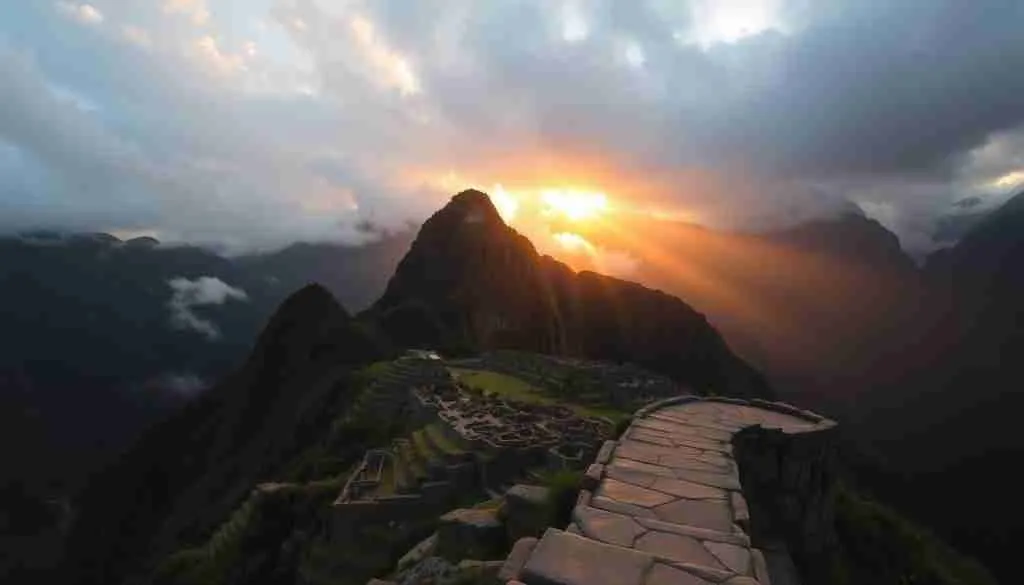
“Witnessing the sunrise from the Intipunku is a truly awe-inspiring experience, allowing visitors to connect with the enduring spirit of the Inca civilization.”
Explore the Sacred Valley Nearby
Just a short distance from Machu Picchu lies the Sacred Valley. This area is full of attractions and cultural experiences. It’s nestled between the Andes mountains, with elevations from 6,730 to 9,800 feet. Once the heart of the Inca Empire, it still charms visitors with its sites, markets, and culture.
Top Destinations in the Sacred Valley
See the ancient ruins of Pisac, Ollantaytambo, and Chinchero. Each place gives a unique look into the past. Visit Pisac’s colorful Sunday market, see traditional weavings in Chinchero, and marvel at Ollantaytambo’s Inca fortress.
Activities for Adventurers
- Go on a thrilling whitewater rafting trip down the Vilcabamba-Urubamba River
- Take a horseback ride through the valley’s beautiful landscapes
- Hike to the Catarata Poc Poc Waterfall for a stunning 30-meter view
Cultural Experiences to Enjoy
Dive into local culture by visiting markets, watching Andean weaving, and trying unique dishes. Stay at El Albergue hotel to learn about sustainable farming and Peruvian cooking.
“The Sacred Valley offers a unique blend of Incan history, natural beauty, and cultural immersion that complements the awe-inspiring experience of visiting Machu Picchu. It’s a must-visit destination for any traveler seeking to truly understand the rich heritage of the Andes.”
Immerse Yourself in the Local Culture
Visiting Machu Picchu and the areas around it in Peru is a great way to dive into local culture. You can learn about the Incan and Quechua traditions that have lasted for centuries. This experience gives you a deeper understanding of the local way of life.
Engage with Locals
Make sure to talk to the people in Cusco, the Sacred Valley, and Aguas Calientes. You can learn about their crafts and daily lives. Many tours let you visit local villages and join community-based tourism, helping you connect with the Quechua people.
Visit Traditional Markets
Check out the lively local markets like San Pedro in Cusco and Pisac in the Sacred Valley. These places show the local economy and culture. You can find traditional Andean crafts, textiles, and food. Bargaining with vendors is a fun way to experience the culture.
Participate in Cultural Events
Try to visit during cultural festivals and celebrations. The Inti Raymi festival in June honors the sun god and is a major event in Peru. The Qoyllur Rit’i pilgrimage and the Puno Week festivities around Lake Titicaca are also great experiences.
By talking to locals, visiting markets, and joining cultural events, you can fully experience Peru’s cultural heritage. This is a key part of your Machu Picchu travel guide journey.
Try Local Peruvian Cuisine
Visiting Peru means trying its amazing food. From Aguas Calientes at Machu Picchu’s base to Cusco, the food is a cultural immersion experience. Make sure to try these dishes and dining spots in your Peru travel guide.
Must-Try Dishes in Aguas Calientes
In Aguas Calientes, try ceviche, a fresh fish dish in citrus. Also, don’t miss lomo saltado, a beef stir-fry with onions, tomatoes, and fries. For a unique taste, try alpaca steak, a specialty from the Andes.
Recommended Restaurants in Machu Picchu
Aguas Calientes, near Machu Picchu, has many dining spots. Tinkuy offers views and Andean dishes. Indio Feliz is cozy, serving local foods in a charming setting.
Culinary Experiences to Consider
- Join a cooking class to learn about Peruvian dishes
- Go on a food tour to try local specialties
- Experience a pachamanca, a traditional feast cooked in an earth oven
Peru’s food is fresh, hearty, and adventurous. Enjoy the cultural immersion experiences and taste the flavors of this amazing place.
| Dish | Description | Popularity |
|---|---|---|
| Ceviche | A refreshing raw fish dish marinated in citrus juices | A national dish of Peru, often considered the country’s signature dish |
| Lomo Saltado | A stir-fried beef dish with onions, tomatoes, and french fries | One of the most popular Peruvian dishes, influenced by Chinese cuisine |
| Alpaca Steak | Tender and flavorful meat from the Andean alpaca | A specialty of the Andes region, growing in popularity among visitors |
Relax in Aguas Calientes
After exploring Machu Picchu’s ancient ruins, visitors find peace in Aguas Calientes, or Machu Picchu Pueblo. This lively town has many amenities and activities for travelers to relax and refresh.
Hot Springs and Wellness Retreats
The natural hot springs in Aguas Calientes are a big attraction. These thermal baths are close to the town center. They offer a warm, mineral-rich soak with amazing mountain views. The cost is 5 soles (2 USD) for locals and 10 soles (3 USD) for foreigners.
Hotels and Lodging Options
Aguas Calientes has many places to stay, from cheap hostels to fancy hotels. You can find the ideal spot to rest. Some great choices include the Ecopackers Machu Picchu Hostel, El Tambo Machupicchu, and the Sumaq Machu Picchu Hotel, known as one of South America’s best.
Shopping Opportunities
The town is also great for shopping. The Mercado Artesanal has local crafts, textiles, and souvenirs. You can find unique items like stone carvings, alpaca sweaters, and paintings. It’s a great way to support local artists and take home a piece of Peru.
Aguas Calientes is perfect for unwinding after a day at Machu Picchu. It offers hot springs, various places to stay, and a lively shopping scene. As part of the Peru Travel Guide, it’s a key stop for Machu Picchu visitors.

Capture Amazing Photos
Machu Picchu is a top spot for photos, and it’s easy to see why. This Inca citadel is full of photo opportunities. Whether you’re a pro or just starting, these Machu Picchu photography tips will help you get great shots.
Best Photography Spots
The Watchman’s Hut is great for seeing Machu Picchu from afar. For a sunrise photo, go to the Sun Gate. It’s where the first light of day hits the ruins.
For a view from above, hike up Huayna Picchu. It gives you a unique look at the whole site. Don’t miss the Temple of Three Windows and the Intihuatana stone for special photos.
Tips for Taking Great Photos
- Visit early morning or late afternoon for the best light.
- Weather changes fast, so be ready for different shots.
- Try different angles to show off Machu Picchu’s size.
- Include people in your photos to show the ruins’ scale.
- Look for local wildlife, like llamas, to add interest.
Considerations for Social Media Sharing
When posting your Machu Picchu photos online, think about local rules and respect. Don’t disrupt others or disrespect the site. Share the beauty and history of Machu Picchu through your photos.
Follow these tips to capture Machu Picchu’s beauty. Remember, great photos need patience, creativity, and a love for the site’s wonders.
Learn About Flora and Fauna in the Area
Machu Picchu is a natural wonder with a wide variety of plants and animals. It has over 2,000 plant species, including rare orchids and ferns. More than 400 bird species, like hummingbirds and Andean condors, also call it home.
This place is special because it has plants and animals found nowhere else. The Machu Picchu orchid and Polylepis trees are unique to this area. It’s also home to spectacled bears, vicuñas, and pumas.
Unique Plants and Wildlife
The area is known for its amazing biodiversity. Over 2,354 plant species have been found here, with 42 exclusive to the sanctuary. Visitors can see more than 400 orchid species, some discovered recently.
The animal life is just as impressive, with 582 species identified. This includes the endangered Andean bear and the giant hummingbird. The Sacha Cabra or Pudús, one of the smallest deer species, also lives here.
Guided Nature Tours
Joining a guided nature tour is a great way to see Machu Picchu’s wonders. These tours offer deep insights into the area’s plants and animals. Guides share their knowledge on biodiversity and conservation.
Conservation Efforts
Machu Picchu is a UNESCO World Heritage site, recognized for its cultural and natural value. The Peruvian government works to protect it through Sernanp. Visitors are asked to be mindful of their impact and support sustainable tourism.
Plan Your Itinerary Effectively
Planning well is key for a great Machu Picchu trip. Most people spend 2-3 days there, with a full day for the Inca ruins. Make sure to include time for hiking, learning about the culture, and trying local food.
Recommended Duration for Visiting
Visiting Machu Picchu for 2-3 days is best. This lets you see the ruins, hike to places like Huayna Picchu, and enjoy Aguas Calientes. Remember to think about getting used to the altitude and travel plans.
Creating a Balanced Itinerary
A good Machu Picchu plan includes ruins, hikes, culture, and food. This mix makes your trip better and helps you understand the area more.
Resources for More Information
For the latest on Machu Picchu, check official sites like the Peruvian Ministry of Culture and local tour operators. They offer tips on visiting, rules, and things to do. Using these resources helps plan a smooth Machu Picchu visit.
