Yosemite Day Trip from San Francisco 2026: Complete Planning Guide
Yosemite National Park, a UNESCO World Heritage Site since 1984, sits 170 miles from San Francisco in the Sierra Nevada mountains — close enough for a day trip yet vast enough to showcase North America’s most dramatic granite landscapes, with El Capitan’s 3,000-foot vertical walls, Yosemite Falls cascading 2,425 feet, and ancient giant sequoias dwarfing human visitors. This guide provides complete planning information for experiencing Yosemite’s iconic highlights in a single day from San Francisco, including verified 2026 entrance fees, transportation options, optimal timing, and strategies for maximizing your limited hours in one of America’s most visited national parks.
Key Takeaways for Yosemite Day Trips 2026
- Feasibility and Timing 2026: A Yosemite day trip from San Francisco requires commitment — the 170-mile drive takes 4 to 4.5 hours each way, creating a 14-hour day with only 3 to 5 hours inside the park. Leave San Francisco by 5 AM to reach Yosemite Valley by 9:30 AM, maximizing park time and avoiding midday crowds.
- New Entrance Fee Structure 2026: U.S. residents pay $35 per vehicle for seven-day access. Non-U.S. residents pay $35 per vehicle plus $100 per person aged 16 and older — a family of four from abroad faces $435 total entrance costs. The America the Beautiful Annual Pass costs $80 for U.S. residents or $250 for non-residents and covers entrance fees for one year.
- Organized Tours vs Self-Drive 2026: Guided day tours cost $95-145 per person and eliminate driving stress while providing expert commentary and guaranteed park time. Self-driving offers flexibility and potentially lower costs for groups but demands early departure, navigation of mountain roads, and parking challenges during peak season.
- No Reservations Required 2026: Unlike previous years, Yosemite operates without entrance reservations throughout 2026, removing booking barriers but creating potential overcrowding on holiday weekends and summer months. Early morning arrival remains critical for securing parking and avoiding congestion.
- One-Day Highlight Circuit: Day-trippers should focus exclusively on Yosemite Valley — Tunnel View for orientation, Bridalveil Fall for accessible waterfall experience, El Capitan Meadow for granite wall perspectives, and Yosemite Falls Trail or Cook’s Meadow for moderate hiking. Giant Sequoias at Mariposa Grove require an additional 1.5-hour round trip and work best for multi-day visits.
- Seasonal Considerations 2026: Spring (April-June) delivers peak waterfall flow from snowmelt but requires snow chain preparedness on Highway 120. Summer (July-September) guarantees accessible roads and long daylight but brings maximum crowds and diminished waterfalls. Fall (October-November) offers moderate crowds and autumn color while winter (December-March) demands winter driving experience and limits high-elevation access.
People Also Ask About Yosemite Day Trips from San Francisco 2026
Is a Yosemite day trip from San Francisco worth it in 2026?
A Yosemite day trip from San Francisco delivers access to one of the world’s most spectacular natural landscapes in a single day but demands realistic expectations about what you can accomplish. With 4 to 4.5 hours of driving each way and only 3 to 5 hours inside the park, you experience Yosemite Valley’s iconic landmarks — El Capitan, Half Dome, Yosemite Falls, Bridalveil Fall — without time for extended hikes, remote areas like Tuolumne Meadows, or Giant Sequoias at Mariposa Grove. For visitors with limited California vacation time or those combining Yosemite with a San Francisco stay, a day trip proves worthwhile despite its brevity. Travelers with flexible schedules gain significantly more from overnight stays, allowing sunrise photography, evening tranquility, and exploration beyond the valley floor.
How much does a Yosemite day trip from San Francisco cost in 2026?
Self-drive day trip costs for two people range from $115 to $185 in 2026. U.S. residents pay $35 park entrance (covers all vehicle passengers for seven days), $50-80 gasoline for 340-mile round trip, and $30-70 for meals — totaling approximately $115-185 for two people. Non-U.S. residents face significantly higher costs: $35 vehicle entrance plus $100 per person aged 16 and older creates $235 entrance fees alone for two adults, pushing total day trip costs to $315-385. Guided tours eliminate these individual expenses at $95-145 per person and include transportation, park entrance, and expert guides.
What is the best route from San Francisco to Yosemite in 2026?
Highway 120 via Groveland to the Big Oak Flat Entrance represents the fastest route at 165 miles and 3.5 to 4 hours driving time. This route climbs through dramatic elevation changes with spectacular views approaching Yosemite Valley but features steep grades and tight switchbacks that challenge larger vehicles and nervous drivers. Highway 140 via Merced and Mariposa to the Arch Rock Entrance extends to 190 miles and 4 to 4.5 hours but offers gentler grades, wider roads, and all-season reliability — this route remains passable even after winter storms that close Highway 120. Day-trippers prioritizing speed and scenic drama choose Highway 120 while those favoring easier driving or traveling in winter select Highway 140.
What time should I leave San Francisco for a Yosemite day trip in 2026?
Departing San Francisco between 4:30 AM and 5:30 AM positions you to reach Yosemite Valley by 9 AM to 10 AM, securing parking before midday crowds overwhelm valley lots and maximizing your limited park time. Early arrival also delivers optimal waterfall lighting and animal activity in spring and summer. Leaving later than 7 AM risks losing two hours to San Francisco traffic congestion, arriving at Yosemite during peak crowd periods (11 AM – 2 PM), and facing full parking lots that force lengthy shuttle wait times. Plan to depart Yosemite by 4 PM to 5 PM, reaching San Francisco around 8:30 PM to 9:30 PM for a total 15 to 16-hour day.
Extended multi-day tours – 5+ days
Featured San Francisco Multi-Day Tour Packages

4 days
Sip, See & Explore: 4 Days in San Francisco & Napa Valley
- ✓ Booking needs min. 2 travelers

4 days
Golden Gate Days and Pacific Nights: A San Francisco Weekend
- ✓ Booking needs min. 2 travelers
7 days
Western National Parks 7 Day Explorer Camping
- ✓ Comprehensive San Francisco tour
- ✓ Expert local guides included
- ✓ All accommodation arranged
- ✓ Transportation provided

7 days
San Francisco Discovery Tour
- ✓ Comprehensive San Francisco tour
- ✓ Expert local guides included
- ✓ All accommodation arranged
- ✓ Transportation provided
Multi-day tour packages powered by TourRadar. Prices and availability subject to change.
Introduction to Yosemite Day Trips from San Francisco
Yosemite National Park stands 170 miles east of San Francisco across California’s Central Valley and into the Sierra Nevada mountains, positioning it as the closest major national park to the Bay Area and creating one of America’s most attempted day trips. The journey from San Francisco’s urban coastline to Yosemite’s granite cliffs traverses dramatic California geography — from sea-level fog banks through agricultural flatlands into foothill Gold Rush country before ascending mountain passes to Yosemite Valley at 4,000 feet elevation. This geographic compression allows motivated travelers to experience UNESCO World Heritage landscapes in a single day while creating significant challenges: 8 to 9 hours of total driving, pre-dawn departures, and compressed park time that permits only surface-level exploration of a park spanning 1,189 square miles.
Yosemite received UNESCO World Heritage designation in 1984 based on criteria (vii) for superlative natural phenomena and beauty, and criteria (viii) as an outstanding example representing major stages of Earth’s history. The park showcases glacial erosion effects unmatched anywhere on the planet — repeated glaciations over millions of years carved distinctive landscape features including 3,000-foot vertical granite cliffs, soaring domes like Half Dome rising 4,800 feet above Yosemite Valley, and free-falling waterfalls including Yosemite Falls at 2,425 feet, ranking among North America’s tallest waterfalls. These geologic masterpieces provide scenic backdrop for mountain meadows, giant sequoia groves with trees exceeding 3,000 years old, and diverse wildlife including black bears, mule deer, and over 260 bird species.
The feasibility of a Yosemite day trip from San Francisco depends entirely on traveler expectations and physical stamina. Those seeking Instagram-worthy photographs of El Capitan, Half Dome, and major waterfalls while accepting that hiking will be limited to short walks achieve satisfying day trip experiences. Visitors hoping to hike to Vernal Fall, explore Giant Sequoias at Mariposa Grove, drive to Glacier Point for panoramic vistas, and photograph sunrise and sunset discover that one day provides insufficient time — these experiences require overnight stays. Understanding this distinction before committing to a day trip prevents disappointment and allows realistic planning.
Transportation choices fundamentally shape day trip experiences. Self-driving offers maximum flexibility for departure timing, route selection, and park itinerary customization but demands navigation of mountain roads, parking lot hunting during peak season, and personal responsibility for all logistics. Organized tours eliminate driving stress, provide expert commentary, guarantee reserved parking through commercial tour permits, and handle all entrance fees — but operate on fixed schedules with limited personal flexibility. Cost comparisons favor self-driving for groups of three or more travelers while solo visitors and couples often find organized tours competitively priced when factoring in gasoline, parking, and entrance fees.
The 2026 season introduces significant changes affecting Yosemite day trips. New entrance fee structures implemented January 1, 2026 charge non-U.S. residents $100 per person aged 16 and older in addition to standard $35 vehicle fees, dramatically increasing costs for international visitors. Simultaneously, Yosemite operates without entrance reservations throughout 2026 after experimenting with reservation systems in previous years — this removal of booking barriers improves spontaneous visit flexibility but creates potential overcrowding on popular weekends and holidays without reservation caps to limit daily visitor numbers.
Seasonal timing profoundly impacts day trip success. Spring visits from April through June coincide with peak waterfall flow as Sierra snowmelt feeds Yosemite’s waterfalls to maximum volume and drama, creating the park’s most photogenic conditions. Summer months from July through September guarantee accessible roads, long daylight hours extending park time, and reliably dry weather — but also deliver maximum crowds, diminished waterfalls as snowmelt subsides, and temperatures reaching 90°F in the valley. Fall September through November provides moderate crowds and autumn foliage color with cooler temperatures while winter December through March demands winter driving experience, snow chain requirements, and acceptance that high-elevation roads including Glacier Point Road and Tioga Pass remain closed until late spring.
Day trip planning requires meticulous attention to timing logistics. The round-trip journey consumes 8 to 9 hours of driving under normal conditions, leaving only 5 to 6 hours for park exploration within a reasonable 14 to 15-hour total day. Efficient travelers maximize their limited park time by focusing exclusively on Yosemite Valley highlights — the concentration of iconic landmarks within a 7-mile valley floor allows visitors to experience multiple signature features without extensive hiking or driving between distant park regions. Attempting to visit outlying areas like Glacier Point, Mariposa Grove, or Tuolumne Meadows on a day trip fragments already limited time and creates rushed, unsatisfying experiences.
This guide provides comprehensive planning information for Yosemite day trips from San Francisco in 2026, including verified entrance fees and policy changes, detailed route comparisons, realistic itinerary suggestions for different time constraints and fitness levels, seasonal considerations affecting road conditions and waterfall flow, and strategies for maximizing limited park time. Whether choosing self-drive independence or organized tour convenience, proper preparation transforms a potentially exhausting marathon into a memorable introduction to one of America’s crown jewel national parks.
Understanding Yosemite Entrance Fees and Passes 2026
Yosemite National Park entrance fees for 2026 operate under a significantly revised structure that distinguishes between U.S. residents and non-U.S. residents, implemented January 1, 2026. U.S. citizens and permanent residents pay $35 per vehicle for seven consecutive days of park access in 2026 (check nps.gov/yose for current official rates as pricing may vary). This single vehicle fee covers all passengers regardless of vehicle size or passenger count, making it economical for groups and families traveling together. Motorcycle entry costs $30 for the same seven-day period while individual entry for those arriving by bicycle, on foot, or via public transportation runs $20 per person aged 16 and older. Children under 16 enter free when accompanied by paying adults.
Non-U.S. residents face dramatically higher entrance costs under new 2026 regulations. These visitors pay the standard $35 vehicle entrance fee plus an additional $100 surcharge per person aged 16 and older. A family of four from abroad — two adults and two teenagers aged 16 and 17 — pays $35 vehicle fee plus $400 in individual surcharges for a total of $435 to enter Yosemite. This represents a substantial increase from previous years when the $35 vehicle fee covered all passengers regardless of citizenship. The surcharge applies only to Yosemite and ten other high-visitation national parks including Yellowstone, Grand Canyon, and Sequoia & Kings Canyon.
The America the Beautiful Annual Pass provides the best value for visitors planning multiple national park trips in 2026. U.S. residents pay $80 for one year of unlimited access to all U.S. national parks, national forests, and federal recreation sites — the pass pays for itself after just three Yosemite visits since $35 multiplied by three equals $105. The pass covers the vehicle and all passengers at per-vehicle fee areas like Yosemite and covers the pass holder plus three additional adults at per-person fee areas. Annual pass validity runs from purchase month through the same month the following year, making purchase timing strategic for maximizing value.
Non-U.S. residents can purchase an America the Beautiful Annual Pass for Non-Residents at $250 in 2026. This pass covers entrance fees and the $100-per-person surcharge at all eleven designated high-visitation parks for 12 months. The pass covers up to two motorcycles and all occupants of a private vehicle, making it cost-effective for groups. Two non-U.S. resident adults visiting Yosemite together face $235 in entrance costs ($35 vehicle plus $200 in surcharges) — the $250 annual pass provides better value even for a single Yosemite visit if the travelers plan any additional U.S. national park visits during their trip.
Fee-free days for U.S. residents offer opportunities for free entrance on specific dates in 2026. These fee-free days include Martin Luther King Jr. Birthday (third Monday in January), National Park Week (mid-April), Great American Campout (late June), National Public Lands Day (late September), and Veterans Day (November 11). Non-U.S. residents cannot enter free on these designated days — they must pay either individual entrance fees plus surcharges or present a valid Non-Resident Annual Pass. Free entrance days attract significant crowds and parking challenges, potentially offsetting the financial savings for day-trippers.
Payment methods at park entrance stations accept credit cards, debit cards, and the Non-Resident Annual Pass purchased in advance via recreation.gov. Cash payment is not accepted for the $100 non-resident surcharge — international visitors must pay by credit card at the entrance station. Some guided tour operators collect the non-resident surcharge separately either through advance online payment or cash collection from passengers at tour departure. Visitors should verify surcharge payment procedures with their tour operator before departure to avoid delays at park entrance gates.
The seven-day entrance permit validity begins on the day of purchase and covers seven consecutive calendar days. Visitors entering Yosemite on a Monday morning pay $35 and can re-enter the park freely through Sunday night of the same week without additional charges. This multi-day validity provides no benefit for day-trippers who enter and exit within a single day but offers flexibility for visitors making multiple day trips from gateway towns like Mariposa or Groveland during a week-long California vacation.
Self-Drive vs Organized Tours 2026: Cost and Experience Comparison
Self-driving from San Francisco to Yosemite costs approximately $115-185 total for two U.S. resident travelers in 2026. The expense breakdown includes $35 park entrance covering both passengers, $50-80 gasoline for 340-mile round trip (at $4-5 per gallon for a vehicle averaging 22-25 mpg), and $30-70 for meals including breakfast stop, lunch in the park, and dinner on the return drive. Groups of three to four travelers reduce per-person costs significantly since the $35 entrance fee and gasoline expenses divide among more passengers — a family of four pays approximately $29-46 per person for the day trip.
Non-U.S. residents face substantially higher self-drive costs due to the $100-per-person entrance surcharge. Two non-resident adults pay $235 for park entrance alone ($35 vehicle plus $200 in surcharges), pushing total day trip costs to $315-385 for two people. Four non-resident adults in one vehicle pay $435 entrance fees plus $50-80 gasoline plus $60-140 meals for approximately $545-655 total, or $136-164 per person. These elevated costs make organized tours more financially competitive for non-resident visitors.
Organized day tours from San Francisco to Yosemite range from $95 to $145 per person in 2026 for group tours departing daily from downtown San Francisco hotels. This all-inclusive price covers round-trip transportation in air-conditioned coaches, park entrance fees for U.S. residents, and expert guide commentary throughout the journey. Non-U.S. residents pay the tour price plus the $100-per-person entrance surcharge, typically collected separately either through advance online payment or cash payment to the guide at departure. Total costs for non-residents on organized tours reach $195-245 per person including all fees.
Cost comparison demonstrates that organized tours deliver better value for solo travelers and couples while self-driving favors groups. A solo U.S. resident pays $95-145 for an organized tour versus approximately $115-185 for self-driving (full entrance fee, full gasoline cost, meals) — organized tours and self-driving prove similarly priced for solo travelers with tours potentially saving up to $40 or costing up to $30 more depending on meal choices. Two U.S. resident travelers split self-drive costs to approximately $58-93 per person versus $95-145 per person for organized tours — self-driving saves $5-175 total depending on meal choices and gasoline prices. Four travelers reduce self-drive costs to approximately $29-46 per person, creating $49-116 savings per person compared to organized tours.
Beyond direct cost comparisons, organized tours eliminate several hidden self-drive expenses and stresses. Tours bypass parking fees at commercial lots if Yosemite Valley parking fills to capacity, avoid potential vehicle damage from narrow mountain roads unfamiliar to Bay Area drivers, and eliminate driver fatigue from 8-9 hours behind the wheel. Tours enter Yosemite through commercial tour gates that process coach groups faster than general vehicle entrance stations, saving 15-45 minutes during peak summer periods. Expert guides provide natural history commentary, identify optimal photo locations, and share insider knowledge about waterfall viewing angles and wildlife spotting opportunities that self-drivers must discover through trial and error.
Self-driving delivers advantages that organized tours cannot match. Independent travelers control departure timing — leaving San Francisco at 4 AM to maximize park time or departing at 6:30 AM for a more relaxed schedule. Self-drivers customize their park itinerary, spending extra time at favorite viewpoints or hiking longer trails without adhering to tour group schedules. Vehicle flexibility allows spontaneous detours to roadside attractions including Columbia State Historic Park or Groveland, adding California Gold Rush history to the day’s experiences. Travelers carrying specialized photography equipment, mobility aids, or young children appreciate the privacy and personal space of their own vehicle compared to shared coach seating.
Tour departure and return schedules impose strict timing constraints. Most San Francisco to Yosemite day tours depart downtown hotels between 6 AM and 7 AM, providing passengers with 4.5 to 5 hours inside Yosemite Valley before departing the park at 3:30 PM to 4:30 PM. Return to San Francisco occurs around 8 PM to 9 PM, creating a 14 to 15-hour total day. These fixed schedules work well for many visitors but frustrate early risers who could maximize their park time with a 4:30 AM self-drive departure or evening photographers hoping to capture sunset light on Half Dome.
Tour group dynamics significantly affect experience quality. Shared coach transportation means traveling with 40-50 other visitors, creating potential delays when the entire group boards and disembarks at each stop. Tours allocate specific time blocks at major viewpoints — typically 15-20 minutes at Tunnel View, 30 minutes at Bridalveil Fall, and 3-4 hours of free time in Yosemite Valley. Visitors who appreciate structured experiences and enjoy meeting fellow travelers thrive in group tour environments while those preferring solitude and spontaneity find organized tours constraining.
Vehicle requirements for self-driving include reliable operation, adequate cargo space for day packs and camera equipment, and appropriately rated tires for mountain driving. Larger vehicles like SUVs and trucks navigate Highway 120’s tight switchbacks and steep grades more confidently than compact sedans but consume more fuel, increasing gasoline costs. Winter self-drivers must carry tire chains regardless of vehicle type — California law requires chains for Highway 120 during snow conditions, and rental car companies provide chains for additional fees of $30-50 per rental period.
International visitors renting vehicles in San Francisco face additional considerations. Major rental companies at San Francisco International Airport offer one-way rentals allowing return in gateway towns near Yosemite, though one-way fees of $75-150 apply. Comprehensive insurance coverage proves essential for mountain driving — collision damage waivers from rental companies or credit card coverage protects against potential damage from narrow roads and unfamiliar driving conditions. Non-U.S. driver’s licenses remain valid in California for tourism purposes, but international drivers should familiarize themselves with U.S. traffic laws including right-turn-on-red permissions and four-way stop protocols.
Driving Routes from San Francisco to Yosemite 2026: Highway 120 vs Highway 140
Highway 120 via Groveland to Yosemite’s Big Oak Flat Entrance covers 165 miles and requires 3.5 to 4 hours driving time under normal conditions, making it the fastest route from San Francisco to Yosemite Valley. This route begins on Interstate 80 east from San Francisco, transitions to Interstate 580 through Oakland, continues on Interstate 205 and Interstate 5 to Manteca, then follows Highway 120 east through the Central Valley, into Sierra foothills, and finally climbing to Big Oak Flat Entrance at 5,000 feet elevation. From the entrance station, drivers continue 30 minutes descending into Yosemite Valley at 4,000 feet elevation for total travel time of 4 to 4.5 hours San Francisco to valley floor.
Highway 120 delivers the most dramatic approach to Yosemite with spectacular Sierra Nevada scenery emerging as the route climbs from foothill elevations through mixed conifer forests into higher montane zones. The final 30-mile segment features steep grades approaching 10 percent, tight switchbacks requiring reduced speeds, and narrow sections where larger vehicles must exercise caution. These challenging road conditions create anxiety for nervous drivers or those piloting RVs and large trucks — the scenic rewards come at the cost of demanding mountain driving that requires full attention and experience with elevation changes.
Highway 140 via Mariposa to Yosemite’s Arch Rock Entrance extends to 190 miles and requires 4 to 4.5 hours driving time, adding 30-60 minutes compared to Highway 120. This route follows Interstate 80 and Interstate 580 east from San Francisco, continues on Interstate 205 south to Interstate 5, transitions to Highway 99 south through Merced, then follows Highway 140 east through Mariposa and along the Merced River canyon to Arch Rock Entrance. The entrance station sits at 3,600 feet elevation with Yosemite Valley just 15 minutes beyond for total travel time of 4.5 to 5 hours San Francisco to valley floor.
Highway 140 provides gentler grades, wider road surfaces, and more forgiving driving conditions compared to Highway 120’s steep switchbacks. The approach through Merced River canyon features continuous moderate grades rather than dramatic elevation changes, making this route preferable for larger vehicles, inexperienced mountain drivers, and winter conditions when snow affects higher elevations. Highway 140 remains passable year-round even after winter storms that close Highway 120 to all traffic or require chains for snow-covered sections — this all-season reliability makes Highway 140 the recommended route from December through March.
Route selection depends on priorities balancing time savings against driving comfort. Travelers prioritizing speed and dramatic mountain scenery choose Highway 120, accepting steeper grades and tighter curves as the price for 30-60 minutes faster arrival. Those preferring easier driving, towing trailers, piloting RVs, or traveling in winter select Highway 140, accepting slightly longer travel time for significantly reduced driving stress. Combining both routes — taking Highway 120 to Yosemite and Highway 140 returning to San Francisco — allows experiencing both approaches while distributing challenging mountain driving across outbound and return journeys when driver fatigue levels differ.
Roadside stops along Highway 120 include Oakdale, known as the Cowboy Capital of the World with western-themed shops and restaurants suitable for breakfast stops 90 minutes from San Francisco. Groveland appears 30 minutes before Big Oak Flat Entrance and provides final meal, restroom, and fuel opportunities before entering the park — the Iron Door Saloon, California’s oldest continuously operating saloon since 1852, serves breakfast and lunch in historic surroundings. Columbia State Historic Park, a 20-minute detour from Highway 120, preserves Gold Rush-era buildings and offers stagecoach rides through the once-bustling mining town that rivaled San Francisco in size during the 1850s.
Highway 140 route stops include Merced, positioned 2.5 hours from San Francisco and offering standard fast-food chains and grocery stores for lunch supplies. Mariposa, the last substantial town before park entrance, provides fuel, restaurants, and shopping in a charming historic downtown 45 minutes from Arch Rock Entrance. Neither Highway 140 nor Highway 120 features significant attractions between San Francisco and Yosemite — the 170-mile journey passes primarily through agricultural Central Valley flatlands and Sierra foothill forests without major tourist destinations warranting extended stops on a time-limited day trip.
Fuel availability proves critical for round-trip planning. Gasoline prices increase steadily with proximity to Yosemite — San Francisco area gas stations charge $4.50-5 per gallon while Groveland and Mariposa stations command $5.50-6.50 per gallon as of 2026. Filling the tank in Manteca or Oakdale where prices remain $4.50-5 per gallon saves $15-25 on a full tank compared to purchasing fuel immediately before park entrance. Yosemite Valley contains no public gas stations — the nearest fuel inside Yosemite sits at Wawona, 27 miles south of the valley, charging premium prices approaching $7 per gallon.
Traffic congestion affects both routes but concentrates in different locations. Highway 120 experiences minimal traffic east of Manteca except during summer weekend mornings when recreational vehicles and day-trippers create convoys climbing toward Big Oak Flat Entrance. Highway 140 flows freely between Merced and Mariposa but sometimes encounters delays in the narrow Merced River canyon section where rock slides and construction occasionally reduce traffic to single-lane alternating flow controlled by flaggers. Summer weekends see both routes carrying heavy Yosemite-bound traffic from 7 AM to 11 AM and San Francisco-bound traffic from 4 PM to 7 PM.
Cell phone coverage along both routes proves spotty. Service remains reliable on Interstate highways near San Francisco and through Central Valley sections but deteriorates in Sierra foothills and becomes nonexistent in remote stretches approaching park entrances. Download offline maps through Google Maps or purchase detailed paper road maps before departure — relying exclusively on GPS navigation apps risks losing directions in coverage gaps precisely when navigation assistance becomes most valuable on unfamiliar mountain roads.
Weather and road condition information should be verified before departure during winter months. Caltrans operates road condition hotlines providing real-time chain requirement updates and closure information for Highway 120 and Highway 140. Yosemite’s official website posts current conditions at nps.gov/yose including entrance road status and weather forecasts. Winter storms can close Highway 120 entirely for days when heavy snow makes the steep grades impassable even with chains, forcing all traffic to divert to Highway 140’s lower-elevation approach.
What to See and Do on a Yosemite Day Trip 2026
Yosemite day-trippers must focus exclusively on Yosemite Valley to maximize limited park time — attempting to visit outlying regions like Glacier Point, Mariposa Grove, or Tuolumne Meadows fragments already constrained hours and creates rushed, unsatisfying experiences. Yosemite Valley concentrates the park’s most iconic features within a 7-mile-long, 1-mile-wide glacially carved canyon, allowing visitors to experience multiple signature landmarks through short walks and shuttle connections. This concentrated geography makes the valley ideal for day trips despite representing just 1 percent of Yosemite’s total area.
Tunnel View provides the essential first stop and orientation to Yosemite Valley, located immediately after emerging from Wawona Tunnel on Highway 41 approaching from Fresno or accessible via Valley View from Big Oak Flat Road approaching from Highway 120. This roadside viewpoint frames the entire valley in one sweeping panorama: El Capitan’s 3,000-foot granite monolith on the left, Bridalveil Fall cascading 620 feet on the right, and Half Dome rising 4,800 feet above the valley floor in the distant center. Photographers capture this exact composition made famous by Ansel Adams, while first-time visitors grasp the valley’s scale and layout before descending to floor level. Spend 15-20 minutes at Tunnel View taking photographs and identifying landmarks visible from the valley floor.
Bridalveil Fall offers the most accessible waterfall experience in Yosemite Valley, reached via a paved 0.5-mile round-trip trail from a dedicated parking area. The 620-foot waterfall flows year-round though volume diminishes significantly by late summer as Sierra snowmelt subsides — spring visits from April through June showcase the fall at peak flow when spray soaks the approach trail and rainbows form in afternoon sunlight. The short walk climbs gentle grades suitable for all fitness levels and wheelchair users, making Bridalveil Fall an essential stop for visitors seeking waterfall photography without extended hiking. Allocate 30-45 minutes for parking, the trail walk, and waterfall viewing.
El Capitan Meadow delivers prime perspectives on the granite monolith that defines Yosemite Valley’s northern wall. El Capitan rises 3,000 vertical feet from valley floor to summit in a single unbroken sweep of granite — the largest exposed granite monolith on Earth and a legendary rock climbing destination where climbers spend days ascending routes named The Nose, Salathé Wall, and Dawn Wall. Bring binoculars to spot climbers on the cliff face during summer months when dozens of parties simultaneously tackle multi-day ascents. The meadow parallels Northside Drive between Valley View and El Capitan Bridge, providing multiple pullouts for photography and extended observation. Budget 20-30 minutes exploring different meadow vantage points.
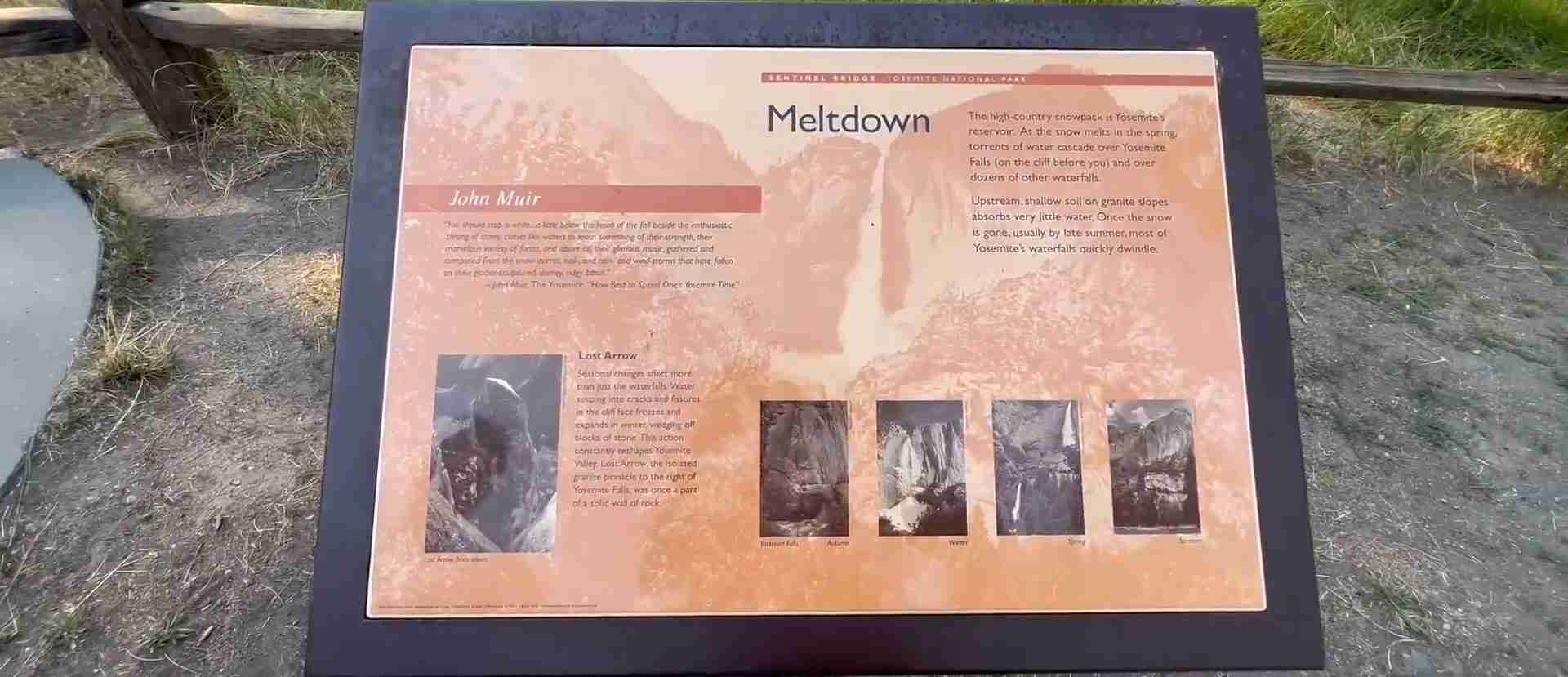
Yosemite Falls, North America’s tallest waterfall at 2,425 feet total drop (1,430-foot upper fall, 675-foot middle cascades, 320-foot lower fall), commands attention from anywhere in Yosemite Valley during spring and early summer peak flow. The Lower Yosemite Fall Trail provides close approach via a 1-mile loop on paved pathways, reaching the base of the lower fall in 10-15 minutes of easy walking from Yosemite Valley Lodge. Spring visitors experience thunderous water volume creating spray clouds visible across the valley while late summer visitors often find the falls reduced to trickles or completely dry as seasonal snowmelt ceases. The Upper Yosemite Fall Trail climbs 2,700 feet elevation gain over 7.2 miles round trip to the top of the upper fall — this strenuous hike requires 6-8 hours and exceeds realistic day trip time constraints.
Cook’s Meadow Loop delivers an easy 1-mile valley floor walk showcasing classic Yosemite Valley perspectives without significant elevation gain. The level loop trail circles through meadows and riparian forests providing postcard views of Half Dome, Sentinel Rock, and Yosemite Falls framed by foreground vegetation. Spring wildflowers carpet the meadows while autumn brings golden foliage color to black oak trees. Wildlife sightings occur frequently — mule deer graze in meadows during morning and evening hours while acorn woodpeckers and Steller’s jays inhabit surrounding forests. The entire loop requires 30-45 minutes at a leisurely pace with ample photography stops.
Yosemite Village serves as the valley’s commercial and visitor service center, offering the Yosemite Valley Visitor Center with natural history exhibits and park orientation information, the Ansel Adams Gallery displaying the photographer’s iconic black-and-white prints and selling high-quality reproductions, Degnan’s Kitchen providing quick lunch options, and Village Store stocking snacks, camping supplies, and souvenirs. The visitor center provides relief from summer heat with air conditioning and restrooms while interpretive exhibits explain Yosemite’s geological formation through glaciation. Budget 30-60 minutes for village exploration depending on lunch timing and shopping interests.
Mirror Lake seasonal pool once reflected Half Dome’s image in still waters, creating the mirror effect that named the destination — winter and spring runoff fills the former lake bed while summer evaporation reduces it to shallow pools and by autumn only dry meadows remain. The Mirror Lake Loop Trail covers 5 miles round trip from shuttle stop with minimal elevation gain, following Tenaya Creek through forests and meadows. This moderate hike requires 2.5-3 hours completing the full loop — time constraints limit most day-trippers to shorter out-and-back walks viewing Half Dome from creek-level perspectives. Ranger-led walks sometimes depart from Yosemite Village during summer providing natural history interpretation along valley floor trails.
The free Yosemite Valley Shuttle operates year-round between 7 AM and 10 PM serving 21 numbered stops throughout the valley floor including all major attractions, trailheads, campgrounds, and lodging areas. Shuttles arrive at each stop every 10-20 minutes during peak hours, providing car-free transportation that eliminates parking hassles at individual sites. Day-trippers should park once at any designated lot and use shuttles for subsequent movements — this strategy saves time otherwise spent searching for parking at crowded locations like Yosemite Falls and Bridalveil Fall during midday peak hours. Download the free Yosemite shuttle app showing real-time bus locations and stop positions.
Ranger programs enhance day trip experiences through expert interpretation of Yosemite’s natural and cultural history. Summer schedules typically include morning geology talks at various valley locations, afternoon wildlife programs, and evening campfire presentations. Program schedules appear on notice boards at the visitor center and online at the park website — advance planning allows coordinating arrival time with particularly interesting programs on topics like bears, rock climbing history, or Native American heritage. Most programs last 30-60 minutes and require no advance reservations.
Photography opportunities peak during morning and late afternoon golden hours when low-angle sunlight illuminates granite walls and waterfalls with warm color. Midday overhead sun creates harsh shadows and blown-out highlights that diminish photograph quality. Serious photographers should arrive at Tunnel View by 7:30 AM for soft morning light on El Capitan and Bridalveil Fall, shoot Yosemite Falls and Cook’s Meadow during mid-morning hours, retreat to shaded locations or indoor exhibits during midday 11 AM to 2 PM, then return to valley floor locations for late afternoon light from 4 PM to sunset. Spring and fall provide the best natural lighting conditions while summer’s harsh overhead sun challenges even experienced photographers.
What to skip on day trips includes Glacier Point, requiring a 60-mile round trip from Yosemite Valley with 1-hour driving time each way that consumes 25 percent of total park time for a single viewpoint. Mariposa Grove’s giant sequoias sit 1.5 hours round trip from the valley by car plus 1-2 hours hiking grove trails — this 3 to 3.5-hour excursion reduces valley time below the minimum needed to see core attractions. Tuolumne Meadows, accessible only via Tioga Road from late May through October, lies 90 minutes from the valley and requires overnight stays to appreciate its high-alpine meadows and granite domes. Vernal Fall and Nevada Fall hikes via the Mist Trail demand 4-6 hours round trip with significant elevation gain exceeding day-trip time and energy budgets.
Seasonal Considerations for Yosemite Day Trips 2026
Spring months from April through June deliver Yosemite at peak waterfall flow as warming temperatures melt Sierra Nevada snowpack, feeding the park’s waterfalls to maximum volume and drama. Yosemite Falls, Bridalveil Fall, and Vernal Fall cascade at their most spectacular during this season, creating spray clouds visible across the valley and generating the thunderous roar that echoes off granite walls. Spring wildflowers bloom in valley meadows and foothill elevations, adding vibrant color to green grass and fresh foliage. Temperatures range from 60-75°F in the valley with cool mornings and pleasant afternoons ideal for hiking.
Spring disadvantages include variable weather with occasional rain showers and lingering snow at higher elevations. Highway 120 sometimes requires tire chains through late May when spring storms deposit fresh snow on upper sections near Big Oak Flat Entrance. Tioga Road and Glacier Point Road remain closed until late May or early June depending on winter snowpack levels, limiting access to high-country destinations. Despite these constraints, spring provides the optimal season for day trips balancing comfortable temperatures, dramatic waterfalls, and moderate crowds before summer peak season begins.
Summer months from July through September guarantee accessible roads, predictable dry weather, and long daylight hours extending to 8:30 PM that maximize available park time for evening photography and extended exploration. Temperatures climb to 85-95°F in the valley during July and August with intense sunlight creating challenging midday conditions but pleasant early mornings and late afternoons. All park roads including Tioga Road across the Sierra crest and Glacier Point Road to the famous overlook open by early July, providing maximum access to Yosemite’s diverse regions.
Summer delivers Yosemite’s most crowded conditions with parking lots filling by 10 AM on weekends and holidays, shuttle buses running at capacity, and popular trails experiencing congestion that diminishes wilderness experience. Many waterfalls including Yosemite Falls reduce to trickles or dry up completely by August as seasonal snowmelt ceases — visitors expecting dramatic cascades face disappointment during late summer visits. Despite these drawbacks, summer’s reliable weather and full park access make it the most popular season for day trips from San Francisco, particularly for families coordinating with school vacation schedules.
Fall months from September through November provide excellent day trip conditions with moderate crowds after summer peak season ends, comfortable temperatures ranging 60-75°F, and autumn foliage color as black oaks and dogwoods turn gold and red. Waterfalls flow at reduced volume or completely dry during fall but pleasant weather and reduced congestion compensate for diminished cascades. Early fall through mid-October maintains full road access while late October through November may see Tioga Road and Glacier Point Road close for the season depending on first significant snowfalls.
Fall advantages include significantly reduced crowds compared to summer months, easier parking throughout the day, and pleasant hiking temperatures without summer’s intense heat. Wildlife activity increases as black bears forage aggressively before winter hibernation and mule deer descend from high country to valley elevations. Fall colors peak in late October across Yosemite Valley’s mixed forests creating photographic opportunities rivaling spring wildflowers for visual interest. Day-trippers seeking peaceful experiences with minimal crowds should prioritize fall visits despite dry waterfalls.
Winter months from December through March transform Yosemite into a snow-covered landscape with valley temperatures ranging 30-55°F and occasional snowfall dusting granite cliffs and meadows. Yosemite Falls sometimes freezes partially, creating ice formations at the base while maintaining flow through the main cascade. Winter provides unique photography opportunities with snow-frosted evergreens and ice-trimmed rock faces impossible during other seasons. Significantly reduced visitation creates peaceful experiences with nearly empty valley roads and trails shared with only the most dedicated winter travelers.
Winter challenges include mandatory tire chain requirements for Highway 120 during and after snowstorms, potential road closures lasting days during severe weather, and shortened daylight hours limiting park time to 9 AM to 5 PM core period. Tioga Road and Glacier Point Road close completely from first significant November snowfall until late May, restricting access to Yosemite Valley and lower elevation destinations. Winter self-drivers must carry tire chains, verify weather forecasts before departure, and possess experience driving mountain roads in snow conditions — inexperienced winter drivers should consider organized tours that handle chain installation and snow driving challenges.
Shoulder seasons of late March through April and late October through November provide compromise conditions between peak season crowds and winter access restrictions. These periods feature moderate temperatures, minimal crowds, partial waterfall flow, and generally accessible roads with occasional weather-related complications. Visitors accepting some uncertainty about weather and waterfall conditions gain significant advantages from reduced congestion and pleasant touring weather during shoulder season day trips.
Sample One-Day Yosemite Itinerary from San Francisco 2026
This intensive itinerary maximizes day trip efficiency while maintaining realistic expectations about hiking distances and time allocations. Total driving time consumes 8.5 hours while park activities span 5.5 hours for a complete 14-hour day from San Francisco departure to return arrival.
4:30 AM: Depart San Francisco via Interstate 80 and Interstate 580 toward Oakland, carrying packed breakfast and full water bottles. Early departure avoids San Francisco traffic congestion and positions arrival at Yosemite Valley during optimal morning light.
6:30 AM: Stop in Oakdale or Manteca for restroom break and hot coffee at roadside cafe. These final Central Valley towns provide last convenient services before the hour-long mountain climb to Yosemite.
7:30 AM: Continue on Highway 120 through foothill country as sunrise illuminates Sierra Nevada peaks ahead. Morning light transforms ordinary agricultural landscapes into photogenic scenery worth occasional photo stops at designated pullouts.
8:30 AM: Arrive at Big Oak Flat Entrance station, pay $35 entrance fee, and receive seven-day permit and park map. Review shuttle schedule and current conditions with entrance rangers.
9:00 AM: Stop at Tunnel View for the classic Yosemite Valley panorama capturing El Capitan, Bridalveil Fall, and Half Dome in single composition. Morning light illuminates the valley beautifully for 15 minutes of photography before descending to valley floor.
9:30 AM: Walk Bridalveil Fall Trail, a 0.5-mile round trip reaching the base of the 620-foot cascade. Spring visitors experience peak flow and spray while summer visitors find reduced volume but easier trail conditions without slippery wet rocks.
10:15 AM: Drive to El Capitan Meadow, pull into roadside parking areas along Northside Drive, and glass the granite face with binoculars searching for rock climbers on multi-day ascents. Multiple viewpoints along the meadow provide different perspectives for 20 minutes of observation.
10:45 AM: Park at Yosemite Valley Lodge and board the free valley shuttle heading to Yosemite Village. Parking once and using shuttles for subsequent movements eliminates time wasted searching for spots at individual attractions.
11:00 AM: Visit Yosemite Valley Visitor Center for exhibits explaining glaciation processes that carved the valley, view natural history displays on wildlife and vegetation zones, and use air-conditioned restrooms. Purchase Ansel Adams photography books and trail maps at adjacent bookstore if desired.
11:45 AM: Walk through Yosemite Village examining Ansel Adams Gallery prints, browsing Village Store merchandise, and purchasing lunch supplies at Degnan’s Kitchen or Village Store deli counter. Prepared sandwiches, fruit, and snacks cost $15-25 per person.
12:30 PM: Eat lunch at Cook’s Meadow with Half Dome views as backdrop. Tables and benches along the meadow loop provide comfortable picnic spots while immersed in classic Yosemite Valley scenery.
1:15 PM: Walk Cook’s Meadow Loop, a level 1-mile trail circling through meadows and forests with continuous views of Half Dome, Sentinel Rock, and Yosemite Falls. Spring wildflowers or fall foliage color enhance the 45-minute stroll depending on season.
2:00 PM: Hike Lower Yosemite Fall Trail from Yosemite Valley Lodge, following the paved 1-mile loop to the base of North America’s tallest waterfall. Spring flow creates impressive spray while late summer reveals dry rockfaces where water cascaded months earlier.
2:45 PM: Return to vehicle at Yosemite Valley Lodge parking area and drive to Valley View at the western end of Yosemite Valley for final photographs of El Capitan and Bridalveil Fall from river-level perspective.
3:15 PM: Begin return journey to San Francisco via Highway 140 to experience the gentler Merced River canyon approach as alternative to Highway 120’s steeper grades. Different route provides fresh scenery and distributes challenging mountain driving across separate segments of total journey.
4:30 PM: Stop in Mariposa for restroom break, late afternoon snack, and fuel if needed before the final 2.5-hour drive to San Francisco. Mariposa’s historic downtown offers pleasant walking if schedule permits extra 30 minutes.
7:00 PM: Arrive in San Francisco completing the 14.5-hour day trip. Total driving time of 8.5 hours combined with 5.5 hours of park activities and stops creates an intensive but rewarding introduction to Yosemite National Park’s signature landscapes.
This itinerary assumes normal traffic conditions and moderate fitness levels for 3 miles of total hiking on gentle terrain. Faster walkers and drivers could compress the schedule by 1 hour while those preferring relaxed pacing might extend the day to 15-16 hours total. Weather delays, unexpected parking challenges, or extended photography sessions require schedule flexibility — build 30-60 minute buffer time into planning to accommodate inevitable complications.
Practical Tips for Yosemite Day Trips 2026
What to pack for a Yosemite day trip includes layered clothing accommodating 40-degree temperature swings between dawn departure from sea-level San Francisco (50°F) and midday valley temperatures (85-95°F in summer). Bring lightweight jacket or fleece for early morning and evening hours, sun hat for midday protection, comfortable hiking shoes with ankle support for uneven trails, sunscreen with SPF 30 or higher for high-altitude sun exposure, and sunglasses to reduce granite glare. A small daypack holds water bottles, snacks, extra layers, and camera equipment while keeping hands free for walking and photography.
Water consumption proves critical in Yosemite’s dry mountain climate where high altitude and physical exertion increase dehydration risk. Carry at least 2 liters of water per person for moderate hiking and warm weather conditions, refilling at visitor center fountains and restroom facilities throughout the valley. Reusable water bottles minimize plastic waste while insulated bottles keep water cool during summer heat. Dehydration symptoms including headache, fatigue, and dizziness appear quickly at 4,000-foot valley elevations — consistent water intake prevents these complications.
Food options inside Yosemite Valley include Degnan’s Kitchen at Yosemite Village offering sandwiches, salads, and pizza for $12-18 per meal, Yosemite Valley Lodge’s food court with burgers, pasta, and salads for $15-22 per meal, and The Ahwahnee Hotel’s formal dining room serving upscale cuisine for $35-60 per person requiring advance reservations. Village Store stocks groceries, snacks, and deli sandwiches for self-catered meals at lower costs. Packing lunch from San Francisco saves time and money while allowing flexible picnic timing at scenic locations like Cook’s Meadow and El Capitan Meadow rather than constraining midday hours to restaurant service periods.
Restroom availability concentrates in developed areas including Yosemite Village, Yosemite Valley Lodge, Curry Village, and trailhead parking areas. Portable toilets serve popular viewpoints including Tunnel View and Valley View during peak season while formal restroom buildings provide year-round facilities at major destinations. Plan restroom stops strategically — facilities at less popular trailheads offer shorter lines than crowded village locations during midday peak hours. The Yosemite Valley Visitor Center restrooms remain among the cleanest and least crowded options for mid-morning breaks.
Bear safety protocols apply year-round in Yosemite Valley where approximately 300-500 American black bears inhabit the park. Never approach bears for photographs regardless of how docile they appear — all bears are wild animals capable of sudden aggressive behavior. Maintain minimum 50-yard distance from bears encountered on trails or meadows. Store all food, scented toiletries, and trash in vehicles when leaving cars unattended, and use designated food storage lockers at trailheads and picnic areas. Bears have learned to associate vehicles and backpacks with food, making proper storage essential for preventing property damage and dangerous bear habituation to human food sources.
Altitude considerations affect some San Francisco Bay Area visitors unaccustomed to elevation. Yosemite Valley sits at 4,000 feet elevation where thinner air reduces oxygen availability compared to sea level, potentially causing shortness of breath, mild headache, and faster fatigue during hiking. These mild altitude effects resolve within hours as the body adjusts — starting with easy walks rather than strenuous hikes allows gradual acclimatization. Visitors with respiratory conditions or cardiovascular issues should consult physicians before undertaking day trips involving 4,000-foot elevation changes and moderate hiking.
Cell phone service remains unreliable throughout Yosemite Valley with dead zones common at many popular locations including Cook’s Meadow, El Capitan Meadow, and trail sections distant from developed areas. Limited service exists near Yosemite Village and Yosemite Valley Lodge but should not be relied upon for navigation or emergency communication. Download offline maps through Google Maps before leaving San Francisco, carry printed park maps available free at entrance stations, and inform family members of expected return timing before departing cellular coverage areas.
Weather changes rapidly in mountains with morning sunshine giving way to afternoon thunderstorms during summer months. Monitor sky conditions and retreat from exposed locations if dark clouds build overhead — lightning strikes granite cliffs and open meadows during afternoon thunderstorms common from July through September. Carry lightweight rain jacket even when morning forecast promises clear skies. Winter weather requires more extensive preparation including tire chains, ice scraper, and emergency supplies in case of unexpected road closures stranding travelers.
Parking strategies significantly affect day trip efficiency. Arrive at Yosemite Valley before 9 AM to secure parking at preferred lots near Yosemite Village or Yosemite Valley Lodge — lots fill completely by 10 AM on summer weekends and holidays, forcing late arrivals to remote overflow lots requiring long shuttle rides. Park once and use free valley shuttles for all subsequent movements rather than driving between individual attractions. Shuttle wait times rarely exceed 20 minutes even during peak periods while driving and parking at each location consumes 30-45 minutes per destination including parking searches.
Photography equipment recommendations for day-trippers include wide-angle lens (16-35mm equivalent) capturing expansive valley panoramas and tall waterfalls, telephoto zoom (70-200mm equivalent) isolating distant granite formations and wildlife, and tripod for long exposure waterfall shots and low-light conditions during early morning and late afternoon. Polarizing filters reduce glare on granite faces and darken blue skies while neutral density filters enable creative long exposures of waterfalls during bright midday conditions. Pack extra batteries and memory cards — cold morning temperatures drain battery life while unlimited photo opportunities fill cards quickly.
Accessibility services accommodate visitors with mobility limitations through paved valley floor trails including Lower Yosemite Fall Trail and portions of Cook’s Meadow Loop suitable for wheelchairs. Free valley shuttles feature wheelchair lifts and designated seating areas. Accessible parking spaces exist at all major valley locations including visitor center, village, and lodge areas. The Yosemite Valley Visitor Center provides detailed accessibility information and brochures outlining barrier-free activities throughout the valley floor.
Frequently Asked Questions About Yosemite Day Trips 2026
Can you realistically visit Yosemite in one day from San Francisco?
Yosemite day trips from San Francisco prove realistic for experiencing valley highlights including El Capitan, Half Dome viewpoints, Yosemite Falls, and Bridalveil Fall but require accepting significant limitations. The 170-mile distance and 4 to 4.5-hour drive each way consume 8 to 9 hours of a 14 to 15-hour day, leaving only 5 to 6 hours for park exploration. This compressed schedule permits viewing major landmarks, short walks to waterfall bases, and limited hiking on valley floor trails but excludes extended hikes to Vernal Fall or Nevada Fall, drives to Glacier Point, visits to Mariposa Grove’s giant sequoias, or exploration of Tuolumne Meadows high country. Visitors seeking comprehensive Yosemite experiences covering multiple park regions should plan overnight stays rather than attempting unrealistic one-day coverage of a park spanning 1,189 square miles.
What is the best time of year for a Yosemite day trip from San Francisco?
Late April through early June provides optimal conditions for Yosemite day trips from San Francisco, balancing peak waterfall flow from snowmelt, comfortable temperatures averaging 60-75°F, and moderate crowds before summer peak season. Spring delivers Yosemite’s most dramatic waterfall displays with Yosemite Falls, Bridalveil Fall, and other cascades flowing at maximum volume while valley meadows showcase wildflower blooms. Roads remain accessible with occasional chain requirements on Highway 120 during spring storms. September and October offer attractive alternatives with pleasant fall weather, autumn foliage color, and significantly reduced crowds compared to summer despite dry waterfalls. Avoid mid-July through August when extreme crowds overwhelm parking facilities, summer heat reaches 90-95°F, and most waterfalls dry completely from depleted snowpack.
Do you need reservations to enter Yosemite in 2026?
Yosemite National Park operates without entrance reservations throughout 2026, eliminating the booking requirements that applied during some previous years. All visitors can enter the park daily without advance reservations regardless of arrival method or season, though they must still pay applicable entrance fees. This reservation-free policy improves spontaneous visit flexibility and removes planning barriers but creates potential overcrowding during holiday weekends, summer peak season, and popular fall foliage periods when daily visitor numbers sometimes exceed parking capacity and ideal experience conditions. Park officials recommend early arrival before 9 AM to secure parking and avoid congestion regardless of reservation requirements.
How much does it cost for two people to take a day trip to Yosemite from San Francisco?
Two U.S. resident travelers pay approximately $115-185 total for a self-drive Yosemite day trip from San Francisco in 2026. Costs include $35 park entrance covering both passengers for seven days, $50-80 gasoline for 340-mile round trip assuming $4-5 per gallon and 22-25 mpg fuel economy, and $30-70 for meals including breakfast stop, lunch in the park, and return journey dinner. Two non-U.S. resident travelers face substantially higher costs of approximately $315-385 total due to the $100-per-person entrance surcharge mandated for non-residents aged 16 and older — park entrance alone costs $235 ($35 vehicle fee plus $200 in individual surcharges). Organized tours cost $95-145 per person for U.S. residents or $195-245 per person for non-residents including all transportation and park entrance.
Is driving to Yosemite from San Francisco difficult?
Driving from San Francisco to Yosemite presents moderate difficulty varying by chosen route and driver experience. Highway 120 via Groveland features steep grades approaching 10 percent, tight switchbacks requiring reduced speeds, and narrow sections demanding confident mountain driving skills — experienced drivers handle these conditions comfortably while nervous drivers or those piloting large vehicles find the route stressful. Highway 140 via Mariposa provides gentler grades, wider road surfaces, and more forgiving conditions suitable for all driver skill levels and vehicle sizes. Both routes traverse 165-190 miles requiring sustained attention for 3.5 to 4.5 hours each direction. Winter conditions add significant difficulty with mandatory tire chain requirements, potential ice, and possible road closures requiring experience with snow driving. Summer conditions present minimal technical challenges beyond winding mountain roads navigable by average drivers.
What should I pack for a Yosemite day trip?
Essential items for Yosemite day trips include 2 liters of water per person in reusable bottles for hydration during hiking and warm weather, layered clothing accommodating 40-degree temperature swings from cool morning departures to midday valley heat, comfortable hiking shoes with ankle support for uneven trails, sunscreen SPF 30 or higher and sun hat for high-altitude exposure, sunglasses reducing granite glare, lightweight daypack carrying supplies while keeping hands free, packed lunch and snacks saving time and money compared to park restaurants, camera equipment capturing iconic landscapes, park map and downloaded offline navigation since cell service proves unreliable, basic first aid supplies for minor injuries, and portable phone charger since cold temperatures and extensive photography drain batteries quickly.
Can you see giant sequoias on a Yosemite day trip from San Francisco?
Visiting Mariposa Grove’s giant sequoias proves difficult on San Francisco day trips due to time constraints. The grove sits 35 miles and 1 hour drive from Yosemite Valley in the park’s southern section, requiring 2 hours round-trip driving plus 1.5 to 2 hours hiking grove trails for a total 3.5 to 4-hour excursion. This substantial time commitment consumes most available park hours, forcing difficult choices between giant sequoias and valley landmarks including El Capitan, Yosemite Falls, and Half Dome viewpoints. Day-trippers should prioritize Yosemite Valley experiences and plan future overnight visits for comprehensive park coverage including Mariposa Grove. Visitors absolutely determined to see giant sequoias on day trips should book organized tours specifically advertising Mariposa Grove inclusion, though these tours typically reduce valley time to 2-3 hours.
Are guided tours or self-driving better for Yosemite day trips?
Self-driving delivers better value and flexibility for groups of three or more travelers while organized tours suit solo visitors and couples preferring stress-free experiences. Self-driving costs approximately $29-46 per person for four travelers sharing vehicle and entrance expenses compared to $95-145 per person for organized tours — groups save $66-99 per person choosing independent travel. Self-drivers control departure timing, customize park itineraries, spend unlimited time at favorite locations, and avoid group dynamics of 40-50 passengers. Organized tours eliminate driving fatigue from 8-9 hours behind the wheel, provide expert natural history commentary, guarantee commercial tour parking access bypassing general lot congestion, and handle all logistics allowing passengers to relax and enjoy scenery. Solo travelers and couples find organized tours competitively priced when factoring gasoline, parking, entrance fees, and the value of expert interpretation.
What are the must-see attractions in Yosemite for first-time visitors on a day trip?
First-time day-trippers should prioritize Tunnel View for the classic valley panorama capturing El Capitan, Bridalveil Fall, and Half Dome in one composition, Bridalveil Fall Trail for accessible 0.5-mile walk to a 620-foot waterfall base, El Capitan Meadow providing perspectives on the 3,000-foot granite monolith, Lower Yosemite Fall Trail reaching the base of North America’s tallest waterfall via easy 1-mile paved loop, and Cook’s Meadow Loop for level valley floor walking with continuous Half Dome views. These five essential stops require approximately 4 hours total including driving, parking, walking, and photography time, leaving margins for lunch, visitor center exploration, and unexpected delays. Attempting to add Glacier Point, Mariposa Grove, or extended hiking fragments limited day trip time and creates rushed experiences diminishing enjoyment of these priority attractions.
How early should I arrive at Yosemite Valley to avoid crowds?
Arriving at Yosemite Valley between 8:30 AM and 9:30 AM positions day-trippers before peak midday crowds overwhelm parking facilities and popular viewpoints. Valley parking lots begin filling around 9 AM on summer weekends and holidays, reaching capacity by 10 AM to 11 AM when late arrivals face remote overflow parking requiring long shuttle rides. Early arrival also delivers optimal waterfall lighting during spring mornings when low-angle sun illuminates cascades without the harsh overhead glare of midday hours. Departing San Francisco by 4:30 AM to 5:30 AM allows 3.5 to 4.5-hour drive time plus breakfast stop, positioning valley arrival during this ideal window. Organized tours departing San Francisco at 6 AM to 7 AM typically reach the valley around 10:30 AM to 11:30 AM, arriving after prime morning conditions but before afternoon crowds peak.