Visiting New York City with Kids 2026: Complete Family Guide
New York City transforms into an extraordinary playground for families, where world-class museums sit alongside sprawling parks, Broadway stages welcome young audiences, and neighborhoods pulse with energy that captivates children and adults alike. Planning a family trip to the city requires strategic preparation across attractions, budgets, safety considerations, and logistics to ensure every family member experiences the magic without the overwhelm.
Key Takeaways for NYC Family Travel 2026
- Budget Planning 2026: Families need $330-600 per person daily for mid-range comfort, assuming two sharing hotel accommodation. Budget-conscious families manage $180-280 per person daily, while luxury seekers invest $550-850+ per person daily.
- Transportation Value: The subway weekly fare cap at $35 provides unlimited rides after 12 trips in seven days, with children under 44 inches tall riding free, delivering exceptional value for families staying several days.
- Major Attractions 2026: The American Museum of Natural History leads family attractions with suggested admission of $25 adults and $14 children ages 3-12, plus pay-what-you-wish admission for New York State residents.
- Optimal Visit Timing: Late spring (May-June) and early fall (September-October) offer comfortable weather, manageable crowds, and accessible outdoor attractions including playgrounds and parks throughout all five boroughs.
- Strategic Neighborhoods: Midtown Manhattan provides central access to major attractions, while the Upper West Side offers family-friendly residential character near Central Park and the American Museum of Natural History.
- Safety and Navigation: New York City ranks as one of America’s safest large cities in 2026, with family-friendly neighborhoods, reliable subway service, and pedestrian infrastructure designed for strollers and young walkers.
People Also Ask About Visiting New York City with Kids 2026
Is New York City safe for families with children in 2026?
New York City is remarkably safe for families in 2026, ranking among America’s safest large cities with comprehensive police presence, well-lit public spaces, and heavily-trafficked tourist areas. Manhattan’s major family destinations including Times Square, Central Park, the American Museum of Natural History, and Bryant Park maintain constant foot traffic and security. The subway system serves millions daily with 24/7 operation and increasing security cameras and personnel. Tourist-focused neighborhoods like Midtown, the Upper West Side, and Battery Park area provide pedestrian-friendly sidewalks, stroller accessibility, and family amenities. Standard big-city awareness applies — watch belongings in crowded areas, avoid deserted streets late evening, and keep children close in busy terminals — but families navigate the city comfortably using normal urban precautions. The MTA subway remains the safest mass transit option, particularly during daylight and evening hours when trains and stations stay crowded with commuters and tourists.
How much does a family trip to New York City cost in 2026?
A family of four (two adults, two children) visiting New York City for one week in 2026 spends approximately $6,200-10,600 total for mid-range comfort. This includes accommodation $1,680-2,800 (family suite or connecting rooms at $240-400 nightly for seven nights), meals $2,240-3,360 (family of four at $80-120 per person daily), transportation $280-420 (four weekly subway caps at $35 each plus occasional taxi rides), attractions $1,400-2,800 (museum admissions, observation decks, Broadway shows for four people), and miscellaneous $600-1,200 (souvenirs, snacks, unexpected costs). Budget-conscious families reduce total weekly costs to approximately $4,000-6,000 through budget hotels, food trucks and groceries, free attractions, and walking when practical. Luxury families invest $14,000-21,000+ weekly with high-end hotels, fine dining, Broadway premium seats, and private tours. Individual daily costs per person (with hotel rates divided by occupants before calculating totals) range $180-280 budget tier, $330-600 mid-range, and $550-850+ luxury.
What are the best family-friendly neighborhoods to stay in NYC 2026?
The Upper West Side stands as NYC’s premier family neighborhood, offering residential safety, Central Park proximity, the American Museum of Natural History within walking distance, and extensive subway access via the 1, 2, 3, B, and C trains. Hotels range $220-400 nightly with many featuring family suites and kitchenettes. Midtown Manhattan provides central location near Times Square, Bryant Park, Grand Central Terminal, and the Empire State Building, with hotels $180-350 nightly and unmatched subway connectivity but higher density and noise. Battery Park City delivers waterfront parks, Statue of Liberty ferry access, 9/11 Memorial proximity, and protected pedestrian paths ideal for young children, with hotels $250-450 nightly and the 1 train providing uptown access. Brooklyn’s DUMBO and Brooklyn Heights neighborhoods offer Brooklyn Bridge Park, stunning Manhattan skyline views, and quieter streets, connected via the A, C, F trains with hotels $170-320 nightly. Chelsea and the Flatiron District combine walkable neighborhoods, High Line park access, and food hall culture with hotels $200-380 nightly and excellent subway connections.
What free activities can families enjoy in New York City 2026?
New York City delivers exceptional free family experiences throughout all five boroughs. Central Park provides 843 acres of playgrounds, open lawns, Alice in Wonderland sculpture, Belvedere Castle, and seasonal events without admission charges. Times Square offers dazzling billboards, street performers, red TKTS stairs, and people-watching excitement completely free. The Staten Island Ferry provides 30-minute round-trip views of the Statue of Liberty, Manhattan skyline, and New York Harbor without cost, departing every 30 minutes. Brooklyn Bridge delivers iconic pedestrian walkway crossing with spectacular city views accessible from both Brooklyn and Manhattan sides. Bryant Park features seasonal activities including summer movie nights, winter ice skating (skate rental required), carousel rides, reading room, and lawn games. The High Line park presents elevated walkway gardens, art installations, and Hudson River views along 1.45 miles of former railway. Grand Central Terminal welcomes visitors to explore Beaux-Arts architecture, whispering gallery, and celestial ceiling free of charge. Public libraries including the Stephen A. Schwarzman Building offer children’s programming, story times, and architectural grandeur. Street festivals, outdoor concerts, and neighborhood events throughout summer months provide cultural experiences without tickets.
Extended multi-day tours – 5+ days
Featured New York City Multi-Day Tour Packages

3 days
New York City 3-Day Discovery Tour
- ✓ Comprehensive New York City experience
- ✓ Expert local guides included
- ✓ All accommodation included
- ✓ Transportation provided
5 days
New York City 5-Day Highlights Experience
- ✓ Comprehensive New York City experience
- ✓ Expert local guides included
- ✓ All accommodation included
- ✓ Transportation provided
7 days
New York City 7-Day Cultural Journey
- ✓ Comprehensive New York City experience
- ✓ Expert local guides included
- ✓ All accommodation included
- ✓ Transportation provided
10 days
New York City 10-Day Complete Adventure
- ✓ Comprehensive New York City experience
- ✓ Expert local guides included
- ✓ All accommodation included
- ✓ Transportation provided
Multi-day tour packages powered by TourRadar. Prices and availability subject to change.
Introduction to Family Travel in New York City 2026
New York City stands as one of the world’s premier family destinations, combining educational museums, theatrical performances, iconic landmarks, diverse cuisines, and neighborhood character that engages children while satisfying adult interests. The city’s compact geography concentrates attractions within subway-accessible neighborhoods, enabling families to experience world-class institutions without exhausting young legs or depleting travel budgets. From dinosaur skeletons at the American Museum of Natural History to crown-climbing adventures inside the Statue of Liberty, from Broadway’s family musicals to Central Park’s endless playgrounds, New York delivers experiences that educate, inspire, and create lasting memories across age groups.
Planning a successful family trip to New York City in 2026 requires strategic decisions across accommodation location, transportation methods, attraction selection, meal planning, and daily scheduling. The city’s extensive subway system provides affordable mobility, while concentrated neighborhoods allow walking between multiple attractions. Budget considerations span broad ranges depending on accommodation choices, dining preferences, and attraction priorities, with families controlling costs through strategic planning while maintaining comfort and enjoyment. Safety remains excellent across tourist-focused areas, with standard urban awareness ensuring comfortable navigation for families with children of all ages.
This comprehensive guide addresses every aspect of visiting New York City with kids in 2026, from budgeting and transportation to neighborhood selection and daily itineraries. Families discover how to maximize value through attraction passes, when to visit for optimal weather and crowds, which neighborhoods suit different family styles, and how to balance must-see landmarks with downtime and spontaneous exploration. The goal is confident, enjoyable family travel where logistics fade into background and experiences take center stage.
Understanding New York City Family Travel Costs 2026
Family travel costs in New York City span wide ranges depending on accommodation tier, dining choices, attraction selection, and travel style. Mid-range families budget $330-600 per person daily assuming two sharing hotel accommodation, encompassing comfortable hotels, diverse dining including restaurants and casual options, major attractions, and convenient transportation. Budget-conscious families reduce daily costs to $180-280 per person through hostel or budget hotel accommodation, food trucks and grocery shopping, free attractions and walking, and strategic subway use. Luxury families invest $550-850+ per person daily with high-end hotels, fine dining, Broadway orchestra seats, private tours, and taxis or car services. All daily cost figures reflect per-person expenses with hotel room rates divided by two occupants before calculating totals.
Accommodation represents the largest expense category for most families. Mid-range Manhattan hotels charge $240-400 per night for standard double rooms, translating to $120-200 per person nightly when two share. Budget hotels and hostels in outer boroughs or less central Manhattan locations offer $180-280 nightly ($90-140 per person), while luxury properties command $600-1,200+ nightly ($300-600+ per person). Family suites with separate sleeping areas or connecting rooms increase costs but provide valuable space and privacy, typically adding $80-150 to base room rates. Location dramatically affects pricing, with Midtown and tourist-focused neighborhoods commanding premium rates while neighborhoods in Brooklyn, Queens, or upper Manhattan deliver 20-40 percent savings with slightly longer subway commutes.
Meals consume substantial daily budgets across dining tiers. Budget families manage $50-70 per person daily through breakfast bagels $8-12, food truck lunches $12-18, pizza slice dinners $15-20, and grocery snacks $10-15. Mid-range dining reaches $80-120 per person daily with diner breakfasts $15-25, casual restaurant lunches $25-40, sit-down dinners $35-50, plus coffee and treats $10-20. Luxury dining exceeds $150 per person daily through upscale breakfast spots $30-45, acclaimed lunch restaurants $50-75, fine dining dinners $75-120+, and premium cafes $15-25. Families with young children often alternate between restaurants and quick options, averaging mid-range costs even when occasionally splurging on signature dining experiences.
Attraction costs vary dramatically based on interests and pass purchases. Major museums charge $20-35 adults and $12-20 children, observation decks run $40-75 per person, Broadway shows cost $80-200+ per ticket, and specialized attractions add $25-50 per person. A family of four visiting five major paid attractions across one week spends $800-1,600 without passes. The New York CityPASS saves significant money for attraction-focused families, bundling five top sights for $144 adults and $119 children versus $200+ buying separately. Free attractions including Central Park, Staten Island Ferry, Times Square, Brooklyn Bridge, and numerous festivals reduce daily costs dramatically when balanced with paid experiences.
Transportation Strategies and Costs for Families 2026
New York City’s subway system delivers exceptional value for family transportation, charging $3 per ride as of January 2026 with children under 44 inches tall riding free. The automatic fare cap system provides unlimited rides after paying for 12 trips within seven days, capping weekly costs at $35 per person regardless of additional travel. Families staying five to seven days typically benefit from this cap, effectively receiving unlimited subway access for extended visits. The OMNY contactless payment system replaced MetroCard in 2026, allowing families to tap credit cards, smartphones, or OMNY cards at turnstiles without advance purchase or station visits.
Subway navigation with children requires modest planning but proves remarkably family-friendly. Most stations provide elevator access for strollers, though some older stations require carrying collapsed strollers up stairs. Peak rush hours (7:30-9:30 AM and 4:30-7 PM weekdays) create crowded trains where strollers and tired children face challenges; families traveling mid-morning, midday, or early evening experience comfortable, uncrowded service. The numbered trains (1,2,3,4,5,6) run north-south through Manhattan while lettered trains (A,C,E,B,D,F,M,N,Q,R,W) provide crosstown and outer borough connections. Subway maps display clearly at every station with digital signs announcing arrivals, and smartphone apps including Citymapper and Google Maps provide real-time directions and service updates.
Walking comprises substantial daily transportation in Manhattan’s compact geography. Families comfortably walk 20-30 minute distances between nearby attractions, particularly along Central Park, through Midtown, and across downtown neighborhoods. Stroller-friendly sidewalks throughout Manhattan enable parents with young children to navigate confidently, though crowded areas like Times Square require vigilance. Comfortable walking shoes prove essential, as families typically cover 5-8 miles daily even when using subway for longer distances. Strategic walking reduces subway trips while allowing spontaneous discoveries of playgrounds, cafes, and neighborhood character.
Taxis and ride-sharing services provide convenience for specific situations despite higher costs. Yellow cabs charge $3 initial fare plus $2.50 per mile, with typical crosstown Manhattan rides costing $15-25. Uber and Lyft match or slightly exceed taxi prices during normal hours but surge dramatically during peak demand. Families use taxis strategically — late evenings when children tire, rainy weather, heavy shopping bags, or destinations poorly served by subway. A family budgeting $50-100 weekly for occasional taxi rides maintains flexibility without dramatically increasing transportation costs compared to all-subway strategy costing $105-140 weekly for three fare-paying family members.
Optimal Timing for NYC Family Visits 2026
Late spring (May through mid-June) and early fall (September through October) offer ideal conditions for NYC family travel, combining comfortable temperatures, manageable crowds, and full accessibility to outdoor attractions. May temperatures range 60-75°F with blooming flowers in Central Park and Bryant Park, while September delivers similar comfort after summer humidity breaks. These shoulder seasons avoid July-August peak tourism when hotel prices increase 30-40 percent, major attractions experience longest waits, and 85-90°F temperatures with high humidity challenge young children during midday hours.
Summer (late June through August) remains NYC’s busiest family travel season despite heat and crowds, driven by school vacation schedules. Families visiting summer months should plan indoor attractions during hottest afternoon hours (noon-4 PM), focusing on air-conditioned museums, Broadway matinees, and indoor entertainment complexes. Early mornings (before 10 AM) and evenings (after 5 PM) provide comfortable outdoor exploration in Central Park, along the High Line, and through neighborhood streets. Summer also delivers free outdoor concerts, festivals, and extended attraction hours that appeal to families accepting weather trade-offs for schedule convenience.
Winter (November through February) offers the lowest hotel rates and smallest crowds but requires cold-weather preparation. December provides magical holiday experiences with Rockefeller Center Christmas tree, department store windows, and festive decorations throughout the city, though hotel prices spike during Thanksgiving week and Christmas week. January and February deliver rock-bottom hotel rates ($140-220 nightly mid-range) and minimal attraction lines, perfect for families comfortable with 30-45°F temperatures and potential snow. Winter visits require warm layered clothing, with many attractions and all museums offering climate-controlled indoor environments for cold days.
Spring (March through April) presents unpredictable weather but increasing pleasant days as winter transitions to summer. Cherry blossoms bloom late March through early April in Brooklyn Botanic Garden and along streets throughout the city, while April temperatures rise into comfortable 55-70°F range. Spring break weeks (varying by school district) increase crowds and prices, but families visiting outside these peak weeks enjoy moderate conditions and manageable visitor numbers. Rain occurs frequently spring months, so families pack umbrellas and rain jackets while planning indoor backup options for major attractions.
Essential Neighborhoods and Accommodation Guide 2026
The Upper West Side stands as New York’s premier family neighborhood, stretching from 59th to 110th Streets between Central Park and the Hudson River. This residential area combines tree-lined streets, excellent restaurants, abundant playgrounds, and immediate access to Central Park’s western entrance and the American Museum of Natural History. Hotels range $220-400 nightly with many offering family suites, and the neighborhood’s quiet evening character contrasts sharply with Midtown’s perpetual buzz. The 1, 2, 3, B, and C subway lines provide quick access to Times Square (15 minutes), downtown attractions (25 minutes), and Coney Island (60 minutes). Families choosing Upper West Side enjoy safe strolling, neighborhood groceries for snacks and breakfast supplies, and proximity to Riverside Park’s waterfront playgrounds and bike paths.
Midtown Manhattan delivers maximum convenience at the cost of density and noise, extending from 34th to 59th Streets with Times Square, Bryant Park, Grand Central Terminal, and Empire State Building within walking distance. Hotels charge $180-350 nightly for standard rooms with prime locations commanding premium prices. The concentration of subway lines (1,2,3,4,5,6,7,A,C,E,B,D,F,M,N,Q,R,W,S) enables quick travel anywhere in the city, while walkability between major attractions reduces daily transportation needs. Midtown’s 24/7 energy excites some families but overwhelms others, particularly those with young children sensitive to constant noise and crowds. Hotel room selection matters significantly in Midtown, with quieter side street locations and higher floors dramatically improving sleep quality.
Battery Park City and Lower Manhattan provide waterfront tranquility with Statue of Liberty ferry access, 9/11 Memorial, and One World Observatory nearby. This newer residential neighborhood features protected pedestrian paths perfect for stroller walks, multiple playgrounds, and Hudson River Park’s recreational facilities. Hotels charge $250-450 nightly with modern amenities and river views common. The 1 train provides direct uptown access to Times Square (20 minutes) and Upper West Side (35 minutes), while the 4,5,E trains connect to Grand Central and Midtown East. Battery Park City suits families prioritizing safety, outdoor space, and lower Manhattan exploration over central Midtown location.
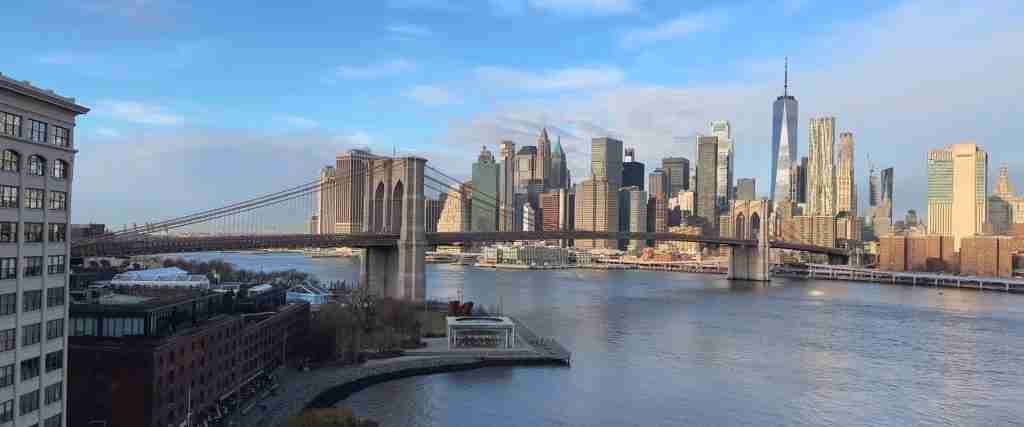
Brooklyn’s DUMBO (Down Under the Manhattan Bridge Overpass) and Brooklyn Heights neighborhoods offer Manhattan skyline views, Brooklyn Bridge Park’s waterfront playgrounds and carousels, and quieter residential character. Hotels range $170-320 nightly, providing 25-40 percent savings versus comparable Manhattan properties. The A, C, F, and 2,3 trains connect Brooklyn to Manhattan attractions in 15-30 minutes depending on destination. Brooklyn Bridge Park delivers 85 acres of lawns, playgrounds, basketball courts, and waterfront paths with spectacular Manhattan views, while neighborhood streets provide authentic Brooklyn brownstone architecture and local cafes. Families staying Brooklyn accept slightly longer subway commutes for substantial cost savings and residential neighborhood feel.
Major Family Attractions in New York City 2026
The American Museum of Natural History reigns as NYC’s premier family attraction, housing dinosaur fossils, the Rose Center planetarium, ocean life exhibits, and the Gilder Center’s butterfly vivarium across 45 permanent exhibition halls. Suggested admission charges $25 adults and $14 children ages 3-12 in 2026, with pay-what-you-wish admission available for New York State residents (check official site for current rates as pricing may vary). The museum requires 3-5 hours to explore highlights including the Tyrannosaurus Rex skeleton, blue whale model, Hall of Ocean Life, and planetarium space show. Families arrive at opening (10 AM) to avoid afternoon crowds, particularly during summer and school vacation weeks. The museum’s Central Park West location on the Upper West Side enables combination with Central Park visits, and the B,C subway lines stop directly at the 81st Street museum entrance.
Statue of Liberty and Ellis Island experiences range from ferry-only sightseeing to crown-climbing adventures. Base ferry tickets cost $25.50 adults and $16.50 children ages 4-12, including round-trip ferry, Liberty Island grounds access, Statue of Liberty Museum, and Ellis Island Immigration Museum. Pedestal Reserve tickets ($25.80 adults) add interior pedestal access with 215 steps or elevator to observation deck, while Crown Reserve tickets ($25.80 adults) include the ultimate 162-step climb to the statue’s crown — but crown tickets sell out months ahead and require booking 3-4 months advance for summer dates. The ferry departs Battery Park every 20-30 minutes starting 9 AM, with visits requiring 4-6 hours for both islands. Families with young children often choose base ferry tickets for flexibility, as crown access prohibits children under 42 inches tall and pedestal/crown reservations lock visit times.
Central Park provides 843 acres of free family entertainment across playgrounds, open lawns, walking paths, and iconic landmarks. The Ancient Playground near 85th Street and Fifth Avenue features pyramid-shaped climbing structures themed to Egyptian architecture, while Heckscher Playground at 62nd Street and Seventh Avenue delivers NYC’s largest playground with water features, climbing equipment, and shaded seating. Families discover Alice in Wonderland statue for climbing at 75th Street East Side, Belvedere Castle for dragon-themed architecture and views, Conservatory Water for model sailboat rentals, and Sheep Meadow for picnic sprawl. The Central Park Zoo sits at 64th Street and Fifth Avenue, charging separate admission ($23 adults, $17 children 3-12) for its compact collection of penguins, sea lions, snow leopards, and children’s petting zoo. Central Park spans from 59th to 110th Streets, accessed via multiple subway stations including 59th Street-Columbus Circle (A,B,C,D,1), 72nd Street (B,C), 81st Street-Museum of Natural History (B,C), and 86th Street (4,5,6).
Empire State Building observation decks deliver iconic NYC skyline views from the 86th floor open-air deck and optional 102nd floor enclosed deck. Admission prices vary by date and time (check official website for current rates), with online advance booking recommended to skip lengthy ticket lines. The 86th floor experience requires 1-2 hours total including security screening, exhibits, elevator rides, and observation time. Evening visits provide dazzling city lights but sacrifice daytime landmark identification, while morning visits before 11 AM offer clearest views and smallest crowds. The building locates at 34th Street and Fifth Avenue, accessible via the B,D,F,M,N,Q,R,W trains to 34th Street-Herald Square station or the 6 train to 33rd Street.
Times Square combines free entertainment through dazzling billboards, street performers, costumed characters, and people-watching with nearby paid attractions including Madame Tussauds wax museum, National Geographic Encounter ocean experience, and RiseNY flight simulation ride. The red TKTS stairs above the discount theater ticket booth provide elevated seating for crowd observation without purchase requirements. Families should set clear expectations about costumed character photos, which typically cost $5-10 tips per photo, and about street performers, some displaying content unsuitable for young children. Times Square concentrates between 42nd and 47th Streets along Broadway and Seventh Avenue, served by the 1,2,3,7,N,Q,R,W,S trains to Times Square-42nd Street station.
Broadway Shows and Entertainment for Families 2026
Broadway’s family-friendly productions range from Disney classics to contemporary musicals suitable for children ages 5 and up. “The Lion King” delivers spectacular puppetry, African-inspired music, and themes of courage and family that engage young audiences while stunning adults with technical artistry. “Aladdin” brings Disney’s animated film to stage with flying carpet magic, colorful costumes, and Genie’s comedic energy. “Frozen” adapts the beloved movie with ice palace sets, “Let It Go” anthem, and sisterhood story that particularly resonates with elementary-age children. These Disney productions typically run 2.5 hours including intermission, with recommended minimum ages of 4-5 years due to length and occasional scary moments.
Ticket prices range $80-200+ depending on seat location, performance date, and show popularity. Orchestra and front mezzanine seats command premium prices ($150-200+), while rear mezzanine and balcony seats cost $80-120 with excellent sightlines for children who can see over seat backs. The TKTS discount booth in Times Square sells same-day tickets at 20-50 percent off for many shows, though popular family productions rarely appear at significant discounts. Advance booking through official theater websites or Ticketmaster provides guaranteed seats for desired dates, important during school vacation weeks and summer months when family shows sell out. Broadway theaters prohibit children under 4 years old, and lap-sitting is not permitted — every audience member requires a ticket regardless of age.
Matinee performances (typically Wednesday 2 PM, Saturday 2 PM, Sunday 3 PM) suit family schedules better than 8 PM evening shows, allowing dinner after theater and reasonable bedtimes. Arriving 30 minutes before curtain provides time for restroom visits, merchandise browsing, and settling into seats without stress. Theater District restrooms experience heavy traffic immediately before shows and during intermission; families using facilities shortly after arrival avoid longest waits. Most Broadway theaters offer booster cushions for young children unable to see comfortably over seats, available free from ushers upon request.
Alternative theater options provide family entertainment at lower price points. The New Victory Theater specializes in children’s programming including plays, circus performances, and puppet shows with tickets $20-40, designed for ages 5-12. Off-Broadway theaters present smaller-scale productions often more accessible for young children with shorter run times and interactive elements. Free summer entertainment includes Central Park SummerStage concerts, Bryant Park movie nights, and various neighborhood festivals with performances throughout the city.
Dining Strategies for Families in New York City 2026
New York City’s diverse culinary scene accommodates every family budget and dining preference, from dollar pizza slices to upscale restaurants with children’s menus. Budget-conscious families embrace food trucks and quick-service options throughout the city, with Halal carts serving chicken and rice platters $10-12, taco trucks offering authentic Mexican $3-5 per taco, and pizza by the slice available $3-5 throughout Manhattan. These options provide substantial portions, quick service, and affordable pricing that enables families to allocate budgets toward attractions rather than restaurants.
Mid-range family dining concentrates in casual restaurants offering kids’ menus, relaxed atmospheres, and diverse options satisfying picky eaters. Shake Shack locations throughout the city serve burgers $6-9, hot dogs $5-6, and milkshakes $6-7 with consistently high quality. Junior’s Restaurant in Times Square delivers classic American menu with famous cheesecake, while Carmine’s family-style Italian restaurants provide enormous shareable portions designed for groups. Diner classics including Ellen’s Stardust Diner (singing waitstaff), City Diner, and Tom’s Restaurant offer breakfast all day, burgers, sandwiches, and comfort food $12-18 per entree. These establishments welcome families with high chairs, changing tables, and patient service accommodating young children.
Grocery shopping dramatically reduces food costs for families with hotel refrigerators or kitchenettes. Whole Foods, Trader Joe’s, and local groceries throughout Manhattan provide breakfast supplies (yogurt, fruit, bagels) for morning in-room meals, lunch components for picnics in Central Park or Bryant Park, and snacks for attraction visits. A family investing $40-60 on groceries covers multiple breakfasts and several lunches, reallocating those meal budgets toward dinner experiences or attraction tickets. Many Manhattan hotels provide mini-fridges in standard rooms, with family suites commonly including small refrigerators and microwaves.
Ethnic neighborhoods deliver authentic cuisines at neighborhood prices well below tourist-area restaurants. Chinatown’s dim sum parlors serve dumplings and small plates $3-6 each, sufficient for family lunches under $50. Little Italy’s pasta restaurants provide generous portions $15-22 per plate in checkered-tablecloth settings. Jackson Heights in Queens features Indian and Latin American restaurants with family platters $12-18, accessible via the 7 train. Korean BBQ in Koreatown (32nd Street between Fifth and Broadway) offers all-you-can-eat options $25-30 per person with unlimited banchan side dishes. These neighborhood dining experiences combine cultural education with budget-friendly meals.
Family-Friendly Free Attractions Throughout New York City 2026
Central Park delivers endless free entertainment across its 843-acre expanse, anchoring any NYC family visit without admission charges. Families explore the 21 playgrounds scattered throughout the park, each offering unique themes and equipment — the Ancient Playground’s Egyptian pyramids, Heckscher’s water features, Diana Ross’s climbing rocks. Open lawns including Sheep Meadow and Great Lawn invite picnics, frisbee, and ball games. The Loeb Boathouse pond hosts ducks and turtles for wildlife observation, while Belvedere Castle provides fairy-tale architecture and park views. Families walk or bike the park’s 6-mile loop road, closed to vehicles on weekends and evenings. Seasonal events including SummerStage concerts, Shakespeare in the Park performances (free tickets via lottery), and various festivals add cultural programming throughout warmer months.
The Staten Island Ferry operates 24/7 between Manhattan’s Whitehall Terminal and Staten Island’s St. George Terminal, providing completely free 25-minute cruises past the Statue of Liberty, Ellis Island, and Manhattan skyline. Ferries depart every 15-30 minutes depending on time of day, with morning and evening commuter hours offering most frequent service. Families board free without reservations, secure outdoor deck positions for optimal views (right side outbound, left side return for Statue sightlines), and complete the round trip in one hour. The ferry terminal connects to the 1 train at South Ferry station and the 4,5 trains at Bowling Green, making access convenient from anywhere in Manhattan. Families often combine ferry rides with nearby Battery Park playground and waterfront strolling.
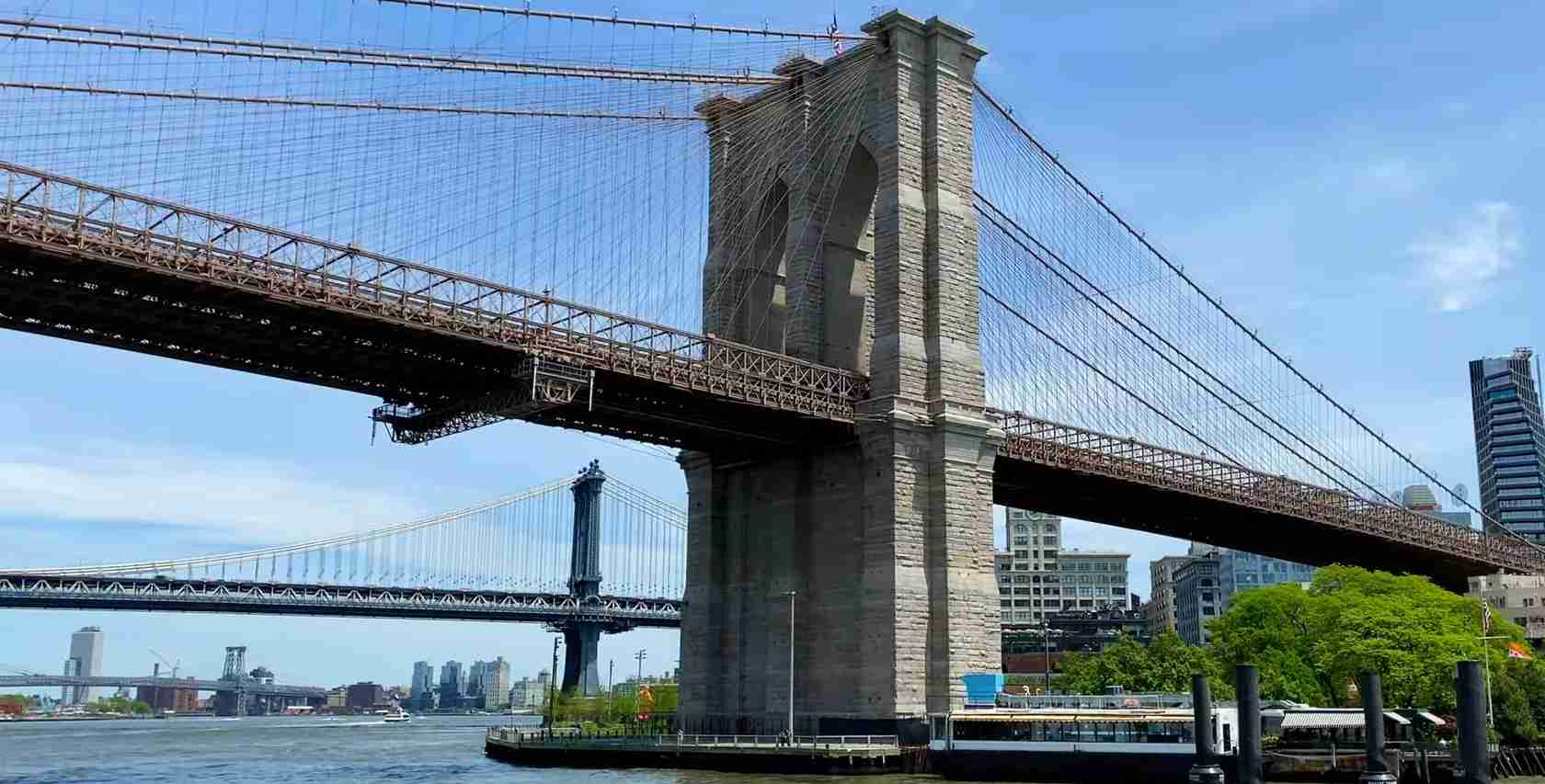
Brooklyn Bridge pedestrian walkway spans 1.1 miles between Manhattan and Brooklyn, delivering iconic architecture, East River views, and Manhattan skyline panoramas without cost. The elevated wooden walkway separates pedestrians from cyclists, though families keep children close during crowded periods. Brooklyn-bound walks provide optimal photo angles of Manhattan’s skyscrapers, while both directions showcase bridge cables, Gothic towers, and suspension engineering. The walk requires 30-40 minutes at moderate family pace, with Manhattan entrance at City Hall Park (accessible via 4,5,6 trains) and Brooklyn entrance at Adams Street (A,C,F trains). Families complete the crossing one direction then subway return, or explore Brooklyn Bridge Park’s playgrounds and carousels after Brooklyn-side arrival.
Times Square’s dazzling billboards, street performers, and pedestrian plazas provide free entertainment that captures children’s imagination despite commercial surroundings. The red TKTS stairs offer elevated seating for crowd-watching and photo opportunities. Street performers demonstrate talents ranging from musical performances to acrobatics, though families should set clear expectations about tipping and costumed character photos. The Disney Store at 45th Street features free magic mirrors with animated characters and small theater showing Disney clips. M&M’s World and Hershey’s Chocolate World provide immersive brand experiences with photo opportunities, though families navigate persistent product marketing. Times Square’s free entertainment typically satisfies 1-2 hours of exploration before sensory overload suggests moving to calmer destinations.
Grand Central Terminal welcomes visitors to explore Beaux-Arts architecture, whispering gallery acoustics, celestial ceiling constellation, and bustling concourse activity completely free. The main concourse’s four-faced clock serves as iconic meeting point, while the whispering gallery outside the Oyster Bar transmits whispers across arched ceilings. Free walking tours operate at 12:30 PM Fridays, providing architectural and historical context, or families self-explore using smartphone guides. The terminal’s food court basement level offers diverse quick dining, and the Apple Store provides technology interaction and air conditioning during hot days. The terminal connects multiple subway lines (4,5,6,7,S) and Metro-North commuter rail, making it a natural transit hub to incorporate into broader itineraries.
Sample Family Itineraries for Different Visit Lengths 2026
A three-day NYC family visit concentrates on iconic highlights across Manhattan’s major attractions. Day one focuses on Midtown, starting with Empire State Building observation deck mid-morning before crowds peak, followed by Bryant Park lunch from food trucks or kiosks, then afternoon at the American Museum of Natural History arriving around 1 PM. Evening includes Times Square exploration and casual dinner in the Theater District. Day two emphasizes downtown and waterfront, beginning with early Staten Island Ferry round trip to view the Statue of Liberty, followed by Battery Park playground time, lunch near the 9/11 Memorial, afternoon in Central Park exploring playgrounds and lawns, and evening Upper West Side dinner. Day three adds Brooklyn Bridge morning walk into Brooklyn Bridge Park, DUMBO pizza lunch, afternoon subway return to Manhattan for shopping or relaxation, and final evening Broadway show. This itinerary balances major landmarks, free experiences, and family downtime without overwhelming schedules.
Five-day visits expand beyond Manhattan essentials into neighborhood exploration and specialized interests. The first three days follow the intensive itinerary above, while days four and five add Brooklyn’s Prospect Park and Brooklyn Museum, Queens’ New York Hall of Science, or Bronx Zoo day trip. Families incorporate more free time for playground visits, neighborhood strolling, and unstructured exploration that allows children to decompress from attraction-heavy days. Five days enable strategic rest mornings or pool time at hotels between active touring days. The extended timeline also permits backup plans when weather disrupts outdoor activities or children tire faster than expected.
Week-long NYC visits allow sustainable pace with full rest days, outer borough exploration, and deeper neighborhood immersion. Families alternate active touring days with relaxed exploration days focused on single neighborhoods, parks, or free attractions. One full day might remain completely unscheduled for late wake-up, long playground sessions, casual neighborhood walking, and spontaneous discoveries. The longer duration justifies day trips to Coney Island’s beach and boardwalk (accessible via D,F,N,Q trains in 45-60 minutes), or dedicated time exploring a single borough like Queens with its diverse ethnic neighborhoods and Flushing Meadows Park. Week-long stays establish neighborhood rhythms, discover favorite cafes or playgrounds for repeat visits, and reduce pressure to cram every experience into limited days.
Practical Safety and Navigation Tips for Families 2026
New York City’s excellent safety record in 2026 enables confident family navigation across tourist-focused areas and major neighborhoods. The subway system serves millions daily with extensive security cameras, increased police presence, and generally safe conditions during daylight and evening hours. Families traveling together remain vigilant during crowded subway boarding when pickpockets target distracted tourists, keeping wallets in front pockets and bags zipped and visible. Avoiding empty subway cars during off-peak hours protects against the occasional disruptive passenger, though the vast majority of rides prove completely uneventful.
Pedestrian safety requires teaching children street-crossing protocols before departure. New York’s “walk” signals provide limited crossing time, and drivers turning right on green lights may not yield to pedestrians despite their legal right-of-way. Families cross at marked crosswalks when signals indicate, hold young children’s hands continuously on busy Manhattan streets, and avoid jaywalding mid-block regardless of locals’ habits. Stroller navigation demands awareness of curb heights, construction barriers, and crowded sidewalks where rushing pedestrians may not notice approaching families. Manhattan’s grid system simplifies orientation — numbered streets run east-west with numbers increasing uptown, avenues run north-south, and “uptown” means north while “downtown” means south.
Bicycle traffic in dedicated bike lanes requires family awareness, as cyclists travel at speeds dangerous to wandering children. Green-painted bike lanes appear throughout Manhattan, often between parked cars and sidewalks. Families teach children to look both directions before crossing bike lanes even when no cyclists appear visible, as fast-moving bicycles arrive quickly. Never stand in bike lanes while consulting phones or maps, as aggressive messengers and delivery cyclists prioritize speed over pedestrian safety in these designated zones.
Identifying children with contact information provides security backup despite careful supervision. Wristbands, temporary tattoos, or cards in pockets listing parent phone numbers and hotel names enable lost children to receive assistance from authorities or kind strangers. Teaching children hotel names and rough neighborhood helps them provide useful information if separated. Establishing meeting points at major attractions — specific landmarks rather than vague “entrance” instructions — streamlines reunification if family members become separated in crowds. Most children carry smartphones in 2026, making brief separations easily resolved through calls or texts, but younger children without devices benefit from physical contact information.
Seasonal Considerations and Special Events 2026
Summer in New York City delivers abundant free outdoor programming alongside heat management challenges. Free concerts flood parks and public spaces, with Central Park SummerStage hosting major artists, Bryant Park presenting Monday movie nights on the lawn, and neighborhood festivals celebrating cultural diversity through food, music, and performance. Outdoor pools in Astoria, Hamilton Fish, and Sunset Park neighborhoods provide city-operated swimming free to all visitors, though Manhattan locations require subway rides to Queens, Lower East Side, or Brooklyn. Summer also brings increased subway delays due to heat-related equipment failures, suggesting families build schedule flexibility and carry water bottles for unexpected platform waits.
Fall combines comfortable weather with back-to-school crowd reductions creating optimal visiting conditions. September delivers summer-like temperatures without humidity or peak pricing, while October adds fall foliage to Central Park and changing leaves along city streets. Halloween transforms Greenwich Village into parade destination with massive Halloween Parade drawing costume-clad participants and spectators October 31. Thanksgiving brings Macy’s Thanksgiving Day Parade along Central Park West and through Midtown, though viewing requires very early morning arrival (6-7 AM) to secure sidewalk positions ahead of 9 AM start. Fall restaurant week events offer prix-fixe lunch and dinner bargains at upscale restaurants, though family-friendly participation depends on children’s dining sophistication.
Winter holiday season (late November through early January) delivers magical experiences alongside premium pricing and massive crowds. Rockefeller Center Christmas tree lighting ceremony occurs late November, with the tree remaining illuminated through early January and ice skating rink operating below. Department store holiday windows including Macy’s, Bergdorf Goodman, and Saks Fifth Avenue present elaborate animated displays free to view, attracting evening crowds November through December. The Dyker Heights Christmas lights in Brooklyn feature over-the-top residential decorations accessible via R train, while Radio City Christmas Spectacular Rockettes show runs multiple daily performances. Hotel rates spike dramatically Thanksgiving week and Christmas week, suggesting families visit early December or January for lower prices while retaining seasonal decorations.
Spring brings unpredictable weather but increasing outdoor accessibility as winter releases its grip. Cherry blossoms bloom Brooklyn Botanic Garden and throughout city streets late March through early April, providing photographic backdrops and parks’ seasonal beauty. Earth Day celebrations (April 22) bring environmental festivals and activities to parks citywide, while spring restaurant week mirrors fall event with prix-fixe deals. Spring break weeks (varying by school district but typically mid-to-late March) increase family visitors, raising hotel prices and attraction crowds during these specific weeks while surrounding periods remain moderate.
Money-Saving Strategies for NYC Family Travel 2026
The New York CityPASS delivers substantial savings for attraction-focused families, bundling admission to Empire State Building, American Museum of Natural History, Guggenheim Museum or Top of the Rock, Statue of Liberty ferry or Circle Line cruise, and 9/11 Memorial or Intrepid Museum for $144 adults and $119 children versus $200+ purchased separately. The pass activates upon first use and remains valid nine consecutive days, providing scheduling flexibility across extended visits. CityPASS skip-the-line privileges at some attractions save additional time during busy periods. Families visiting five or more major paid attractions benefit significantly from this pass, while those balancing paid and free attractions may find individual ticket purchasing more economical.
Grocery shopping for breakfast and snacks cuts daily food costs by $30-50 per family. Hotels with complimentary breakfast provide another substantial saving, offsetting $60-80 daily restaurant breakfast costs for family of four. Midday quick-service lunches from food trucks, pizza by the slice, or deli sandwiches cost $10-15 per person versus $25-40 sit-down restaurant lunches, saving $60-100 daily for families implementing this strategy most days. Evening dining remains the primary restaurant meal, where full-service experiences and diverse cuisines justify higher investment while breakfast and lunch employ budget strategies.
Free attractions and activities fill multiple touring days without admission costs. Families visiting Central Park, Staten Island Ferry, Times Square, Brooklyn Bridge, Grand Central Terminal, public libraries, and waterfront parks access high-quality experiences costing nothing. Strategic balancing — one paid major attraction per day supplemented with free activities — spreads $800-1,200 weekly attraction budgets across entire visits rather than concentrating costs in single expensive days. This approach also prevents attraction fatigue where families race through museums to justify entry fees rather than exploring at comfortable children’s pace.
Accommodation in Brooklyn or Queens neighborhoods reduces nightly hotel costs 25-40 percent versus comparable Manhattan properties while adding only 15-25 minutes subway commute to major attractions. Budget hotels in Long Island City (7,N,W trains), Williamsburg (L train), or Jackson Heights (7,E,F,M,R trains) charge $140-220 nightly for rooms equivalent to $220-320 Manhattan properties. The trade-off balances commute time against cost savings, with $400-700 weekly savings justifying slightly longer subway rides for many families. These neighborhoods also offer authentic ethnic dining at lower prices than tourist-focused Manhattan restaurants.
Hotel Selection and Family Accommodation Options 2026
Family-specific hotel amenities transform standard stays into comfortable retreats when touring exhausts children and parents alike. Suites with separate living areas provide critical space for families, enabling parents to enjoy evening downtime while children sleep in separated bedrooms. Connecting rooms offer similar benefits at standard room pricing when available. Mini-fridges or full kitchenettes allow breakfast preparation and snack storage, reducing daily restaurant costs while accommodating picky eaters. Hotels with on-site pools provide afternoon breaks where children burn energy while parents relax, particularly valuable during multi-day visits when continuous touring overwhelms young travelers.
Location considerations balance convenience against cost across Manhattan’s neighborhoods. Families prioritizing walkability to major attractions choose Midtown locations despite $180-350 nightly costs, premium pricing, and environmental noise. Those valuing residential safety, playground proximity, and quieter evenings select Upper West Side hotels at $220-400 nightly with excellent subway access but requiring transportation to most major attractions. Budget-conscious families accept outer borough locations in Brooklyn, Queens, or upper Manhattan where $140-220 nightly rates deliver comfortable accommodations with 20-30 minute subway commutes. All-suite hotel chains including Embassy Suites and Homewood Suites offer standardized family-friendly amenities across price tiers.
Vacation rental apartments through Airbnb or VRBO provide residential experiences with full kitchens, washing machines, and multiple bedrooms. Rentals prove economical for families of five or six requiring multiple hotel rooms otherwise, and for extended stays exceeding five nights where kitchen access substantially reduces food costs. Manhattan apartments range $200-450 nightly for two-bedroom units accommodating four to six people, competitive with two hotel rooms totaling $360-700. Brooklyn and Queens apartments cost $150-320 nightly for equivalent space. Trade-offs include less predictable quality than hotel chains, stairs without elevators in older buildings, and checkout cleaning expectations versus hotel maid service.
Booking timing significantly affects pricing, with advance reservations 2-3 months ahead securing lower rates than last-minute bookings during peak seasons. Hotel prices fluctuate based on demand, with major conventions, holidays, and summer months commanding premiums while January-February off-season delivers bargains. Flexible date searching reveals rate differences — shifting arrival one day earlier or later sometimes saves $40-80 nightly. Loyalty program memberships with major chains (Marriott, Hilton, Hyatt, IHG) provide point accumulation, elite status benefits including room upgrades and late checkout, and member-rate discounts typically 10-15 percent below public rates.
Specialized Interests: Museums, Parks, and Unique Experiences 2026
Beyond major attractions, NYC’s specialized museums cater to specific family interests with engaging programming. The Intrepid Sea, Air, & Space Museum ($36 adults, $24 children 5-12) displays aircraft carrier, submarine, Space Shuttle Enterprise, and Concorde jet with interactive exhibits appealing to transportation enthusiasts. The New York Transit Museum in Brooklyn ($15 adults, $8 children 3-17) features vintage subway cars, interactive signal exhibits, and transit history engaging children fascinated by trains and buses. The Museum of Mathematics ($18 adults and children) presents hands-on math activities through puzzles, games, and interactive displays making mathematics tangible and entertaining. The Children’s Museum of Manhattan ($16 adults and children) designs entire exhibits for ages 0-10 with sensory exploration, creative play, and early learning activities.
Botanical gardens and zoos provide nature immersion within urban context. Brooklyn Botanic Garden ($18 adults, free children under 12) showcases cherry blossoms in spring, rose gardens summer, and Japanese garden year-round across 52 acres. The Bronx Zoo ($40 adults, $28 children 3-12) remains NYC’s largest zoo with 265 acres housing 4,000+ animals across naturalistic habitats, requiring full days to explore comprehensively. Prospect Park Zoo ($10 adults, $7 children 3-12) offers intimate Brooklyn alternative with sea lions, red pandas, and animals in accessible compact setting. These green spaces provide respite from concrete and crowds while maintaining urban accessibility via subway connections.
Unique experiences create memorable moments beyond traditional sightseeing. The Roosevelt Island Tramway ($3 subway fare each direction) operates aerial cable cars offering East River views and unique transportation adventure. Smorgasburg outdoor food market (Saturdays in Williamsburg, Sundays in Prospect Park, free entry plus food costs) assembles 100+ vendors with diverse cuisines, live music, and market atmosphere. Kayaking on the Hudson River through Downtown Boathouse (free equipment and instruction, weekends May-October) provides active waterfront experience accessible to families with children ages 8+. These specialized activities supplement standard attractions with distinctive NYC experiences unavailable elsewhere.
Health, Emergencies, and Practical Logistics 2026
NYC’s extensive healthcare infrastructure ensures families access medical care when needed. CityMD urgent care centers operate throughout Manhattan with evening and weekend hours for non-emergency illnesses and minor injuries, accepting most insurance plans and credit cards. Mount Sinai, NYU Langone, and New York Presbyterian hospitals provide 24/7 emergency departments for serious conditions. Pharmacies including CVS, Walgreens, and Duane Reade operate 24-hour locations throughout the city for prescription fills and over-the-counter medications. Families traveling with prescription medications should carry extra days’ supply and original labeled bottles.
Weather preparation requires layered clothing and adaptability across unpredictable conditions. Spring and fall visits benefit from light jackets, umbrellas, and comfortable walking shoes suitable for varying temperatures. Summer demands sunscreen, hats, water bottles, and lightweight breathable clothing for 85-90°F days with high humidity. Winter necessitates warm coats, gloves, hats, and layered clothing for 30-45°F temperatures and occasional snow. Sudden temperature changes and unexpected rain occur frequently, suggesting families pack adaptable wardrobes rather than weather-specific outfits.
Luggage storage facilities enable museum visits or afternoon relaxation before hotel checkout or after arrival before check-in. Schwartz Travel Services locations near Penn Station and Times Square charge $10-15 per bag daily with secure storage and extended hours. Many hotels offer complimentary luggage hold for guests checking out early or arriving before room availability. This service enables morning museum visits on departure days or late-night departure flights without dragging luggage through attractions.
Public restrooms appear less frequently than many cities, requiring strategic planning. Major department stores (Macy’s, Bloomingdale’s, Nordstrom), museums, Grand Central Terminal, and large bookstores provide accessible restrooms without purchase requirements. Parks maintain public facilities though quality varies and lines form during peak hours. Families with young children identify restroom locations upon arriving at attractions, anticipating needs before emergencies arise. Coffee chains (Starbucks, Pret a Manger) technically restrict restrooms to customers though enforcement varies and small purchases provide legitimate access.
Frequently Asked Questions: Visiting New York City with Kids 2026
What is the best age for children to visit New York City?
New York City accommodates children of all ages with attractions and experiences spanning infancy through teenagers, though children ages 5-12 gain maximum benefit from the city’s diverse offerings. Preschool children (ages 3-5) enjoy Central Park playgrounds, Central Park Zoo, Children’s Museum of Manhattan, and simple street experiences like Times Square lights and subway rides, but lack stamina for long museum visits and cannot attend most Broadway shows. Elementary-age children (6-12) possess attention spans for museum exhibits, physical endurance for walking between attractions, interest in diverse cuisines, and eligibility for all Broadway productions, making this age range ideal for comprehensive NYC visits. Teenagers appreciate cultural experiences, shopping districts, diverse food scenes, and sophisticated Broadway shows while requiring less direct supervision than younger children. Families with mixed-age children successfully balance activities across age groups through strategic planning and willingness to split activities when interests diverge significantly.
How many days should families spend in New York City?
Five to seven days provides optimal balance for first-time family visits to New York City, allowing coverage of major highlights without exhausting schedules or overwhelming young children. Three-day visits concentrate on absolute essentials — Empire State Building, American Museum of Natural History, Central Park, Statue of Liberty, Times Square, and one Broadway show — but require intensive daily touring with limited downtime. Five days expand beyond essentials into Brooklyn exploration, additional museums, neighborhood strolling, and rest mornings or pool afternoons balancing active touring days. Week-long visits enable sustainable pace with full rest days, outer borough day trips, deeper neighborhood immersion, and backup plans when weather or child energy levels require flexibility. Families returning for repeat visits often focus on single boroughs or specialized interests, spending three to four days exploring Brooklyn thoroughly or concentrating on museums and cultural attractions with less emphasis on landmark sightseeing. The city’s density enables productive short visits, though extended stays provide rhythm and spontaneity impossible during rushed itineraries.
Should families buy attraction passes or individual tickets in New York City 2026?
The New York CityPASS proves economical for families planning five or more major paid attractions during visits, bundling Empire State Building, American Museum of Natural History, Guggenheim or Top of the Rock, Statue of Liberty or Circle Line cruise, and 9/11 Memorial or Intrepid Museum at $144 adults and $119 children versus $200+ separately. Families balancing paid attractions with free experiences — Central Park, Staten Island Ferry, Brooklyn Bridge, Times Square, beaches — may find individual tickets more economical than committing to pass requirements. Calculate total cost of planned attractions individually, then compare against pass pricing including skip-the-line benefits and scheduling flexibility. Passes require activation within one year of purchase and remain valid nine consecutive days after first use, accommodating week-long visits comfortably. Families with young children who tire easily or have unpredictable schedules may prefer individual ticket flexibility over pass commitment, purchasing admissions day-by-day based on actual energy and interest levels.
What are the best rainy day activities for families in New York City 2026?
New York City’s extensive indoor attractions transform rainy days into museum and entertainment experiences rather than outdoor sightseeing cancellations. The American Museum of Natural History provides 3-5 hours of climate-controlled exploration across dinosaurs, ocean life, planetarium shows, and cultural exhibits. The Metropolitan Museum of Art (suggested $30 adults, free children under 12) offers world-class art spanning 5,000 years across three floors and two million square feet, with family gallery guides and interactive programs. Broadway matinee performances deliver theatrical entertainment in dry comfort, with 2 PM show times providing afternoon activity options. The Intrepid Museum’s aircraft carrier and submarine exhibits combine indoor galleries with covered outdoor deck areas protecting from moderate rain. Indoor shopping destinations including Macy’s flagship Herald Square location, FAO Schwarz toy store, and American Girl Place provide retail entertainment for commercial-minded families. The Transit Museum in Brooklyn presents subway history and vintage cars in underground station converted to museum space, completely protected from weather. Chelsea Market combines food vendors, shops, and industrial architecture in covered market setting, enabling lunch and browsing regardless of outdoor conditions.
How do families navigate the subway system with strollers in New York City 2026?
New York subway navigation with strollers requires strategic station selection, elevator identification, and flexible timing avoiding rush hours. Approximately 25 percent of NYC subway stations provide elevator access from street to platform, with online maps marking accessible stations clearly. Families plan routes using accessible stations when possible, accepting occasional longer walks to reach elevator-equipped locations rather than attempting stairway descents with strollers and children. The MTA website and Google Maps both indicate elevator locations, and smartphone apps provide real-time elevator status to avoid out-of-service equipment. When elevators prove unavailable, folding strollers enable parents to carry collapsed frames up or down stairs while managing young children, though this maneuver challenges parents traveling solo or with multiple small children. Lightweight umbrella strollers fold more easily than full-size models, suggesting families bring compact stroller options for NYC visits. Rush hour crowds (7:30-9:30 AM and 4:30-7 PM weekdays) create challenging conditions for stroller navigation as packed trains provide minimal space; families traveling mid-morning, midday, or early evening encounter comfortable uncrowded service accommodating strollers easily. Weekend subway service often features fewer crowds and more flexible schedules, improving stroller navigation conditions substantially.
Are New York City restaurants kid-friendly and welcoming to families 2026?
New York City restaurants span spectrum from explicitly family-focused establishments with kids’ menus and high chairs to adult-oriented fine dining where children require exceptional behavior, with vast majority of casual and mid-range restaurants comfortably accommodating families. Chains including Shake Shack, Chipotle, and Panera Bread deliver consistent kid-friendly menus, quick service, and high chairs at locations throughout the city. Family-style restaurants like Carmine’s serve enormous shareable portions designed for groups, while diners offer children’s menu classics (grilled cheese, chicken fingers, pasta with butter) alongside diverse adult options. Ethnic restaurants in Chinatown, Little Italy, Jackson Heights, and Flushing welcome families with children’s portions or shared dishes accommodating various palates. Upscale restaurants in Midtown and downtown neighborhoods typically require reservations, quieter behavior, and longer meal durations challenging for young children, though some provide early seating (5-6 PM) when atmosphere remains casual. Outdoor seating during warm months provides extra space and noise tolerance for energetic children. Most restaurants provide high chairs and changing tables in restrooms, with staff accustomed to families given NYC’s residential population.
How do families manage luggage when traveling between hotel and attractions in New York City 2026?
Luggage storage services near major transportation hubs enable families to explore the city on arrival or departure days without dragging bags through museums and parks. Schwartz Travel Services operates locations near Penn Station and Times Square charging $10-15 per bag daily for secure storage with extended hours accommodating flight schedules. Many hotels provide complimentary luggage storage for guests checking out early morning or arriving before afternoon check-in time, typically holding bags in secure areas for same-day retrieval. Families maximize final mornings or first afternoons through luggage storage, visiting nearby museums or parks hands-free before hotel checkout or after airport arrival. LuggageHero app-based storage connects travelers with shops and businesses offering bag storage throughout Manhattan at comparable pricing with convenient locations. Grand Central Terminal lockers provide short-term storage options though space fills quickly during peak travel periods. These services transform awkward transition hours into productive touring time, particularly valuable for families with afternoon departures or morning arrivals when hotel rooms prove unavailable until check-in time.
What special considerations apply to visiting New York City during major holidays 2026?
Major holidays including Thanksgiving, Christmas, and New Year’s Eve dramatically increase crowds, raise hotel prices, and alter regular attraction schedules while providing unique seasonal experiences unavailable other times. Thanksgiving week brings Macy’s Thanksgiving Day Parade along Central Park West requiring early morning arrival (6-7 AM) for sidewalk viewing positions before 9 AM start, plus many restaurants closing or operating limited Thanksgiving Day menus. Christmas week delivers Rockefeller Center tree and ice skating, elaborate department store windows, Radio City Christmas Spectacular, and festive decorations throughout the city, but hotel rates spike to $350-600+ nightly for mid-range properties (versus $220-320 non-holiday periods) and major attractions experience maximum crowds. New Year’s Eve Times Square ball drop requires arriving midday for viewing positions, enduring hours of standing in secured pens without restroom access, and facing massive post-midnight subway crowds — families with young children typically avoid this event in favor of earlier neighborhood celebrations or private hotel parties. July 4th brings Macy’s fireworks over East River (best viewed from FDR Drive locations and Brooklyn waterfront), increased summer crowds, and restaurant reservations challenging for popular dining. Many attractions including museums and observation decks operate holiday hours (often reduced on Thanksgiving and Christmas Day), requiring advance schedule verification to prevent disappointment.
How do families with children of different ages balance attraction interests in New York City 2026?
Families with mixed-age children successfully balance interests through morning-afternoon splits where different age groups pursue separate activities, full-family attractions appealing across age ranges, and willingness to compromise so each child experiences priority interests during the visit. The American Museum of Natural History engages ages 3-17 through dinosaur halls (young children), planetarium shows (all ages), cultural exhibits (older children), and interactive science (middle schoolers), making it rare full-family attraction. Central Park similarly accommodates broad age ranges with playgrounds for young children, lawns for ball games and picnics (all ages), and walking paths teenagers tolerate while parents enjoy scenery. Families sometimes split for specialized interests — parents with teenagers exploring Metropolitan Museum of Art while grandparents supervise younger children at Central Park Zoo, then reuniting for lunch and afternoon activity appealing to all. Older children capable of subway navigation and basic city orientation sometimes receive supervised independence for shopping or attraction visits while parents focus on younger siblings, particularly in safe neighborhoods like Upper West Side. Advance family discussions identifying each child’s top priorities ensure everyone experiences must-see attractions while accepting that not every family member joins every activity. Mix activity intensity so high-energy attractions (climbing statue crown, Broadway show) alternate with low-key experiences (park relaxation, casual neighborhood walking) preventing exhaustion that triggers conflicts.
What packing essentials should families bring for New York City visits in 2026?
Essential packing for NYC family visits prioritizes comfortable walking shoes, layered weather-appropriate clothing, and city-specific convenience items enabling smooth daily navigation. Broken-in walking shoes for all family members prevent blisters during 5-8 mile daily walking distances, with children requiring well-fitted sneakers or supportive sandals rather than fashion footwear. Lightweight day pack or backpack carries water bottles, snacks, extra layers, entertainment for subway rides, and small first aid supplies (bandages, pain reliever, hand sanitizer). Portable phone chargers maintain smartphone functionality for photos, maps, subway directions, and communication when family members split temporarily. Reusable water bottles reduce beverage costs and maintain hydration, particularly summer months when fountains appear throughout parks and subway stations. Compact umbrellas handle sudden showers common spring and summer, folding into day packs when sun returns. Sunscreen and hats protect against intense summer UV exposure on observation decks, in Central Park, and during street walking. Comfortable stroller for children under 5 simplifies park exploration and provides napping location during transition periods, though lightweight folding models navigate subway stairs more easily than full-size carriages. Prescription medications should carry several extra days supply, plus over-the-counter children’s fever reducer and stomach remedies for common childhood ailments. Entertainment for subway rides and wait times — tablets with downloaded content, small toys, drawing supplies — occupies young children during inevitable transit delays and restaurant waits.