The Fortress of the Spirit: The Medieval Sanctuaries of Spoleto and the Sacred Woods of Monteluco
Rising above the Umbrian valley at 780 meters, the Sacred Woods of Monteluco crown the medieval city of Spoleto with an unbroken canopy of ancient holm oaks that sheltered hermits, mystics, and spiritual seekers for over fifteen centuries. This extraordinary landscape unites early Christian basilicas, Lombard architecture, Franciscan hermitages, and a forest venerated since pre-Roman times into a singular expression of contemplative faith rooted in the Italian landscape.
Key Takeaways
- Ancient Sacred Geography: Monteluco’s name derives from the Latin “monte lucus” (sacred mountain grove), protected by the 3rd-century BC Lex Spoletina establishing severe penalties for desecrating the forest dedicated to Jupiter, making it one of Europe’s oldest documented protected natural sites.
- Hermit Tradition Foundation: Syrian anchorite Saint Isaac arrived in 528 CE, establishing Monteluco as one of Italy’s primary centers of eremitic monasticism, with hermitages carved into the mountainside that remain accessible via forest footpaths threading through the oak canopy.
- Lombard Architectural Legacy: The 4th-century Basilica of San Salvatore represents one of Italy’s most significant early medieval structures, recognized as part of the UNESCO World Heritage serial site “Lombards in Italy. Places of the power (568-774 A.D.)” inscribed in 2011, blending Roman architectural elements with Byzantine and Germanic influences.
- Franciscan Connections: Saint Francis established a hermitage at Monteluco in 1218, drawn by the forest’s spiritual power, creating a contemplative retreat that remains active and accessible to visitors seeking the same solitude that attracted medieval mystics.
- Ecological Continuity: The dense holm oak forest, unusual at this inland elevation, has remained virtually unchanged for millennia through continuous local protection, granted formal landscape bonds in 1919 and 1946, and designated a Site of Community Interest under European Union conservation directives.
- Architectural Diversity: Beyond San Salvatore, Spoleto preserves San Paolo inter Vineas with 13th-century frescoes, the Romanesque San Ponziano built over a paleo-Christian cemetery housing martyrs’ sarcophagi, and numerous smaller churches reflecting centuries of devotional architecture from early Christian through Baroque periods.
People Also Ask About Spoleto and Monteluco
Why Was Monteluco Considered Sacred in Ancient Times?
Monteluco’s sacred status predates Christianity by at least 500 years. The Lex Spoletina, a series of stone inscriptions in archaic Latin dating to the late 3rd century BC, established strict legal protections for the forest dedicated to Jupiter, prohibiting tree cutting, animal removal, and any profanation of the grove. The unusual presence of dense evergreen holm oak forest at 780-800 meters elevation, far from the Mediterranean coast or large lakes where such vegetation typically thrives, likely contributed to the ancient Umbrians’ perception of the mountain as a sacred anomaly in the landscape. The forest’s perpetual green canopy, acoustic properties that amplify silence, and naturally occurring caves suitable for meditation created an environment that ancient peoples recognized as spiritually charged. This pre-Christian veneration created a foundation that Christian hermits later recognized and adapted, transforming pagan sacred geography into Christian contemplative space without destroying the forest’s essential character.
What Makes the Basilica of San Salvatore Architecturally Significant?
The Basilica of San Salvatore stands as one of the most important early medieval structures in Italy, representing a unique transitional moment in European architecture. Constructed in the 4th or 5th century, the basilica demonstrates the sophisticated reuse of Roman architectural elements—Corinthian columns taken from the forum area of Roman Spoletium support the presbytery and dome—while incorporating Eastern Byzantine influences brought by Syrian monks in the 6th century. The façade features three windows decorated with classical elements in the upper section, while the interior maintains a spare, contemplative quality punctuated by remarkable frescoes, the earliest dating to the 8th century depicting a jeweled cross with gemstones hanging from its arms. This architectural synthesis of Roman structural engineering, Byzantine decorative sensibilities, and Germanic Lombard spatial concepts creates a building that UNESCO recognized as exemplifying the cultural synthesis achieved during the Lombard period. The basilica’s survival largely intact through fifteen centuries, now incorporated into Spoleto’s cemetery on Ciciano hill just outside the medieval walls, provides scholars with an unaltered example of early medieval religious architecture rare in Western Europe.
How Did the Hermit Tradition Develop on Monteluco?
Monteluco’s hermit tradition began dramatically in 528 CE with the arrival of Saint Isaac of Syria, an anchorite whose Eastern monastic practices introduced a new model of solitary contemplation to central Italy. Unlike communal monasticism developing elsewhere in Europe, the eremitic movement on Monteluco emphasized individual withdrawal into natural solitude, with hermits occupying caves and constructing small cells scattered throughout the oak forest rather than gathering in organized monasteries. The sacred forest’s pre-existing protection under the Lex Spoletina meant hermits could retreat into legally protected wilderness that secular authorities were forbidden to violate, creating an unusual guarantee of undisturbed solitude. Over subsequent centuries, the hermit population fluctuated but never disappeared, with some hermitages eventually evolving into small religious communities while others remained solitary retreats. When Saint Francis visited Spoleto in the early 13th century, he recognized Monteluco’s spiritual character and established a Franciscan hermitage in 1218, adding mendicant contemplation to the ancient eremitic tradition. The forest’s network of footpaths still connects these historical hermitages, many transformed into abbeys and monasteries linked to major monastic orders, allowing contemporary visitors to trace the physical geography of medieval spiritual practice through the living landscape.
What Role Did Spoleto Play in Early Medieval Italy?
Spoleto occupied a crucial strategic and cultural position in early medieval Italy as the capital of an independent Lombard duchy from 571 to 1230, controlling vital communication routes between Rome and the Adriatic. The Duchy of Spoleto was one of the most powerful Lombard states, at times exercising autonomy from the Lombard kings in Pavia and maintaining its own diplomatic relations with the papacy, the Byzantine Empire, and Frankish rulers. This political independence allowed Spoleto to develop a distinctive cultural synthesis, commissioning religious architecture like San Salvatore that blended Lombard, Byzantine, and Roman elements into forms found nowhere else in Italy. The duchy’s wealth supported a remarkable building campaign that left Spoleto with exceptional Romanesque churches, fortifications including the massive Rocca Albornoziana fortress, and the 13th-century Ponte delle Torri, a 230-meter aqueduct bridge spanning the valley to connect the city with Monteluco. When papal authority finally subdued the duchy in the 14th century, Spoleto became an important papal stronghold, with the Rocca serving as a residence for cardinal-legates governing central Italy, adding Renaissance and Baroque architecture to the medieval core. This layered history of Lombard independence, papal control, and continuous religious devotion created the multifaceted cultural landscape visitors encounter today.
Extended multi-day tours – 5+ days
Featured Umbria Multi-Day Tour Packages

3 days
Umbria 3-Day Discovery Tour
- ✓ Comprehensive Umbria experience
- ✓ Expert local guides included
- ✓ All accommodation included
- ✓ Transportation provided
5 days
Umbria 5-Day Highlights Experience
- ✓ Comprehensive Umbria experience
- ✓ Expert local guides included
- ✓ All accommodation included
- ✓ Transportation provided
7 days
Umbria 7-Day Cultural Journey
- ✓ Comprehensive Umbria experience
- ✓ Expert local guides included
- ✓ All accommodation included
- ✓ Transportation provided
10 days
Umbria 10-Day Complete Adventure
- ✓ Comprehensive Umbria experience
- ✓ Expert local guides included
- ✓ All accommodation included
- ✓ Transportation provided
Multi-day tour packages powered by TourRadar. Prices and availability subject to change.
Introduction
The medieval city of Spoleto and the forested mountain of Monteluco rising behind it constitute one of central Italy’s most distinctive sacred landscapes, where architectural heritage, natural environment, and spiritual tradition have interpenetrated for over two millennia. Unlike many Italian pilgrimage destinations defined by a single monument or saint’s cult, this landscape’s power emerges from the accumulated presence of continuous religious practice across multiple traditions—pre-Roman sacred grove protection, early Christian martyrdom, Eastern eremitic monasticism, Lombard political and religious synthesis, Franciscan mendicant spirituality, and ongoing contemplative life.
The Basilica of San Salvatore anchors the lower terminus of this vertical sacred geography. Built in the 4th or 5th century on Ciciano hill outside Spoleto’s ancient walls, the basilica represents one of Italy’s oldest substantially intact church structures, its massive reused Roman columns and spare interior creating an architectural bridge between classical antiquity and the emerging medieval Christian world. UNESCO’s recognition of San Salvatore in 2011 as part of the “Lombards in Italy” serial World Heritage inscription acknowledges the basilica’s role in documenting the cultural synthesis achieved during the Lombard period, when Germanic traditions, Byzantine influences, and Roman architectural heritage fused into new forms that would shape European culture for centuries.
Rising 380 meters above the basilica, Monteluco’s Sacred Woods present an ecological and spiritual phenomenon equally remarkable. The mountain’s dense canopy of evergreen holm oak, maintained since pre-Roman times through legal protection, cultural reverence, and practical forestry management, creates an environment recognized as sacred across multiple religious traditions. The Lex Spoletina inscriptions, carved into stone in archaic Latin during the 3rd century BC, established legal penalties for harming the forest, creating one of Europe’s earliest documented conservation laws. When Christian hermits began arriving in the 6th century, they recognized the forest’s spiritual potency, carving cells into the limestone, occupying natural caves, and gradually establishing the network of hermitages that still marks the mountainside.
The 13th-century Ponte delle Torri, spanning 230 meters across a deep valley at a height of 80 meters, physically connects these two poles of the sacred landscape, allowing pilgrims and visitors to walk from the Lombard basilica through Spoleto’s medieval center to the Franciscan hermitage and ancient oak forest above. This architectural connection mirrors the theological understanding that animated medieval spiritual practice: the vertical journey from the communal worship spaces of the valley churches to the solitary contemplation of the mountain hermitages represented an interior ascent from active religious life to contemplative union with the divine.
Contemporary visitors encounter this landscape as a palimpsest where each historical layer remains legible. Roman columns salvaged from Spoletium’s forum support early Christian vaults in San Salvatore. Byzantine frescoes depicting jeweled crosses share walls with Lombard architectural innovations. Franciscan spirituality interpenetrates with much older eremitic practices in the forest hermitages. The medieval city’s defensive walls, towers, and fortress architecture frame churches spanning a millennium of stylistic evolution. And through it all, the Sacred Woods maintain the same protective canopy that sheltered ancient Umbrian rites, Christian anchorites, Franciscan brothers, and contemporary seekers of solitude.
This guide explores the architectural, historical, and spiritual dimensions of this extraordinary landscape, tracing the development of religious culture from pre-Roman forest veneration through contemporary preservation efforts, examining the specific monuments that document this evolution, and investigating how natural environment and built heritage combine to create a sacred geography that has attracted spiritual practitioners for over 2,500 years.
The Sacred Woods of Monteluco: Ancient Forest and Spiritual Refuge
Pre-Roman Sacred Grove and the Lex Spoletina
Monteluco’s designation as sacred ground predates Roman conquest of Umbria, rooted in indigenous religious practices that recognized certain natural features as manifestations of divine presence. The mountain’s name preserves this ancient status: “monte” (mountain) combined with “lucus” (sacred grove or wood), a Latin term that specifically denoted forests or groves set apart for religious purposes and protected from ordinary human use. The Romans, encountering this established sacred geography when they founded the colony of Spoletium in 241 BC, chose to maintain rather than suppress the local religious tradition, codifying the forest’s protected status in formal legal language.
The Lex Spoletina, discovered on stone inscriptions near the base of Monteluco, represents one of the ancient world’s most detailed conservation laws. Written in archaic Latin dating to the late 3rd century BC, the inscriptions establish a comprehensive system of penalties for various violations of the sacred grove’s sanctity. The law prohibited cutting trees, removing wood, grazing animals, or conducting any activity that would disturb the forest dedicated to Jupiter, with fines calibrated to the severity of the offense and the social status of the offender. The legal framework distinguished between knowing violations committed with criminal intent and inadvertent transgressions, with provisions for ritual purification allowing violators to restore their standing before the gods through appropriate sacrifices.
This legal protection ensured Monteluco’s survival as one of Europe’s oldest continuously protected natural sites. While forests throughout the ancient Mediterranean world fell to agricultural clearing, shipbuilding, and fuel needs, Monteluco remained sacrosanct, its legal status discouraging the economic exploitation that destroyed comparable ecosystems. The practical result preserved an unusual ecological phenomenon: a dense evergreen holm oak forest at an inland elevation where such vegetation rarely occurs naturally, creating a micro-environment that ancient peoples recognized as anomalous and therefore sacred.
Ecological Character and Natural History
Monteluco rises to approximately 800 meters above sea level, its limestone foundation supporting a forest ecosystem dominated by Quercus ilex (holm oak or evergreen oak), a species typically associated with Mediterranean coastal regions or areas near large lakes. The presence of such dense holm oak coverage at this inland elevation represents an ecological outlier, possibly explained by microclimate factors including the mountain’s south-facing exposure, limestone substrate that retains winter moisture, and protection from extreme weather by surrounding topography. The continuous forest canopy creates a distinctive environment characterized by perpetual shade, moderate temperature fluctuations, and high humidity that supports specialized plant and animal communities.
The Sacred Woods provide habitat for numerous bird species including the green woodpecker, great spotted woodpecker, short-toed treecreeper, and Eurasian nuthatch, all adapted to mature oak forest environments. Large beetles characteristic of ancient woodland ecosystems inhabit the standing dead wood and fallen logs that accumulate in a forest protected from harvest for millennia. The understory vegetation, dominated by shade-tolerant species, includes numerous ferns, mosses, and flowering plants that thrive in the cool, humid conditions beneath the holm oak canopy.
The forest floor reveals evidence of the limestone substrate through exposed rock formations, natural caves, and small grottoes that attracted hermits seeking natural shelter for meditation. Water percolates through the porous limestone, emerging as springs at various elevations on the mountainside, providing drinking water for the hermitages and monastic communities established over centuries. The combination of natural caves, reliable water sources, dense forest providing both shelter and solitude, and legal protection preventing disturbance created ideal conditions for eremitic religious practice.
Medieval Hermit Tradition and Eremitic Communities
The transformation of Monteluco from pagan sacred grove to Christian eremitic center began in 528 CE with the arrival of Saint Isaac of Syria, an anchorite trained in the rigorous ascetic practices of Eastern monasticism. Isaac brought to central Italy a model of Christian spirituality distinct from the communal monasticism developing in other parts of Europe under the Rule of Saint Benedict. Eastern eremitic practice emphasized radical solitude, voluntary poverty, continuous prayer, and physical austerity as means of achieving mystical union with God through withdrawal from all human society and comfort.
Isaac’s presence attracted other solitary seekers, gradually populating the mountainside with hermits occupying caves, constructing small stone cells, and living in deliberate isolation while maintaining minimal contact with each other and the world below. The eremitic community that developed on Monteluco was not a monastery in the conventional sense—hermits did not gather for communal worship, did not share meals, did not live under a common rule administered by an abbot. Instead, each hermit maintained an independent spiritual practice, occasionally consulting with more experienced practitioners for guidance but otherwise living in complete solitude sustained by contemplation, manual work, and whatever food could be gathered from the forest or received from charitable visitors.
Archaeological and historical evidence documents numerous hermit cells scattered throughout the forest, some carved directly into limestone outcroppings, others built as small stone structures barely large enough to shelter a sleeping person. Many of these hermitages occupied sites chosen for specific spiritual qualities: caves facing east to receive the sunrise for dawn prayers, locations with sweeping valley views conducive to meditation on God’s creation, secluded grottoes where the forest canopy created cathedral-like acoustic spaces that amplified the sounds of prayer and sacred reading.
Some hermitages evolved over centuries into more substantial religious foundations. The Hermitage of Saint Francis, established when the saint visited Monteluco in 1218, began as a simple shelter for Franciscan brothers seeking temporary withdrawal from their usual mendicant ministry for periods of contemplation and prayer. The community gradually expanded, constructing a small church, dormitory buildings, and supporting structures while attempting to maintain the spirit of radical poverty and simplicity that characterized early Franciscanism. The hermitage remains an active Franciscan site, with brothers continuing the contemplative tradition in an environment that has changed remarkably little since Francis first recognized Monteluco’s spiritual power.
Other hermitages transformed into monasteries governed by established religious orders including the Benedictines, Camaldolese, and Augustinians, each adapting their rule to accommodate Monteluco’s tradition of solitary contemplation while introducing elements of communal religious life. These transitions reflect the ongoing tension in Christian monasticism between eremitic and cenobitic models, between the anchorite seeking God in radical solitude and the monk finding spiritual growth through community, obedience, and shared worship.
Franciscan Connection and Saint Francis’s Hermitage
Saint Francis of Assisi’s relationship with Spoleto and Monteluco represents a significant chapter in early Franciscan history. The region featured prominently in Francis’s spiritual development, with Spoleto playing a role in his early conversion experiences and later becoming one of the locations where he established hermitages for brothers needing temporary withdrawal from active ministry. A later tradition attributes to Francis the observation “Nil iucundius vidi valle mea spoletana” (I have never seen anything more cheerful than my Spoleto Valley), recorded in an inscription near the Rocca Albornoziana fortress’s belvedere.
Francis visited Monteluco multiple times beginning around 1212, recognizing the Sacred Woods as an environment particularly suited to the contemplative dimension of Franciscan spirituality. While the Franciscan movement emphasized active ministry among the poor, urban and rural preaching, and engagement with the world rather than monastic withdrawal, Francis understood that periods of solitary prayer and contemplation were essential for sustaining the spiritual intensity required for effective ministry. He established hermitages including the one at Monteluco as places where brothers could temporarily retreat from their usual activities for renewed focus on prayer, meditation, and direct encounter with God in natural solitude.
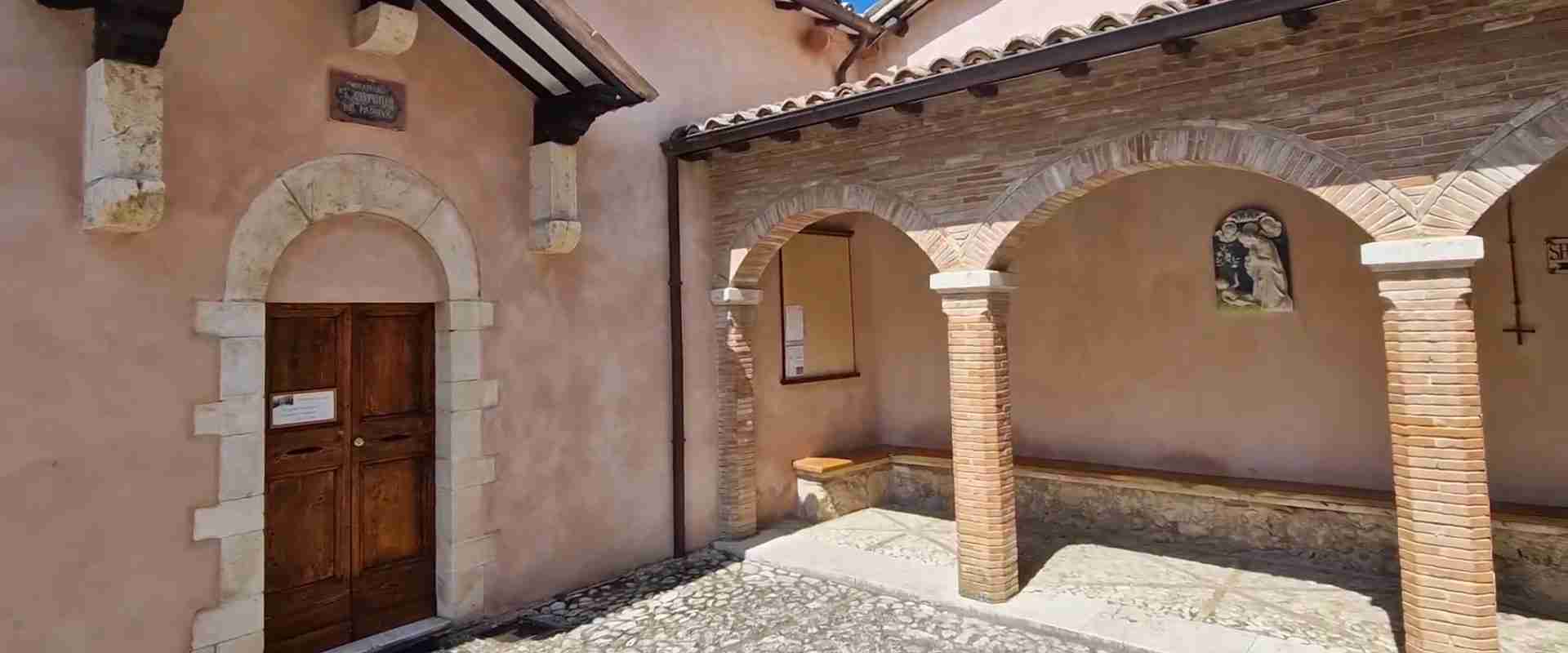
The Hermitage of Saint Francis at Monteluco, founded in 1218, embodies this balance between eremitic withdrawal and communal support. The complex includes individual cells where brothers lived in solitude, a small church for communal worship, spaces for shared meals (taken in silence), and practical facilities including a kitchen, refectory, and work areas. The architecture reflects Franciscan poverty through simple construction using local stone and timber, minimal decoration, and spaces designed for functionality rather than grandeur. The hermitage occupies a spectacular site on the mountainside with sweeping views across the Spoleto Valley, allowing contemplation of the created world as a means of approaching its Creator.
Francis’s appreciation for Monteluco reflected his broader theology of creation, which recognized the natural world as a sacramental manifestation of divine glory. The forest’s perpetual green canopy, the interplay of light and shadow beneath the holm oaks, the sounds of wind in the branches and birdsong echoing through the trees, the springs providing fresh water, the cycles of seasons marking time through subtle changes in a forest that never entirely sheds its leaves—all these elements contributed to an environment conducive to the kind of contemplative prayer Francis practiced and taught. The hermitage he established allowed Franciscan brothers to experience this same environment, continuing a tradition of forest-based contemplation that stretched back through seven centuries of Christian eremitic practice to pre-Christian veneration of the sacred grove.
Contemporary visitors can access the Hermitage of Saint Francis via footpaths ascending from Spoleto, crossing the Ponte delle Torri and continuing up through the forest. The hermitage welcomes visitors seeking spiritual renewal, offering simple accommodations for those wishing to experience the contemplative rhythm that has characterized the site for eight centuries. The cells, church, and common spaces maintain their essential character despite inevitable repairs and modifications, preserving an environment that would be recognizable to medieval Franciscans and that continues to serve its original purpose of providing sacred solitude within the protected forest.
Forest Protection and Conservation Through the Centuries
Monteluco’s survival as an intact ancient forest ecosystem through more than two millennia of human occupation represents an extraordinary achievement in environmental conservation. The combination of religious veneration, legal protection, and local cultural attachment created a preservation framework that persisted across dramatic changes in political authority, economic systems, and religious practices.
The original Lex Spoletina protections established in the 3rd century BC created a legal foundation that survived Roman rule, early medieval disruption, Lombard conquest, papal authority, and eventual Italian unification. Even when the specific legal instruments changed, the fundamental principle that Monteluco’s forest was protected by law and custom persisted. Medieval Spoleto maintained forest wardens responsible for preventing unauthorized cutting, grazing, or other violations, with fines supporting the city’s treasury and the maintenance of religious institutions dependent on the forest.
The practical forestry management exercised over centuries allowed sustainable use while preventing degradation. Limited selective cutting provided timber for essential construction and repairs, controlled harvesting of fallen dead wood supplied fuel without depleting standing trees, and careful management of water sources supported both hermitage communities and valley agriculture. This traditional management regime maintained the forest’s essential character while accommodating human needs, creating a model of sustainable resource use grounded in religious and cultural values rather than purely economic calculation.
Modern formal conservation measures built upon this ancient foundation. In 1919, following Italian unification, Monteluco received official recognition as a place of significant public interest, codifying in national law the protections that had existed for over two thousand years. In 1946, the entire mountain was granted a formal landscape protection bond, strengthening legal barriers against development, road construction, or other activities that might compromise the forest’s integrity. More recently, the identification of the Sacred Woods as a Site of Community Interest under European Union environmental directives integrated Monteluco into transnational conservation frameworks, ensuring that this ancient ecosystem receives protection consistent with contemporary ecological science while respecting its unique cultural and spiritual significance.
The forest today appears substantially as it did in ancient times, with the same dense holm oak canopy, the same network of footpaths connecting hermitages, the same springs providing water, the same natural caves that attracted the first hermits. Walking through Monteluco, visitors experience an environment that has remained essentially unchanged for over two millennia, a living connection to practices and places documented in archaic Latin inscriptions, early medieval hagiographies, Franciscan chronicles, and contemporary ecological research. This continuity represents not accidental preservation but deliberate, multi-generational commitment to maintaining a sacred landscape whose value transcends economic utility.
The Basilica of San Salvatore: Lombard Architecture and Early Christian Heritage
Historical Context and Construction Dating
The Basilica of San Salvatore stands on Ciciano hill on the eastern outskirts of Spoleto, now incorporated into the municipal cemetery but originally positioned just beyond the late Roman walls of Spoletium. Scholarly consensus dates the basilica’s construction to the 4th or 5th century CE, during the transitional period between late Roman imperial administration and the emerging early medieval kingdoms. The precise construction date remains debated due to the building’s unusual architectural synthesis, which combines elements that scholars variously interpret as indicating 4th-century, 5th-century, or even early 6th-century origins.
The basilica’s foundation on this specific site likely relates to earlier Christian activity. Late Roman Spoletium developed a Christian community during the 3rd and 4th centuries, with evidence of early worship spaces, martyrs’ burials, and episcopal organization. The location outside the city walls but within walking distance of the urban core represents typical early Christian practice of situating major basilicas at burial grounds associated with martyrs or significant Christian figures, creating pilgrimage destinations beyond the walls while maintaining close connection to the urban Christian community.
The building campaign that created San Salvatore drew heavily on architectural salvage from Roman Spoletium. The magnificent Corinthian columns supporting the presbytery and dome almost certainly came from the city’s forum or other monumental public buildings. The marble elements, decorative details, and architectural fragments incorporated throughout the structure document the systematic reuse of high-quality Roman materials, a practice reflecting both practical necessity in an era when new marble quarrying and transport were increasingly difficult and ideological intent to establish continuity between Roman imperial authority and emerging Christian power.
Architectural Analysis and Distinctive Features
San Salvatore’s architectural significance emerges from its unique synthesis of classical Roman structural elements, early Christian basilica planning, Byzantine decorative sensibilities, and proto-Romanesque spatial concepts. The basilica employs a three-aisled basilica plan common in early Christian architecture, with a central nave flanked by lower side aisles separated by colonnades. The nave terminates in a raised presbytery area elevated above the nave floor, with the altar positioned at the focal point beneath a dome supported by the reused Corinthian columns.
The façade demonstrates the architectural fusion that characterizes the entire structure. Three windows in the upper section feature frames decorated with classical architectural elements including pediments and architraves that reference Roman temple architecture, while the overall composition and proportional relationships reflect early Christian aesthetic principles. The windows’ placement and design create dramatic light effects in the interior, with carefully calculated angles allowing sunlight to illuminate specific areas at different times of day, particularly the altar area during morning services.
Inside, the reused Corinthian columns dominate the visual experience. These massive columns, likely originally supporting porticoes around Spoletium’s forum, retain their crisp Classical detailing despite centuries of exposure and reuse. The capitals’ acanthus leaf carving demonstrates the high quality of Roman imperial craftsmanship, while their incorporation into an early Christian building illustrates the appropriation of classical architectural language to express Christian theological concepts. The columns support arches that carry the presbytery’s upper walls and dome, creating a vertical emphasis that draws the eye upward toward the sanctuary’s focal point.
The presbytery’s dome represents one of the basilica’s most distinctive architectural features. Byzantine influence appears clearly in the dome’s construction technique and decorative approach, reflecting the cultural connections between 6th-century Spoleto and the Eastern Mediterranean world. The dome creates a centralized vertical space above the altar, generating acoustic effects that enhance liturgical chanting and creating a visual metaphor for heaven descending to meet the earthly worship community. Light entering through windows at the dome’s base creates dramatic illumination of the altar area, reinforcing the liturgical focus on this sacred space.
The side aisles maintain a simpler architectural treatment, with vaulted ceilings and minimal decoration that directs attention toward the central nave and presbytery. This hierarchical spatial organization reflects early Christian liturgical practice, with clergy and liturgical action concentrated in the presbytery while the congregation occupied the nave and aisles. The different ceiling heights create acoustic zoning that allows different liturgical functions to occur simultaneously without excessive interference, supporting the complex early Christian liturgy that included multiple services, processions, and devotional activities throughout the day.
Decorative Elements and Frescoes
While much of San Salvatore’s interior maintains a spare, austere quality that emphasizes architectural form over decorative elaboration, the basilica preserves remarkable fresco fragments that document early medieval painting traditions. The most significant frescoes date to the 8th century, representing some of the earliest post-classical painting surviving in central Italy. These frescoes demonstrate the continuation of late antique painting techniques while introducing new iconographic programs reflecting early medieval theological emphasis.
The most notable fresco depicts a jeweled cross with gemstones hanging from its arms, a motif connecting to Byzantine imperial imagery and early Christian symbolic representation of Christ’s triumph over death. The cross appears not as an instrument of torture but as a victory monument adorned with precious stones, transforming the crucifixion narrative into a celebration of resurrection. This theological interpretation, emphasizing triumph rather than suffering, reflects early Christian artistic practice before later medieval emphasis on Christ’s physical suffering became dominant in Western art.
The fresco technique employed in these early medieval paintings shows continuity with late Roman practices while adapting to new circumstances. The painters used mineral pigments applied to wet plaster (true fresco), creating durable surfaces that have survived fifteen centuries despite exposure to humidity, temperature fluctuations, and the basilica’s eventual incorporation into a cemetery environment. The color palette emphasizes earth tones, ochres, and reds, with limited use of expensive pigments like ultramarine blue or vermilion that became scarcer in the post-Roman economy.
Later additions to the basilica’s decorative program include Romanesque and Gothic fresco fragments documenting the building’s continuous use over centuries. These later paintings overlay earlier work, creating a palimpsest that art historians must carefully analyze to distinguish different chronological layers. Some areas reveal three or more distinct painting campaigns, each reflecting the aesthetic and theological priorities of its era while respecting the fundamental architectural framework established in the 4th-5th century construction.
Liturgical Function and Religious Practice
San Salvatore functioned as an active church for over a millennium, serving various religious communities and adapting to evolving liturgical practices while maintaining its essential architectural character. The basilica’s original liturgical function likely centered on martyrs’ commemoration, with relics or burials of early Christian martyrs drawing pilgrims and establishing the site as a focal point for devotional activity beyond Spoleto’s urban walls.
The architectural arrangement supports complex liturgical choreography typical of early Christian worship. Processions could move through the side aisles, enter the presbytery via stairs, circle the altar, and return through the opposite aisle, creating circular movement patterns that symbolized theological concepts including Christ’s resurrection, the eternal nature of divine worship, and the pilgrim church’s journey toward heavenly Jerusalem. Multiple altars allowed different liturgical celebrations to occur simultaneously, supporting the early Christian practice of celebrating Mass multiple times daily to accommodate different groups of worshippers.
During the Lombard period, the basilica gained particular significance as a demonstration of the duchy’s sophisticated cultural synthesis. The Lombard rulers of Spoleto sponsored modifications and enhancements that emphasized their patronage while respecting the building’s fundamental character. Lombard religious practice, which combined residual Arian Christianity with increasingly orthodox Catholic theology, found expression in liturgical celebrations that emphasized royal and ducal authority as divinely sanctioned while maintaining connection to broader Catholic traditions.
The basilica’s eventual incorporation into Spoleto’s cemetery transformed its function while preserving its architectural integrity. Cemetery chapels serving funeral liturgies and memorial services replaced earlier pilgrimage-oriented worship, but the building’s essential form and decoration remained substantially intact. This transformation ironically contributed to preservation, as cemetery use discouraged major architectural modifications that might have occurred had the basilica remained an active parish church subject to changing liturgical fashions and growing congregation sizes.
UNESCO Recognition and Conservation
In 2011, UNESCO inscribed the Basilica of San Salvatore as part of the serial World Heritage site “Lombards in Italy. Places of the power (568-774 A.D.),” recognizing the building’s exceptional significance in documenting the cultural synthesis achieved during the Lombard period. The inscription acknowledges San Salvatore as one of seven outstanding examples of Lombard architecture and culture that collectively demonstrate this Germanic people’s transformation from warrior invaders to sophisticated cultural patrons who synthesized classical Roman, Byzantine, and Northern European traditions into distinctive new forms.
The UNESCO designation established San Salvatore’s universal value while highlighting the specific qualities that distinguish it from other early medieval churches. The building’s exceptional preservation, architectural synthesis of diverse cultural influences, early construction date making it one of Italy’s oldest substantially intact church structures, and documentation of the transition from late antiquity to the early Middle Ages all contributed to the World Heritage recognition. The inscription also acknowledged the broader landscape context connecting San Salvatore to Spoleto’s urban medieval core and to Monteluco’s sacred geography, recognizing that the basilica’s significance extends beyond its individual architectural merit to encompass its role within a larger sacred topography.
Conservation challenges facing San Salvatore include structural stabilization of ancient masonry, protection of fresco fragments from environmental deterioration, management of moisture issues related to the cemetery context, and preservation of the reused Roman architectural elements including the Corinthian columns. Ongoing restoration campaigns address these concerns while respecting principles of minimal intervention that preserve the building’s authentic historical fabric. Recent work has focused on structural reinforcement using reversible techniques, careful cleaning of fresco surfaces to remove accumulated dirt without damaging fragile paint layers, and improved water management to reduce moisture-related decay.
Public access to the basilica requires coordination with cemetery operations, but visitors can arrange visits to experience this extraordinary building firsthand. The combination of architectural grandeur, historical significance, artistic merit, and spiritual atmosphere creates a powerful encounter with early Christian and early medieval heritage that few other sites can equal. Walking through San Salvatore, visitors experience architecture that would have been familiar to 5th-century Christians, Lombard dukes, medieval pilgrims, and Renaissance scholars, connecting directly to fifteen centuries of continuous cultural heritage.
Medieval Spoleto: Churches and Urban Sacred Geography
San Paolo inter Vineas and Early Medieval Foundations
The Church of San Paolo inter Vineas (Saint Paul among the Vineyards) represents Spoleto’s early medieval religious architecture, dating to the 10th century with significant 13th-century fresco additions. The church’s name reflects its original location surrounded by vineyard cultivation outside Spoleto’s walls, a common pattern for early medieval churches established beyond urban boundaries in agricultural zones. The positioning allowed adequate space for church construction and associated cemetery development while maintaining easy access for urban and rural populations.
San Paolo’s architectural form follows Romanesque principles with a simple single-nave plan, stone walls constructed from local limestone, and a timber roof structure typical of smaller medieval churches. The exterior presents an austere face to the world, with minimal decorative elaboration and small windows that create a dim interior appropriate for contemplative worship. The rough stone construction, irregular coursing, and visible mortar joints document medieval building techniques that prioritized durability and sacred function over aesthetic refinement.
The church’s artistic significance resides primarily in its 13th-century fresco cycle, which covers significant portions of the interior walls with narrative scenes from the lives of Christ, the Virgin Mary, and various saints. These paintings demonstrate the development of medieval narrative art, using sequential images to tell sacred stories for largely illiterate congregations who could not read written scriptures. The fresco technique employed shows sophistication in color use, compositional arrangement, and figural representation that reflects the broader revival of painting quality occurring across Italy during the 13th century.
Particular fresco panels reveal the influence of broader Italian painting trends while maintaining local stylistic characteristics. The color palette emphasizes deep blues, earth reds, and ochres, with gold leaf highlights on halos and important symbolic elements. Figures demonstrate increasing naturalism compared to earlier medieval painting, with attention to drapery folds, facial expressions, and spatial relationships that anticipate Renaissance developments. The narrative scenes employ continuous narrative technique, showing multiple episodes from the same story within a single compositional frame, requiring viewers to read the sequence from left to right or top to bottom.
San Ponziano and Paleo-Christian Heritage
The Church and Monastery of San Ponziano occupy a site of exceptional historical and religious significance near the Basilica of San Salvatore. Built over a paleo-Christian cemetery containing burials dating to the earliest centuries of Christian practice in Spoleto, the complex preserves direct physical connection to the city’s Christian origins. The church honors Saint Pontian (San Ponziano), a Christian martyr beheaded in 175 CE during anti-Christian persecution, whose relics became a focal point for devotional practice and pilgrimage.
Archaeological investigation of the crypt reveals the paleo-Christian cemetery’s extent, with numerous sarcophagi containing remains of martyrs and early Christians interred during the 2nd through 4th centuries. These burials follow typical early Christian practice of placing the deceased in stone coffins decorated with Christian symbols including crosses, chi-rho monograms, and scriptural quotations. The concentration of Christian burials at this location suggests an established Christian community of significant size operating semi-publicly during periods when Christianity faced intermittent persecution, implying either official toleration in Spoletium or a Christian population large enough to maintain communal burial grounds despite legal restrictions.
The monastery structure, built around the year 1000, represents Benedictine monastic architecture of the early medieval period. The complex includes a church, cloister, dormitory, refectory, and working spaces arranged according to the functional requirements of Benedictine communal life. The monastery’s foundation coincided with the broader expansion of Benedictine monasticism across Italy during the 10th and 11th centuries, when reformed Benedictine houses became centers of agricultural development, manuscript preservation, and liturgical elaboration.
The church itself dates primarily to the 12th century, featuring a valuable Romanesque façade that demonstrates the mature development of this architectural style in Umbria. The façade employs characteristic Romanesque elements including round-arched portals, decorative arcading, and stone carving that creates visual interest through geometric patterns and stylized natural motifs. The portal features carved capitals showing acanthus leaves, animals, and geometric interlace, demonstrating the skill of Umbrian stone carvers and the aesthetic priorities that governed Romanesque decorative programs.
The crypt containing the martyrs’ sarcophagi remains accessible to visitors, providing direct encounter with Spoleto’s earliest Christian heritage. The underground space maintains the austere character appropriate to burial contexts, with simple vaulting supported by short columns and minimal decoration that focuses attention on the stone coffins themselves. Inscriptions on several sarcophagi identify the deceased and sometimes provide biographical details, creating precious historical documentation of Spoleto’s early Christian community composition, naming practices, and commemorative customs.
Cathedral of Santa Maria Assunta and Episcopal Center
The Cathedral of Santa Maria Assunta (Cathedral of the Assumption) serves as Spoleto’s episcopal church and architectural centerpiece, occupying a commanding position in Piazza Duomo in the historic center. The cathedral’s construction began in the 12th century on the site of an earlier church, with subsequent additions and modifications creating a complex architectural history that spans from Romanesque foundations through Baroque interior remodeling. The building documents the evolution of Spoleto’s ecclesiastical architecture while serving as the city’s primary liturgical center and episcopal seat.
The Romanesque façade, dating to the 12th-13th centuries, presents one of Umbria’s finest examples of this architectural style. The design employs characteristic Romanesque horizontal banding created by alternating courses of white and pink stone, creating striking chromatic effects that enliven the façade’s surface. A magnificent rose window dominates the upper façade, its tracery creating geometric patterns that filter light into the interior while serving as a symbolic representation of divine perfection and the cosmos. The portal features carved marble elements including decorated jambs, an archivolted entrance arch, and sculptural details that demonstrate the high quality of 12th-century Umbrian stone carving.
The interior underwent significant Baroque remodeling during the 17th century, transforming the medieval space into a theatrical environment celebrating Counter-Reformation Catholicism. Gilded stucco decorations, elaborate altarpieces, painted vaults, and marble veneer created the rich, emotionally engaging environment that Baroque religious aesthetics favored. This transformation represents common practice in Italian churches, where medieval structures received Baroque overlays that dramatically altered their visual character while respecting the fundamental architectural framework.
The cathedral’s artistic treasures include frescoes by Filippo Lippi, one of the most important Florentine painters of the 15th century. Lippi’s fresco cycle in the apse depicts the Life of the Virgin, executed between 1467 and 1469 near the end of the artist’s life. The frescoes demonstrate Lippi’s mature style, combining sophisticated perspective construction, graceful figural composition, and rich color that influenced subsequent generations of Renaissance painters. The narrative scenes show the Annunciation, Nativity, Death of the Virgin, and Coronation of the Virgin, arranged in registers that guide the viewer’s eye upward toward the apse’s summit where the glorified Virgin receives her heavenly crown.
Pinturicchio, another renowned Italian Renaissance painter, contributed frescoes to the cathedral during the late 15th or early 16th century. His work demonstrates the evolution of Renaissance painting toward greater naturalism, atmospheric effects, and narrative complexity. The frescoes show Pinturicchio’s characteristic attention to landscape backgrounds, architectural settings, and decorative details that create rich visual environments supporting the religious narratives.
The cathedral functions as Spoleto’s liturgical center, hosting regular worship services, significant episcopal celebrations, and the city’s major religious festivals. During the annual Festival dei Due Mondi (Festival of Two Worlds), an internationally significant performing arts festival founded in 1958, the cathedral hosts liturgical concerts that combine sacred music performance with the building’s exceptional acoustics and artistic heritage, creating experiences that unite aesthetic, cultural, and spiritual dimensions.
Additional Medieval Churches and Religious Architecture
Spoleto preserves numerous additional medieval churches that collectively document the city’s rich religious architectural heritage. San Gregorio Maggiore, one of Spoleto’s oldest churches, dates to the early Christian period with substantial medieval rebuilding. The church occupies a significant position near the Roman amphitheater, connecting the late Roman urban fabric to medieval Christian topography. The building’s architectural history spans multiple construction campaigns, creating a complex layering of Romanesque, Gothic, and later elements that requires careful analysis to distinguish chronological phases.
San Eufemia represents Spoleto’s finest Romanesque church architecture, constructed during the 12th century as the palace chapel for the archbishop’s residence. The church demonstrates sophisticated Romanesque design including a women’s gallery (matroneum) that allowed female worshippers to attend services separated from men, following Byzantine liturgical practice unusual in Western medieval churches. The architectural form, spatial organization, and decorative details reflect connections to contemporary Lombard and Tuscan Romanesque architecture while maintaining distinctive Umbrian characteristics.
The Church of San Pietro features a magnificent 13th-century Romanesque façade decorated with elaborate sculptural reliefs depicting biblical narratives, allegorical scenes, and moral exempla. The sculptural program employs high-quality stone carving that creates dramatic visual narratives including scenes of good and evil, virtue and vice, salvation and damnation. These didactic images served pedagogical functions, teaching theological concepts and moral lessons to largely illiterate congregations through visual narratives more accessible than written texts.
Sant’Ansano demonstrates early medieval architecture preserving a crypt with frescoes documenting early medieval painting traditions in Spoleto. The underground space maintains an austere character appropriate to its original function as a martyrs’ burial site, with simple vaulting and minimal architectural elaboration that focuses attention on the fresco decorations. The paintings show stylistic connections to broader Italian early medieval art while exhibiting local characteristics that distinguish Spoleto’s artistic production from contemporary work in other regions.
The Ponte delle Torri: Engineering and Sacred Connection
Construction and Structural Analysis
The Ponte delle Torri (Bridge of Towers) spans the deep valley between Spoleto and Monteluco, creating a dramatic architectural connection between the medieval city and the sacred mountain. Constructed during the 13th century, the bridge measures approximately 230 meters in length and reaches a maximum height of 80 meters above the valley floor, making it one of medieval Europe’s most impressive civil engineering achievements. The structure employs characteristic medieval bridge construction techniques adapted to the unusual scale and topographic challenges presented by the site.
The bridge consists of ten massive arches supporting a horizontal deck that carried both an aqueduct channel and a pedestrian walkway. The arches vary in span to accommodate the irregular topography, with the largest central spans crossing the deepest section of the valley while smaller arches at either end transition from the bridge deck to the natural ground level. The piers supporting the arches reach depths of 80 meters at the valley’s lowest point, requiring sophisticated foundation engineering to ensure structural stability on the steep, irregular bedrock.
Construction materials include local limestone quarried from the surrounding hills, providing both structural strength and aesthetic coherence with Spoleto’s other medieval architecture. The stone masonry employs carefully dressed blocks laid in regular courses with minimal mortar, creating walls of exceptional solidity and durability. The arch construction follows traditional Roman techniques that medieval builders adapted and refined, using timber centering to support stone voussoirs during construction, then removing the temporary supports once the keystone locked the arch into self-supporting structural equilibrium.
The aqueduct channel running across the bridge’s upper surface carried water from springs on Monteluco to Spoleto, serving both practical and strategic purposes. The water supply supported the city’s population, industries, and defensive capabilities, making the aqueduct a vital infrastructure element rather than merely a monumental architectural statement. The dual function of transporting water while providing pedestrian access demonstrates medieval engineering’s pragmatic approach to combining multiple functions in single structures, maximizing construction investment while creating monuments that served practical needs.
Historical Function and Strategic Significance
The Ponte delle Torri served multiple interconnected functions that made it central to Spoleto’s medieval urban system. The primary function as an aqueduct ensured reliable water supply independent of springs within the city walls or potentially contaminated valley sources. Medieval cities faced constant challenges maintaining adequate clean water, with epidemics frequently linked to contaminated supplies. The Monteluco springs provided high-quality water from a protected source above the valley’s agricultural and urban pollution, making the aqueduct a public health infrastructure of exceptional importance.
The bridge’s pedestrian function created direct access between Spoleto and Monteluco, facilitating movement of pilgrims, hermits, citizens visiting the forest for spiritual retreat, and practical traffic including forestry workers, shepherds, and travelers using mountain paths connecting Spoleto to eastern destinations. Before the bridge’s construction, valley crossing required descending to the valley floor, fording or bridging the stream, and climbing the opposite slope—a journey of several hours. The bridge reduced crossing time to minutes, fundamentally altering the relationship between city and mountain.
Strategic military considerations influenced the bridge’s design and construction. The structure provided a secondary escape route from the city during sieges, allowing defenders to evacuate to Monteluco’s forests if urban defenses failed. The bridge’s height prevented enemy forces from easily attacking or cutting the structure, while its stone construction resisted fire, a primary siege weapon against wooden bridges. Defensive towers at both ends (reflected in the bridge’s name “Ponte delle Torri”) allowed guards to control access and defend crossing points, transforming the bridge into an integrated component of Spoleto’s defensive system.
Economic functions included facilitating trade and transport between Spoleto and mountain communities, moving forest products including timber, charcoal, and wild game to urban markets, and supporting seasonal agriculture on mountain slopes. The bridge eliminated the significant transportation costs associated with valley crossing, making previously marginal economic activities viable and expanding Spoleto’s effective economic territory to include mountain resources that would otherwise have been too costly to exploit.
Architectural Significance and Engineering Innovation
The Ponte delle Torri represents a remarkable achievement in medieval engineering that demonstrates the period’s sophisticated understanding of structural mechanics, materials behavior, and large-scale construction management. The bridge’s exceptional height required innovations beyond typical medieval bridge practice, with foundation engineering, arch design, and construction sequencing all presenting challenges that builders resolved through empirical knowledge, practical experience, and incremental innovation.
Foundation construction at 80-meter depths required excavation techniques and temporary works substantially more complex than typical medieval practice. Workers likely employed coffer dams or caissons to create dry working spaces at the valley floor, allowing foundation trenches to be dug to bedrock and filled with stone rubble creating solid bases for the massive piers. The irregular bedrock topography required foundation depths to vary significantly across the bridge’s length, demanding careful surveying and construction sequencing to ensure all piers rose to the correct elevations for supporting level arches.
The arch construction demonstrates sophisticated understanding of structural behavior under gravitational and lateral loads. Medieval builders recognized that pointed arches could span greater distances with less lateral thrust than semicircular Roman arches, making them preferable for tall, multi-span bridges where excessive lateral forces might destabilize slender piers. The Ponte delle Torri employs slightly pointed arches that balance structural efficiency with aesthetic preferences for relatively semicircular forms that medieval viewers associated with Roman imperial engineering.
Construction phasing required careful planning to ensure stability during the multi-year building campaign. Builders likely constructed piers progressively from one end to the other, then erected arches sequentially rather than simultaneously, allowing each completed arch to stabilize before adding adjacent spans. Timber centering supporting arch construction during masonry assembly required substantial engineering in itself, with falsework towers rising 80 meters from the valley floor to support horizontal centering beams at the arch spring line.
Contemporary Access and Conservation
The Ponte delle Torri remains one of Spoleto’s most visited monuments and most photographed architectural features. The bridge can be crossed on foot, providing spectacular views across the valley toward Spoleto’s medieval skyline dominated by the Rocca Albornoziana fortress. The walkway surface follows the original medieval paving level, allowing contemporary visitors to experience the same perspectives and spatial relationships that medieval pilgrims encountered while crossing between city and sacred mountain.
Conservation challenges include structural monitoring to detect any movement or deterioration in the ancient masonry, vegetation management to prevent root growth damaging stonework, and water management ensuring drainage systems prevent moisture accumulation that might weaken mortar joints. Recent engineering studies employing modern structural analysis techniques have confirmed the bridge’s essential soundness while identifying specific areas requiring maintenance attention. Ongoing conservation work addresses these concerns using minimally invasive techniques that preserve the structure’s authentic medieval fabric while ensuring continued safety for pedestrian use.
Access restrictions occasionally limit crossing when conservation work requires temporary closures or when weather conditions create safety concerns. Visitors planning to cross the bridge should verify current access status, though the structure remains open to pedestrians the majority of the time. The crossing experience provides extraordinary perspectives on both Spoleto’s urban architecture and Monteluco’s forest canopy, creating a powerful spatial experience that connects the two poles of the sacred landscape while offering views that clarify the topographic relationships defining this extraordinary site.
Spiritual Tourism and Contemporary Pilgrimage
Visiting the Hermitages and Forest Paths
Contemporary visitors can access Monteluco’s hermitages and sacred sites via an extensive network of footpaths threading through the holm oak forest. These paths, many following routes established by medieval hermits, provide graduated experiences of forest contemplation ranging from short walks near the Franciscan hermitage to extended hikes reaching remote sites deep in the woods. Trail marking varies from clear signage on major routes to minimal waymarking on more remote paths, requiring visitors to come prepared with adequate maps and attention to route-finding.
The Hermitage of Saint Francis serves as the most accessible starting point for forest exploration. Visitors can reach the hermitage either by crossing the Ponte delle Torri and continuing up through the forest, or by driving to parking areas near the hermitage entrance. The hermitage welcomes visitors during specified hours, allowing exploration of the church, common areas, and certain outdoor spaces while respecting the contemplative life of brothers who continue to occupy the complex. The hermitage gift shop offers religious items, books about Franciscan spirituality and local history, and refreshments.
From the Franciscan hermitage, marked trails lead deeper into the forest toward other hermit sites. The path network includes both circular routes returning to the starting point and linear trails crossing the mountain toward destinations on the opposite slope. Trail conditions vary from well-maintained paths suitable for ordinary walking shoes to rougher tracks requiring sturdy footwear and some scrambling ability. Hikers should carry water, as natural springs may not be easily accessible from all trails, and should be prepared for variable weather conditions, as the forest canopy provides limited shelter from rain.
Individual hermit cells scattered through the forest present various states of preservation. Some remain partially roofed structures with recognizable walls defining small living spaces, while others have deteriorated to foundation outlines barely visible among forest vegetation. The most intact sites allow visitors to appreciate the radical simplicity of eremitic life, with spaces barely large enough to lie down, no heating or sanitation facilities, and positioning chosen for spiritual rather than practical considerations. These ruins create powerful encounters with medieval spiritual practice, where physical discomfort, isolation, and material poverty served as tools for achieving contemplative focus.
Natural caves used by hermits offer particularly evocative experiences. Walking into limestone grottoes that sheltered 6th-century Syrian monks, medieval anchorites, and Franciscan brothers creates direct physical connection to centuries of contemplative practice. The caves’ acoustic properties, natural temperature moderation, and filtered light create environments conducive to meditation even for contemporary secular visitors, demonstrating how specific physical spaces can facilitate contemplative experience independently of religious belief.
Seasonal Considerations and Best Times to Visit
Monteluco’s evergreen holm oak forest maintains its essential character throughout the year, but seasonal variations affect both the practical experience of visiting and the particular qualities of light, atmosphere, and natural cycles observable in the forest. Spring and fall offer optimal conditions combining comfortable temperatures, manageable precipitation, and distinctive seasonal phenomena that enhance the visit.
Spring (April through early June) brings renewed growth in the forest understory, with wildflowers blooming beneath the holm oak canopy and migrating birds returning to nest in the forest. Temperatures remain moderate, typically ranging from cool mornings requiring light jackets to pleasantly warm afternoons. Spring rainfall can be substantial, making waterproof clothing advisable and potentially rendering some trails muddy, though the holm oak canopy provides significant rain shelter. The seasonal renewal creates an atmosphere of vitality and growth that complements contemplation of spiritual renewal and transformation.
Summer (June through August) presents the warmest conditions, with the forest providing welcome shade and cooling during the hottest hours. The dense canopy moderates temperatures, keeping the forest interior significantly cooler than exposed valley areas. However, the hermitages themselves, constructed of stone without climate control, can become quite warm during afternoon hours. Summer also brings the highest visitor numbers, particularly in July and August when the Festival dei Due Mondi draws international audiences to Spoleto, some of whom extend their cultural tourism to include Monteluco visits.
Fall (September through November) offers perhaps the most contemplative atmosphere, with declining tourist numbers, comfortable temperatures, and subtle seasonal changes in the forest. While the evergreen holm oaks do not display dramatic fall color, other vegetation in the forest undergoes seasonal transformation, and the changing angle of sunlight creates different illumination patterns in the forest interior. Fall rainfall begins increasing toward November, requiring weather-appropriate clothing and potentially affecting trail conditions.
Winter (December through March) presents the most challenging conditions but also the most profound solitude. Visitor numbers decline dramatically, creating opportunities for extended periods alone in the forest paths. Temperatures can drop significantly, occasionally bringing snow to Monteluco’s 800-meter elevation, though sustained snow cover remains rare. The evergreen character of the forest becomes most apparent in winter, when the holm oak canopy maintains its cover while surrounding deciduous forests stand bare. Winter light, low-angled and often filtered through clouds, creates atmospheric effects particularly conducive to contemplative mood.
Accommodations and Retreat Facilities
Visitors seeking extended engagement with Monteluco’s contemplative atmosphere can access various accommodation options ranging from the Franciscan hermitage’s simple retreat facilities to hotels in Spoleto offering comfortable bases for daily visits to the mountain. The choice depends on the depth of spiritual engagement desired and practical comfort requirements.
The Hermitage of Saint Francis offers simple overnight accommodations for individuals or small groups seeking spiritual retreat. Facilities include basic cells with minimal furnishings, shared bathroom facilities, and meals taken in common with the Franciscan community. Guests participate in the hermitage’s daily rhythm of prayer, work, and contemplation, experiencing something approaching the medieval monastic schedule that shaped life in these buildings for centuries. Reservations require advance contact with the hermitage administration, with preference given to those seeking genuine spiritual engagement rather than merely touristic experience.
Small religious guesthouses and retreat centers in Monteluco and nearby areas offer alternatives combining spiritual focus with slightly more comfort. These facilities, often operated by religious orders or lay Catholic organizations, provide private rooms, regular meals, and structured retreat programs while maintaining contemplative atmosphere. Programs may include guided meditation, spiritual direction, workshops on Franciscan spirituality or contemplative practice, and organized walks through the forest connecting physical pilgrimage to interior spiritual journey.
Spoleto’s hotels provide comfortable accommodation for visitors preferring daily excursions to Monteluco rather than overnight forest stays. Hotels range from simple budget options to luxury properties occupying restored historic buildings, allowing visitors to match accommodation to their budget and comfort preferences. Staying in Spoleto combines forest contemplation with access to the city’s exceptional architectural heritage, restaurants, cultural events, and urban amenities, creating a balanced experience that integrates sacred landscape with broader cultural tourism.
Respectful Engagement and Contemplative Practice
Visiting Monteluco’s sacred sites requires sensitivity to their continuing religious function and respect for the contemplative atmosphere that visitors seek to experience. Unlike purely historical monuments where tourist activity dominates, Monteluco remains an active spiritual landscape where hermits, monks, and contemplative visitors pursue serious religious practice. Appropriate behavior acknowledges this living tradition while allowing personal engagement with the site’s spiritual dimensions.
Silence represents the fundamental requirement for respectful engagement. The forest’s contemplative power emerges from quiet allowing interior reflection, bird song, wind in the trees, and one’s own footsteps to create a soundscape conducive to meditation. Loud conversation, music, or other noise intrusions violate the essential character of the space and disturb others seeking contemplative experience. Visitors should maintain quiet voices when conversation is necessary and seek extended periods of complete silence while walking forest paths or visiting hermitage sites.
Modest dress appropriate to religious sites applies when visiting active hermitages and churches. Shoulders and knees should be covered, clothing should avoid messages or imagery that might give offense, and overall appearance should reflect respect for the sacred context. This requirement applies regardless of personal religious beliefs or lack thereof; respect for the place and its current religious function takes precedence over individual expression preferences.
Photography requires particular sensitivity. While photographing architecture, forest landscapes, and general views causes no concern, photographing monks, hermits, or other visitors engaged in prayer or meditation violates their privacy and interrupts contemplative practice. Signs at some hermitages prohibit photography in certain areas; these restrictions must be respected absolutely. Even where photography is permitted, discretion and restraint demonstrate appropriate engagement with sacred space.
Environmental ethics apply with particular force in a forest protected for over two millennia. Staying on marked trails prevents erosion and vegetation damage, carrying out all trash maintains the forest’s pristine character, and leaving natural and cultural features undisturbed preserves the site for future visitors. The temptation to collect “souvenirs”—stones from hermit cells, oak leaves, wildflowers—must be resisted; the Lex Spoletina’s ancient prohibitions against removing anything from the sacred grove remain morally if not legally binding.
Cultural Context: Spoleto’s Broader Heritage
Roman Foundations and Classical Heritage
Spoleto’s cultural landscape builds upon substantial Roman foundations that shaped the city’s topography, urban form, and architectural heritage. The Romans founded Spoletium in 241 BC as a Latin colony, establishing it as a strategic military and administrative center controlling communication routes between Rome and the Adriatic. The colony received the standard Roman urban planning treatment including a forum, temples, theater, amphitheater, baths, and defensive walls that defined the city’s fundamental organization.
Substantial Roman remains survive integrated into the medieval and modern city. The Roman theater, partially excavated and restored, documents Roman entertainment architecture and continues to serve performance functions during the Festival dei Due Mondi. The amphitheater, though substantially dismantled for building stone during the medieval period, remains recognizable as a major Roman structure adapted to later uses. The Arch of Drusus and Germanicus, erected in 23 CE to honor these members of the imperial family, creates a monumental entrance to the forum area, its inscription documenting Roman commemorative practice and political propaganda.
The pre-Roman “cyclopean wall” constructed by Umbrian peoples before Roman conquest represents even earlier urbanization. Built with massive irregular limestone blocks fitted without mortar, sections of this ancient fortification remain visible, documenting indigenous engineering capabilities and the strategic importance that attracted both pre-Roman Umbrians and Roman colonizers to this defensible hilltop position. The wall’s survival through over two millennia demonstrates both the quality of ancient construction and the continuous occupation that preserved the structure as new building phases incorporated rather than demolished earlier work.
Medieval Political History and the Duchy of Spoleto
Following the collapse of Roman imperial administration in the 5th century, Spoleto emerged as capital of an independent Lombard duchy, one of the most powerful political entities in early medieval Italy. The Duchy of Spoleto, established around 571 CE, controlled extensive territory in central Italy, at times exercising effective independence from Lombard kings based in northern Italy and pursuing autonomous diplomatic and military policies. This political autonomy provided resources and motivation for the architectural patronage that created monuments including San Salvatore and laid foundations for Spoleto’s exceptional medieval heritage.
The duchy’s relationship with the papacy fluctuated between cooperation and conflict, with Spoleto’s dukes sometimes supporting papal claims against Lombard kings, sometimes threatening papal territory, and occasionally serving as papal military allies against external threats. This complex political positioning reflected Spoleto’s strategic location between papal Rome and the Adriatic, allowing dukes to leverage their geographical advantages for political gains. The duchy’s wealth derived from controlling trade routes, agricultural production in the fertile Spoleto Valley, and tribute from subject territories created resources for patronizing religious foundations, constructing defensive works, and supporting the cultural activities that distinguished Spoleto from less favored medieval cities.
Papal conquest of the duchy in the 14th century transformed Spoleto into a key papal stronghold in central Italy. Cardinal Albornoz, charged with restoring papal authority over territories that had asserted independence during the Avignon papacy, commissioned the massive Rocca Albornoziana fortress dominating Spoleto’s highest point. The fortress, constructed between 1359 and 1370, served as residence for papal governors, military garrison controlling the city and surrounding territory, and symbol of papal power. The Rocca’s massive walls, towers, and defensive works demonstrate 14th-century military architecture at its most sophisticated, while interior spaces including the Cortile d’Onore (Court of Honor) show the refinement expected in a cardinal-legate’s residence.
Renaissance and Baroque Transformations
The Renaissance period brought new architectural and artistic patronage to Spoleto, though the city never achieved the cultural prominence of Florence, Rome, or Venice. Wealthy families constructed urban palaces displaying Renaissance architectural principles, commissioned artworks from significant painters including Filippo Lippi and Pinturicchio for church decorations, and supported cultural activities including manuscript production, musical performance, and humanist scholarship. The cathedral’s Renaissance frescoes represent the most visible artistic achievements of this period, bringing Florentine artistic sophistication to this Umbrian center.
Baroque transformations affected many of Spoleto’s medieval churches, with interiors remodeled according to Counter-Reformation aesthetic principles emphasizing emotional engagement, theatrical effects, and material richness. Gilded altarpieces, elaborate stucco decorations, painted vaults, and marble veneering transformed austere Romanesque interiors into environments designed to overwhelm the senses and inspire religious devotion through beauty. These Baroque overlays, while dramatically altering the visual character of medieval spaces, generally respected the fundamental architectural frameworks, creating palimpsests where different historical periods remain legible.
Noble families constructed urban palaces demonstrating Renaissance and Baroque architectural principles adapted to Spoleto’s particular urban context. These buildings, while smaller and less lavish than Roman or Florentine equivalents, show sophisticated design incorporating classical architectural elements, carefully proportioned façades, and interior decorations reflecting contemporary artistic fashions. Many palaces survive substantially intact, contributing to Spoleto’s remarkably preserved historic urban fabric.
The Festival dei Due Mondi and Contemporary Cultural Life
The Festival dei Due Mondi (Festival of Two Worlds), founded in 1958 by composer Gian Carlo Menotti, transformed Spoleto into an internationally significant performing arts center. The festival, held annually during late June and early July, presents opera, theater, dance, concerts, visual art exhibitions, and experimental performance across venues throughout the city including churches, palaces, the Roman theater, and purpose-built facilities. The festival’s name reflects Menotti’s vision of creating cultural dialogue between Europe and the Americas (“two worlds”), with programming drawing artists and audiences from both continents.
The festival utilizes Spoleto’s exceptional architectural heritage as performance venues, creating unique artistic experiences that unite contemporary performance with historical settings. Opera performances in the cathedral leverage the building’s acoustics and visual grandeur, chamber music concerts in medieval churches create intimate encounters with both music and architecture, and theater productions in the Roman theater connect contemporary performance to ancient entertainment traditions. These site-specific uses demonstrate how historical monuments can serve living cultural functions rather than existing as preserved but essentially dead artifacts.
Beyond the festival season, Spoleto maintains active cultural programming including concerts, exhibitions, theater performances, and educational activities that keep the city’s architectural heritage engaged with contemporary life. The Museo Nazionale del Ducato di Spoleto, housed in the Rocca Albornoziana, presents collections documenting the duchy’s history, medieval art, and archaeological finds from Spoleto and surrounding areas. Temporary exhibitions explore specific aspects of local history, artistic traditions, or contemporary issues relating to cultural heritage preservation and interpretation.
Practical Information for Visitors
Reaching Spoleto and Monteluco
Spoleto benefits from good transportation connections making it accessible from major Italian cities and international airports. The city has its own railway station, Spoleto, served by regional trains on the Rome-Ancona line. Direct trains connect Spoleto to Rome in approximately 90 minutes, making day trips from the capital feasible though insufficient for experiencing the site’s contemplative dimensions adequately. Regional trains also connect Spoleto to Perugia, Assisi, Foligno, and other Umbrian destinations, allowing visitors to combine Spoleto with broader Umbrian itineraries.
The station lies approximately 1.5 kilometers from Spoleto’s historic center, connected by local bus service, taxis, or a moderately steep uphill walk. Visitors arriving by train can either take buses departing from in front of the station (routes clearly marked for “Centro” or “Centro Storico”) or enjoy the walk through lower Spoleto observing the transition from 19th-20th century development to the medieval core. The walk takes 20-30 minutes depending on pace and fitness level, following well-signed pedestrian routes that minimize traffic exposure.
Drivers reach Spoleto via the SS3 Flaminia highway or the E45 expressway, both providing connections to the national highway network. Parking in the historic center is limited and restricted, with the best options being designated parking areas outside the walls connected to the center by elevators and moving walkways that overcome the steep topography. These parking facilities charge by the hour or day, with rates comparable to other Italian tourist cities. Some hotels provide parking for guests, either on-site or in designated areas with special arrangements.
Reaching Monteluco from Spoleto requires either walking via the Ponte delle Torri (approximately 45-60 minutes from the cathedral to the Franciscan hermitage) or driving via the winding mountain road that climbs from the valley floor to parking areas near the hermitage. The walking route provides the most authentic experience, allowing gradual transition from urban environment to forest solitude while appreciating the Ponte delle Torri’s engineering and the topographic relationships defining the sacred landscape. The drive saves time and effort but sacrifices the spatial and contemplative experience of walking the traditional pilgrimage route.
Visiting Hours and Access
The Basilica of San Salvatore, located in Spoleto’s municipal cemetery, observes specific visiting hours that respect cemetery operations and religious services. Typical hours allow access during daylight, generally from early morning through early evening, with potential restrictions during major religious holidays and cemetery closures. Visitors should verify current hours before planning a visit, as schedules may vary seasonally and for special events. Entrance to the basilica is free, though donations supporting conservation and maintenance are welcomed.
The Hermitage of Saint Francis maintains regular visiting hours typically including morning and afternoon periods with a midday closure respecting the brothers’ lunch and rest periods. The hermitage may restrict access during religious services, private retreats, or periods when maintenance work requires visitor exclusion. Checking current hours via the hermitage’s website or by telephone ensures a successful visit. The hermitage requests respectful behavior including appropriate dress, silence, and no photography in certain areas.
Monteluco’s forest paths remain accessible at all times, though hiking after dark requires proper lighting and presents safety concerns on unfamiliar trails. Dawn and dusk visits offer particular atmospheric experiences, with early morning providing opportunities to observe forest wildlife and experience the exceptional quiet of the forest awakening, while evening light creates dramatic illumination effects through the oak canopy. Night hiking during full moon periods can be magical but requires excellent navigation skills and familiarity with the trail system.
Spoleto’s cathedral observes church visiting hours that balance tourism access with ongoing religious functions. The cathedral welcomes visitors outside mass times, typically opening mid-morning and closing early evening. Modest dress requirements apply, with shoulders and knees covered. During services, visitors should remain in designated areas and avoid photographing worshippers or disrupting liturgical celebrations. Major feast days including Easter, Assumption of the Virgin (August 15), and Christmas attract large congregations and may restrict tourist access to accommodate worshippers.
Guided Tours and Educational Resources
Various organizations offer guided tours exploring Spoleto’s heritage and Monteluco’s sacred sites. The Spoleto tourism office provides information on authorized guides offering private or small-group tours covering the city’s major monuments, medieval churches, Roman remains, and connections to broader Umbrian culture. These professionally guided experiences provide historical context, architectural interpretation, and access to sites or building details that independent visitors might miss.
Specialized spiritual or pilgrimage-focused tours emphasize the religious and contemplative dimensions of the landscape. These experiences, often led by individuals with backgrounds in theology, religious history, or contemplative practice, explore the sites’ spiritual significance rather than merely presenting architectural or historical facts. Programs may include guided meditation in the forest, reflections on Franciscan spirituality, discussion of eremitic traditions, and invitation to personal spiritual engagement with the sacred geography.
Self-guided walking tours using published itineraries or downloaded maps allow independent exploration at personal pace. Several published guidebooks provide detailed walking routes connecting the major sites, background information on architectural and historical significance, and practical details about opening hours, access, and facilities. Smartphone applications offering GPS-guided tours with audio commentary provide technological alternatives to traditional printed guides, though visitors should note that mobile signal coverage in the densest parts of Monteluco’s forest may be limited.
Educational resources including academic publications, illustrated guides, and documentary videos provide opportunities for deeper engagement with the sites’ significance. The bibliography of scholarly work on Spoleto’s Lombard heritage, Monteluco’s eremitic traditions, and early medieval Italian religious architecture offers access to specialized knowledge for visitors with particular research interests or desire for comprehensive understanding beyond general guidebook treatments.
Comparative Context: Sacred Mountains and Hermit Traditions
Parallels with Other Italian Sacred Mountains
Monteluco participates in a broader Italian tradition of sacred mountains combining natural landscape features with religious architecture and contemplative practice. The Sacri Monti (Sacred Mountains) of Piedmont and Lombardy, inscribed collectively as a UNESCO World Heritage site, represent the most formally developed examples of this tradition, with elaborate chapel sequences depicting biblical narratives integrated into mountain landscapes. While Monteluco predates these Renaissance and Baroque sacred mountain complexes by over a millennium, the underlying concept of mountain topography facilitating spiritual ascent remains consistent.
Monte Subasio, rising above Assisi and associated with Saint Francis’s early spiritual development, offers perhaps the closest parallel to Monteluco. Both mountains preserve forests or natural landscapes venerated for spiritual qualities, both feature hermitages and contemplative sites associated with Franciscan tradition, and both create vertical sacred geographies where physical ascent from valley cities to mountain retreats mirrors interior spiritual journeys. The differences lie primarily in scale and institutional development, with Subasio’s association with the main Franciscan basilica in Assisi creating more formalized pilgrimage infrastructure compared to Monteluco’s more intimate, less commercially developed character.
Monte Cassino, though developing along very different lines emphasizing large-scale Benedictine monasticism rather than eremitic practice, shares with Monteluco the pattern of mountain-based religious foundations creating spiritual centers distinct from valley urbanization. The abbey of Monte Cassino, founded by Saint Benedict in 529 CE almost exactly contemporary with Saint Isaac’s arrival at Monteluco, established Benedictine communal monasticism as the dominant form in Western Christianity, creating an institutional alternative to the eremitic model that flourished on Monteluco. The parallel chronology and contrasting institutional developments illuminate the diversity of early medieval Christian monasticism, with different mountains fostering different expressions of contemplative life.
Eastern Monastic Influences and Syrian Heritage
Monteluco’s eremitic tradition traces directly to Eastern Mediterranean monastic practices imported to Italy by Syrian monks including Saint Isaac. The deserts of Egypt, Palestine, and Syria had developed Christian eremitic and cenobitic monasticism during the 3rd and 4th centuries, with figures including Saint Anthony of Egypt, Saint Pachomius, and the Syrian stylite saints creating models of radical asceticism, solitary contemplation, and voluntary poverty that inspired spiritual seekers throughout the Christian world.
Syrian monks brought to Italy not merely abstract theological concepts but practical expertise in eremitic life including techniques for sustaining solitude, methods of continuous prayer, approaches to fasting and ascetic discipline, and architectural knowledge about constructing hermit cells adapted to specific landscapes. The caves and cells at Monteluco show design features consistent with Syrian eremitic practice, including eastern orientation for sunrise prayer, natural acoustic properties facilitating chanting, and spatial organization separating sleeping areas from prayer spaces within minimal footprints.
The theological emphases that Syrian monasticism contributed to Western Christianity included strong contemplative traditions balancing the active ministry orientations developing in Roman Christianity, appreciation for apophatic theology emphasizing what cannot be said about God rather than positive theological claims, and understanding of spiritual development as progressive transformation achieved through ascetic discipline and contemplative practice. These Eastern influences enriched Western Christianity’s spiritual vocabulary, creating alternatives to the institutional, sacramental, and hierarchical emphases characteristic of Roman ecclesiastical culture.
Continuities and Transformations in European Monasticism
Monteluco’s history documents major transformations in European monastic practice from early eremitic movements through Benedictine communal monasticism to mendicant orders including the Franciscans. The site’s ability to accommodate multiple monastic models reflects both the adaptability of the mountain landscape and the persistence of core values including contemplation, simplicity, and withdrawal from worldly concerns that unite diverse monastic traditions.
The tension between eremitic solitude and communal support appears throughout monastic history. Early hermits pursued radical isolation, but even the most austere anchorites required minimal contact for obtaining food, spiritual direction, and human connection preventing complete psychological dissolution. Organized monasticism attempted to balance solitude’s spiritual benefits with community’s practical and spiritual advantages, creating institutions where individuals maintained personal contemplative practice within supportive communal frameworks.
Franciscan spirituality added distinctive elements to this monastic heritage including emphasis on poverty as liberation rather than merely ascetic discipline, integration of contemplation with active ministry among the poor, and appreciation for creation as revelation of divine beauty rather than obstacle to spiritual development. The Franciscan presence at Monteluco transformed the site from purely eremitic refuge to location balancing contemplative withdrawal with engagement with the broader Christian community, creating a model that has proven sustainable for eight centuries.
Theological and Spiritual Themes
Sacred Geography and Vertical Spiritual Journey
The Spoleto-Monteluco landscape embodies theological concepts about spiritual development as vertical ascent, movement from multiplicity toward unity, and progress from active engagement toward contemplative rest. Medieval Christian spirituality frequently employed spatial metaphors including pilgrimage, ascent, journey, and arrival to describe interior spiritual transformation, with physical geography providing concrete expression of abstract spiritual concepts.
The valley-to-mountain topography creates a natural metaphor for spiritual ascent. The valley, dense with human activity, architectural complexity, and social interactions, represents the active life (vita activa) of engagement with the world, necessary for human flourishing but potentially obscuring direct encounter with the divine through constant distraction. The mountain, elevated above quotidian concerns, simplified to essential elements of forest, stone, and sky, represents the contemplative life (vita contemplativa) seeking God through simplification, silence, and solitary prayer.
Physical ascent from Spoleto to Monteluco mirrors the interior journey from externalized religious practice toward interiorized contemplative union. The pilgrim begins in the cathedral participating in communal worship, sacramental celebration, and liturgical complexity involving multiple participants, elaborate vestments, sacred music, and architectural grandeur. The journey across the Ponte delle Torri represents transitional space, neither fully urban nor fully wilderness, suspended between earth and sky. Arrival in the forest hermitages brings radical simplification—bare cells, minimal liturgy, extended silence—creating conditions for contemplative practice impossible amid urban complexity.
This vertical sacred geography does not imply hierarchy of spiritual value, with contemplative life superior to active engagement. Rather, it recognizes that different spiritual practices serve different purposes and suit different temperaments, with both active ministry and contemplative withdrawal essential to complete Christian spiritual life. The physical landscape accommodating both expressions allows individuals to move between them as circumstances and spiritual needs dictate, recognizing that most people require both engagement and withdrawal across their spiritual development.
Forest as Sacred Space and Natural Sanctuary
Monteluco’s forest represents a particular understanding of natural environments as inherently sacred, capable of facilitating spiritual experience through their physical characteristics independently of architectural or institutional mediation. This theological position, rooted in both pre-Christian nature veneration and Christian creation theology, recognizes certain landscapes as particularly conducive to encountering the divine through qualities including silence, scale, temporal continuity, and ecological complexity.
The forest’s perpetual canopy creates an environment of cathedral-like grandeur achieved through natural processes rather than human construction. The vertical thrust of oak trunks, the filtering of light through layered foliage creating dim interior illumination punctuated by shafts of brilliance, the acoustic properties that amplify certain sounds while dampening others, the sense of enclosure combined with infinite complexity—these qualities produce effects similar to great religious architecture while emerging from entirely natural processes. This parallel suggests that human sacred architecture may attempt to recreate qualities already present in certain natural environments, with buildings as imitations of sacred landscapes rather than improvements upon nature.
Forest ecology with its cycles of growth, death, and regeneration occurring across timescales from daily to millennial provides endless material for theological reflection. The visible decay of fallen trees nourishing new growth demonstrates death as essential to ongoing life, contradicting human tendencies to view death as final ending. The forest’s ability to regenerate from catastrophic damage through seed banks, root systems, and ecosystem resilience illustrates theological concepts of resurrection and renewal. The interdependence of species creating stable ecosystems demonstrates that individual flourishing requires community relationships rather than isolation.
The legal protection accorded to Monteluco since pre-Christian times reflects recognition that certain spaces should remain exempt from ordinary economic use, preserved for purposes transcending material utility. This principle resonates with theological understanding of Sabbath rest, of time and space set apart from productive activity to allow contemplation, worship, and recognition of values beyond efficiency and economic return. The ancient forest, protected from harvest, development, and exploitation, represents a living Sabbath—space removed from productive economy and preserved for purposes that cannot be measured in conventional utilitarian terms.
Simplicity, Poverty, and Material Detachment
The hermitages at Monteluco, whether early medieval anchorites’ caves or Franciscan cells, embody radical simplicity that challenges contemporary material culture’s complexity and consumption patterns. The hermit’s possessions reduced to minimal shelter, simple clothing, basic utensils for eating and drinking, and perhaps a few books represent voluntary poverty chosen as spiritual practice rather than economic necessity imposed by circumstance.
This voluntary simplification serves multiple spiritual purposes. Practically, it eliminates distractions that prevent contemplative focus, with possessions requiring maintenance, protection, and psychological investment that depletes energy available for prayer and meditation. Theologically, it demonstrates trust in divine providence rather than security achieved through accumulated resources. Psychologically, it reveals how little is actually necessary for human flourishing, exposing the extent to which conventional material culture serves psychological needs for status, security, and distraction rather than genuine physical requirements.
Franciscan poverty adds distinctive emphases to earlier eremitic simplicity. Francis understood poverty not merely as ascetic discipline but as liberation, freeing individuals from the constant anxiety, competition, and spiritual compromise required to maintain wealth in unjust economic systems. Poverty also created solidarity with the poor majority of medieval society, allowing Franciscans to minister among the marginalized without the barriers of status and wealth that separated conventional clergy from ordinary people. The Franciscan hermitage at Monteluco thus represents not withdrawal from the world but strategic retreat enabling more authentic future engagement.
Continuity of Contemplative Practice Across Religious Boundaries
Monteluco’s history documents continuous contemplative practice across dramatic changes in religious systems, from pre-Christian grove veneration through Christian eremitic monasticism to contemporary spiritual seeking that may or may not operate within traditional religious frameworks. This continuity suggests that certain human spiritual needs and practices persist across theological systems, with specific places facilitating contemplative experience through qualities that transcend particular religious interpretations.
The ancient Umbrians who established the Lex Spoletina protecting Monteluco’s forest recognized something sacred in the landscape before any Christian theological framework existed. Christian hermits arriving centuries later recognized similar qualities, reinterpreting the sacred grove as God’s creation revealing divine glory rather than as shrine to pagan deities. Franciscan spirituality added appreciation for creation as sacrament while maintaining the essential practice of forest-based contemplation. Contemporary secular visitors may experience the forest’s contemplative power without adopting any religious interpretation, finding renewal through silence, natural beauty, and temporary withdrawal from ordinary life’s pressures.
This multi-religious and trans-religious continuity challenges rigid boundaries between sacred and secular, religious and non-religious experience. The forest facilitates contemplative practice whether interpreted through pagan natural theology, Christian creation spirituality, or secular appreciation for wilderness and solitude. The universal human capacity for contemplation, for experiences of transcendence, for recognition that reality includes dimensions beyond material utility and economic exchange—these capacities appear across cultures and religious systems, suggesting they represent fundamental aspects of human nature rather than products of particular theological traditions.
Conservation Challenges and Future Prospects
Environmental Pressures and Forest Management
Monteluco’s ancient forest faces ongoing environmental pressures requiring careful management to ensure preservation for future generations. Climate change presents increasing challenges including temperature increases, shifting precipitation patterns, and extreme weather events that stress the holm oak ecosystem adapted to specific environmental conditions. Rising temperatures may eventually push the forest toward different species compositions, potentially threatening the evergreen oak dominance that has characterized the mountain for millennia.
Forest management must balance preservation of the ancient ecosystem with accommodation of natural dynamic processes including tree mortality, regeneration patterns, and gradual species shifts. Complete preservation freezing the forest in current condition contradicts ecological reality, where forests exist in constant flux through individual tree lifecycles, disturbance events, and long-term successional processes. Sustainable management allows natural processes to continue while preventing catastrophic changes that might compromise the forest’s essential character.
Invasive species present growing threats to native biodiversity. Plants, insects, and pathogens introduced accidentally or deliberately can establish populations that disrupt existing ecological relationships, potentially replacing native species or introducing diseases to which native vegetation has no resistance. Early detection and rapid response to new invasions provides the best management strategy, requiring regular monitoring and willingness to intervene when problematic species appear.
Visitor impacts require ongoing assessment and management. While current visitation levels remain sustainable, increasing tourism could create erosion problems on trails, vegetation damage from off-trail hiking, waste accumulation, and disturbance to wildlife. Maintaining sustainable tourism requires infrastructure including well-designed trails resistant to erosion, adequate waste facilities preventing littering, clear information encouraging responsible behavior, and willingness to implement access restrictions if impacts exceed acceptable levels.
Architectural Conservation and Adaptive Reuse
The medieval and early modern structures dotting Monteluco and Spoleto require continuous conservation ensuring their survival while allowing appropriate contemporary use. Stone masonry deteriorates through weathering, vegetation growth, and structural movement, requiring periodic repointing, vegetation removal, and structural stabilization. Fresco preservation presents particular challenges, with humidity, biological growth, and air pollution all threatening fragile painted surfaces.
Conservation philosophy must balance preservation of authentic historical fabric with necessary interventions ensuring structural stability and preventing accelerating decay. Minimal intervention principles favor reversible repairs using traditional materials and techniques that maintain buildings’ historical authenticity while providing needed protection. This approach contrasts with more aggressive restoration that might return buildings to a supposed original state through extensive reconstruction, potentially destroying later historical layers and creating falsified rather than authentic historic fabric.
Adaptive reuse of historic structures allows continued function supporting their conservation. The Franciscan hermitage continuing its original contemplative purpose provides ideal adaptive reuse, with minimal modifications needed to accommodate contemporary users. Other structures may require more substantial adaptation, but successful adaptive reuse maintains the building’s essential character while introducing compatible new uses. Poor adaptive reuse destroys historic fabric through excessive modification or introduces incompatible uses that compromise the building’s integrity.
Balancing Tourism Development and Contemplative Character
Monteluco and Spoleto face the challenge confronting many heritage sites: how to welcome visitors and support local economy through tourism while preserving the qualities that make the sites valuable. Excessive tourism development could easily destroy Monteluco’s contemplative atmosphere through crowding, noise, commercial development, and infrastructure that transforms the sacred landscape into mere tourist attraction.
Sustainable tourism strategies include limiting visitor numbers during peak periods through reservation systems or access restrictions, developing clear carrying capacity assessments identifying maximum sustainable visitation levels, investing in high-quality visitor experiences that encourage longer stays by fewer visitors rather than brief visits by large numbers, and maintaining strict controls on commercial development preventing proliferation of shops, restaurants, and facilities that would urbanize the forest landscape.
Educational programming helps visitors understand the site’s significance and appropriate behavior. Information about the hermit tradition, the forest’s protected status, the spiritual practices that have occurred here for centuries, and the contemporary conservation challenges creates context encouraging respectful engagement. Visitors understanding they are not merely touring historical monuments but entering an active spiritual landscape where contemplative practice continues are more likely to behave appropriately and to value preservation efforts.
International Recognition and Institutional Support
UNESCO’s recognition of the Basilica of San Salvatore as World Heritage provides international validation of the site’s exceptional value while potentially increasing tourist interest and funding opportunities for conservation. World Heritage status brings responsibilities including regular monitoring, reporting on conservation status, and maintaining the qualities that justified inscription. Italy’s substantial portfolio of World Heritage sites creates both opportunities and challenges, with Spoleto competing with other exceptional sites for limited conservation resources and public attention.
European Union conservation designations including the Site of Community Interest status for Monteluco integrate local conservation into transnational frameworks, providing access to EU conservation funding and technical expertise while imposing requirements for biodiversity monitoring, habitat protection, and sustainable management. These international commitments strengthen local conservation efforts while potentially constraining local autonomy in making management decisions.
Institutional support from religious orders, particularly the Franciscans maintaining active presence at Monteluco, provides essential continuity connecting contemporary conservation to the spiritual traditions that created the sacred landscape. Religious communities bring long-term perspectives, institutional memory, and spiritual commitments that complement governmental and secular conservation efforts. The combination of religious, governmental, academic, and civil society stakeholders creates robust support networks ensuring comprehensive attention to the site’s multiple dimensions—spiritual, historical, architectural, ecological, and cultural.
Frequently Asked Questions
Is Monteluco a UNESCO World Heritage Site?
Monteluco itself is not separately inscribed as a UNESCO World Heritage site, but the Basilica of San Salvatore in Spoleto, which is closely connected to Monteluco’s sacred landscape, was inscribed in 2011 as part of the serial World Heritage property “Lombards in Italy. Places of the power (568-774 A.D.).” This UNESCO recognition acknowledges the basilica’s exceptional significance as one of Italy’s most important early medieval structures, demonstrating the cultural synthesis achieved during the Lombard period through its combination of Roman architectural elements, Byzantine influences, and Germanic spatial concepts. Monteluco’s Sacred Woods, while not part of the UNESCO inscription, have received multiple conservation designations including recognition as a place of significant public interest in 1919, landscape protection in 1946, and designation as a Site of Community Interest under European Union environmental directives, collectively ensuring protection for this ancient forest ecosystem and its associated spiritual heritage.
Can I Stay Overnight at the Hermitage of Saint Francis?
The Hermitage of Saint Francis does offer simple overnight accommodations for individuals or small groups seeking authentic spiritual retreat rather than mere tourist experience. Facilities include basic cells with minimal furnishings, shared bathroom facilities, and meals taken in common with the Franciscan community. Guests participate in the hermitage’s daily rhythm of prayer, work, and contemplation, experiencing something approaching the contemplative schedule that has characterized the site since Saint Francis established it in 1218. Reservations require advance contact with the hermitage administration, typically by telephone or through their website, with preference given to those genuinely seeking spiritual engagement rather than simply inexpensive lodging. The hermitage may have limited capacity and may prioritize individual retreatants, organized religious groups, or those participating in structured retreat programs over casual tourists. Alternative accommodations include religious guesthouses and retreat centers in Monteluco and nearby areas offering similar spiritual focus with varying levels of comfort, as well as conventional hotels in Spoleto providing comfortable bases for daily visits to the mountain.
How Long Does It Take to Walk from Spoleto to Monteluco?
The walk from Spoleto’s cathedral to the Hermitage of Saint Francis on Monteluco takes approximately 45-60 minutes at a moderate pace, covering a distance of roughly 3 kilometers with significant elevation gain. The traditional route crosses the Ponte delle Torri, providing spectacular views of the valley and allowing the gradual transition from urban environment to forest solitude that enhances the spiritual dimension of the pilgrimage. The path begins in Spoleto’s medieval center, descends slightly to the Ponte delle Torri, crosses the dramatic 230-meter bridge suspended 80 meters above the valley floor, then ascends through increasingly dense forest along well-maintained paths to the hermitage entrance. Walking time varies with individual fitness level, frequency of stops for photographs or contemplation, and weather conditions affecting footing and pace. The route includes some moderately steep sections requiring reasonable fitness, though the gradual ascent and frequent opportunities to rest make it accessible to most visitors capable of sustained walking. Alternative approaches include driving via the winding mountain road, which reduces walking to just the final approach from parking areas to the hermitage, but sacrifices the spatial and contemplative experience of the traditional pilgrimage route.
What Is the Lex Spoletina and Why Is It Significant?
The Lex Spoletina is a series of stone inscriptions in archaic Latin dating to the late 3rd century BC that established legal protections for Monteluco’s sacred forest, making it one of Europe’s oldest documented conservation laws. The inscriptions, discovered on stones near the mountain’s base, established comprehensive penalties for various violations of the grove’s sanctity including cutting trees, removing wood or vegetation, grazing animals, or conducting any activity that would disturb the forest dedicated to Jupiter. The law distinguished between knowing violations committed with criminal intent and inadvertent transgressions, with fines calibrated to the severity of the offense and the social status of the offender, and included provisions for ritual purification allowing violators to restore their standing before the gods through appropriate sacrifices. The Lex Spoletina’s significance extends far beyond local antiquarian interest: it demonstrates sophisticated ancient understanding of environmental protection, documents pre-Roman sacred geography that Christian practitioners later recognized and adapted, provides linguistic evidence about archaic Latin and early Roman legal formulations, and established a protective framework that ensured the forest’s survival through over two millennia of political, economic, and religious transformations that destroyed comparable ecosystems throughout the Mediterranean world. The continuity of forest protection from pre-Roman indigenous law through Roman administration, early medieval Christian eremitic use, Lombard political authority, papal governance, and modern Italian conservation represents an extraordinary achievement in environmental and cultural preservation.
Are There Any Entrance Fees for Visiting the Sites?
Most sites associated with Spoleto and Monteluco’s sacred landscape are free to visit or request only voluntary donations supporting conservation and maintenance. The Basilica of San Salvatore, the most significant architectural monument in the complex, has no entrance fee, though donations are welcomed and appreciated. The cathedral (Santa Maria Assunta) is free to enter as an active church, though some associated museum spaces or special exhibitions may charge admission. The Hermitage of Saint Francis welcomes visitors without entrance fees during regular visiting hours, though guests staying overnight for spiritual retreats typically make contributions covering meals and accommodations based on ability to pay. Monteluco’s forest paths and hermitage ruins are freely accessible at all times, with no fees or tickets required for hiking and exploration. The Rocca Albornoziana fortress, which houses the Museo Nazionale del Ducato di Spoleto, charges admission with rates typically around €8-10 for adults, with reductions for students, seniors, and EU citizens under 18. Combined tickets covering multiple museums and monuments in Spoleto may offer cost savings for visitors planning comprehensive exploration. Visitors should bring cash for donations at churches and hermitages, as electronic payment systems may not be available at all sites, and should budget modest amounts for supporting conservation efforts at the various locations visited.
When Is the Best Time of Year to Visit Monteluco?
Spring and fall offer optimal conditions for visiting Monteluco, combining comfortable temperatures, manageable precipitation levels, moderate tourist numbers, and distinctive seasonal qualities enhancing the contemplative experience. Spring (April through early June) brings renewed growth in the forest understory with wildflowers blooming beneath the holm oak canopy, migrating birds returning to nest, and an atmosphere of vitality and renewal. Fall (September through November) offers perhaps the most contemplative atmosphere with declining visitor numbers after summer’s peak, comfortable temperatures ideal for forest hiking, and subtle seasonal changes in the evergreen forest illuminated by autumn’s changing light angles. Summer (June through August) presents the warmest conditions but also the highest visitor numbers, particularly in July during the Festival dei Due Mondi, though the dense forest canopy provides cooling shade during the hottest hours. Winter (December through March) offers the most profound solitude with minimal tourism, though temperatures can drop significantly and occasional snow may affect trail conditions, while the evergreen character of the holm oak forest becomes most apparent when surrounding deciduous vegetation stands bare. Visitors should consider their priorities: spring for natural vitality and moderate conditions, summer for cultural events and guaranteed weather, fall for contemplative atmosphere and comfortable hiking, winter for authentic solitude and dramatic seasonal contrasts. Any season can provide meaningful experiences for visitors prepared for the conditions and approaching the landscape with appropriate expectations and respect for its contemplative character.
Can Non-Religious or Non-Catholic Visitors Visit the Hermitages?
Monteluco’s hermitages and sacred sites welcome all visitors regardless of religious affiliation or lack thereof, provided they approach the spaces with appropriate respect for their ongoing spiritual function and the contemplative atmosphere that both religious practitioners and secular visitors seek. The sites are not exclusive Catholic preserves but rather places where human spiritual seeking across diverse traditions and perspectives can find expression through encounter with landscapes, architecture, and practices that have facilitated contemplation for over fifteen centuries. Non-religious visitors often report powerful experiences in Monteluco’s forest despite not sharing the Christian theological framework that originally motivated hermit settlement, discovering that silence, natural beauty, simplicity, and withdrawal from ordinary life’s pressures can provide renewal and perspective independently of specific religious beliefs. The hermitages request only that visitors maintain respectful behavior including silence or quiet conversation, modest dress covering shoulders and knees, no photography of persons engaged in prayer or meditation, and generally conducting themselves in ways appropriate to contemplative sacred space. The Franciscan community maintaining the Hermitage of Saint Francis explicitly welcomes seekers from all backgrounds, recognizing that Saint Francis’s appreciation for creation as revelation of divine glory and his emphasis on humility, simplicity, and service transcend narrow sectarian boundaries and speak to universal human spiritual capacities. Visitors should approach the sites with genuine openness to contemplative experience rather than merely touristic curiosity, respecting the places’ character while allowing personal engagement with the spiritual dimensions that make these landscapes significant across religious and cultural boundaries.
Are Guided Tours Available in English?
English-language guided tours of Spoleto and Monteluco are available through various providers including the Spoleto tourism office, private guide services, and specialized tour companies focusing on religious heritage, medieval architecture, or contemplative tourism. The official tourism office can provide contact information for authorized guides offering private or small-group tours in English, typically covering Spoleto’s major monuments including the cathedral, Roman remains, medieval churches, and the Rocca Albornoziana, with possible extension to Monteluco and the Franciscan hermitage depending on tour length and client interests. Private guides offer flexibility in customizing itineraries to match specific interests, adjusting pace to accommodate fitness levels and photography desires, and providing depth of information beyond what generic group tours offer. Specialized pilgrimage or spiritual tourism companies occasionally include Spoleto and Monteluco in broader Umbrian itineraries focusing on Franciscan sites, contemplative landscapes, or sacred mountains, offering multi-day experiences combining guided exploration with opportunities for personal retreat and spiritual practice. Some religious organizations including Franciscan educational programs offer English-language retreat experiences incorporating structured tours of the hermitages with spiritual direction, meditation instruction, and theological reflection on the sites’ significance. Independent visitors comfortable with self-guided exploration can use English-language guidebooks, downloaded walking tour applications, and online resources to create personalized experiences without requiring live guides, though direct interaction with knowledgeable guides often reveals architectural details, historical connections, and interpretive perspectives not readily accessible through written materials alone. Advance booking for English-language guided services is advisable, particularly during peak tourist seasons when guides may be committed to other groups, and visitors should clarify whether tours include Monteluco hiking or focus primarily on Spoleto’s urban monuments.
What Should I Bring for Hiking in Monteluco?
Visitors planning to hike Monteluco’s forest trails should come prepared with appropriate footwear, clothing, and supplies ensuring safe, comfortable exploration of sometimes challenging mountain terrain. Sturdy walking shoes or hiking boots with good ankle support and aggressive tread provide necessary traction on paths that can be rocky, uneven, and occasionally steep, with trail surfaces ranging from smooth packed earth to loose stones, exposed roots, and limestone outcroppings. Lightweight, breathable clothing in layers allows adaptation to changing conditions as exertion levels fluctuate and as movement between sunny exposed areas and shaded forest interior creates temperature variations. A light rain jacket provides protection against sudden weather changes, as mountain conditions can shift rapidly even when valley forecasts predict clear weather. Water bottles or hydration systems are essential, as natural springs may not be conveniently accessible from all trails and dehydration quickly impairs both physical performance and judgment. Trail maps or GPS devices help with navigation, though the major paths are generally well-marked and difficult to lose if attention is paid to waymarking. A small first aid kit, whistle for emergency signaling, and fully charged mobile phone provide safety backups, though visitors should not assume reliable mobile coverage in all parts of the forest. Sunscreen and sun protection including hats become important on exposed sections of trail, while insect repellent may be advisable during summer months when forest insects are most active. Modest clothing appropriate for entering hermitages and churches should be either worn or carried, with shoulders and knees covered meeting the dress requirements at religious sites. Camera equipment for photography should be carried in protective cases, with extra batteries as cold conditions can reduce battery life. Snacks or trail food provide energy for extended hikes, though visitors planning to visit the Franciscan hermitage may wish to arrive for communal meals rather than carrying extensive provisions. Hiking poles can provide additional stability and reduce knee stress on steep descents, though they are optional for those comfortable without them. Visitors should assess their own fitness levels honestly, starting with shorter, easier trails before attempting more demanding routes, and should inform someone of hiking plans including expected return times when venturing onto less-traveled paths.
How Does Monteluco’s Forest Compare to Mediterranean Coastal Holm Oak Forests?
Monteluco’s inland holm oak forest at 780-800 meters elevation represents an unusual ecological phenomenon differing significantly from the typical Mediterranean coastal holm oak forests found near sea level in regions with direct maritime climate influence. Coastal holm oak ecosystems benefit from maritime temperature moderation creating mild winters and moderate summers with high humidity from sea proximity, while Monteluco’s inland mountain location experiences more continental climate patterns with colder winters, potentially hotter summer days, and moisture regimes dependent on local topography rather than marine influences. The dense, mature character of Monteluco’s forest, resulting from over two millennia of legal protection preventing harvest and major disturbance, differs from many coastal holm oak stands that have experienced more intensive human management including periodic cutting, grazing, and conversion to agriculture or development. Monteluco’s forest structure includes substantial old-growth characteristics with large-diameter trees, complex vertical stratification from ground layer through understory to canopy, abundant standing dead wood and fallen logs providing habitat for specialized species, and soil development patterns characteristic of long-undisturbed forest ecosystems—features often absent from coastal forests subject to more intensive historical use. The limestone substrate at Monteluco creates specific soil chemistry and drainage patterns influencing which understory species can establish, potentially producing different plant community compositions compared to coastal sites on different geological formations. The elevation gradient creates distinct microclimate zones across the mountainside, with higher elevations experiencing conditions that approach the holm oak’s climatic tolerance limits, creating stress that may affect tree form, growth rates, and competitive relationships with other potential tree species. The absence of certain coastal species including maritime pines, Mediterranean scrub species, and salt-tolerant plants creates different aesthetic character and wildlife habitat compared to coastal holm oak ecosystems. Bird communities differ with Monteluco hosting species adapted to mature inland forests rather than the coastal and maritime species found in littoral oak woodlands. Despite these differences, the fundamental ecological structure of evergreen oak forest creating year-round canopy cover, accumulating deep leaf litter, supporting shade-tolerant understory vegetation, and providing stable habitat for specialized forest species remains consistent between Monteluco and coastal holm oak forests, demonstrating the species’ remarkable ecological plasticity across Mediterranean climate regions.