
The Alternative Loire Valley Guide: Hidden Châteaux and Sights You Won’t Find in Guidebooks
The Loire Valley holds over 300 châteaux within its UNESCO-designated cultural landscape, yet most visitors spend their entire stay at five or six of them before moving on. Beyond Chambord’s famous staircase and Chenonceau’s arched galleries over the Cher lies a parallel Loire Valley of forgotten Renaissance courts, Plantagenet royal tombs, entire communities carved from the tuffeau cliffs, a cardinal’s perfectly preserved planned town whose monumental château no longer exists, and prehistoric heritage predating all of it by five millennia. This guide covers what the standard itinerary consistently omits.
Key Takeaways
- More than 300 châteaux stand in the Loire Valley — the lesser-known ones offer comparable or superior architecture, authentic atmosphere, and minimal crowds, often with more direct personal access than any major monument permits.
- The Loir Valley — the smaller tributary river, spelled without the final ‘e’ — runs parallel to the Loire 30–50 kilometres to the north and represents an entirely separate travel experience: medieval villages with Romanesque fresco cycles, inhabited troglodyte cliffs, and a landscape almost untouched by the tourist economy.
- Troglodyte culture is as historically significant to this region as Renaissance architecture: entire villages, wine cellars, mushroom farms, and community spaces were excavated from the soft tuffeau limestone and remained inhabited into the 20th century — some remain inhabited today.
- Fontevraud Abbey contains the tomb effigies of Henry II, Eleanor of Aquitaine, Richard the Lionheart, and Isabelle of Angoulême, placing it among the most important dynastic burial sites in medieval Europe — yet it attracts a fraction of the visitors that nearby Loire châteaux receive in a summer week.
- Richelieu, constructed on open farmland by Cardinal Richelieu in the 1630s, is one of Europe’s earliest and best-preserved examples of classical town planning and survives almost intact — while the enormous château it was built to serve was sold for building materials after the Revolution and no longer exists.
- Le Grand-Pressigny operated as the largest prehistoric flint-manufacturing centre in Europe from roughly 3500 to 2200 BCE, exporting finished blades a thousand kilometres across the continent — a heritage predating the medieval Loire by five millennia, housed in an excellent museum almost entirely unknown to visitors.
People Also Ask About Loire Valley Hidden Châteaux and Alternative Sights
Which Loire Valley châteaux are worth visiting beyond the famous ones?
The most architecturally rewarding hidden Loire châteaux are Château du Moulin at Lassay-sur-Croisne — a diamond-patterned brick-and-glazed-tile Renaissance jewel surrounded by a complete water-filled moat — and Château de Fougères-sur-Bièvre, a purely medieval fortress untouched by Renaissance remodelling and preserved in austere detail by the state heritage authority. Château de Talcy north of Blois retains its original 16th-century interior intact, including furniture, kitchen equipment, and personal objects, and connects directly to the poetry of Pierre de Ronsard and Agrippa d’Aubigné. Château de Beauregard near Cellettes contains a gallery of 327 painted portrait tiles covering an entire room floor to ceiling, a unique ensemble with no parallel in France. Château de Montpoupon between Montrichard and Loches survives as a living hunting estate with five centuries of family accumulation still palpable in its rooms. All five receive a small fraction of the visitors that Chambord or Chenonceau see in a summer day.
What is the difference between the Loire Valley and the Loir Valley?
The Loire is France’s longest river, rising in the Massif Central and reaching the Atlantic at Saint-Nazaire; its central section between Gien and Angers carries the UNESCO World Heritage designation inscribed in 2000. The Loir — without the final ‘e’ — is a smaller, slower tributary that runs roughly parallel to the Loire approximately 30–50 kilometres to the north, through the departments of Loir-et-Cher and Sarthe before joining the Sarthe river. The Loir Valley is an entirely different travel landscape: medieval villages with Romanesque frescoed chapels, inhabited troglodyte cliffs, small market towns whose architecture survived the 19th century largely undisturbed, and an atmosphere of genuine rural France absent from the tour-bus circuit. Lavardin, Montoire-sur-le-Loir, and Troo rank among the most rewarding small heritage destinations in central France and are almost completely unknown internationally.
Are there troglodyte cave villages open to visitors in the Loire region?
The Loire region holds one of Europe’s densest concentrations of troglodyte habitation, both historical and living. Rochemenier near Doué-la-Fontaine preserves a complete underground village of tuffeau-carved farmsteads, inhabited until the 1930s and now open as a museum with original domestic furnishings in place. Troo on the Loir is a living troglodyte community where cave dwellings have been continuously occupied for centuries; the village retains resident cave-dwellers today. The Bioparc de Doué-la-Fontaine operates a zoo built into ancient tuffeau quarries, functioning simultaneously as a wildlife park and a monument to cave architecture. Throughout the Saumur-Champigny and Bourgueil appellations, wine producers age their wines in kilometres of excavated tuffeau gallery cellars, many open for visits and tastings year-round.
Why is Fontevraud Abbey important for English royal history?
Fontevraud Abbey served as the dynastic mausoleum of the Plantagenet royal family — the dynasty that ruled England from 1154 to 1485. Four Plantagenet figures are entombed here: Henry II of England, his queen Eleanor of Aquitaine, their son Richard I the Lionheart, and Isabelle of Angoulême, wife of King John. Their polychrome stone effigy sculptures, produced in the early 13th century, count among the finest Romanesque funerary portraits in European art. Eleanor of Aquitaine’s effigy — showing the queen reading, the only medieval royal effigy depicted in an act of reading — is one of the most reproduced images of medieval queenship in existence. Founded in 1099, Fontevraud functioned as a royal abbey until the Revolution, then served as a state prison until 1963. Today it operates as a cultural centre and luxury hotel, with the effigy hall, the extraordinary Romanesque kitchen, and the abbey church accessible to day visitors.
Extended multi-day tours – 5+ days
Featured Loire Valley Multi-Day Tour Packages
3 days
Loire Valley 3-Day Discovery Tour
- ✓ Comprehensive Loire Valley experience
- ✓ Expert local guides included
- ✓ All accommodation included
- ✓ Transportation provided

5 days
Loire Valley 5-Day Highlights Experience
- ✓ Comprehensive Loire Valley experience
- ✓ Expert local guides included
- ✓ All accommodation included
- ✓ Transportation provided
7 days
Loire Valley 7-Day Cultural Journey
- ✓ Comprehensive Loire Valley experience
- ✓ Expert local guides included
- ✓ All accommodation included
- ✓ Transportation provided

10 days
Loire Valley 10-Day Complete Adventure
- ✓ Comprehensive Loire Valley experience
- ✓ Expert local guides included
- ✓ All accommodation included
- ✓ Transportation provided
Multi-day tour packages powered by TourRadar. Prices and availability subject to change.
Introduction: The Loire Valley Beyond the Bus Tours
On a summer morning at Chambord, the car parks fill before the château opens. Tour coaches queue at the roundabout as forest mist still clings to the hunting park. By ten o’clock, the double-helix staircase — the architectural puzzle attributed to a design by Leonardo da Vinci — has disappeared inside a continuous flow of visitors. None of this is a reason to avoid Chambord: the building remains genuinely extraordinary, its scale shocking even in a region of outsized ambition, and the density of architectural invention visible in every corner rewards the most careful attention. But standing in the central hall at peak season involves a great deal of waiting and very little solitude.
Drive twenty kilometres south and stop at a field gate in flat farmland near Lassay-sur-Croisne. A lane leads to a complete moat surrounding a small Renaissance château whose façade is composed of red brick and black-glazed tile arranged in diamond patterns that exist nowhere else in the Loire Valley. On most mornings, the car park holds three or four vehicles. The guided tour is conducted by the family who has owned the château for generations, in rooms that function as accumulated domestic history rather than reconstituted museum installations. This is Château du Moulin, considered by architectural historians to be one of the finest small Renaissance buildings in France, and for practical purposes almost unknown outside specialist circles.
This pattern — exceptional heritage, intimate access, minimal crowds — repeats throughout the Loire Valley the moment you depart from the eight or ten sites that constitute the standard itinerary. The region’s UNESCO World Heritage designation describes a cultural landscape, not a fixed list of monuments, and within that landscape the ratio of extraordinary heritage to visiting crowds shifts enormously once you leave the well-marked routes. The alternative Loire Valley does not offer inferior experiences: it offers different ones, frequently more personal, architecturally more varied, and historically more layered than the famous sites permit.
The alternative approach also reveals aspects of the Loire that the château-circuit narrative consistently obscures. The Loire is above all a river landscape, and rivers cut through geology, and the geology of this region — the pale, creamy tuffeau limestone that gives Loire Valley châteaux their characteristic colour — has produced a form of habitation found nowhere else in Europe at comparable scale. From the early medieval period, communities throughout the Saumurois, the Touraine, and along the Loir excavated their homes, barns, workshops, wine cellars, and churches directly from the living rock. Entire villages spent centuries underground. The troglodyte culture of the Loire predates the Renaissance châteaux by a thousand years and in some cases remains active today: there are streets in the Saumur area and villages along the Loir where cliff-face windows and chimneys still indicate occupied domestic space inside the rock.
Then there is the Loir Valley — the smaller river running parallel to the north, spelled and pronounced without the final ‘e’ that marks the larger Loire. The Loir passes through a sequence of medieval villages and small market towns carrying an extraordinary concentration of Romanesque fresco cycles, castle ruins, inhabited troglodyte cliffs, and memories of the Renaissance poets who lived in this landscape. The Loir Valley functions as a backstage version of the Loire: less visited, less managed, quieter in every sense, and in its own way more compelling.
This guide maps these parallel realities: the hidden châteaux worth a half-day’s drive, the troglodyte communities that contextualise cave-dwelling culture across Europe, the Plantagenet tombs in a royal abbey, the perfectly preserved ghost of a cardinal’s ambition, the medieval royal fortress complex that most Loire visitors never reach, and the prehistoric manufacturing economy that predates all of it by five thousand years.
Undervisited Loire Valley Châteaux: Five Architectural Masterpieces Worth the Detour
The Loire Valley’s five most rewarding hidden châteaux — Château du Moulin, Château de Fougères-sur-Bièvre, Château de Talcy, Château de Beauregard, and Château de Montpoupon — each represent a distinct architectural approach and historical moment, and together deliver a more complete picture of Loire Valley château culture than any combination of the famous sites. All five are fully accessible to independent visitors, all open seasonally, and all receive a fraction of the crowds at Chambord or Chenonceau on any given day.
Château du Moulin: The Diamond-Pattern Renaissance
Built between 1480 and 1501 for Philippe du Moulin — a knight in the service of Charles VIII — Château du Moulin at Lassay-sur-Croisne represents the precise moment when French military architecture began incorporating the decorative vocabulary of the Italian Renaissance without abandoning its functional relationship with defence. The result is one of the most architecturally distinctive buildings in the Loire Valley: a compact rectangular structure surrounded by a complete water-filled moat, its main façade composed of red brick punctuated by black-glazed brick tiles arranged in diamond formations. This specific decorative technique — using the colour contrast between fired brick and vitrified tile to create geometric surface patterns — appears elsewhere in the Loire Valley but nowhere with the precision and ambition visible at du Moulin. The local designation “la perle des châteaux du Val de Loire” reflects a genuine consensus among those who know it, not promotional inflation.
The interior preserves the original room distribution with furniture and domestic objects accumulated over five centuries of continuous family occupation. The guided tour makes direct use of this density: the kitchen contains equipment that was still in active use within living memory, the salons preserve portraits and furnishings that document the family’s history from the late 15th century forward, and the walled garden retains its Renaissance moat and outbuildings in a state of attractive informality entirely unlike the manicured approaches to the major châteaux. Du Moulin is privately owned and opens seasonally from spring through early autumn; consult the château’s own website for current tour schedules before making the journey to this relatively remote corner of the Loir-et-Cher.
Château de Fougères-sur-Bièvre: Medieval Austerity
Twenty kilometres west of Blois in the village of Fougères-sur-Bièvre stands one of the most purely medieval châteaux in the Loire Valley — a fact that requires some explanation given the region’s reputation as a landscape of Renaissance refinement. Built in the 15th century by Pierre de Refuge, treasurer to Louis XI, Château de Fougères-sur-Bièvre was constructed with a design that deliberately evoked the military architecture of the previous century despite being raised in a period when the great Loire châteaux were beginning to adopt Italian decorative vocabulary. The result is a building of severe external appearance — machicolations, round towers, an absence of the large windows characterising contemporary Renaissance construction — that reads as an intentional statement of traditional values at a moment of architectural transformation.
The interior is no longer furnished — the building is state-owned and managed by the Centre des Monuments Nationaux — but the architectural fabric is remarkably complete, and the courtyard reveals a more ornate face than the exterior suggests: Flamboyant Gothic window tracery and carved decoration applied to walls that otherwise read as purely defensive. This tension between external severity and internal refinement makes Fougères-sur-Bièvre a genuinely interesting study in late-Gothic architectural ambivalence, a building that seems to resolve the question of whether to be castle or house differently on every elevation. Visitor numbers are consistently low; the visit is self-guided with panels in French and English, and the village itself rewards a brief walk for its Loir-et-Cher vernacular architecture.
Château de Talcy: Renaissance Interior Preserved
Château de Talcy, 25 kilometres north of Blois in the open farmland between the Loire and the Beauce plateau, is the Loire Valley château that most completely preserves its original Renaissance domestic interior. Built from 1520 for Bernardo Salviati, a Florentine banker at the court of François I, and modified in the 17th century, Talcy retains an extraordinary proportion of its original furnishings, textiles, woodwork, and personal objects — a completeness reflecting both the continuity of family ownership until the French state’s acquisition in 1932 and the subsequent decision to conserve rather than restore or reinstall the interior contents. The effect is of a house in which time paused around 1700 rather than a monument prepared for public consumption.
The literary associations add a further layer impossible to ignore. Pierre de Ronsard, the leading French poet of the 16th century, first encountered Cassandre Salviati at Talcy in 1545; the meeting produced the Amours de Cassandre, the first book of his collected Amours and one of the defining collections of French Renaissance poetry. A generation later, the Protestant poet Agrippa d’Aubigné met Diane Salviati at the same château, beginning a relationship that generated its own poetic cycle. This double literary connection — two major Renaissance poets, two women of the same family, the same building — gives Talcy a biographical density unusual even in a region as richly literary as the Loire Valley. The building itself is elegantly proportioned, its tower and loggia forming a composition at once modest and refined, and the walled garden preserves a working wine press and dovecote of the 16th century alongside carefully maintained parterre beds.
Château de Beauregard: The Portrait Gallery
Built originally as a hunting lodge for François I around 1520 and subsequently expanded by Jean du Thier, secretary of state to Henri II, Château de Beauregard near Cellettes south of Blois is architecturally accomplished but unremarkable by Loire Valley standards. Its singular attraction is the Galerie des Illustres — a long first-floor gallery whose walls and floor are covered in an unbroken installation of 327 painted portrait panels depicting rulers, military commanders, literary figures, and intellectuals from Philippe VI of France to Louis XIII, encompassing the period from 1328 to 1643. The floor tiles, produced at the Delft manufactory in the Netherlands, show soldiers and cavalry officers in period dress across 3,900 individual tiles — a scheme that functions as a visual encyclopaedia of 16th and early 17th-century European power culture. No comparable portrait programme survives intact anywhere in France, and the combined effect of painted panel portraits above and Delft tile below produces a visual experience unlike any other room in any other French château.
The remainder of the château contains furnished rooms with period boiseries and family portraits of the Thier and Fumée families who owned the property over three centuries. The parkland retains mature trees giving the approach a grandeur proportionate to the building’s historical importance. Beauregard is privately owned and opens to visitors across the spring and summer season, with guided tours of the gallery available daily during peak periods.
Château de Montpoupon: The Hunting Château
Château de Montpoupon, positioned between Montrichard and Loches in the Touraine, represents a category of Loire château entirely absent from the major sites: the hunting estate maintained as a working aristocratic property into the 20th century, with all the accumulated material culture this implies. The château itself is medieval in its towers and curtain walls, substantially rebuilt in the 15th and 16th centuries and modified again in the 19th — a layering typical of properties that remained in continuous family use rather than being purchased as prestige objects for renovation. A count’s family acquired it in 1857 and operated it until 1981, when it opened to visitors.
What distinguishes Montpoupon from the reconstituted interiors of the grander Loire châteaux is the coherence of its accumulation: the rooms contain the actual hunting equipment, trophies, liveries, carriages, saddlery, and domestic objects of a specific family’s specific way of life across a century. The hunting museum in the outbuildings is one of the most complete collections of venery equipment in France — not merely a display of objects but a document of a social world in which the château and its surrounding woodland existed for the specific purpose of organised hunt. The equestrian collections are equally substantial. Montpoupon opens seasonally, and the informal quality of the visit — a real inhabited place made accessible rather than a monument prepared for public consumption — gives it an atmosphere entirely its own.
Further Discoveries: The Châteaux of the Outer Loire
Beyond the central Loir-et-Cher and Indre-et-Loire departments, the outer Loire region contains châteaux of equal interest and even lower visitor density. Château de Montrésor in the southern Indre, Château du Plessis-Bourré north of Angers, and Château de Brissac on the Aubance each represent distinct phases of Loire architectural history and each offers a visit of unusual intimacy and historical depth.
Château de Montrésor: The Polish Collection
Montrésor, in the southern Indre on the Indrois river, is listed among Les Plus Beaux Villages de France, and its château is among the most conceptually unusual in the region. The medieval castle ruins crowning the hill above the village date to the 11th-century fortifications of Foulques Nerra, Count of Anjou; the Renaissance residential building below them was constructed by Imbert de Bastarnay, advisor to three French kings. The building passed through several ownerships before 1849, when it was purchased by Count Xavier Branicki, a Polish nobleman in exile following the failed uprising of 1830. Branicki and his descendants filled the interior with Polish art, religious objects, historical portraits, silverware, and personal mementos, creating a collection that functions simultaneously as a Loire Valley Renaissance interior and a displaced archive of Polish aristocratic culture.
The result is genuinely strange and genuinely moving: a perfectly preserved French Renaissance loggia containing the cultural memory of a displaced nation, maintained by Branicki family descendants who still own and inhabit part of the château today. The guided visit includes the furnished apartments with the Polish collection in place, the medieval kitchen, and the château’s remarkably complete chapel with 16th-century decoration. The village below contains a covered market hall, a Romanesque priory church, and a river-bank quality of unhurried provincial life that makes Montrésor an ideal base for exploring the southern Loire.
Château du Plessis-Bourré: The Moated Masterpiece
Built between 1468 and 1473 by Jean Bourré, treasurer to Louis XI, Château du Plessis-Bourré near Écuillé north of Angers is among the most perfectly proportioned late-Gothic châteaux in France. Its moat is exceptional — 43 metres wide, forming a complete reflective rectangle around the entire château complex — and its state of preservation is equally remarkable: the original drawbridge mechanism survives in operational condition, the towers retain their machicolations, and the courtyard presents a consistently late-Gothic design that few Loire châteaux match for architectural coherence. The unity of the building reflects its construction history: Plessis-Bourré was built in five years, by one patron, to a single design, without the iterative modifications that give more celebrated châteaux their visual complexity alongside their inconsistency.
The interior is privately owned and guided tours reveal a particularly extraordinary feature: the painted wooden ceiling of the guardroom carries a cycle of allegorical images incorporating alchemical symbols, ribald proverbs, and moral allegories whose interpretation has been debated by art historians since the 18th century. The ceiling’s combination of popular humour and esoteric symbolism is unique in French château decoration and makes Plessis-Bourré a destination of genuine scholarly interest well beyond its already considerable architectural merits. Its location between Angers and Le Mans places it slightly off the standard Loire circuit, which accounts almost entirely for the low visitor numbers — an advantage the attentive traveller should exploit before word spreads further.
Château de Brissac: The Unfinished Giant
Château de Brissac on the Aubance river near Brissac-Quincé is, at seven stories, the tallest château in France — a distinction that requires immediate qualification since the current building is not a completed architectural project but rather a 15th-century military castle partially demolished and partially overbuilt in the early 17th century by the 2nd Duc de Brissac, who ran out of money before completing the reconstruction. Two surviving medieval towers of the original castle stand within and alongside a more grandiose 17th-century residential wing that was never fully integrated with them. The visual effect from the approach road is of a château undecided about its own identity, medieval and classical occupying the same site in productive architectural tension.
What makes Brissac distinctive is its continuing active family ownership: the Cossé-Brissac family has held the property since 1502, making it one of the longest continuously family-owned noble estates in France, and parts of the château remain their private residence. The visit accordingly includes genuinely inhabited apartments — furnished with period pieces and family portraits accumulating across five centuries of ownership — alongside a private theatre built within the medieval fabric, a wine estate producing Anjou appellations from the surrounding grounds, and access to rooms on a scale appropriate to the building’s exceptional height. Brissac opens to visitors from spring through autumn and runs wine tastings in its cave cellars throughout the season.
Loches: The Best Medieval Royal Town in the Loire Valley
The Cité Royale of Loches — the fortified medieval and royal complex on its hill above the market town of the same name — is the single most undervisited major heritage site in the Loire Valley. It contains within its walls a Romanesque keep of exceptional scale and preservation, a royal residential complex with direct connections to Charles VII and Joan of Arc, a collegiate church with an architectural feature found nowhere else in France, and the prison cell where Ludovico Sforza, ruler of Milan and patron of Leonardo da Vinci, spent the last eight years of his life painting the walls. Loches receives a fraction of the visitors that travel to Amboise or Blois, 40 kilometres to the northwest, despite offering a historical experience at least as rich and architecturally more varied.
The Donjon: Romanesque Military Architecture at Its Peak
The keep at Loches, rising 37 metres above the cité royale’s rocky promontory, is one of the largest and best-preserved Romanesque military towers in France. Its construction began under Foulques III Nerra, Count of Anjou, in the early 11th century and continued under his successors, producing a tower of a scale and solidity that survived sieges by Richard the Lionheart, Henry II of England, and Philippe Auguste before passing permanently to the French crown. The white tuffeau stone from which it is built gives the tower its characteristic luminosity — the same material, the same colour, as the Renaissance châteaux built four centuries later on the same geological foundations.
The interior of the keep is accessible to visitors and reveals a sequence of vaulted chambers on five levels, their walls bearing traces of medieval decoration and, most remarkably, the frescoes painted by Ludovico il Moro — Ludovico Sforza — during his imprisonment here from 1500 until his death in 1508. Captured by Louis XII during the reconquest of Milan, Ludovico passed his final years in a cell in the donjon, decorating its walls with grapes, trompe-l’oeil architectural elements, and inscriptions in Latin and Italian. The traces that survive are fragmentary but the context they carry is exceptional: the patron of Leonardo da Vinci, confined in a Loire Valley tower, leaving marks on the walls that remain visible five centuries later.
The Logis Royal: Charles VII and Agnès Sorel
Adjacent to the donjon, the Logis Royal of Loches represents the transition from military keep to royal residence that characterises the Loire Valley’s architectural evolution in the 15th and early 16th centuries. Charles VII maintained his court here during the Hundred Years War, and it was to Loches that Joan of Arc came in June 1429, immediately after the liberation of Orléans, to urge the king toward his consecration at Reims — an encounter documented in the royal accounts. The Logis also contains the tomb and effigy of Agnès Sorel, Charles VII’s openly acknowledged companion and the first woman in French royal history to be given official recognition as a royal favourite. Her alabaster recumbent effigy, produced around 1450 and showing her in serene repose with two lambs at her feet, is one of the finest examples of 15th-century French memorial sculpture and among the most quietly affecting objects in the entire Loire Valley.
The Collegiate Church of Saint-Ours
The collegiate church of Saint-Ours, standing between the keep and the Logis Royal within the walled cité, is a building of extraordinary architectural interest. Its nave is covered by two pyramidal stone towers — called dubes — rising from the interior rather than the exterior of the building, a structural solution unique in France that transforms the nave into a covered internal space of strange and solemn verticality. The pyramidal stone vaults, constructed in the 12th century, create a visual effect that anticipates the geometry of Gothic ribbed vaulting while drawing on an entirely different structural logic. The church’s western portal carries a sculpted tympanum of exceptional Romanesque quality, and the entire complex retains a quality of unmediated architectural encounter rare in a region where the most visited buildings are carefully stage-managed for large visitor numbers.
The Loir Valley: France’s Hidden Heritage River
The Loir Valley — the smaller river spelled without the final ‘e’ — delivers the most consistently rewarding alternative experience available within a day’s travel of the main Loire circuit. Running approximately 30–50 kilometres north of the Loire through Vendôme, Montoire-sur-le-Loir, and Lavardin before crossing into the Sarthe, the Loir passes through a medieval landscape of exceptional preservation carrying none of the tourist infrastructure developed along the Loire since the 19th century. The combination of inhabited troglodyte cliffs, Romanesque chapel fresco cycles of first-rank quality, castle ruins among the most dramatic in central France, and small market towns whose architectural patrimony has accumulated largely undisturbed makes the Loir Valley the Loire region’s most significant underexplored destination.
Lavardin: Castle Ruins and Romanesque Frescoes
Lavardin, listed among Les Plus Beaux Villages de France, clusters at a bend in the Loir below the ruins of one of the most imposing medieval castles in central France. The castle was built and extended between the 11th and 13th centuries, resisted multiple sieges before surrendering to Henri IV in 1589, and was subsequently demolished by royal order to prevent further use as a military stronghold. The ruins that remain — towers 35 metres high, sections of curtain wall, the outline of the keep covering the hilltop promontory — have a presence both picturesque and genuinely monumental. This is not the romantic ruination of a building abandoned to weather but the calculated demolition of a functioning fortress, which gives the ruins a different quality from the decorative romantic ruination that anchors most heritage tourism destinations.
Below the ruins, the church of Saint-Genest preserves one of the finest collections of Romanesque frescoes in France, covering the nave, choir, and side chapels with narrative cycles painted across the 11th through 13th centuries. The programme includes a Life of Christ, a Baptism cycle, the Life of Saint Gilles, and a composition of the Descent into Hell that connects directly to Byzantine iconographic traditions through routes of transmission still debated by art historians. The frescoes survived because Lavardin’s small size and agricultural isolation meant the church was never significantly altered during the Baroque period and never received the whitewash that obliterated comparable decoration across most of France. The village itself — medieval bridge, troglodyte cliff dwellings above the church, Loir-bank views, a handful of stone houses unchanged since the 17th century — is one of the most completely satisfying small heritage destinations in the region.
Montoire-sur-le-Loir: The Frescoed Priory Chapel
Montoire-sur-le-Loir carries two entirely distinct layers of historical significance. The more recent and darker one is documented at the railway station: it was here, on 24 October 1940, that Marshal Pétain met Adolf Hitler to ratify France’s collaboration with the German occupation. The town’s older history is of an entirely different character. The chapel of Saint-Gilles, attached to the ruins of a Benedictine priory founded in the 11th century, contains a Romanesque fresco cycle of exceptional quality and remarkable completeness — comparable in ambition to the frescoes at Saint-Savin-sur-Gartempe and covering the apse, the choir vault, and the lateral walls with narrative compositions of Christ’s life and a majestic Pantocrator figure in the apse conch executed with a mastery of Byzantine-influenced linear style that places these paintings among the finest early medieval wall paintings in France.
The Saint-Gilles chapel is accessible by appointment or during organised open periods — the absence of permanent staff accounts for both its remarkable preservation and its relative obscurity. Pierre de Ronsard, born a short distance away at the manor of La Possonnière, maintained connections with Montoire throughout his life, weaving the Loir Valley landscape into the same poetic geography that connects the Loire Valley’s Renaissance artistic world to this quieter parallel river.
Troo: The Living Troglodyte Village
Troo, on the south bank of the Loir between Montoire and Vendôme, is among the few places in France where troglodyte habitation remains a living practice rather than a museum experience. The village occupies two levels: conventional stone construction at river level and a second settlement in the cliff face above, where cave dwellings — some with tidy front gardens, some with whitewashed façades cut flush to the rock face — have been continuously occupied for centuries. The visual effect from the opposite bank is unlike anything else in the Loire region: a hillside of excavated openings with chimneys, window boxes, and domestic details, functioning as ordinary inhabited space within the living rock.
Troo also contains a 12th-century collegiate church, a talking well (a natural vertical shaft through the tuffeau with extraordinary acoustic properties allowing whispered communication between the surface and a depth of several metres), an underground cave system open for guided visits, and a Gallo-Roman mound at the top of the village providing panoramic views across the Loir valley. The village’s tourist infrastructure is minimal — one restaurant, a handful of chambres d’hôtes, a small local museum — and the atmosphere is one of genuinely inhabited historical space rather than managed heritage presentation. Troo sits on the Véloroute de la Vallée du Loir cycling route, and arriving by bicycle is both the appropriate and the most rewarding mode of arrival.
Vendôme: Flamboyant Gothic and River Town Character
Vendôme, the principal market town of the Loir Valley, is known to specialists in Gothic architecture for its Trinité abbey church — a Benedictine foundation begun in the 11th century and furnished with one of the most elaborate Flamboyant Gothic façades in France, constructed around 1500. The façade deploys crocketed gables, pierced tracery, carved canopies, and a sculptural programme of a quality comparable to the great Gothic churches of the Île-de-France, produced here in a small provincial town in circumstances that remain somewhat mysterious to architectural historians. The abbey also preserves a 12th-century stained-glass window depicting the Virgin and Child — one of the oldest in France and rendered in a blue of exceptional luminous depth.
The town of Vendôme is bisected by multiple channels of the Loir, giving it an unusual river-town character: bridges, weirs, watermills, and Loir-side gardens appearing at every turn through a medieval and Renaissance town centre with well-preserved market architecture. The ruined castle above the town contains botanical gardens with valley views. Vendôme has a TGV connection on the Paris-Bordeaux line, making it the most accessible Loir Valley destination from the capital — yet this railway access has not generated significant tourism at scale, which works entirely in the visitor’s favour.
Underground Loire: Troglodyte Villages and the Architecture of the Tuffeau Cliffs
The tuffeau limestone that gives Loire Valley châteaux their characteristic pale colour is, in its natural state, soft enough to cut with a hand saw and dense enough, once exposed to air, to sustain structural loads for centuries. This combination of properties made the Loire Valley’s geology uniquely suited to excavated habitation: from the early medieval period, communities in the Saumurois, the Touraine, and along the Loir dug their homes, barns, workshops, wine cellars, and churches directly from the cliff faces and the flat plateaux above them. The resulting troglodyte culture is one of the most architecturally distinctive aspects of the Loire Valley, far less visited than the châteaux but equally essential to understanding what makes this landscape unique in European heritage terms.
Rochemenier: The Complete Underground Village
The underground village museum at Rochemenier, near Doué-la-Fontaine in the Maine-et-Loire, preserves two complete farmstead complexes excavated from the tuffeau plateau — not from cliff faces but from the flat ground itself, with light shafts and ventilation openings cut vertically from above. The village was inhabited from the medieval period until the 1930s; the museum opened in 1963 on the basis of what was left in place when the last residents departed. The domestic interiors — kitchens, sleeping rooms, animal stalls, wine cellars, a chapel, a community well — retain their original configurations and a substantial portion of their original contents. Rochemenier is not a reconstruction: it is an archaeological site with furniture still in the rooms.
The museum also demonstrates the practical logic of troglodyte life with unusual clarity. Underground temperatures in tuffeau remain stable at approximately 12–13 degrees Celsius year-round, eliminating the need for heating in winter and cooling in summer. The cave walls provide natural insulation against sound and vibration. These were not primitive dwellings of last resort but a rational adaptation to local geology that produced comfortable, thermally efficient, structurally durable homes requiring far less maintenance than conventional construction — an architectural vernacular that modern sustainable building practices are only beginning to re-examine seriously.
Doué-la-Fontaine: The Cave Zoo and Ancient Quarries
Doué-la-Fontaine is best known to French visitors as the rose capital of France, hosting an annual rose show of national standing each July. Its most architecturally distinctive feature, however, is the Bioparc — a zoo built entirely within ancient tuffeau quarries and natural cave formations, creating a wildlife park whose enclosures are defined by cave walls, sunken arenas, and cliff-face passages of excavations dating back several centuries. Operating within these spaces since 1961, the Bioparc functions as both a serious wildlife conservation organisation and a monument to the adaptive reuse of troglodyte geology. Observing large mammals in enclosures with vaulted tuffeau ceilings is an experience unlike any conventional zoo.
The town and surrounding area also preserve the Arènes de Doué — a circular arena carved from the tuffeau, predating most of the domestic troglodyte sites and possibly associated with Carolingian-period fortification — alongside active wine cave operations in the surrounding countryside where Crémant de Loire and Anjou appellations are produced and aged in kilometres of excavated tuffeau gallery.
Saumur and the Wine Caves
Saumur is the only Loire city where the relationship between tuffeau geology, the wine economy, and the built environment is on continuous display. The cliffs east and west of the city contain galleries of excavated tuffeau used simultaneously as wine storage, mushroom cultivation, and residential space, creating a riverbank landscape of cave openings, cliff-face windows, and tuffeau-built additions that makes Saumur’s Loire frontage one of the visually richest urban environments in the valley. The Saumur appellation produces both still wines and the méthode traditionnelle sparkling wines for which the area is known, and producers in Saint-Hilaire-Saint-Florent immediately west of the city open their cave cellars to visitors: galleries running for hundreds of metres under the tuffeau plateau, with tastings conducted at cave temperature in the rock itself.
The mushroom connection is equally distinctive: the stable low temperatures of the tuffeau caves supported a major commercial mushroom cultivation industry from the 19th century onward, producing the button mushrooms that supplied Paris markets and giving rise to the enduring misnomer champignons de Paris despite their Loire Valley origin. Several former cultivation galleries have been converted to visitor sites explaining the cultivation technique and demonstrating the same ecological logic that made the caves equally suited to fungal production and wine ageing — a dual heritage of gastronomy and geology found nowhere else in France.
Fontevraud Abbey and the Plantagenet Legacy
Fontevraud Abbey, founded in 1099 by the itinerant preacher Robert d’Arbrissel, is the most historically significant religious complex in the Loire Valley and one of the most important medieval sites in France. These are not promotional claims but verifiable ones: the abbey served as the dynastic mausoleum of the Plantagenet royal family and preserves tomb effigies of four of the most consequential individuals in 12th and 13th-century European history. Fontevraud receives a fraction of the visitors that Chambord or Chenonceau attract in a summer week. The explanation lies partly in its location in the far western Loire Valley near Montsoreau, and partly in a 162-year history as a state prison — a period that interrupted the popular memory of its earlier significance and from which the building’s heritage identity is only now fully recovering.
The abbey church contains the four Plantagenet effigy tombs: Henry II of England, died 1189; his queen Eleanor of Aquitaine, died 1204; their son Richard I the Lionheart, died 1199; and Isabelle of Angoulême, died 1246, wife of King John. The effigies are polychrome stone sculptures of the early 13th century, each figure lying in royal vestments with face smoothed to an idealised calm making no concession to individual portraiture. Eleanor’s effigy is the most arresting, and the most discussed: she is shown reading a book, the only medieval royal effigy depicting the figure in an act of intellectual engagement rather than dynastic display. Eleanor of Aquitaine — duchess of Aquitaine in her own right, queen of France by her first marriage, queen of England by her second, mother of two kings, regent of England during the Third Crusade — is rendered here as a reading woman, a characterisation that continues to attract scholarly attention more than eight centuries after the effigy was produced.
The abbey complex extends well beyond the church. The chapter house preserves a cycle of 16th-century frescoes. The cloister is one of the largest in France, its Romanesque and Gothic arcading enclosing a garden restored to a form consistent with medieval monastic use. Most extraordinarily, the Romanesque kitchen — a freestanding octagonal building with multiple apsidal chimney stacks visible in dramatic silhouette against the sky — is the only intact monastic kitchen of its period in France. Its internal oven spaces and fish-pond channels demonstrate the logistical requirements of feeding a religious community of several hundred in the 12th century with a clarity that no other surviving building anywhere provides.
Fontevraud today operates as a cultural centre and luxury hotel within the historic fabric, with the archaeological and architectural heritage fully accessible to day visitors. The hotel occupies the former monks’ dormitory and conventual buildings; guests eat in refectory spaces beneath 12th-century vaulting. The combination of serious heritage, serious contemporary hospitality, and the continuing frank engagement with the building’s prison history — documented in a permanent exhibition — makes Fontevraud one of the most intellectually alive destinations in the Loire Valley, and its relative obscurity on the tourist circuit represents one of the region’s most persistent anomalies.
Cardinal Richelieu’s Phantom Utopia: The Town Without Its Château
The town of Richelieu, in the southern Indre-et-Loire near the Vienne border, exists as a monument to the gap between political ambition and architectural permanence. Between 1631 and 1642, Cardinal Richelieu — chief minister to Louis XIII, architect of French absolutism, and the most powerful political figure in France — created from bare farmland one of the most ambitious building projects in French history: a walled town of entirely regular grid plan, with two identical parallel main streets, uniform façades of brick and stone, a classical church, two market squares, and at its northern end, the largest private château in France, surrounded by formal gardens and a park of 475 hectares. The town was conceived as the setting for the cardinal’s dynastic seat, a physical demonstration that his political power had reshaped the landscape from nothing.
The château was demolished after the Revolution. A Parisian speculator purchased the estate and sold it progressively for building materials between 1805 and 1835, leaving only earthworks, fragments of the park walls, and two pavilions of the original entrance complex. The town survives almost intact. Walking the Grande Rue today means passing between building façades of extraordinary classical regularity that constitute one of the best-preserved examples of 17th-century French urban design in the country, a nationally listed historic monument that most Loire travellers never encounter. The town grid has remained substantially unchanged since the 1640s; the covered arcades of the two market squares retain their original timber structures; the church of Notre-Dame preserves its original furnishings including a painting by Philippe de Champaigne. The small museum in the town’s hôtel particulier includes scale models of the demolished château and explains the historical context clearly.
The experience of Richelieu is primarily conceptual: a town designed as an adjunct to a building that no longer exists, producing an architectural orphanhood that gives the streets their peculiar quality of completeness and purposelessness simultaneously. This is heritage at its most thoughtful and least spectacular — the kind of place that rewards a visitor who wants to think about what towns are for and what happens when their reason for being disappears. Richelieu is a 20-minute drive from Chinon and pairs naturally with an afternoon at Fontevraud or the Vienne valley châteaux.
Prehistoric Loire: Le Grand-Pressigny and the Flint Capital of Ancient Europe
Le Grand-Pressigny, a quiet market town in the valley of the Claise in the southern Indre, occupies a position in prehistoric European history entirely disproportionate to its current profile as a tourist destination. From approximately 3500 to 2200 BCE — the Neolithic and Chalcolithic periods — the area around Grand-Pressigny functioned as the largest flint-tool manufacturing centre in prehistoric Europe, producing finished blades that were exported a thousand kilometres across the continent and found in excavations from Brittany to the Netherlands, from Switzerland to the British Isles.
The geological circumstances that created this industry are specific: a stratum of particularly fine-grained, honey-coloured silex appears in outcrops around Grand-Pressigny in large nodular masses known to French prehistorians as livres de beurre — butter books — that allowed skilled knappers to produce exceptionally long, thin pressure-flaked blades of a regularity and sharpness unmatched by flint deposits elsewhere in western Europe. The workshops that exploited these outcrops over more than a millennium represented an organised production economy of a scale and sophistication that complicates any simple model of Neolithic subsistence: this was specialist manufacturing, long-distance trade, and regional economic interdependence five thousand years before the construction of Chambord.
The Musée de Préhistoire du Grand-Pressigny, housed within the château complex above the town, holds one of the finest collections of Neolithic flint technology in Europe alongside exhibits explaining the production process, the distribution networks, and the social organisation implied by an industry of this scale. The museum is consistently excellent and consistently undervisited. The château itself, a mix of medieval and Renaissance construction occupying the same promontory above the Claise where prehistoric workshops have been identified, adds an architectural dimension to the visit that makes Grand-Pressigny genuinely satisfying beyond its specialist interest. A half-day here and at the nearby dolmens of the Touraine south reorients any Loire Valley itinerary toward a significantly longer historical perspective.
Navigating the Alternative Loire Valley: Practical Considerations
A private car is essential for exploring the alternative Loire Valley. Public transport connects the major towns — Tours, Blois, Saumur, Angers — but reaches none of the destinations described in this guide with sufficient reliability or frequency to structure a visit. Car hire from Tours, Blois, or Angers provides the most flexible base; distances between sites run 20–40 kilometres but roads are predominantly rural and journey times should be planned generously to account for single-lane sections and the temptation to stop at every roadside curiosity.
Route Clusters for Efficient Exploration
The sites in this guide fall naturally into geographic clusters that minimise driving while maximising variety. A first cluster covers the central Loir-et-Cher: Château de Fougères-sur-Bièvre, Château de Beauregard, and Château de Talcy lie within 30 kilometres of Blois, and all three can be combined in a single day with intelligent timing. A second cluster anchors in the Touraine: Château de Montpoupon, the Cité Royale of Loches, and Château de Montrésor form a tight triangle in the Cher and Indrois valleys, with the town of Loches serving as an ideal overnight stop. Château du Moulin and Château de Chémery occupy a quiet corner of the Sologne southeast of Blois that also rewards aimless driving through birch forest and étang country.
A third cluster covers the western Loire from Fontevraud: the abbey itself, Richelieu (40 minutes south), and Château du Plessis-Bourré (45 minutes north via Angers) can be combined across two days based in Saumur, with Rochemenier and the Saumur wine caves filling any remaining time. The Loir Valley requires a dedicated day or two and is best approached from Vendôme (TGV connection from Paris makes this a realistic arrival point), moving downstream through Montoire and Lavardin to Troo. Le Grand-Pressigny in the Indre fits naturally into a loop from Loches through the southern Touraine.
Seasonal Considerations and Opening Hours
The privately owned châteaux — du Moulin, Montpoupon, Plessis-Bourré, Brissac, Beauregard, Montrésor — open seasonally, running from April through October with reduced hours in the shoulder months of April, May, and October. State-owned monuments including Fougères-sur-Bièvre (Centre des Monuments Nationaux) and the Loches Cité Royale are open throughout the year with seasonal hour variations. Fontevraud opens year-round. Check each property’s official website for current opening periods and tour schedules before planning a visit: schedules at smaller privately owned châteaux change between seasons and between years in ways not always reflected in third-party travel platforms.
The Loir Valley is at its most accessible from May through September, when small local establishments (restaurants, chambre d’hôtes, canoe hire) are operational. Out of season, the troglodyte villages and the Romanesque churches remain fully accessible, but practical support is minimal. The wine caves of the Saumurois operate year-round and welcome visitors without advance booking at most producers in the Saint-Hilaire-Saint-Florent appellation.
The Eastern Approach: Gien and Sully-sur-Loire
Travellers approaching the Loire Valley from Paris along the river road encounter two châteaux east of the UNESCO zone that serve as excellent appetisers for the hidden Loire. Château de Gien, on its promontory above the Loire in the northernmost Loiret, houses an outstanding hunting museum alongside the Musée de la Faïencerie de Gien documenting the town’s world-famous ceramics tradition. Château de Sully-sur-Loire, further downstream, is a textbook late-medieval fortress of four towers and a complete moat, whose great timber roof — one of the finest medieval roofs in France — survived the building’s use as a gunpowder magazine through the 18th and 19th centuries. Both see far fewer visitors than their architectural quality warrants and function as excellent calibration points for the alternative Loire approach: the quiet car park, the attentive guide, the unglamourised presentation of extraordinary things.
Accommodation Strategy
The most rewarding accommodation choices for an alternative Loire itinerary are the region’s chambres d’hôtes and small château-hotels, many of which occupy the kind of building this guide discusses — smaller Renaissance or medieval manor houses whose owners have adapted surplus rooms for guests. Several of the châteaux described in this guide, including Fontevraud (as a full luxury hotel in the abbey complex) and Brissac (which operates gîtes in the estate buildings), offer accommodation within their own fabric. The towns of Loches, Saumur, and Vendôme provide full hotel infrastructure at various price points; all three are within range of multiple sites described in this guide and each carries its own architectural interest beyond its function as a base.
Frequently Asked Questions About the Alternative Loire Valley
How many châteaux does the Loire Valley have in total?
The Loire Valley contains over 300 châteaux of varying scale and historical significance, from the royal palaces of Chambord and Blois to modest 16th-century manor houses and medieval tower houses built by lesser nobility. The UNESCO World Heritage designation covers a cultural landscape of approximately 800 square kilometres along the middle Loire and explicitly recognises the density of this architectural heritage — not merely the individual monuments but the relationship between buildings, river, agriculture, and urban development that gives the valley its distinctive character. Of these 300-plus châteaux, only eight to ten appear on the standard tourist itinerary, leaving the great majority accessible to visitors willing to depart from the marked routes.
What is tuffeau stone and why does it matter for Loire Valley heritage?
Tuffeau is a form of soft, creamy-white limestone formed from calcareous sediments laid down in the shallow sea that covered the Paris Basin during the Cretaceous period, approximately 90 million years ago. It is the geological foundation of the Loire Valley’s distinctive built environment. Soft enough to cut easily when freshly quarried but hardening on prolonged exposure to air, tuffeau provided the building material for Loire Valley châteaux, churches, and town houses over a thousand years of construction. Its pale colour gives the Loire Valley its characteristic luminous quality in certain light conditions. Equally important, tuffeau’s softness made it easy to excavate, enabling the troglodyte habitation culture that shaped communities throughout the region from the early medieval period onward. Understanding tuffeau means understanding why the châteaux look the way they do, why the caves exist where they exist, and why the Loire Valley’s cultural landscape has the geological unity that underlies its UNESCO designation.
Which Loire Valley sight is best for visitors interested in the Hundred Years War?
The Cité Royale of Loches provides the most direct encounter with the Hundred Years War in the Loire Valley. Charles VII maintained his court here during the war’s final decades, and Joan of Arc’s visit to Loches in June 1429 — documented in royal accounts — took place immediately after the liberation of Orléans. The Logis Royal preserves the rooms in which this history unfolded, alongside the tomb of Agnès Sorel, whose political influence on Charles VII during the war’s final phase is well documented by contemporary sources. The town of Chinon, where Joan of Arc first identified Charles VII in the royal court in 1429, provides a complementary visit 60 kilometres to the west.
Is a car necessary for visiting the alternative Loire Valley?
A car is essential for the alternative Loire Valley itinerary. Public transport serves Tours, Blois, Saumur, and Angers reliably, and Vendôme has a TGV connection from Paris. But virtually none of the sites described in this guide — Château du Moulin, Fougères-sur-Bièvre, Talcy, Beauregard, Montpoupon, Loches, Lavardin, Montoire, Troo, Rochemenier, Plessis-Bourré, Montrésor, Richelieu, Grand-Pressigny — is accessible by regular public transport with practical visit timing. Car hire from Tours, Blois, or Angers is straightforward and distances between clusters of sites are modest. The Loire Valley cycling infrastructure (the Loire à Vélo route) covers the river banks and some of the Loir Valley, making cycling a viable option for the Loir Valley specifically, but the wider alternative itinerary requires motorised transport.
What time of year is best for visiting lesser-known Loire Valley sites?
May, June, and September are the optimal months for the alternative Loire Valley. Privately owned châteaux are fully open, the landscape is at its most photogenic before and after the height of summer, and visitor numbers at smaller sites — always modest — fall further in shoulder months. July and August bring the highest visitor numbers to the major sites and raise accommodation prices throughout the region, but even in peak summer the hidden châteaux and Loir Valley villages see nothing approaching the crowds at Chambord or Chenonceau. The troglodyte cave sites and Saumur wine caves are open and equally worth visiting year-round, their underground temperatures making them comfortable in both winter cold and summer heat. Fontevraud operates throughout the year with concerts, art installations, and cultural programming that complement the heritage visit in every season.
Are the frescoes at Lavardin and Montoire comparable to those at Saint-Savin-sur-Gartempe?
The Romanesque fresco cycles at Lavardin’s Saint-Genest church and Montoire’s Saint-Gilles chapel are not as extensive as those at Saint-Savin-sur-Gartempe (a UNESCO World Heritage Site), but they are comparable in quality and in several respects more intimate and affecting as heritage encounters. Saint-Savin’s frescoes cover a vast nave barrel vault with Old Testament narratives of a scale that overwhelms the individual composition; Lavardin and Montoire present concentrated cycles in smaller spaces where the figures appear at close range. The Saint-Gilles Pantocrator at Montoire and the Descent into Hell at Lavardin are both works of the highest competence in the Romanesque figurative tradition, painted with a confidence in line and colour that distinguishes the best work of the Loire Romanesque school from provincial imitation. The relative accessibility — Lavardin in particular is a small village church rather than a major monument — makes the encounter with these paintings unusually direct.
What is the Plantagenet Route and does it connect Loire Valley sites?
The Plantagenet Route (Route des Plantagenêts) is a cultural heritage itinerary linking sites associated with the Plantagenet dynasty across Anjou, the Touraine, and into Normandy and Aquitaine. In the Loire Valley, the route connects Fontevraud Abbey (dynastic mausoleum), Chinon château (royal residence and site of Joan of Arc’s recognition of Charles VII), Loches (Plantagenet and Capetian royal complex), and Saumur. Beyond the Loire region, the route extends to Poitiers, where Eleanor of Aquitaine held her famous court, and to Normandy, where the Plantagenet historical presence is equally dense. The route is marked with brown signage throughout Anjou and the Touraine and is accompanied by an official guide published by the regional tourism authority. For visitors interested primarily in the English medieval monarchy’s French connections, the Plantagenet Route provides an organisational framework that unites several of the alternative Loire Valley sites described in this guide with a wider cross-regional heritage narrative.
Which smaller Loire Valley town is best as an overnight base for alternative exploration?
Loches is the single most rewarding overnight base for the alternative Loire itinerary, combining its own extraordinary heritage — the Cité Royale alone justifies a full day — with excellent position for reaching Montpoupon, Montrésor, Château du Moulin, and Grand-Pressigny. The town has a functioning medieval centre with restaurants, independent shops, and accommodation at multiple price points, and it carries none of the over-developed tourist character of Amboise or Chinon. Saumur serves as a comparable base for the western Loire, giving access to Fontevraud, Rochemenier, the Saumur wine caves, and the Doué-la-Fontaine area. Vendôme works as a Loir Valley base with the practical advantage of a direct TGV connection from Paris, making it viable as a two or three-night destination from the capital without requiring a car for the initial journey.
Is the Château de Valençay worth including on an alternative Loire itinerary?
Château de Valençay, in the Indre south of the main Loire circuit, is more frequently visited than the sites described in this guide but occupies an unusual historical position that makes it worth the detour for visitors interested in Napoleonic and post-Revolutionary history. The château was purchased in 1803 by Talleyrand at Napoleon’s insistence — the emperor required his foreign minister to maintain a suitably grand residence for diplomatic entertainments — and subsequently served, from 1808 to 1813, as the gilded prison of the deposed Spanish royal family, confined there for five years while Napoleon’s brother occupied the Spanish throne. The furnished interior documents Talleyrand’s meticulous taste and extraordinary career, and the grounds contain a substantial park with free-roaming peacocks and a motor museum. Valençay pairs naturally with Montrésor (45 minutes east) for a southern Indre day that covers the Napoleonic and Polish collection dimensions of Loire heritage alongside medieval and Renaissance architecture.
How does the Loire Valley’s alternative heritage compare to the well-known sites in terms of visitor experience?
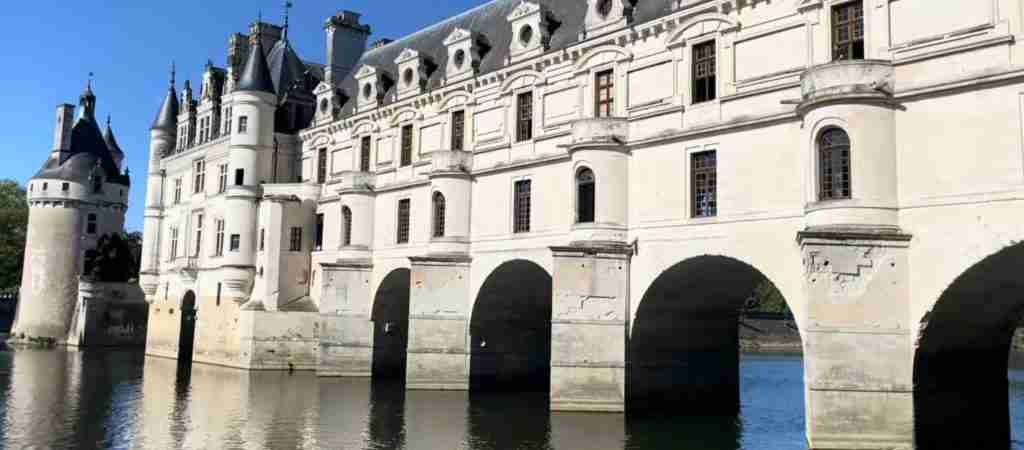
The comparison favours the alternative sites in almost every dimension except the architecture of the most famous individual buildings. Chambord at 156 metres wide with 440 rooms represents a scale of construction simply unavailable anywhere else; Chenonceau spanning the Cher on its six arches is a visual effect that cannot be replicated. These buildings earned their fame honestly. What the alternative Loire Valley offers in exchange is intimacy, context, and the specific pleasure of encountering extraordinary things without a crowd between you and them. At Château du Moulin, the diamond-tile façade is yours to examine at whatever distance and duration you choose. At Lavardin’s Saint-Genest, the 12th-century frescoes are at eye level in an empty village church. At Fontevraud, Eleanor of Aquitaine’s reading effigy can be approached and circled without managing around other visitors. The alternative Loire Valley is not a consolation prize for travellers who arrived too late for the main event: it is a different kind of travel experience, more demanding in its navigational requirements and more rewarding in its returns.