
Tavira Day Trip from Faro 2026: Travel Planning Guide
Tavira stands as the Algarve’s most authentic historic town, where 36 Renaissance churches rise above cobbled streets and whitewashed houses line the tranquil Gilão River. Just 32 kilometers from Faro, this perfectly preserved medieval settlement offers visitors a compelling alternative to the region’s crowded beach resorts, combining Moorish castle ruins, golden barrier islands, and traditional Portuguese tascas serving fresh Atlantic seafood in a compact, walkable center.
Key Takeaways: Planning Your Tavira Day Trip 2026
- Budget-Friendly Access: Regional trains connect Faro to Tavira every two hours for €3.25 each way, with the 40-minute journey offering scenic views across the Ria Formosa wetlands. Bus route 67 provides an alternative at €3.85 with 4-5 daily departures.
- Day Trip Costs 2026: Budget travelers complete excellent Tavira day trips for €22-30 per person including transport, lunch, and attractions. Mid-range visitors invest €34-50 per person for enhanced dining and paid attractions. Comfortable day trips with private transfer options and upscale dining range €80-107 per person.
- Compact Historic Center: Tavira’s main attractions cluster within a 15-minute walking radius. The free castle ruins, €2.50 church with bell tower access, Roman Bridge, and Praça da República square form an easily navigable loop requiring 3-4 hours to explore thoroughly without rushing.
- Island Beach Access: Ferries to Ilha de Tavira depart year-round from Quatro Águas (€2-3 round trip, 10 minutes) and seasonally from the town center. The 11-kilometer barrier island offers pristine Blue Flag beaches with minimal development, accessible within 20 minutes of the historic center.
- Optimal Visit Timing 2026: Spring and early autumn provide the best day trip conditions with 20-25°C temperatures, fewer crowds than July-August, and full ferry schedules without peak summer prices. Weekday visits encounter lighter tourist traffic at churches and restaurants.
- Practical Logistics: Tavira train station sits 700 meters downhill from the town center via cobbled streets. The bus station offers more central arrival directly adjacent to Praça da República. Both allow easy same-day return to Faro with trains running until 22:16 and evening bus services available.
People Also Ask About Tavira Day Trips 2026
Is Tavira Worth a Day Trip from Faro in 2026?
Tavira absolutely justifies a day trip from Faro in 2026. The town preserves authentic eastern Algarve character that disappeared from western resort areas decades ago, offering visitors a genuine glimpse of traditional Portuguese culture just 40 minutes from Faro. The compact historic center allows thorough exploration of medieval castle ruins, Renaissance churches, cobbled lanes, and the iconic seven-arched Roman Bridge within 3-4 hours, while still leaving time for the stunning barrier island beaches or leisurely riverside lunches. Budget-conscious travelers complete satisfying Tavira day trips for €22-30 per person including train transport, casual dining, and free attractions like the castle.
The town’s accessibility via frequent regional trains and buses eliminates the need for rental cars, making it one of the Algarve’s most convenient independent day trips. Unlike crowded Albufeira or Vilamoura, Tavira maintains a relaxed pace even during summer months, with sufficient restaurants, cafés, and attractions to fill a full day without feeling touristy or manufactured. The addition of pristine Ilha de Tavira beaches reachable by short ferry adds beach time without sacrificing cultural exploration. Day trippers consistently praise Tavira as their favorite Algarve discovery, frequently extending planned half-day visits into full-day explorations after experiencing the town’s unhurried charm and architectural beauty.
How Much Does a Tavira Day Trip Cost in 2026?
A Tavira day trip from Faro costs €22-30 per person for budget travelers, €34-50 per person for mid-range comfort, and €80-107 per person for comfortable experiences with enhanced transport and dining in 2026. Budget trips utilize the €6.50 round-trip train ticket, pack picnic supplies or choose €10-15 casual lunch options, and focus on free attractions like the castle ruins and riverside walks. The €2-3 ferry to Ilha de Tavira beach adds minimal cost while significantly expanding the day’s possibilities.
Mid-range day trippers increase restaurant spending to €18-25 for quality seafood lunches at traditional tascas, add paid church entries at €2.50, and potentially include the €5 Camera Obscura or €6 tourist train. Comfortable visitors might book private transfers for one leg of the journey (approximately €30 versus €3.25 train fare), dine at upscale riverside restaurants for €30-45, and visit all paid attractions. These costs exclude Faro accommodation but include all transport, meals, and activity expenses for the day trip itself, making Tavira one of the Algarve’s most accessible quality day trip destinations regardless of budget level.
How Do You Get from Faro to Tavira in 2026?
Regional trains provide the fastest and most convenient Faro-to-Tavira connection in 2026, departing Faro station every two hours for the 40-minute journey at €3.25 per person each way. Purchase tickets at Faro station’s ticket office (open daily 06:20-22:20) or through the Comboios de Portugal website and app before boarding. The train service runs from early morning until 22:16, offering flexible return timing for day trippers. Faro station sits approximately 20 minutes by bus or €10 by taxi from Faro Airport, requiring travelers arriving by air to first reach the city center.
Bus route 67 operated by Vamus provides an alternative with 4-5 daily weekday departures and 4 weekend departures at €3.85 per person for the one-hour journey. The bus station in both Faro and Tavira offers more central locations than train stations, dropping passengers directly adjacent to each town’s historic core. Private transfers arranged through companies like Yellow Fish cost €49-55 for door-to-door service (total vehicle cost, not per person), making them economical for groups of three or four splitting costs. Uber and Bolt operate between the cities for approximately €35-40, while standard taxis charge €60-70 depending on traffic and time of day.
Can You Visit Tavira and the Beach in One Day in 2026?
Combining Tavira’s historic center and Ilha de Tavira beach comfortably fits within a single day trip from Faro in 2026. Arrive on an early train (first departure around 07:00), spend 2-3 hours exploring the castle, churches, Roman Bridge, and historic lanes during the morning when temperatures remain pleasant, then catch the 11:00 or 12:00 ferry to the island for 3-4 hours of beach time and lunch at one of the island’s casual restaurants. Return ferries run every 30 minutes during peak season, allowing flexible beach departure timing before catching an evening train back to Faro.
An alternative sequence explores the beach first during midday heat, then transitions to the shaded historic center during the afternoon as temperatures moderate. Ferries depart from both Quatro Águas year-round and from the town center seasonally (late March through October), with the town-center departure saving 10 minutes of walking time. The compact nature of both the historic center and the main beach area at Ilha de Tavira eliminates transportation delays between major highlights, unlike larger Algarve destinations where beaches sit kilometers from cultural attractions. This natural pairing of history and beach makes Tavira unique among eastern Algarve day trip destinations.
Extended multi-day tours – 5+ days
Featured Algarve Multi-Day Tour Packages
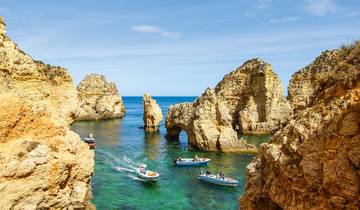
4 days
Algarve Discovery Tour
- ✓ Booking needs min. 2 travelers

8 days
Walking in Portugal – Remote Coastal Trails
- ✓ Comprehensive Algarve tour
- ✓ Expert local guides included
- ✓ All accommodation arranged
- ✓ Transportation provided
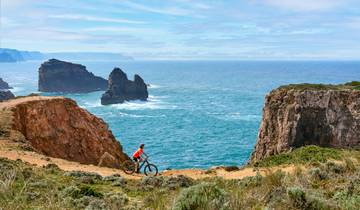
7 days
Costa Vicentina: Natural Park self-guided bike tour
- ✓ Comprehensive Algarve tour
- ✓ Expert local guides included
- ✓ All accommodation arranged
- ✓ Transportation provided

8 days
Algarve: Along Portugal's Dream Coast
- ✓ Comprehensive Algarve tour
- ✓ Expert local guides included
- ✓ All accommodation arranged
- ✓ Transportation provided
Multi-day tour packages powered by TourRadar. Prices and availability subject to change.
Introduction: Discovering Tavira’s Timeless Appeal in 2026
Thirty-two kilometers east of Faro Airport, Tavira preserves what much of the Algarve surrendered to mass tourism four decades ago. The town’s historic center remains remarkably intact, with 36 churches rising above traditional Portuguese architecture along the slow-flowing Gilão River. Centuries of Moorish heritage blend seamlessly with post-earthquake reconstruction, creating an architectural tapestry that spans eight centuries without succumbing to resort development or tourist kitsch.
The town’s location on the eastern edge of the Ria Formosa Natural Park provides both protection from overdevelopment and access to some of Portugal’s most pristine barrier island beaches. Unlike the central and western Algarve where beaches have become extensions of concrete resort strips, Tavira’s islands remain largely undeveloped, accessible only by ferry or pedestrian bridges that naturally limit crowd sizes and preserve natural character.
For day trippers based in Faro or passing through the region, Tavira offers an accessible window into authentic Portuguese culture without requiring multi-day commitments or extensive planning. The compact historic center allows thorough exploration within 3-4 hours, while excellent public transport connections eliminate rental car requirements. Budget travelers discover Tavira equally accessible as luxury visitors, with costs scaling appropriately across all comfort levels.
This guide provides comprehensive planning information for executing successful Tavira day trips in 2026, from early morning departure logistics through evening return timing. Whether prioritizing architectural history, beach access, culinary exploration, or some combination thereof, the day trip framework adapts to diverse traveler interests while maintaining the practical constraints of same-day return to Faro.
Getting to Tavira from Faro 2026: Complete Transportation Analysis
Regional Train Service: The Optimal Choice
The regional train connecting Faro to Tavira represents the fastest, most economical, and most environmentally friendly transport option for day trippers in 2026. Operated by Comboios de Portugal on the Algarve coastal line, the service covers approximately 32 kilometers in 40 minutes with departures every two hours throughout the day. Adult single tickets cost €3.25, making the round trip €6.50 per person.
Trains depart from Faro’s modern station beginning around 07:00, with the final evening departure to Tavira typically scheduled around 20:16. Return services from Tavira to Faro run until 22:16, providing ample flexibility for evening dining before returning to Faro accommodations. The route makes several intermediate stops at smaller stations including Olhão and Fuzeta, though these stops add minimal time to the journey given the regional train’s already moderate speed.
Purchase tickets at Faro station’s ticket office, open daily from 06:20 to 22:20, or through the CP website and mobile app allowing advance booking with electronic tickets displayed on smartphones. Ticket offices at both Faro and Tavira can experience queues during busy periods, particularly before popular departure times, making online purchase advisable for travelers on tight schedules. Unstaffed stations along the route allow ticket purchase onboard for local journeys without penalty, though Faro and Tavira both maintain staffed ticket offices.
Faro station sits approximately 3 kilometers north of the airport and 1 kilometer north of the city center, requiring connecting transport for most travelers. The number 14 or 16 Próximo bus connects the airport to Faro station in 20-30 minutes for a few euros paid to the driver. Taxis and ride-hailing services cover the same route in approximately 10 minutes for €10-15. Day trippers staying in central Faro hotels can typically walk to the station in 10-15 minutes depending on specific accommodation location.
Tavira’s train station occupies a location 700 meters north of the historic center via cobbled streets that descend steadily into town. The walk takes 10-15 minutes and requires navigating uneven pavement, making it less ideal for travelers with mobility limitations or heavy luggage. Taxis do not typically wait at Tavira station, though calling for pickup service remains straightforward. The downhill walk into town proves manageable for most visitors, with the corresponding uphill return climb at day’s end being the more challenging direction that some visitors choose to taxi instead.
Bus Service: The Central Alternative
Vamus operates bus route 67 connecting Faro and Tavira with 4-5 daily departures on weekdays and 4 departures on weekends in 2026. The journey takes approximately one hour, slightly longer than the train, with adult single tickets costing €3.85 each way. The primary advantage over train service lies in the bus stations’ more central locations in both cities, depositing passengers directly adjacent to the historic cores without requiring additional walks or transfers.
Faro’s bus station sits within easy walking distance of the city center and approximately 200 meters south of the train station, making it straightforward for travelers to compare departure times between both modes and select whichever departs first during their desired travel window. To reach Faro bus station from the airport, take the same number 14 or 16 Próximo bus that serves the train station, or taxi/Uber for €10-15 in approximately 15 minutes.
Tavira’s bus station offers the significant advantage of central location, placing arriving passengers within a 5-minute walk of Praça da República and all major historic attractions. This eliminates the 700-meter uphill/downhill transition required when arriving by train, making bus service particularly valuable for visitors with mobility concerns or those maximizing limited time in town. Bus schedule limitations become the primary constraint, with fewer daily departures than train service restricting timing flexibility, particularly for afternoon returns to Faro.
Purchase tickets at the Vamus ticket office in Faro bus station or pay the driver upon boarding, though drivers often lack change for large bills making exact fare or small notes advisable. The bus route continues beyond Tavira to Vila Real de Santo António at the Spanish border, so confirm your destination with the driver when boarding despite the bus displaying the final terminus. Limited evening bus service means day trippers should verify return departure times upon arrival in Tavira to avoid being stranded or forced into more expensive taxi returns.
Private Transfers and Taxis: Premium Convenience
Private transfers arranged through companies like Yellow Fish provide door-to-door service between Faro accommodations and Tavira for €49-55 when booked in advance for 2026 travel. This total vehicle cost makes private transfers economical for groups of three or four travelers splitting the fare, working out to €12-18 per person compared to €6.50-7.70 for public transport. The 30-35 minute journey via the A22 motorway proves faster than both train and bus, with drivers waiting at specified pickup locations and handling all navigation.
Ride-hailing services including Uber and Bolt operate between Faro and Tavira for approximately €35-40, fluctuating based on demand levels and time of day. Summer peak periods and weekends typically command higher fares, while shoulder season weekday travel sees lower rates. Unlike traditional taxis, ride-hailing apps provide upfront pricing before booking, eliminating concerns about unexpected meter readings or unclear routes.
Standard licensed taxis wait outside Faro Airport and train station, charging approximately €60-70 for the Tavira run depending on traffic, time of day, and weekend premium rates. Night and weekend surcharges can increase these fares by 20-30 percent above base rates. Tavira taxis do not typically wait at the train station but maintain ranks near the bus station and Praça da República, making taxi return journeys require phone booking or asking restaurants to call services on your behalf.
The private transfer and taxi option particularly benefits travelers arriving on early morning flights who wish to maximize Tavira time without first checking into Faro hotels, as well as families with young children for whom public transport with strollers and beach equipment creates logistical challenges. Solo budget travelers and couples find little economic advantage over public transport unless placing exceptionally high value on convenience and time savings.
Self-Drive: Rental Car Considerations
Rental cars provide maximum schedule flexibility for Tavira day trips, with the A22 motorway connecting Faro to Tavira in approximately 35 minutes covering 32 kilometers. The motorway charges tolls collected electronically via transponder or license plate billing, adding roughly €2-3 each direction to fuel and rental costs. Rental agencies cluster at Faro Airport and in the city center, with daily rates in 2026 ranging €25-50 for economy vehicles depending on season and advance booking timing.
Parking in Tavira presents the primary logistical consideration for self-drive visitors. The compact historic center prohibits vehicle access, requiring use of paid parking areas on the town’s periphery. Several lots near the Roman Bridge and along the river charge approximately €1-2 per hour with all-day rates around €8-10. Free parking exists further from the center along residential streets, requiring 10-15 minute walks into the historic core. Summer high season sees parking lots fill by late morning, making early arrival advisable.
The self-drive option proves most valuable for travelers planning to combine Tavira with other eastern Algarve destinations like Vila Real de Santo António, Cacela Velha, or Fuseta in a single day, creating custom multi-stop itineraries impossible via public transport. For single-destination Tavira day trips, the train’s superior value, environmental impact, and elimination of parking logistics makes it the superior choice for most travelers unless rental cars are already secured for other portions of Algarve travel.
Tavira Historic Center Exploration 2026: Walking Guide
Castelo de Tavira: Free Panoramic Gateway
The castle ruins crowning Santa Maria Hill provide the natural starting point for Tavira exploration, offering free entry and commanding views across the entire historic district, Gilão River, and Ria Formosa lagoons beyond. Originally constructed by Moors in the 11th century and rebuilt by King Dinis in 1292 after the Christian reconquest, the castle served defensive purposes until severe damage in the catastrophic 1755 Lisbon earthquake left it in its current romantic ruined state.
The castle opens daily at 10:00 closing at 17:00 during autumn and winter months, extending to 19:00 closures during spring and summer. No entrance fee applies, making it Tavira’s most accessible major attraction. Steep stone steps ascend to rampart sections where visitors walk along preserved wall sections for 360-degree panoramas. Inside the castle walls, a well-maintained garden features seasonal flowers including poppies, cosmos, and bougainvillea creating colorful displays against ancient stonework.
The defensive walls stretch irregularly following the hilltop topography, with several towers offering different viewing angles across Tavira’s characteristic scissor-style terracotta rooftops. From these elevated positions, the town’s 36 church steeples become clearly visible, illustrating Tavira’s historical religious significance. Looking south, the Ria Formosa’s intricate network of channels and islands extends toward the Atlantic, with Ilha de Tavira’s white sand beaches visible as a thin ribbon separating lagoon from ocean.
Plan 20-30 minutes for thorough castle exploration including photography stops and panorama absorption. The site provides limited shade, making morning or late afternoon visits preferable during summer months when midday sun and heat intensify. Basic restroom facilities exist near the entrance. The castle’s free admission status means it attracts steady visitor traffic throughout the day, though crowding never reaches problematic levels given the spacious rampart areas and garden zones.
Access the castle via the medieval Arco da Misericórdia gateway on Largo Abu-Otmane, where stone archways frame the entrance approach. The same square provides direct access to two of Tavira’s most significant churches, creating natural route flow between the three attractions without backtracking through the town.
Igreja de Santa Maria do Castelo: Gothic Survivors and Knight’s Tombs
Standing immediately adjacent to the castle entrance, the Church of Santa Maria do Castelo serves as Tavira’s main church and holds particular historical significance for commemorating the Christian reconquest. Built in the 13th century on the foundations of Tavira’s principal mosque following the 1242 Christian victory, the church underwent extensive reconstruction after 1755 earthquake damage under supervision of Italian architect Francisco Fabri, though some original Gothic elements survived intact.
Inside lies the tomb of Dom Paio Peres Correia, Master of the Order of Santiago who led the 1242 campaign against Moorish rulers, alongside tombs of seven knights who died during that military action. The church displays a 13th-century baptismal font and unique glass-sided ossuary containing human remains uncovered during archaeological excavations. Stone-carved Stations of the Cross decorate the exterior walls, while a preserved Gothic portico adorns the main façade.
Entrance costs €2.50 in 2026, which includes access to the bell tower offering alternative panoramic views complementing those from the castle ramparts. The climb involves narrow stone staircases unsuitable for those with mobility limitations or claustrophobia concerns, but rewards visitors with close views of the distinctive yellow and white clock faces visible across town. The bell tower perspective emphasizes the density of churches throughout Tavira’s compact center, with multiple steeples visible in every direction.
The church operates during standard visiting hours, generally 10:00-18:00 with potential variations for religious services. Photography inside is permitted though respectful behavior around the tombs and religious objects is expected. The €2.50 admission represents excellent value given the historical significance, architectural details, and included tower access. Visitors interested in only external architecture can view the impressive facade, portico, and Station of the Cross carvings free of charge from the surrounding square.
Combined with the adjacent free castle visit, the castle-church complex typically requires 45-60 minutes for thorough exploration, positioning it as the anchor activity for Tavira’s cultural attractions. The elevated hilltop location means completing these sites early in the day allows downhill progression into the lower town rather than saving uphill climbs for afternoon when energy wanes.
Igreja de Santiago: Secondary Bell Tower Option
A short walk from Santa Maria do Castelo, the Santiago church dates from the late 13th century and shares the distinction of being built atop a former Moorish structure. The church takes its name from the Order of Santiago to whom it was donated following the Christian conquest. Its most distinctive exterior feature is the large gold medallion depicting a knight mounted on the main façade, immediately identifying the building even from a distance.
The church’s architectural style proves more sedate and scaled-down compared to its grander neighbor, though the interior maintains historical and artistic interest. Like Santa Maria do Castelo, Santiago offers bell tower access for visitors seeking additional panoramic perspectives of Tavira. The tower climb provides slightly different viewing angles emphasizing the northern neighborhoods and approaches to the town.
Entrance details including pricing and tower access fees vary and warrant on-site inquiry, as this secondary church receives less tourist infrastructure focus than the main Santa Maria do Castelo. Many visitors who have already climbed the castle ramparts and Santa Maria tower find a third similar viewpoint redundant, making Santiago primarily valuable for church architecture enthusiasts or those seeking to visit multiple examples of Tavira’s legendary church concentration.
The church location near Largo Abu-Otmane means it’s easily incorporated into the castle district exploration without significant detours. Budget-conscious travelers can appreciate the exterior architecture and distinctive gold medallion without paying entrance fees, reserving paid visits for the more historically significant Santa Maria do Castelo where the modest €2.50 investment delivers greater historical narrative and better tower access value.
Igreja da Misericórdia: Renaissance Azulejo Showcase
Returning toward Praça da República brings visitors past the Igreja da Misericórdia, Tavira’s grandest church building and finest example of Renaissance religious architecture in the Algarve region. The church features exquisite 18th-century azulejo panels depicting the Works of Mercy, creating walls of intricate blue and white tilework that exemplifies Portuguese decorative traditions at their most refined.
The Renaissance facade showcases sophisticated stonework and classical proportions that distinguish it from Tavira’s Gothic and Baroque churches. Built in the 16th century, the structure survived the 1755 earthquake better than many contemporaries, preserving more original Renaissance elements than most Algarve churches from this period. The interior gilded altarpiece demonstrates the wealth accumulated by Tavira’s religious institutions during the Age of Discovery when the port prospered from North African trade.
Operating hours and entrance fees should be confirmed on-site as they can vary seasonally and for religious observances. Some Tavira churches including Misericórdia occasionally offer free entrance during specific hours or days, making flexible timing potentially cost-advantageous for budget-focused travelers. Even when entrance requires payment, the €2-3 typical fees represent minimal investment for access to some of Portugal’s finest religious architecture and decorative arts outside Lisbon.
Photography policies vary by church and time, with flash photography generally prohibited to protect delicate azulejo panels and painted surfaces. Visitors should dress respectfully with covered shoulders and knees, particularly when religious services coincide with tourist visiting hours. The churches maintain active religious functions beyond their tourist attraction roles, requiring visitors to balance cultural exploration with appropriate reverence for active worship spaces.
Camera Obscura: 19th Century Optical Novelty
Housed in the town’s water tower, the Camera Obscura represents Tavira’s most unusual attraction, using 19th-century lens and mirror technology to project live, real-time images of the town onto a viewing table in a darkened chamber. The optical system that predated photography allows up to 15 visitors at a time to observe Tavira’s streets, river, and landmarks from a unique perspective as guides manipulate the mirrors to scan across different districts.
Tours last approximately 20-30 minutes with guides explaining Tavira’s historic buildings and monuments visible through the camera system while demonstrating the optical principles underlying the technology. The novelty proves particularly engaging for visitors interested in history of science, photography, or unique perspectives on familiar subjects. Children often find the magic of seeing real-time street life projected onto the table especially captivating.
Entrance costs €5 per adult in 2026, positioning it as one of Tavira’s pricier attractions relative to the experience duration and depth. Many travelers consider this expense harder to justify compared to the excellent value of castle entry (free) or church visits (€2.50), particularly when considering that similar panoramic views come free from the castle ramparts without optical equipment.
The Camera Obscura occupies a location near the Roman Bridge, making it convenient to incorporate without significant detours. Visitors particularly interested in photography, optical history, or novel experiences find the €5 worthwhile, while budget-focused travelers can reasonably skip it in favor of longer time at no-cost attractions. The darkened chamber viewing experience provides welcome air-conditioned escape during hot summer afternoons, adding functional value beyond the pure novelty factor for visitors touring during peak heat hours.
Praça da República: Historic Heart and Social Center
The grand Praça da República serves as Tavira’s principal square, functioning as both the geometric center of the old town and its social gathering point. The square hosted the town’s marketplace for centuries before transitioning to its current role as the civic and commercial heart of modern Tavira. Elegant heritage buildings with preserved facades surround the plaza, many now housing restaurants, cafés, and shops while maintaining their historic architectural character.
The prominent Câmara Municipal de Tavira town hall dominates the square’s eastern side, presenting monumental architecture that asserts civic authority through classical design elements. The building’s formal facade creates a backdrop for the square’s less formal daily activities, from locals meeting for coffee to tourists consulting maps and planning routes through the historic district.
The square’s central location makes it the natural gathering point and orientation landmark for visitors exploring Tavira. The tourist information center sits directly on Praça da República, providing maps, current attraction hours, event schedules, and restaurant recommendations. Staff speak English and can assist with booking ferry times, calling taxis, or answering specific logistical questions about navigating the town and surrounding region.
Restaurant terraces and café awnings extend into the square’s periphery, creating outdoor seating zones where visitors can observe local life while enjoying coffee, pastries, or meals. The plaza maintains activity throughout the day, from morning coffee crowds through afternoon shopping hours into evening dining and socializing. Unlike some European squares that feel primarily tourist-oriented, Praça da República retains authentic local use, with Tavira residents conducting daily business and social activities alongside visitor tourism.
The square provides logical starting or ending points for walking tours of Tavira’s historic center, with major monuments accessible via short walks in every direction. Bus arrivals and departures occur adjacent to the square, making it the first landmark most bus passengers encounter. The square’s open space, seating options, and restroom access at nearby cafés make it valuable for planning session breaks, orientation pauses, or meeting points when groups split to pursue different interests.
Ponte Romana: Seven Arched Icon
The seven-arched footbridge spanning the Gilão River ranks among Tavira’s most photographed landmarks, often misleadingly called the “Roman Bridge” despite being constructed centuries after Roman occupation ended. The current structure dates from the 17th century, built on foundations and approaches that may incorporate Roman-era elements, creating the naming confusion that persists despite historical records clearly documenting its post-Roman construction.
The bridge links Praça da República and the northern historic district with the southern neighborhoods, creating the principal pedestrian connection across the river that bisects the town. The stone construction with its distinctive arches creates elegant lines that photograph beautifully from riverside walking paths below the bridge level, particularly during golden hour when warm light illuminates the aged stonework.
The bridge’s flat design accommodates modern pedestrian traffic without steps or significant elevation changes, making it accessible for wheelchairs, strollers, and those with mobility limitations. Wide enough for bidirectional foot traffic without crowding, the bridge surface itself offers river views in both directions, with café terraces and restaurants visible along both banks.
The bridge functions as working infrastructure rather than a separated tourist attraction, meaning there are no entrance fees, operating hours, or guided tours. Visitors simply walk across when moving between the northern and southern sections of town, pausing mid-span for photographs or river views as desired. Early morning and evening hours provide less crowded crossing times for those seeking unobstructed photos or quiet contemplation of the river’s tranquil flow.
The areas immediately adjacent to both bridge approaches host restaurants with prime riverside terrace seating, making the bridge zone logical for lunch or dinner planning. The southern approach leads toward residential neighborhoods and the tourist train departure point, while the northern approach returns to Praça da República and the castle district, creating clear navigation landmarks for orientation throughout the day.
Ilha de Tavira Beach Access 2026: Ferry Operations and Island Exploration
Ferry Services: Quatro Águas Year-Round Operations
Ferries to Ilha de Tavira depart year-round from Quatro Águas, a small pier area approximately 2 kilometers southeast of Tavira’s historic center. The Silnido company operates regular scheduled services with departures every 30 minutes during summer high season from June through September, scaling back to hourly departures during shoulder months and reduced winter schedules. The crossing takes approximately 10 minutes, landing passengers directly on the main section of Ilha de Tavira adjacent to the most developed beach areas.
Round-trip ferry tickets cost €2-3 per adult in 2026, purchased at kiosks located at the departure pier. Payment typically requires cash in small bills or coins, as card payment infrastructure remains limited at the basic pier facilities. Tickets validate for same-day return on any scheduled ferry, operating on first-come, first-served basis without reserved seats or departure time assignments for the return journey.
Reaching Quatro Águas from Tavira’s center requires either walking approximately 20-25 minutes along clearly signed paths through residential areas, or catching the tourist train (€6) that includes the Quatro Águas stop on its circular route. Taxis cover the distance in 5 minutes for approximately €5-8. The walk proves pleasant during temperate months, passing through authentic neighborhood zones and offering views across the Ria Formosa wetlands, though summer heat makes the 2-kilometer walk less appealing during midday hours.
Ferry schedules intensify during summer peak season to handle increased beach visitor volume, with boats running from approximately 08:00 until 20:00 or later depending on sunset timing and demand levels. Off-season schedules contract significantly, with final departures sometimes as early as 17:00 or 18:00. Day trippers should confirm current schedules upon arrival in Tavira to avoid being stranded on the island past the final ferry return, as no alternative transport exists once boat service ceases for the day.
Town Center Seasonal Ferry: Cais das Naus Convenience
From late March through September or October, supplementary ferry services depart directly from the town center at Cais das Naus pier, eliminating the 2-kilometer walk or transport requirement to reach Quatro Águas. This seasonal service saves visitors approximately 20-30 minutes total in access time, allowing more efficient transitions between historic center exploration and beach time within compressed day trip schedules.
The Cais das Naus crossing takes approximately 20 minutes compared to 10 minutes from Quatro Águas due to the greater distance and more complex navigation through Ria Formosa channels. Ferry frequency runs lower than the main Quatro Águas route, typically hourly rather than every 30 minutes, making schedule timing more critical for return planning. Round-trip fares run slightly higher at €3-4 reflecting the longer crossing distance and premium convenience of central departure.
The Cais das Naus pier sits within 5-10 minutes walking distance from Praça da República and all major historic attractions, making post-beach returns directly back to the town center for evening activities or meals far more practical than returning via Quatro Águas on the town’s opposite edge. Day trippers particularly benefit from this routing efficiency when attempting to combine morning historic touring with afternoon beach time followed by early evening dining before catching the train back to Faro.
Seasonal operation means the Cais das Naus service remains unavailable during autumn, winter, and early spring months, forcing reliance on year-round Quatro Águas departures during off-peak travel periods. The late March seasonal startup and September/October shutdown varies slightly year-to-year based on weather patterns and demand forecasting, warranting confirmation of operational status for trips planned near the seasonal transition periods.
Ilha de Tavira Beach Experience: 11-Kilometer Barrier Island
Ilha de Tavira extends approximately 11 kilometers in length while ranging from 150 meters to 1 kilometer in width, creating a elongated barrier island separating the Ria Formosa wetlands from the open Atlantic. The island forms part of the Ria Formosa Natural Park, protecting it from development and preserving natural dune systems, maritime vegetation, and nesting habitats for diverse bird species including gulls, terns, and wading birds.
The main landing area where Quatro Águas ferries dock features the island’s highest concentration of amenities including beach bar restaurants, sunbed and umbrella rentals, changing facilities, and restrooms. This central zone attracts the majority of visitors, creating a lively beach atmosphere with steady but not overwhelming crowds during summer months. The beach holds Blue Flag certification, indicating high standards for water quality, safety, and environmental management.
Walking east or west from the main landing area leads to progressively quieter beach sections where crowds thin dramatically within 10-15 minutes of walking. The island’s 11-kilometer length provides ample space for visitors seeking isolation, with the most remote sections essentially deserted except during peak August weeks. The eastern portions of the island include designated naturist zones where clothing-optional sunbathing is legally practiced, clearly signed to avoid surprising conventional beachgoers.
The beaches face southeast, creating sheltered conditions protected from the prevailing Atlantic swells and winds that characterize western Algarve beaches. Waters remain calm and suitable for families with children, with gentle sandy entries and minimal undertow. Swimming conditions prove safer and more predictable than ocean-facing Atlantic beaches, though standard coastal safety precautions including attention to lifeguard flags and warnings remain essential.
The island provides no shade beyond what visitors create with rented umbrellas or personal beach equipment, making sun protection critical during extended visits. Several restaurant operations along the main beach zone serve grilled fish, seafood rice, salads, sandwiches, and beverages at mid-range prices approximately €12-25 for main courses. These facilities offer welcome respite from sun exposure while providing meal options that eliminate the need to return to mainland Tavira for lunch during extended beach visits.
Alternative Island Access: Praia do Barril via Santa Luzia
Travelers with private vehicles or those seeking variation can access different sections of Tavira’s barrier island system via Praia do Barril near the village of Santa Luzia, approximately 5 kilometers west of Tavira town. A pedestrian bridge connects the mainland to the island, followed by either a 2-kilometer walk through dunes or a miniature tourist train that covers the same route during summer operating season.
Praia do Barril distinguishes itself through the Cemitério das Âncoras, an art installation featuring dozens of rusty boat anchors arranged in the dunes commemorating the area’s tuna fishing heritage. The anchors create dramatic photographic subjects particularly during golden hour lighting, offering visual interest beyond standard beach scenery. The beach itself maintains the same white sand and calm water character as the main Ilha de Tavira sections, with slightly fewer amenities and lower summer crowds.
This alternative access point proves less practical for Faro-based day trippers without rental cars, as reaching Santa Luzia via public transport requires bus connections or taxis from Tavira adding complexity and cost to already time-compressed itineraries. The route serves primarily self-drive visitors staying multiple days in the region and seeking to experience different beach sections during an extended visit. Day trippers maximizing limited time generally find the direct Quatro Águas or Cais das Naus ferry access to the main Ilha de Tavira sections more efficient for combining beach time with historic center exploration.
Tavira Dining Guide 2026: Where to Eat During Your Day Trip
Budget-Friendly Traditional Tascas
Budget-conscious day trippers discover excellent value at Tavira’s traditional tascas serving authentic Portuguese cuisine without tourist markup pricing. Três Palmeiras offers the Algarve’s most authentic budget dining experience with all-you-can-eat charcoal-grilled fish at fixed prices ranging €10-17 per person in 2026. The family-owned institution serves whatever fish proved fresh that day, grilling it over open charcoal and delivering unlimited portions until diners signal satisfaction. The experience emphasizes quantity, quality, and local tradition over menu sophistication or presentation refinement.
Snack bars and café-style eateries scattered throughout the historic center offer lighter meals at €8-15 including grilled sardines, pork dishes with chips, tuna salads, and traditional Portuguese stews. The Mercado Municipal market building houses several casual food stalls serving regional specialties to local workers during lunch hours, providing authentic experiences at rock-bottom prices roughly €7-12 for substantial meals. These market stalls operate primarily during weekday lunch periods, closing by mid-afternoon.
Indian restaurants including Little India and Mehfil Indian & Italian provide budget international alternatives when Portuguese seafood loses appeal, serving generous portions of curries, naan, and rice dishes at €10-15 per person. These establishments prove particularly valuable for vegetarians and vegans seeking more options than traditional Portuguese tascas typically offer.
Budget planning should allocate €10-15 for casual lunch, €3-5 for coffee and pastries, and €2-4 for bottles of water throughout the day. Many budget restaurants include bread, olives, butter, and other table items that appear complimentary but carry small charges on the final bill, typically €2-4 total. Declining these items when servers present them avoids surprise charges, though the amounts rarely prove significant enough to materially impact overall budget calculations.
Mid-Range Seafood and Portuguese Classics
Mid-range restaurants focusing on Algarve seafood and Portuguese classics cluster along the river and near Praça da República, offering quality ingredients, professional service, and riverside terrace seating at €18-30 per person for main courses before beverages. Artefact exemplifies this category with its strict farm-to-table philosophy using exclusively own-grown produce, showcasing refined Mediterranean and Portuguese cooking where exceptional ingredients receive proper technical treatment. Signature dishes including tuna tataki, snails, duck breast, and precisely cooked steaks demonstrate kitchen capability while celebrating regional products.
Restaurants along Rua Borda d’Água da Asseca command river views and corresponding modest price premiums, typically €20-30 for fish and seafood mains. Establishments emphasize classic Portuguese seafood preparations including grilled whole fish priced by weight, seafood rice, and cataplana stews combining shellfish and firm fish in copper pots. These preparations showcase Algarve ingredients and cooking traditions without excessive elaboration, allowing fish quality and freshness to drive the dining experience.
Come na Gaveta offers a modern tapas-style approach to Portuguese dining with seasonal small plates designed for sharing, though portions prove substantial enough for individual consumption. The lunch menu features dishes like veal pica pau and seared tuna on bolo do caco bread at moderate prices €15-25, attracting both locals and visitors seeking contemporary Portuguese cooking in relaxed settings. The name references Tavira’s historical practice of workers eating lunch “from a drawer” when customers interrupted their meals.
Wine selections at mid-range establishments emphasize Algarve and Alentejo regional wines priced €15-30 per bottle, providing excellent value compared to international selections or premium Portuguese bottles. House wines by the glass or carafe offer further economy at €3-8, proving perfectly adequate for casual lunches when premium vintages seem unnecessary. Portuguese beer including Super Bock and Sagres costs €2-4 for small bottles, while imported beers command €4-6.
Complete mid-range lunch including appetizer or salad, main course, dessert, and wine typically totals €25-40 per person before service charge. Many restaurants add 10 percent service automatically to bills, while others leave tipping discretionary, with 5-10 percent considered appropriate for satisfactory service. Credit cards receive wide acceptance at mid-range and upscale establishments, though budget tascas and market stalls may require cash.
Upscale Dining for Special Occasions
Upscale restaurants including O Tonel, Coisa Linda, and Bartô provide refined dining experiences at €30-50+ per person for sophisticated preparations, premium ingredients, and elevated service standards. O Tonel occupies a picturesque side street location serving world-class Mediterranean classics including sublime duck breast, creamy vegetable soup, and impeccably fresh clams and oysters. Limited seating fills quickly, requiring advance reservations particularly during summer months and weekends.
Coisa Linda meaning “Beautiful Thing” delivers on its promising name through sophisticated Portuguese, French, and Brazilian influences in a stunning garden setting ideal for leisurely lunches or romantic dinners. Standout dishes including perfectly cooked cod, succulent duck, and flavorful ribeye showcase serious kitchen technique and ingredient sourcing. The restaurant has evolved into Tavira’s trendy destination for aesthetically pleasing meals that satisfy both culinary and visual sensibilities.
Bartô specializes in high-quality fusion sushi featuring inventive creations like tuna hard shell tacos alongside impeccable traditional preparations. The Japanese-International menu represents unusual sophistication for a small Algarve town, appealing to visitors seeking alternatives to endless Portuguese seafood without sacrificing quality or ambition. Premium sushi-grade fish and creative presentations command corresponding premium pricing at €35-60 per person for complete meals with sake or wine.
Day trippers rarely allocate full day trip budgets toward upscale dining experiences given limited time in town and the many attractions competing for schedule space and financial resources. These restaurants prove more appropriate for travelers staying overnight in Tavira hotels or those treating the day trip as a culinary-focused excursion where fine dining forms the centerpiece rather than incidental component. The quality consistently matches or exceeds Lisbon and Porto equivalents while pricing remains 15-20 percent lower than major city standards.
Coffee, Pastries, and Quick Refreshment
Numerous cafés throughout Tavira’s historic center serve excellent Portuguese coffee at bargain prices by European standards. Espresso costs approximately €0.80-1.20, galão (similar to latte) €1.50-2.50, and pastéis de nata €1-1.50 each. These prices remain consistent whether taking coffee standing at the bar in traditional Portuguese fashion or paying modest premiums for table service and extended terrace sitting.
One specialty coffee shop near the historic center outskirts doubles as co-working space, offering V60 pour-overs, flat whites, and matcha lattes at €3-5 alongside sourdough toast and Turkish eggs. The more contemporary café culture appeals to remote workers and digital nomads while providing air-conditioned respite during hot summer afternoons. The establishment’s baker produces outstanding sourdough bread available for purchase when supplies last, though production runs only certain days weekly.
Portuguese pastries beyond the ubiquitous pastéis de nata include regional specialties like alfarroba cake made from carob, queijadas (small cheese tarts), and travesseiros (puff pastries filled with egg cream). Most cafés display these items in glass cases by the bar, with service staff plating selections when customers order. Asking about filling ingredients and sweetness levels helps navigate unfamiliar pastries, as Portuguese sweets tend toward high sugar content that may exceed some palates’ preferences.
Gelato and ice cream shops operate near major tourist zones including Praça da República and the Quatro Águas ferry pier, serving Italian-style gelato at €2-4 for single scoops and €4-7 for larger portions. These provide welcome cooling relief during midday heat and beach visits. Portuguese ice cream flavors emphasize regional ingredients including fig, carob, almond, and citrus alongside standard international flavors.
Budgeting €5-10 per day for coffee, pastries, and cold drinks covers most visitors’ refreshment needs beyond main meals. Water bottles from supermarkets cost €0.50-1 compared to €1.50-3 at tourist-area vendors, making brief supermarket stops worthwhile for all-day hydration supplies. Most restaurants and cafés provide free tap water when requested, though Portuguese dining culture defaults to bottled water unless customers specifically request tap alternatives.
Sample Tavira Day Trip Itineraries 2026
Budget Cultural Focus: Historic Center Deep Dive
Morning: Faro Departure and Arrival
Catch the 09:00 regional train from Faro station (ticket €3.25) arriving Tavira 09:40. Walk downhill 10-15 minutes from train station to Praça da República, stopping at the tourist information center for current attraction hours and restaurant recommendations. Continue uphill to the castle district, arriving around 10:15 for castle opening.
Castle and Church Exploration: 10:15-12:00
Explore Castelo de Tavira ruins and gardens (free entry) for 30-40 minutes, walking the ramparts for panoramic photographs and town orientation. Visit Igreja de Santa Maria do Castelo (€2.50) including bell tower climb for alternative views and examination of the historical tombs and Gothic architectural elements. Walk through surrounding Largo Abu-Otmane examining Santiago church exterior and traditional neighborhood architecture.
Lunch Break: 12:00-13:15
Descend to riverside area for lunch at budget tasca, selecting grilled fish or meat with salads and bread at €12-15. Alternatively pack picnic supplies purchased at Faro supermarket before departure, eating in castle gardens or riverside benches for significant additional savings.
River Walk and Bridge: 13:15-14:30
Walk riverside paths photographing traditional architecture, fishing boats, and the Roman Bridge from multiple angles. Cross the bridge examining the seven arches and river views. Explore the Igreja da Misericórdia exterior and surrounding cobbled lanes without rushing, absorbing authentic Portuguese urban character away from castle tourist concentration.
Afternoon Exploration: 14:30-16:30
Visit Mercado Municipal market building examining stalls selling fresh produce, fish, regional specialties, and handicrafts. Continue through residential neighborhoods south of the river observing daily Portuguese life, traditional tiled houses, and neighborhood squares. Return via different routes to discover additional churches, local shops, and architectural details missed during morning castle district focus.
Coffee and Return: 16:30-18:00
Stop for coffee and pastéis de nata (€3-4 total) at Praça da República café, occupying terrace seating for people watching and travel journaling. Walk uphill to train station by 17:30 for the 18:00 departure returning to Faro at 18:40.
Total Costs: Train €6.50, church entry €2.50, lunch €15, coffee and pastry €4. Total approximately €28 per person.
Mid-Range Balanced: History Plus Beach Combination
Early Departure: Faro to Tavira
Catch the 08:00 regional train from Faro arriving Tavira 08:40. Walk directly to castle district, arriving before 09:00 when sites remain quiet and morning light provides excellent photography conditions. Tourist train alternative (€6) saves walking energy for later beach activities.
Concentrated Morning Cultural Tour: 09:00-11:30
Rapid but thorough castle exploration (free, 30 minutes) followed by Igreja de Santa Maria do Castelo visit including tower (€2.50, 30 minutes). Photograph Roman Bridge and Praça da República while walking to Cais das Naus ferry pier, completing core historic attractions in concentrated 2.5-hour morning session that leaves full afternoon for beach.
Ferry and Beach Time: 11:30-16:00
Catch 12:00 ferry from Cais das Naus to Ilha de Tavira (€3 round trip, 20-minute crossing). Spend 3-4 hours at the beach swimming, sunbathing, and exploring quieter sections by walking east or west from main landing zone. Lunch at beach restaurant serving grilled fish and seafood rice €18-25, or pack picnic sandwiches from Tavira cafés for significant savings.
Return and Evening Activities: 16:00-19:00
Return ferry to Cais das Naus arriving back in town center 16:30. Quick refresh stop at accommodation if staying overnight, or immediate walk to riverside restaurants for early dinner. Alternatively enjoy coffee and pastries while reviewing photos and planning return timing. Walk to train station for 19:00 departure to Faro.
Total Costs: Train €6.50, church €2.50, ferry €3, beach lunch €22, coffee €4. Total approximately €38 per person.
Comfortable Photography and Culinary Focus
Flexibility Start: Private Transfer Option
Book private transfer from Faro hotel to Tavira (€50 vehicle total, €12-15 per person when splitting among group) for 08:30 arrival providing extra morning sleep compared to train schedules. Request driver to wait briefly at Roman Bridge for initial photographs before proceeding to Praça da República drop-off.
Golden Hour Photography: 08:30-10:30
Early arrival captures excellent morning light on the Roman Bridge, river reflections, and castle walls before harsh midday sun flattens contrast. Methodically work through castle grounds and ramparts (free entry) focusing on architectural details, panoramic compositions, and interesting foreground elements. Visit Igreja de Santa Maria do Castelo (€2.50) when it opens at 10:00 for interior religious art and bell tower perspectives.
Camera Obscura and Market: 10:30-12:00
Visit Camera Obscura (€5) for the unique optical experience and air-conditioned break from warming temperatures. Tour Mercado Municipal photographing vendor stalls, fish displays, produce arrangements, and authentic market atmosphere. Engage vendors in conversation (many speak basic English) adding human interest stories to image collections.
Upscale Lunch: 12:00-14:00
Reserve table at O Tonel or Coisa Linda for refined two-hour lunch experience emphasizing regional ingredients and sophisticated preparations. Budget €40-60 per person including wine and dessert, treating the meal as primary day trip highlight rather than functional necessity. Request terrace or garden seating when weather cooperates.
Afternoon Beach or Extended Exploration: 14:00-17:30
Choose either ferry to Ilha de Tavira for afternoon beach relaxation and sunset photography, or continue historic center exploration photographing churches, architectural details, and local life throughout less-visited neighborhoods. Late afternoon light provides second golden hour opportunity for exterior photography impossible to achieve during morning-only visits.
Return Journey: 17:30-19:00
Arrange taxi or ride-hailing return to Faro (€35-40) providing door-to-door convenience and eliminating train station walks. Alternatively catch 18:00 train for €3.25 if comfortable with the walk and standard schedule timing.
Total Costs: Private transfer €50 (vehicle), church €2.50, Camera Obscura €5, lunch €55, beach ferry €3, taxi return €38. Total approximately €80-90 per person depending on group size for transfer split.
Practical Day Trip Planning Tips 2026
Optimal Timing and Seasonal Considerations
Spring months from April through early June and autumn from mid-September through October provide ideal conditions for Tavira day trips, combining comfortable 20-25°C temperatures with lower tourist volumes than July-August peak season. These shoulder periods allow thorough exploration without heat exhaustion concerns while maintaining full ferry schedules to Ilha de Tavira and extended restaurant hours. Hotel rates in Faro decrease during shoulder months, making day trip bases more affordable for multi-day Algarve visits incorporating Tavira excursions.
Summer peak season from July through August brings intensely hot temperatures often exceeding 30°C, requiring strategic planning around midday heat by scheduling castle and church visits during morning or late afternoon hours. Ferry services run most frequently during this period with boats every 30 minutes, and all restaurants and attractions maintain extended hours. The tradeoff involves substantially higher crowds at major sites and ferry queues, particularly on weekends when Portuguese domestic tourists supplement international visitors.
Winter months from November through March see reduced ferry schedules with the final departures sometimes as early as 17:00, potentially limiting beach visit feasibility for day trippers. Many restaurants reduce hours or close certain weekdays during this low season, making advance research of operating schedules more critical. The compensating advantages include minimal crowds at all attractions, dramatically lower accommodation rates in Faro bases, and authentic local atmosphere as Tavira returns to serving primarily Portuguese residents rather than international tourists.
Weekday visits encounter lighter crowds than weekends year-round, with Tuesday through Thursday proving consistently quieter at churches, restaurants, and ferries. Portuguese public holidays and school vacation periods create temporary crowd surges mid-week, though these remain manageable compared to summer Saturday and Sunday peaks. Most shops and businesses operate normal hours Monday through Friday, while some reduce Saturday hours and close Sundays creating potential limitations for visitors seeking shopping opportunities.
What to Pack for Your Day Trip
Comfortable walking shoes with good traction prove essential for navigating Tavira’s cobbled streets, uneven sidewalks, and castle rampart steps. The town’s compact size and pedestrian-oriented layout means visitors cover 8-12 kilometers walking during typical day trip exploration, making footwear selection critical to avoid blisters and foot fatigue. Sandals and flip-flops suffice for beach portions but prove inadequate for extended historic center walking on irregular pavement.
Sun protection including high-SPF sunscreen, sunglasses, and wide-brimmed hats becomes non-negotiable during April-October visits when UV indexes reach extreme levels. The castle’s exposed ramparts and beach areas provide zero natural shade, creating sunburn risk within 20-30 minutes of unprotected exposure. Reusable water bottles allow refills at public fountains and restaurant restrooms, maintaining hydration without repeatedly purchasing bottled water at tourist area markups.
Lightweight daypack or bag carries water, sunscreen, camera equipment, extra layers, and any picnic supplies without requiring hand-carrying throughout the day. Beach visits require addition of swimwear, beach towel, and change of clothes if combining beach and historic touring in single day. Small dry bags protect phones and cameras from sand and water during beach portions while allowing photography without equipment damage concerns.
Light layers prove valuable even during summer when air-conditioned churches and restaurants contrast with outdoor heat, and evening temperatures drop 5-10°C below midday peaks. Spring and autumn visits particularly benefit from removable layers as morning and evening temperatures often run 10-15°C cooler than midday conditions. Most Tavira restaurants maintain casual dress codes, making formal attire unnecessary though modest coverage (shoulders and knees) shows appropriate respect when entering churches as active worship spaces beyond their tourist attraction function.
Language and Communication
Portuguese remains Tavira’s primary language with English comprehension varying significantly by generation and occupation. Tourism sector employees including restaurant servers, hotel staff, and attraction workers generally speak functional English adequate for basic transactions and questions. Older residents and those in non-tourist occupations may speak limited or no English, though most demonstrate patience and willingness to communicate through gestures, simple vocabulary, and smartphone translation apps.
Learning basic Portuguese courtesy phrases significantly improves local interactions and demonstrates respect for Portuguese culture. “Bom dia” (good morning), “boa tarde” (good afternoon), “obrigado/obrigada” (thank you masculine/feminine), “por favor” (please), “desculpe” (excuse me), and “fala inglês?” (do you speak English?) cover most essential situations. Portuguese people generally appreciate linguistic effort even when pronunciation proves imperfect, responding with increased helpfulness and warmth compared to tourists making no attempt at local language.
Restaurant menus increasingly include English translations at establishments near Praça da República and major tourist zones, though traditional tascas and neighborhood eateries may offer Portuguese-only menus. Smartphone camera translation apps instantly convert Portuguese menu text to English, eliminating the anxiety of ordering unknown dishes. Pointing to desired items on display cases, in photos, or at neighboring tables provides foolproof ordering methods when language barriers prove insurmountable through verbal communication.
Emergency situations requiring police, medical, or fire services can dial 112, the pan-European emergency number where operators speak multiple languages including English. Tourist information centers provide translation assistance for complex questions or situations beyond simple transactions. Most younger Portuguese under age 40 studied English in school and can provide translation help when communication challenges arise with older residents or in situations requiring detailed explanation.
Money Matters and Payment Options
Portugal uses the euro with all prices in Tavira quoted and charged in local currency. ATMs throughout the historic center dispense euros in denominations from €10-50, with €20 notes proving most useful for typical day trip transactions. Portuguese ATMs typically charge €1-3 withdrawal fees for foreign cards, though visitors’ home banks may assess additional international transaction fees varying by institution and account type.
Credit cards receive wide acceptance at mid-range and upscale restaurants, larger shops, and paid attractions, though budget tascas, market stalls, and ferry services often require cash. Visa and Mastercard process reliably while American Express finds less acceptance outside upscale establishments. Contactless payment technology works at most card-accepting merchants, speeding transactions and eliminating PIN entry requirements for purchases under €50.
Small denomination cash proves essential for coffee bars, pastry purchases, market vendors, church entrance fees, and ferry tickets. Breaking larger bills (€50-100) often proves challenging at small establishments, making €20 notes and smaller denominations more practical for day trip expenses. Some traditional businesses prefer cash payment even when accepting cards, as electronic processing fees reduce their already thin profit margins.
Tipping culture in Portugal proves less aggressive than North American standards but exceeds Northern European restraint. Leaving 5-10 percent at restaurants demonstrates appreciation for good service without being excessive, while rounding up café bills to the nearest euro or leaving small change (€0.50-1) proves appropriate for counter service. Taxi drivers appreciate rounding up fares to the next €5 increment but don’t expect percentage-based tips. No tipping occurs at ticket windows, churches, or other non-service transactions.
Accessibility Considerations
Tavira’s historic center presents significant accessibility challenges for wheelchair users and those with limited mobility given extensive cobbled streets, uneven sidewalks, and lack of curb cuts in older neighborhoods. The Roman Bridge offers flat crossing without steps, and Praça da República maintains level paving suitable for wheelchairs, but reaching the castle and churches requires navigating steep cobbled lanes essentially impassable for wheelchairs without assistance.
The train from Faro to Tavira provides flat crossing to the platform at Faro station, though Tavira station requires crossing the tracks via ground-level crossing requiring vigilance but no steps. The 700-meter walk from Tavira station into town center involves steady downhill on uneven pavement, creating challenges for both wheelchairs and ambulatory travelers with balance or joint concerns. Taxis provide more practical transport for visitors with mobility limitations, depositing passengers at accessible Praça da República.
Most restaurants maintain ground-floor dining rooms accessible without steps, though restrooms frequently occupy basement levels requiring stair negotiation. Outdoor terrace seating often proves more accessible than interior dining rooms, with staff generally helpful in arranging appropriate table locations when mobility concerns are communicated. Beach access to Ilha de Tavira involves ferry boarding requiring 1-2 step climbs from pier to boat deck, manageable for many ambulatory visitors with assistance but impossible for wheelchairs without ferry staff lifting equipment.
Travelers with accessibility requirements benefit from advance research of specific restaurants and attractions, contacting establishments directly to confirm facilities and assistance available. The tourist information center at Praça da República can provide current accessibility information and suggest the most manageable routes for particular mobility constraints. While Tavira proves less accessible than purpose-built modern tourist destinations, careful planning and willingness to accept certain limitations allows visitors with mobility challenges to experience major attractions and authentic Portuguese atmosphere.
Beyond Tavira: Combining Eastern Algarve Destinations 2026
Vila Real de Santo António: Spanish Border Town
Continuing 20 kilometers east from Tavira, Vila Real de Santo António sits directly on the Spanish border with ferry services crossing the Guadiana River to Ayamonte, Spain. The town’s geometric grid layout dates from the 18th-century reconstruction following the 1755 earthquake, creating unusually orderly streets compared to most Portuguese settlements’ organic medieval patterns. The distinctive urban planning makes Vila Real architecturally interesting despite lacking the romantic charm of Tavira’s irregular medieval lanes.
The riverside promenade provides pleasant walking with views across the Guadiana to Spain’s southern coast, lined with restaurants and cafés suitable for lunch or coffee breaks. The town’s main square features monumental architecture and traditional Portuguese paving patterns, though it feels more formal and less intimate than Tavira’s organic Praça da República. The primary attraction lies in the novelty of easily visiting two countries in a single day, with the ferry to Spain departing regularly for those wishing to add international border crossing to their Algarve itinerary.
Train service extends from Tavira to Vila Real de Santo António for €2.40 additional beyond the Faro-Tavira fare, making three-stop day trips (Faro-Tavira-Vila Real) feasible though rushed for attempting to meaningfully experience both Tavira and Vila Real in a single day. Self-drive visitors can incorporate Vila Real as a lunch stop when continuing east to explore Spain’s Costa de la Luz or as a beach destination via the ferry to Ayamonte and onward to Spanish resort areas.
Cacela Velha: Clifftop Hamlet and Pristine Beach
Halfway between Tavira and Vila Real, the tiny clifftop hamlet of Cacela Velha provides one of the Algarve’s most photogenic viewpoints overlooking the Ria Formosa lagoons and barrier islands. The settlement consists of a small whitewashed church, a fortress remnant, and a handful of traditional houses clustered around a miniature plaza, all perched dramatically above the wetlands and Atlantic beyond.
The clifftop location offers stunning panoramic views across the entire Ria Formosa system, with late afternoon light creating particularly beautiful conditions for photography. A steep path descends from the hamlet to the beach and lagoon below, where a small ferry operation (summer only) provides access to Praia da Cacela Velha, a pristine barrier island beach far less developed than the main Ilha de Tavira sections.
Cacela Velha lies 10 kilometers from Tavira requiring private vehicle access, as bus services prove limited and impractical for day trip timing. Self-drive visitors can include brief Cacela Velha stops during eastern Algarve explorations, budgeting 30-45 minutes for the hamlet viewpoint and 2-3 hours if including the beach descent and ferry crossing. The location proves most valuable for photography enthusiasts seeking dramatic vistas and those researching unspoiled Algarve villages representing pre-tourism character.
Fuseta: Authentic Fishing Village Without Tourism Infrastructure
Located 10 kilometers west of Tavira, Fuseta remains authentically Portuguese with minimal tourism development despite proximity to major Algarve destinations. The working fishing village maintains traditional character with colorful boats lining the waterfront, daily fish auctions when boats return with catches, and local restaurants serving whatever seafood proved fresh that day rather than standardized tourist menus.
The town provides ferry access to another section of the Ria Formosa barrier island system, with beaches proving less crowded than the main Ilha de Tavira areas while maintaining the same white sand and calm water characteristics. The absence of beach bar development and tourist infrastructure means visitors should pack supplies including food, water, and sun protection rather than expecting on-site amenities.
Regional trains stop at Fuzeta station on the Faro-Tavira-Vila Real line, making public transport access feasible though the station sits approximately 1.5 kilometers from the village center. Most visitors find Fuseta more suitable for overnight stays or extended visits rather than rushed day trip inclusions, as the town’s appeal lies in slow-paced immersion in Portuguese coastal life rather than concentrated attraction touring. Day trippers prioritizing authentic experience over monument visiting may substitute Fuseta for Tavira, though this trades architectural grandeur for cultural authenticity.
Frequently Asked Questions About Tavira Day Trips 2026
Is One Day Enough to See Tavira Properly?
One day provides sufficient time to experience Tavira’s essential attractions including the castle, main churches, Roman Bridge, historic center streets, and Ilha de Tavira beach for travelers willing to move efficiently without lingering excessively at any single location. Most major cultural sites cluster within a compact 15-minute walking radius, allowing thorough exploration of the historic core within 3-4 hours. The addition of a 3-4 hour beach visit via ferry creates a full but manageable day trip schedule returning to Faro by evening.
Travelers seeking more relaxed pacing, extended beach time, multiple restaurant experiences, or comprehensive church visitations benefit from overnight stays allowing two partial days rather than one compressed full day. Photographers requiring optimal lighting conditions at multiple locations similarly benefit from overnight stays capturing morning and evening golden hours impossible to achieve during midday-focused day trips. Budget travelers camping or staying in Tavira’s hostels often extend visits to 2-3 days given the low incremental accommodation costs and the town’s pleasant atmosphere for extended relaxation.
The single-day format works exceptionally well for travelers based in Faro hotels without rental cars who want to experience authentic eastern Algarve character without repositioning accommodations or managing luggage. It also suits travelers on structured Algarve tours making scheduled stops at multiple towns, where Tavira’s compact layout allows hitting highlights without excessive time allocation. Solo travelers and couples find day trips more manageable than families with young children, who may find the full-day schedule exhausting and prefer splitting Tavira exploration across two shorter visits.
Can I Do Tavira Without a Rental Car?
Tavira works exceptionally well as a car-free day trip destination given excellent public transport connections from Faro and the compact, entirely walkable historic center. Regional trains departing every two hours provide reliable, affordable transport at €6.50 round trip, while bus services offer alternative timing options when schedules align with desired travel windows. Once in Tavira, the entire town navigates on foot within 15-20 minutes maximum walking time between any two points.
The ferry to Ilha de Tavira operates from the easily walkable Quatro Águas pier or seasonally from the town center pier, eliminating any need for vehicles to access the beach. The tourist train provides an optional paid shortcut for travelers preferring to avoid the 2-kilometer walk to Quatro Águas, though this represents convenience rather than necessity given the pleasant walking route through residential neighborhoods.
Rental cars provide value primarily for travelers wishing to combine Tavira with multiple eastern Algarve destinations in custom multi-stop itineraries, or for families with young children for whom the luggage, stroller, and beach equipment logistics prove challenging on public transport. Solo travelers, couples, and independent tourists generally find public transport the superior option given the cost savings, environmental benefits, and elimination of parking logistics. The car-free approach also allows relaxed wine consumption at lunch without designated driver concerns.
Where Should I Eat in Tavira for Best Value?
Três Palmeiras delivers the best value for traditional Portuguese dining with all-you-can-eat charcoal-grilled fish at €10-17 per person, providing authentic experience and unlimited food for budget prices impossible to match elsewhere in town. The fixed-price approach eliminates menu anxiety for travelers unfamiliar with Portuguese fish names, as servers simply bring grilled sardines, mackerel, or whatever proved fresh that morning until diners signal satisfaction.
Market stalls at Mercado Municipal serve substantial Portuguese meals to local workers for €7-12 during weekday lunch hours, offering even cheaper alternatives than traditional restaurants though with more limited hours and less tourist-friendly atmospheres. These stalls require comfort with pointing at desired items or attempting basic Portuguese vocabulary, rewarding adventurous budget travelers with authentic experiences and rock-bottom prices.
Indian restaurants including Little India and Mehfil provide excellent value international alternatives at €10-15 for generous curry and naan portions, particularly valuable for vegetarians finding limited options in traditional Portuguese seafood-focused restaurants. Mid-range Portuguese restaurants along the river charge €18-30 for quality seafood preparations when budget tascas lose appeal, representing reasonable splurges without entering upscale dining price categories.
Self-catering via supermarket picnic supplies purchased in Faro before departure creates maximum value for travelers on strict budgets, particularly when combined with free castle garden picnicking or riverside bench dining. Breakfast pastries and coffee at local cafés cost €2-4 total, providing satisfying morning fuel before launching into full-day exploration. The key to value dining in Tavira involves avoiding tourist-zone restaurants along Praça da República in favor of side-street tascas where locals eat and prices drop 20-30 percent for equivalent quality.
Is Tavira Safe for Solo Travelers?
Tavira maintains excellent safety standards with violent crime virtually nonexistent and petty theft uncommon compared to larger Portuguese cities and major tourist resorts. The town’s small size, strong community bonds, and older demographic create inherently safe environments where suspicious behavior stands out immediately. Solo travelers routinely walk Tavira’s streets day and night without incident, with women reporting comfortable exploring alone without harassment or safety concerns.
Standard travel precautions remain advisable including securing valuables, avoiding displaying expensive jewelry or electronics unnecessarily, and maintaining awareness of surroundings particularly at ATMs and crowded ferry boarding areas. Pickpocketing occurs rarely compared to Lisbon or Porto but remains theoretically possible in any tourist environment. Leaving passports and excess cash secured at Faro accommodations rather than carrying throughout the day trip eliminates most theft risk impact.
Solo travelers benefit from Tavira’s compact size making navigation straightforward without extended walks through unfamiliar neighborhoods after dark. The concentration of restaurants and nightlife around Praça da República and the river creates natural gathering areas where solo visitors blend seamlessly with crowds. Restaurant staff and shop owners generally demonstrate helpful attitudes toward solo travelers, providing directions, recommendations, and local insights when engaged conversationally.
Emergency services respond promptly when needed, though Tavira’s safety profile means most visitors complete entire stays without requiring police, medical, or other emergency assistance. The tourist information center provides English-language help for non-emergency situations requiring local knowledge or intervention. Solo travelers uncomfortable with language barriers or navigation concerns might consider joining organized Tavira day trips from Faro, though the excellent public transport and compact town layout make independent exploration straightforward for most comfort levels.
What’s the Best Time of Day to Visit Tavira Castle and Churches?
Morning arrival between 09:00-10:30 provides optimal conditions for castle and church exploration, capturing pleasant temperatures before midday heat intensifies and enjoying soft morning light excellent for photography. The castle opens at 10:00 allowing early arrivals to be among the first visitors experiencing the ruins before crowds accumulate. Churches open on varying schedules typically between 09:00-10:00, with morning visits avoiding afternoon closures some churches implement during summer heat.
Late afternoon arrival after 16:00 provides the second-best option, benefiting from cooling temperatures and attractive golden hour lighting as the sun descends toward the western horizon. The castle remains open until 17:00 in winter or 19:00 in summer, allowing afternoon visitors sufficient exploration time. Church schedules prove less predictable in late afternoon with some closing by 17:00-18:00, making morning visits more reliable for guaranteed access.
Midday visits between 12:00-15:00 during July-August face intense heat and harsh overhead lighting creating unflattering shadows and bleaching colors in photographs. The castle’s exposed ramparts offer zero shade during these hours, creating genuine heat exhaustion risk for extended exploration. Churches provide air-conditioned refuge during midday heat, making them preferable midday cultural activities while reserving the castle for morning or late afternoon timing.
Sunrise and sunset timing provides exceptional photographic opportunities for dedicated photography enthusiasts, though castle operating hours prevent access during actual sunrise and sunset moments. The areas surrounding the castle and churches remain accessible 24 hours, allowing photographers to capture exterior shots during optimal lighting without entering the paid or scheduled attractions themselves. Blue hour following sunset creates particularly atmospheric conditions for long-exposure photography of the illuminated castle walls and church facades.
How Much Time Should I Allocate for the Ferry and Beach?
Ferry boarding, crossing, and landing requires 20-40 minutes total depending on departure point, with Quatro Águas journeys taking approximately 10 minutes and town center seasonal ferries requiring 20 minutes. Add 15-30 minutes for walking to Quatro Águas pier or tourist train transit if not using the town center seasonal service. Beach time scales according to personal interest from minimum 90 minutes for quick swimming and sunbathing to 4-5 hours for extended relaxation including beach restaurant lunch.
A 3-hour beach allocation (11:30 ferry departure, 14:30 return) provides satisfying ocean time including swimming, beach walking to quieter sections, and packed picnic lunch without feeling rushed. This duration fits comfortably within full-day Tavira itineraries allowing 3-4 hours morning historic center exploration plus 3 hours beach plus 1-2 hours evening activities before train return to Faro.
Extended 4-5 hour beach visits suit travelers prioritizing beach over cultural attractions or those visiting during peak summer heat when afternoon historic touring becomes uncomfortable. These longer beach allocations typically include lunch at island restaurants (budget 1-1.5 hours for meal service) and substantial walking along the 11-kilometer island length exploring quieter zones away from the main landing area.
Quick beach visits under 2 hours prove possible but feel rushed given ferry transit time consuming nearly half the allocation. Travelers constrained by tight schedules or uncertain about beach interest might better skip the island entirely, focusing full time on historic center depth rather than fragmenting the day between insufficient beach time and rushed cultural exploration. Alternatively, prioritize beach over culture by spending morning at Ilha de Tavira then allocating only 1-2 afternoon hours for castle and church highlights before evening train departure.
Can I Visit Tavira in Winter?
Winter visits to Tavira from November through March remain entirely feasible with significant advantages including minimal crowds, dramatically lower accommodation rates in Faro, and authentic local atmosphere as international tourists largely disappear. The castle, churches, restaurants, and historic center maintain full access and operation with some businesses reducing hours particularly during January-February lowest season.
Temperature considerations prove manageable with average highs ranging 15-18°C and lows around 8-10°C, requiring layers and light jackets but rarely reaching conditions that prevent outdoor activities. Rain occurs with moderate frequency averaging 8-10 rainy days per month during December-January peak wet season, warranting flexible schedules that can adapt to weather conditions by emphasizing indoor church visits and museum time during rain and outdoor castle exploration during clear periods.
Beach visits become less practical during winter given cooler water temperatures around 15-17°C, rough Atlantic conditions, and reduced ferry schedules with final departures sometimes as early as 17:00. Hardy swimmers accustomed to cold water can still enjoy winter beach time, though most visitors find the experience more focused on beach walking and bird watching than swimming and sunbathing. The Ria Formosa’s winter bird populations peak during this period with migratory species arriving from northern Europe, creating excellent conditions for nature enthusiasts.
Train and bus services maintain year-round schedules from Faro to Tavira, though some evening departures may be eliminated during winter requiring earlier returns to Faro. Restaurant availability decreases with some establishments closing entirely November-March or reducing to weekend-only operations, making advance research of open businesses more critical than summer season when essentially all restaurants operate daily. The winter trade-off accepts minor logistical complications and weather unpredictability in exchange for dramatically enhanced authenticity, value, and crowd-free exploration of one of Portugal’s most beautiful historic towns.
Are There Any Festivals or Events in Tavira I Should Know About for 2026?
Tavira’s festival calendar focuses heavily on religious observances reflecting the town’s historical church concentration, with Semana Santa preceding Easter as the most significant annual event. Holy Week processions wind through the historic center featuring elaborate religious floats, traditional costumes, and solemn ceremony dating back centuries. The 2026 Easter falls in mid-April making Semana Santa an excellent time for travelers interested in authentic Portuguese religious culture, though accommodation availability tightens and prices increase during this peak period.
Summer festivals proliferate June-September with music, food, and cultural events held in Praça da República and along the riverside. The São João festival in late June celebrates the town’s patron saint with fireworks, grilled sardines, traditional music, and street celebrations attracting participants from across the eastern Algarve. These summer events create lively atmospheres excellent for cultural immersion though increasing crowds and noise levels that some visitors seeking tranquil exploration may wish to avoid.
The Ria Formosa Natural Park hosts occasional environmental education events and guided bird-watching tours throughout the year, with spring and autumn migration periods providing particularly rich opportunities for nature enthusiasts. The tourist information center maintains current event calendars and can provide specific dates and participation details for programs operating during your visit window.
Local markets including the twice-weekly fresh produce market create regular opportunities to experience authentic Portuguese commerce and social interaction. These markets operate early morning hours typically 07:00-13:00, requiring early arrival from Faro to witness peak activity. The markets prove particularly valuable for self-catering travelers seeking picnic supplies, regional specialties, and handicrafts at local prices without tourist markup.
Should I Buy the Tavira Tourist Train Ticket?
The tourist train ticket at €6 per person provides optional convenience rather than essential transportation, given Tavira’s compact size and entirely walkable historic center. The hop-on-hop-off format stops at the Roman Bridge, castle, Quatro Águas ferry pier, and several other points around the historic district, operating approximately 09:00-18:00 daily during summer season with reduced hours and days during off-season.
The train proves most valuable for travelers with mobility limitations for whom the 2-kilometer walk to Quatro Águas ferry pier proves challenging, or families with young children whose energy flags during full-day exploration. The train also benefits first-time visitors wanting quick town orientation before detailed exploration, as the 30-40 minute complete circuit provides overview of major landmarks and neighborhood layout.
Budget-conscious travelers easily skip the tourist train without sacrificing any meaningful experiences given the short walking distances between all attractions. The €6 per person investment represents meaningful expense for families when multiplied across three or four people, totaling €18-24 that alternative buys substantial portions of daily lunch budgets. Solo travelers and couples gain minimal practical benefit given the modest distances involved and the pleasant character of walking through Tavira’s historic streets and residential neighborhoods.
Photography enthusiasts generally prefer walking over the train, as the ability to stop frequently for photos, adjust routes based on interesting discoveries, and move at variable paces proves incompatible with fixed train schedules and shared group pace. The train’s cute appearance creates photo opportunities itself, with visitors sometimes photographing the train more than riding it. Consider purchasing tickets only for the Quatro Águas leg when exhausted after beach visits and facing the 2-kilometer uphill return walk into town, skipping the complete circuit ticket.
What Souvenirs Should I Buy in Tavira?
Traditional Portuguese ceramics including azulejo tiles, decorative plates, and hand-painted pottery represent quintessential Tavira souvenirs combining authentic craftsmanship with practical usefulness. Multiple shops around Praça da República and along tourist streets stock these items at varying quality and price levels from mass-produced tourist versions around €5-15 to artisan handcrafted pieces €30-100+. Authentic pieces carry artist signatures and demonstrate hand-painting irregularities distinguishing them from factory production.
Regional food products including locally harvested sal de Tavira sea salt, Algarve honey, fig preserves, and carob-based products provide edible souvenirs capturing the area’s agricultural traditions. These items pack easily in checked luggage, survive transport well, and deliver continued enjoyment after returning home. Prices range €4-12 for typical jars and packages, representing excellent value for gifts or personal consumption.
Cork products including wallets, bags, and accessories showcase Portugal’s traditional cork industry while offering lightweight, durable souvenirs that pack efficiently. Cork items range €10-50 depending on size and craftsmanship quality, with Portugal producing the world’s majority cork supply making these authentically Portuguese purchases rather than imported tourist merchandise.
Local textiles including embroidered linens, traditional Portuguese blankets, and handwoven items represent higher-end souvenir options typically €30-150 depending on size and detail level. These items require more luggage space and investment but provide lasting quality that disposable tourist trinkets cannot match. The Mercado Municipal market building occasionally hosts artisan vendors selling textiles alongside the regular produce and fish stalls, offering better prices than dedicated tourist shops while supporting local craftspeople directly.
Avoid mass-produced plastic items, generic Portugal t-shirts, and low-quality tourist trinkets that lack authentic connection to Tavira or Portuguese culture. These items often originate in Asian factories despite “Portugal” labeling, providing neither cultural authenticity nor lasting quality. Focus souvenir budgets on fewer higher-quality items with genuine Portuguese origins rather than accumulating multiple disposable pieces that quickly lose value and meaning post-trip.