Siena Best Tours & Walking Routes 2026: Complete Travel Guide
Siena’s medieval streets and Gothic cathedral complex draw travelers into one of Italy’s most perfectly preserved historic centers, where professional-guided tours unveil contrada traditions and centuries-old artistic treasures while self-guided walking routes let you explore hidden corners at your own pace. This comprehensive guide details tour operator pricing, cathedral access strategies, wine excursion options, and walking routes through the UNESCO World Heritage historic center to help you plan your 2026 Siena experience.
Key Takeaways
- Guided walking tours range €35-70 for 2-hour experiences, while private tours start at €210 for specialized contrada access and cathedral expertise
- The OPA SI Pass (€16-21) provides three-day access to seven cathedral complex sites including the Duomo, crypt, baptistery, and Facciatone viewpoint, saving 50% versus individual entries
- Chianti wine tours from Siena average €60-85 for half-day excursions visiting two wineries with tastings, or €730 for full-day private experiences
- Self-guided walking routes through the historic center require 2-4 hours and combine Piazza del Campo, cathedral grounds, and contrada neighborhoods without guide fees
- Cathedral floor mosaics are fully uncovered June 27-July 31 and August 18-October 15 in 2026, creating premium viewing periods when OPA SI Pass pricing increases slightly
- Booking tours 2-4 weeks ahead ensures availability during peak season (April-October), while same-day bookings work November-March
People Also Ask About Siena Tours 2026
How much does a guided walking tour in Siena cost in 2026?
Guided walking tours in Siena cost €35-70 per person for 2-hour group experiences in 2026, with small-group tours (maximum 12-15 people) at the higher end of this range. Private walking tours start at €210 for 2-hour experiences covering up to 15 people, making them cost-effective for families or small groups when split among participants. Tours including cathedral entry with skip-the-line access range €60-85 per person for 3-hour experiences. Most operators offer free cancellation up to 24 hours before the tour date.
Is the OPA SI Pass worth buying for Siena Cathedral in 2026?
The OPA SI Pass (€16-21 per adult in 2026) is worth buying because it provides access to seven attractions within the cathedral complex for significantly less than purchasing individual entries, which would total €30-35. The pass includes the Cathedral, Piccolomini Library, Crypt, Baptistery, Museo dell’Opera, Facciatone panoramic viewpoint, and Oratory of St. Bernardino, with validity for three consecutive days allowing flexible exploration. The pass also includes skip-the-line access to the Cathedral and a free multilingual audio guide app, making it the most economical option for anyone visiting more than just the Cathedral interior.
What are the best wine tours from Siena in 2026?
The best wine tours from Siena in 2026 are half-day Chianti excursions (€60-85) visiting two family-owned wineries in Castellina or Gaiole for tastings of Chianti Classico, Super Tuscans, and extra virgin olive oil, combined with scenic drives through cypress-lined landscapes. Full-day tours (€120-180) add San Gimignano or Montepulciano visits with traditional Tuscan lunches at vineyard estates. Small-group tours limit participants to 8-20 people ensuring personalized attention, while private tours (€570-730 for two people) offer flexible schedules and customized winery selections based on wine preferences.
Can you explore Siena’s historic center without a guided tour in 2026?
You can explore Siena’s historic center without a guided tour using well-marked self-guided walking routes connecting Piazza del Campo, the Cathedral, and major contrada neighborhoods within 2-4 hours. The compact UNESCO World Heritage zone measures roughly 800 meters across, making navigation straightforward with a paper map or smartphone app. Free walking routes provide access to all public squares, exterior architectural views, and contrada museums (€2-4 entry), though guided tours add valuable historical context about the Palio traditions, medieval governance systems, and hidden architectural details that independent visitors typically miss.
Extended multi-day tours – 5+ days
Featured Siena Multi-Day Tour Packages

3 days
Siena 3-Day Discovery Tour
- ✓ Comprehensive Siena experience
- ✓ Expert local guides included
- ✓ All accommodation included
- ✓ Transportation provided
5 days
Siena 5-Day Highlights Experience
- ✓ Comprehensive Siena experience
- ✓ Expert local guides included
- ✓ All accommodation included
- ✓ Transportation provided

7 days
Siena 7-Day Cultural Journey
- ✓ Comprehensive Siena experience
- ✓ Expert local guides included
- ✓ All accommodation included
- ✓ Transportation provided
10 days
Siena 10-Day Complete Adventure
- ✓ Comprehensive Siena experience
- ✓ Expert local guides included
- ✓ All accommodation included
- ✓ Transportation provided
Multi-day tour packages powered by TourRadar. Prices and availability subject to change.
Introduction to Siena Tours and Walking Experiences 2026
Siena presents one of Italy’s most rewarding destinations for both guided tours and self-directed exploration, with a compact historic center where Gothic and Romanesque architecture creates a continuous medieval streetscape largely unchanged since the 14th century. The city’s UNESCO World Heritage designation recognizes this exceptional urban preservation, while the twice-yearly Palio horse race maintains living traditions that guided tours illuminate through contrada neighborhood visits and museum access unavailable to independent visitors.
Tour options in 2026 range from 90-minute cathedral-focused walks to full-day Chianti wine excursions, with pricing structures favoring advance online booking for guaranteed availability and occasional discounts. The cathedral complex operates as Siena’s primary ticketed attraction, with the OPA SI Pass combination ticket providing the most economical access to multiple sites, while walking tours add expert interpretation of the Allegory of Good and Bad Government frescoes in Palazzo Pubblico and the fierce inter-neighborhood rivalries that define Sienese identity.
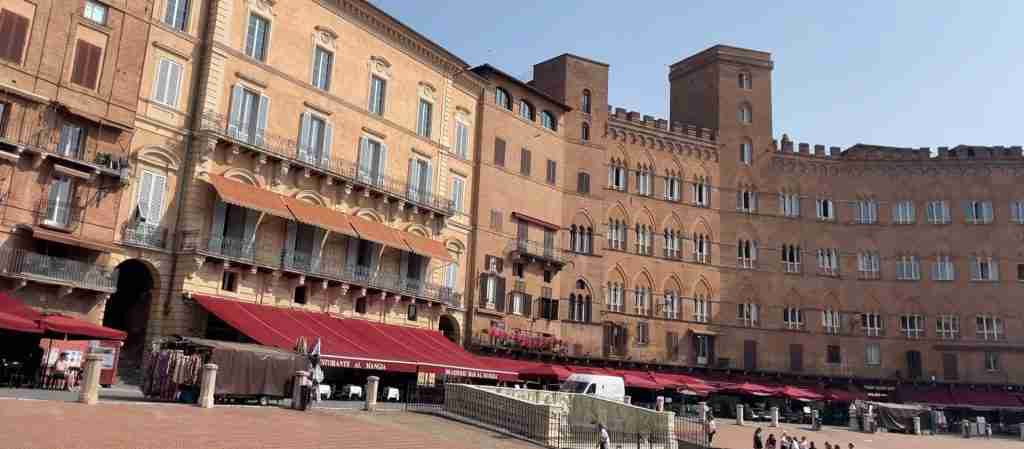
Self-guided walking routes work exceptionally well in Siena because the historic center prohibits most vehicle traffic, creating pedestrian-friendly streets where paper maps or smartphone GPS suffice for navigation between the shell-shaped Piazza del Campo, the striped marble cathedral facade, and seventeen contrada territories marked by street-level plaques and fountain sculptures. The compact layout allows thorough exploration in 2-4 hours, though museum visits and cathedral access require additional time and separate ticketing beyond basic walking route time estimates.
Peak season tours (April-October) require advance booking 2-4 weeks ahead to secure preferred dates and times, particularly for small-group walking tours limited to 12-15 participants and wine excursions with fixed departure schedules. Off-season visitors (November-March) enjoy same-day booking availability and occasional price reductions, with the trade-off of reduced daylight hours for afternoon tours and potential rain requiring indoor-focused itineraries. Cathedral floor unveiling periods (late June through mid-October) command premium interest, making tour bookings especially competitive during these weeks when the magnificent marble mosaics are fully visible.
Understanding Siena’s Tour Landscape 2026
Siena’s tour industry divides into four primary categories serving different traveler interests and budget levels. Walking tours focus on the historic center’s architecture, Palio traditions, and cathedral complex, typically lasting 2-3 hours with group sizes of 8-20 participants. Wine and countryside tours venture into Chianti territory for winery visits and tastings, requiring half-day or full-day commitments with transportation included. Food tours combine walking with multiple tasting stops at trattorias, salumerie, and gelaterias throughout the medieval neighborhoods. Specialty tours address specific interests including photography walks, cooking classes, and contrada museum visits with costumed guides explaining Palio banner collections and neighborhood rivalries.
Licensed tour guides in Siena complete rigorous regional certification requiring art history expertise, architectural knowledge, and multiple language proficiency. This professional standard distinguishes legal guided tours from unlicensed walking experiences, with certified guides displaying official badges and providing deeper historical analysis than general tour leaders. Many guides specialize in particular aspects of Sienese culture, from Renaissance art conservation to Palio race mechanics, allowing travelers to match guide expertise with personal interests when booking private tours.
Group tour dynamics significantly impact experience quality, with small groups (8-12 people) enabling questions and flexible pacing while large groups (20-30 people) reduce per-person costs but limit personal attention and require audio headsets for hearing guide commentary in crowded spaces. Private tours eliminate group dynamics entirely, offering customized itineraries, flexible start times, and the ability to adjust pace based on energy levels or unexpected interests encountered during the walk.
Tour cancellation policies favor travelers in 2026, with most operators offering full refunds for cancellations made 24 hours before scheduled departure. This flexibility allows weather-dependent decisions and itinerary adjustments without financial penalty. Some operators extend cancellation windows to 48 or 72 hours for advance bookings made months ahead, while last-minute bookings (within 24 hours of tour time) typically carry no-refund policies due to guide commitment and lost booking opportunities.
Guided Walking Tour Options and Pricing 2026
Standard guided walking tours in Siena cost €35-70 per person for 2-hour experiences exploring the historic center in 2026 (check tour operator websites for current rates as pricing varies by season and group size). These tours typically begin at Basilica San Domenico or Piazza del Campo, proceeding through medieval streets to visit the cathedral exterior, contrada neighborhoods, and Palazzo Pubblico square. Small-group tours limiting participants to 12-15 people command higher prices (€60-70) but provide better guide interaction and easier movement through narrow alleys and crowded piazzas compared to larger groups.
The standard walking tour structure follows a consistent pattern across multiple operators: 15-20 minutes introducing Siena’s history and the Palio tradition while walking from the meeting point toward Piazza del Campo, 30-40 minutes exploring the Campo’s shell shape and discussing the twice-yearly horse race that circles this central square, 20-30 minutes walking through one or two contrada territories explaining neighborhood symbols and rivalry traditions, 25-35 minutes at the cathedral exterior discussing Gothic architecture and the abandoned 14th-century expansion project, with optional cathedral interior visits adding 30-45 minutes and €7-10 entrance fees to the base tour price.
Cathedral-inclusive walking tours cost €60-85 per person for 3-hour experiences that combine historic center exploration with skip-the-line cathedral access and interior guided visits (verify current pricing on booking platforms). These tours include entrance to the Duomo and Piccolomini Library but typically exclude the full OPA SI Pass sites like the crypt and baptistery. The skip-the-line benefit saves 15-45 minutes during peak season (April-October) when individual ticket buyers queue at the cathedral entrance, making the premium worthwhile for time-constrained visitors.
Private walking tours start at €210 for 2-hour experiences accommodating up to 15 people, with per-person costs decreasing as group size increases. A family of four pays approximately €52 per person for this private experience, while a couple pays €105 each for the same expert guide attention and customized pacing. Private tours offer significant advantages: flexible start times matching hotel checkout or train schedules, customized focus on specific interests (Renaissance art, medieval architecture, Palio history), ability to skip or extend particular stops based on group energy, and elimination of waiting for slower group members at each location.
Specialist walking tours addressing particular interests cost €50-90 per person depending on duration and included elements. Photography tours (3 hours, €75-90) teach composition techniques while visiting optimal viewpoints for cathedral facade shots, Piazza del Campo angles, and contrada street scenes. Food walking tours (2.5-3 hours, €65-85) include 5-6 tasting stops for pecorino cheese, salumi, ribollita soup, cantucci cookies, and vin santo dessert wine. Contrada museum tours (2 hours, €55-70) provide exclusive access to neighborhood archives with Palio banners, historical costumes, and race memorabilia not visible to independent visitors.
Evening tours operate June-September when extended daylight hours allow 6 PM or 7 PM departures, offering different atmospheric qualities as shadows lengthen across medieval facades and locals emerge for evening passeggiata strolls. These tours cost the same as daytime equivalents (€35-70 for group tours) but provide relief from midday summer heat and coincide with golden-hour photography light. Evening tours typically conclude near recommended restaurants for dinner, with guides providing current dining suggestions based on seasonal menus and local favorites.
Free walking tours operate on a tips-based model where participants pay nothing upfront but are expected to tip the guide €10-20 per person at tour conclusion based on satisfaction level. These tours last 90-120 minutes covering basic historic center highlights without cathedral interior access. The free structure attracts budget travelers and backpackers, creating larger group sizes (20-30+ people) that reduce individual attention and increase noise levels making guide commentary harder to hear in crowded squares.
Cathedral Complex Access and OPA SI Pass Strategy 2026
The OPA SI Pass costs €16-21 per adult in 2026 depending on the time of year, providing access to seven attractions within the Siena Cathedral complex over three consecutive days (verify current official rates at operaduomo.siena.it as seasonal pricing adjustments occur). Standard pricing (€16-18) applies November-June, while premium pricing (€19-21) reflects the cathedral floor unveiling periods from June 27-July 31 and August 18-October 15 when the complete marble mosaic is visible. Children ages 7-11 receive 70% discounts (€5-6), children under 7 enter free, and residents of Siena or university students with valid ID also receive complimentary access.
The OPA SI Pass includes seven distinct attractions that would cost €30-35 if purchased individually: the Cathedral (Duomo) with its marble floor and Piccolomini Library (€9.50 standalone), the Baptistery featuring Renaissance sculptural fonts (€6), the Crypt with 13th-century frescoes sealed for 700 years (€8), the Museo dell’Opera displaying original cathedral sculptures and stained glass (€8), the Facciatone panoramic viewpoint atop the unfinished cathedral expansion (€8), the Oratory of St. Bernardino with Sienese School paintings (€4), and seasonal access to the Paths of Light underground tour June-October (€5 supplement when operating). The three-day validity allows visitors to spread these sites across multiple visits rather than rushing through all attractions in a single overwhelming afternoon.
Pass redemption requires exchanging the online voucher (purchased through operaduomo.siena.it, GetYourGuide, Tiqets, or other authorized resellers) for a physical ticket at the Crypt ticket office located at the base of the cathedral stairs or at the Dear Guests visitor center in Via di Città 48. The redemption process takes 5-15 minutes during normal periods but can extend to 20-30 minutes during peak season mornings (9 AM-11 AM in July-August) when multiple tour groups arrive simultaneously. The physical pass includes a QR code for the free multilingual audio guide app (Italian, English, French, German, Spanish) that provides 30-45 minutes of commentary per attraction.
The Gate of Heaven (Porta del Cielo) rooftop tour operates separately from the OPA SI Pass, requiring an additional ticket purchased exclusively online (€25-30 per person, 18-person maximum per tour, 45-minute guided experience). This specialized tour leads visitors across outdoor walkways above the cathedral nave for aerial views of the marble floor patterns and unique perspectives of Siena’s terracotta rooftops. Tours depart at fixed times (usually 10 AM, 11:30 AM, 2 PM, 3:30 PM, 5 PM during peak season) with reservations required 1-7 days ahead depending on season, as same-day availability is limited by the small group capacity.
Strategic use of the OPA SI Pass requires understanding cathedral complex crowd patterns and optimal visit sequences. The Cathedral itself experiences highest visitation 10 AM-2 PM when day-trippers from Florence arrive via tour buses, making early morning (opening hour at 10 AM-10:30 AM depending on season) or late afternoon (4 PM-6 PM) the preferred times for cathedral visits. The Facciatone viewpoint requires climbing 130+ narrow steps and has limited rooftop capacity, creating queues of 15-30 minutes during midday peaks but minimal waits early morning or late afternoon. The Crypt, Baptistery, and Museo dell’Opera maintain steadier visitor flows throughout the day, making them ideal alternatives when cathedral crowds appear excessive.
The recommended visit sequence for maximizing the OPA SI Pass begins with the Facciatone viewpoint immediately at opening (10 AM-10:30 AM) before day crowds arrive, followed by the Museo dell’Opera while still on the upper level (30-45 minutes), descending to the Cathedral during late morning when initial rush subsides (60-90 minutes including Piccolomini Library), proceeding to the Baptistery (15-20 minutes), finishing with the Crypt (20-25 minutes), and reserving the Oratory of St. Bernardino for day two or three if energy permits. This sequence takes approximately 3.5-4 hours for thorough exploration, though many visitors split the experience across two days using the three-day pass validity.
Wine Tours from Siena: Chianti Excursions 2026
Half-day Chianti wine tours from Siena cost €60-85 per person for 4.5-5 hour experiences visiting two family-owned wineries in 2026 (confirm current rates when booking as prices vary by season and included elements). These tours typically depart 2 PM-2:30 PM, allowing morning exploration of Siena’s historic center before afternoon countryside excursions. The standard itinerary includes air-conditioned minivan transportation to Castellina in Chianti or Gaiole area, guided cellar tours at two estates explaining fermentation and aging processes, tastings of 4-6 wines per winery (typically Chianti Classico, Chianti Riserva, Super Tuscan blends, Vin Santo dessert wine), extra virgin olive oil tastings, light food pairings (cheese, salumi, crostini), and return to Siena by 7 PM-7:30 PM.
Full-day wine tours cost €120-180 per person for 9-11 hour experiences adding San Gimignano or Montepulciano visits with extended winery time and traditional Tuscan lunches at vineyard estates. Morning departures (9 AM-9:30 AM) allow leisurely pacing through three destinations: medieval hilltop town exploration (San Gimignano’s towers or Montepulciano’s Renaissance palaces) for 90 minutes free time, first winery visit with cellar tour and 4-5 wine tastings (60-75 minutes), traditional Tuscan lunch at vineyard restaurant featuring pappardelle pasta, grilled meats, seasonal vegetables, and estate wines (90 minutes), second winery visit focusing on premium wines like Brunello di Montalcino or Vino Nobile di Montepulciano (60-75 minutes), returning to Siena by 6 PM-7 PM.
Small-group wine tours limit participants to 8-16 people in Mercedes or Ford Transit minivans, ensuring window seats for all passengers during scenic drives through cypress-lined roads and terraced vineyards. Larger bus tours (20-30 people) reduce costs to €50-70 for half-day experiences but sacrifice the intimate atmosphere of small wineries where groups larger than 15-20 create logistical challenges for cellar tours and tasting room capacity. The small-group premium of €10-20 per person provides significantly better winery access and guide interaction throughout the day.
Private wine tours cost €570-730 for two people for full-day experiences (8 hours) with Mercedes sedan and English-speaking driver, averaging €285-365 per person for couples. Adding two additional passengers reduces per-person costs to €145-185 each for a group of four. Private tours offer complete flexibility: custom departure times matching hotel schedules, winery selection based on wine preferences (organic estates, biodynamic vineyards, historic castle cellars, boutique producers), flexible lunch timing and restaurant choice, ability to add or subtract stops based on energy and interest, and elimination of waiting for other group members at each location.
Winery direct bookings for independent visitors without tour groups average €22-70 per person for cellar tours and tastings, with most estates requiring reservations 1-7 days ahead. The challenge for independent visitors without personal vehicles is accessing wineries in rural Chianti locations where public transportation is limited or nonexistent. Organized tours solve this transportation problem while adding English-language context about viticulture practices, DOCG regulations, and wine-making philosophies that enhance appreciation beyond simple tasting experiences.
Wine tour booking strategy for 2026 requires understanding seasonal demand patterns and advance reservation windows. Peak season tours (April-October) fill 7-14 days ahead for weekend departures and 3-7 days ahead for weekday slots. Harvest season (September-October) commands premium interest as some tours add vineyard visits to observe grape picking, requiring 2-3 weeks advance booking. Off-season tours (November-March) offer same-week booking availability and occasional last-minute discounts (10-15% off) for tours with remaining capacity, though some smaller operators reduce frequency to 2-3 weekly departures rather than daily options.
Self-Guided Walking Routes Through Historic Siena 2026
The Classic Centro Storico Loop covers Siena’s essential sights in 2.5-3 hours of walking without guide fees, beginning at Piazza Gramsci (main bus terminal and parking area), descending Via Camollia to Piazza Salimbeni (medieval banking palaces), continuing to Piazza del Campo via Via Banchi di Sopra (main shopping street), exploring the Campo’s shell-shaped perimeter (15-20 minutes), ascending to the Cathedral (exterior viewing, interior requires separate ticket), walking to Basilica San Domenico for views across the Siena valley, and returning to Piazza Gramsci via Via della Sapienza. This route covers approximately 3.5 kilometers with 120 meters total elevation change, manageable for most fitness levels though the cathedral ascent includes steep staircases.
The Contrada Discovery Route explores three distinct neighborhood territories in 2-3 hours, starting at Fontebranda (ancient brick fountain below San Domenico), entering Oca (Goose) contrada territory marked by street plaques and fountain sculpture, proceeding to Contrada Museum (€2-4 entry, 15-20 minutes) to view Palio banners and neighborhood artifacts, walking through Drago (Dragon) territory via Via di Città, reaching Piazza del Campo (the neutral ground between contrade), exploring Tartuca (Tortoise) streets south of the Campo, and finishing at Torre (Tower) fountain in Via Salicotto. This route emphasizes the neighborhood division system that defines Sienese identity, with each contrada marked by colored street lamps, boundary plaques, and symbolic fountains.
The Panoramic Viewpoints Walk combines scenic overlooks in 2-2.5 hours, beginning at Basilica San Domenico’s front terrace for cathedral views, descending to Fontebranda fountain (the oldest surviving medieval fountain, free access), climbing to Orto de’ Pecci gardens (small park with bench seating and valley views), walking to the Facciatone cathedral viewpoint (requires OPA SI Pass entry), exploring Piazza del Mercato’s lower level below the Campo for perspective on the square’s hillside construction, and finishing at Fortezza Medicea (Medici Fortress) ramparts for 360-degree panoramas including Monte Amiata and Chianti hills on clear days. This route prioritizes photography opportunities and rest breaks at scenic locations rather than museum visits or shopping streets.
The Via Francigena Historic Route follows the medieval pilgrimage path through Siena in 1.5-2 hours, entering the city walls at Porta Camollia (northern gate where pilgrims arrived from Canterbury), descending Via Camollia past medieval shops and inns that served 12th-15th century travelers, reaching Piazza del Campo (the pilgrim gathering point), continuing to the Cathedral (major pilgrimage church on the route to Rome), descending Via di Città to Santa Maria della Scala (the historic pilgrims’ hospital, now a museum complex with €9 entry), and exiting through Porta Romana (southern gate toward Rome). This route emphasizes Siena’s role as a major waypoint on the 1,700-kilometer England-to-Rome pilgrimage trail that brought medieval travelers, merchants, and religious devotees through the city.
Self-guided route navigation in 2026 works well using smartphone GPS apps (Google Maps, Maps.me, Citymapper) combined with paper maps available free at the tourist information office in Piazza del Campo. The medieval street layout creates occasional confusion with similar-looking alleyways and unmarked intersections, but the compact historic center measures roughly 800 meters north-south and 600 meters east-west, making it virtually impossible to get seriously lost. Key orientation landmarks visible from most locations include the Torre del Mangia bell tower (102 meters tall, visible throughout the centro storico), the cathedral’s striped marble bell tower, and Basilica San Domenico’s brick Gothic mass on the western edge.
Food Tours and Culinary Experiences 2026
Guided food walking tours in Siena cost €65-85 per person for 2.5-3 hour experiences combining 5-6 tasting stops throughout the historic center in 2026. The standard food tour structure begins at Piazza del Campo with historical introduction and prosecco welcome drink, proceeds to a salumeria for pecorino cheese tastings (aged 6 months, 12 months, 24 months varieties) paired with local honey and mostarda, visits a traditional bakery for ricciarelli almond cookies and panforte (medieval spiced cake), stops at a wine bar for Chianti Classico or Brunello tastings with crostini appetizers, includes ribollita soup or pappardelle pasta at a family trattoria, and concludes with cantucci cookies dipped in vin santo dessert wine. These tastings collectively substitute for a full lunch, making afternoon departure times (2 PM-2:30 PM) most logical for meal scheduling.
The food tour pricing (€65-85) includes all tastings, wine pairings, and guide fees, with group sizes limited to 8-15 participants ensuring adequate space at each tasting location and reducing wait times between stops. Some operators add market visits when tours coincide with the Wednesday or Saturday morning farmers market in Piazza del Mercato (late November-June only, as summer heat precludes outdoor market operation). The market addition extends tour duration to 3.5 hours and increases prices to €90-100, but provides interaction with local producers selling fresh produce, artisanal cheeses, cured meats, and seasonal specialties like white truffles (November-December) or fresh porcini mushrooms (September-October).
Cooking classes operate as half-day experiences (€120-180 per person, 4-5 hours) teaching traditional Tuscan preparation techniques. The standard format includes morning market shopping with the chef-instructor selecting seasonal ingredients, transfer to a cooking school or agriturismo kitchen 10-15 minutes outside Siena’s historic center, hands-on preparation of 3-4 dishes (typically fresh pasta like pici or ravioli, main course of braised meat or roasted vegetables, dessert such as panna cotta or cantuccini), lunch featuring the prepared dishes with estate wines, and printed recipe cards for recreating dishes at home. These classes accommodate 6-12 students with individual work stations for pasta rolling and preparation tasks.
Truffle hunting experiences operate September-December when white truffles (November-December) and black truffles (September-October) reach peak season. These specialized tours (€90-120 per person, 3-4 hours) include countryside transfer to truffle forests 20-30 minutes from Siena, guided forest walks with trained truffle dogs demonstrating underground truffle detection, truffle finds shared among participants (typical yield: 20-50 grams per 2-hour hunt), and truffle-based lunch at rural restaurants featuring tagliolini pasta with shaved truffles, scrambled eggs with truffle, and truffle bruschetta. The unpredictable nature of truffle hunting means some experiences yield abundant finds while others produce minimal results, but the demonstration of dog training and forest ecology provides value regardless of quantity discovered.
Day Trips from Siena: Regional Destinations 2026
San Gimignano day trips from Siena operate as half-day tours (€50-75 per person, 5-6 hours) or full-day combinations with Chianti wine stops (€110-150). The half-day structure includes morning departure (9 AM) from Siena, 45-minute scenic drive through Chianti countryside to San Gimignano, 2-2.5 hours free time exploring the medieval towers and historic center, optional gelato tasting at Gelateria Dondoli (world champion gelato maker, €4-6 per cone), and return to Siena by 2:30-3 PM allowing afternoon cathedral visits or independent exploration. The full-day version adds two Chianti winery stops with cellar tours and tastings plus traditional Tuscan lunch at a vineyard estate, extending return time to 6-7 PM.
Montalcino and Val d’Orcia tours combine Brunello wine territory with UNESCO World Heritage landscape views in full-day excursions (€130-180 per person, 9-10 hours). The typical itinerary departs Siena 9 AM, drives through Crete Senesi clay hills for photo stops, reaches Montalcino for fortress visit and town exploration (90 minutes free time), visits a Brunello winery for cellar tour and premium wine tastings (60-75 minutes), continues to Pienza for Renaissance urban planning and pecorino cheese shops (60 minutes), stops at a Val d’Orcia viewpoint for cypress tree and rolling hill photography, and returns to Siena by 6-7 PM. This tour requires significant driving time (3-4 hours total) but accesses some of Tuscany’s most photographed landscapes unavailable on shorter half-day excursions.
Pisa day trips from Siena operate less frequently than Florence-based tours due to longer travel distances (90 minutes each way versus 60 minutes for Chianti destinations), but full-day options (€90-130 per person, 10-11 hours) combine Pisa’s Piazza dei Miracoli with San Gimignano stops. The itinerary includes morning departure from Siena (8:30 AM), 90-minute transfer to Pisa, 90 minutes free time at the Leaning Tower and cathedral complex, lunch stop en route to San Gimignano, 90 minutes exploring the tower town, and return to Siena by 6:30-7 PM. This full-day structure creates long travel times relative to destination time, making it most suitable for travelers without personal vehicles who want to maximize Tuscany coverage during limited visit duration.
Florence day trips from Siena reverse the more common Florence-to-Siena direction, with half-day tours (€60-90 per person, 6-7 hours) providing afternoon departures (1 PM) for evening Florence exploration. The standard format includes 75-minute transfer to Florence, 3-3.5 hours free time for Duomo visits, Uffizi Gallery entrance (tickets not included, €20-25 if purchased), Ponte Vecchio bridge walks, and gelato stops in Santa Croce area, returning to Siena by 7-8 PM. This abbreviated Florence experience works best for travelers staying multiple nights in Siena who want Florence highlights without changing accommodations, though serious Florence museum visits require full-day or overnight strategies rather than afternoon glimpses.
Specialized Tour Options: Photography, History, and Architecture 2026
Photography walking tours cost €75-90 per person for 3-hour experiences teaching compositional techniques while visiting Siena’s most photogenic locations in 2026. The standard photography tour begins at dawn (6 AM-6:30 AM in summer, 7 AM-7:30 AM in spring and fall) when soft morning light illuminates the cathedral facade and Piazza del Campo remains empty of day crowds. The instructor (typically a professional photographer with Siena specialization) teaches exposure settings for high-contrast marble striations, composition strategies for Torre del Mangia framing against sky, techniques for capturing contrada street details without tourist interference, and long-exposure methods for fountain water movement in Fonte Gaia. Tours accommodate 4-8 participants ensuring individual instruction time and multiple shooting angles at each location without overcrowding.
Architecture-focused tours emphasize Gothic and Romanesque construction techniques, cathedral engineering challenges, and Sienese adaptation of international styles to local materials and traditions. These specialized tours (€80-100 per person, 3.5-4 hours) include extended cathedral exterior analysis discussing the abandoned 14th-century expansion project (the Duomo Nuovo that would have created one of Europe’s largest churches), Palazzo Pubblico Gothic civic architecture representing medieval municipal governance ideals, and comparison of Siena’s horizontal building traditions (preserving Campo sightlines) versus Florence’s vertical Renaissance assertions. Architecture tours attract design professionals, architecture students, and serious history enthusiasts rather than casual tourists, with group sizes limited to 6-10 participants for detailed technical discussions.
Renaissance art tours focus on Sienese School painters (Duccio, Simone Martini, Ambrogio Lorenzetti) who developed distinctive styles diverging from Florentine contemporaries in the 13th-15th centuries. These tours (€85-110 per person, 4 hours) include extended time in the Museo dell’Opera examining Duccio’s Maestà altarpiece panels, Palazzo Pubblico visits for Lorenzetti’s Allegory of Good and Bad Government (the medieval civic ideals frescoes), Pinacoteca Nazionale museum entrance (€8-10, major Sienese School collection), and Santa Maria della Scala for late-medieval hospital frescoes depicting pilgrim care and civic charity. Art tours require standing for extended periods while viewing and discussing individual works, making them most suitable for enthusiasts with both art historical interest and physical stamina for 3-4 hours on feet with minimal sitting breaks.
Palio history tours provide deep dives into the twice-yearly horse race traditions, contrada rivalries, and contemporary significance of this 700-year-old event. These specialized tours (€70-95 per person, 2.5-3 hours) include exclusive contrada museum access (negotiated by guides with neighborhood relationships), viewing of historical Palio banners and victory records, explanation of race regulations and jockey hiring practices, discussion of the July 2 Palio di Provenzano versus August 16 Palio dell’Assunta distinctions, and visits to the horse blessing ceremonies sites within contrada churches. Palio tours operate year-round but gain special intensity in the weeks preceding July and August race dates when neighborhood preparations intensify and trial races (prove) allow visitors to observe horses training on the Campo track.
Seasonal Tour Considerations and Optimal Timing 2026
Cathedral floor unveiling periods create two premium tour seasons in 2026: June 27-July 31 and August 18-October 15 when the magnificent 56-panel marble mosaic floor is completely uncovered for public viewing. The floor typically remains covered under protective boards to prevent wear from daily tourist traffic, making these 10-11 weeks the only annual opportunity to view the complete 15th-16th century inlay work depicting Old Testament scenes, pagan sibyl prophecies, and allegorical virtues. Tours during floor unveiling periods book 3-4 weeks ahead and command premium pricing (OPA SI Pass increases to €19-21 versus €16-18 standard), but the visual experience justifies both advance planning and higher costs.
Palio race weeks (late June-early July and mid-August) transform Siena’s atmosphere as seventeen contrade neighborhoods prepare for the July 2 and August 16 races. Accommodation costs increase 40-80% during these peak periods, tour bookings require 4-6 weeks advance reservation, and walking tours incorporate more contrada content and current race preparation activities. The four days preceding each Palio (June 28-July 2 and August 12-16) feature daily trial races at 9 AM and 7:30 PM when tourists can watch horses and jockeys practice on the Campo track (free spectating from square perimeter, no tickets required), creating unique opportunities unavailable other times of year. These trial days add special value to standard walking tours without price increases, as guides explain race mechanics and point out favored horses during morning practice sessions.
Weather patterns influence tour comfort and operational logistics across Siena’s extended tourist season. April-May and September-October provide optimal conditions: moderate temperatures (15-25°C / 59-77°F), lower humidity than summer months, reduced day-trip crowds from cruise ships and Florence hotels, and longer daylight hours than winter (6:30 AM sunrise, 8 PM sunset in September). Peak summer months (July-August) bring intense heat (regularly exceeding 35°C / 95°F), making morning tours (departing before 10 AM) and evening tours (after 6 PM) more comfortable than midday departures. Winter tours (November-February) face shorter daylight (7:30 AM sunrise, 5 PM sunset), occasional rain requiring covered indoor-focused itineraries, and reduced availability as some operators decrease from daily to 3-4 weekly departures.
Harvest season tours (September-October) add viticultural context as Chianti wine tours coincide with grape picking activities. Some wineries invite tour groups to observe or participate in harvest work, crushing demonstrations, and first fermentation processes typically hidden from summer visitors when grapes still ripen on vines. This seasonal advantage makes September-October Chianti tours particularly valuable for wine enthusiasts interested in production mechanics rather than purely tasting experiences.
Booking Strategies and Advance Planning 2026
Online booking platforms (GetYourGuide, Viator, TripAdvisor Experiences, Walks in Europe direct) offer different advantages for Siena tour reservations in 2026. GetYourGuide and Viator aggregate multiple tour operators allowing price comparison and review analysis across 5-15 similar tour options, typically adding 10-15% commission fees to base operator prices but providing centralized cancellation management and customer service. Direct booking through operator websites (Tuscan Escapes, Siena Guides, ToursByLocals) eliminates commission markups and occasionally offers early-booking discounts (5-10% off for reservations made 30+ days ahead), but requires managing multiple operator communications and separate cancellation policies for each tour booked.
The optimal booking window for 2026 Siena tours balances availability guarantees against price optimization and schedule flexibility. Peak season tours (April-October) require 2-4 weeks advance booking for preferred dates and small-group experiences, while last-minute bookings (1-3 days ahead) face limited availability and larger group assignments. Off-season tours (November-March) allow 3-7 days advance booking with good availability, though severe weather forecasts might prompt last-minute cancellations or date changes. Cathedral floor unveiling periods and Palio race weeks demand 4-6 weeks advance booking, as popular time slots (9-10 AM cathedral tours, evening walking tours) fill earliest.
Group discount opportunities emerge for private tour bookings when traveler parties reach 6-8 people, crossing the threshold where per-person private tour costs drop below small-group tour rates. A private 3-hour cathedral and walking tour costs approximately €350-420 for groups up to 15 people, averaging €58-70 per person for a group of six versus €65-85 for equivalent small-group tours. This calculation favors private bookings for family groups, friend traveling parties, or couples willing to coordinate with other travelers for shared private experiences organized through tour operator matching services.
Combination tour packages bundling walking tours with wine excursions or multi-day itineraries save 10-20% versus booking individual experiences separately. A three-tour package (2-hour walking tour + half-day Chianti wine tour + San Gimignano day trip) costs €190-240 when booked as a bundle versus €215-270 for separate bookings, reflecting operator incentives for guaranteed multi-day customer commitments. These packages work best for travelers with 3-5 nights in Siena allowing tour days interspersed with independent exploration days, though they reduce schedule flexibility once booked.
Tour Cost Breakdown and Daily Budget Planning 2026
A comprehensive tour day in Siena combining professional guided walking with cathedral access costs €75-105 per person when booking a 3-hour cathedral-inclusive tour (€60-85) plus separate OPA SI Pass purchase (€16-21) for additional cathedral complex sites visited independently after the guided portion concludes. This approach provides expert interpretation of cathedral highlights and Siena history during the guided segments while maintaining flexibility for self-paced exploration of the crypt, baptistery, and museum afterward. Alternative strategies spending €35-45 on a basic walking tour (cathedral exterior only) plus €16-21 for OPA SI Pass total €51-66 but require completely independent cathedral interior exploration without guide context.
Full-day wine tour budgets require €85-180 depending on half-day versus full-day options and group versus private selections. A typical full wine day combining morning Siena walking tour (€35-50) with afternoon half-day Chianti tour (€60-85) totals €95-135, providing comprehensive Siena cultural immersion plus countryside experience. Travelers prioritizing wine over walking might skip the morning guided tour in favor of independent cathedral visits using the OPA SI Pass (€16-21), reducing daily tour costs to €76-106 while maintaining afternoon wine focus.
Multi-day tour strategies for visitors with 3-5 Siena nights might allocate: Day 1 walking tour with cathedral access (€60-85), Day 2 half-day wine tour (€60-85), Day 3 San Gimignano day trip (€50-75) or self-guided walking routes (€0 in guide fees plus €16-21 OPA SI Pass for cathedral access), Day 4 food tour or cooking class (€65-120). This spread totals €235-385 in tour costs across four days, averaging €59-96 daily in guided experiences. Budget-conscious alternatives substituting self-guided routes and direct winery visits reduce costs to €100-180 for the four-day period, though sacrificing professional interpretation and transportation convenience.
Hidden costs in tour budgets include optional gratuities (€5-15 per person for satisfactory tours, €15-25 for exceptional experiences), museum entrance fees not included in walking tours (Palazzo Pubblico €10, Pinacoteca €8, Santa Maria della Scala €9), lunch or dinner not included in wine tours unless explicitly stated in tour descriptions (€15-30 per person for casual meals, €35-50 for full restaurant dinners), and souvenir purchases at wineries or specialty shops during food tours (wine bottles €12-45, pecorino wheels €8-20, local crafts €15-50). Adding €25-60 daily for these supplementary expenses provides realistic budgeting for comprehensive tour experiences rather than bare-minimum participation.
Accessibility and Physical Requirements 2026
Siena’s medieval topography creates significant accessibility challenges for walking tours due to steep hills, narrow cobblestone streets, and uneven paving throughout the historic center. Standard walking tours involve 2-4 kilometers of continuous walking with elevation changes of 80-150 meters, requiring moderate fitness levels and comfortable footwear with good ankle support and non-slip soles. Tour operators typically classify routes as “moderate difficulty” meaning most participants ages 12-70 with average fitness complete tours comfortably, though individuals with mobility limitations or significant knee problems struggle with the sustained climbing and descending throughout Siena’s terraced medieval layout.
Wheelchair accessibility in Siena’s centro storico remains limited despite Italian accessibility regulations, as the medieval street configuration resists modern modifications. The Cathedral offers ramp access from the left side of the building allowing wheelchair entry to the main nave, but the Crypt, Baptistery, and Facciatone viewpoint remain inaccessible due to staircase-only access. Palazzo Pubblico provides elevator access to the Museo Civico and Allegory frescoes, though the Torre del Mangia tower climb (400 steps) cannot accommodate wheelchairs. Tour operators offer modified routes for wheelchair users focusing on accessible sites, but these adapted tours reduce the comprehensive historic center experience to 40-60% of standard walking tour content.
Age restrictions apply to certain specialized tours based on physical demands and child engagement levels. Wine tours typically require participants aged 18+ for alcohol consumption (Italian legal drinking age), though families with teenagers 14-17 can join with parents if tour operators confirm in advance. Cooking classes welcome ages 12+ for hands-on participation, while children under 12 participate as observers without individual workstations. Standard walking tours accommodate all ages but work best for children 8+ who maintain attention during 90-120 minute historical explanations, while families with younger children (ages 4-7) find 60-minute abbreviated tours or completely self-guided exploration more successful.
Stair climbing requirements vary significantly across tour types, with cathedral-focused experiences involving the most vertical movement. Accessing the Facciatone panoramic viewpoint requires climbing 130+ narrow spiral steps (70cm width, uneven risers), the Torre del Mangia tower ascent involves 400 steps (similar narrow spiral configuration), and the Crypt entrance descends 40+ steps into the underground chambers. Tour descriptions should clearly indicate total stair counts, but visitors with knee problems, hip replacements, or vertigo should specifically inquire about stair requirements before booking to avoid discovering incompatible physical demands midway through tours.
Tour Operator Selection and Quality Indicators 2026
Licensed guide certification serves as the primary quality indicator for Siena walking tours, with regional Tuscany licensing requiring art history degrees, multi-year training programs, comprehensive examinations on local history and architecture, and demonstrated proficiency in at least two languages beyond Italian. Licensed guides display official badges showing Tuscany region certification and guide number, distinguishing professional historians from general tour leaders or unlicensed “free” walking tour operators who may lack formal training despite enthusiastic presentations. Requesting confirmation of guide licensing when booking ensures expert-level interpretation rather than memorized scripts from unqualified presenters.
Review analysis across booking platforms requires filtering for recent experiences (past 6-12 months) rather than cumulative ratings spanning multiple years during which tour quality, guide rosters, or ownership changes may have occurred. Look for consistent positive comments about specific named guides (indicating stable quality across the operator’s guide team), mentions of group size matching advertised limits (confirming operators honor small-group commitments rather than overselling), and validation that tour descriptions match actual routes and included sites (distinguishing accurate marketing from overpromising operators). Negative reviews mentioning guide no-shows, incorrect meeting points, or significantly shortened tour durations indicate operational problems warranting alternative operator selection.
Tour operator longevity and local establishment provide quality assurance, with companies operating 5+ years in Siena demonstrating sustained business success, established winery relationships for wine tours, and refined itineraries incorporating years of traveler feedback. Newer operators (1-3 years established) may offer innovative approaches and competitive pricing but carry higher uncertainty about long-term reliability and depth of local connections. Asking operators about years in business, guide tenure (whether guides are permanent staff versus freelance contractors), and membership in professional associations (Tuscany guide associations, Siena tourism groups) helps assess operational maturity.
Customer service responsiveness during booking communication forecasts likely service quality during actual tours. Operators responding to email inquiries within 24 hours, providing detailed answers to specific questions about tour routes and physical requirements, and offering alternative suggestions when requested tours are fully booked demonstrate customer-focused operations likely to handle unexpected tour-day complications professionally. Delayed responses (3+ days), generic answers failing to address specific questions, or pressure tactics emphasizing limited availability without substantive tour information suggest lower service standards.
Alternative Exploration: Audio Guides and Self-Guided Resources 2026
Cathedral audio guides included with the OPA SI Pass provide 30-45 minutes of commentary per attraction (Cathedral, Piccolomini Library, Crypt, Baptistery, Museo dell’Opera) via smartphone app downloaded through QR code printed on the physical pass. The multilingual content (Italian, English, French, German, Spanish) covers architectural history, artistic masterpieces, and religious significance with stop-by-stop navigation corresponding to numbered plaques throughout each site. The audio guide system allows self-paced exploration matching individual interest levels, with ability to skip sections or replay complex explanations, though the one-way commentary lacks the interactive question-response dynamic of live guided tours.
Premium smartphone audio tour apps (Rick Steves Audio Europe, GPSmyCity, Clio Muse) offer comprehensive self-guided walking routes with GPS-triggered commentary activating automatically as users reach each stop. These apps cost €3-8 per route or €10-20 for multi-route city packages, providing detailed historical context comparable to guided tours while maintaining complete schedule flexibility and unlimited replay capability. The Siena routes typically include 15-25 stops covering 2-3 hours of walking with historical explanations, architectural analysis, and cultural context rivaling professional guide depth if not matching the spontaneous storytelling and question adaptation of live guides.
Printed walking tour guides (available at bookstores for €12-18 or tourist information offices for €3-6) provide mapped routes with historical descriptions and architectural details, working well for travelers preferring paper navigation over smartphone dependency. These guides lack the multimedia elements and automatic GPS triggering of app-based tours but eliminate battery life concerns and screen-reading eye strain during extended walking days. The Siena-specific guides typically offer 3-5 themed routes (Historic Center Walk, Contrada Discovery, Panoramic Views, Via Francigena) allowing mix-and-match exploration based on daily energy and interests.
Free walking tour maps distributed by the Siena tourist information office in Piazza del Campo provide basic orientation and major landmark identification without detailed historical commentary. These single-sheet maps work adequately for general navigation between the Cathedral, Palazzo Pubblico, and main contrada neighborhoods, but lack the interpretive depth for understanding architectural significance, artistic movements, or cultural traditions that make Siena more than a collection of pretty medieval buildings. Combining free maps with guidebook reading (€15-25 for comprehensive Siena chapters in Tuscany guides) provides substantive context without guide or audio tour costs.
Combining Tours with Independent Exploration 2026
The optimal Siena itinerary strategy balances professional guided tours providing historical and cultural context with independent exploration time allowing spontaneous discoveries and personal pace preferences. A successful three-day Siena visit might allocate: Day 1 morning for a 2-hour guided walking tour (€35-50) establishing orientation and historical framework, afternoon for independent cathedral complex exploration using the OPA SI Pass (€16-21), Day 2 for a half-day Chianti wine tour (€60-85) with evening free for dinner and passeggiata walks, Day 3 morning for self-guided contrada neighborhood walks based on specific neighborhoods sparked by interest during the Day 1 guided tour, afternoon for museum visits (Palazzo Pubblico, Santa Maria della Scala) based on personal art interests rather than tour group schedules.
This hybrid approach costs €111-156 in tour and entrance fees across three days while providing comprehensive Siena coverage through both expert-led and self-directed experiences. The guided walking tour on Day 1 orients visitors to the city’s layout, explains contrada dynamics and Palio traditions that would remain mysterious without interpretation, and allows questions about specific interests (best photography spots, quietest restaurants, lesser-known churches) that inform subsequent independent exploration. The wine tour provides countryside access and winery insider knowledge unavailable to independent visitors without personal vehicles and advance winery contacts.
Independent exploration days benefit from tour-acquired knowledge about Siena’s history and culture, making architectural details and neighborhood divisions meaningful rather than merely aesthetic. A visitor who completed the introductory walking tour understands why certain streets display Oca (Goose) contrada symbols while adjacent streets show Drago (Dragon) emblems, recognizes the significance of the Torre del Mangia as a civic rather than religious tower representing municipal governance ideals, and appreciates why the Cathedral’s abandoned expansion project represents 14th-century Siena’s overreaching ambition during plague devastation. This contextual foundation transforms subsequent independent wandering from simple sightseeing into informed cultural immersion.
Evening exploration after guided tour departures allows different atmospheric experiences of sites visited during daytime tours. Piazza del Campo after 8 PM fills with locals rather than day-trippers, creating authentic passeggiata scenes as Sienese residents socialize around the fountain and café tables. The cathedral facade illuminated after dark (spotlights activate 30 minutes after sunset) emphasizes the marble striping and Gothic details differently than midday sun, with far fewer tourists obstructing photography angles. Contrada streets after 7 PM reveal neighborhood life as residents gather at local bars and children play in small piazzas, providing glimpses of contemporary Sienese culture beyond the medieval-focused guided tour narratives.
Transportation and Logistics for Tour Participation 2026
Tour meeting points in Siena typically concentrate at easily identifiable landmarks accessible to visitors staying throughout the historic center or arriving from outside accommodations. Basilica San Domenico serves as the most common meeting location, with its prominent brick Gothic mass visible from multiple approach routes and a large tree in the front piazza providing specific meeting spot identification (guides hold signs reading “Walks in Europe” or similar operator identifiers). Piazza Gramsci functions as the secondary meeting point, particularly for tours including participants arriving via bus from Florence or staying in hotels near the northern edge of the centro storico. The Cathedral’s main entrance and Piazza del Campo’s Fonte Gaia fountain serve as alternative meeting spots for cathedral-focused tours or food walking tours beginning in the central square.
Arriving 15 minutes before scheduled tour departure time ensures participant check-in completion before guides begin tours punctually, as most operators emphasize that late arrivals cannot join tours in progress due to the disruption of stopping ongoing commentary to integrate latecomers. This strict policy reflects the practical challenge of guided groups navigating crowded medieval streets where stopping mid-route creates bottlenecks, but also serves tour business interests in discouraging casual lateness. Travelers staying outside the immediate historic center should factor 10-20 minutes walking time from accommodations to typical meeting points, plus buffer time for potential navigation confusion in the maze of similar-looking medieval streets.
What to bring on Siena walking tours includes comfortable walking shoes with closed toes (open sandals or flip-flops prove inadequate for 2-4 hours on uneven cobblestones), sun protection (hat, sunglasses, SPF 30+ sunscreen for April-September tours), refillable water bottle (public fountains throughout the historic center provide potable water for refills), and light rain jacket or umbrella during shoulder seasons (April-May, September-October) when brief showers occur. Cathedral dress codes require covered shoulders and knees (no tank tops, shorts above knee, or short skirts), enforced at entry regardless of tour guide presence, so bringing a light scarf or shawl for shoulder covering allows compliance without wardrobe restrictions throughout the day.
Photography policies during guided tours generally permit personal non-commercial photos throughout walking portions, though some specific locations restrict tripod use or flash photography. Cathedral interior photography is permitted without flash for personal use, while the Piccolomini Library prohibits all photography to protect the vibrant Pinturicchio frescoes from cumulative light exposure. Winery cellar tours typically allow photography throughout except during competitive wine evaluation moments when guides request camera stowing to maintain focused tasting attention. Asking guides about specific photo restrictions at tour beginning prevents embarrassing mid-tour corrections or confiscated shots.
Frequently Asked Questions About Siena Tours 2026
How far in advance should I book Siena tours in 2026?
Book Siena tours 2-4 weeks ahead for peak season (April-October) and 3-7 days ahead for off-season (November-March), with cathedral floor unveiling periods (late June through mid-October) and Palio race weeks requiring 4-6 weeks advance reservation. Small-group tours with 8-12 participant limits fill faster than standard group tours, while private tours offer more last-minute availability since operators can deploy guides on short notice. Weekend departures book earliest, particularly Saturday morning wine tours, making weekday tour selections easier for travelers with flexible schedules. Booking at the maximum recommended advance window ensures first choice of departure times (early morning for summer heat avoidance, late afternoon for golden-hour photography) rather than accepting remaining availability.
Do Siena walking tours operate in rain in 2026?
Siena walking tours operate in light rain with participants expected to bring umbrellas or rain jackets, but severe weather (heavy downpours, thunderstorms, strong winds) triggers cancellations or indoor-focused route modifications. Operators notify participants 2-4 hours before scheduled departure about weather-related cancellations, offering full refunds or date changes without penalty. Winter tours (November-February) face higher rain probability (15-20% chance on any given day versus 5-8% in summer), making shoulder season (April-May, September-October) optimal for balancing good weather odds against peak summer crowds. Wine tours proceed in rain since winery visits occur primarily indoors, though vineyard walking portions get abbreviated or eliminated when conditions are poor.
Can I join a Siena walking tour if I don’t speak English in 2026?
Siena tours operate in English, Italian, French, German, and Spanish depending on operator and guide availability, with multilingual options requiring specific booking rather than assuming multiple language commentary on single tours. English tours depart most frequently (typically daily April-October, 3-4 times weekly November-March), while French, German, and Spanish tours operate 2-3 times weekly during peak season and by advance request only during off-season. Private tours in less common languages (Portuguese, Japanese, Russian, Mandarin) require 1-2 weeks advance notice for guide sourcing and cost €250-350 for 2-3 hour experiences rather than standard private tour rates, reflecting specialized guide availability. Audio guide apps offer broader language options (10-15 languages) for self-guided alternatives when live guide languages don’t match preferences.
Are Siena tours suitable for children in 2026?
Siena walking tours work best for children ages 8+ who maintain attention during 90-120 minute historical narratives, while younger children (ages 4-7) struggle with the sustained walking, standing, and listening required. Family-specific tours designed for children ages 6-12 incorporate interactive elements like treasure hunts, costume props, and shorter explanations (60-75 minutes rather than 2-3 hours), costing €50-70 per child and €60-80 per adult. Standard adult tours welcome children at reduced rates (typically 50% discount ages 6-12, free under 6) but don’t adapt content or pacing for young participants, creating potential boredom and distraction issues. Private family tours (€280-350 for 2-3 hours) allow complete customization to children’s interests and energy levels, incorporating gelato stops, park breaks, and age-appropriate storytelling rather than detailed Renaissance art analysis.
What happens if I’m late to my Siena tour meeting point in 2026?
Tours depart punctually at scheduled times with late arrivals unable to join in progress, resulting in forfeited tour fees without refunds or reschedules since operators enforce strict punctuality policies. This no-late-joining rule reflects practical constraints of guided groups already proceeding through narrow medieval streets where stopping to integrate latecomers disrupts ongoing commentary and inconveniences timely participants. Travelers should arrive 15 minutes early accounting for potential navigation challenges in Siena’s maze-like historic center, with meeting points like Basilica San Domenico or Piazza del Campo clearly identified but sometimes confusing to reach from unfamiliar accommodation locations. Setting phone alarms for 30 minutes before tour time and asking hotel reception for walking directions to meeting points reduces lateness risk.
Do Siena wine tours include lunch in 2026?
Half-day wine tours (€60-85) typically include light food pairings like cheese, salumi, crostini, and olive oil with bread during tastings but not complete meals, while full-day wine tours (€120-180) include traditional Tuscan lunches at vineyard restaurants featuring pasta courses, grilled meats, seasonal vegetables, dessert, and estate wines. Tour descriptions explicitly state “lunch included” or “light food pairings” to distinguish between full meal and appetizer-level provisions, as this represents a significant value and experience difference. Travelers booking half-day afternoon tours should eat lunch beforehand or plan post-tour dining, while full-day tour lunches often prove substantial enough that dinner becomes light snack rather than full meal. Special dietary requirements (vegetarian, vegan, gluten-free, allergies) require notification at booking time for winery meal preparation rather than day-of announcements.
Can I buy wine at wineries during Chianti tours in 2026?
Wineries on organized tours offer wine purchases at cellar-door prices (€12-45 per bottle depending on wine type and aging), typically matching or slightly below retail prices in Siena wine shops but requiring transport capacity for carrying bottles back to accommodations. Most tour groups purchase 3-6 bottles per couple during two-winery visits, with operators providing cardboard shipping boxes (€2-4 each) and bubble wrap for safe transport. International shipping from wineries to home countries costs €40-80 for 6-bottle cases, economical for premium wines (€25+ per bottle) but often exceeding wine value for basic Chianti (€12-18 bottles). Travelers without checked luggage capacity should arrange winery shipping at purchase time rather than attempting to carry-on wine bottles which face airport security liquid restrictions.
Do I need to tip Siena tour guides in 2026?
Tipping Siena tour guides is customary but not obligatory, with standard gratuities ranging €5-10 per person for satisfactory tours and €15-25 per person for exceptional experiences providing outstanding knowledge, engaging storytelling, or extra assistance with restaurant recommendations and logistics help. The tipping culture in Italy differs from North American expectations, making tips appreciated bonuses rather than expected wage supplements since guide base pay provides livable income. Private tour tips tend higher (€30-50 total for full-day experiences) reflecting the increased guide attention and customization effort. Cash tips handed directly to guides at tour conclusion work best, as credit card payment systems rarely include tip options on European tour bookings.
Are Siena tours wheelchair accessible in 2026?
Standard Siena walking tours prove largely inaccessible to wheelchair users due to steep hills, narrow cobblestone streets, and medieval staircases throughout the historic center, though modified accessible routes focusing on level areas and ramped buildings provide partial historic center coverage. The Cathedral main nave offers wheelchair ramp access from the left side of the building, but the Crypt, Baptistery, Museo dell’Opera, and Facciatone viewpoint remain inaccessible due to staircase-only entry. Operators offering accessible tours (€280-350 for private 2-hour experiences) combine the limited wheelchair-accessible sites with extended time at each location to compensate for reduced destination count. Travelers requiring wheelchair access should contact operators directly before booking to confirm specific route accessibility rather than assuming general “accessible tour” descriptions guarantee complete barrier-free access.
What is the best time of day for Siena walking tours in 2026?
Morning tours departing 9 AM-10 AM provide optimal conditions for Siena walking with cooler temperatures (particularly important May-September), better photography light for cathedral facade and palazzo architecture, and smaller crowds at Piazza del Campo and cathedral grounds before 11 AM tour bus arrivals from Florence. Late afternoon tours (4 PM-5 PM departures) offer secondary advantages including golden-hour photography as sun approaches sunset, completion timing that flows into dinner reservations, and slightly reduced cathedral complex crowds as day-trippers depart. Midday tours (12 PM-2 PM) face intense summer heat (regularly 30-35°C / 86-95°F), harsh overhead sunlight creating poor photography shadows, and peak cathedral crowds, making them less desirable despite sometimes discounted pricing.