Pompeii Itinerary Planning 2026: Complete Visit Strategy
Planning an effective Pompeii itinerary requires strategic thinking about this massive 170-acre archaeological site. The ancient Roman city offers dozens of remarkable structures spread across multiple districts, making efficient routing essential for maximizing your 2026 visit. This comprehensive itinerary planning guide provides tested strategies for visitors with varying time constraints, from focused half-day tours to immersive full-day explorations.
Key Takeaways
- Full-day visits (6-8 hours) allow comprehensive exploration of major houses, forums, and theaters
- Half-day itineraries (3-4 hours) focus on essential highlights including Forum, Amphitheater, and Villa of Mysteries
- Start visits at 9 AM opening time for optimal lighting and smaller crowds at popular sites
- Strategic routing from Porta Marina entrance minimizes backtracking across the 170-acre archaeological site
- Combine Pompeii with Herculaneum or Vesuvius for multi-site day trips from Naples
- Book skip-the-line tickets in advance to maximize actual exploration time
Introduction
Your itinerary planning determines how much you’ll experience at this UNESCO World Heritage site. The archaeological park contains over 1,500 buildings, multiple forums, theaters, bathhouses, and extraordinary preserved villas. Smart scheduling ensures you see priority highlights while maintaining energy for quality exploration rather than exhausting yourself rushing between distant locations.
This guide structures optimal visit sequences for different timeframes, incorporates practical rest stops and meal breaks, and provides contingency planning for weather or crowd conditions. Whether you’re visiting independently or joining guided tours, these itinerary frameworks help you experience Pompeii’s archaeological treasures efficiently while enjoying the journey through ancient Roman daily life.
People Also Ask About Pompeii Itinerary Planning 2026
How much time do you need to visit Pompeii?
Plan 6-8 hours for comprehensive exploration covering major districts, villas, and theaters. A focused half-day visit (3-4 hours) covers essential highlights including the Forum, Amphitheater, House of Faun, and Villa of Mysteries. Full-day visits allow leisurely pacing with meal breaks and deeper exploration of residential areas and lesser-known gems.
What is the best route through Pompeii?
Enter through Porta Marina entrance, proceed directly to the Forum complex, then move eastward through the theater district before exploring the Amphitheater. Return westward through Via dell’Abbondanza visiting major houses, ending with Villa of Mysteries near the exit. This clockwise routing minimizes backtracking across the extensive site.
Can you visit Pompeii and Herculaneum in one day?
Yes, combine 3-4 hours at Pompeii with 2-3 hours at Herculaneum for a full archaeological day. Start at Pompeii at 9 AM, travel to Herculaneum by 1 PM via Circumvesuviana train (17-minute journey). This combination provides contrasting perspectives on preserved Roman cities buried by Vesuvius.
Should I book a guided tour or explore independently?
Guided tours provide expert historical context and ensure you see priority highlights within limited timeframes. Independent exploration offers flexibility for personal pacing and spontaneous discoveries. Consider morning guided tours (2-3 hours) followed by independent afternoon exploration for balanced experiences combining expertise with personal freedom.
Extended multi-day tours – 5+ days
Featured Pompeii Multi-Day Tour Packages

3 days
Discover Sorrento, Amalfi Coast & Pompeii in 3 Days
- ✓ Comprehensive Pompeii tour
- ✓ Expert local guides included
- ✓ All accommodation arranged
- ✓ Transportation provided

6 days
6 Days from Naples: Pompeii, Mount Vesuvius, Amalfi Coast, Sorrento, Positano & Capri Island
- ✓ Comprehensive Pompeii tour
- ✓ Expert local guides included
- ✓ All accommodation arranged
- ✓ Transportation provided
7 days
Sorrento Escape, Private Tour
- ✓ Comprehensive Pompeii tour
- ✓ Expert local guides included
- ✓ All accommodation arranged
- ✓ Transportation provided
4 days
Discovering Amalfi Coast
- ✓ Comprehensive Pompeii tour
- ✓ Expert local guides included
- ✓ All accommodation arranged
- ✓ Transportation provided
Multi-day tour packages powered by TourRadar. Prices and availability subject to change.
Essential Pompeii Itinerary Frameworks
Half-Day Itinerary (3-4 Hours)
The focused half-day itinerary concentrates on Pompeii’s most significant structures and best-preserved areas. This schedule works perfectly for visitors with limited time or those combining Pompeii with other Campania destinations. Start your visit at 9 AM opening time to maximize cool morning hours and avoid afternoon heat buildup in the exposed archaeological site.
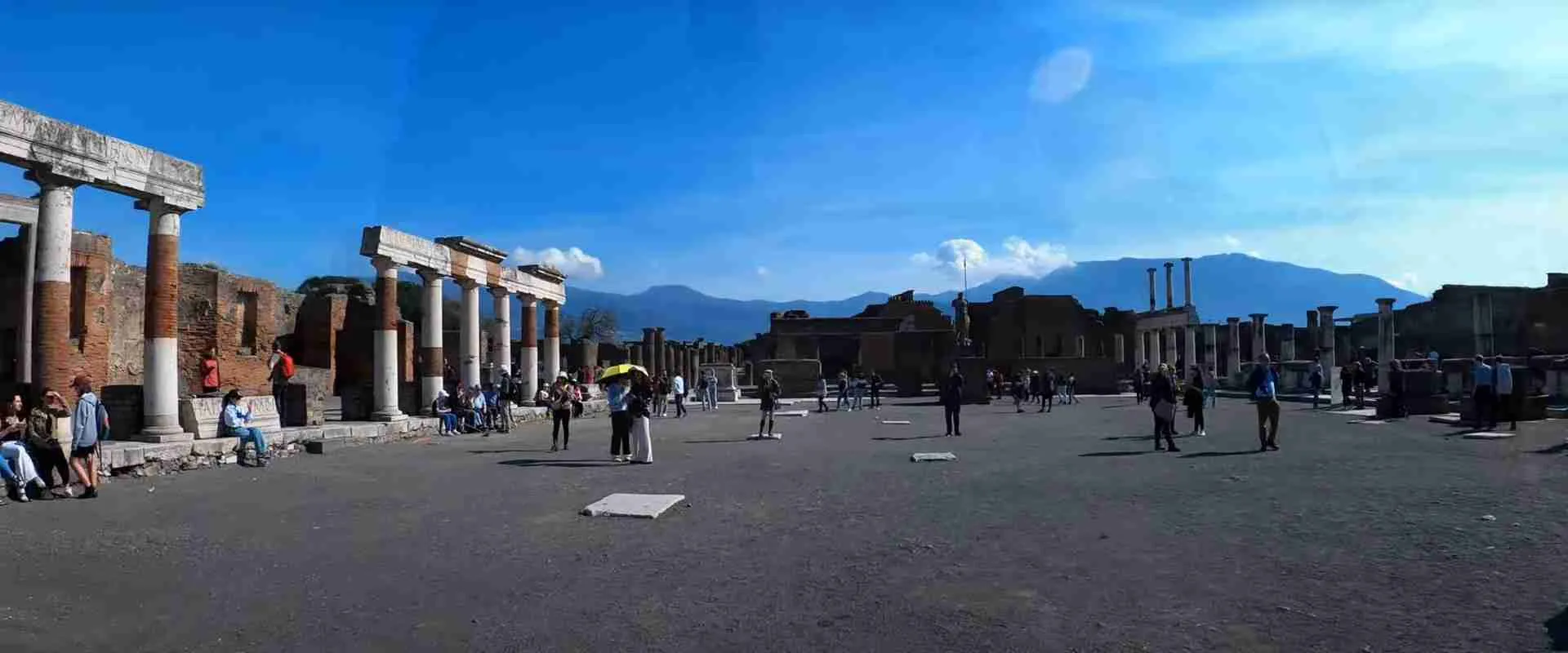
Enter through Porta Marina entrance and head immediately to the Forum complex, the political and religious heart of ancient Pompeii. Spend 45 minutes exploring the Forum plaza, Temple of Jupiter, and surrounding basilicas. The Forum offers excellent orientation to Roman urban planning and provides context for structures you’ll encounter throughout your visit.
Move eastward to the Theater District, allocating 30 minutes for the Large Theater and adjacent Small Theater. These well-preserved performance venues demonstrate Roman entertainment architecture and offer elevated viewpoints over the excavation. Continue to the nearby House of the Tragic Poet, famous for its “Cave Canem” (Beware of Dog) mosaic.
Proceed along Via dell’Abbondanza, Pompeii’s main commercial street, stopping at the House of the Faun (30 minutes). This massive aristocratic residence features the famous Alexander Mosaic (now a replica, original in Naples Archaeological Museum) and demonstrates wealthy Roman domestic architecture with its multiple atriums and peristyle gardens.
Walk to the eastern section for the Amphitheater (20 minutes), one of the oldest surviving Roman arenas, capacity 20,000 spectators. The amphitheater’s excellent preservation allows clear understanding of gladiatorial event organization. Adjacent Great Palaestra offers shaded rest areas under ancient trees.
Exit through the western section, stopping at Villa of Mysteries (45 minutes) for its extraordinary fresco cycle depicting Dionysian mystery cult rituals. These vivid paintings represent some of the finest surviving examples of Roman wall painting. The villa’s suburban location outside city walls provides peaceful conclusion to your visit.
This half-day itinerary covers approximately 2.5 miles of walking with strategic rest stops at major structures. Bring water, wear comfortable shoes, and plan for minimal shade throughout most of the route.
Full-Day Itinerary (6-8 Hours)
The comprehensive full-day itinerary allows deep exploration of Pompeii’s diverse districts while maintaining comfortable pacing with proper rest breaks. This schedule suits archaeology enthusiasts and visitors wanting thorough understanding of ancient Roman urban life. Begin at 9 AM to maximize daylight hours and avoid afternoon fatigue.
Start with the Forum complex (90 minutes), exploring not just the main plaza but all surrounding temples, basilicas, and administrative buildings. Visit the Temple of Apollo, Temple of Jupiter, and Forum Granary housing plaster casts of Vesuvius victims. The Forum’s central location makes it ideal orientation before exploring outlying areas.
Move to the Stabian Baths (45 minutes), Pompeii’s oldest bathhouse complex demonstrating advanced Roman engineering. Examine separate male and female sections, heating systems, and decorated chambers. The baths provide excellent examples of Roman social spaces beyond residential and religious structures.
Proceed to the Theater District for comprehensive exploration (90 minutes) including Large Theater, Small Theater, and Gladiator Barracks. Climb to upper theater sections for panoramic site views. Visit nearby Temple of Isis, remarkably preserved Egyptian-style religious complex reflecting cultural diversity in Roman Pompeii.
Break for lunch (60 minutes) at the on-site café near the Amphitheater, or exit briefly to nearby modern Pompeii town restaurants. Resting mid-visit prevents afternoon exhaustion and allows processing morning experiences before continuing exploration.
Explore the eastern Amphitheater section (60 minutes) during afternoon hours when crowds concentrate in western areas. The amphitheater’s open design provides natural ventilation even during warm weather. Adjacent Great Palaestra offers shaded walking paths and seating areas.
Dedicate extensive time (90 minutes) to major residential structures: House of the Faun, House of the Vettii, and House of the Golden Cupids. These aristocratic residences showcase Roman domestic luxury with their elaborate frescoes, mosaic floors, and sophisticated water features. Room layouts demonstrate separation between public reception areas and private family quarters.
Walk Via dell’Abbondanza exploring commercial establishments (45 minutes) including bakeries, thermopolia (fast food shops), and workshops. These structures reveal daily economic life beyond elite residences. Check displayed information panels explaining specific business activities at each location.
Conclude with Villa of Mysteries (60 minutes) for detailed examination of the fresco cycle. Late afternoon lighting enhances the paintings’ colors. The villa’s quieter location provides peaceful ending after the busy central district. Exit through the western gate directly to parking areas or train station.
Full-day visits cover approximately 4-5 miles with significant standing time examining structures. Bring substantial water supplies, sun protection, and energy snacks. Schedule your pace according to weather conditions and personal energy levels.
Strategic Route Planning
Optimal Entry Points and Circulation
Pompeii offers three main entrances: Porta Marina (west), Piazza Anfiteatro (east), and Piazza Esedra (north). Porta Marina serves as the primary entrance with best access from Pompeii Scavi train station and main parking areas. This entrance leads directly to the Forum, providing logical starting point for clockwise site circulation.
The Piazza Anfiteatro entrance suits visitors prioritizing the Amphitheater or those arriving by car from the Salerno direction. Starting at this eastern entrance allows reverse circulation, beginning with the Amphitheater and Great Palaestra before moving westward through residential areas toward the Forum. This routing works well during hot weather, placing exposed Forum exploration in cooler morning hours.
Piazza Esedra entrance serves visitors accessing from northern areas but offers less intuitive routing into the main archaeological zones. This entrance suits return visits focusing on northern residential districts less visited during initial tours. Independent explorers familiar with the site layout can use this entrance for direct access to specific areas.
Plan your circulation route clockwise or counterclockwise based on entry point and priorities. Clockwise routing from Porta Marina (Forum → Theater District → Amphitheater → Via dell’Abbondanza → Villa of Mysteries) follows logical historical narrative from public to private spaces. Counterclockwise routing (Amphitheater → Via dell’Abbondanza → Forum → Villa of Mysteries) places most walking during cooler morning hours.
District-by-District Planning
The Forum District requires 60-90 minutes for comprehensive exploration of temples, basilicas, and administrative buildings. Allocate extra time for detailed examination of architectural features and reading information panels. The Forum’s open plaza offers minimal shade, so plan this section during morning or late afternoon hours during summer visits.
Theater District exploration takes 60-90 minutes covering Large Theater, Small Theater, Gladiator Barracks, and Temple of Isis. The theaters’ elevated positions provide natural rest stops with seating and viewpoints. This district offers partial shade in theater cavea sections during midday hours.
Residential areas along Via dell’Abbondanza require substantial time (90-120 minutes) for major houses including House of Faun, House of Vettii, and House of Golden Cupids. These elaborate structures reward slow exploration of room sequences, frescoes, and garden areas. Residential districts provide more shade than open forums and streets.
The Amphitheater section takes 30-45 minutes including the arena itself and adjacent Great Palaestra. The palaestra’s large trees offer welcome shade for rest breaks. This eastern district remains quieter during morning hours when most visitors concentrate in western Forum areas.
Villa of Mysteries requires 45-60 minutes for proper appreciation of the fresco cycle and villa layout. Plan this as your final stop when exiting through western gates, or as an early morning first destination before crowds arrive. The villa’s suburban location provides quieter atmosphere than central districts.
Multi-Site Day Trips
Pompeii and Herculaneum Combination
Combining Pompeii and Herculaneum creates comprehensive understanding of Vesuvius’s buried cities. The two sites offer contrasting preservation styles and urban scales. Pompeii demonstrates large-scale Roman city planning while Herculaneum preserves extraordinary organic materials and multi-story structures.
Schedule Pompeii first with 3-4 hour focused visit covering essential highlights. Exit Pompeii by 12:30-1:00 PM, taking Circumvesuviana train toward Naples, exiting at Ercolano Scavi station (17 minutes journey time). Walk 10 minutes downhill to Herculaneum entrance.
Allocate 2-3 hours for Herculaneum’s smaller but intensely preserved site. Herculaneum’s compact size allows comprehensive coverage in less time than Pompeii. The site’s better-preserved upper floors and organic materials provide details impossible at Pompeii.
Pack lunch supplies or plan restaurant stops in Ercolano town near Herculaneum. Both archaeological sites have limited food options beyond basic cafés. Bring substantial water for both locations as summer temperatures affect comfort levels.
This combination day requires early start (8:30-9:00 AM) for completion before 5:00 PM closing times. Purchase separate tickets for each site in advance. Total costs include entrance fees (€38 combined) plus train fares (€4.40 round-trip from Pompeii to Herculaneum).
Pompeii and Mount Vesuvius Combination
Pairing Pompeii with Vesuvius crater hiking provides dramatic context seeing the volcano that buried the city. This combination works best for physically active visitors comfortable with uphill hiking. Weather conditions significantly affect Vesuvius access, so maintain flexible scheduling.
Visit Pompeii during morning hours (9 AM – 1 PM) covering essential highlights with focused itinerary. Exit Pompeii and take EAV bus from Pompeii Scavi to Vesuvius National Park (45-minute journey, buses run April-October). Alternative transport includes private drivers or organized tours combining both locations.
Vesuvius crater hike takes 2-3 hours including 30-minute uphill walk to crater rim, time at summit, and descent. The trail gains 200 meters elevation with volcanic gravel surface requiring proper footwear. Summit provides extraordinary views across Bay of Naples and Pompeii ruins below.
Vesuvius visits depend heavily on weather conditions. Strong winds, rain, or fog close the trail for safety. Check conditions before committing to this combination day. Morning Vesuvius visits offer clearer visibility before afternoon haze develops.
This combination requires high energy levels and good fitness. The walking distances at Pompeii (2-3 miles) plus Vesuvius hiking (1.5 miles with elevation gain) total approximately 4-5 miles with varied terrain. Bring extra water, sun protection, and hiking-appropriate footwear.
Seasonal Itinerary Adjustments
Summer Visit Strategies (June-August)
Summer visits require heat management strategies as exposed archaeological areas reach uncomfortable temperatures during midday hours. Plan extensive walking during morning hours (9 AM – 12 PM) when temperatures remain moderate and structures provide long morning shadows.
Schedule Forum exploration early in your visit before the open plaza becomes intensely hot. Move to shaded residential areas and covered structures during peak heat hours (12 PM – 3 PM). The House of Vettii, House of Faun, and covered theater sections provide relief from direct sun exposure.
Take extended lunch breaks during hottest hours, either exiting to nearby restaurants or resting in shaded areas within the site. The Great Palaestra’s trees offer welcome shade for midday rest. Resume active exploration after 3 PM when temperatures moderate slightly.
Bring extensive water supplies (3-4 liters per person) as on-site facilities have limited availability. Wear light-colored clothing, wide-brimmed hats, and strong sunscreen. Consider starting visits at 9 AM opening time to maximize morning cool hours.
Spring and Fall Optimal Conditions (April-May, September-October)
Spring and fall provide ideal Pompeii visiting conditions with moderate temperatures and comfortable full-day exploration. These seasons allow flexible itinerary pacing without extreme heat concerns. Crowds remain substantial but less overwhelming than peak summer months.
Spring visits (April-May) feature blooming vegetation throughout the site, particularly attractive in garden areas and peristyles. Weather variability requires layered clothing as morning coolness gives way to warm afternoons. Occasional spring rain requires light rain jacket or umbrella.
Fall visits (September-October) offer excellent photographic lighting with lower sun angles creating dramatic shadows across ruins. September maintains summer warmth with reduced crowds after Italian school holidays end. October brings cooler temperatures ideal for extensive walking.
Both seasons allow standard itinerary pacing without summer heat restrictions. Explore the Forum during midday without discomfort. Extend site visits into late afternoon with pleasant temperatures and beautiful lighting for photography. These seasons represent peak value for comprehensive Pompeii exploration.
Winter Visit Considerations (November-March)
Winter visits offer smallest crowds and atmospheric experiences exploring ancient streets without overwhelming tourist numbers. Reduced visitor pressure allows leisurely exploration of major structures without queuing or crowding. Weather conditions require appropriate preparation for cool temperatures and potential rain.
Shorter daylight hours limit visiting time with 5 PM closures during winter months. Plan comprehensive visits for full 6-hour exploration starting at 9 AM opening. Winter light creates beautiful long shadows across ruins, particularly attractive for photography enthusiasts.
Cold temperatures and wind exposure require layered clothing including warm jackets. The site’s exposed layout offers minimal wind protection. Pack waterproof outerwear for frequent winter rain. Wet conditions make stone surfaces slippery, requiring careful footing on ancient paving.
Reduced operating schedules affect support services during winter months. On-site facilities may have limited hours. Plan accordingly with packed lunches and adequate water supplies. Winter visits reward prepared travelers with authentic, crowd-free exploration of Pompeii’s archaeological treasures.
Planning Your 2026 Visit
Advanced Planning Timeline
Begin planning Pompeii visits 3-6 months ahead for optimal accommodation and tour availability. Early planning ensures preferred visit dates, especially during peak spring and fall seasons. Book skip-the-line entrance tickets immediately after finalizing travel dates to guarantee access on chosen days.
Reserve accommodations in Pompeii town or nearby Naples 2-3 months ahead. Properties near Pompeii Scavi train station provide convenient access without complicated transport logistics. Naples hotels offer broader accommodation options with easy Circumvesuviana train access to Pompeii.
Research and book guided tours 4-8 weeks ahead for preferred morning departure times and expert guide availability. Popular tour operators fill capacity during peak seasons. Independent visitors maintain flexibility but should still purchase entrance tickets in advance to avoid admission queues.
Download offline maps and archaeological site layouts before your visit. Mobile service within the ruins remains inconsistent. Having detailed maps and structure locations allows efficient routing without depending on internet connectivity. Study major structure locations to optimize on-site navigation time.
Essential Pre-Visit Preparation
Research Pompeii’s history and major structures before visiting to maximize on-site comprehension. Understanding Roman daily life, building purposes, and Vesuvius eruption events provides crucial context. Read overview materials about Forum functions, theater purposes, and residential layouts to recognize significance during exploration.
Study archaeological site maps identifying priority structures for your available timeframe. Mark must-see locations on printed or digital maps. Plan realistic routes connecting desired sites efficiently. Understanding site layout prevents wasted time backtracking or missing nearby important structures.
Prepare appropriate clothing and supplies based on seasonal weather forecasts. Summer requires sun protection and extensive water. Winter needs warm layers and waterproof outerwear. All seasons require comfortable walking shoes with good support and grip for ancient paved surfaces.
Plan transportation logistics from your accommodation to Pompeii entrance. Research train schedules if using Circumvesuviana from Naples. Identify parking locations if driving. Understanding transport timing ensures arrival at 9 AM opening for optimal crowd avoidance and heat management.
Time Management and Pacing
Realistic Time Allocation
Allocate realistic time blocks for each major area based on your interests and energy levels. The Forum complex requires minimum 60 minutes for basic exploration, 90 minutes for thorough examination. Major houses (Faun, Vettii) need 20-30 minutes each. The Amphitheater takes 30 minutes including surrounding areas.
Factor rest breaks into your schedule preventing exhaustion from continuous walking and standing. Plan 10-minute breaks every 60-90 minutes for hydration and rest. Identify shaded rest areas including theater seating, Great Palaestra, and covered porticos in residential areas.
Account for photography time if documenting your visit extensively. Allow extra minutes at visually striking locations including Villa of Mysteries frescoes, Amphitheater, and house gardens. Popular photo spots create queuing situations during peak hours, requiring patience and additional time.
Build contingency time into itineraries for unexpected discoveries or longer-than-planned stays at compelling structures. Pompeii’s scale and richness often exceed visitor expectations. Flexible scheduling allows following interests without stress about rigid timelines.
Energy Conservation Strategies
Pace exploration to prevent physical exhaustion from extensive walking on uneven ancient paving. Alternate intensive examination periods with easier walking sections. Follow demanding Forum exploration with leisurely Via dell’Abbondanza strolling. Balance steep Theater District with flat Amphitheater areas.
Identify strategic rest points throughout your route. Theater seating provides comfortable breaks with historical atmosphere. Great Palaestra offers shaded benches under ancient trees. House peristyles provide quiet rest spots away from main thoroughfare crowds.
Stay properly hydrated throughout your visit preventing heat exhaustion during warm weather. Drink water consistently rather than waiting for thirst. Limit caffeine and alcohol before and during visits as these increase dehydration risk. Pack sports drinks or electrolyte tablets for hot summer days.
Recognize personal fatigue limits and adjust plans accordingly. Cutting short visits when exhausted prevents injury risks on uneven surfaces. Better to enjoy quality exploration of fewer structures than exhausting yourself attempting comprehensive coverage. Return visits always remain possible for areas missed during initial tours.
2026 Updates & Changes
Current Site Operations
Pompeii maintains standard operating hours 9 AM – 5 PM November-March, extended to 7 PM April-October with last entry 90 minutes before closing. These hours remain consistent for 2026 planning purposes. Confirm current times on the official Pompeii archaeological park website before finalizing daily schedules.
Skip-the-line tickets purchased online guarantee admission on selected dates and eliminate entrance queuing. Standard admission costs €18, reduced rates €2 for EU citizens aged 18-25. Combined tickets with Herculaneum and other archaeological sites offer cost savings for multi-site visitors. Purchase tickets through official channels to avoid fraudulent third-party sellers.
The archaeological park continues restoration projects throughout the site improving accessibility and preserving structures. Some houses or areas may temporarily close for conservation work. These closures rotate ensuring major highlights remain accessible. Check the official website for current closure notifications before visits.
Guided tour operations continue from multiple providers offering varied durations and languages. Standard group tours range €45-75 per person for 2-3 hour experiences. Private tours cost €180-300 for personalized experiences. Audio guides remain available for €8 providing self-paced exploration with expert commentary.
Planning Resources
Official Pompeii archaeological park website provides comprehensive visitor information including current hours, ticket prices, and temporary closures. The site offers detailed maps showing all accessible structures and recommended routes. Use official resources as primary planning tools ensuring accurate current information.
Digital and printed guidebooks supplement official information with detailed historical context and suggested itineraries. Quality guidebooks explain structure purposes, fresco meanings, and archaeological significance beyond basic site information. Purchase guidebooks before visits for pre-trip learning or bring for on-site reference.
Mobile apps including official Pompeii apps and general archaeological guides provide GPS-enabled routing and structure identification. Download these before visits as on-site internet connectivity remains limited. Apps offer efficient navigation without constantly consulting paper maps.
Local tourism offices in Pompeii town and Naples provide printed materials, current conditions information, and booking assistance for tours and transportation. Visit tourism offices upon arrival for last-minute planning questions or changes to published schedules.
Frequently Asked Questions
What is the best starting time for Pompeii visits?
Start at 9 AM opening time for smallest crowds and optimal morning lighting. Early starts allow completing Forum exploration before midday heat develops. Morning hours provide best photography lighting with long shadows across ruins. Arrive 15 minutes before opening to purchase tickets if needed.
How much walking does a Pompeii visit require?
Half-day visits cover 2-3 miles walking, full-day comprehensive visits reach 4-5 miles. All walking occurs on uneven ancient stone paving requiring good footwear. Expect substantial standing time examining structures and reading information panels. Fitness levels should accommodate extended walking and standing.
Can I visit Pompeii with mobility limitations?
Pompeii’s ancient paved streets present challenges for wheelchairs and mobility aids. Some main routes offer smoother surfaces but many areas remain inaccessible. Contact the archaeological park directly for current accessibility information and available assistance services. Consider guided tours specializing in accessible experiences.
Are there facilities for breaks and meals at Pompeii?
Basic café services operate near the Amphitheater offering snacks, beverages, and light meals. Facilities remain limited with restricted menu options. Most visitors bring packed lunches and snacks for better quality and value. Water fountains provide drinking water throughout the site.
Should I hire a guide or explore independently?
Guided tours provide valuable historical context and ensure seeing priority highlights efficiently. Independent exploration offers flexibility and personal pacing. Consider combining morning guided tours with afternoon independent exploration for balanced experiences mixing expertise with personal discovery.
What should I bring for a Pompeii visit?
Bring comfortable walking shoes, sun protection, 2-3 liters water per person, snacks or packed lunch, and camera. Summer requires hats and strong sunscreen. Winter needs warm layers and rain protection. Bring portable battery chargers for phones used for photography and navigation.
Can I visit Pompeii and Vesuvius in one day?
Yes, combine morning Pompeii exploration (3-4 hours) with afternoon Vesuvius crater hiking (2-3 hours). Buses connect Pompeii to Vesuvius National Park April-October. This combination requires good fitness levels for extensive walking and uphill hiking. Weather conditions affect Vesuvius accessibility.
How far in advance should I buy Pompeii tickets?
Purchase tickets 2-4 weeks ahead for guaranteed admission on preferred dates, especially during peak spring and fall seasons. Last-minute tickets remain available for most days but risk capacity limitations during busy periods. Online purchases eliminate entrance queuing time maximizing exploration hours.
What time of year offers the best Pompeii experience?
April-May and September-October provide ideal conditions with moderate temperatures and manageable crowds. Spring features blooming vegetation while fall offers excellent photographic lighting. Summer brings intense heat requiring careful planning. Winter provides smallest crowds but requires weather preparation.
Is photography allowed throughout Pompeii?
Personal photography is permitted throughout the archaeological park without restrictions. Commercial photography and videography require permits. Tripods may be restricted in crowded areas. The best lighting occurs during morning and late afternoon hours with dramatic shadows across ancient structures.