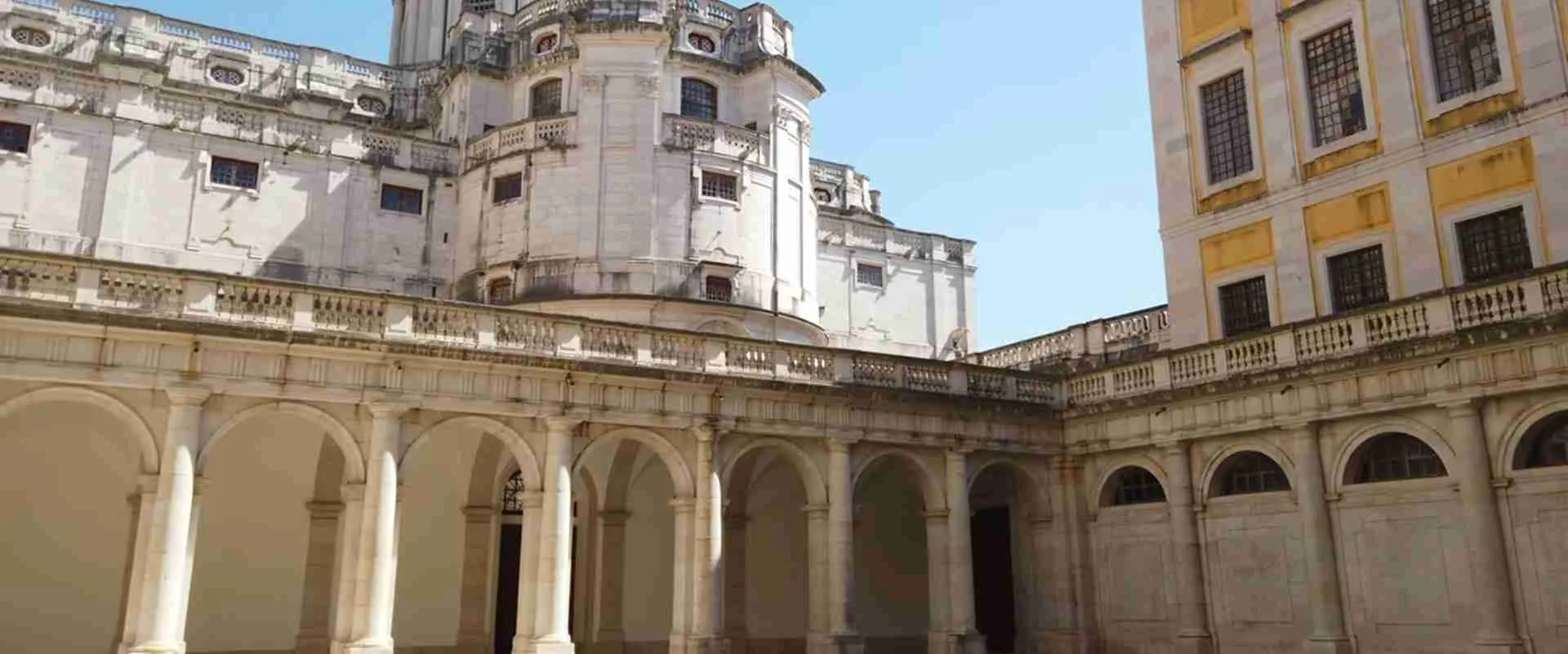
Royal Heritage and Atlantic Coast Drive 2026: Mafra to Ericeira Circuit from Lisbon
Thirty kilometres north-west of Lisbon, a single morning’s drive connects one of Europe’s largest Baroque palace complexes with Europe’s only designated World Surfing Reserve. The Mafra to Ericeira circuit follows the A8/A21 highway corridor before descending to a medieval whitewashed town perched on Atlantic cliffs, where surf camps and seafood restaurants line streets too narrow for any tour bus. This guide covers everything needed to plan and execute that drive efficiently in 2026: timed entry logistics for the royal library, carillon recital scheduling, coastal fortress stops, Ericeira parking constraints, and verified budget ranges for every traveller type.
Key Takeaways
- The Mafra National Palace library reopened on 9 January 2026 following conservation works; the basilica remains closed for restoration under the PRR programme and is not currently accessible to visitors. Standard adult admission is €15; a reduced rate may apply while the basilica restoration continues — confirm the current price at the official ticketing office or online before booking.
- The palace’s 92-bell carillon plays every Sunday at 4 PM from the two bell towers; the concert is free and audible from the palace garden, making Sunday the optimal day for visitors who want both the library and the carillon on a single circuit.
- Budget travellers complete the full day-trip circuit for €50–80 per person (two sharing a car); mid-range visitors covering the palace, the Mafra Hunting Park, and a seafood dinner in Ericeira typically spend €100–140 per person. Adding an overnight stay in Ericeira increases costs by €45–70 per person for a mid-range guesthouse.
- The A21 motorway (Malveira to Ericeira) still operates electronic tolls in 2026; the A8 toll situation changed following the 2026 State Budget and should be verified at the official toll calculator before departure. Rental cars typically include a Via Verde Visitors transponder — confirm at pickup.
- Ericeira’s medieval centre has narrow streets where large vehicles and long wheelbase vehicles cannot safely navigate; all visitors should park in the free seafront areas near the São Sebastião shopping centre or in the paid Municipal Market lot and continue on foot.
- The World Carillon Congress 2026 is hosted at the Mafra National Palace; if a visit falls near the congress dates, additional carillon concerts and specialist events will be scheduled — check wccmafra26.pt for the 2026 programme.
People Also Ask About the Mafra to Ericeira Circuit 2026
How much does a day trip on the Mafra to Ericeira circuit cost per person in 2026?
Budget travellers sharing a car can complete the full circuit for €50–80 per person in 2026. That figure covers a share of fuel and tolls (approximately €8–14 per person for the return trip from Lisbon), the €15 palace entry, a simple lunch in Mafra, and a lighter meal or snack in Ericeira. Mid-range travellers who add the Mafra Hunting Park (€6.50) and a seafood restaurant dinner in Ericeira typically spend €100–140 per person. These figures assume two people sharing transport costs; solo travellers or those hiring a car independently will spend more on the vehicle. An overnight stay in Ericeira at a mid-range guesthouse or small hotel adds approximately €45–70 per person to the total, based on a double room priced between €90 and €140 per night divided equally between two guests.
Is the Mafra National Palace library open to visitors in 2026?
Yes. The library of the Mafra National Palace reopened to the public on 9 January 2026, following conservation and restoration works that ran from August 2025. As the final room on the standard visitor circuit, the library is included in the general admission ticket and requires no separate booking. The basilica, by contrast, has been closed since 9 January 2025 for a major PRR-funded structural restoration; this work was ongoing as of mid-2026 with no confirmed reopening date. Visitors planning their 2026 trip specifically around the six historic pipe organs should check palacionacionaldemafra.gov.pt for any updates on basilica access before departure, as the restoration timeline may shift.
How long does the full Mafra to Ericeira circuit take as a day trip in 2026?
Allow a full day of eight to ten hours for a comfortable circuit from Lisbon in 2026. The drive from Lisbon to Mafra takes approximately 30–40 minutes via the A8 highway; the palace requires 90 minutes to two hours for a thorough visit including the library. Add 30–45 minutes for lunch in Mafra, then 15 minutes to drive the 12 kilometres to Ericeira. Visitors wishing to hear the Sunday carillon at 4 PM should build in an extra two hours at Mafra. Allow two to three hours in Ericeira to explore the old town, visit at least one beach overlook, and stop for dinner before the 45–50 minute return drive to Lisbon via the A21/A8. Visitors who also include the Mafra Hunting Park trails need an extra two hours and may prefer a two-day itinerary with an overnight stay in Ericeira.
When can visitors hear the carillon at Mafra National Palace in 2026?
The carillon is played every Sunday at 4 PM, broadcasting from the palace’s twin bell towers. The concert is free of charge, lasts approximately 30–40 minutes, and is clearly audible from the palace garden and the surrounding square, meaning visitors do not need a palace ticket to attend the outdoor concert. The two carillons together hold 92 carillon bells — the total bell collection including hourly and liturgical bells is approximately 120 — and the sound fills the town regardless of where you are standing. Note that the basilica interior, which houses the six historic pipe organs, remains closed for restoration in 2026; the carillon towers are separate from the basilica and are unaffected by those works. The World Carillon Congress 2026, hosted at the palace, will feature additional concert dates beyond the regular Sunday schedule — check the official congress website for the full programme.
Extended multi-day tours – 5+ days
Featured Lisbon Multi-Day Tour Packages
3 days
Lisbon 3-Day Discovery Tour
- ✓ Comprehensive Lisbon experience
- ✓ Expert local guides included
- ✓ All accommodation included
- ✓ Transportation provided
5 days
Lisbon 5-Day Highlights Experience
- ✓ Comprehensive Lisbon experience
- ✓ Expert local guides included
- ✓ All accommodation included
- ✓ Transportation provided
7 days
Lisbon 7-Day Cultural Journey
- ✓ Comprehensive Lisbon experience
- ✓ Expert local guides included
- ✓ All accommodation included
- ✓ Transportation provided

10 days
Lisbon 10-Day Complete Adventure
- ✓ Comprehensive Lisbon experience
- ✓ Expert local guides included
- ✓ All accommodation included
- ✓ Transportation provided
Multi-day tour packages powered by TourRadar. Prices and availability subject to change.
The Mafra to Ericeira Circuit in 2026: Context and Why This Drive Works
Portugal’s most rewarding day trips tend to follow a logical geographic logic, and the Mafra to Ericeira circuit is one of the most coherent in the Lisbon region. The two destinations sit barely 12 kilometres apart yet occupy entirely different worlds: one dominated by a monumental eighteenth-century palace complex so large it challenged the financial stability of an empire; the other a compact medieval fishing settlement that has become the reference address for European surf culture. Between them lies a stretch of Atlantic coastline defined by low limestone cliffs, ancient fortifications, and the steady westerly swell that makes this coast exceptional.
The circuit has a clear internal logic. You arrive at Mafra in the morning when the palace is freshest and the library light is best, tour the royal apartments and the restored baroque library, take lunch in the town, and then drive the coastal road south to Ericeira for the afternoon. If the visit falls on a Sunday and timing aligns, the 4 PM carillon concert provides a memorable mid-afternoon interlude before the Ericeira leg. The return to Lisbon via the A21/A8 is fast and straightforward, meaning the full circuit fits comfortably into a single day without any frantic transitions.
For 2026, two operational facts shape itinerary planning more than any others. First, the basilica at Mafra has been closed for structural restoration since 9 January 2025, which removes the six historic pipe organs from the accessible visitor circuit; travellers who came specifically for the organ experience should monitor the official palace site for any update on reopening. Second, the library closed for its own conservation works in August 2025 and reopened on 9 January 2026, meaning visitors arriving from early 2026 onward again have access to what most consider the palace’s single greatest highlight: the 88-metre rococo gallery lined floor to ceiling with 36,000 leather-bound volumes, protected by a permanent colony of small bats that hunt the insects which would otherwise destroy the books.
The Ericeira half of the circuit rewards visitors who slow down rather than rush. The old town is small enough to walk completely in an hour, but the cliff-edge streets, the viewpoints over the surf breaks, the tiled fishing-neighbourhood facades, and the casual seafood restaurants that line the waterfront edges reward lingering. A two-hour window before dinner is the comfortable minimum; an overnight stay transforms the experience entirely, giving access to the surf breaks at dawn and the town in the quiet hours that precede the summer-weekend crowds.
Navigating the A8/A21 Corridor in 2026: Roads, Tolls, and Parking
The standard driving route from Lisbon to Mafra follows the A8 (Auto-Estrada do Oeste) northward from the Odivelas/CRIL interchange, then exits at the Malveira junction to pick up the N9 dual carriageway into Mafra town. On a clear weekday morning the journey takes 30–35 minutes; weekend and morning rush hour (8–10 AM on weekdays) can push this to 45–50 minutes as traffic thickens near Loures. A large free car park sits immediately south of the palace facade, visible from the main roundabout on the N9 and consistently available even on weekends; smaller free car parks sit to the north and west of the complex. Parking in Mafra itself is entirely unproblematic compared to other Lisbon day-trip destinations such as Sintra, and should not figure in itinerary timing.
The Mafra to Ericeira leg is covered by two route options. The fast option takes the A21 motorway west from the Malveira interchange to the Ericeira exit — approximately 12 kilometres, 12–15 minutes — and delivers visitors to the edge of the town. The scenic option follows the N247 coastal road south from the Ericeira direction, passing through the coastal parishes west of Mafra; this adds 10–15 minutes but passes near Fort Santa Susana and the São Lourenço beach area, which makes it worth taking if the coastal fortifications feature on the itinerary.
Toll handling in 2026 requires attention. The A21 between Malveira and Ericeira operates an electronic multi-lane free-flow system with no cash toll booths: gantry cameras record all vehicles. The 2026 Portuguese State Budget included toll exemptions for several motorways; the A8 was among those listed, though the practical implementation should be confirmed at the official toll calculator (portagens.infraestruturasdeportugal.pt) before departure, as the status may differ from budget approvals to operational reality. The A21 retains electronic tolls as of mid-2026. Visitors in hire cars should confirm at pickup that a Via Verde Visitors transponder is fitted or register with EASYToll at the airport before driving; unregistered foreign-plate vehicles that transit toll gantries face penalty charges billed to the hire car company. Visitors using their own Portuguese-registered vehicles and holding a Via Verde subscription have no additional steps to take.
For the return journey, the fastest route from Ericeira to Lisbon retraces the A21/A8 corridor, taking 35–40 minutes in normal traffic. An alternative return via the N116 through Sintra and Queluz avoids the A21 but adds 30–40 minutes; this option suits travellers who want to combine the circuit with a quick stop in Sintra, though it is better suited to a two-day itinerary than a single long day. Bus travellers can use Carris Metropolitana services (routes 2803 and 2804) operating between Campo Grande station in Lisbon and Ericeira via Mafra; the journey takes between 45 and 75 minutes depending on the service, and tickets cost €4.50 for adults purchased from the driver, with the latest timetable at carrismetropolitana.pt.
Mafra National Palace in 2026: UNESCO Baroque Giant and Current Visitor Access
The Mafra National Palace is one of the largest Baroque building complexes in Europe. The main facade extends roughly 220 metres, enclosing approximately 38,000 square metres of floor plan, and the building is traditionally said to contain 1,200 rooms and 4,700 doors and windows. It was inscribed on the UNESCO World Heritage List in 2019 as the “Royal Building of Mafra — Palace, Basilica, Convent, Cerco Garden and Hunting Park (Tapada),” a designation that recognises the unified conception of palace, religious complex, formal garden, and royal hunting reserve as a single design act of the Portuguese Baroque. Even so, its reputation in international tourism has consistently lagged behind Sintra, Óbidos, and the Alentejo cities, which means the visitor experience in Mafra retains a quality that those more heavily marketed destinations have largely lost: the ability to stand in the library on a weekday morning and have the room almost to yourself.
Construction began in 1717 under the direction of Johann Friedrich Ludwig — known in Portugal as João Frederico Ludovice — a German-born architect trained in Rome who had settled in Lisbon and was appointed to lead what would become one of the most ambitious building projects of eighteenth-century Europe. The commission came from King João V, who had pledged to build a monastery and church if his queen, Maria Ana of Austria, bore him a living heir. The heir arrived, the vow was honoured, and what began as a modest Franciscan convent for thirteen friars expanded, as Brazilian gold continued to arrive, into a palace, convent, basilica, library, hospital, and hunting park large enough to house 330 friars alongside the entire royal court. The project reportedly employed a workforce that reached 25,000 at its peak and continued until approximately 1755.
Two specific commissions from that original patronage remain exceptional today. For the twin bell towers, King João V ordered carillons from Flanders; according to the official congress documentation for the World Carillon Congress 2026, the North Tower carillon was cast in Liège by Nicolas Levache and the South Tower carillon in Antwerp by Willem Witlockx, with each instrument weighing more than 44 tonnes. Together the carillons hold 92 playable carillon bells — the full bell collection, including hourly and liturgical bells, numbers approximately 120. For the basilica, six historic pipe organs were built between 1792 and 1807 by Portuguese organ-builders António Xavier Machado e Cerveira and Joaquim António Peres Fontanes, designed from the outset to be played simultaneously as a single coordinated instrument. Both commissions were intended to overwhelm the senses in the way only significant quantities of gold and decades of labour could enable.
What is currently open in 2026. The palace museum route — royal apartments, convent cells, infirmary, trophy room, games room, and library — is fully accessible. The library itself, the final room on the circuit, was the subject of its own conservation programme from August 2025 and reopened on 9 January 2026; its 88-metre rococo gallery, held up by two storeys of Brazilian hardwood bookcases and a barrel-vaulted ceiling, is once again the highlight of any visit. The basilica has been closed since 9 January 2025 under a PRR-funded structural restoration programme described by the official operator as the first such intervention since the building’s inauguration; the six organs are currently inaccessible, and the basilica may show external scaffolding. The Cerco Garden (the formal garden behind the palace) remains open without separate charge. The Mafra Hunting Park is separately managed and ticketed.
Tickets and hours in 2026. Standard adult admission is €15; seniors aged 65 and over and young people aged 13–24 pay €7.50; children under 12 enter free. Portuguese residents enter free on Sundays. The palace is open Wednesday to Monday from 9:30 AM to 5:30 PM, with last entry at 4:30 PM. It is closed on Tuesdays and on the following dates: 1 January, Easter Sunday, 1 May, Ascension Thursday (a local holiday in Mafra), and 25 December. Because the basilica restoration reduced the accessible area, a temporary 50% discount applied to standard admission when both the basilica and the library were closed simultaneously; with the library now reopened, the applicable discount — if any — should be confirmed at the official site palacionacionaldemafra.gov.pt before booking, as the rate depends on which sections are accessible at the time of the visit. Advance booking through the palace’s own ticketing system or through the Portuguese national museums platform (mmp.bymeoblueticket.pt) is recommended in high season to avoid on-the-day queues. The palace address is Terreiro D. João V, Mafra; telephone (+351) 261 817 550.
Inside the palace. The visitor circuit follows a linear route through approximately 1.5 kilometres of state rooms, giving some measure of what it means to navigate the building. The royal apartments in each of the two towers — the King’s Tower to the north, the Queen’s Tower to the south, separated by a 232-metre connecting gallery that gave the royal couple complete privacy from one another — contain original furniture, tapestries, and paintings. The infirmary is architecturally unusual: beds were arranged so that every patient faced the altar at the hall’s far end, allowing confined monks to observe mass without leaving their beds. The trophy room, furnished with furniture made from antler and animal skin collected from hunting in the adjacent park, makes the connection between palace, court, and the wider royal estate explicit. The games room, which includes an early mechanical pinball device among its exhibits, has become unexpectedly popular with visitors who did not expect levity in so formal a setting. The library closes the circuit.
A historical footnote. On 4 October 1910, King Manuel II of Portugal spent his final night in the country at the Mafra National Palace before departing in the early hours for the coast at Ericeira, where he boarded a ship and sailed into exile, ending the Portuguese monarchy. The route from Mafra to Ericeira therefore carries an additional historical resonance: it is the path of the last king’s final journey on Portuguese soil.
Efficient 1-Day Architectural Itinerary: Basilica to Coastal Fortresses
The most common itinerary error on this circuit is arriving at Mafra too late in the morning, finding crowds at the palace entrance, rushing through the library, and arriving in Ericeira after the best afternoon light has gone. The corrective is simple: aim to be at the palace doors at 9:30 AM when they open. The first hour is the calmest, the library is at its most photogenic in morning light filtering through the west-facing windows, and a 9:30 start means finishing the full palace circuit by 11:30 and having the rest of the day without time pressure.
The following timetable assumes a standard weekday visit or a non-Sunday visit where the carillon concert is not a scheduling factor.
- 9:30 AM — Arrive at the free car park south of the palace. Enter through the ticket office to the left of the main facade.
- 9:30–11:30 AM — Palace circuit (90–120 minutes): royal apartments, infirmary, trophy room, games room, library. The library is the final room; linger here longest.
- 11:30 AM–1:00 PM — Coffee and lunch in Mafra town. Several cafes and restaurants are immediately opposite the palace entrance in the square; the Cervejaria Ordem is a local standby for grilled fish and pork dishes at moderate prices.
- 1:00–1:15 PM — Drive from Mafra to the Fort Santa Susana area via the coastal road.
- 1:15–2:00 PM — Stop at the São Lourenço beach area and Fort Santa Susana (exterior visit, no ticket required). The fort occupies a strategic headland south of the beach; the drive along the D. João V cliffside road gives the first Atlantic views of the circuit.
- 2:00–2:15 PM — Drive south on the N247 to the Fort of Milreu turnoff (3 kilometres north of Ericeira).
- 2:15–3:00 PM — Fort of Milreu, 3 kilometres north of Ericeira centre. The 1670–1675 fortification stands on open coastal ground and is freely accessible; its two circular towers and rectangular battery form one of the more complete surviving examples of seventeenth-century Portuguese coastal defence.
- 3:00 PM onwards — Ericeira town: old town walk, Republic Square (Praça da República), Fishing Wives’ Viewpoint (Miradouro das Pescadeiras), Fishermen’s Beach (Praia dos Pescadores), and an evening seafood meal before returning to Lisbon.
Synchronizing Library Access Times with Carillon Recital Schedules in 2026
For visitors making the circuit on a Sunday in 2026, the carillon adds a scheduling variable that makes the day both more complex and more rewarding. The concert begins at precisely 4 PM, lasts 30–40 minutes, and the sound carries strongly in the open garden and the surrounding square; there is no need to be inside the palace or even in the garden to hear it clearly, though the garden is the optimal listening position and admits visitors for the concert without requiring a palace ticket.
The timing tension is this: the library closes with the rest of the palace at 5:30 PM (last entry 4:30 PM), and the carillon plays at 4 PM. A visitor who enters the palace at 9:30 AM and completes the full circuit in two hours finishes at 11:30 AM — well clear of the carillon. The question is whether to remain in Mafra for the 4 PM concert or proceed directly to Ericeira after lunch. The answer depends on prioritisation. For visitors who rank the carillon experience highly — and those who have not heard 92 large bells played in coordinated sequence from twin Baroque towers may not fully anticipate how substantial the experience is — remaining in Mafra until 4:30 PM and then driving to Ericeira for a 5:00–5:15 PM arrival gives a perfectly usable window for the old town, the cliff walk, and a late dinner. Sunset over the Atlantic from Ericeira in summer and autumn adds its own considerable merit to a later arrival time.
The library itself has no separate timed-entry slot system; it is the final room on the continuous palace circuit and is reached by following the visitor route through the building. The access constraint is purely volumetric: the room is 88 metres long and approximately 9.5 metres wide, and it becomes crowded when tour groups converge in it simultaneously. The practical strategy is to arrive at the palace at opening time (9:30 AM) and move through the earlier rooms at a steady pace; arriving at the library before 11 AM typically means having the room in a state that allows proper observation. The rococo detailing — Portuguese marble floor in pink, grey, and white geometric patterns, Brazilian hardwood bookcases, barrel-vaulted ceiling, two-level colonnade — can be fully absorbed when the room is not at capacity. The resident bat colony lives behind the bookcases during daylight hours; they become visible only at dusk when they emerge to hunt.
For those who have no Sunday constraint, the practical advice is simpler: arrive at 9:30 AM on a Wednesday through Monday, tour the palace, check the library, and be on the road to Ericeira by 12:30 PM at the latest, giving a full afternoon and evening on the Atlantic coast without any 4 PM scheduling dependency.
One particular 2026 consideration: the World Carillon Congress is taking place at the Mafra National Palace. This international specialist congress will feature concert events beyond the regular Sunday schedule, which means some 2026 visitors may find additional carillon performances on non-Sunday dates. Specific congress dates and public concert times are published at wccmafra26.pt; visitors with a particular interest in carillon music should check this site when planning, as the congress represents an unusual opportunity to hear the Mafra carillons in a concentrated festival context.
Afternoon Timing in 2026: Driving the Coastal Route to Ericeira
The coastal N247 route between Mafra and Ericeira, rather than the A21 motorway, adds 15–20 minutes to the journey but delivers several stops that are genuinely worth making. Leaving Mafra to the west, the road descends toward the Atlantic coast through the parish of Gradil and then follows the shoreline north to south through a series of cliffside headlands. The first significant stop is the area around São Lourenço beach and Fort Santa Susana — see the following section — roughly halfway between Mafra and Ericeira. From there the road continues south through the coastal parish of Santo Isidoro before arriving at the northern edge of the Fort of Milreu headland. Drivers reaching Ericeira via this route arrive from the north along the coastal road, entering the town past the Ribeira d’Ilhas surf beach — world-famous in surf circles and worth a five-minute stop at the cliff-top viewpoint above it — before dropping into Ericeira itself.
This northern approach to Ericeira via the N247 is also the recommended route for visitors who are heading directly from Lisbon to Ericeira on the A21 and want to pick up the coastal forts on the way: exit the A21 at the Ericeira junction, drive north on the N247 past the town, visit Fort of Milreu and Fort Santa Susana, then return south into Ericeira. The directional flexibility of the coastal road makes this straightforward to sequence regardless of which end of the circuit you begin from.
On the return from Ericeira to Lisbon, the A21 is the standard fast route: exit Ericeira on the IC22/N247 heading east, join the A21 at the Ericeira junction, and follow signs for Lisbon via the A8. The entire return journey from Ericeira’s centre to central Lisbon takes 40–50 minutes in normal evening traffic; allow 60–70 minutes on summer Sunday evenings when northbound traffic on the A21 from beach towns can create congestion near the Malveira interchange.
Fort of Milreu and Fort Santa Susana: The Coastal Fortifications in 2026
Two seventeenth-century coastal forts punctuate the coastal road between Mafra and Ericeira, both built in the aftermath of the Portuguese Restoration War (1640–1668) that ended Spanish dominance over Portugal. Their presence on the itinerary requires no great additional planning; neither charges a significant admission and both can be visited within 20–30 minutes. Together they give the coastal drive an architectural coherence that the simple Mafra–Ericeira transition would otherwise lack.
Fort Santa Susana (also known as Fort São Lourenço) sits on the clifftops south of São Lourenço Beach in the parish of Santo Isidoro, municipality of Mafra. It was built during the Restoration War between 1640 and 1656 and rebuilt after damage in 1809–10. The fort occupies a commanding position above the Atlantic and uses the natural rock terrain of the coastal cliffs as part of its defensive structure. Only the exterior is accessible to visitors; the interior is in a maintained but not publicly exhibited state. The coastal clifftop location provides a strong introduction to the Mafra municipality’s Atlantic geography, and the adjacent São Lourenço Beach — a small, relatively quiet cove by comparison with the busier beaches further south toward Ericeira — makes a reasonable brief stop in summer.
Fort of Milreu (Forte de São Pedro de Milreu) is positioned 3 kilometres north of Ericeira town on the coast and was built between 1670 and 1675 as part of a systematic programme to rebuild Portugal’s Atlantic coastal defences following lessons learned in the Restoration War. Rectangular in plan, built in the Mannerist style in local limestone, it is equipped with two circular bartizans with conical roofs at its seaward corners, three barracks, and a guardhouse. It is one of the more complete surviving examples of this post-Restoration coastal defence typology. The fort’s stated strategic purpose was to defend against maritime access to Ericeira from the north and to cover the Ribeira d’Ilhas beach landing approach. It is freely accessible to the public. The coastal setting — open headland, direct Atlantic exposure, surf visible on the reefs below — makes it an unusually atmospheric spot for the ten minutes it takes to walk the perimeter.
Mafra Hunting Park Trail Access in 2026: Wildlife Reserve and Nature Walks
The Mafra Hunting Park (Tapada Nacional de Mafra) is a separately managed walled estate of over 800 hectares immediately behind the palace complex. Created during the reign of João V to provide hunting grounds and recreation for the royal court and convent community, it was recognised as part of the UNESCO World Heritage inscription in 2019 under the designation “Royal Building of Mafra — Palace, Basilica, Convent, Cerco Garden and Hunting Park (Tapada).” Today it functions as a wildlife reserve and public outdoor recreation area supporting walking, cycling, horse riding, archery, and guided nature tours.
The park holds a significant wildlife population: red deer, fallow deer, wild boar, foxes, and multiple species of birds of prey live freely across the estate’s forests and open valleys. Wildlife sightings on the trails are common, particularly in the early morning and the last two hours before dusk. Four independently walkable colour-coded trails of varying length and difficulty are marked and signposted from the ticket office. An audio guide system is provided with trail access, replacing the printed map and delivering real-time location feedback throughout; this system is included in the standard entry fee.
Entry to the trails costs €6.50 per person. Guided electric-car tours, operating at 11:15 AM and 3:00 PM, provide a full circuit of the main valley and upper viewpoints with commentary on the estate’s history, ecology, and royal connections; these tours are bookable at the ticket office or through the Tapada’s own website at tapadademafra.pt and carry a separate price above the standard entry. Seasonal speciality experiences — including beekeeping demonstrations and falconry displays — are scheduled periodically; check the Tapada’s events calendar before visiting for the current programme. The ticket office accepts cash; card payment availability should be confirmed in advance.
For 2026 itinerary planning, one practical caution applies: the Tapada’s Eco circuit sustained storm damage in the first half of 2026, and trail closures were reported on visitor review platforms without consistent advance notice on the official website. Before committing the Tapada to a day with limited flexibility, contact the site or check the current trail status online. The guided electric-car tour is less susceptible to trail-specific closures and provides reliable access to the main estate valley regardless of individual footpath status.
Incorporating the Tapada into the Mafra–Ericeira day requires an additional two hours and a slight reordering of the itinerary: visit the Tapada first (it opens early and is at its best in the morning light), then proceed to the palace, then drive to Ericeira in the afternoon. Alternatively, use the Tapada as the basis for a two-day itinerary, with day one covering the palace and coastal forts, and day two combining the Tapada with an extended morning in Ericeira. The two-day structure eliminates all timing pressure and is the approach most likely to produce a memorable rather than rushed experience.
Ericeira in 2026: Europe’s Only World Surfing Reserve
Ericeira was designated the first World Surfing Reserve in Europe and the second in the world by the Save the Waves Coalition in 2011. The designation protects 4 kilometres of Atlantic coastline centred on the town, recognising both the exceptional quality and variety of its surf breaks — ranging from beginner-friendly beach breaks to powerful advanced reef breaks — and the surrounding natural and cultural environment as a system worth preserving from incompatible development. Ericeira remains, as of 2026, the only World Surfing Reserve in Europe. The status has brought intensive surf tourism development while broadly succeeding in maintaining the coastal geology and water quality that justify it; most beaches carry the Blue Flag environmental certification.
The old town. Ericeira’s medieval centre occupies a clifftop promontory above a series of small beaches and rock platforms. The streets are narrow, many are pedestrianised or effectively too tight for standard vehicles, and the whitewashed facades with their blue and painted tile details create an immediate visual coherence that distinguishes the town from most Portuguese coastal resorts. The natural arrival point is Republic Square (Praça da República), locally known as Jogo da Bola, which sits at the geographic and social heart of the old town surrounded by cafes, small restaurants, and the municipal market building. From the square a ten-minute walk in any direction reaches the main viewpoints and beach access points.
Fishing Wives’ Viewpoint. Fishing Wives’ Viewpoint (Miradouro das Pescadeiras) is one of the most characteristic spots in the old town, named for the women who historically gathered here to watch for their husbands’ fishing boats returning across the Atlantic. The viewpoint stands at the cliff edge above Fishermen’s Beach (Praia dos Pescadores), a small sandy cove hemmed in by the cliffs below the town and accessible via a steep path from the clifftop. The beach is tiny and occasionally congested in high summer, but the view from the miradouro over the small boat harbour and the breaking Atlantic swell is compelling at any time of year.
Surf beaches. Ribeira d’Ilhas, 2 kilometres north of the town centre, is the circuit’s flagship surf beach and the location of the annual Rip Curl Pro Portugal event. The wave breaks over a rock reef platform below a clifftop car park; spectating from the cliff is excellent and free, and surf schools operate on the adjacent beach section during the season. Foz do Lizandro, south of the town centre, is the gentler beach-break alternative and the recommended entry point for beginners and for non-surfing beach visits in summer. Coxos, a powerful right-hand reef break some 5 kilometres north of Ericeira, is one of Portugal’s benchmark advanced waves; it is not suitable for casual swimmers and should be observed rather than entered by anyone without serious reef-break experience. Praia do Sul, the most easily accessible beach immediately south of the town, is consistently busy in summer and the default choice for families and non-surfers wanting a straightforward beach afternoon. The surf season’s peak — in terms of wave quality and size — runs from October to May; summer waves are smaller and the beaches crowded with Lisbon visitors, though a warm-water summer afternoon on Praia do Sul remains entirely enjoyable on its own terms.
Parking. Ericeira’s medieval street network was not designed for twentieth-century vehicles, and the narrowest lanes in the old town cannot safely accommodate standard cars. The free seafront car park near the São Sebastião shopping centre, on the northern edge of the town, is the recommended arrival point; it is within easy walking distance of the town centre and generally available outside July and August peak periods. Paid parking is available at the Municipal Market lot (metered, variable availability in summer) and in the Santa Casa de Misericórdia underground park; the latter is small and often full on summer weekends. Camper vans and large vehicles should use the seafront spaces only, as attempting to navigate the inner streets risks getting wedged or scratching paintwork on walls. In July and August, arriving before 10 AM guarantees a free seafront space; arriving after noon on a summer weekend may require patience and a short walk.
Seafood dining. Ericeira’s restaurants concentrate the freshest possible local catch into a compact strip of establishments along the cliff edges and the Largo das Ribas area. Perceves (barnacles), percebes de Ericeira being particularly well regarded, are the local speciality; caldeirada de peixe (fisherman’s stew) and grilled sea bass are consistently good across the mid-range and upper-mid-range establishments. Budget-conscious visitors find the lowest prices at the simpler tasca-style restaurants on the inland streets off the main square, while the cliff-edge terraces with Atlantic views command a modest premium. A standard mid-range seafood lunch with wine costs approximately €30–45 per person; a sit-down seafood dinner with decent wine ranges from €40–60 per person at a well-regarded restaurant.
Budget Breakdown for the Mafra to Ericeira Circuit in 2026
The following calculations assume two people sharing a car. All figures are per person unless stated. Accommodation costs are divided equally between two guests.
How Much Does a Budget Day Trip Cost per Person in 2026?
Budget travellers prioritising the palace, a simple lunch, and a couple of hours in Ericeira without a seafood restaurant dinner can complete the circuit for approximately €50–80 per person from Lisbon. The main cost components are: a share of fuel and tolls for the return journey (approximately €8–14 per person depending on the current A8 toll status and petrol price); the €15 palace entry; a café lunch in Mafra (€12–18); a light meal or snack in Ericeira (€10–18); and incidental coffee and drinks (€5–8). The Mafra Hunting Park entry (€6.50) is optional but adds significant value; those including it land at the top of the range. The Cerco Garden behind the palace is free. Fort of Milreu is free. Fort Santa Susana is free to view from the exterior. The carillon concert on Sunday is free.
What Does a Mid-Range Day Trip Cost per Person in 2026?
Mid-range travellers — those who include the Mafra Hunting Park, take a sit-down restaurant lunch in Mafra, and have a full seafood dinner in Ericeira with wine — spend approximately €100–140 per person. Components: shared transport €10–16; palace entry €15; Mafra Hunting Park €6.50; restaurant lunch in Mafra €22–30; Ericeira seafood restaurant dinner €35–50; wine and drinks €12–18; coffee and snacks €5–10. These figures hold for a single day trip without overnight accommodation.
Overnight Stay in Ericeira: Additional Costs in 2026
Visitors extending the circuit to include one night in Ericeira should add the following per-person costs to the day-trip figures above. A budget hostel dorm bed in Ericeira costs approximately €25–40 per person per night; Ericeira has a well-established hostel infrastructure built around surf tourism. A mid-range guesthouse or small hotel in the old town charges approximately €90–140 per room per night in the shoulder season (October–May) and €140–200 per room per night in high season (July–August); divided by two, that is €45–70 per person in shoulder season and €70–100 per person in high season. Premium boutique hotels and sea-view properties charge €200–320 per room per night in high season, representing €100–160 per person. Breakfast is sometimes included at guesthouses and small hotels but is typically extra at surf hostels (approximately €5–10 per person).
Rental Car vs. Organised Tour: Cost Comparison in 2026
For visitors without a car, two options compete: hiring a car in Lisbon or joining an organised day tour. Budget car hire for a compact vehicle starts at approximately €35–60 per day from Lisbon Airport, with the Via Verde Visitors transponder typically included or available at minimal extra cost. Split between two people that is €17.50–30 per person for the vehicle alone, before fuel and tolls. For solo travellers, car hire does not make budget sense unless the flexibility to stop at coastal forts and the Tapada is a high priority. Taxi and Uber from Lisbon to Mafra runs approximately €35–50 one way, making public transport (bus via Campo Grande) the practical alternative for those without a car.
Organised day tours from Lisbon combining the Mafra National Palace and Ericeira are available through multiple operators on Viator and GetYourGuide, with prices typically ranging from €45–85 per person for group tours and €120–200 per person for private tours. The group tours normally include transport, a guide, and palace entry in the advertised price; the private tours offer flexible routing including stops at the coastal forts and the Tapada. For travellers who want the palace context explained professionally, who find Portuguese driving logistics stressful, or who are visiting alone, the organised tour frequently represents better value than the equivalent solo journey by taxi or hire car once all costs are aggregated.
Money-Saving Strategies in 2026
Visiting on a weekday avoids the premium parking pressure in Ericeira and the Sunday crowds at the palace, though it means missing the carillon concert (Sunday only). The palace is closed on Tuesdays. Visiting on a Sunday earns free admission for Portuguese residents; for international visitors, the carillon concert at 4 PM is the Sunday-specific value point — it is free regardless of nationality and the palace garden is open to the public during the recital. The Lisboa Card grants free entry to the Mafra National Palace and is worth calculating against individual ticket prices if the itinerary also includes multiple Lisbon museum entries; it is available in 24-hour, 48-hour, and 72-hour variants. Lunch in Mafra is consistently cheaper than lunch in Ericeira; visitors on a tighter budget should eat in Mafra before driving to the coast. The Mafra Hunting Park entry is most economical if time is allocated for two or more trails rather than a brief walk; if only 45 minutes is available, the independent trail is less efficient than the guided electric-car tour, which covers more ground in less time. Carillon concert timing — which requires remaining in Mafra until 4:30 PM if both the concert and the drive to Ericeira are on the same day — does reduce Ericeira time and is worth factoring into the decision for short-visit travellers.
Guided Tour Options from Lisbon for the Mafra to Ericeira Circuit in 2026
The Mafra National Palace sits well within the range of Lisbon’s organised day-tour industry, and several itinerary formats have become established products in 2026. The most common format is a small-group coach tour departing from central Lisbon in the late morning, arriving at Mafra for a two-hour palace visit, and then continuing to Ericeira for lunch and a brief town walk before returning to Lisbon in the late afternoon. These tours are available from most Lisbon-based operators and are listed on platforms including Viator and GetYourGuide; prices typically range from €45–70 per person inclusive of transport and palace entry.
A more expansive variant combines the Mafra National Palace with additional coastal villages — commonly Azenhas do Mar and Praia das Maçãs — creating a full-day Atlantic coast circuit that arrives in Ericeira for a late afternoon and early evening. This format is well suited to visitors who prefer not to drive and want the coastal geography explained in context. Tour durations run to nine or ten hours from Lisbon; prices are generally €65–90 per person for group tours.
Private tours, available from most operators at a significant premium, offer the most logistically satisfying experience for those who want to include the Mafra Hunting Park alongside the palace and the coastal fortifications. A well-structured private itinerary can cover the Tapada morning guided tour (departing at 11:15 AM), the palace in early afternoon, Fort Santa Susana and Fort of Milreu on the drive south, and arrive in Ericeira for a seafood dinner without any element feeling rushed. Private tour prices for two to four passengers typically range from €150–250 per person for a full day including transport and guide fees but excluding meals and entry tickets.
For those who specifically want a guide inside the palace itself, the palace administration can arrange licensed guides for groups through the official ticketing office; this service is worth enquiring about when booking tickets, as the palace rooms are not labelled in the depth that the architecture and history warrant for a casual visitor.
Best Seasons and Weather for the Mafra to Ericeira Circuit in 2026
The Mafra to Ericeira area experiences a Mediterranean-Atlantic climate strongly influenced by the proximity of the ocean and the prevailing north-westerly winds. Temperatures are moderate year-round by European standards: summer highs rarely exceed 30°C and are typically tempered by a steady sea breeze; winters are mild, with average lows around 8–10°C and occasional rain that can be sustained for two or three days but rarely persistent for a full week.
The optimal visit window for the overall circuit depends on priorities. Autumn (October–November) combines the best surf conditions for Ericeira — consistent north-west swell, uncrowded beaches, water still relatively warm from summer — with quiet palace interiors and easy parking in town. Autumn light on the Atlantic cliffs is outstanding. Spring (March–May) offers a similar balance: smaller crowds than summer, comfortable temperatures, green countryside on the Mafra plateau, and functional surf. Summer (June–August) brings the largest crowds, the busiest beaches, and the hardest parking problem in Ericeira; however, the waves are gentler (better for non-surfers and casual beach visitors), the coastal light is strong, and Ericeira’s cafes and restaurants are at their most vibrant. The Ericeira local population roughly doubles or triples in July and August from Lisbon weekend visitors, so arriving early or staying overnight midweek is the practical strategy for a comfortable summer visit.
Winter (December–February) is the undiscovered slot. Palace interiors are heated, crowds are minimal, Ericeira’s old town is genuinely calm, the surf is at its most powerful (for spectating), and the Atlantic light on grey winter days can be extraordinary. The main risk is rain, which reduces the coastal road experience and the outdoor element; the palace, being almost entirely interior, is entirely unaffected by weather. The carillon concert continues through winter on Sundays regardless of conditions.
Where to Stay Near the Mafra to Ericeira Circuit in 2026
Overnight accommodation is concentrated in Ericeira, which has a broad range of options developed around surf tourism. Mafra town has fewer hotel options and limited after-dinner atmosphere; it is a logical base for visitors focussing on the palace and the Tapada but not for those who want coast and evening life.
Budget (€25–50 per person per night). Ericeira’s surf hostel scene is well established and of generally high standard. Hostels within the old town or a short walk from the beaches offer dorm beds and private double rooms; most include use of a kitchen, common areas, and secure board storage. This category suits independent surfers, solo travellers, and couples content with smaller private rooms. The hostel cluster is concentrated in the old town and along the road toward Ribeira d’Ilhas.
Mid-range (€45–100 per person per night, two sharing). Guesthouses and small boutique hotels throughout Ericeira’s old town and seafront areas provide the most atmospheric mid-range accommodation. Double rooms typically run €90–140 per night in the shoulder season; expect €140–200 in July–August. Some properties include balconies with sea views at the upper end of this range. Booking three to four weeks ahead is sufficient in spring and autumn; in July and August, four to six weeks’ advance booking is advisable for the better-located properties.
Premium (€100–160+ per person per night, two sharing). A small number of cliff-edge boutique properties and design hotels in and around Ericeira charge €200–320 per room per night in high season. These properties typically offer terraces with direct Atlantic views, spa facilities, and access to private beach areas. The Vila Galé Collection Ericeira, positioned above the cliffs north of the old town, is the largest and most consistently reviewed of the higher-end options.
For those who prefer a base in Mafra itself: accommodation is quieter, cheaper (mid-range double rooms at €60–100), and within walking distance of the palace. The practical trade-off is that Ericeira requires a 15-minute drive for any evening activity. For visitors whose priority is an early palace entry without commuting stress, a Mafra base makes sense; for those who want to be in a walking-distance relationship with restaurants and beaches, Ericeira is the clear choice.
Frequently Asked Questions About the Mafra to Ericeira Circuit in 2026
Is it possible to visit both Mafra National Palace and Ericeira in a single day trip from Lisbon in 2026?
Yes, the circuit is very manageable as a single day from Lisbon. Arriving at the palace at 9:30 AM and spending 90–120 minutes inside leaves enough time for a Mafra lunch, the coastal fort stops, and three to four hours in Ericeira before the return drive. The total round trip from Lisbon covers approximately 90–100 kilometres and includes two to three hours of driving spread across the day. Travellers who include the Mafra Hunting Park on the same day will find it tight; a two-day itinerary gives a much more comfortable experience when the Tapada is a genuine priority rather than a brief stop.
Do I need to book Mafra National Palace tickets in advance for 2026?
Advance booking is recommended but not always essential. In high season (July–August) and on public holidays, on-the-day queues at the palace ticket office can add 20–30 minutes to the entry process; booking online through the palace’s own system (palacionacionaldemafra.gov.pt) or through the national museums platform eliminates this wait. In the shoulder season — spring and autumn — on-the-day purchase at the ticket office is generally reliable. The ticketing platform issues specific-date entry tickets; check the cancellation and rebooking terms when purchasing, as the palace’s own portal allows free rebooking with 48 hours’ notice. The carillon concert (Sundays, 4 PM) and the outdoor garden access during the concert require no booking and no ticket.
Is the Mafra National Palace basilica open during 2026?
No. The basilica of the Mafra National Palace has been closed to public access since 9 January 2025 for a major PRR-funded structural restoration programme. This is described by the palace administration as the first structural intervention of this scale since the building’s inauguration. The six historic pipe organs — among the most exceptional musical instruments in Europe — are therefore not accessible in 2026. The palace museum route, including the royal apartments, the infirmary, the trophy room, the games room, and the library, remains fully open. The library reopened on 9 January 2026 following its own separate conservation works that had closed it from August 2025. For any update on basilica reopening, check the official palace site before planning a visit.
What are the best beaches to visit in Ericeira in 2026?
The choice depends on purpose. Praia do Sul, immediately south of the town centre, is the closest and most convenient beach for non-surfers and families; it is the most crowded in summer but the most accessible from the old town on foot. Ribeira d’Ilhas, 2 kilometres north, is the flagship of the World Surfing Reserve and worth visiting for the clifftop spectator view of the waves even if surfing is not the goal. Foz do Lizandro, south of the centre, is the best beach-break option for beginner surfers and also a pleasant sheltered beach for relaxed swimming in calmer summer conditions. Coxos, 5 kilometres north, is strictly for experienced reef-break surfers and spectators; it is not appropriate for general swimming or beginner surf. The beaches within the World Surfing Reserve consistently hold the Blue Flag environmental certification, and water quality is monitored throughout the season.
How do Portugal road tolls work on the A8 and A21 for visitors in 2026?
Portugal uses electronic toll collection rather than cash toll booths on most motorways. The A21 between Malveira and Ericeira operates a multi-lane free-flow system where gantry cameras record all vehicles automatically. There are no physical toll stations on this section; payment is made through a registered electronic system. The A8 north of Lisbon had toll changes approved in the 2026 Portuguese State Budget, but the practical implementation should be verified at portagens.infraestruturasdeportugal.pt before travel. Visitors in hire cars should confirm at pickup that a Via Verde Visitors transponder is installed or pre-register with EASYToll at the airport (1-hour process, approximately €1 registration plus per-transit fee of approximately €0.32). Vehicles using gantry sections without a registered payment method incur penalty charges billed through the hire car company. Portuguese Via Verde subscribers and drivers with installed on-board units have no additional steps to take.
Can I visit the Mafra Hunting Park on the same day as the palace in 2026?
The combination is possible but requires an early start and careful sequencing. The recommended order for a combined day is: Tapada Nacional guided electric-car tour (departs at 11:15 AM — arrive at the Tapada ticket office by 10:30 AM), followed by the palace (afternoon visit from approximately 1:30 PM, last entry 4:30 PM), then drive to Ericeira for the evening. For independent walkers, the four trail options range from moderate to long; a single trail takes approximately 1.5–2.5 hours. Given that the Tapada often closes earlier than the palace and has a ticket office that may only accept cash, checking hours, availability, and payment methods at tapadademafra.pt before committing to the combination day is strongly recommended. A reported May 2026 closure of the Eco circuit due to storm damage was not flagged clearly on the official website, underlining the value of pre-visit verification for this site.
What is the best time of year to drive the Mafra to Ericeira circuit in 2026?
For the overall circuit, autumn (October and November) offers the most favourable combination of factors: palace interiors are uncrowded, the library can be experienced in near-solitude on a weekday, Ericeira parking is easy, the surf is at its best for those who want to surf or spectate, and the coastal light is exceptional. Spring (March to May) is an equivalent alternative with slightly fewer surf visitors. Summer delivers vibrant energy in Ericeira, the best beach-swimming conditions, and warm evenings, but requires early parking arrivals (before 10 AM) and acceptance that the beaches will be busy. Winter (December to February) is genuinely underrated for those who prioritise the cultural rather than beach dimension: the palace is at its quietest and the Atlantic coast at its most dramatically atmospheric.
Are there guided tours from Lisbon covering both Mafra and Ericeira in 2026?
Yes. Multiple operators listed on Viator and GetYourGuide offer day tours combining the Mafra National Palace with Ericeira, typically priced at €45–90 per person for group tours including transport and palace entry. The standard group tour format involves a morning departure from Lisbon, two hours at the palace, and three to four hours in Ericeira. Private tours cost significantly more (approximately €150–250 per person for two to four passengers) but allow for additional stops at the coastal forts, the Tapada, or neighbouring sites such as the Azenhas do Mar cliffside village. Visitors who want a licensed guide inside the palace itself — rather than only transport and group context — should specifically request a palace guide when booking; not all group tours include this.
Where is the best place to park in Ericeira in 2026?
The free seafront car park near the São Sebastião shopping centre on Ericeira’s northern seafront edge is the best general option: it is free, within a five-minute walk of the old town, and typically available in spring, autumn, and winter. In July and August it fills by mid-morning; arriving before 10 AM secures a space without searching. Paid alternatives include the metered Municipal Market lot in the town centre (variable availability, fill-and-search approach needed in summer) and the Santa Casa de Misericórdia underground car park (small, frequently full on summer weekends). Camper vans and larger vehicles should use only the seafront areas; the inner medieval street network is not navigable by standard-sized campervans. There is no parking enforcement problem specific to this area beyond the normal summer saturation; patience and an early arrival are the practical solution.
What is the World Carillon Congress at Mafra and when does it take place in 2026?
The World Carillon Congress 2026 is an international specialist congress hosted at the Mafra National Palace in 2026. The Mafra carillons — two instruments cast in Antwerp and Liège in the early eighteenth century, each weighing more than 44 tonnes and together holding 92 carillon bells — were selected as the host instruments in recognition of their exceptional historical significance and the fact that they were restored as recently as 2018–2020. The congress programme includes multiple public carillon recitals, workshops, debates, and concerts specifically designed to showcase the Mafra instruments to an international audience. For precise dates, the public concert schedule, and ticketing information, the official congress website at wccmafra26.pt carries the full programme. The basilica will remain closed during the congress period due to the ongoing restoration, meaning the six pipe organs will not be part of the congress musical programme; the carillon concerts take place from the external bell towers and are audible throughout the town.