Madrid 4-Day Itinerary 2026: Complete Planning Guide
Madrid combines world-class art museums, royal palaces, vibrant neighborhoods, and authentic Spanish culture within a compact, walkable city center. This comprehensive 4-day itinerary guides first-time visitors through the capital’s essential experiences with detailed daily plans, verified 2026 costs, strategic timing recommendations, and practical logistics to maximize your long weekend in Spain’s cultural heart.
Key Takeaways for Your Madrid Trip 2026
- Budget Planning 2026: Expect €80-120 per person daily excluding accommodation for mid-range experiences covering major museums (€17 for Prado with booking fee, €16 for Royal Palace with booking fee), meals including menu del día lunches (€15-20) and tapas dinners (€25-35), and unlimited metro transport (€23 for 3-day Tourist Travel Pass). Mid-range hotels in central Madrid cost €100-180 per night, while budget options range €60-90.
- Museum Strategy 2026: Book Prado Museum tickets (€15 plus €2 online fee) 2-3 weeks ahead for April-October weekend visits to skip 60-90 minute queues. Royal Palace (€15 plus €1 online fee) allows same-week reservations except Easter and May peaks. Free evening admission at Prado (Monday-Saturday 18:00-20:00) and Reina Sofía (Monday/Wednesday-Saturday 19:00-21:00) requires advance online reservations released one week prior.
- Optimal Visit Timing 2026: Spring (April-May) and autumn (September-October) deliver ideal 15-25°C temperatures, manageable crowds, and full museum hours. Summer (June-August) brings 30-38°C heat making midday sightseeing exhausting, while winter (December-February) offers lowest prices but 5-12°C temperatures and early sunsets limiting evening activities. Book accommodation 2-3 months ahead for spring and fall visits.
- Transportation Efficiency 2026: Purchase the 3-day Tourist Travel Pass (€23 for Zone A) immediately at airport metro station for unlimited metro, bus, and cercanías trains including airport transfer supplement. Madrid’s metro reaches all major attractions faster than taxis in traffic-congested areas. Walking works best for short distances in compact Sol-Gran Vía-Retiro triangle.
- Daily Pacing Formula 2026: Dedicate mornings (09:00-13:30) to major museums when energy peaks and crowds remain moderate, reserve midafternoons (14:00-17:00) for menu del día lunches followed by light neighborhood strolling or park time, utilize evenings (17:00-22:00) for secondary attractions, tapas bar circuits, and flamenco shows when Madrid’s energy intensifies and heat subsides.
- Madrid’s Golden Triangle 2026: The Prado, Reina Sofía, and Thyssen-Bornemisza museums cluster along Paseo del Prado within 1 kilometer—attempting all three in one day guarantees superficial visits and exhaustion. Allocate one full morning each for Prado and Reina Sofía (Picasso’s Guernica alone warrants dedicated time), treating Thyssen as optional Day 4 alternative to Retiro Park based on art interest levels.
People Also Ask About Madrid 4-Day Itineraries 2026
How much does a 4-day Madrid trip cost in 2026?
A 4-day Madrid trip in 2026 costs €389-610 for budget travelers, €614-1,015 for mid-range visitors, and €1,225-1,825+ for luxury experiences including accommodation (excluding international flights). Budget travelers utilize hostel dormitories (€25-45 per night, €75-135 for 3 nights) or budget hotels (€60-90 per night, €180-270 for 3 nights) plus daily costs totaling €314-475 for four days (calculation: 88+81+55+90 = 314 low, 107+150+90+128 = 475 high) covering transport with 3-day Tourist Travel Pass (€23), major museum admissions (Prado €17, Royal Palace €16, Reina Sofía €12), menu del día lunches, tapas dinners, and Toledo day trip. Mid-range travelers stay in comfortable central hotels (€100-180 per night, €300-540 for 3 nights) with daily costs of €314-475 including full-price museum admissions, restaurant dining, and flamenco shows, totaling €614-1,015 for the complete trip. Luxury visitors occupy premium hotels (€250-450 per night, €750-1,350 for 3 nights) with maximum daily costs reaching €475 for Michelin dining, private guides, and comprehensive attraction coverage, totaling €1,225-1,825+ for four days.
What is the best 4-day Madrid itinerary structure for first-time visitors in 2026?
The optimal 4-day structure dedicates Day 1 to the Prado Museum and Retiro Park establishing Madrid’s artistic foundation, Day 2 to the Royal Palace and Sol-Gran Vía central district experiencing royal heritage and urban energy, Day 3 to Reina Sofía Museum and La Latina tapas neighborhood discovering 20th-century art and authentic dining, and Day 4 to either Toledo day trip (experiencing Spain’s medieval capital 30 minutes from Madrid) or Malasaña-Chueca neighborhood exploration with Thyssen-Bornemisza Museum based on personal preference for historical excursions versus contemporary Madrid culture. This sequence balances intensive art appreciation early when enthusiasm peaks with lighter neighborhood wandering later, alternates museum-heavy days with palace/neighborhood days preventing burnout, and reserves flexible time at trip’s end for pursuing discovered interests.
Can I see both the Prado and Reina Sofía in one day or should I split them?
Split the Prado and Reina Sofía across separate days for quality appreciation rather than superficial viewing. The Prado requires 3-4 hours minimum to properly experience Velázquez’s Las Meninas, Goya’s Black Paintings and The Third of May 1808, Bosch’s The Garden of Earthly Delights, and the Spanish Golden Age collection that forms Western art’s foundation. Attempting to add Reina Sofía’s 20th-century masters including Picasso’s Guernica, Dalí, and Miró in the same day creates 6-7 hours of continuous museum standing on hard floors leading to aesthetic exhaustion where exceptional artworks blur together. Museums represent Madrid’s greatest offerings—dedicate one morning each for engaged viewing, then balance afternoons with lighter activities like park strolls, neighborhood exploration, or menu del día lunches allowing mental processing of morning’s artistic immersion.
Is a Toledo day trip worth sacrificing a Madrid day in a 4-day itinerary?
Yes for travelers prioritizing medieval Spanish history and UNESCO World Heritage sites, no for those focused exclusively on Madrid’s urban culture and nightlife. Toledo delivers dramatically different experiences from Madrid—a preserved medieval city with Gothic cathedral, El Greco masterpieces, and layered Jewish-Christian-Muslim heritage versus Madrid’s royal Baroque grandeur and contemporary energy. The 30-minute high-speed train journey and compact historic quarter make Toledo an efficient Day 4 option adding historical depth to an art-focused Madrid visit. However, travelers with limited Spanish city experience benefit more from dedicating all four days to Madrid’s depth—Malasaña’s vintage shops and cafés, Chueca’s LGBTQ+ culture, Lavapiés’ multicultural atmosphere, or Santiago Bernabéu stadium tours for football enthusiasts offer immersive Madrid experiences impossible during short visits split across multiple cities.
Extended multi-day tours – 5+ days
Featured Madrid Multi-Day Tour Packages

3 days
Madrid 3-Day Discovery Tour
- ✓ Comprehensive Madrid experience
- ✓ Expert local guides included
- ✓ All accommodation included
- ✓ Transportation provided

5 days
Madrid 5-Day Highlights Experience
- ✓ Comprehensive Madrid experience
- ✓ Expert local guides included
- ✓ All accommodation included
- ✓ Transportation provided
7 days
Madrid 7-Day Cultural Journey
- ✓ Comprehensive Madrid experience
- ✓ Expert local guides included
- ✓ All accommodation included
- ✓ Transportation provided
10 days
Madrid 10-Day Complete Adventure
- ✓ Comprehensive Madrid experience
- ✓ Expert local guides included
- ✓ All accommodation included
- ✓ Transportation provided
Multi-day tour packages powered by TourRadar. Prices and availability subject to change.
Introduction: Planning Your Madrid Long Weekend 2026
Madrid functions as Spain’s political, cultural, and geographic heart, occupying the exact center of the Iberian Peninsula at 650 meters elevation. From its 9th-century origins as a Moorish fortress through transformation into Imperial Spain’s capital in 1561, the city accumulated artistic treasures that today fill the world’s greatest museums. The Prado Museum houses Spanish Golden Age masters Velázquez, Goya, and El Greco alongside Flemish and Italian masterpieces assembled by Habsburg and Bourbon monarchs. The Royal Palace, Spain’s largest operating royal residence, showcases Baroque splendor in 3,418 rooms though the royal family now resides in the modest Palacio de la Zarzuela.
A thoughtfully structured 4-day itinerary allows thorough exploration of Madrid’s essential attractions while maintaining energy for evening tapas culture and spontaneous discoveries. This timeframe provides adequate museum coverage without overwhelming visitors with back-to-back art immersion, permits experiencing multiple neighborhood atmospheres from aristocratic Salamanca to bohemian Malasaña, and accommodates either a Toledo day trip or deeper Madrid neighborhood exploration based on personal preferences. The compact city center concentrates major attractions within 3-4 kilometer radiuses, making walking feasible for those avoiding metro systems despite Madrid’s exceptional public transport efficiency.
Successful Madrid visits in 2026 require strategic advance planning for specific elements while maintaining flexibility for spontaneous experiences. Prado Museum tickets sell out weeks ahead during spring weekends when Spanish school groups and international tourists converge simultaneously. Menu del día lunch deals—three-course fixed-price menus at €15-20—represent Spanish dining culture’s best value but require understanding that restaurants serve them only 13:00-16:00 weekdays. Flamenco show reservations become essential for quality venues where authentic performances replace tourist-focused dinner theater spectacles. Yet Madrid rewards unplanned wandering through Retiro Park, discoveries of neighborhood markets, and following locals to tapas bars lacking English menus but serving exceptional jamón and vermouth.
This itinerary provides day-by-day frameworks with museum priorities, transportation routing, dining strategies, and timing recommendations while remaining adaptable to personal interests. Art enthusiasts extend museum time by reducing shopping hours, food-focused travelers add culinary tours by abbreviating palace visits, and football fans substitute Santiago Bernabéu stadium tours for secondary museums. The structure ensures coverage of unmissable experiences—Las Meninas at the Prado, the Royal Palace’s Throne Room, Guernica at Reina Sofía, tapas in La Latina—while leaving space for the unexpected conversations, neighborhood festivals, and small museum discoveries that transform good trips into memorable ones.
Pre-Trip Planning Essentials Madrid 2026
When to Visit Madrid: Seasonal Analysis 2026
Madrid experiences continental climate extremes affecting both comfort and costs. Spring (April-May) delivers optimal visiting conditions with 15-23°C temperatures, minimal rainfall averaging 40-50mm monthly, flowering Retiro Park gardens, and outdoor café terraces opening citywide. Museums maintain full hours without summer heat closures, walking remains comfortable throughout the day, and accommodation costs run 20-30% below peak summer rates. May’s San Isidro festival (May 15) celebrates Madrid’s patron saint with bullfights, concerts, and traditional celebrations attracting domestic tourists—book accommodations well ahead if visiting mid-May.
Summer (June-August) brings intense 28-38°C heat with July-August regularly exceeding 35°C, making midday outdoor exploration exhausting. Locals flee to coastal regions during August when many restaurants and shops close for annual holidays, though major tourist attractions maintain full operations. The advantage: lowest crowd levels at museums as Spanish families vacation elsewhere, extended evening daylight until 22:00 permitting terraza dining and nighttime park strolls, and rooftop bar season reaching peak enjoyment. Hotel prices peak June-July before dropping in August when Madrileños’ exodus creates availability. Choose summer only if heat tolerance runs high or if school holiday timing mandates it.
Autumn (September-October) mirrors spring conditions with 16-25°C temperatures, reduced crowds as schools resume, and pleasant evening weather ideal for tapas bar circuits. September maintains summer closing times while October transitions to winter schedules with earlier museum closures. The grape harvest season brings fresh wine to bars, chestnuts roast on street corners, and Madrid’s cultural calendar intensifies with theater premieres, gallery openings, and music festivals. Accommodation prices drop 15-25% from summer peaks while weather reliability remains high with only 30-40mm monthly rainfall.
Winter (November-March) offers lowest prices, empty museums, and authentic local atmosphere as Madrid returns to residents after tourist season. However, 5-12°C temperatures feel colder due to altitude and wind, occasional snow occurs January-February though rarely accumulates, and reduced daylight (sunset by 18:00 in December) limits daily touring hours. Christmas markets, Three Kings parades (January 5-6), and holiday decorations create festive atmosphere compensating for weather limitations. Choose winter for budget priority or crowd aversion, avoiding December 20-January 10 when domestic tourism surges and prices rise temporarily.
Advance Bookings Required for 2026
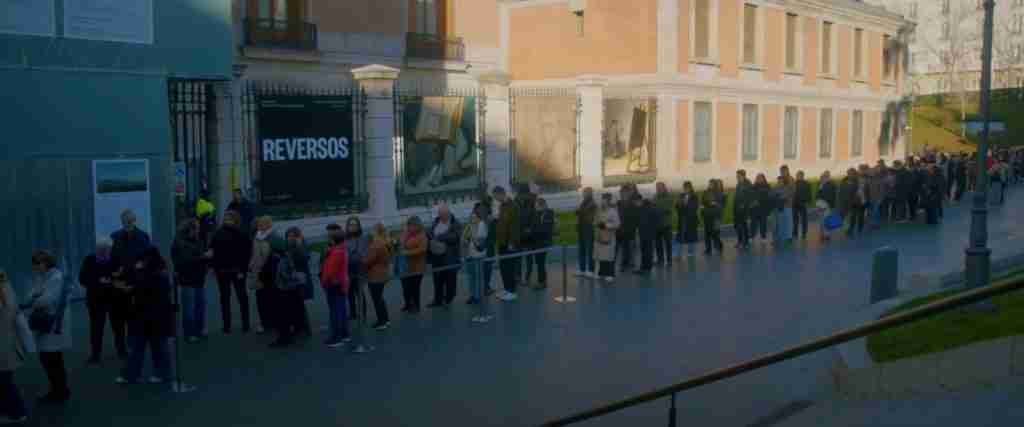
Book Prado Museum tickets 2-3 weeks before weekend visits during April-October peak season to secure preferred 10:00-11:00 entry times avoiding both opening rush and midday crowds. Purchase through museonacionaldelprado.es (official source) selecting general admission (€15 plus €2 online booking fee) with specific date and time. Free evening admission (Monday-Saturday 18:00-20:00, Sunday 17:00-19:00) requires separate online reservations releasing one week ahead and booking out within hours—set calendar reminders if pursuing this option. Guided tours (€26) and audio guides (€6) can be added during ticket purchase.
Royal Palace accepts reservations through patrimonionacional.es up to 60 days ahead, though same-week and walk-up availability exists most days outside Easter (March-April) and May peaks when school groups overwhelm morning hours. Standard admission (€15 plus €1 online booking fee) includes Royal Armory and Pharmacy, while combined tickets with Royal Collections Gallery (€19) or guided tours (€22-28) provide enhanced experiences. Wednesday-Thursday afternoons during winter months see lightest crowds for spontaneous visitors.
Reina Sofía Museum and Thyssen-Bornemisza rarely sell out, permitting same-week or day-of reservations through respective websites. Free Reina Sofía evening hours (Monday/Wednesday-Saturday 19:00-21:00, Sunday 12:30-14:30) also require advance online booking releasing one week prior. Toledo day trips via organized tours fill 1-2 weeks ahead during spring and autumn—book through reputable operators including GetYourGuide or Viator, or purchase independent AVE train tickets through renfe.com for self-guided exploration (€21-30 round-trip, 33 minutes each way).
Accommodation in Sol, Gran Vía, and Retiro Park vicinity books solid 6-8 weeks ahead for April-May and September-October optimal weather windows. Reserve directly through hotel websites when rates match booking platforms to support smaller properties avoiding commission fees. Hostels near Gran Vía fill quickly with budget travelers—book 4-6 weeks early. Airbnb rentals in Malasaña, Chueca, or La Latina offer character and kitchen facilities at €80-150 nightly for well-located apartments, requiring similar advance booking.
Visa and Entry Requirements 2026
Spain implements European Union entry requirements for all visitors. EU/EEA citizens require only valid national ID cards for 2026 Madrid visits with no advance registration needed. United Kingdom citizens enter visa-free for stays up to 90 days within 180-day periods following Brexit, requiring passports valid at least three months beyond intended departure dates. United States, Canadian, Australian, and New Zealand visitors enjoy identical 90-day visa-free stays with minimum passport validity.
The European Travel Information and Authorization System (ETIAS) launched late 2025 requires non-EU visitors to complete online pre-registration (€7 fee, 10-minute process, three-year validity) before Spain arrival. Apply through official travel-europe.europa.eu website 72 hours minimum before departure, though most applications process within minutes. Overstaying 90-day limits incurs significant fines and potential future entry bans—track carefully if visiting multiple Schengen countries during the same 180-day period.
Money and Currency Considerations 2026
Spain uses the Euro (€) as official currency with widespread credit card acceptance at hotels, restaurants, museums, and shops throughout central Madrid. Withdraw euros from ATMs affiliated with major Spanish banks (Santander, BBVA, CaixaBank) upon arrival at Barajas Airport or in the city rather than exchanging at airport currency desks charging 8-12% markups. Use ATMs inside bank branches rather than standalone machines in tourist zones to avoid excessive fees and ensure machine functionality.
Carry €100-150 in cash for small purchases at traditional markets, neighborhood bakeries, some tapas bars, and metro ticket top-ups at machines accepting only cash. Break large bills at supermarkets rather than small vendors where providing change for €50 notes proves difficult. Notify credit card companies of Spain travel dates preventing fraud blocks on legitimate transactions. Contactless payment works on Madrid metro using credit/debit cards directly at turnstiles, though the Tourist Travel Pass offers better value for frequent daily use.
Tipping customs differ from North American expectations. Restaurants sometimes include 10% service charges eliminating separate tip requirements, though leaving 5-10% additional for exceptional service shows appreciation. Round up taxi fares to nearest euro or add €1-2 for helpful drivers. Bar tenders receive no tips for single drinks, though leaving small change (€0.50-1) after multiple rounds is customary. Hotel porters receive €1-2 per bag, housekeeping €1-2 daily if using services.
Day 1: Prado Museum and Retiro Park 2026
Morning: Prado Museum Deep Dive 2026
Arrive at the Prado Museum at 10:00 using pre-purchased timed entry tickets (€15 plus €2 online booking fee, check official website for current rates). The Goya Door (northern entrance) provides smoothest access for online ticket holders, avoiding the Murillo Door queues where walk-up purchasers wait 60-90 minutes during peak morning hours. The museum houses over 7,000 paintings though only 1,300 display at any time, requiring strategic routing to appreciate masterworks without aimless wandering leading to decision fatigue.
Begin on the first floor with Spanish Golden Age masters. Velázquez’s Las Meninas (Room 12) represents Western art’s most analyzed painting—the 1656 portrait of Infanta Margarita with her maids, chaperone, dwarfs, and the reflected King and Queen creates complex spatial puzzles debated by art historians for centuries. Allocate 20 minutes studying this single work’s composition, light manipulation, and self-portrait of Velázquez himself at the canvas. Continue to Goya’s The Third of May 1808 (Room 64) depicting French firing squad executing Spanish resisters, a proto-modern masterpiece influencing Picasso’s later Guernica. Goya’s Black Paintings fill adjacent rooms—Saturn Devouring His Son and other disturbing late works painted directly on his house walls reveal the artist’s darkening psychology.
Descend to the ground floor for Hieronymus Bosch’s The Garden of Earthly Delights (Room 56A), the triptych’s fantastical creatures and surreal landscapes retaining their mystery five centuries later. El Greco’s collection demonstrates the Greek painter’s distinctive elongated figures and dramatic spirituality. Flemish masters including Rubens, Brueghel, and especially Bosch receive comprehensive coverage reflecting Spanish royal collections’ historical connections to Flemish territories. The Italian collection features Titian, Raphael, and Tintoretto alongside Caravaggio’s dramatic chiaroscuro paintings.
Allocate 3-4 hours minimum for engaged viewing—attempting to “do” the Prado in 90 minutes means superficial glimpses rather than appreciation. Audio guides (€6, available in multiple languages) provide valuable context for unfamiliar works, though crowds sometimes make listening difficult. Free museum plans at entrance indicate current exhibition layouts as room numbers change during rotations. Photography without flash is permitted in permanent collection areas but prohibited in temporary exhibitions. Exit by 13:00-13:30 to allow time for lunch before afternoon activities.
Lunch: Menu del Día Strategy 2026
Walk five minutes from the Prado to surrounding neighborhoods for authentic menu del día lunches, the fixed-price three-course meals served 13:00-16:00 weekdays at €15-20. Avoid restaurants directly facing the Prado charging €25-35 for tourist menus—walk three blocks toward Lavapiés or Barrio de las Letras for local establishments. Taberna de Ángel Sierra (Calle Gravina 11) offers traditional Madrileño cuisine including cocido stew and croquetas at €16 menus. La Fábrica (Calle Jesús 2) serves creative market-based dishes at €18.
Menu del día structure includes bread, wine or water, starter (salad, soup, or croquettes), main course (grilled meat, fish, or pasta), dessert (flan, fruit, or ice cream), and coffee. This represents Spanish dining culture’s best value—the same meal ordered à la carte costs €30-40. Understand that service moves slower than North American expectations as lunch is a leisurely 90-minute affair, not a rushed refueling. Request “la cuenta” (the check) when ready as servers avoid interrupting meals with presumptive billing.
Afternoon: Retiro Park and Paseo del Prado 2026
Walk through Retiro Park (Parque del Buen Retiro), Madrid’s largest green space and UNESCO World Heritage site comprising 125 hectares of landscaped gardens, tree-lined promenades, and tranquil corners perfect for post-lunch digestion. Enter via the Puerta de Felipe IV gate directly from the Prado Museum area. The Estanque Grande (Great Pond) forms the park’s centerpiece where rowboats rent for €6 per 45 minutes, offering relaxing water time viewing the Alfonso XII Monument’s colonnade backdrop.
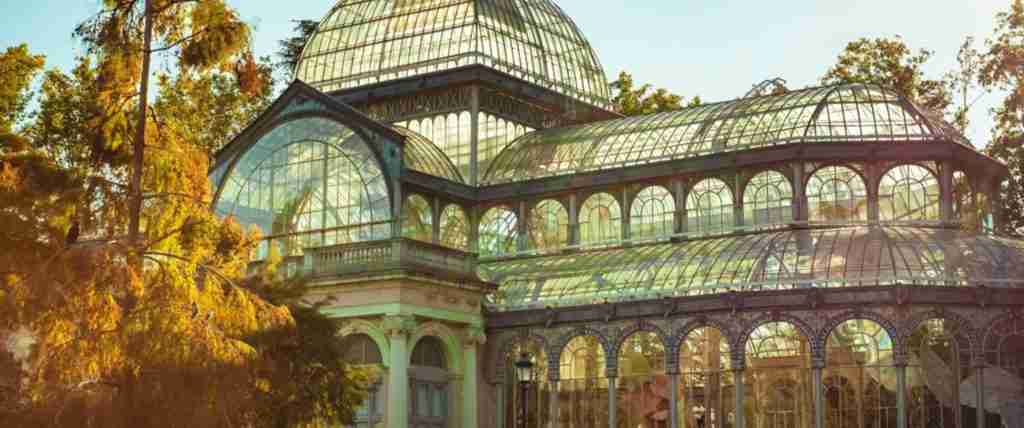
Visit the Palacio de Cristal (Crystal Palace), a stunning 1887 glass pavilion hosting rotating contemporary art installations, free admission making it Madrid’s best architectural surprise. The building itself—a Victorian-era iron and glass structure inspired by London’s Crystal Palace—rivals any exhibition contents. Walk to the Fallen Angel statue, one of few monuments worldwide depicting Lucifer, situated precisely at Madrid’s 666-meter elevation above sea level according to local legend (actual elevation: 650 meters, but the mythology persists).
The Rosaleda rose garden blooms spectacularly May-June with 4,000 rose bushes creating fragrant corridors, though other seasons reveal only thorny branches. Walk Paseo de las Estatuas viewing statues of Spanish monarchs originally intended for the Royal Palace but relocated after their artistic quality proved disappointing. Street musicians, portrait painters, palm readers, and buskers create festive atmosphere especially weekend afternoons. Budget 90-120 minutes for relaxed park wandering, or extend time indefinitely if weather permits as Madrileños use Retiro for extended afternoon socialization.
Evening: La Latina Tapas Introduction 2026
Take metro Line 2 from Retiro station to La Latina station (15 minutes, covered by Tourist Travel Pass). La Latina neighborhood represents Madrid’s most authentic tapas zone where locals gather Sunday afternoons and weeknights at historic bars serving traditional small plates. Unlike Basque pintxos (elaborate toothpick-speared preparations), Madrid tapas remain simple—slice of tortilla española, jamón serrano on bread, patatas bravas with spicy sauce, croquetas, or boquerones (marinated anchovies).
Begin at Juana La Loca (Plaza Puerta de Moros 4) famous for thick potato tortilla slices at €4-5. Continue to Casa Lucio (Cava Baja 35) where Spain’s royal family dines on huevos estrellados (broken eggs over fries) at €14. Almendro 13 (Calle Almendro 13) serves excellent bravas and salmorejo at €6-8 per plate. The traditional approach involves ordering 1-2 tapas at each bar, standing at counters, then moving to the next establishment rather than settling for full meals at single locations. This creates Spanish social dining’s distinctive energy—conversation, movement, wine, repeat.
Calle Cava Baja concentrates dozens of tapas bars within two blocks, becoming extremely crowded Friday-Saturday evenings when reservations help at sit-down restaurants though standing bars accept no bookings. Expect €25-35 per person for satisfying tapas circuits including drinks (wine €3-4 per glass, beer €3-3.50, vermouth €4-5). La Latina’s Sunday Rastro flea market (09:00-15:00) transforms the neighborhood into Madrid’s liveliest outdoor scene—consider returning Day 4 if visiting Friday-Monday.
Day 1 Transportation and Costs 2026
Transport: Purchase 3-day Tourist Travel Pass at airport (€23 for Zone A) covering all metro, bus, and cercanías trains including airport transfer for Days 1-3. This single purchase eliminates individual ticket costs for three full days.
Attractions: Prado Museum €15 plus €2 online booking fee. Retiro Park free. Crystal Palace free. Total attractions: €17 per person.
Meals: Breakfast at hotel or café (€8-12), menu del día lunch (€15-20), tapas dinner circuit (€25-35). Total meals: €48-67 per person.
Day 1 total cost: €88-107 per person excluding accommodation (includes 3-day Tourist Travel Pass €23, Prado Museum €17, meals €48-67).
Day 2: Royal Palace and Central Madrid 2026
Morning: Royal Palace Extended Visit 2026
Arrive at the Royal Palace (Palacio Real) at 10:00 using pre-purchased tickets (€15 plus €1 online booking fee). Wednesday and Thursday mornings see lighter crowds than weekends when Spanish families visit. The palace, Europe’s largest functioning royal residence by floor area with 3,418 rooms, served as the Spanish monarchy’s official residence from 1738 until 1931 when Alfonso XIII departed during the Second Republic. Today it hosts state ceremonies while the royal family resides in the modest Palacio de la Zarzuela outside Madrid.
The self-guided route tours approximately 50 rooms across the palace’s main floor showcasing Baroque and Rococo opulence. The Throne Room’s red velvet walls, gilded mirrors, and Tiepolo ceiling frescoes demonstrate absolute monarchy’s peak expression. The Gasparini Room’s chinoiserie decoration—Chinese-inspired porcelain and silk panels—reflects 18th-century European taste for exotic aesthetics. The Porcelain Room displays 18th-century Buen Retiro factory plates covering walls floor-to-ceiling, creating one of Madrid’s most photographed spaces (photography permitted without flash).
The Royal Armory houses medieval armor and weapons including Charles V’s parade armor and El Cid’s sword (according to palace guides, though historians debate authenticity). The Crown Jewels and royal plate collections fill additional rooms with ceremonial objects rarely displayed publicly. Allocate 2-3 hours for thorough exploration including the Royal Armory, Pharmacy displaying historic medicine bottles and equipment, and gardens if weather permits. Audio guides (€5) provide room-by-room explanations though English signage adequately explains major spaces.
Exit through the Sabatini Gardens descending toward Plaza de Oriente for panoramic palace views. The gardens open free to visitors providing peaceful green space contrasting the palace’s formal grandeur. Walk five minutes to the Almudena Cathedral, Madrid’s Catholic cathedral consecrated 1993 after century-long construction. The relatively recent completion explains its jarring stylistic contrast with surrounding historic architecture—neo-Gothic exterior mixed with modern interior aesthetics. Admission is free to the cathedral though the museum (€6) adds minimal value unless specifically interested in ecclesiastical history.
Late Morning: Sol and Gran Vía Orientation 2026
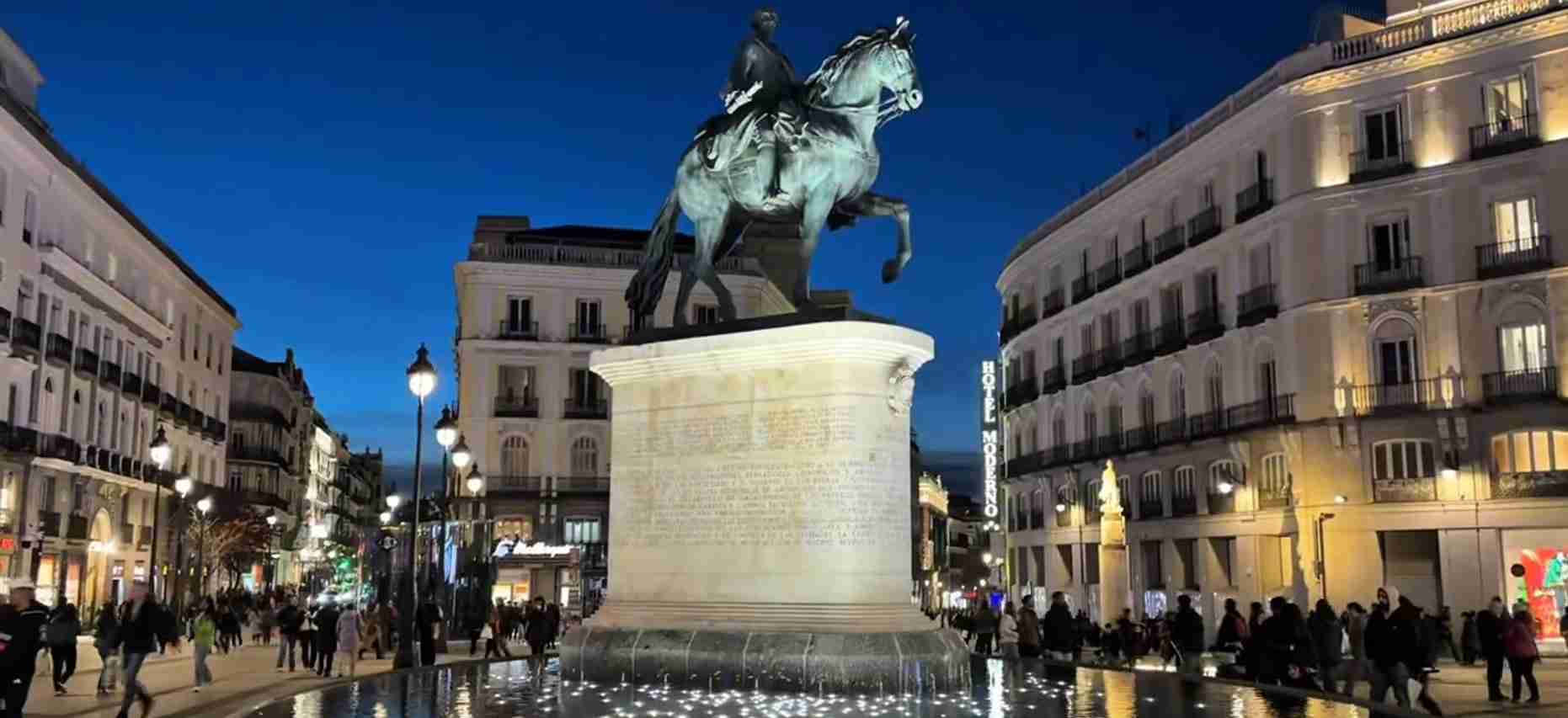
Walk ten minutes from the Royal Palace through Plaza de Oriente to Puerta del Sol, Madrid’s geographic and symbolic center point from which all Spanish road distances measure. The “Kilometer Zero” plaque embedded in the plaza’s pavement marks this origin. The bronze Bear and Strawberry Tree statue symbolizes Madrid’s coat of arms. Sol pulses with street performers, political demonstrations, tourist crowds, and pickpockets requiring vigilant bag awareness. The Christmas season transforms Sol into Spain’s premier holiday spectacle with elaborate light displays and a massive outdoor Christmas market.
Continue north on Calle Preciados to Gran Vía, Madrid’s premier commercial boulevard constructed 1910-1931 through historic neighborhoods razed for the project. The street’s early 20th-century architecture mixing Art Nouveau, Art Deco, and early skyscraper styles creates distinctive skylines when viewed from Plaza de España. Metropolis Building’s gilded dome and winged statues anchor the Gran Vía-Alcalá intersection as Madrid’s most photographed architectural landmark. Major international retail chains (Zara, H&M, Primark) line Gran Vía alongside historic theaters, cinemas, and hotels.
Stop at Chocolatería San Ginés (Pasadizo de San Ginés 5) for churros con chocolate, Madrid’s essential breakfast-or-anytime treat. The 1894 establishment operates 24 hours serving fresh churros (fried dough strips) with thick hot chocolate for dipping at €4-6. Crowds peak Sunday mornings after Saturday night partying when Madrileños finish their evenings here before returning home. Budget 30-45 minutes for Sol-Gran Vía orientation plus churros stop before lunch.
Lunch: Traditional Madrileño Restaurants 2026
Seek authentic Madrileño cuisine at traditional restaurants near Sol serving specialties like cocido madrileño (chickpea stew), callos (tripe), and rabo de toro (oxtail). Lhardy (Carrera de San Jerónimo 8) has operated since 1839 as Madrid’s oldest restaurant serving €18-25 menu del día lunches in ground-floor casual dining or €50-80 upstairs formal service. Casa Labra (Calle Tetuán 12) specializes in cod croquettes (€2.50 each) and draft beer since 1860, ideal for light lunches at €10-15 standing at marble counters.
Alternatively, explore the Mercado de San Miguel (Plaza San Miguel), a renovated 1916 iron-and-glass market hall now functioning as a gourmet food court. While undeniably touristy with prices 50% higher than neighborhood markets, the quality remains high with over 30 vendors selling Iberian ham, fresh oysters, Spanish cheeses, vermouth, croquettes, and pastries. Budget €15-25 per person for sampling multiple counters. The market opens 10:00-midnight daily providing all-day dining flexibility.
Afternoon: Templo de Debod and Plaza de España 2026
Walk or metro to Templo de Debod, an authentic 4th-century BC Egyptian temple reconstructed in Madrid’s Parque del Oeste. Egypt gifted the temple to Spain in 1968 thanking Spanish engineers who helped save Abu Simbel during the Aswan Dam construction. The temple sits on elevated ground overlooking Casa de Campo park creating spectacular sunset photography opportunities with the Royal Palace visible in the background. Entry is free though interior visits require timed reservations made online same-day or the prior day—exterior viewing suffices for most visitors.
The temple’s surroundings transform into impromptu social gathering spaces during summer evenings when locals bring wine, snacks, and guitars for sunset sessions. This epitomizes Madrid’s al fresco culture where public parks become living rooms. Allocate 45-60 minutes here including photography time and park wandering.
Descend to Plaza de España, Madrid’s largest square dominated by the controversial 1948 Cervantes Monument featuring Don Quixote and Sancho Panza statues. The plaza underwent major renovation completed in 2021 creating pedestrian-friendly spaces replacing previous traffic-choked roundabouts. The vertical Edificio España and Torre de Madrid skyscrapers frame the plaza’s northern edge. While the square itself holds minimal tourist interest beyond monument photography, the surrounding area offers shopping at El Corte Inglés department store and access to Malasaña neighborhood for evening activities.
Evening: Flamenco Show Experience 2026
Attend an authentic flamenco performance at a quality tablao (flamenco venue), Madrid’s unique contribution to Spanish cultural traditions despite flamenco’s Andalusian origins. Las Carboneras (Plaza Conde de Miranda 1) offers intimate 75-minute shows in a 90-person capacity venue with professional dancers, guitarists, and singers at €38 show-only or €55 with drinks and tapas. Corral de la Morería (Calle Morería 17), operating since 1956, attracts international acclaim despite higher prices (€45 show-only, €70-85 with dinner). Book online 1-2 weeks ahead for preferred showtimes—21:30-22:30 shows work best after full dinner elsewhere.
Distinguish authentic tablaos from tourist dinner-show packages. Quality venues seat 80-120 people maximum creating intimate atmospheres where dancers’ foot-stamping reverberates physically. Professional performers display technical virtuosity and emotional duende (soul/passion) absent from arena-style tourist shows. The 10-15 minute individual dance segments alternate styles (soleá, alegrías, bulerías) demonstrating flamenco’s diversity beyond the popular image of women in polka-dot dresses.
Alternatively, skip expensive tablaos and explore Madrid’s live music scene in Malasaña or Chueca neighborhoods where bars host free or €5-10 cover concerts featuring rock, jazz, indie, or electronic music depending on venue. This suits younger travelers or those prioritizing contemporary Madrid culture over traditional tourist experiences.
Day 2 Transportation and Costs 2026
Transport: All metro and walking covered by 3-day Tourist Travel Pass purchased Day 1. Total additional transport: €0.
Attractions: Royal Palace €15 plus €1 online booking fee, Almudena Cathedral free, cathedral museum €6 optional, Templo de Debod free. Total attractions: €16 per person (€22 with cathedral museum).
Meals: Breakfast (€8-12), San Ginés churros (€4-6), lunch at Mercado San Miguel or restaurant (€15-25), flamenco show with tapas (€38-55 show only, €55-85 with food). Total meals and entertainment: €65-128 per person depending on flamenco option selected.
Day 2 total cost: €81-150 per person excluding accommodation.
Day 3: Reina Sofía and Neighborhood Exploration 2026
Morning: Reina Sofía Museum and Guernica 2026
Arrive at the Museo Nacional Centro de Arte Reina Sofía at 10:00 with pre-purchased tickets (€12 general admission, check official website for current rates). This former 18th-century hospital converted to contemporary art museum houses Spain’s premier 20th and 21st century collection. The permanent collection occupies buildings 1 and 2 across four floors, requiring strategic navigation as the museum’s scale rivals the Prado.
Proceed directly to the second floor of Building 2 to view Picasso’s Guernica before crowds arrive. This massive 1937 canvas depicting German bombing of the Basque town Guernica during the Spanish Civil War represents 20th-century art’s most powerful political statement. Picasso refused to allow the painting to return to Spain until democracy replaced Franco’s dictatorship—it finally arrived in Madrid in 1981. Surrounding rooms display Picasso’s preparatory sketches revealing the composition’s evolution, enhancing appreciation for the final work’s power. Allocate 30-45 minutes in the Guernica rooms—the painting demands extended contemplation impossible during rushed museum marathons.
The Reina Sofía collection extends far beyond Guernica with comprehensive Spanish avant-garde coverage. Joan Miró’s surrealist paintings and sculptures fill multiple rooms with biomorphic forms and primary colors. Salvador Dalí’s dreamscapes including The Great Masturbator demonstrate technical virtuosity serving psychological obsessions. Juan Gris’s Cubist still lifes, Luis Buñuel’s surrealist films, and Spanish informalist painters like Antoni Tàpies provide context for Spain’s remarkable 20th-century artistic output.
The museum’s contemporary wings display rotating exhibitions of international art from 1945-present including video installations, conceptual art, and multimedia works. These prove hit-or-miss depending on current shows and personal taste—consult the museum website before visiting to evaluate temporary exhibition interest. Allocate 2-3 hours total at Reina Sofía, understanding that contemporary art galleries generate different viewing rhythms than Old Masters museums where each painting rewards extended looking.
Lunch: Lavapiés Multicultural Dining 2026
Walk five minutes from Reina Sofía to Lavapiés, Madrid’s most multicultural neighborhood where immigrant communities from India, China, Morocco, and Latin America create diverse culinary landscapes absent elsewhere in the city. Lavapiés transformed from working-class Spanish neighborhood to immigrant hub over recent decades, facing ongoing gentrification pressures as real estate prices rise. The result: authentic ethnic restaurants alongside hip cafés catering to young artists and students moving in.
Try Indian cuisine at Indian Restaurant Namaste Madrid (Calle Cabestreros 3) offering vegetarian thalis at €9-12 or Tandoori Garden (Calle Argumosa 31) serving Northern Indian specialties at €12-16. Moroccan restaurants including Tetería Taza de Menta (Calle Argumosa 20) provide tagines and couscous at €10-15 in cushioned interior rooms decorated with lanterns and carpets. Chinese restaurants concentration near Plaza Lavapiés offers authentic Sichuan and Cantonese dishes at €8-14, vastly superior to typical Western “Chinese” food.
The multicultural character that makes Lavapiés fascinating also generates gentrification tensions—respect residents’ neighborhood rather than treating it as a tourist zoo. Support small ethnic restaurants over chain establishments, don’t photograph people without permission, and understand that you’re visiting someone’s home neighborhood, not a theme park.
Afternoon: La Latina Market and Cava Baja 2026
Return to La Latina neighborhood (visited briefly Day 1 evening) for daylight exploration. El Rastro flea market operates Sundays 09:00-15:00 along Calle Ribera de Curtidores and surrounding streets, becoming Madrid’s liveliest weekly gathering. Over 1,000 vendors sell antiques, vintage clothing, vinyl records, handmade jewelry, African crafts, secondhand books, and tourist souvenirs across dozens of blocks. Quality varies dramatically from genuine antiques to mass-produced imports—haggling is expected and prices typically drop 20-30% from initial quotes.
Pickpockets work El Rastro crowds systematically—secure bags in front position, avoid carrying excessive cash or valuables, and maintain awareness in dense throngs. The market’s energy and chaos either exhilarate or overwhelm depending on personal tolerance for crowds and noise. Allocate 60-90 minutes for Rastro browsing if visiting on Sunday, understanding that most purchases serve as inexpensive souvenirs rather than valuable finds.
On non-Sunday days, explore La Latina’s streets independently. Calle Cava Baja contains restored 17th-century buildings now housing tapas bars, wine shops, and restaurants. Basílica de San Francisco el Grande features a massive 33-meter diameter dome rivaling Rome’s great churches, though the exterior’s severe neoclassical style attracts fewer visitors than ornate Baroque churches elsewhere. Entry (€5) includes a small museum and rooftop access offering panoramic Madrid views.
Evening: Malasaña Neighborhood Culture 2026
Metro to Tribunal station and explore Malasaña, Madrid’s hipster-bohemian quarter centered on Plaza del Dos de Mayo. This neighborhood became countercultural epicenter during La Movida Madrileña, the 1980s cultural explosion following Franco’s death when Madrid suddenly experienced freedom after 40 years of dictatorship. Pedro Almodóvar’s early films captured La Movida’s energy—creative chaos, sexual liberation, all-night partying, and artistic experimentation.
Today’s Malasaña balances 1980s nostalgia with contemporary creative culture. Vintage shops sell retro clothing and vinyl records at €15-50. Specialty coffee shops serve €3-4 lattes to laptop-working creatives. Street art covers building walls with tags, murals, and political messages. Bookshops like La Buena Vida (Calle Lavapiés 5) stock Spanish literature and vinyl collections. Small galleries display emerging artists.
Dine at Casa Julio (Calle Madera 37), a tiny bar famous for the city’s best croquettes at €1.50 each—order 6-8 varieties standing at the counter alongside locals. Bodega La Ardosa (Calle Colón 13) operating since 1892 serves excellent draft beer and traditional tapas in tile-decorated interior. For sit-down dinners, Ojalá (Calle San Andrés 1) offers creative Mediterranean cuisine at €15-25 per person in relaxed atmosphere with sandy-beach-floor back room.
Malasaña nightlife intensifies after 23:00 when bars fill with diverse crowds spanning university students, artists, LGBTQ+ community, and aging punk rockers nostalgic for 1980s glory days. Explore bars along Calle San Vicente Ferrer and Plaza del Dos de Mayo—entry remains free most places with beers €3-4 and simple cocktails €7-9. Live music venues charge €5-15 covers depending on acts. The neighborhood maintains authentic character despite gentrification pressures as established residents and artists fight to preserve Malasaña’s creative identity.
Day 3 Transportation and Costs 2026
Transport: All metro and walking covered by 3-day Tourist Travel Pass purchased Day 1. Total additional transport: €0.
Attractions: Reina Sofía Museum €12, Basílica San Francisco el Grande €5 optional, Rastro flea market free (purchases at personal discretion). Total attractions: €12-17 per person.
Meals: Breakfast (€8-12), Lavapiés ethnic lunch (€10-16), afternoon snacks/drinks (€5-10), Malasaña dinner and drinks (€20-35). Total meals: €43-73 per person.
Day 3 total cost: €55-90 per person excluding accommodation.
Day 4: Toledo Day Trip or Madrid Neighborhood Deep Dive 2026
Option A: Toledo UNESCO Day Trip 2026
Take the 08:00 or 09:00 AVE high-speed train from Madrid Atocha station to Toledo (33 minutes journey time, €12-16 each way depending on booking timing, round-trip €21-30). Purchase tickets through renfe.com 1-2 weeks ahead for best rates or €25-35 at station same-day. Alternatively, book organized day tours (€60-90 including guide, transport, and cathedral entry) through GetYourGuide or Viator if preferring structured experiences over independent exploration.
Toledo, Spain’s former imperial capital and UNESCO World Heritage Site, preserves medieval character within intact city walls crowning hills above the Tagus River. The city’s layered Jewish-Christian-Muslim heritage creates unique cultural fusion visible in architecture, cuisine, and crafts. From the train station, take bus 5, 6, 61 or 62 to Plaza de Zocodover (€1.40, 10 minutes) at the historic quarter’s heart, or walk uphill 25 minutes through modern neighborhoods to medieval gates.
Begin at the Cathedral of Toledo, Spain’s Primate church and Gothic architectural masterpiece constructed 1226-1493. Entry (€12.50 including audio guide) provides access to the massive nave, El Greco paintings including The Spoliation, choir stalls with biblical scenes carved in walnut, and the transparent—a Baroque altarpiece opening to illuminate the reserved sacrament. Allocate 60-90 minutes for cathedral exploration as it rivals European great cathedrals in scale and artistic wealth.
Visit the Sinagoga del Tránsito and Sephardic Museum (€3) displaying Spain’s Jewish heritage before the 1492 expulsion. The 14th-century synagogue’s Mudéjar architecture—Christian construction using Islamic decorative techniques—exemplifies Toledo’s cultural fusion. Walk to San Juan de los Reyes monastery (€3), built by Catholic Monarchs Ferdinand and Isabella, featuring extraordinary Isabelline Gothic cloister and chains from freed Christian captives hanging on exterior walls.
Explore Toledo’s steep medieval streets discovering workshops selling damascene metalwork (steel inlaid with gold and silver threads, a Moorish technique preserved here), marzipan shaped into colorful fruits and figures (Toledo’s sweet specialty since medieval times), and swords ranging from €30 tourist replicas to €500+ functional weapons. Stop for lunch at Adolfo Restaurante (Calle Hombre de Palo 7, €25-40 per person) or simpler Taberna El Botero (Plaza de la Magdalena 8, €15-25) serving Castilian cuisine.
Return trains depart Toledo hourly through evening with 17:00-18:00 departures providing optimal timing for 19:00-20:00 Madrid arrival. The day trip loses 1.5 hours minimum to train journeys plus time navigating to/from stations, but delivers dramatically different experiences from urban Madrid—a preserved medieval cityscape demonstrating Spain’s complex cultural history. Choose Toledo if medieval architecture and Spanish history appeal strongly, skip if preferring contemporary Madrid culture or already visiting other UNESCO Spanish cities on the same trip.
Option B: Thyssen-Bornemisza and Malasaña Deep Dive 2026
Dedicate Day 4 entirely to Madrid neighborhoods and secondary attractions for visitors choosing deeper city immersion over Toledo excursion. Begin at the Thyssen-Bornemisza Museum (€13 general admission, check official website for current rates), completing Madrid’s “Golden Triangle” with morning viewing when energy remains high. This private collection assembled by the Thyssen-Bornemisza family fills chronological and stylistic gaps between the Prado’s Old Masters and Reina Sofía’s modern focus.
The museum displays European painting from 13th-century Italian Primitives through Pop Art in chronological arrangement facilitating art history education. German Expressionism, Russian Constructivism, and American Abstract Expressionism receive coverage absent from other Madrid museums. The collection includes Caravaggio, Rubens, Monet, Van Gogh, Kandinsky, Hopper, and Rothko among 1,000+ works displayed. Allocate 2 hours for comprehensive viewing or 60-90 minutes for highlights if museum fatigue has set in after three days of intensive art immersion.
Walk through Chueca neighborhood, Madrid’s LGBTQ+ district centered on Plaza de Chueca. Rainbow crosswalks signal the area’s identity pride, with June’s Pride Madrid (Orgullo) attracting 2+ million participants making it Europe’s largest LGBTQ+ celebration. Restaurants, bars, clubs, specialty shops, and boutiques create village-within-city atmosphere. Mercado de San Antón (Calle Augusto Figueroa 24), a renovated three-floor market hall, offers lunch options at €12-20 from various food counters, plus rooftop terrace overlooking the neighborhood.
For football enthusiasts, visit Santiago Bernabéu Stadium, Real Madrid’s legendary home ground. Stadium tours (€25, book through realmadrid.com) provide access to presidential box, players’ tunnel, trophy room displaying 15 European Cups and countless other honors, and pitch-side views of the renovated 81,000-capacity venue. Allocate 90-120 minutes for self-guided tours using multimedia guides. The stadium sits on metro Line 10 at Santiago Bernabéu station providing easy access. Non-football fans skip this attraction as it offers nothing beyond sports significance.
Alternatively, explore Salamanca neighborhood, Madrid’s most upscale district with designer boutiques lining Calle Serrano and Calle Ortega y Gasset. This neighborhood lacks major tourist attractions but provides authentic glimpses of affluent Madrid life—ladies in Chanel lunching at outdoor terraces, chauffeurs waiting outside exclusive shops, perfectly manicured poodles on jeweled leashes. The Museo Lázaro Galdiano (€6) displays eclectic private art collection in Belle Époque mansion if seeking additional museum options.
Evening: Final Madrid Night 2026
Conclude the Madrid visit with dinner at a quality restaurant elevating traditional cuisine beyond tapas bars. Casa Botín (Calle Cuchilleros 17) claims status as world’s oldest operating restaurant per Guinness World Records (founded 1725), specializing in cochinillo asado (roast suckling pig) at €24-30 per person. Sobrino de Botín (similar name, different establishment) creates tourist confusion—verify the authentic address. Alternatively, Taberna La Bola (Calle Bola 5) serves classic cocido madrileño in 1870s-era dining rooms at €25 per person.
For contemporary Spanish cuisine, seek restaurants earning Michelin recognition without requiring Michelin budgets. La Tasquería (Calle Duque de Rivas 3) offers market-based tasting menus at €48-68. Vinoteca Moratín (Calle Moratín 36) serves creative small plates at €25-40 per person. These establishments demonstrate modern Spanish cooking’s evolution beyond traditional preparations while maintaining ingredient quality and regional identity.
End the evening at a rooftop bar viewing Madrid’s nighttime cityscape. Círculo de Bellas Artes (Calle Alcalá 42, €4 rooftop entrance fee) offers 360-degree views including Gran Vía, Telefónica Building, and distant Guadarrama Mountains. Nice To Meet You rooftop at Dear Hotel (Plaza Santa Ana) serves cocktails at €12-16 with Puerta del Sol views. These spaces fill weekends requiring early arrival (19:00-20:00) for optimal positions or table reservations (€10-20 minimum consumption) if unwilling to stand.
Day 4 Transportation and Costs 2026
Option A (Toledo): Train round-trip €21-30, Toledo city bus €2.80 round-trip, Toledo attractions (cathedral €12.50, synagogue €3, San Juan de los Reyes €3) total €18.50. Total Option A attractions and transport: €42-51 per person.
Option A Meals: Breakfast (€8-12), Toledo lunch (€15-25), final Madrid dinner (€25-40). Total Option A meals: €48-77 per person.
Option A Day 4 total: €90-128 per person excluding accommodation.
Option B (Madrid): Metro day pass €8.40 (Tourist Travel Pass expired after 3 days), Thyssen-Bornemisza €13, Santiago Bernabéu tour €25 optional, rooftop bar entrance €4-10. Total Option B attractions and transport: €25-56 per person depending on selections.
Option B Meals: Breakfast (€8-12), Chueca lunch (€12-20), final dinner (€25-48). Total Option B meals: €45-80 per person.
Option B Day 4 total: €70-136 per person excluding accommodation.
Complete Budget Breakdown 4-Day Madrid Trip 2026
Accommodation Costs 3 Nights 2026
Budget travelers choosing hostel dormitories at €25-45 per night total €75-135 for three nights. Budget hotels at €60-90 nightly total €180-270. Mid-range travelers at €100-180 per night total €300-540 for comfortable central locations (double occupancy). Luxury properties exceeding €250 nightly total €750-1,350+ for three nights. These ranges assume double occupancy for hotels with per-person costs half the room rates. Solo travelers in hostels pay the dormitory bed rate (€75-135 total) or full private room rates if avoiding shared accommodations.
Daily Costs Recap 4 Days 2026
Day 1: €88-107 per person including 3-day Tourist Travel Pass purchase. Day 2: €81-150 per person. Day 3: €55-90 per person. Day 4 Option A (Toledo): €90-128 per person. Day 4 Option B (Madrid only): €70-136 per person. 4-day total excluding accommodation: €314-475 per person with Toledo trip (calculation: 88+81+55+90 = 314 low, 107+150+90+128 = 475 high), or €294-483 per person with Madrid-only Day 4 (calculation: 88+81+55+70 = 294 low, 107+150+90+136 = 483 high).
Total Trip Cost Complete Breakdown 2026
Budget calculation with Toledo day trip: Accommodation €75-135 (hostel beds) or €180-270 (budget hotels), daily costs €314-475 for four days (calculation: Day 1 €88-107 + Day 2 €81-150 + Day 3 €55-90 + Day 4 Toledo €90-128 = €314-475), utilizing menu del día deals and free evening museum hours. Budget total: €389-610 per person with hostel accommodation (calculation: €75-135 + €314-475), or €494-745 with budget hotels (calculation: €180-270 + €314-475).
Mid-range calculation with Toledo: Accommodation €300-540 (comfortable central hotels for 3 nights at €100-180 per night), daily costs €314-475 with standard restaurant dining and full-price attractions. Mid-range total: €614-1,015 per person (calculation: €300-540 + €314-475).
Luxury calculation with Toledo: Accommodation €750-1,350 (premium hotels for 3 nights at €250-450 per night), daily costs up to €475 maximum for elevated dining, private tours, and comprehensive museums. Luxury total: €1,225-1,825+ per person (calculation: €750-1,350 + €475).
Additional costs: International flights vary dramatically by origin (€100-800 European cities, €400-1,200 North America), travel insurance (€25-60 for 4-day coverage), airport transfers if avoiding metro (€30 fixed-rate taxi from Barajas), miscellaneous expenses including souvenirs and snacks (€30-80 total). Complete trip costs including flights range €520-1,490 for budget travelers (calculation: €389-610 base trip + €100-800 flights + €25-60 insurance + €30-80 misc), €840-2,155 for mid-range visitors (calculation: €614-1,015 base trip + €100-800 flights + €25-60 insurance + €30-80 misc), and €1,380-2,915+ for luxury travelers (calculation: €1,225-1,825 base trip + €100-800 flights + €25-60 insurance + €30-80 misc) departing European cities.
Practical Information Madrid 2026
Language and Communication 2026
Spanish (Castilian) is Madrid’s primary language with English proficiency varying widely. Hotels, major museums, and tourist restaurants employ English-speaking staff ensuring smooth basic interactions. Neighborhood tapas bars, local markets, and residential area shops rarely offer English assistance requiring basic Spanish phrases or translation apps. Learn essential Spanish: hola (hello), gracias (thank you), por favor (please), la cuenta (the check), dónde está (where is), cuánto cuesta (how much), no entiendo (I don’t understand).
Download Google Translate offline Spanish-English dictionary before arrival for menu translation and basic communication when cellular data proves unavailable. The app’s camera translation feature converts Spanish text to English in real-time, invaluable for menus and signs. Most Madrileños under 40 studied English in school though confidence speaking varies—many understand more than they speak, making simple English combined with patient gestures functional for basic needs. Attempting Spanish, even poorly, generates goodwill as locals appreciate foreigners’ efforts.
Safety and Security Considerations 2026
Madrid ranks among Europe’s safest major capitals with violent crime exceptionally rare in tourist areas. Petty theft including pickpocketing concentrates around Puerta del Sol, Gran Vía, crowded metro stations (especially Line 1 between Sol and Atocha), and the Rastro flea market where organized groups systematically target tourists. Carry bags in front position with zippers closed, avoid phone use while walking on crowded streets, never leave belongings unattended at cafés, and keep wallets in front pockets or secured interior jacket pockets rather than back pants pockets.
Common scams include friendly strangers offering to help with metro tickets then requesting “favors” requiring money, street game operators running shell games or card tricks designed for guaranteed tourist losses, and taxi drivers claiming meters are broken necessitating flat rates 3-4 times normal fares. Decline all street interactions from overly friendly strangers in tourist zones, avoid street gambling regardless of appearing winnable, and insist taxi drivers activate meters or exit the vehicle. Uber operates in Madrid providing transparent pricing alternatives eliminating meter disputes.
The city maintains extensive police presence in central districts with dedicated tourist police offering English assistance near major attractions. Solo travelers, families, and elderly visitors navigate the city safely day and night in well-lit central neighborhoods. Late-night safety remains high in traditional tapas districts like La Latina and nightlife zones like Malasaña where locals create natural oversight through active evening culture. Empty streets in any city warrant caution—stick to main thoroughfares and populated areas when returning to accommodations after midnight.
Health and Hygiene Standards 2026
Madrid tap water meets European Union standards and Madrileños drink it routinely. Visitors sometimes experience mild digestive adjustment not because of contamination but due to different mineral content and chlorination levels compared to home countries. Bottled water costs €0.50-1.50 at supermarkets or €2-3 at restaurants and cafés. Restaurants serve tap water in carafes when requested though bottled water sales generate revenue making some servers resistant.
Public restrooms in Madrid range from excellent in museums and hotels to basic in train stations and markets. Department stores including El Corte Inglés provide reliable clean facilities. Cafés and restaurants typically restrict restrooms to paying customers—order a coffee (€1.50-2.50) for legitimate access rather than attempting to sneak usage. Carry pocket tissue packets as toilet paper supplies vary in public facilities.
Pharmacies (farmacias, marked by green crosses) stock comprehensive medications including many items requiring prescriptions in other countries available over-counter in Spain at lower prices. Pharmacists speak English in central areas and provide professional medical guidance for minor ailments. Spanish healthcare ranks among Europe’s best with public hospitals treating emergencies regardless of insurance status. Travel insurance covering medical emergencies remains advisable as non-urgent care can generate significant bills for uninsured visitors. EU citizens’ European Health Insurance Cards (EHIC) provide coverage at Spanish public hospitals.
Frequently Asked Questions Madrid 4-Day Itinerary 2026
Can I visit Madrid successfully without speaking Spanish?
Yes, though basic Spanish phrases enhance experiences significantly. Central Madrid’s tourism infrastructure accommodates English speakers with hotel staff, major museum personnel, and tourist-oriented restaurants employing English-speaking employees. Google Translate offline dictionary, translation apps, and patience enable navigation and basic interactions even with zero Spanish knowledge. However, authentic neighborhood tapas bars, local markets, and residential area shops rarely offer English assistance—these experiences require gestures, pointing at desired items, or accepting that miscommunication occasionally occurs. Many travelers find limited Spanish communication part of travel’s charm rather than frustrating obstacle. Download translation apps before arrival, learn 10-15 essential phrases, and maintain flexible attitudes when language barriers arise.
What are the biggest mistakes first-time Madrid visitors make?
The most common errors include attempting both the Prado and Reina Sofía in one day creating museum exhaustion that diminishes appreciation of extraordinary collections, ignoring menu del día lunch deals spending €30-40 on mediocre dinners when €15-20 three-course lunches deliver better value and authenticity, and remaining exclusively in Sol-Gran Vía tourist zones missing authentic Madrid in neighborhoods like Malasaña, La Latina, and Lavapiés. Additional mistakes: over-relying on taxis in traffic-congested areas instead of efficient metro making journeys longer and more expensive, failing to book Prado Museum tickets advance resulting in 60-90 minute queue waits, attempting afternoon sightseeing during siesta (14:00-17:00) when many shops close and heat peaks, and dining before 21:00 when restaurants open for locals making visitors feel rushed through meals. Strategic planning avoiding these errors substantially improves Madrid experiences.
How does Madrid’s siesta culture affect daily planning?
Traditional siesta—afternoon closing of shops and businesses during 14:00-17:00 heat—has declined significantly in modern Madrid with major retail chains, museums, and restaurants maintaining continuous hours. However, smaller shops in residential neighborhoods, family-owned businesses, and some traditional restaurants still close afternoons, reopening 17:00-17:30 for evening hours extending until 20:00-21:00. Plan morning museum visits and afternoon park time or seated lunches rather than shopping when navigating siesta-observing areas. The cultural shift toward continuous schedules means siesta affects visitors less than guidebooks suggest, but understanding that Madrid’s rhythm differs from Northern European or North American patterns prevents frustration when discovering desired neighborhood shops closed 15:00-17:00. Embrace Spanish timing rather than fighting it—leisurely 90-120 minute lunches, late dinners after 21:00, and evening strolls until midnight align with local patterns creating more authentic experiences.
Is the Madrid City Pass worth purchasing for a 4-day visit?
The Madrid City Pass (€95-135 depending on duration) provides value only when visiting 4+ included attractions intensively. The pass includes Prado Museum (€17 standalone), Royal Palace (€16), Reina Sofía (€12), Thyssen-Bornemisza (€13), plus 45+ additional attractions and unlimited public transport. However, the 3-day Tourist Travel Pass (€23) plus individual tickets for major museums totals €81-88, saving €7-47 versus the City Pass while maintaining flexibility. The City Pass suits visitors planning extensive museum circuits including secondary venues like Archaeological Museum, Cerralbo Museum, and Sorolla Museum. Most first-time 4-day visitors attending only major sites (Prado, Royal Palace, Reina Sofía, possibly Thyssen) save money purchasing tickets individually. Calculate your specific planned attractions before deciding—the pass generates value only when actually visiting its included venues, not based on potential theoretical savings for attractions you ultimately skip due to time constraints or changing interests.
Should I add a second day trip beyond Toledo or focus entirely on Madrid?
Focus on Madrid’s depth rather than adding second day trips during 4-day visits. Toledo alone consumes an entire day with 1.5 hours commuting plus cathedral, museums, and medieval street exploration. Adding Segovia, El Escorial, or Aranjuez forces rushed Madrid experiences missing neighborhoods, tapas culture, and secondary museums that reward extended city immersion. Visitors returning to Spain for future trips benefit more from thorough Madrid understanding establishing foundation for appreciating Spanish culture, art, and history rather than superficial multi-city checklists generating vague memories of multiple places. If historical day trips appeal strongly, choose one (Toledo recommended for first-time Spanish visitors) and dedicate other days to Madrid’s depth. Extended Spain trips (10+ days) accommodate multiple day trips from Madrid without sacrificing city exploration, but 4-day visits require focus. Make Madrid your focus or make day trips your focus—attempting both dilutes both experiences.
How much time should I allocate for the Prado Museum to see its highlights?
Allocate 3-4 hours minimum for engaged Prado viewing covering essential masterworks without rushing. This timeframe permits visiting all major galleries (Velázquez, Goya, Bosch, El Greco, Flemish and Italian collections) with adequate time studying key paintings like Las Meninas (allocate 20 minutes for this single work), The Third of May 1808, The Garden of Earthly Delights, and Goya’s Black Paintings. Attempting the Prado in 90 minutes means superficial glimpses appropriate only for visitors lacking genuine art interest but feeling obligated to attend. The museum’s 7,000+ painting collection and 1,300 works on permanent display demand selective viewing—target specific galleries matching personal interests rather than attempting comprehensive coverage generating aesthetic exhaustion. Arrive 10:00-11:00 when morning energy peaks and crowds remain moderate compared to opening rush or afternoon fatigue. Audio guides (€6) enhance understanding for unfamiliar artists and historical contexts. Consider returning for a second Prado visit if staying in Madrid longer, as single visits barely scratch the collection’s surface.
What neighborhoods should I avoid as a tourist in Madrid?
Madrid lacks genuinely dangerous tourist-prohibited neighborhoods, though certain areas offer limited interest and higher petty crime risks. Avoid Ópera and Gran Vía for accommodation despite apparent central convenience—these streets remain noisy 24 hours with traffic, crowds, and street activity preventing quality sleep. The peripheral neighborhoods surrounding central Madrid (Carabanchel, Usera, Villaverde) house working-class residents and immigrant communities living normal lives but lack attractions, English-language services, or restaurants catering to visitors—staying here extends commute times without providing authentic neighborhood experiences justifying the inconvenience. Late night solo walking in Vallecas or parts of Tetuán warrants standard urban caution though remains relatively safe compared to North American or Latin American cities. Concentrate accommodations in Sol, La Latina, Malasaña, Chueca, Salamanca, or near Retiro Park for optimal positioning. The areas tourists actually visit (museums, Royal Palace, tapas neighborhoods, Retiro Park) maintain excellent safety day and night.
How late should I eat dinner to experience authentic Madrid dining culture?
Dine after 21:00 for authentic local timing, though 20:00-20:30 represents acceptable compromise for tourists unaccustomed to late Spanish schedules. Madrileños eat dinner 21:30-23:00 on weekdays and even later weekends, making restaurants nearly empty at 20:00 when tourists arrive. Dining at local times creates better atmospheres as restaurants fill with Spanish families and friend groups, service becomes less rushed as kitchens aren’t overwhelmed, and the evening’s energy builds naturally. Many top restaurants don’t accept reservations before 21:00, and some don’t even open kitchens until 20:30-21:00. The traditional Spanish schedule—light breakfast, substantial lunch 14:00-16:00, tapas around 19:00-20:00, dinner after 21:00—seems extreme to visitors but aligns with climate (avoiding midday heat), work schedules (offices closing 18:00-19:00), and cultural patterns valuing extended social meals. Gradually adjust dining times throughout the visit starting earlier Days 1-2 and pushing later Days 3-4 to acclimate. The effort rewards visitors with authentic experiences impossible when dining 18:00-19:00 in empty restaurants serving primarily tourists.
Can I realistically add a Barcelona visit to a 4-day Madrid trip?
No—splitting 4 days between Madrid and Barcelona creates rushed superficial experiences in both cities rather than quality immersion in either. The Madrid-Barcelona AVE train requires 2.5-3 hours each way consuming half a day minimum, while flights require airport commutes, security, and boarding adding 4-5 hours door-to-door despite shorter flight times. Each city warrants minimum 3-4 days for adequate coverage—Madrid for the Prado, Royal Palace, Reina Sofía, tapas culture, and neighborhoods; Barcelona for Gaudí architecture, Gothic Quarter, Picasso Museum, Barceloneta beach, and Catalan identity. Attempting both in 4 days means 2 days per city with an entire day lost to transit, resulting in missing essential attractions and feeling perpetually rushed. Choose one city for thorough 4-day exploration, return to Spain later for the other city, or extend the trip to 8-10 days permitting adequate time in both. Madrid and Barcelona represent Spain’s two greatest cities but share minimal similarities—seeing both rapidly doesn’t provide Spanish understanding, it generates confusion about Spain’s regional diversity while missing depth that creates meaningful travel memories.
What Madrid experiences are essential versus skippable for first-time visitors?
Essential: Prado Museum (Las Meninas alone justifies the visit), Royal Palace (Europe’s most opulent operating royal residence), Reina Sofía Museum (Guernica cannot be missed), Retiro Park (Madrid’s green heart demonstrating Spanish park culture), authentic tapas circuits in La Latina (essential Spanish dining experience), and menu del día lunches (cultural tradition and practical value). These experiences provide Madrid’s foundation understanding royal heritage, artistic legacy, and daily Spanish life patterns impossible to appreciate elsewhere.
Highly Recommended: Toledo day trip (medieval Spanish history complements Madrid’s royal focus), Thyssen-Bornemisza Museum (completes the Golden Triangle for art enthusiasts), neighborhood exploration in Malasaña or Chueca (contemporary Madrid culture), and flamenco performances at quality tablaos (Andalusian tradition showcased expertly in Madrid). These enhance visits significantly though omitting them doesn’t constitute missing Madrid’s essence.
Skippable: Museo Arqueológico Nacional unless specifically interested in Spanish archaeology, Santiago Bernabéu stadium except for football enthusiasts, multiple day trips beyond Toledo during 4-day visits, dinner-show flamenco packages at large venues (prioritize intimate tablaos or skip entirely), and shopping at international chains on Gran Vía available worldwide. Time is precious during short visits—spend it experiencing uniquely Madrid offerings rather than activities replicable elsewhere or appealing primarily to niche interests.