India with Kids 2026: Delhi Agra Jaipur Family Guide
Planning a family trip to India’s Golden Triangle in 2026 requires balancing spectacular UNESCO World Heritage sites with practical considerations for traveling with children. Delhi, Agra, and Jaipur form India’s most family-friendly circuit, offering manageable distances, excellent tourist infrastructure, and attractions that captivate both children and adults, from the Taj Mahal’s marble wonder to Jaipur’s fort elephant rides and Delhi’s interactive museums.
Key Takeaways for Families in 2026
- Optimal Travel Season 2026: October through March provides comfortable temperatures for children, with November to February offering the most pleasant weather for outdoor monument exploration and minimal heat-related challenges
- Budget Planning 2026: Foreign families should budget ₹8,000-12,000 per person daily (approximately $95-145) covering mid-range hotels, monument tickets, meals, and private transportation, with Indian families requiring ₹3,000-5,000 daily per person
- Monument Access 2026: Children under 15 enter all major monuments free, significantly reducing family ticket costs, while early morning arrivals at the Taj Mahal and other popular sites minimize crowds and heat exposure for young travelers
- Family-Friendly Pacing: The 720-kilometer circuit works best spread across 6-8 days, allowing rest periods between major monuments, afternoon breaks during peak heat, and flexibility for children’s varying energy levels throughout extended sightseeing
- Health and Safety 2026: Delhi, Agra, and Jaipur maintain excellent medical facilities including international-standard hospitals, while bottled water, hand sanitizer, and basic first-aid supplies address common minor health concerns during family travel
- Kid-Engagement Strategies: Interactive experiences like elephant rides at Amber Fort, rickshaw tours through Old Delhi, astronomy demonstrations at Jantar Mantar, and storytelling guides transform monument visits from passive viewing into engaging educational adventures
People Also Ask About India Family Travel 2026
Is the Golden Triangle Safe for Families with Young Children in 2026?
Delhi, Agra, and Jaipur represent India’s most tourist-developed region with infrastructure specifically supporting family travel. Major monuments maintain security screening, clean facilities, and medical services nearby. Private drivers provide safe, comfortable transportation between cities, eliminating navigation stress while allowing flexible stops for children’s needs. Food safety improves dramatically when families choose established restaurants over street vendors, while hotels in the mid-range and luxury categories maintain international cleanliness standards. The primary safety considerations involve managing traffic when walking in cities, staying hydrated during warm weather, and teaching children not to interact with monkeys present at some monuments. Millions of families visit annually, establishing the Golden Triangle as India’s most reliably safe tourist circuit for international travelers with children.
How Much Does a Family Golden Triangle Trip Cost in 2026?
A foreign family of four (two adults, two children under 15) should budget approximately ₹32,000-48,000 daily ($380-575) for comfortable mid-range travel including private car with driver, three-star hotels with family rooms, monument tickets (children free), three meals daily, and minor shopping. Budget-conscious families reduce costs to ₹24,000-32,000 ($285-380) daily by choosing simpler accommodations and dining options, while luxury families spending ₹60,000-100,000 ($715-1,190) daily access five-star hotels, premium guides, and upscale dining. Indian families enjoy dramatically lower costs with accommodation at ₹2,000-4,000 per family room, meals at ₹300-600 per person daily, and reduced monument tickets (children free, adults ₹50-100), totaling approximately ₹8,000-15,000 daily for a family of four. These budgets assume 6-8 day trips covering all three cities with moderate shopping and activities.
What Age Works Best for Children Visiting Golden Triangle Monuments in 2026?
Children ages 8-14 gain maximum educational value from monument visits, possessing sufficient attention span for guided tours while appreciating historical narratives that connect architecture to stories about emperors, queens, and ancient civilizations. Younger children (ages 4-7) enjoy monuments more when visits incorporate interactive elements like scavenger hunts, photo challenges, or storytelling rather than extended historical explanations. Toddlers and infants require more logistical support including strollers for long walking distances (though many monuments restrict wheeled access), frequent breaks, and shortened visit durations focusing on visual highlights rather than comprehensive exploration. Teenagers often engage enthusiastically with photography opportunities, cultural experiences, and the adventure of international travel, though forcing extensive monument touring without breaks risks disengagement. Successful family visits match expectations to children’s developmental stages rather than attempting overly ambitious itineraries that exhaust everyone.
How Do Families Handle India’s Heat and Crowds During 2026 Monument Visits?
Strategic timing minimizes both challenges—arriving at monuments when gates open provides 60-90 minutes of relatively empty spaces before tour groups arrive, while early morning temperatures remain comfortable for children. The Taj Mahal opens 30 minutes before sunrise, rewarding early-rising families with magical lighting and minimal crowds. Midday heat (11 AM to 3 PM) becomes unsuitable for outdoor monument exploration during warm months, making this ideal for hotel rest periods, indoor museums, or air-conditioned restaurant meals that restore children’s energy. Carrying refillable water bottles, applying sunscreen regularly, and dressing children in breathable cotton clothing addresses heat management. Portable battery-operated fans and cooling towels provide additional comfort during warm weather. Many monuments offer shaded areas, courtyards with trees, and rest benches where families pause without exiting entirely. Accepting that children require slower pacing than adult-only tours creates more enjoyable experiences than pushing through fatigue and discomfort.
Extended multi-day tours – 5+ days
Featured India Multi-Day Tour Packages
11 days
Taj Mahal and Wildlife with Royal Stay at Castles
- ✓ Comprehensive India tour
- ✓ Expert local guides included
- ✓ All accommodation arranged
- ✓ Transportation provided
8 days
Golden Triangle Tour With Ranthambore With Luxury 4 Star Hotels Group/Private
- ✓ Comprehensive India tour
- ✓ Expert local guides included
- ✓ All accommodation arranged
- ✓ Transportation provided
5 days
India's Top Selling Golden Triangle India Tour w/ Meals and Sunrise Taj Mahal
- ✓ Comprehensive India tour
- ✓ Expert local guides included
- ✓ All accommodation arranged
- ✓ Transportation provided
7 days
India Golden Triangle Tour
- ✓ Comprehensive India tour
- ✓ Expert local guides included
- ✓ All accommodation arranged
- ✓ Transportation provided
Multi-day tour packages powered by TourRadar. Prices and availability subject to change.
Introduction to Family Golden Triangle Travel 2026
India’s Golden Triangle circuit connecting Delhi, Agra, and Jaipur represents the country’s most accessible introduction for families, concentrating world-class heritage sites within manageable distances while providing tourist infrastructure that supports comfortable family travel. This 720-kilometer route passes through North India’s heartland, where Mughal monuments in Delhi and Agra contrast with Rajput palaces in Jaipur, each city offering distinct architectural styles, cultural experiences, and family-friendly activities that engage children while educating them about India’s extraordinary historical legacy.
Families planning 2026 Golden Triangle visits face choices about balancing ambitious sightseeing against children’s endurance limits, managing budgets that accommodate family-sized hotel rooms and multiple monument tickets (though children under 15 enter free), and structuring days that maintain children’s interest through varied activities rather than monument-heavy marathons that exhaust everyone. Success requires realistic pacing, flexibility when children need breaks, and incorporating interactive experiences—elephant rides, rickshaw tours, cultural demonstrations—that transform sightseeing into engaging adventures rather than passive viewing.
This comprehensive 2026 family guide provides current pricing information, practical logistics for traveling with children, age-appropriate monument visit strategies, and detailed planning resources that help families maximize their Golden Triangle experience while minimizing the stress and confusion that can accompany first-time India travel with kids.
Planning Your 2026 Golden Triangle Family Trip
Best Time to Visit with Children in 2026
October through March constitutes the optimal window for family Golden Triangle travel, when temperatures range from comfortable to pleasantly warm rather than the extreme heat that makes April through June outdoor sightseeing difficult with children. November, December, January, and February provide the most reliable weather with clear skies, minimal rain, and daytime temperatures from 20-28°C (68-82°F) that allow extended monument exploration without heat exhaustion concerns.
October and March represent shoulder seasons with slightly warmer temperatures but fewer crowds than peak winter months, potentially offering better hotel rates and less congested monument visits. However, March temperatures begin climbing toward uncomfortable levels for young children, particularly during midday hours when outdoor activities become challenging.
Monsoon season (July-September) brings dramatic cloud formations and occasional intense rainfall that creates scheduling uncertainty—monuments remain open but outdoor exploration becomes unpredictable. Summer months (April-June) see temperatures exceeding 40°C (104°F) in Agra and Jaipur, making outdoor monument visits unsuitable for children despite lower tourist numbers and hotel discounts.
School holiday periods (Christmas/New Year, Easter, summer vacations) see increased international tourist traffic, resulting in higher accommodation costs and more crowded monuments. Families with scheduling flexibility benefit from traveling during quieter periods when children can explore without competing against large tour groups.
Ideal Trip Duration and Pacing for 2026
A well-paced family Golden Triangle circuit requires 6-8 days providing sufficient time for major monuments without rushing that exhausts children. A sample 7-day itinerary allows two full days in Delhi, one overnight in Agra for sunrise Taj Mahal visit, and three days in Jaipur with built-in flexibility for rest periods and unexpected schedule changes.
Rushing the circuit into 4-5 days creates stress through constant packing, early departures, and insufficient downtime between major sightseeing. Children require recovery periods after long monument visits—returning to hotels for afternoon rest, pool time, or quiet activities prevents the cumulative exhaustion that ruins trip enjoyment.
Adding buffer days for illness, weather delays, or simply taking breaks improves trip quality substantially. A flexible mindset accepting that some planned activities may be skipped prevents disappointment when children need rest or show diminished interest in yet another fort or palace.
Transportation Between Cities in 2026
Private car with driver represents the most family-friendly transportation option, providing door-to-door service, flexibility for stops, and comfortable space for children. Delhi to Agra requires 3.5-4 hours via expressway, while Agra to Jaipur takes 4-5 hours with optional stops at Fatehpur Sikri. Jaipur to Delhi completes the triangle in approximately 5-6 hours depending on traffic.
Private car costs range ₹12,000-18,000 ($145-215) for the complete circuit with experienced drivers who know family-friendly restaurants and rest stops. Booking through established tour companies or hotel concierges provides driver reliability and English communication capabilities.
Train travel offers an alternative for families interested in authentic Indian transport experiences. The Gatimaan Express connects Delhi and Agra in 100 minutes with comfortable seating and onboard meals, while overnight trains between Jaipur and Delhi provide sleeper compartments though these prove less suitable for families with young children who struggle with overnight train accommodation.
Flights between cities remain impractical given short distances and time required for airport procedures, though some families fly into Delhi and out of Jaipur to avoid backtracking, or vice versa.
Monument Tickets and Entry Information 2026
Current Ticket Prices for Families
Understanding 2026 monument pricing helps families budget accurately. The most significant cost savings comes from children under 15 entering all monuments free, dramatically reducing ticket expenses for families with multiple children. Check official ASI websites for current rates as pricing may vary.
Taj Mahal tickets cost ₹1,100 for foreign tourists (check official site for current rates), while Indian citizens pay ₹50. The optional main mausoleum entry requires an additional ₹200 for all visitors. SAARC and BIMSTEC citizens pay ₹540. Children under 15 from all countries enter free. Online booking through asi.payumoney.com provides small discounts (₹50 off foreign tickets) and allows skipping ticket counter queues.
Red Fort Delhi charges ₹550 for foreign tourists, ₹35 for Indian citizens and SAARC/BIMSTEC visitors. Museum access costs an additional ₹320 for foreigners. Children under 15 enter free. The fort opens 9:30 AM to 4:30 PM daily except Mondays.
Amber Fort Jaipur tickets cost ₹500 for foreign tourists, ₹100 for Indian citizens. The popular elephant ride up to the fort costs ₹900-1,200 for two people. Light and sound shows run evenings with tickets at ₹200 for English shows, ₹100 for Hindi shows. Children under 15 enter the fort free.
Humayun’s Tomb, Qutub Minar, Agra Fort, and other major monuments follow similar pricing structures with foreign tickets at ₹500-600, Indian tickets at ₹30-50, and free entry for children under 15. A family of four (two adults, two children under 15) pays approximately ₹2,200-3,200 in foreign monument tickets daily, while an Indian family pays ₹100-200 daily in monument tickets.
Monument Timing and Access Considerations
Major monuments maintain consistent schedules helpful for family planning. The Taj Mahal opens 30 minutes before sunrise (approximately 6:00-6:30 AM depending on season) and closes 30 minutes before sunset, remaining closed Fridays. Early morning entry provides the best combination of minimal crowds, pleasant temperatures, and magical lighting that children appreciate.
Most other monuments including Red Fort, Humayun’s Tomb, Qutub Minar, and Jaipur’s palaces operate 9:00 AM or 9:30 AM to 5:00 PM or 5:30 PM. Some monuments close one day weekly—Red Fort closes Mondays, while the Taj Mahal closes Fridays. Planning around these closures prevents disappointment.
Security screening at all monuments requires patience—arriving early minimizes queue time. Large bags, food, and certain electronic items face restrictions. Many monuments prohibit tripods and selfie sticks. Strollers work in some monument courtyards but face restrictions in narrow passages or elevated platforms, making baby carriers more practical for families with toddlers.
Delhi Family Activities and Attractions 2026
Red Fort and Old Delhi Exploration
Delhi’s massive Red Fort captivates children with its imposing red sandstone walls, vast courtyards, and historical narratives about Mughal emperors who ruled from this fortress-palace. The fort’s 2-kilometer defensive wall creates an adventure exploring ramparts and gates, while interior halls like the Diwan-i-Am showcase Mughal architectural grandeur on a scale that impresses young visitors.
The Chatta Chowk covered bazaar inside Lahori Gate offers shopping opportunities for small souvenirs, though parents should monitor children carefully in crowded market conditions. Evening sound and light shows (₹60-80 per person) present Red Fort history through illuminated displays and narration, though shows run quite late for young children.
Old Delhi exploration expands the Red Fort visit into broader cultural immersion. Rickshaw tours through Chandni Chowk’s narrow lanes provide thrilling rides for children while demonstrating traditional Indian market life. However, the crowded, chaotic environment requires constant supervision and may overwhelm very young children or those uncomfortable with intense sensory experiences.
Jama Masjid, India’s largest mosque, stands within walking distance of the Red Fort. Non-Muslim visitors can explore the vast courtyard and climb minarets for city views, though modest dress requirements (covering arms and legs) apply to all visitors. The mosque closes during prayer times and prohibits photography inside prayer halls.
Humayun’s Tomb Gardens and Architecture
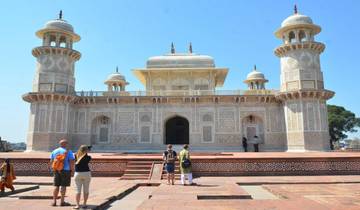
This UNESCO World Heritage monument provides more relaxed exploration than the Red Fort’s crowds, with spacious gardens offering running space while parents admire 16th-century Mughal architecture. The charbagh garden layout creates symmetrical pathways perfect for children to explore, while the tomb’s elevated platform rewards climbers with city views.
The monument’s nickname as “Baby Taj” helps children understand its architectural relationship to Agra’s more famous monument—this tomb preceded and influenced the Taj Mahal’s design. Bringing printouts showing both buildings helps children identify shared design elements.
Surrounding gardens contain smaller tombs and monuments that children can discover independently while remaining visible to parents. The complex remains less crowded than India Gate or Red Fort, allowing more relaxed family time without constant crowd management.
India Gate and Rajpath
India’s war memorial arch stands at the heart of New Delhi’s grand ceremonial boulevard, providing wide open spaces where children can run freely after confined monument interiors. Evening visits see local families gathering, vendors selling snacks and toys, and illuminated monument views creating festive atmospheres.
The surrounding lawns accommodate picnics though food and drinks require purchase from vendors rather than bringing from outside. Boat rides on small ponds near India Gate offer brief diversions though quality varies. The area becomes extremely crowded weekends and holidays when Delhi families gather, making weekday visits more manageable.
National Science Centre and Museums
Delhi’s National Science Centre provides interactive exhibits explaining scientific principles through hands-on activities that engage children far more effectively than passive monument viewing. The dinosaur gallery, human biology exhibits, and 3D shows combine education with entertainment suitable for children ages 6-14.
Entry costs ₹70 for Indian citizens, ₹300 for foreigners, significantly less expensive than monument tickets. The center opens 9:30 AM to 5:30 PM, closed Mondays and major holidays. Plan 2-3 hours for comprehensive exploration.
The National Rail Museum displays vintage locomotives and coaches that children can climb aboard and explore. Mini train rides through the museum grounds add interactive fun beyond static displays. Entry costs ₹50 for Indians, ₹100 for foreigners, with additional charges for toy train rides.
Lodhi Gardens and Outdoor Spaces
These public gardens combine monument exploration with outdoor play, containing several medieval tombs scattered among landscaped grounds where children can run safely while parents walk pleasant pathways. The gardens attract local families, joggers, and picnickers, creating authentic Delhi life experiences alongside heritage appreciation.
Free entry and dawn-to-dusk access make Lodhi Gardens excellent morning or evening alternatives when children need active outdoor time rather than structured monument visits. Playgrounds within the gardens provide modern equipment for younger children.
Agra Family Experiences 2026
Taj Mahal Visit Strategies with Children
Successful Taj Mahal visits with children require early arrival—gates open 30 minutes before sunrise, providing magical lighting and minimal crowds before mass tourism begins. Families staying overnight in Agra should wake early, reach the monument by opening time, and complete their visit by 8:00-8:30 AM before heat and crowds intensify.
The western gate entrance typically sees lighter crowds than the eastern gate, though both require similar security screening. The walk from gate to monument spans approximately 500 meters, manageable for most children though younger kids may tire. Wheelchairs and strollers work on paved pathways but face restrictions on the raised platform surrounding the Taj itself.
Children free under 15 years creates significant savings—a family of four pays only adult tickets (₹2,200 for foreign tourists, ₹100 for Indian citizens) rather than full family admission. The optional main mausoleum entry (₹200 per person including children) allows viewing Shah Jahan and Mumtaz Mahal’s cenotaphs in the central chamber, though the dark interior and strict silence requirements may not suit very young children.
Engaging children requires preparation beyond simply arriving and viewing. Telling the love story behind the monument’s construction provides narrative interest, while explaining how 20,000 workers took 22 years to complete construction gives scale context. Bringing paper and colored pencils allows children to sketch the monument, creating personal engagement beyond photos. Scavenger hunts identifying specific architectural elements—the four minarets, the main dome, geometric marble inlay patterns—transform passive viewing into active exploration.
Agra Fort Historical Adventure
Agra Fort provides more interactive exploration than the Taj Mahal’s strictly controlled environment, with vast courtyards, interconnected palaces, and rampart walks that children experience as adventure playgrounds filled with historical stories. The fort’s massive red sandstone walls create an impressive fortress atmosphere, while interior palaces showcase Mughal luxury through marble carvings and ornate details.
The Musamman Burj tower offers Taj Mahal views across the Yamuna River, allowing families to photograph both UNESCO monuments in one frame while explaining how Shah Jahan spent his final years here gazing at his wife’s tomb. This narrative connection between fort and tomb creates emotional resonance that helps children understand beyond simple architectural appreciation.
The fort’s multiple levels and connecting passages create natural exploration routes where children can discover spaces independently while remaining visible to parents. However, some areas lack protective barriers, requiring supervision near drops or open edges. The fort covers substantial area—comprehensive exploration requires 2-3 hours walking, though families can focus on highlight areas in 90 minutes.
Fatehpur Sikri Day Trip Option
This abandoned 16th-century Mughal capital lies 40 kilometers from Agra, creating a manageable half-day excursion that breaks the journey between Agra and Jaipur. The well-preserved red sandstone palaces and mosques provide architectural exploration without the crowds facing the Taj Mahal, while the ghost city narrative—built with great ambition then abandoned after just 14 years due to water shortages—captures children’s imagination.
The Buland Darwaza gateway towers 54 meters high, creating impressive upward perspectives. The Panch Mahal’s five-story open pavilion allows children to climb stairs and explore different levels, though supervision prevents running that risks falls. Jama Masjid’s vast courtyard provides open space for children to move freely after confined palace interiors.
Entry costs ₹550 for foreign tourists, ₹50 for Indians, with children under 15 free. The site opens 9:00 AM to 5:00 PM daily. Plan 2-3 hours for comprehensive exploration including transport time from Agra. Some guides offer horse-cart rides around the complex, adding novelty though quality and animal welfare vary.
Mehtab Bagh Sunset Views
This riverside garden across the Yamuna from the Taj Mahal provides popular sunset viewing without the monument’s strict rules and crowds. Children can move freely in garden spaces while the Taj appears beautifully lit against evening skies. The informal atmosphere allows picnicking and relaxed time after structured monument visits.
However, the garden requires separate transport from central Agra, adding logistics. Mosquitoes increase near sunset, requiring repellent. The view remains distant compared to close Taj Mahal access, better for photography than detailed monument appreciation. Entry costs ₹200 for foreigners, ₹25 for Indians.
Jaipur Family Adventures 2026
Amber Fort and Elephant Rides
Amber Fort delivers Jaipur’s most exciting family experience through elephant rides up the hillside approach to the fort entrance. Children experience traditional royal transport while ascending to this 16th-century fortress-palace, though elephant welfare concerns lead some families to choose jeep transport or walking instead.
Elephant rides cost ₹900-1,200 for two people sharing one elephant, operating early morning hours (roughly 7:00-11:00 AM) before heat becomes excessive. Advance booking through hotels or tour operators secures rides, as walk-up availability varies with demand. Each ride lasts approximately 15-20 minutes ascending the hillside path.
The fort itself spreads across vast hilltop spaces with interconnected courtyards, palaces, and defensive walls creating natural exploration routes. The Sheesh Mahal (Mirror Palace) amazes children with its thousands of tiny mirrors embedded in walls and ceilings—guides demonstrate how a single candle flame creates countless reflections sparkling throughout the dark chamber.
The Diwan-i-Am and Diwan-i-Khas halls showcase Mughal audience chambers where emperors held court, while gardens and water features demonstrate sophisticated irrigation systems. However, the fort’s size and multiple levels require substantial walking—comprehensive exploration demands 2-3 hours, though families can focus on highlights in 90 minutes.
City Palace and Royal Heritage
Jaipur’s City Palace continues functioning as residence for the former royal family while housing museums accessible to visitors. The complex combines architectural appreciation with artifact displays including royal costumes, weapons, manuscripts, and the world’s largest silver vessels used to transport Ganges water to England.
Children engage more with physical artifacts than architectural details alone—seeing actual swords, armor, and royal clothing brings historical narratives to life. The Peacock Gate courtyard features elaborately decorated doorways representing seasons, while painted walls and mirror work create visual interest throughout.
Entry costs ₹700 for foreign tourists including museum access, ₹300 for Indians. Audio guides provide information though may not hold children’s attention—live guides explaining stories and anecdotes prove more engaging. Plan 90 minutes to 2 hours for comprehensive exploration.
Jantar Mantar Astronomical Observatory
This 18th-century observatory contains massive stone instruments designed to track celestial movements, creating unusual sculptural forms unlike typical monument architecture. Children climb stairs on the Samrat Yantra sundial, observe astronomical calculations, and engage with science history rather than purely historical narratives.
Guides demonstrating how instruments function add educational value—showing how sundials tell time, explaining astronomical concepts, and demonstrating calculations transforms the visit into interactive science lesson. However, without guide explanation, the instruments’ purposes remain unclear to most visitors including children.
Entry costs ₹200 for foreign tourists, ₹50 for Indians, with children under 15 free. The open-air site becomes very hot midday, making morning or late afternoon visits more comfortable. Plan 60-90 minutes for guided exploration.
Hawa Mahal and Pink City Architecture
The Palace of Winds provides Jaipur’s most photographed monument with its honeycomb facade of 953 windows creating unique architectural interest. However, actual exploration proves limited—the building functions primarily as facade rather than comprehensive palace, with interior access providing views through the famous windows toward the street below.
Entry costs ₹200 for foreign tourists, ₹50 for Indians. The building’s positioning along a main road means exterior photography requires managing traffic. Most families photograph the facade without entering, saving time and admission fees for more substantial monuments.
The surrounding old city maintains pink-colored buildings following an 1876 decision to paint Jaipur pink to welcome British royalty. Walking tours through bazaar streets show traditional crafts including block printing, jewelry making, and textile production, though crowded market conditions require constant child supervision.
Nahargarh Fort Sunset Views
This hilltop fort overlooking Jaipur provides panoramic city views particularly beautiful at sunset, though the remote location requires dedicated transport rather than casual access. The fort itself contains less impressive architecture than Amber Fort, functioning primarily as viewpoint destination rather than comprehensive palace exploration.
Entry costs ₹200 for foreign tourists, ₹50 for Indians. The fort restaurant allows dining while enjoying views, though food quality remains average. Families with limited time often skip Nahargarh in favor of more substantial monuments.
Practical Family Travel Considerations 2026
Accommodation Strategies for Families
Family rooms or suites accommodate parents plus children more comfortably than booking separate standard rooms. Mid-range hotels (₹4,000-8,000 per night) offer family rooms with two double beds, while budget options (₹2,000-4,000) provide basic family accommodation. Luxury hotels (₹12,000-25,000+) feature suites with separate children’s sleeping areas and premium amenities.
Hotels with swimming pools provide excellent afternoon activities when children need breaks from sightseeing. Many children engage more enthusiastically with monument visits knowing pool time follows. Air conditioning becomes essential for comfortable sleep during warm months, while hot water remains standard across accommodation categories.
Booking hotels near monuments reduces transport time and provides retreat options when children tire. However, quieter residential neighborhoods may offer better value and more relaxed evening atmospheres than tourist-heavy areas. Advance booking secures family rooms during peak season, while last-minute travelers find availability during quieter periods.
Dining with Children in 2026
Children unfamiliar with spicy food benefit from hotel restaurants serving continental options alongside Indian cuisine, allowing gradual introduction to local flavors. Many restaurants prepare mild versions of traditional dishes upon request. Western fast food chains (McDonald’s, Domino’s, KFC) operate in all three cities, providing familiar comfort food when children reject unfamiliar options.
Food safety concerns lead many families toward established restaurants over street vendors, particularly for young children with sensitive digestive systems. Bottled water remains essential—avoid tap water, ice from unknown sources, and raw vegetables in small restaurants. Fresh fruit that can be peeled (bananas, oranges) provides safe snacks.
Breakfast at hotels allows families to start days with familiar foods before adventurous monument exploration. Carrying snacks (packaged cookies, nuts, dried fruit) prevents hungry meltdowns when restaurant access proves inconvenient. Meal costs range ₹300-600 per person at mid-range restaurants, ₹100-200 for simple meals.
Health and Safety Precautions
Delhi, Agra, and Jaipur maintain international-standard hospitals capable of treating common travel health issues. Travel insurance covering emergency medical care provides peace of mind. Carrying basic first-aid supplies (band-aids, antiseptic cream, pain relievers, anti-diarrheal medication) addresses minor issues without seeking medical care.
Hand sanitizer proves essential given limited handwashing access at monuments. Teaching children to avoid touching eyes, nose, and mouth without clean hands reduces illness risk. Sunscreen and sun hats protect against strong sun exposure during extended outdoor time.
Air quality in Delhi occasionally reaches unhealthy levels, particularly October through January when crop burning combines with traffic pollution. Families with children who have respiratory sensitivities may avoid Delhi during these months or limit outdoor exposure on high-pollution days. Air quality monitoring apps provide current conditions.
Managing Crowds and Attention
Foreign families attract attention in India, with locals often requesting photos with children or offering friendly interactions that can feel overwhelming. Teaching children polite refusal strategies empowers them to set boundaries, while parents modeling friendly but firm responses demonstrates appropriate behavior.
Maintaining close supervision prevents children from wandering in crowded monuments where losing sight of parents creates frightening situations. Establishing meeting points before monument entry provides backup if separation occurs. Older children carrying parent contact information (phone numbers, hotel details) enables communication if they become separated.
Sample 7-Day Family Itinerary 2026
Day 1: Arrive Delhi, Rest and Orientation
International flights typically arrive morning or evening, leaving limited energy for sightseeing arrival day. Hotel check-in, rest, and gentle orientation walks prevent jet lag disasters. Evening visits to India Gate allow children to run freely while parents assess the family’s energy levels and comfort with Indian environments.
Day 2: Delhi Monument Exploration
Morning visit to Humayun’s Tomb during pleasant temperatures, followed by lunch and rest period. Late afternoon Red Fort exploration when harsh midday sun diminishes. Evening rickshaw tour through Old Delhi’s lit bazaars provides cultural immersion without midday heat challenges.
Daily costs (family of four): Accommodation ₹5,000, meals ₹2,000, monument tickets ₹1,200, transport ₹1,500. Total ₹9,700 (approximately $115) excluding shopping.
Day 3: Delhi Museums and Gardens
National Science Centre morning visit provides interactive learning different from monument viewing. Afternoon Lodhi Gardens exploration allows outdoor play. Evening shopping in Dilli Haat crafts market where children can select souvenirs.
Daily costs: Accommodation ₹5,000, meals ₹2,000, museum tickets ₹600, transport ₹800. Total ₹8,400 ($100) excluding shopping.
Day 4: Drive to Agra, Taj Mahal Sunset
Morning Delhi checkout, 3.5-hour drive to Agra with rest stops. Hotel check-in and lunch. Late afternoon Mehtab Bagh visit for Taj sunset views without main monument crowds. Early sleep preparing for pre-dawn Taj Mahal visit.
Daily costs: Accommodation ₹5,000, meals ₹2,000, private car Delhi-Agra ₹5,000, Mehtab Bagh tickets ₹400. Total ₹12,400 ($148).
Day 5: Taj Mahal Sunrise, Drive to Jaipur
Pre-dawn wake-up (5:30 AM) for Taj Mahal sunrise visit, arriving as gates open. Comprehensive Taj exploration finishing by 9:00 AM. Return to hotel for breakfast and checkout. Mid-morning departure for Jaipur with Fatehpur Sikri stop, arriving Jaipur late afternoon. Hotel check-in, rest, and evening pool time.
Daily costs: Accommodation ₹5,000, meals ₹2,000, Taj Mahal tickets ₹2,200, Fatehpur Sikri tickets ₹1,100, private car Agra-Jaipur ₹6,000. Total ₹16,300 ($195).
Day 6: Jaipur Fort Exploration
Early Amber Fort visit with elephant ride, comprehensive fort exploration. Lunch and midday rest period. Late afternoon City Palace and Jantar Mantar visits. Evening Hawa Mahal exterior photography and bazaar shopping.
Daily costs: Accommodation ₹5,000, meals ₹2,000, Amber Fort tickets ₹1,000, elephant ride ₹1,000, City Palace tickets ₹1,400, Jantar Mantar tickets ₹400, transport ₹1,200. Total ₹12,000 ($143) excluding shopping.
Day 7: Jaipur Leisure, Return Delhi
Morning hotel pool and leisure time allowing children to rest. Optional additional monument visits or shopping. Afternoon drive back to Delhi (5-6 hours). Evening Delhi hotel check-in or direct airport transfer for international flights.
Daily costs: Accommodation ₹5,000, meals ₹2,000, private car Jaipur-Delhi ₹7,000. Total ₹14,000 ($167).
Weekly Budget Summary for Foreign Families
7-day trip total for family of four (two adults, two children under 15): Accommodation ₹35,000, meals ₹14,000, monument tickets ₹6,700, private transportation ₹21,200. Total ₹76,900 (approximately $915), averaging ₹11,000 ($131) per day. Adding shopping (₹10,000-20,000), optional activities, and buffer for unexpected expenses brings realistic budget to ₹90,000-100,000 ($1,070-1,190) for comfortable mid-range family travel.
Frequently Asked Questions About Golden Triangle Family Travel 2026
Do We Need Visa Arrangements for Children Traveling to India in 2026?
All foreign nationals including infants require Indian visas regardless of age. E-visa applications cover most nationalities for tourism purposes, requiring separate applications for each family member including children. E-visas must be applied for at least 4 days before arrival, with processing typically taking 3-4 business days. Children’s applications require the same documentation as adults including passport copies and photographs, though application fees may be lower for minors. Indian visa regulations change periodically—consult official Indian visa websites or embassy resources for current requirements rather than relying on dated information.
Can We Find Baby Supplies and Children’s Medications in Delhi Agra Jaipur in 2026?
All three cities maintain well-stocked pharmacies selling common children’s medications including fever reducers, cold medicines, and anti-diarrheal treatments. International brands like Paracetamol and Ibuprofen remain widely available under local brand names. However, specific prescription medications should be brought from home with doctor’s notes explaining medical necessity. Baby supplies including diapers, formula, and baby food are available in major supermarkets and pharmacy chains, though familiar Western brands may be limited to luxury grocery stores. Bringing sufficient supplies of specialized items (specific formula brands, prescription medications, preferred diaper brands) prevents stress searching for exact products. Baby wipes and hand sanitizer remain essential items worth packing in quantity.
How Do We Handle Restroom Access with Young Children During Monument Visits in 2026?
Major monuments maintain basic public restrooms near entrances, though standards vary significantly from Western expectations. Carrying toilet paper, hand sanitizer, and disposable seat covers addresses cleanliness concerns. Many monuments prohibit re-entry after exiting, making bathroom timing strategic—use facilities before entering to avoid forfeiting admission for restroom emergencies. Hotels and upscale restaurants provide reliably clean facilities making them preferable stopping points during city touring. Teaching children to use available facilities even when not desperately needed prevents emergencies during monument visits. Some families carry portable urinals for young children facing urgent needs without suitable facilities nearby.
Are Strollers Practical for Monument Visits with Toddlers in 2026?
Strollers face significant limitations at Indian monuments despite working well for city sidewalk navigation. Many monuments feature stairs, uneven surfaces, narrow passages, and raised platforms that prohibit wheeled access entirely. The Taj Mahal allows strollers on main pathways but prohibits them on the raised marble platform surrounding the monument itself. Baby carriers (structured backpack-style or wrap-style) prove more versatile, allowing access to all monument areas while keeping toddlers secure and comfortable. For families committed to stroller use, lightweight umbrella-style models navigate easier than full-sized jogger strollers. However, accepting that parents will carry children during substantial monument visits creates more realistic expectations than assuming stroller access throughout.
What Photography Rules Apply to Children at Monuments in 2026?
Standard tourist photography including children faces no restrictions at most monuments, though commercial photography requiring extensive equipment or professional shoots may require permits. Tripods and selfie sticks face prohibitions at many monuments due to crowd safety concerns. Drone photography remains restricted without advance permissions that prove difficult to obtain. Inside certain tomb chambers or religious spaces, photography may be prohibited entirely regardless of subjects. Parents should photograph their own children freely while respecting other families’ privacy—avoid capturing recognizable images of other people’s children without permission. Social media sharing requires additional sensitivity given privacy concerns around children’s images appearing in public posts.
How Can We Make Monument Visits Educational Rather Than Just Sightseeing in 2026?
Preparation before visits dramatically improves educational value. Reading age-appropriate books about Mughal history, watching documentaries about the Taj Mahal or Indian palaces, and discussing historical contexts before arrival creates framework for understanding monuments. During visits, engaging guides who tell stories rather than reciting dates transforms passive viewing into narrative engagement. Scavenger hunts identifying specific architectural elements, sketch journals where children draw monuments, and photography challenges create active participation beyond walking and looking. Post-visit activities like creating travel journals, building model monuments from photos, or researching additional historical questions children raise sustain educational engagement beyond the immediate visit. The key involves matching activities to children’s developmental stages rather than forcing academic approaches that create resistance.
Can Vegetarian or Special Dietary Requirements Be Accommodated in 2026?
India excels at vegetarian cuisine given cultural and religious dietary practices, making vegetarian children easier to feed than in many countries. However, North Indian cuisine uses dairy extensively (ghee, paneer, yogurt) which may not suit dairy-free requirements. Restaurants in tourist areas understand “no spice” requests for children, preparing mild versions of traditional dishes. Vegan diets prove more challenging requiring careful ingredient checking, while gluten-free options remain limited outside luxury establishments. Children with severe food allergies should carry medical documentation and emergency medications, as cross-contamination prevention may not meet Western standards in all restaurants. Hotels catering to international tourists typically accommodate special dietary requests with advance notice, making hotel dining safer than random restaurant selection for families with serious dietary restrictions.
Is It Safe for Families to Use Public Transportation in Delhi Agra Jaipur in 2026?
Delhi Metro provides clean, efficient, safe public transportation suitable for families comfortable with crowded conditions during peak hours. Air-conditioned metro cars connect major tourist areas and airports, costing ₹10-60 per journey regardless of age. However, rush hour crowds (8-10 AM, 5-8 PM) create challenging conditions with young children. Auto-rickshaws and Uber/Ola taxis work well for short distances, though negotiating fair auto-rickshaw prices requires skill—insist on meters or agree prices before boarding. Long-distance travel between cities proves more comfortable via private car than public buses which lack air conditioning, make frequent stops, and operate on unpredictable schedules. Train travel offers authentic experiences for families interested in cultural immersion, though sleeper class accommodations suit adventurous families better than those seeking comfort and predictability.
What Should Our Family Emergency Plan Include for India Travel in 2026?
Comprehensive emergency planning includes travel insurance with medical evacuation coverage, copies of all important documents (passports, visas, tickets) stored separately from originals and in cloud storage, emergency contact information for nearest embassy/consulate, hotel addresses in local language for taxi communication, and list of nearby hospitals at each destination. Registering travel plans with your home country’s embassy allows authorities to locate and assist you during emergencies. Children old enough to communicate should memorize hotel names and parent phone numbers, while younger children can wear identification bracelets with emergency contact information. Designating a home-country emergency contact who can coordinate assistance from outside India provides backup if the entire family faces crisis simultaneously. These preparations prove valuable if needed while hopefully remaining unused.
How Much Shopping Money Should We Budget for 2026 Golden Triangle Visits?
Shopping budgets vary dramatically based on interests and purchasing power, from minimal souvenir spending (₹5,000-10,000 for small items, clothing, handicrafts) to substantial textile, jewelry, and art purchases (₹50,000-200,000+). Children enjoy selecting small items—carved elephants, colorful bangles, miniature paintings—typically costing ₹100-500 per item. Bargaining remains expected in markets though less common in fixed-price government emporiums. Realistic bargaining reduces quoted prices 30-50%, though aggressive negotiation over small amounts appears ungracious. Carrying sufficient cash proves essential as many small vendors lack card payment capabilities, though larger shops accept international credit cards. Shipping arrangements allow purchasing bulky items without luggage concerns, though costs add substantially to purchase prices. Building shopping time into itineraries prevents rushed last-day scrambles that result in poor purchasing decisions or missed opportunities.