Guatavita Lake from Bogotá 2026: Legend of El Dorado
Key Takeaways
- Guatavita Lake sits 75 kilometers northeast of Bogotá, accessible via 2-hour drive through Andean highlands at 3,100 meters elevation
- Guided day tours from Bogotá cost $65-95 per person in 2026, including transportation, entrance fees, bilingual guides, and lunch
- The Muisca indigenous ceremony involving gold-covered chieftain inspired the legendary El Dorado myth that drew Spanish conquistadors across South America
- Spanish attempts to drain the lake in 1545 and 1898 recovered minimal gold, confirming indigenous accounts that precious offerings lay beyond recovery depths
- Independent visits require advance reservations through official website, as daily visitor limits protect the sacred site and surrounding páramo ecosystem
- Optimal visiting months run December-March and June-August 2026, when clear Andean weather maximizes visibility across the crater lake and surrounding mountains
Planning Your Guatavita Lake Visit in 2026
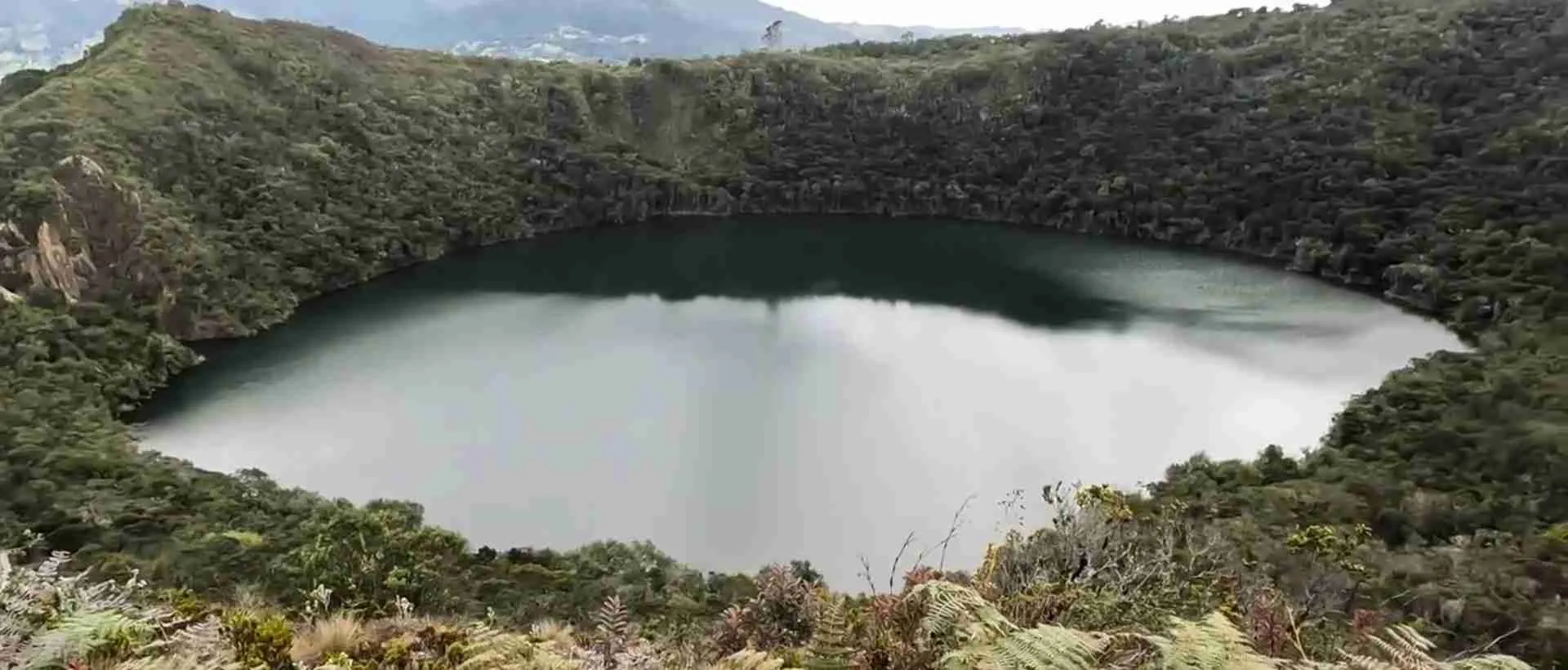
Guatavita Lake emerges from Colombian Andes as a circular body of water occupying a volcanic crater at 3,100 meters elevation, sacred site where Muisca indigenous peoples performed ceremonial rituals involving gold offerings that spawned the El Dorado legend. The lake sits 75 kilometers northeast of Bogotá in Cundinamarca department, positioned within protected páramo ecosystem characterized by unique high-altitude vegetation, mist-shrouded peaks, and crystalline air. Day trips to Guatavita combine historical significance, indigenous cultural heritage, natural beauty, and the enduring mystique of Colombia’s most famous legend, creating experiences that transcend typical tourist destinations.
The El Dorado ceremony, documented by Spanish chroniclers interviewing Muisca descendants, involved a chieftain covering his body in gold dust before rowing to the lake’s center on a ceremonial raft. At the deepest point, he dove into the water while priests threw gold and emerald offerings, believing the lake connected to spiritual realms beyond earthly existence. This ritual, performed for centuries before Spanish arrival, inspired conquistador expeditions searching for cities of gold throughout South America. The actual ceremony site proved far more modest than conquistador fantasies: a remote Andean lake where indigenous peoples honored their cosmology through precious offerings rather than accumulating wealth.
Modern visits to Guatavita emphasize cultural education over treasure hunting, with Colombian authorities protecting the site as patrimonio cultural (cultural heritage) and limiting daily visitors to preserve both indigenous significance and fragile páramo environment. The lake remains in its natural state following failed Spanish drainage attempts, with archaeological evidence confirming indigenous accounts of deep-water offerings beyond recovery reach. Day trips from Bogotá in 2026 combine Guatavita Lake with visits to the new town of Guatavita (built 1967 after original village was flooded for Tominé Reservoir), Tominé Reservoir itself, and surrounding Andean landscapes where traditional Colombian agriculture continues in remote mountain communities.
People Also Ask About Guatavita Lake 2026
How much does a Guatavita Lake day trip cost from Bogotá in 2026?
Guided day tours from Bogotá to Guatavita Lake cost $65-95 per person in 2026, depending on group size, included services, and tour operator. Check tour company websites for current official rates as pricing may vary seasonally. Standard tours include round-trip transportation in private vehicles, entrance fees to Guatavita Lake ($7 for international visitors), bilingual guides, traditional Colombian lunch, and visits to Tominé Reservoir viewpoints. Premium tours at $85-95 add stops at local cheese factories, longer time at each location, and smaller group sizes (maximum 8-10 participants). Budget tours at $65-75 accommodate larger groups (15-20 people) with more structured schedules and shorter free time at locations.
Can you visit Guatavita Lake independently from Bogotá in 2026?
Independent visits to Guatavita Lake require advance reservations through the official website (www.car.gov.co), as daily visitor quotas limit access to protect the sacred site. Entrance costs $7 for international visitors, $3.50 for Colombian nationals. Transportation options include rental cars (driving northeast from Bogotá via Route 45 to Guatavita, then following signs to Laguna de Guatavita), private taxis ($80-120 round-trip negotiated rate), or bus combinations from Bogotá’s Terminal del Norte to Guatavita town ($5 each way) followed by local taxi to the lake entrance ($10-15). Independent visits provide maximum flexibility but require navigation through mountain roads, advance booking to guarantee entry, and Spanish language ability for interactions with local transportation providers.
What is the true story behind the El Dorado legend at Guatavita Lake in 2026?
The El Dorado legend originated from Muisca indigenous ceremonial practices at Guatavita Lake, where new chieftains underwent ritual involving gold dust covering their bodies before entering the lake aboard ceremonial rafts. At the lake’s center, the chieftain dove into water while priests threw gold and emerald offerings, symbolizing connection between earthly and spiritual realms. Spanish conquistador Gonzalo Jiménez de Quesada first documented this practice in 1537 after conquering Muisca territories. The ceremony had ceased before Spanish arrival, but indigenous accounts sparked expeditions searching for “El Dorado” (The Golden One) throughout Colombia and beyond. Multiple attempts to drain Guatavita Lake between 1545-1898 recovered minimal gold, proving offerings lay in deep water beyond recovery capabilities and validating indigenous accounts that treasures belonged to spiritual rather than material realms.
What should you expect during a Guatavita Lake visit in 2026?
Guatavita Lake visits involve 1-1.5 kilometer hiking trail from entrance gate to lake viewpoint, ascending through páramo ecosystem at 3,100 meters elevation. The trail features interpretive signs explaining Muisca culture, El Dorado legend, and páramo ecology in Spanish and English. Guides provide historical context about indigenous ceremonies, Spanish conquest, and failed drainage attempts visible in channels cut through crater walls. The lake viewpoint offers panoramic views across the circular crater, surrounding mountains, and distant Bogotá savanna. Swimming remains prohibited to protect water quality and respect indigenous spiritual significance. Visitors spend 1-2 hours at the lake including hiking time, with total day trips from Bogotá lasting 8-10 hours including transportation and additional stops at Tominé Reservoir and Guatavita town.
Extended multi-day tours – 5+ days
Featured Bogota Multi-Day Tour Packages
3 days
Colombia – Guatavita & Suesca by Bike
- ✓ Comprehensive Bogota tour
- ✓ Expert local guides included
- ✓ All accommodation arranged
- ✓ Transportation provided
2 days
Colombia – Villa de Leyva
- ✓ Comprehensive Bogota tour
- ✓ Expert local guides included
- ✓ All accommodation arranged
- ✓ Transportation provided
7 days
Private Service I Best-Selling Journey: One Week in Bogotá, Medellín & Cartagena — Domestic Flights Included
- ✓ Booking needs min. 2 travelers
6 days
Colombia Express: A 6 Day Journey of Charm, Culture & Tradition
- ✓ Comprehensive Bogota tour
- ✓ Expert local guides included
- ✓ All accommodation arranged
- ✓ Transportation provided
Multi-day tour packages powered by TourRadar. Prices and availability subject to change.
Essential Planning Information for 2026 Visits
Tour Costs and Booking Requirements 2026
Guided Guatavita Lake tours from Bogotá range from $65-95 per person in 2026. Check tour operator websites for current official rates as pricing may vary. Standard full-day tours cost $70-85 and include hotel pickup from La Candelaria, Chapinero, Zona Rosa, or Usaquén neighborhoods, round-trip transportation in comfortable vehicles (vans for groups, sedans for private tours), entrance fees to Guatavita Lake, bilingual guide services, traditional Colombian lunch at local restaurant, bottled water, and stops at Tominé Reservoir and new Guatavita town. Tours departing at 7:00-8:00 AM return to Bogotá between 5:00-6:00 PM, creating 10-11 hour experiences.
Private tours cost $200-280 for groups of 2-4 people, providing customized itineraries, flexible departure times, ability to spend more time at preferred locations, and guide’s undivided attention. Private experiences suit families with children, couples seeking romantic excursions, or visitors with specific interests in Muisca history, páramo ecology, or photography opportunities. The per-person cost proves comparable to standard group tours only when splitting among 3-4 participants, making private options economical for small travel parties.
Advanced booking 1-2 weeks ahead proves sufficient during most of year, though December-February and June-August high seasons require 2-3 weeks advance reservation to secure preferred dates. Tour operators accept credit cards, PayPal, and Colombian peso payments, typically requiring 50% deposit at booking with remainder due 48 hours before departure. Cancellation policies allow full refunds for cancellations made 72+ hours before scheduled tour, 50% refunds for 48-72 hour cancellations, and no refunds for cancellations within 48 howrs or no-shows.
Transportation and Access Logistics 2026
The journey from Bogotá to Guatavita Lake covers approximately 75 kilometers via Route 45 heading northeast through Andean highlands, requiring 2-2.5 hours depending on traffic conditions and weather. Tours departing Bogotá at 7:00-8:00 AM avoid morning rush hour congestion, while later departures face delays on city exits. The route ascends from Bogotá’s 2,640 meters to Guatavita’s 3,100 meters, passing through agricultural areas, small mountain towns, and increasingly dramatic Andean landscapes as altitude increases.
Independent transportation options include rental cars available throughout Bogotá for $35-55 per day from major international companies (Hertz, Avis, Budget). Driving requires confidence navigating mountain roads, familiarity with Colombian traffic patterns, and awareness that weather conditions can deteriorate rapidly at high elevations. GPS navigation works reliably on main routes, though some sections near the lake lose signal. Fuel costs add $10-15 to trip expenses, while Tominé Reservoir toll booth charges $3 each direction.
Public transportation from Bogotá to Guatavita town uses Terminal del Norte bus station, with Líneas Andinas and other carriers operating frequent service for $5 per person each direction. Buses run hourly 6:00 AM – 6:00 PM, requiring 1.5-2 hours depending on stops. From Guatavita town to the lake entrance requires local taxi ($10-15 one way) or pre-arranged pickup through lake administration. This option suits budget travelers willing to navigate Spanish-language coordination and flexible schedules, totaling $30-40 per person round-trip compared to $70-85 for guided tours that include entrance fees and lunch.
Understanding the El Dorado Legend 2026
Muisca Cultural Context and Ceremonies 2026
The Muisca civilization dominated the Bogotá savanna and surrounding highlands for centuries before Spanish conquest in 1537, developing sophisticated agricultural systems, social hierarchies, and spiritual practices centered on sacred lakes. Guatavita Lake held particular significance as site where new chieftains (zipas) underwent ritual purification before assuming leadership. The ceremony involved covering the chieftain’s body in sticky resin followed by gold dust application, transforming him into a golden figure representing divine connection between earthly authority and spiritual power.
The raft ceremony commenced at dawn when the chieftain, accompanied by four priests, paddled to the lake’s center aboard ceremonial balsa. Once positioned above the deepest water, the chieftain dove into the lake while priests threw gold tunjos (small gold figurines), emeralds, and other precious offerings. The submersion washed away the gold dust, symbolizing the chieftain’s transformation from ordinary person to sacred leader. Muisca cosmology viewed lakes as portals to spiritual dimensions where gods and ancestors dwelled, making these offerings communications rather than mere depositions of wealth.
Spanish chronicler Juan Rodríguez Freyle documented these practices in “El Carnero” (1636), interviewing Muisca descendants about pre-conquest ceremonies. His accounts, combined with other Spanish sources, established that the ritual occurred irregularly when new chieftains assumed power, not as regular ceremony performed frequently. By the time Spanish conquistadors arrived, the practice had largely ceased due to political changes within Muisca society. This timing created frustrating situation for treasure seekers: they had reliable accounts of gold offerings but arrived after ceremonies ended, leading to centuries of speculation about recoverable treasures.
Spanish Conquest and Treasure Hunting History 2026
Gonzalo Jiménez de Quesada reached Muisca territories in 1537, conquering the region and establishing Spanish rule. His expedition discovered substantial gold among Muisca peoples but sought the ceremony’s source after learning about Guatavita Lake offerings. The Spanish attempted draining the lake in 1545 under Hernán Pérez de Quesada, cutting channel through crater wall to lower water levels. The effort recovered approximately 232 pesos of gold (roughly 1 kilogram) before the channel collapsed, killing workers and ending the attempt.
The most ambitious drainage occurred in 1898 when Colombian Contractors Limited, a British company, excavated deep channel lowering the lake’s water by approximately 3 meters. This engineering feat exposed lake bottom, but mud prevented access to deepest areas where offerings presumably concentrated. The company recovered approximately £500 worth of gold (roughly 5 kilograms at 1898 values) before abandoning the project as unprofitable. The drainage channel remains visible today, carved through the crater’s north wall, testament to persistent belief in recoverable treasures despite repeated failures.
Modern archaeological understanding suggests the bulk of offerings lie in deep lake sediments where recovery proves impossible without completely draining and excavating the site. Colombian authorities declared Guatavita Lake protected cultural heritage, prohibiting further treasure hunting and establishing the site as place for cultural education rather than gold extraction. The failed drainage attempts actually validated Muisca accounts: offerings went to spiritual realms (deep water) rather than accessible locations, prioritizing religious significance over material recovery.
The Legend’s Evolution and Modern Understanding 2026
The El Dorado legend evolved from specific Guatavita ceremony into generalized myth of golden cities throughout South America. Spanish conquistadors heard accounts of the ritual and assumed it represented ongoing practice rather than occasional ceremony that had ceased. They extrapolated from one sacred lake to entire kingdoms made of gold, driving expeditions across Colombia, Venezuela, Guyana, and into Amazon basin. The term “El Dorado” shifted meaning from “The Golden One” (the chieftain) to “Place of Gold” (imagined city or kingdom), fueling centuries of exploration and conquest.
This transformation benefited Spanish colonial enterprises by motivating exploration of unknown territories, though based on fundamental misunderstanding of indigenous practices. The Muisca never accumulated gold for wealth; they valued the metal for spiritual properties and ceremonial uses. Their goldwork demonstrated extraordinary craftsmanship, but they created objects for offerings and adornment rather than currency or treasure storage. The Spanish obsession with El Dorado revealed cultural differences: indigenous peoples saw gold as spiritual medium, Europeans viewed it as ultimate wealth.
Contemporary understanding of El Dorado emphasizes historical context over treasure hunting. Museums worldwide display Muisca gold artifacts recovered from various sites (not Guatavita specifically), demonstrating the civilization’s metallurgical sophistication. The Museo del Oro (Gold Museum) in Bogotá houses the world’s largest collection of pre-Hispanic goldwork, including the famous Muisca Raft depicting the Guatavita ceremony in miniature gold craftsmanship. This artifact, discovered in 1969 in a ceramic vessel south of Bogotá, provides physical evidence supporting Spanish chroniclers’ accounts while demonstrating how indigenous peoples themselves commemorated the ceremony.
The Guatavita Lake Visiting Experience 2026
Trail and Access Points 2026
The Guatavita Lake trail begins at entrance gate where park rangers verify reservations and collect entrance fees: $7 for international visitors, $3.50 for Colombian nationals. The well-maintained path extends 1-1.5 kilometers from gate to main lake viewpoint, ascending through páramo ecosystem with interpretive signs explaining environmental and cultural significance in Spanish and English. The trail gains approximately 100 meters elevation over its length, creating moderate difficulty at 3,100 meters altitude where reduced oxygen affects physical exertion.
The path follows the crater’s outer slope, providing increasingly dramatic views as it ascends. Páramo vegetation surrounding the trail includes frailejones (espeletia), unique plants with fuzzy leaves adapted to high-altitude conditions, alongside native grasses, small shrubs, and colorful wildflowers during rainy season. Interpretive panels describe páramo ecosystem’s role providing water to Bogotá region, as high-altitude wetlands capture and store moisture from clouds before releasing it gradually to lower elevations through springs and streams.
The main viewpoint sits at trail’s highest point, offering unobstructed panorama across the circular crater lake, surrounding mountains, and on clear days, distant views toward Bogotá savanna 75 kilometers southwest. A covered viewing platform protects visitors from weather while providing photo opportunities and orientation panels identifying visible landmarks. The dramatic north wall cut by 1898 British drainage attempt remains clearly visible, creating physical evidence of historical treasure hunting efforts. Guides use this vantage point to explain Muisca ceremonies, Spanish conquest, and ongoing conservation efforts.
On-Site Experiences and Activities 2026
Time at Guatavita Lake typically spans 1.5-2 hours including hiking, viewpoint time, and return descent. Guides provide 20-30 minute presentations covering El Dorado legend, Muisca culture, páramo ecology, and historical drainage attempts, allowing questions and encouraging exploration. Photography opportunities abound, with the circular crater lake creating dramatic compositions particularly during morning hours when light illuminates the water’s surface and surrounding vegetation appears most vibrant. Late morning visits encounter more clouds, creating atmospheric effects though reducing long-distance visibility.
The lake itself measures approximately 90 meters diameter, smaller than many visitors expect given the legend’s magnitude. This modest scale reinforces understanding that El Dorado reflected indigenous spirituality rather than accumulated treasure. The water appears dark green or black depending on light and weather conditions, with depth estimated at 10-15 meters at the center. Swimming remains strictly prohibited to protect water quality, respect indigenous spiritual significance, and ensure visitor safety in cold, high-altitude water. Drone photography requires special permission from environmental authorities, rarely granted to preserve site tranquility and respect cultural sensitivities.
Educational components include examination of páramo plants, explanation of water cycle at high altitudes, discussion of indigenous land management, and contemporary conservation challenges. Rangers emphasize that Guatavita represents one of hundreds of sacred Muisca sites throughout Cundinamarca department, with many others destroyed or altered by colonial and modern development. The relatively pristine state of Guatavita Lake creates rare opportunity to experience Andean landscape approaching pre-Hispanic conditions, adding ecological significance to cultural and historical importance.
Weather Conditions and Seasonal Variations 2026
Guatavita’s high elevation (3,100 meters) creates cool temperatures year-round, ranging 45-60°F during daytime with significant drops during morning and evening. Visitors need layered clothing including warm jackets, as wind at exposed viewpoint dramatically affects perceived temperature. Rain gear proves essential regardless of season, as páramo weather changes rapidly with clouds materializing quickly and producing precipitation at any time. Waterproof hiking boots or sturdy walking shoes with good traction prevent slipping on potentially muddy trail sections.
Optimal visiting months fall during Colombia’s dry seasons: December-March and June-August. These periods provide higher probability of clear mornings with unobstructed views across the crater and surrounding mountains. However, even during dry season, afternoon clouds frequently develop, reducing visibility and creating atmospheric but less photogenic conditions. Tours departing Bogotá at 7:00 AM reach Guatavita by 9:30-10:00 AM, capturing best morning light before typical midday cloud formation.
Rainy season months (April-May, September-November) present challenges including muddy trails, obscured views, and frequent precipitation. However, these months also showcase páramo vegetation at peak lushness with abundant wildflowers and vibrant green landscapes. Tour operators continue operating during rainy season with proper rain gear and trail maintenance, though visibility proves unpredictable. Morning departures still provide best conditions, as rain typically increases through afternoon and evening hours. Budget-conscious travelers might negotiate slight price reductions during rainy season when tour demand decreases.
Additional Day Trip Destinations 2026
Tominé Reservoir and Viewpoints 2026
Tominé Reservoir, Colombia’s largest artificial lake, lies between Bogotá and Guatavita, created in 1967 to provide water and hydroelectric power to the capital region. The reservoir flooded original Guatavita village, requiring its reconstruction at higher elevation. Most day tours include stops at Tominé viewpoints providing panoramas across the vast blue water surrounded by agricultural hills and distant mountains. These stops last 15-30 minutes, allowing photographs and brief explanations of the reservoir’s role in Bogotá’s infrastructure.
The reservoir extends approximately 16 kilometers in length, creating microclimate affecting local weather and agriculture. Weekend days see recreational activities including sailing, windsurfing, and fishing from shore, as Bogotanos escape city heat for cooler mountain air. Lakeside restaurants serve fresh trout and traditional Colombian dishes, with several tour operators scheduling lunch stops at these establishments. Meals at reservoir restaurants cost $10-15 per person, typically included in comprehensive tour packages.
The dam structure itself demonstrates 1960s engineering adapting European reservoir technology to Andean conditions. Information panels explain construction challenges, environmental impacts, and ongoing water management balancing Bogotá’s needs with downstream agricultural requirements. The dam viewpoint provides education about Colombia’s modernization during mid-20th century, contrasting with Guatavita Lake’s pre-Hispanic significance and creating narrative about human interaction with Andean landscape across different eras.
New Guatavita Town and Architecture 2026
New Guatavita town, built 1967 to replace original village flooded by Tominé Reservoir, demonstrates distinctive planned-community architecture combining Spanish colonial influence with indigenous motifs. The town follows grid layout around central plaza, with white-washed buildings, red tile roofs, and ornamental details referencing Muisca symbols. This architectural style creates charming village atmosphere, attracting Colombian domestic tourists during weekends and holidays. Day trips typically allocate 30-45 minutes for town exploration, plaza visits, and souvenir shopping.
The main plaza features church, administrative buildings, and restaurants serving traditional Cundinamarca cuisine. Local specialties include trucha (trout from nearby streams), cuchuco (barley soup), and various potato preparations reflecting region’s agricultural heritage. Souvenir shops sell Muisca-inspired crafts, though quality varies and authentic indigenous artisanship proves difficult to distinguish from mass-produced items. The town maintains quiet atmosphere except during weekends when Bogotá residents visit for day trips, hiking, and escaping urban environment.
Cultural explanations in new Guatavita cover reservoir construction’s impact on displaced communities, architectural decisions in town planning, and ongoing efforts to preserve regional identity despite modern development pressures. The town’s 1960s origins create interesting juxtaposition with millennia-old Guatavita Lake, demonstrating how contemporary Colombian society negotiates between indigenous heritage, colonial legacy, and modern progress. Visitors interested in rural Colombian life and architecture benefit from this stop, while those prioritizing Guatavita Lake and El Dorado legend may prefer tour options minimizing time in town.
Local Cheese Factories and Agricultural Stops 2026
Premium day tours sometimes include visits to local cheese factories where traditional Colombian cheese production continues using methods passed through generations. Cundinamarca highlands support dairy cattle farming, with fresh mountain grass producing distinctive milk flavors. Tours visiting cheese factories observe production processes, sample fresh cheeses, and purchase products at factory prices significantly below Bogotá retail. These stops last 30-45 minutes and add cultural dimension showing contemporary rural economy alongside historical attractions.
Typical cheese varieties include queso campesino (farmer cheese), cuajada (fresh curd cheese), quesadilla (sweet cheese bread), and arequipe (milk caramel). Factory visits demonstrate milk pasteurization, curd formation, pressing processes, and aging rooms where hard cheeses develop flavor. Families operating these facilities for decades share knowledge about cattle breeds, pasture management, and challenges maintaining small-scale dairy operations facing competition from industrial producers. These interactions provide insights into rural Colombian life beyond typical tourist narratives.
Agricultural landscapes between Bogotá and Guatavita showcase potato fields, onion cultivation, and dairy pastures characteristic of Cundinamarca highlands. Tour guides explain how altitude and climate determine crop selection, traditional farming techniques persisting alongside modern agriculture, and economic pressures facing rural communities as young people migrate to cities. Understanding this agricultural context enriches appreciation for traditional Colombian cuisine encountered during lunch stops and explains ingredient sources for dishes consumed throughout travel in Colombia.
Practical Planning Tips for 2026 Visits
What to Bring and Wear 2026
Guatavita’s 3,100 meter elevation and exposed páramo environment require careful clothing preparation. Essential items include warm jacket or fleece (temperatures range 45-60°F but feel colder with wind), waterproof rain jacket or poncho (weather changes rapidly), layered clothing allowing adjustment to temperature changes, warm hat or beanie (significant heat loss through head at altitude), sunglasses and sunscreen (UV radiation increases with elevation), and comfortable waterproof hiking boots or walking shoes (trail becomes muddy during wet conditions).
Additional recommended items include camera with extra batteries (cold reduces battery life), small backpack for layers and personal items, bottled water (altitude increases dehydration though tour operators provide water), energy snacks (trail exertion at elevation increases calorie needs), and altitude medication if susceptible to elevation issues. Bring Colombian pesos for purchasing souvenirs, additional snacks, or items at local stops, as credit cards work inconsistently in rural areas and ATMs prove rare outside Guatavita town.
Avoid bringing valuable jewelry, excessive electronics, or items vulnerable to weather conditions. The páramo environment’s moisture and variable temperatures can damage sensitive equipment not properly protected. Mobile phone coverage proves intermittent along the route and at Guatavita Lake, so don’t rely on phones for navigation or emergency communication. Tour operators maintain satellite communication equipment for emergencies, and independent travelers should inform someone of planned route and expected return time.
Health and Safety Considerations 2026
Guatavita’s elevation (3,100 meters) affects some visitors with mild altitude symptoms including headache, shortness of breath, or fatigue. Spending at least one day in Bogotá (2,640 meters) before the excursion provides partial acclimatization, though some sensitivity persists. Drink water consistently throughout the day, avoid alcohol the night before, and consume light breakfast to minimize altitude effects. The trail’s gradual ascent and frequent rest stops allow most visitors to complete the hike comfortably despite elevation.
Páramo weather creates hypothermia risk if visitors become wet and cold without proper clothing. The combination of wind, precipitation, and temperatures in 45-55°F range drops body temperature quickly when clothing becomes saturated. Stay close to tour groups, alert guides immediately if feeling unwell, and change into dry clothing if possible when wet. Tour operators carry first aid equipment and emergency blankets, but personal preparation through proper clothing provides primary protection.
Standard travel safety applies during transportation segments: wear seatbelts, store bags securely, and remain alert in unfamiliar areas. The mountain road to Guatavita features curves, elevation changes, and occasional truck traffic, requiring experienced drivers confident handling Andean conditions. Tour operators use licensed drivers with extensive mountain experience, regular vehicle maintenance, and insurance coverage. Independent travelers should exercise caution, especially during rain or fog when visibility drops dramatically on mountain roads.
Photography Tips and Best Practices 2026
Guatavita Lake photography succeeds best during morning hours (9:00-11:00 AM) when sun illuminates crater and surrounding mountains without overwhelming contrast. Circular crater shape creates strong compositional element, enhanced by dramatic drainage channel scar and páramo vegetation providing foreground interest. Wide-angle lenses capture full crater, while telephoto lenses isolate crater details and distant mountain ranges. Polarizing filters enhance water surface appearance and reduce haze in distant views.
Weather challenges include rapidly changing cloud conditions, variable light, and moisture affecting equipment. Protect cameras and lenses with rain covers or plastic bags, as páramo mist penetrates standard camera bags. High altitude creates harsh light requiring exposure compensation or HDR techniques to balance sky and land tones. Overcast conditions actually benefit photography by reducing contrast and creating even light for landscape and vegetation details, though reducing dramatic long-distance views.
Respect cultural sensitivities when photographing. While the viewpoint and trail allow photography freely, avoid poses or actions suggesting disrespect for indigenous spiritual significance. Focus on natural beauty and educational documentation rather than tourist selfies that trivialize the site’s importance. Drone photography requires advance permission from environmental authorities (rarely granted), and visitors must comply with restrictions even if tempted by aerial perspective opportunities. Ground-based photography provides sufficient visual documentation while respecting site regulations and cultural protocols.
Sample 2026 Day Trip Itineraries
Standard Guided Tour from Bogotá 2026
This comprehensive guided experience spans 10-11 hours, departing Bogotá at 7:00 AM and returning approximately 5:30-6:00 PM. Tour cost: $70-85 per person including all activities, transportation, entrance fees, lunch, and guide services.
7:00 AM – Hotel Pickup: Tour operator collects participants from hotels in La Candelaria, Chapinero, Zona Rosa, or Usaquén neighborhoods using comfortable van accommodating 8-15 passengers. Driver and bilingual guide introduce day’s itinerary and provide preliminary information about El Dorado legend and Muisca culture.
7:30 AM – Departure from Bogotá: Vehicle exits city via northern routes, ascending through increasingly rural landscapes. Guide provides commentary about Colombian geography, Andean ecology, and historical context for sites ahead. Weather typically clear during morning departure, providing views across Bogotá savanna and surrounding mountains.
9:00 AM – Tominé Reservoir Stop: First photo opportunity at reservoir viewpoint overlooking vast blue water and surrounding hills. Guide explains dam construction, original Guatavita village flooding, and reservoir’s role in Bogotá’s water supply. 15-20 minutes at viewpoint allowing photographs and brief explanations.
9:30 AM – Arrival at Guatavita Lake: Park entrance for reservation verification and entrance fee collection (included in tour price). Begin 1-1.5 kilometer trail through páramo ecosystem toward crater viewpoint. Guide identifies native plants, explains ecosystem significance, and discusses conservation efforts protecting high-altitude wetlands.
10:00 AM – Main Viewpoint and Presentation: Comprehensive guide presentation covering El Dorado legend, Muisca ceremonies, Spanish conquest, drainage attempts, and contemporary understanding. Question and answer session encouraging participant engagement. Time for photography capturing crater, surrounding mountains, and unique páramo vegetation. 45-60 minutes at viewpoint including educational content and free exploration.
11:15 AM – Return Trail and Departure: Descent to parking area, loading vehicles for continuation to new Guatavita town. Guide reviews morning experiences and previews lunch and afternoon activities.
12:00 PM – Lunch in Guatavita Town: Traditional Colombian meal at local restaurant featuring trout, chicken, or beef main courses with rice, salad, soup, and beverage ($10-15 per person, included in tour price). Restaurants accommodate dietary restrictions with advance notice. Time for bathroom facilities and brief town plaza exploration.
1:30 PM – Guatavita Town Walking Tour: 30-45 minute guided walk through town squares, church, and main streets. Guide explains 1967 construction, architectural features referencing Muisca culture, and contemporary community life. Optional souvenir shopping at local crafts stores selling Muisca-inspired items, ceramics, and textiles.
2:30 PM – Optional Cheese Factory Visit: Premium tours include local cheese production facility demonstrating traditional methods. Sample fresh cheeses, observe production processes, and purchase products at factory prices. Standard tours substitute second Tominé viewpoint or direct return to Bogotá. 30 minutes at cheese factory.
3:30 PM – Return Journey to Bogotá: Departure from Guatavita region heading southwest toward capital. Afternoon clouds typically develop by this time, creating atmospheric mountain views though reducing long-distance visibility. Guide available for questions about Colombia, travel advice, and recommendations for remaining Bogotá stay.
5:30-6:00 PM – Arrival in Bogotá: Hotel drop-off in same neighborhoods as morning pickup. Guide provides farewell, answers final questions, and wishes participants well for continued travels.
Day Cost Summary: Tour package $70-85 per person including transportation, entrance fee, guided services, lunch, and all stops. Additional costs: tips for guide and driver $5-10, souvenir purchases $5-15, extra snacks or beverages $5-10. Total day cost: $85-120 per person (excluding accommodation).
Independent Budget Visit 2026
Self-guided Guatavita Lake visit minimizing costs while maximizing flexibility. Total cost: $35-55 per person including all transportation, entrance, and meals.
6:30 AM – Departure from Accommodation: Take TransMilenio or taxi to Terminal del Norte bus station in northern Bogotá ($1-5). Purchase ticket to Guatavita with Líneas Andinas or similar carrier ($5 per person). Buses depart hourly starting 7:00 AM. Pack lunch items purchased at Bogotá supermarkets to avoid restaurant expenses (optional).
7:00 AM – Bus to Guatavita: 1.5-2 hour journey ascending through Andean highlands with stops in small towns. Observe rural Colombian life, agricultural landscapes, and increasing elevation visible through vegetation changes. No guide commentary, so previous reading about El Dorado legend proves valuable for contextualizing sites ahead.
8:45 AM – Arrival in Guatavita Town: Exit bus at main plaza, locate taxi stand or pre-arranged vehicle to lake entrance. Negotiate taxi price before departing (approximately $10-15 one way, or $25-30 round-trip with 2-hour wait at lake). Some taxi drivers speak limited English, so Spanish phrases helpful: “Laguna de Guatavita, por favor” (Guatavita Lake, please), “Cuánto cuesta?” (How much?).
9:30 AM – Lake Entrance: Present reservation confirmation (required, book online at www.car.gov.co) and pay entrance fee: $7 international visitors, $3.50 Colombian nationals. Receive trail map and basic information in Spanish and English. No mandatory guide, allowing self-paced exploration.
10:00 AM – Independent Trail Hike: Follow well-marked 1-1.5 kilometer path to crater viewpoint. Read interpretive signs explaining páramo ecology and Muisca culture. Take photographs, observe páramo plants, and experience high-altitude environment. Spend desired time at viewpoint (1-2 hours recommended) without group schedule constraints.
11:30 AM – Return to Entrance: Descend trail at comfortable pace, meet arranged taxi or wait for vehicle if transportation pre-arranged. Return to Guatavita town (15-20 minute drive).
12:15 PM – Lunch in Guatavita: Select budget restaurant around main plaza serving set meals (“menú del día”) for $4-7 including soup, main course, rice, beverage. Local specialties include trout, chicken soup, and traditional Cundinamarca dishes. Alternatively, consume packed lunch in plaza while observing town life.
1:30 PM – Town Exploration: Independent walk through Guatavita streets, visit church interior, observe colonial-style architecture with Muisca motifs, browse souvenir shops. Photography opportunities in plaza and surrounding streets. Optional: visit small museums or cultural centers if open (irregular hours, minimal entrance fees $1-2).
3:00 PM – Return Bus to Bogotá: Purchase return ticket to Bogotá from same bus company ($5 per person). Afternoon buses run until approximately 6:00 PM, though earlier departure recommended to reach Bogotá before dark. 1.5-2 hour return journey.
5:00 PM – Arrival Terminal del Norte: Take TransMilenio or taxi back to accommodation ($1-5). Rest evening after full day of high-altitude activity.
Day Cost Summary: Bus round-trip Bogotá-Guatavita $10, taxi to/from lake entrance $25-30, lake entrance fee $7, lunch $4-7, snacks and beverages $3-5, miscellaneous $3-5. Total day cost: $52-64 per person. Packed lunch reduces total to $47-60. Compare to guided tour at $70-85 showing $10-35 savings offset by requiring Spanish ability, advance reservation management, and independent navigation.
Booking and Reservations 2026
Tour Operator Selection 2026
Major Bogotá tour operators offering Guatavita Lake excursions include Colombian Highlands Tours, Bogotá Day Trips, and Urban Adventures Colombia. Research operators through TripAdvisor (minimum 4.5 stars with 50+ reviews), company websites showing detailed itineraries and pricing, and social media displaying recent tour photos. Verify operators include bilingual guides (Spanish-English), proper transportation with seatbelts, and liability insurance covering participants.
Small independent operators and freelance guides offer personalized experiences at competitive prices, though require more careful vetting. Request references from previous clients, confirm insurance coverage, and establish clear communication about itinerary inclusions before booking. WhatsApp serves as primary communication tool in Colombia, with most operators responding quickly to inquiries about availability, customization possibilities, and special requirements.
Booking process typically requires 50% deposit via credit card or PayPal, with remainder due 48-72 hours before departure. Direct booking through operator websites sometimes provides 5-10% discounts compared to third-party platforms like Viator or GetYourGuide. However, platforms offer purchase protection, consolidated reviews, and unified customer service justifying slightly higher costs for risk-averse travelers. Compare total prices including all fees before finalizing booking channel.
Independent Reservation Requirements 2026
Independent Guatavita Lake visits require advance reservations through CAR (Corporación Autónoma Regional) official website: www.car.gov.co. Navigate to “Laguna de Guatavita” section, select desired date, complete registration providing passport information for international visitors or cédula (ID) for Colombians, and pay entrance fee online. Confirmation email provides QR code or reservation number required at park entrance for admission.
Daily visitor quotas limit access to approximately 200-300 people to protect fragile páramo ecosystem and maintain quality visitor experience. Weekend dates (Saturday-Sunday) and Colombian holidays book weeks in advance, requiring early reservation especially during December-February and June-August peak seasons. Weekday dates show better availability, offering advantages for travelers with flexible schedules. The reservation system sometimes experiences technical difficulties, so allow several days buffer before trip date in case re-booking proves necessary.
Reservation confirmation must be printed or available on mobile device for entrance gate verification. Rangers strictly enforce reservation requirements, turning away visitors without proper documentation even during low-attendance periods. This policy protects ecosystem carrying capacity and ensures equitable access rather than allowing walk-up visitors during potentially overbooked times. Confirming reservation 1-2 days before planned visit prevents surprises from administrative changes or unexpected closures.
Seasonal Availability and Peak Times 2026
Guatavita Lake remains accessible year-round except during occasional maintenance closures or extreme weather events. Peak visiting seasons (December-February, June-August) coincide with favorable weather and Colombian school holidays, increasing both international tourist and domestic visitor numbers. Advanced booking 2-3 weeks ahead secures preferred dates during these months, while last-minute availability decreases significantly, particularly for weekend dates.
Shoulder seasons (March-May, September-November) offer advantages including fewer visitors, more intimate experiences, better guide availability, and occasionally reduced tour prices. Rain probability increases during these months, though proper preparation and morning departures minimize weather impact. The páramo landscape appears particularly lush during rainy season, with abundant wildflowers and verdant vegetation compensating for increased cloud cover and reduced long-distance visibility.
Colombian holidays (New Year’s week, Semana Santa/Easter, mid-year school vacation June-July, Christmas week) create peak demand from domestic tourists. International visitors should avoid these periods if seeking quiet experiences or budget concerns exist, as prices sometimes increase 10-20% during major holidays. Conversely, travelers interested in Colombian culture benefit from experiencing how locals engage with natural and historical sites during vacation periods, observing domestic tourism patterns differing from international tourist behaviors.
Frequently Asked Questions
Is Guatavita Lake worth visiting from Bogotá?
Guatavita Lake merits visiting for travelers interested in Colombian indigenous history, El Dorado legend, high-altitude páramo ecosystems, or escaping Bogotá for mountain scenery. The site’s cultural significance surpasses its visual drama, so visitors seeking spectacular natural beauty might prioritize other destinations. However, the combination of Muisca heritage, Spanish colonial history, páramo environment, and El Dorado mystique creates unique experience unavailable elsewhere. Budget 10-11 hours for complete day trip from Bogotá, weighing this time investment against interest level in pre-Hispanic cultures and colonial treasure-hunting narratives.
Can you swim in Guatavita Lake?
Swimming remains strictly prohibited in Guatavita Lake to protect water quality, respect indigenous spiritual significance, and ensure visitor safety. The lake’s spiritual importance to Muisca descendants continues, making recreational swimming culturally inappropriate. Additionally, the water’s depth (10-15 meters), cold temperature, and high altitude (3,100 meters) create dangerous swimming conditions even for experienced swimmers. Park rangers enforce the prohibition consistently, with violations potentially resulting in fines or removal from the site. Visitors should appreciate the lake visually and culturally rather than as recreational swimming destination.
How difficult is the hike to Guatavita Lake viewpoint?
The Guatavita trail presents moderate difficulty, extending 1-1.5 kilometers with approximately 100 meters elevation gain at 3,100 meters altitude. Most visitors complete the ascent in 30-45 minutes with rest breaks, though reduced oxygen at elevation affects exertion levels. The well-maintained path features compact earth, some stone steps, and interpretive panels providing natural rest points. People with basic fitness complete the hike comfortably, while those with mobility limitations, respiratory conditions, or significant altitude sensitivity may struggle. Tour groups accommodate various fitness levels through flexible pacing and frequent stops for explanations and photography.
What is the best time of day to visit Guatavita Lake?
Morning visits (9:00 AM – 12:00 PM) provide optimal conditions with clearer weather, better visibility, improved lighting for photography, and fewer afternoon clouds obscuring mountain views. Tours departing Bogotá at 7:00-8:00 AM reach the lake during ideal viewing hours. Afternoon visits (after 2:00 PM) encounter increased cloud development typical in páramo environments, though creating atmospheric conditions some photographers prefer. The lake’s north-south orientation means morning sun illuminates the crater from east, providing balanced lighting without harsh shadows. Sunrise timing varies minimally near equator, so seasonal considerations prove less important than weather patterns when selecting visit dates.
Are there facilities at Guatavita Lake?
Basic facilities at Guatavita Lake entrance include restrooms, small information center, and covered waiting area. The trail itself offers no facilities beyond interpretive signs, requiring visitors to use entrance restrooms before beginning hike. No food vendors or shops operate at the lake site, so bring snacks, water, and any items needed for 2-3 hours at elevation. The entrance area receives mobile phone signal intermittently, though coverage disappears along trail and at viewpoint. Emergency communication relies on park rangers maintaining radio contact with base station. New Guatavita town 15 minutes away provides full services including restaurants, shops, ATMs, and proper medical facilities if needed.
Can you visit Guatavita Lake with children?
Families with children successfully visit Guatavita Lake provided children can complete moderate 1-1.5 kilometer hike at altitude. Age recommendations suggest 8+ years for standard visits, though active younger children with hiking experience prove capable. The elevation (3,100 meters) affects children more than adults, requiring careful observation for altitude symptoms and appropriate pacing. The circular crater lake, indigenous legends, and treasure-hunting stories engage children’s imaginations, making the cultural content accessible beyond typical historical sites. Private family tours cost $200-280 total for 2-4 people and accommodate family pacing, rest breaks, and child-focused explanations. Parents should prepare children for weather variability, potential rain, and cold temperatures requiring warm clothing.
Is Guatavita Lake accessible for wheelchair users?
Guatavita Lake trail lacks wheelchair accessibility due to natural terrain, elevation changes, and narrow path width. The 1-1.5 kilometer trail includes uneven surfaces, some steps, and grades unsuitable for wheelchair navigation. No alternative access exists to the main viewpoint. Visitors with mobility limitations but able to walk short distances might reach partial viewpoints near trail start, though missing the complete crater panorama. The entrance area provides accessible restrooms and parking, but trail limitations prevent full site experience for wheelchair users. Contact park administration directly to discuss specific mobility needs and receive honest assessment of accessibility options.
What souvenirs can you buy at Guatavita?
Souvenirs at new Guatavita town include Muisca-inspired crafts (replica gold tunjos, ceramic work, textiles), local cheese and dairy products, Colombian coffee, and regional handicrafts. Quality varies significantly, with mass-produced items dominating alongside authentic local craftsmanship. Prices range $3-30 for most items, with higher-end crafts reaching $50-100. Exercise caution with items marketed as “authentic Muisca artifacts,” as genuine pre-Hispanic pieces require archaeological documentation and face export restrictions. Reputable shops provide authenticity certificates for higher-value crafts. Budget $10-25 for typical souvenir purchases, more if seeking quality handicrafts or substantial cheese/coffee quantities for gifts.
Can you see gold artifacts at Guatavita Lake?
No gold artifacts remain visible at Guatavita Lake itself, as Spanish drainage attempts recovered minimal items and Colombian authorities protect remaining underwater offerings. The Museo del Oro (Gold Museum) in Bogotá houses extensive Muisca gold collections including the famous Muisca Raft depicting the El Dorado ceremony. This museum provides comprehensive context for understanding Muisca goldwork and ceremonial practices, making it essential complement to Guatavita Lake visits. The raft artifact, discovered 1969 in Pasca south of Bogotá, demonstrates Muisca metallurgical sophistication and provides physical evidence supporting Spanish chroniclers’ accounts of the ceremony. Combine Guatavita day trip with Gold Museum visit for complete El Dorado experience encompassing both the legendary site and actual surviving gold artifacts.
How cold is it at Guatavita Lake?
Guatavita Lake temperatures range 45-60°F during daytime, with significant wind chill at exposed viewpoint dropping perceived temperature further. Morning arrivals (9:00-11:00 AM) experience cooler conditions (45-55°F), warming to 55-60°F by early afternoon before cloud development cools surroundings again. Bring warm layers including jacket or fleece, as standing at viewpoint during guide presentations in cool, windy conditions feels colder than anticipated. Bogotá’s milder 60-70°F temperatures don’t prepare visitors for páramo cold, and elevation amplifies cooling effects. Pack assuming 10-15°F cooler than Bogotá daytime temperatures, with additional wind chill considerations requiring proper outerwear regardless of Bogotá weather conditions when departing.