
Free Things to Do in Victoria BC 2026: Complete Budget Guide
British Columbia’s capital city offers remarkable opportunities to experience world-class attractions, stunning waterfront scenery, and rich cultural heritage without spending a dollar. From Parliament Buildings tours and expansive urban parks to historic neighborhoods and seasonal festivals, Victoria delivers exceptional budget-free experiences throughout 2026 that rival many paid attractions in quality and memorability.
Key Takeaways
- Architectural Grandeur: Free guided tours of the BC Parliament Buildings run weekdays year-round and daily during summer 2026, showcasing Romanesque Revival architecture and British Columbia’s legislative history.
- Waterfront Excellence: The Inner Harbour pathway, Fisherman’s Wharf floating village, and Ogden Point Breakwater deliver spectacular ocean views, marine wildlife sightings, and picturesque photo opportunities at zero cost.
- Park Network: Beacon Hill Park’s 200 acres, Mount Douglas Park’s summit trails, and Government House Gardens provide world-class green spaces with peacocks, ocean vistas, and seasonal blooms completely free to explore.
- Cultural Immersion: Canada’s oldest Chinatown, Fan Tan Alley, historic cemeteries, and Indigenous art installations offer deep cultural experiences without admission fees in 2026.
- Transportation Savings: Victoria’s compact downtown and extensive free attractions within walking distance eliminate transit costs, with children ages 6-12 riding BC Transit buses free year-round.
- Seasonal Events 2026: Victoria Day Parade on May 18, Swiftsure Yacht Race in late May, Dragon Boat Festival in August, and Symphony Splash in summer provide festival experiences at no charge.
People Also Ask About Free Activities Victoria BC 2026
What are the best completely free things to do in Victoria BC in 2026?
The Inner Harbour waterfront pathway, BC Parliament Buildings tours, Beacon Hill Park, Fisherman’s Wharf, and exploring Chinatown with Fan Tan Alley rank as Victoria’s premier free experiences in 2026. The Parliament Buildings offer complimentary guided tours weekdays year-round and seven days weekly during summer months. Beacon Hill Park provides 200 acres of gardens, walking trails, and resident peacocks without admission fees. The Inner Harbour pathway delivers world-class waterfront scenery framed by the Fairmont Empress Hotel and illuminated Parliament Buildings, particularly stunning during evening hours when architectural lighting creates magical ambiance.
How much money do you need per day in Victoria BC if you focus on free activities in 2026?
Visitors focusing exclusively on free attractions in Victoria BC need approximately $45-75 CAD ($33-55 USD) per person daily in 2026, covering only meals and incidental costs. This budget assumes hostel accommodation outside the calculation, dining at casual restaurants or food trucks for $35-45 CAD ($26-33 USD) daily, and utilizing free attractions exclusively. Adding occasional transit ($3 CAD or $2 USD per ride for those beyond walking distance) or coffee shop visits increases the daily total to $50-80 CAD ($37-58 USD). The remarkable concentration of free world-class attractions within Victoria’s walkable downtown core eliminates transportation costs for most visitors, making the city exceptionally budget-friendly compared to other major Canadian destinations.
Are Victoria’s Parliament Buildings really free to visit in 2026?
The British Columbia Parliament Buildings provide completely free guided tours in 2026 with no admission charges or booking fees. Tours operate on weekdays throughout the year and expand to seven-days-weekly during summer months from approximately May through September. Standard tours run at regular intervals between 9:30 AM and 4:00 PM, lasting roughly 45 minutes and covering the Legislative Chamber, rotunda, and significant architectural features. Specialized 90-minute architecture tours focusing on the buildings’ Romanesque Revival design and construction history are also available at no cost. Walk-ins are welcome though arrival during less busy mid-morning or early afternoon hours typically ensures shorter wait times.
What free outdoor activities can you do in Victoria in 2026?
Victoria offers extensive free outdoor experiences in 2026 including Beacon Hill Park’s 200-acre grounds, Mount Douglas Park’s summit hiking trails with panoramic ocean views, Dallas Road waterfront pathway along the Juan de Fuca Strait, Ogden Point Breakwater’s 20-minute seaside walk, and Government House Gardens’ 36 acres of formal landscaping. Goldstream Provincial Park, located 30 minutes from downtown, provides free access to old-growth forests and seasonal salmon runs. Coastal wildlife watching opportunities include harbor seals at Fisherman’s Wharf, great blue herons in park wetlands, and occasional orca sightings from shoreline viewpoints. The Galloping Goose Regional Trail offers 60 kilometers of car-free cycling and walking paths from downtown Victoria through surrounding municipalities at zero cost.
Extended multi-day tours – 5+ days
Featured Victoria Multi-Day Tour Packages

3 days
Victoria 3-Day Discovery Tour
- ✓ Comprehensive Victoria experience
- ✓ Expert local guides included
- ✓ All accommodation included
- ✓ Transportation provided

5 days
Victoria 5-Day Highlights Experience
- ✓ Comprehensive Victoria experience
- ✓ Expert local guides included
- ✓ All accommodation included
- ✓ Transportation provided

7 days
Victoria 7-Day Cultural Journey
- ✓ Comprehensive Victoria experience
- ✓ Expert local guides included
- ✓ All accommodation included
- ✓ Transportation provided
10 days
Victoria 10-Day Complete Adventure
- ✓ Comprehensive Victoria experience
- ✓ Expert local guides included
- ✓ All accommodation included
- ✓ Transportation provided
Multi-day tour packages powered by TourRadar. Prices and availability subject to change.
Introduction
Victoria, British Columbia’s capital city positioned on the southern tip of Vancouver Island, contradicts the notion that exceptional urban experiences require substantial financial investment. This compact coastal metropolis of roughly 400,000 residents across the greater metropolitan area delivers a remarkable density of world-class attractions, cultural sites, and natural wonders accessible entirely without admission fees. The city’s British colonial heritage, Indigenous cultural presence, stunning Pacific Northwest geography, and commitment to public space accessibility combine to create one of North America’s most budget-friendly destinations for travelers prioritizing experiences over expenses.
The concentration of free attractions within Victoria’s walkable downtown core—roughly two kilometers square—eliminates transportation costs while providing seamless access to architectural landmarks, waterfront pathways, urban parks, and historic neighborhoods. Unlike many cities where premier attractions cluster behind admission gates, Victoria’s defining experiences including the Parliament Buildings tours, Inner Harbour promenade, Beacon Hill Park, and Fisherman’s Wharf floating village charge nothing for entry. This accessibility reflects both Canadian cultural values prioritizing public access to heritage sites and municipal investment in public spaces that benefit residents and visitors equally.
Victoria’s 2026 calendar further enhances the free experience landscape with seasonal festivals, weekly markets, outdoor performances, and community events that transform public spaces into celebration venues throughout the year. The city’s famous mild climate—warmest winters in Canada and comfortable summers rarely exceeding 25°C (77°F)—extends the outdoor activity season nearly year-round, maximizing value from park visits, waterfront walks, and open-air cultural experiences. The combination of architectural grandeur, ocean scenery, diverse ecosystems, and vibrant cultural programming accessible at zero cost positions Victoria as an exceptional destination for budget-conscious travelers seeking quality experiences without compromise.
This guide catalogs Victoria’s premier free attractions for 2026, organized by category to facilitate trip planning whether visiting for a single day or extended stay. Each section provides specific details on locations, optimal visiting times, what to expect, and how to maximize the experience while spending nothing. The self-contained format allows readers to extract information relevant to their specific interests—architectural tourism, nature experiences, cultural immersion, or family activities—without reading the entire guide. For visitors combining free attractions with occasional paid experiences, this resource identifies which Victoria highlights deliver exceptional value at zero cost versus those worth budgeting admission fees.
Inner Harbour Waterfront Experience 2026
Victoria’s Inner Harbour serves as the city’s ceremonial heart and most photographed location, where the Fairmont Empress Hotel’s ivy-covered facade and the illuminated Parliament Buildings create an iconic Pacific Northwest tableau framing the busy working harbor. The waterfront pathway encircling the harbor basin provides approximately two kilometers of paved walking surface accessible 24 hours daily without fees, connecting multiple free attractions while delivering constantly changing maritime activity from seaplanes and float planes executing water landings to whale-watching zodiac boats departing for tours and private yachts navigating the harbor entrance.
The pathway experience peaks during evening hours when the Parliament Buildings’ 3,300 light bulbs illuminate the architectural facade in warm golden tones, reflecting across the harbor waters and creating dramatic photography opportunities particularly striking during the blue hour following sunset. Street performers, buskers, and seasonal vendors concentrate along the walkway between late spring and early autumn, adding entertainment value to the stroll though the natural beauty and architectural grandeur remain the primary attractions. The pathway connects seamlessly to multiple free sites including the BC Parliament Buildings tours, Thunderbird Park’s totem collection immediately adjacent, and the path continues south along the waterfront toward Fisherman’s Wharf and beyond.
Optimal visiting strategy involves walking the complete Inner Harbour circuit at least twice—once during daylight hours to appreciate the architectural details, mountain backdrop, and harbor activity, then returning after sunset to experience the illuminated buildings and evening atmosphere. The eastern pathway segment between the Parliament Buildings and the Coho Ferry terminal provides unobstructed views across the harbor to the Empress Hotel with fewer crowds than the busier northern waterfront. Benches positioned at regular intervals along the route provide rest spots and extended viewing opportunities for those watching float planes, harbor ferries, or simply absorbing the scene. The pathway remains open year-round with winter visits offering solitude and dramatic storm-watching opportunities when weather systems move across the Pacific.
Fisherman’s Wharf Floating Village 2026
Located approximately one kilometer south of the Inner Harbour along the Dallas Road waterfront, Fisherman’s Wharf represents Victoria’s most colorful marine community where vibrant floating homes, working fishing vessels, and recreational boats create a bohemian waterfront enclave accessible entirely without charge. The connected dock system allows visitors to walk among the floating structures, observe harbor seals hauled out on docks awaiting fish scraps from local seafood vendors, and experience authentic maritime culture in a setting that feels distinctly separate from downtown Victoria’s more formal character despite the short walking distance.
The floating homes themselves—painted in bold primary colors and pastels with creative architectural additions including rooftop gardens, decorative carvings, and whimsical nameboards—provide the visual centerpiece and photography focal point. These structures function as actual residences for a small community of waterfront dwellers who maintain the area’s authentic character rather than tourist-oriented artifice. While multiple food vendors and small shops operate on the floating docks, simply walking the network of interconnected platforms, watching the resident seals, observing boat traffic, and photographing the colorful structures costs nothing and represents the primary attraction for most visitors.
Timing visits for mid-morning through late afternoon optimizes harbor seal sightings, as the marine mammals regularly haul out on designated platforms and floating docks particularly during lower tide periods. The seals exhibit habituated behavior around humans, swimming close to the docks and occasionally vocalizing, though visitors should maintain respectful distance and never attempt to touch or feed the animals. The wharf connects to the scenic Ogden Point Breakwater via a 15-minute coastal walk, allowing combination visits that maximize waterfront exploration. Winter visits offer quieter atmosphere and storm-watching opportunities though some vendors reduce operating hours during colder months. The site remains accessible and free year-round with parking available in surrounding neighborhoods.
BC Parliament Buildings Free Tours 2026
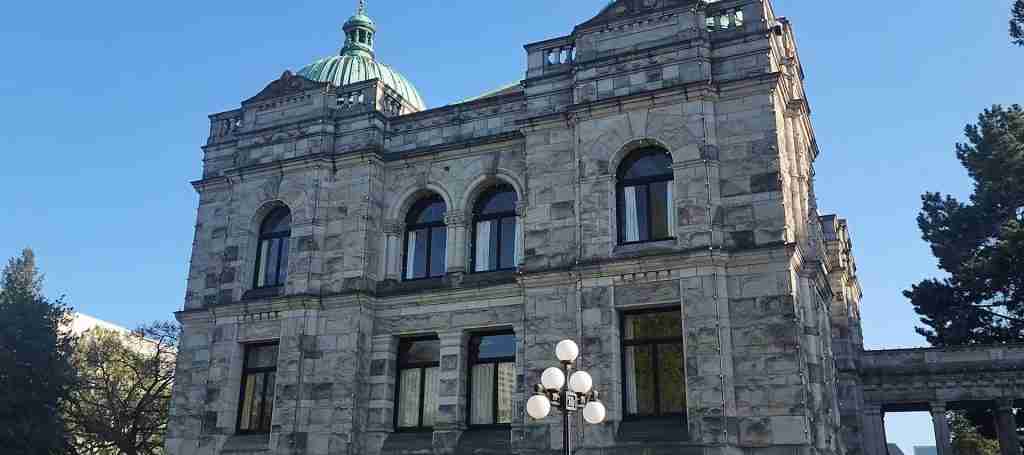
The British Columbia Parliament Buildings, completed in 1898 and designed in Romanesque Revival style by architect Francis Rattenbury, rank among Canada’s most architecturally significant government buildings and provide free guided tours that reveal both the province’s legislative history and the structure’s remarkable interior design. Tours operate weekdays year-round and expand to daily service during peak summer months from approximately May through September 2026, with standard 45-minute tours departing at hourly intervals between 9:30 AM and 4:00 PM from the main entrance on Belleville Street.
The tours access areas normally restricted to visitors including the Legislative Chamber where British Columbia’s 87 elected members debate and vote on provincial legislation, the ornate Speaker’s Chair positioned beneath the chamber’s domed ceiling, and the central rotunda featuring a massive stained glass ceiling and marble columns. Knowledgeable guides provide historical context on the building’s construction, the parliamentary system, significant political moments in BC history, and architectural details including the hand-carved woodwork, period furniture, and portrait collection of past premiers and lieutenant governors. The Legislative Chamber’s layout directly mirrors Westminster traditions with government and opposition benches facing each other across the center aisle, providing tangible connection to British parliamentary heritage.
Specialized architecture tours lasting approximately 90 minutes delve deeper into the building’s Romanesque Revival design, construction techniques utilizing local materials, and Rattenbury’s broader influence on Victoria’s architectural character. These extended tours examine exterior features including the central copper dome, quatrefoil windows, rusticated stone base, and the Sir George Vancouver statue atop the copper-clad dome. Both standard and architecture tours require no advance booking, operate on a first-come-first-served basis, and charge zero admission fees. Arriving mid-morning on weekdays typically ensures shortest wait times compared to summer afternoons when tour groups and cruise ship passengers increase demand. Security screening comparable to airport procedures precedes entry, requiring visitors to allow extra time beyond the tour’s scheduled start.
The Parliament Buildings grounds themselves warrant exploration before or after the guided interior tours. The expansive front lawns host various monuments including war memorials, the Queen Victoria statue facing the Inner Harbour, and formal gardens maintained to showcase seasonal blooms. The buildings’ evening illumination using over 3,000 light bulbs creates spectacular nighttime photography opportunities visible from across the Inner Harbour and from the grounds themselves. The Parliamentary Dining Room, accessed through the Mowat entrance rather than the main ceremonial entrance, operates weekdays serving breakfast and lunch featuring British Columbia ingredients at reasonable prices—not free but worth noting for those building a full day around the Parliament tour experience.
Urban Parks and Gardens 2026
Beacon Hill Park Free Access 2026
Beacon Hill Park encompasses 200 acres of diverse landscapes including formal gardens, natural coastal bluffs, ponds, walking trails, and open meadows positioned between downtown Victoria and the Dallas Road waterfront. The park provides free 24-hour access year-round, functioning as Victoria’s premier urban green space and delivering exceptional variety within walking distance of the city center. The park’s unusual combination of manicured gardens near the main entrance transitioning to wilder coastal landscapes along the southern boundary creates distinctly different experiences within the same site, allowing visitors to customize their park exploration based on preferred environments.
The resident peacock population—originally introduced in the early 1900s—roams freely throughout the park’s central areas, providing unexpected wildlife encounters in an urban setting and creating popular photography opportunities particularly when males display their elaborate tail feathers during spring breeding season. Beyond the peacocks, the park supports diverse bird populations including great blue herons nesting in tall trees near Goodacre Lake, numerous waterfowl species in the ponds, and seasonal migrant songbirds utilizing the tree canopy. Wildlife observation requires no special equipment beyond binoculars, though the habituated peacocks often approach within several meters of pathways.
The park’s trail network totals approximately 5 kilometers of paved and natural surface paths connecting various features including Goodacre Lake with its fountain and resident ducks, the children’s petting farm (free admission), the Mile Zero marker for the Trans-Canada Highway, and viewpoints overlooking the Strait of Juan de Fuca and Olympic Mountains. The southern coastal section along Dallas Road provides the park’s most dramatic landscapes where wind-sculpted Garry oak trees frame ocean vistas, rocky outcrops create tide pool exploration opportunities, and the wave-battered shoreline offers storm-watching during winter months. Walking the park’s perimeter circuit takes roughly 45-60 minutes at casual pace, while comprehensive exploration including detours to various features requires 90-120 minutes.
Optimal visiting times vary by season and objective. Spring visits from April through June showcase peak flowering in the formal gardens including extensive displays of daffodils, flowering trees, and later-season rose gardens. Summer provides longest daylight hours and warmest temperatures for extended park exploration and picnicking. Autumn delivers spectacular fall color particularly in the deciduous tree stands, while winter offers solitude and storm-watching opportunities along the coastal bluffs. The park’s proximity to downtown—roughly 10-15 minutes walking from the Inner Harbour—makes it easily accessible without transit costs. Street parking surrounds the park’s perimeter with time limits varying by location, while the park itself contains no parking fees or admission gates.
Mount Douglas Park Summit Trails 2026
Mount Douglas Park, located in the Saanich Peninsula approximately 8 kilometers north of downtown Victoria, provides 188 hectares of forested slopes culminating in a 225-meter summit delivering panoramic views across the Strait of Georgia, Haro Strait, San Juan Islands, and Olympic Mountains. The park offers over 21 kilometers of free hiking trails ranging from moderate coastal pathways to strenuous summit ascents, appealing to various fitness levels while maintaining zero admission costs and unrestricted access hours. The elevation gain and trail variety distinguish Mount Douglas from Victoria’s flatter urban parks, providing genuine mountain hiking experiences within Greater Victoria’s boundaries.
Two primary routes access the summit from the main parking area on Cordova Bay Road. The moderate Irvine Trail ascends through Douglas fir and western redcedar forest via switchbacks over approximately 2 kilometers, gaining 225 meters elevation with steady grades manageable for reasonably fit hikers. The steeper Churchill Drive route follows the paved maintenance road directly to the summit over 1.5 kilometers, offering faster ascent but more sustained grades that challenge cardiovascular fitness. Both routes typically require 30-45 minutes uphill depending on pace and fitness, with descent taking slightly less time. The summit parking lot allows those preferring minimal hiking to drive directly to the viewpoint, though the hiking experience provides superior forest immersion and greater sense of accomplishment.
The summit viewpoint features interpretive panels identifying visible landmarks including the Gulf Islands, Mount Baker’s distinctive volcanic cone across the international border, and various San Juan Islands scattered throughout the visible seascape. Clear days provide visibility exceeding 50 kilometers, while foggy conditions create atmospheric effects as clouds move through the forested slopes and occasionally envelop the summit itself. The viewpoint orientation faces primarily north and east, making morning visits optimal for photography with backlighting, though afternoon and evening visits showcase different lighting conditions and sunset potential over the western mountains. The summit experience requires no fees, permits, or advance booking—simply park in the designated lot and begin hiking.
The park’s lower elevation trails explore coastal ecosystems along Cordova Bay’s shoreline, offering alternative experiences for those avoiding steep climbs or seeking beach access. The Beach Trail and Peanut Loop provide relatively flat routes through coastal forest and along the sandy beach, popular for dog walking and casual nature observation. Winter visits require appropriate rain gear and caution on potentially muddy trails, while summer conditions offer dry surfaces and extended evening hours for post-work hiking. The park maintains year-round access with dawn-to-dusk trail use recommended for safety though no gates restrict access during darkness hours. Transit access via BC Transit Route 26 from downtown Victoria provides car-free access for those combining the visit with Victoria’s free transit for children or utilizing the $3 CAD ($2 USD) adult fare for occasional rides.
Government House Gardens 2026
Government House, the official residence of British Columbia’s Lieutenant Governor, maintains 36 acres of formal gardens, woodland trails, and landscaped grounds accessible to the public daily free of charge despite the site’s status as a working vice-regal residence. The gardens showcase British Columbia’s horticultural excellence through themed garden rooms including a rose garden, rock garden, kitchen garden, and perennial borders maintained by professional gardening staff and volunteer organizations. The combination of formal Victorian-era landscaping traditions and Pacific Northwest native plant integration creates a distinctive garden character reflecting both colonial heritage and regional ecology.
The gardens peak visually from April through October when flowering displays transition through spring bulbs, early summer perennials, midsummer roses, and autumn color. The rose garden reaches maximum bloom typically in June and July, featuring both heritage varieties and modern cultivars in formal beds surrounding a central fountain. The rock garden, positioned on a hillside slope, showcases alpine and rock garden plants adapted to well-drained conditions, particularly striking in spring when early perennials bloom against the stone features. The woodland trails winding through the property’s natural areas provide shade during summer months and peaceful walking environments year-round.
Visiting regulations require respectful behavior appropriate to the formal garden setting and the property’s function as the Lieutenant Governor’s residence. Dogs must remain leashed, visitors should stay on designated pathways rather than walking across planted beds, and the gardens close during official vice-regal functions though these closures affect only a handful of days annually. The main entrance on Rockland Avenue provides the primary access point with limited street parking available nearby and additional parking along surrounding residential streets. The gardens maintain no admission fees, no booking requirements, and no time limits for visits—guests may explore at leisure from dawn to dusk throughout the year.
The Victorian teahouse building occasionally hosts plant sales and garden-related events benefiting various horticultural societies, providing opportunities to purchase plants propagated from the gardens’ own collection though attending events is optional and garden access itself remains perpetually free. The site’s location in the upscale Rockland neighborhood, roughly 2 kilometers from downtown Victoria, makes it accessible via 20-25 minute walks from the city center or brief transit rides on Route 11 or 14 for those preferring to minimize walking distance. The combination of formal garden design, horticultural excellence, and serene atmosphere creates an experience rivaling many fee-charging botanical gardens.
Historic Neighborhoods and Cultural Sites 2026
Chinatown and Fan Tan Alley 2026
Victoria’s Chinatown, established in the 1860s during the Cariboo Gold Rush and ranking as Canada’s oldest continuous Chinatown, occupies a concentrated area between Fisgard Street, Government Street, and Store Street. The neighborhood retains authentic character despite modern commercial pressures, with heritage buildings displaying ornate iron balconies, traditional painted signage, and architectural details reflecting southern Chinese design influences adapted to Victorian-era construction methods. The Gate of Harmonious Interest spanning Fisgard Street between Government and Store Streets marks the neighborhood’s ceremonial entrance, featuring traditional Chinese architectural elements including upturned eaves and symbolic decorative features.
Fan Tan Alley, the neighborhood’s most distinctive feature, claims status as Canada’s narrowest commercial street at merely 1.2 meters (roughly 4 feet) wide at its most constricted point. The alley historically housed gambling establishments, opium dens, and lodging for Chinese laborers during the late 19th and early 20th centuries, functioning as a semi-private internal street system where Chinese businesses and social organizations operated beyond direct view of the broader community. Contemporary Fan Tan Alley maintains its narrow physical dimensions while hosting small boutiques, galleries, and specialty shops in the heritage buildings lining both sides.
Walking through Chinatown requires no fees and operates on self-guided principles—visitors simply stroll the streets reading interpretive plaques, examining architectural details, and absorbing the neighborhood’s distinctive character. The Chinese Public School building on Fisgard Street showcases traditional Chinese architectural elements and houses exhibits on Chinese-Canadian history. The Tam Kung Temple, tucked inside the Yen Wo Society Building, welcomes respectful visitors during open hours. Street art murals on various building walls celebrate Chinese-Canadian heritage and contemporary Asian culture, providing colorful photography opportunities throughout the district.
Optimal visiting times avoid peak restaurant hours when sidewalks become congested with dining patrons. Mid-morning through early afternoon provides comfortable exploration conditions with shops open and streets relatively uncrowded. The neighborhood’s compact size—approximately three blocks by two blocks—allows thorough exploration in 45-60 minutes including Fan Tan Alley’s length, though photography enthusiasts and history buffs often spend longer absorbing details. The area sits immediately adjacent to Market Square and connects to the Inner Harbour via a 10-minute walk, facilitating combination visits that maximize downtown exploration efficiency. Visiting during Chinese New Year celebrations in late January or early February 2026 adds festival atmosphere though crowds increase significantly during these cultural events.
Ross Bay Cemetery Historic Grounds 2026
Ross Bay Cemetery, established in 1873 and positioned along the Dallas Road coastal pathway overlooking the Strait of Juan de Fuca, functions as both a Victorian-era burial ground and an outdoor museum chronicling British Columbia’s colonial and post-confederation history through its monuments, mausoleums, and grave markers. The 27-acre site contains approximately 28,000 burials including numerous significant historical figures from BC’s first centuries as a British colony and Canadian province. The cemetery remains an active burial ground though most interments in recent decades occupy existing family plots rather than new sections.
Notable burials include Emily Carr, British Columbia’s most celebrated artist and writer whose paintings and writings captured Indigenous cultures and Pacific Northwest landscapes; Sir James Douglas, the first Governor of the Colony of British Columbia; Robert Dunsmuir, the coal baron whose industrial empire shaped Vancouver Island’s economy; and numerous other politicians, entrepreneurs, and pioneers who influenced the region’s development. Identifying specific grave locations requires either advance research using the cemetery’s online database or guided tour participation, though simply wandering the grounds and reading markers encountered provides historical context and Victorian-era memorial art appreciation.
The cemetery’s coastal location and mature tree canopy create an unusually scenic burial ground where ocean views, Garry oak groves, and landscaped pathways combine with historical significance. The Victorian-era monuments display diverse styles reflecting changing tastes in memorial design from elaborate Celtic crosses and classical columns to modest granite markers and family mausoleums. Walking the cemetery’s internal road network and exploring various sections typically requires 60-90 minutes for comprehensive coverage, though shorter visits focusing on specific areas work equally well. The Old Cemetery Society of Victoria offers guided walking tours for reasonable fees, but the grounds themselves remain open and free during daylight hours year-round.
Accessing the cemetery from downtown Victoria requires either walking the Dallas Road waterfront pathway (approximately 30 minutes from the Inner Harbour) or taking BC Transit Route 14 to stops near the main entrance on Fairfield Road. Street parking lines the cemetery perimeter though spaces fill quickly on sunny weekends when the coastal pathway attracts numerous walkers and cyclists. The combination of historical significance, outdoor sculpture gallery character, and coastal setting distinguishes Ross Bay Cemetery from typical burial grounds, creating an attraction that appeals to history enthusiasts, genealogy researchers, and those simply appreciating Victorian-era artistry and peaceful outdoor spaces.
Waterfront Walks and Scenic Pathways 2026
Dallas Road and Ogden Point Breakwater 2026
The Dallas Road waterfront pathway extends approximately 5 kilometers from Fisherman’s Wharf through residential neighborhoods and parklands along Victoria’s southern coast, facing the Strait of Juan de Fuca and providing unobstructed views toward Washington’s Olympic Peninsula. The multi-use paved trail accommodates pedestrians, cyclists, and inline skaters while passing through diverse coastal ecosystems including rocky shorelines, sandy beaches, and grassy blufftops. The pathway delivers consistently excellent ocean vistas including regular marine wildlife sightings—harbor seals, sea lions, bald eagles, and seasonal orca pods passing through local waters—entirely without access fees or restrictions.
The Ogden Point Breakwater, projecting nearly 800 meters into the Strait from the cruise ship terminal area, provides one of Victoria’s most distinctive walks where visitors stroll the breakwater’s concrete surface with open ocean on both sides and expansive views back toward the city skyline and mountains beyond. The breakwater’s round-trip distance of approximately 1.6 kilometers takes roughly 20-25 minutes at casual pace, though many visitors extend the experience by pausing at the outer lighthouse, watching wave action, and scanning for marine wildlife. Winter storms create dramatic wave conditions that occasionally overwash the breakwater, while summer conditions offer calm surfaces and extended evening hours for sunset walks.
The breakwater’s underwater portions support diverse marine ecosystems including anemones, sea stars, kelp forests, and fish populations that attract scuba divers year-round. Surface visitors observe diving activity from the breakwater’s edge and occasionally spot marine mammals surfacing nearby. The cruise ship terminal at the breakwater’s base operates primarily during summer months when Alaska-bound vessels call at Victoria, adding massive ship presence to the maritime scene though public access to the breakwater remains unrestricted regardless of cruise ship schedules. The terminal’s parking lot provides convenient access with metered parking rates, while the pathway continues west through residential areas toward Saxe Point Park and east back toward downtown.
Combining the Dallas Road pathway with Beacon Hill Park and Fisherman’s Wharf creates an exceptional free walking route totaling approximately 7-8 kilometers that showcases Victoria’s finest coastal scenery, urban parkland, and waterfront neighborhoods. The route requires no backtracking when walked as a one-way journey from downtown through Beacon Hill Park, along Dallas Road, past Fisherman’s Wharf, and back to the Inner Harbour via the shoreline pathway. Transit connections along various points enable shorter segments for those limiting walking distance or needing return transportation. The pathway’s ocean exposure makes wind-resistant clothing advisable during cooler months, while summer conditions rarely require more than light layers.
Galloping Goose Regional Trail Access 2026
The Galloping Goose Regional Trail, spanning 60 kilometers from downtown Victoria through suburban municipalities and into the rural Sooke region, represents one of Canada’s premier urban-to-rural multi-use trails offering free walking and cycling access along a converted rail line. The trail name derives from the historical rail cars that operated the route, nicknamed the Galloping Goose for their peculiar motion. The trail surface combines paved sections in urban areas with well-maintained crushed gravel through rural segments, accommodating various user types from casual walkers and families with strollers to serious distance cyclists and inline skaters.
The trail’s urban section between downtown Victoria and the Colwood area traverses diverse environments including residential neighborhoods, industrial zones, wetland ecosystems, and forested corridors. Numerous access points along the route allow users to enter at convenient locations rather than requiring full-length attempts. The downtown trailhead begins near the Johnson Street Bridge, connecting to Victoria’s street network and making the trail accessible via short walks from most downtown hotels and attractions. The trail’s car-free status eliminates traffic concerns while the relatively flat grades reflect the railway heritage, making even lengthy distances manageable for recreational cyclists and walkers.
Trail highlights include the Selkirk Trestle crossing Portage Inlet with water views, the natural areas through Langford and Colwood showcasing wetland birds and resident beavers, and the rural sections beyond Sooke offering old-growth forest experiences and mountain vistas. Most visitors focus on shorter segments rather than attempting the full 60-kilometer length, with popular out-and-back routes including the downtown-to-Colwood section (approximately 24 kilometers round-trip) or even shorter neighborhood segments. The trail remains open year-round though winter conditions bring increased precipitation and occasional surface flooding in low-lying sections.
Connecting the Galloping Goose Trail with other Victoria free attractions requires either cycling from downtown directly to the trailhead or taking transit to access points, with BC Transit buses accommodating bicycles on front-mounted racks during non-peak hours. The trail functions as both a recreational amenity and practical transportation corridor, with commuters using segments for car-free travel between residential areas and employment centers. Dogs are welcome on-leash throughout the trail system. The trail’s operation as a regional park maintains free access permanently, contrasting with some cities where rail trail conversions eventually introduce user fees or parking charges.
Free Cultural Experiences 2026
Thunderbird Park Totem Collection 2026
Thunderbird Park, positioned immediately behind the Royal BC Museum adjacent to the Parliament Buildings, showcases one of British Columbia’s finest outdoor collections of First Nations totem poles, house posts, and monumental carvings. The park functions as both an exhibition space and a traditional carving site where Indigenous artists continue the living tradition of totem creation using techniques passed through generations. The collection represents multiple First Nations from British Columbia’s coast and interior, displaying diverse carving styles and symbolic systems reflecting different cultural traditions and artistic approaches.
The totem poles stand in a compact outdoor gallery setting surrounded by the modern city, creating powerful juxtaposition between contemporary urban development and ancient cultural expressions. Each pole tells stories through its carved figures—eagles, ravens, bears, wolves, orcas, and human forms—representing clan lineages, historical events, or supernatural narratives specific to the commissioning family or community. Interpretive signage provides basic information about carving traditions and specific poles, though the full complexity of the narratives typically requires deeper study or guided interpretation. The park charges no admission fee and remains accessible during daylight hours year-round.
The park’s carving program operates in the traditional Mungo Martin House, a replica of a Kwakwaka’wakw big house where master carvers mentor apprentices and create new works continuing centuries-old artistic traditions. Visitors can often observe carvers at work depending on project schedules and weather conditions, providing rare opportunities to witness totem creation processes and ask questions about techniques and symbolism. The carving house interior occasionally opens for special events though the primary experience focuses on the outdoor pole collection and exterior building architecture.
Visiting Thunderbird Park combines naturally with Parliament Buildings tours and Inner Harbour walks, as all three sites cluster within a two-block area creating an efficient concentration of free cultural experiences. The park’s compact size—less than one acre—allows comprehensive viewing in 20-30 minutes, though photography enthusiasts and those studying individual poles may spend longer. The site’s integration with surrounding urban landscapes rather than isolation in a dedicated cultural precinct creates an unusual setting where monumental Indigenous artworks stand meters from government buildings and busy streets, making profound cultural statements about the endurance of First Nations presence despite colonial displacement.
Public Art and Mural Tours 2026
Victoria’s streets and public spaces host extensive collections of outdoor art including murals, sculptures, and installations distributed throughout downtown neighborhoods and creating self-guided gallery experiences requiring only walking time and observation. The downtown core alone contains dozens of significant murals ranging from heritage scenes depicting Victoria’s history to contemporary works exploring social themes and celebrating cultural diversity. The outdoor gallery model eliminates admission barriers while integrating art into daily urban experience rather than isolating it behind museum walls.
Chinatown and the Lower Johnson Street (LoJo) district concentrate particularly high densities of street art, with building-sized murals transforming otherwise plain walls into colorful canvases. The Chinatown murals specifically celebrate Chinese-Canadian heritage through both traditional imagery and contemporary artistic interpretations exploring themes of immigration, identity, and cultural preservation. The Fan Tan Alley area includes multiple smaller murals and artistic interventions transforming the narrow passage into an open-air gallery. Artists both local and visiting have contributed works, creating an evolving collection that changes periodically as new murals replace aged works.
Self-guided public art exploration requires no maps or organized routes—simply walking downtown streets with attention to building walls, alleyways, and public spaces reveals numerous works. More systematic approaches involve consulting online public art databases compiled by tourism organizations or following social media accounts that document and map street art locations. The Art Gallery of Greater Victoria’s website maintains information about outdoor public sculptures throughout the city, while various walking tour companies offer guided street art experiences for reasonable fees though the art itself remains free to view independently.
Photography of public murals and sculptures faces no restrictions, making the outdoor gallery valuable for social media content creators and casual photographers alike. The works create vibrant backgrounds for portrait photography and serve as recognizable Victoria landmarks when shared online. Seasonal variations affect viewing experiences—summer’s extended daylight allows evening walks past illuminated murals, while winter’s shorter days compress viewing hours but offer dramatic lighting during morning and afternoon golden hours. The permanent accessibility of outdoor public art contrasts with museum hours and admission fees, providing 24-hour cultural access without cost barriers.
Seasonal Events and Festivals 2026
Victoria Day Celebrations May 2026
Victoria Day, observed annually on the Monday preceding May 25 and honoring Queen Victoria’s birthday, transforms into Victoria’s signature civic celebration with a long weekend of events running May 17-19, 2026. The festival unofficially marks the beginning of summer season and draws enormous crowds to the Inner Harbour area for the culminating parade on May 18—the event’s 126th consecutive year. The parade, hosted by Thrifty Foods, typically features approximately 150 entries including marching bands from both Canada and the United States, decorated floats representing community organizations, military vehicles, cultural performance groups, and ceremonial participants in period costumes.
The parade route follows Belleville Street and Government Street through downtown Victoria, passing directly in front of the Parliament Buildings and along the Inner Harbour waterfront where viewing spots fill hours before the parade’s late-morning start. Securing optimal viewing locations requires arriving early, with waterfront positions offering photographic advantages while side-street locations provide less crowded alternatives with equally good parade visibility. The entire parade remains free to attend with no ticketed sections or VIP areas—public curbside viewing on a first-come-first-served basis creates democratic access regardless of economic means.
Beyond the parade, Victoria Day weekend includes various free concerts, street performances, and community gatherings throughout the downtown area. The Parliament Buildings lawn traditionally hosts free outdoor entertainment including musical performances representing diverse cultural traditions. Food vendors concentrate along the Inner Harbour and parade route, though these commercial operations charge normal prices while the entertainment and parade viewing remain free. The festival atmosphere extends to neighborhoods beyond downtown with community-organized events in various parks and public spaces throughout Greater Victoria.
The weather in late May typically provides Victoria’s finest conditions with spring warmth establishing but summer crowds not yet reaching peak levels. Average daily temperatures range 12-18°C (54-64°F) with increasing daylight hours extending to approximately 15 hours by mid-May. Rain remains possible though May ranks among Victoria’s drier months statistically. Visitors planning Victoria Day attendance should book accommodation well in advance as the holiday weekend fills hotels and creates the year’s first major demand surge. Transit services operate enhanced holiday schedules with BC Transit adding extra buses on parade routes, while driving and parking downtown become challenging due to street closures and overwhelming demand for limited parking spaces.
Free Summer Music Festivals 2026
Victoria’s summer calendar includes multiple free music festivals and outdoor concert series transforming public spaces into performance venues between June and September 2026. The Symphony Splash, typically held on August long weekend, ranks as Victoria’s premier free music event when the Victoria Symphony Orchestra performs a waterside concert for audiences gathered around the Inner Harbour. The orchestra performs from a floating barge in the harbor while thousands of listeners spread across the waterfront pathways, adjacent lawns, and nearby building steps. The event traditionally concludes with Tchaikovsky’s 1812 Overture synchronized with fireworks launched over the harbor, creating a spectacular finale visible throughout downtown Victoria.
The Victoria Symphony in the Summer series presents additional free and ticketed performances at various venues throughout the season, with the free offerings typically occurring at outdoor locations including parks and public squares. The program varies annually but consistently maintains commitment to accessible community performances alongside the symphony’s ticketed subscription series. Specific 2026 dates and locations remain subject to confirmation closer to summer months though the general pattern of free summer outdoor concerts continues from previous years’ programming.
Beyond orchestral music, the Moss Street Paint-In on July 18-19, 2026, combines visual arts with live music when artists paint en plein air throughout the street while musicians perform at multiple stages. The event, while focused primarily on the juried art show where dozens of artists create and sell works, includes free musical entertainment throughout the weekend. The event location on Moss Street in the Fairfield neighborhood provides a residential setting distinct from downtown festival venues, creating neighborhood festival atmosphere where art, music, and community interaction blend.
Beach Food Days on Colwood’s waterfront run weekend afternoons from late May through early September, combining food truck offerings with free live music performances in the beachfront park setting. While food purchases generate costs, attending for the music and beach access remains free. The Vancouver Island Blues Bash in August presents multiple free concerts alongside ticketed performances, with outdoor shows in public spaces accessible without charge. Dragon Boat Festival races in the Inner Harbour, typically held in August, include free entertainment programming alongside the competitive racing that draws teams from across British Columbia and the Pacific Northwest.
Getting Around Victoria on a Budget 2026
Victoria’s compact downtown core and walkable urban design eliminate transit costs for visitors focusing on free attractions concentrated within the roughly two-kilometer radius surrounding the Inner Harbour. The distance from the Parliament Buildings to Beacon Hill Park measures approximately 1.5 kilometers, while Chinatown sits less than 1 kilometer from the waterfront—both distances comfortably walkable in 15-20 minutes at casual pace. The flat terrain throughout most of downtown, well-maintained sidewalks, and pedestrian-friendly street design support walking as the primary transportation mode without fitness barriers excluding participation.
BC Transit’s Victoria Regional Transit System operates comprehensive bus service throughout Greater Victoria when destinations exceed comfortable walking distance. Single ride fares cost $3 CAD ($2 USD) when paid in cash to the driver, with exact change required as drivers carry no currency. DayPASS tickets costing $6 CAD ($4 USD) provide unlimited rides for calendar day, offering value for anyone making three or more trips. Children ages 6-12 ride free year-round when accompanied by fare-paying adults, significantly reducing family transportation costs. The Umo fare card system allows electronic payment and fare product loading though purchasing and loading cards adds complexity for short-term visitors.
Strategic transit use focuses on reaching attractions beyond walking distance from downtown including Mount Douglas Park (Route 26), Goldstream Provincial Park (Route 50 from Colwood Exchange requiring initial connection), and the Butchart Gardens area (Route 75 toward Brentwood Bay). Most free attractions discussed in this guide remain within walking distance from downtown accommodation, with transit needed primarily for those extending exploration to greater Victoria’s regional parks and suburban destinations. Cycling provides another car-free option with bike rental shops operating downtown, though rental costs undermine the free-attraction strategy unless extended bike touring justifies the daily rental fee.
The Victoria Harbour Ferry operates small passenger ferries crossing the Inner Harbour and connecting Fisherman’s Wharf to downtown for approximately $8 CAD ($6 USD) per adult. While charming and popular with tourists, the ferry covers distances equally manageable by 15-minute walks along the shoreline pathway at zero cost. The ferry service makes sense when time constrained or mobility limited, but budget-focused travelers easily avoid this expense. Water taxis serving points around the greater harbor area charge similar rates and face the same value assessment—convenient but unnecessary for those prioritizing free experiences and willing to walk reasonable distances.
Bicycle infrastructure throughout Victoria includes dedicated bike lanes on major streets, the Galloping Goose Regional Trail providing car-free cycling routes, and bike racks positioned at most major attractions. Personal bicycles brought from home or borrowed from accommodations eliminate rental costs while enabling faster travel between free attractions compared to walking. The relatively flat terrain downtown and mild climate year-round make Victoria exceptionally bicycle-friendly compared to cities with harsh winters or challenging topography. E-bike and e-scooter sharing services operate throughout downtown though these represent paid options reducing budget efficiency.
Hidden Gems and Local Favorites 2026
Saxe Point Park Coastal Access 2026
Saxe Point Park, positioned on Esquimalt’s waterfront approximately 4 kilometers west of downtown Victoria, provides exceptional ocean access and panoramic views across the Strait of Juan de Fuca toward the Olympic Mountains while maintaining relative anonymity compared to busier Beacon Hill Park or Inner Harbour attractions. The park’s 8 hectares include rocky shoreline, coastal forest trails, grassy bluffs, and the namesake Saxe Point viewpoint extending into the Strait and delivering 180-degree ocean vistas. The combination of natural beauty, wildlife viewing opportunities, and peaceful atmosphere creates an experience rivaling more famous Victoria destinations.
The park attracts local residents for dog walking, shoreline exploration, and sunset viewing but sees far fewer tourists than downtown attractions despite comparable scenic quality. The rocky beaches allow tide pool exploration during lower tides when marine invertebrates including sea stars, anemones, and small crabs populate pools among the rocks. Harbor seals frequently haul out on offshore rocks and occasionally swim close to shore. Bald eagles nest in tall conifers near the parking area and regularly appear perched in dead snags or soaring over the water hunting for fish.
Trail networks wind through the coastal forest connecting the parking area to various viewpoints and beach access points. The main path to Saxe Point requires roughly 5-10 minutes walking from the parking lot, while exploring the complete trail system takes 30-45 minutes. The park’s modest size prevents getting lost while the trails’ relatively flat grades accommodate various fitness levels. Winter storms create dramatic wave action against the rocks and windswept conditions that appeal to storm-watching enthusiasts, while summer provides calmer conditions ideal for extended shore exploration and picnicking on the grassy areas.
Reaching Saxe Point Park from downtown Victoria requires either personal vehicle, bicycle, or BC Transit Route 24 toward Saxe Point, though bus service frequency makes this a less convenient destination for car-free visitors compared to attractions on frequent bus routes or within walking distance. For those with vehicles or serious about cycling, the park rewards the travel effort with exceptional natural beauty and solitude compared to busier downtown free attractions. The park charges no admission fees, imposes no time limits, and remains open from dawn to dusk year-round. The combination of accessibility, natural features, and relative quiet makes Saxe Point worthwhile for visitors seeking authentic local park experiences beyond the tourist circuit.
Abkhazi Garden Free Hours 2026
The Abkhazi Garden, a 1.5-acre property in the Rockland neighborhood showcasing exquisite garden design integrating dramatic Garry oak trees and natural rock outcrops, normally charges admission but offers select free visiting hours benefiting budget-conscious travelers. The garden, created by Prince and Princess Abkhazi between 1946 and the 1960s and now maintained by The Land Conservancy, exemplifies mid-20th century West Coast garden design philosophy emphasizing natural landscape features and plant palette suited to Victoria’s climate and existing site conditions rather than imposing formal European garden traditions.
The garden’s design genius lies in its integration of massive glacially-deposited granite boulders and gnarled Garry oak trees as structural elements rather than obstacles requiring removal. The paths wind between and over rocks, with plantings tucked into crevices and spreading across boulders in ways that appear natural rather than imposed. The combination of small scale, intimate spaces, and dramatic natural elements creates an experience distinctly different from the expansive formal gardens at Butchart or the Government House grounds. The spring flowering season from April through June showcases the garden at peak bloom with rhododendrons, flowering cherries, and perennial plantings reaching maximum visual impact.
Free access hours vary seasonally and require verification through The Land Conservancy website or by calling ahead, as the program’s continuation depends on volunteer availability and organizational priorities that may shift. When offered, free hours typically occur on specific mornings or weekday periods during slower shoulder seasons rather than peak summer months when admission revenue supports operations. The property includes a small tearoom serving light refreshments during regular operating hours, though this commercial service operates separately from the free garden access program. Photography for personal use faces no restrictions during free visiting hours.
The garden’s location approximately 2.5 kilometers from downtown Victoria places it within extended walking distance or brief cycling/transit reach on Route 11 or 14. The neighborhood setting contrasts with Victoria’s more intensively developed downtown core, providing glimpses of the prestigious residential area where historic mansions occupy large lots in a low-density environment. Combining Abkhazi Garden visits with nearby Government House Gardens creates an exceptional free garden tour showcasing different design philosophies—the formal traditional approach at Government House versus the integrated naturalistic design at Abkhazi—both maintained to exceptional standards and accessible without fees during appropriate windows.
Photography Opportunities Without Fees 2026
Victoria delivers exceptional photography opportunities across all free attractions discussed throughout this guide, with several locations ranking among British Columbia’s most photographed scenes. The Parliament Buildings illuminated after dark create Victoria’s signature image, best captured from the Inner Harbour’s eastern waterfront pathway where the buildings’ reflection appears in harbor waters during calm evening conditions. The illumination activates shortly after sunset year-round, with winter’s earlier darkness allowing photography during comfortable early-evening hours while summer requires waiting until approximately 9:30 PM for sufficient darkness to emphasize the building lights.
The Fairmont Empress Hotel’s ivy-covered facade provides another iconic Victoria subject, photographed effectively from various Inner Harbour locations throughout the day though morning and late afternoon sidelighting creates more dimensional modeling compared to midday’s flat overhead light. Including harbor activity—seaplanes landing, boats passing, or the small harbor ferries—adds dynamic elements to otherwise static architectural compositions. Seasonal flowers in hanging baskets and harbor-side planters peak from June through September, adding color to foreground elements in compositions featuring the hotel and Parliament Buildings as background subjects.
Beacon Hill Park’s resident peacocks create popular wildlife photography subjects, particularly when males display elaborate tail feathers during spring breeding season. Photographing the birds requires patience and respect for wildlife—maintaining appropriate distance, avoiding feeding or harassing the animals, and waiting for natural behaviors rather than attempting to force reactions. The peacocks’ habituation to human presence allows relatively close approach compared to wild birds, though they remain unpredictable and maintaining 3-4 meters distance prevents startling the animals. The best light for peacock photography typically occurs during morning hours when the birds are most active and before harsh midday sun creates excessive contrast.
The Dallas Road waterfront pathway and Ogden Point Breakwater provide exceptional sunset photography when weather conditions cooperate, with the Olympic Mountains across the Strait silhouetted against colorful skies and foreground rocks or breaking waves adding compositional interest. Sunset timing varies dramatically between winter solstice (approximately 4:20 PM) and summer solstice (approximately 9:20 PM), affecting planning for golden hour shooting. Weather predictability remains challenging in Victoria’s marine climate where morning conditions often differ substantially from afternoon and evening, requiring photographers to remain flexible and potentially return to locations multiple times for optimal conditions.
Street photography throughout Chinatown, the Inner Harbour, and downtown captures Victoria’s urban character, cultural diversity, and community life. Photographing people in public spaces faces no legal restrictions in Canada though ethical considerations suggest obtaining permission when photographing individuals prominently featured rather than as incidental elements in street scenes. The murals and street art throughout downtown provide colorful, Instagram-friendly backgrounds for portraits and architectural abstracts. No photography permits or fees apply to shooting in public spaces and parks throughout Victoria, contrasting with some cities where commercial photography requires permits even when using public property.
Practical Planning for Zero-Cost Days 2026
Constructing full days in Victoria using exclusively free attractions requires strategic planning to maximize experiences while maintaining true zero-cost touring beyond meals and accommodation. A sample free day might include: morning Parliament Buildings tour (9:30 AM departure, 45 minutes duration), Inner Harbour waterfront walk extending to Fisherman’s Wharf (90 minutes including harbor seal observation), late morning Beacon Hill Park exploration (90 minutes covering southern coastal areas and formal gardens), afternoon Chinatown and Fan Tan Alley visit (60 minutes), late afternoon Government House Gardens tour (60 minutes), return to Inner Harbour for sunset and illuminated Parliament Buildings photography (90 minutes). This itinerary totals approximately 7-8 walking hours including attractions, covers roughly 10-12 kilometers total distance, and costs absolutely nothing beyond personal meal choices.
Extending the free experience across multiple days requires incorporating different free attractions to avoid repetition: day two might emphasize Mount Douglas Park hiking, Galloping Goose Trail cycling or extended walks, Saxe Point Park coastal exploration, and Ross Bay Cemetery historical tour. Day three could focus on seasonal events if visiting during festival periods, alternative park systems in surrounding municipalities, and deeper exploration of neighborhoods beyond the downtown core. The remarkable density of quality free attractions allows Victoria to sustain multi-day visits without either repeating experiences or requiring paid attraction attendance to maintain itinerary variety.
Meal costs represent the primary variable expense during zero-cost touring days. Budget approaches include purchasing groceries from Save-On-Foods, Fairway Market, or Thrifty Foods supermarkets for picnic supplies consumed in parks, spending approximately $15-25 CAD ($11-18 USD) daily per person for basic sandwich components, fruit, and snacks. Food cart options at Fisherman’s Wharf and Inner Harbour area provide mid-range meal alternatives at $12-18 CAD ($9-13 USD) per item. Sit-down casual restaurant meals cost $18-30 CAD ($13-22 USD) per person for lunch entrees, rising to $25-45 CAD ($18-33 USD) for dinner. Coffee shops charging $5-7 CAD ($4-5 USD) for specialty drinks add incremental costs though many free attractions include water fountains for refilling personal water bottles.
Weather preparation maximizes comfort during extended outdoor free-attraction touring. Victoria’s climate produces approximately 150 days annually with measurable precipitation, typically falling as light rain rather than heavy downpours though winter storms occasionally bring more intense conditions. Layered clothing including a waterproof outer shell accommodates temperature variations between morning and afternoon, indoor and outdoor environments, and shaded forest trails versus open sunny coastlines. Victoria’s moderate temperatures—daily highs averaging 8°C (46°F) in January and 22°C (72°F) in August—rarely require extreme weather gear though wind exposure along coastal pathways makes windproof layers valuable year-round.
Photography equipment decisions balance image quality desires against carrying weight during extensive walking days. Smartphones capture adequate images for social media sharing and personal records while weighing nothing beyond the device already carried. Dedicated cameras improve image quality but add weight and theft concerns. Optimal compromise often involves small mirrorless cameras or advanced compact models offering superior image quality compared to phones while maintaining manageable size and weight. Backup batteries prove essential during long days as camera displays and processing drain power, particularly in cold weather when battery capacity reduces.
Family-Friendly Free Activities 2026
Victoria’s free attraction network accommodates families with children across various age ranges, offering experiences from toddler-appropriate parks to teenager-engaging cultural sites. Beacon Hill Park’s children’s farm provides free admission to a small petting zoo area where kids interact with domestic animals including goats, sheep, chickens, and peacocks. The farm operates seasonally from approximately April through October with hours typically from 10 AM to 4 PM daily. Adjacent playgrounds offer multiple play structures suited to different age groups, swings, and open grass areas for unstructured play. The combination of animals, playgrounds, and nearby beaches creates multi-hour entertainment potential for families with young children.
The Inner Harbour area captivates children through its constant maritime activity where seaplanes execute dramatic water landings and takeoffs, harbor ferries navigate between docks, and street performers present juggling acts, music, and other entertainment particularly concentrated during summer months. The harbor ferry boats themselves—though requiring fare—fascinate children from the free dock areas where the vessels can be closely observed maneuvering and loading passengers. The wide waterfront pathways provide safe spaces for children to run and explore without vehicle traffic concerns, though the harbor water itself requires parental supervision as no barriers prevent access to the edge.
Educational free activities include the Parliament Buildings tours which engage older children and teenagers interested in government, history, or architecture, though younger children may find the 45-minute tours exceed their attention spans. Thunderbird Park’s totem poles provide brief outdoor cultural education appropriate for all ages, with the monumental carvings’ dramatic visual impact capturing children’s interest even when detailed historical context exceeds their comprehension. The Royal BC Museum charges admission but the adjacent totem collection remains outdoors and free, allowing families to introduce Indigenous art without museum entrance costs.
Coastal exploration activities including tidepool investigation along Dallas Road beaches, watching harbor seals at Fisherman’s Wharf, and walking the Ogden Point Breakwater provide nature-based educational entertainment. Tidepool exploration requires timing visits for lower tide periods when larger areas of rocky shore expose pools containing trapped marine creatures. Children should be taught to observe without touching and to return any rocks lifted during exploration to their original positions, protecting fragile intertidal ecosystems while still allowing close observation of sea stars, anemones, small crabs, and various invertebrates. Bringing a identification guide or using smartphone apps adds educational dimension to the exploration.
Accessibility and Mobility Considerations 2026
Victoria’s free attractions vary considerably in physical accessibility, with some sites like the Inner Harbour pathway and Parliament Buildings offering full wheelchair access while others including Mount Douglas Park’s summit trails present significant barriers for those with mobility limitations. The Inner Harbour waterfront pathway features smooth paved surfaces, gradual grades, and curb cuts at intersections, meeting accessibility standards and accommodating wheelchairs, mobility scooters, and strollers without difficulty. The pathway’s level surface extends for the complete harbor circuit, providing accessible waterfront experiences comparable to those available to able-bodied visitors.
The Parliament Buildings tours accommodate wheelchair users and those with mobility devices through ramped entrances and elevator access to upper floors, though advance notification allows staff to prepare appropriate routes and ensure necessary equipment availability. The tours’ 45-minute duration requires sustained mobility though seating opportunities exist at various points. Visitors with specific accessibility needs should contact the tour office in advance to confirm accommodation availability and discuss any special requirements. Service animals are permitted throughout the buildings and grounds.
Beacon Hill Park presents mixed accessibility—paved pathways through the park’s northern sections and around Goodacre Lake provide wheelchair-accessible routes to major features, while the southern coastal sections and various trail segments include stairs, uneven surfaces, and steep grades limiting access for those using wheeled mobility devices. The children’s farm area maintains paved access though viewing the animals may require navigating somewhat uneven ground. The park’s overall size allows those with mobility limitations to access significant portions while accepting that certain areas remain challenging or impossible without assistance.
BC Transit operates fully accessible low-floor buses throughout the Victoria Regional Transit System, with wheelchair lifts or ramps at front and rear doors, designated wheelchair securement positions, and announcements of stops for those with visual impairments. The buses accommodate multiple wheelchairs and mobility scooters simultaneously depending on space availability and device sizes. handyDART paratransit service provides door-to-door transportation for registered users with disabilities unable to access conventional bus service, operating advance-booking system with fares matching regular transit costs. The transit system’s accessibility allows those unable to walk significant distances to reach many free attractions beyond downtown core.
Parking designated for people with disabilities appears throughout downtown Victoria and at park locations including Beacon Hill Park, Fisherman’s Wharf area, and Government House Gardens. These spaces follow standard accessibility parking regulations requiring appropriate permit display, with time limits and enforcement matching non-accessible spaces in the same areas. Many free attractions including Parliament Buildings, various parks, and waterfront areas include accessible washroom facilities though availability varies by location with some sites including Mount Douglas Park and coastal pathway sections lacking facilities within reasonable distance of main attractions.
Solo Travel Safety and Social Opportunities 2026
Victoria maintains reputation as one of Canada’s safest cities with violent crime rates substantially below national averages and property crime focused primarily in specific neighborhoods away from main tourist areas. Solo travelers, including women traveling alone, generally experience Victoria as safe environment for daytime and evening exploration of downtown attractions, with normal urban precautions recommended rather than heightened security measures. The Inner Harbour area maintains significant foot traffic until late evening hours during summer months, providing natural safety through visibility and numbers though winter months see earlier quieting of public spaces.
Free attractions concentrated in downtown core and major parks receive regular police patrols and security presence particularly around Parliament Buildings and Inner Harbour areas where both tourist activity and governmental functions concentrate. Beacon Hill Park experiences occasional issues in isolated areas during nighttime hours, leading to general recommendations for avoiding the park after dark particularly in less-traveled southern sections, though daytime visits pose minimal concerns. The well-used pathways and open sightlines throughout most of the park provide natural surveillance discouraging predatory behavior during daylight hours when activity levels remain high.
Social interaction opportunities for solo travelers frequenting free attractions include organized group activities like walking tours, informal meetups at popular locations like the Inner Harbour or Fisherman’s Wharf where striking up conversations with other visitors occurs naturally, and community events including free festivals and concerts where shared experience facilitates social connection. The Parliament Buildings tours, while not specifically designed as social activities, naturally group strangers together creating opportunities for brief interactions and potential connections with other travelers or local residents taking advantage of the free cultural offering.
Accommodation choices influence solo traveler experience and budget significantly. Hostels including Ocean Island Inn and others in downtown Victoria provide low-cost accommodation with built-in social opportunities through common areas and organized activities, typically charging $35-55 CAD ($26-40 USD) per night for dormitory beds. Private accommodation through vacation rentals offers more privacy but eliminates the natural social networking hostels facilitate. For solo travelers prioritizing free daytime attractions, accommodation choice becomes the primary budget variable determining overall trip costs given that food expenses remain relatively fixed and attraction admission fees are eliminated.
Weather Patterns and Seasonal Considerations 2026
Victoria’s mild oceanic climate creates distinct seasonal experiences affecting free attraction enjoyment and optimal visit timing. Summer months from June through September deliver the most reliable weather with average daily high temperatures ranging 20-23°C (68-73°F), minimal rainfall averaging only 20-40mm per month, and extended daylight hours reaching 16 hours during the June solstice. This season provides ideal conditions for extended outdoor exploration, park activities, and waterfront walks though it also brings peak tourist crowds to popular free attractions like the Inner Harbour and Beacon Hill Park, with mid-July through mid-August representing the busiest period.
Spring from March through May produces the city’s spectacular floral displays justifying Victoria’s “City of Gardens” nickname, with cherry blossoms peaking in late March and April, rhododendrons and azaleas reaching maximum bloom in April and May, and the comprehensive spring bulb shows throughout parks and gardens. Government House Gardens and Beacon Hill Park showcase particularly impressive spring displays. Weather during spring months remains variable with mix of sunny and rainy days, average temperatures gradually warming from 12°C (54°F) in March to 18°C (64°F) in May, and precipitation decreasing through the season as summer approaches. The shoulder season combines fewer tourists with excellent conditions for photography and garden visits.
Autumn from October through November delivers spectacular fall color particularly in parks with significant deciduous tree populations including Beacon Hill Park and Mount Douglas Park. The season brings increasing rainfall and decreasing temperatures with October averaging 14°C (57°F) and November dropping to 9°C (48°F), though these temperatures remain remarkably mild compared to eastern Canada or interior British Columbia. Storm systems increase in frequency and intensity, creating dramatic conditions for storm-watching along the Dallas Road waterfront and Ogden Point Breakwater where wave action against rocks provides spectacular natural displays. The autumn period sees substantially fewer tourists than summer while most attractions maintain full access.
Winter from December through February tests Victoria visitor commitment with the year’s highest rainfall totals averaging 130-150mm per month, shortest daylight hours of approximately 8 hours during late December, and coolest temperatures averaging 6-8°C (43-46°F) for daily highs. However, Victoria’s winter weather rarely includes snow at sea level with the city averaging only 30cm annual snowfall compared to 200cm+ in many Canadian cities, and temperatures rarely dropping below freezing. Free outdoor attractions including parks and waterfront pathways remain fully accessible year-round though visitor numbers drop dramatically. The winter season suits those seeking solitude, off-season accommodation rates, and authentic local experience rather than peak-season tourist atmosphere.
Extended Touring: Day Trips from Free Victoria Base 2026
Victoria’s position on southern Vancouver Island provides access to numerous free natural attractions and communities within day-trip range using personal vehicles or organized transit, extending the free-attraction strategy beyond city limits while maintaining Victoria as accommodation base. Goldstream Provincial Park, located approximately 20 kilometers northwest of downtown, provides exceptional old-growth forest access including massive Douglas fir and western redcedar specimens, the Niagara Falls Trail leading to a dramatic 47-meter waterfall, and seasonal salmon runs during autumn months when thousands of chum and coho salmon return to spawn in Goldstream River. The park charges no day-use fees, includes extensive trail networks totaling over 20 kilometers, and offers picnic areas, nature interpretation programming, and diverse ecosystems from riverside valleys to mountain ridges.
The Malahat Summit viewpoint, positioned along Highway 1 approximately 25 kilometers north of Victoria, delivers panoramic views across the Saanich Inlet, Gulf Islands, and distant mainland mountains from a roadside pullout requiring no hiking or fees. The viewpoint sits at 352 meters elevation, substantially higher than Victoria’s sea-level position, providing perspective on the region’s geography and island nature. The site includes interpretive signage explaining visible features and geological history, parking for multiple vehicles, and accessibility for those unable or unwilling to hike steeper trails for summit views elsewhere in the region.
Sooke Potholes Provincial Park, located 40 kilometers west of Victoria near the town of Sooke, features unique geological formations where the Sooke River carved deep pools and channels into solid rock creating natural swimming holes popular during summer months. The park maintains free day-use access, includes swimming areas suitable for various skill levels from calm shallow pools to deeper sections with cliff jumping opportunities for experienced swimmers, and provides riverside trails, picnic areas, and washroom facilities. The 20-minute drive from Sooke along Sooke River Road winds through second-growth forest, eventually reaching the parking area and short walk to the main potholes. Summer weekends see substantial crowds particularly during hot weather, while weekdays and shoulder seasons offer more solitude.
East Sooke Regional Park encompasses 1,422 hectares of protected coastal wilderness along the strait-facing southern shore of the Sooke Basin, providing one of Greater Victoria’s most dramatic coastal hiking environments accessible without fees or permits. The Coast Trail, stretching 10 kilometers along exposed headlands, rocky beaches, and forested slopes, represents the park’s signature feature and requires 5-7 hours for complete one-way traverse with car shuttle or return via interior trails creating loop options. The trail passes through diverse ecosystems including old-growth forest patches, rocky shorelines with tide pools, and dramatic cliff sections where the strait’s wave action creates spectacular coastal scenery. Multiple shorter trail options allow partial park exploration for those not committing to the full coastal traverse.
Maximizing Value: Combining Free with Select Paid Experiences 2026
While this guide emphasizes Victoria’s exceptional free attraction network, realistic visitor patterns often combine complimentary experiences with selective paid admissions to create balanced itineraries. Understanding which Victoria attractions justify admission costs versus those adequately experienced for free allows strategic budgeting that maximizes overall experience value. The Royal BC Museum, charging approximately $30 CAD ($22 USD) for adult admission, provides comprehensive British Columbia natural and human history interpretation including exceptional First Nations galleries, recreated old-town streetscapes, and rotating special exhibitions. The museum experience complements but does not duplicate the free outdoor totem collection at adjacent Thunderbird Park, with the museum providing contextual depth and artifact collections impossible to replicate in outdoor free settings.
Butchart Gardens, charging approximately $40-50 CAD ($29-37 USD) depending on season, represents Victoria’s most famous paid attraction with 55 acres of formal gardens showcasing exceptional horticultural design and seasonal floral displays. The gardens justify admission costs for serious garden enthusiasts and photographers though Government House Gardens and Beacon Hill Park’s gardens deliver quality horticultural experiences at zero cost for those prioritizing budget over comprehensiveness. The decision between free and paid garden experiences depends on individual interests—casual garden appreciation satisfies through free options while dedicated horticultural tourists likely find Butchart’s admission worthwhile despite the cost.
Whale watching tours represent Victoria’s signature marine wildlife experience, charging $100-160 CAD ($73-117 USD) for 3-4 hour boat excursions into prime orca and humpback whale habitat. While shore-based whale watching from free locations like Cattle Point, Beacon Hill Park’s southern shoreline, or Ogden Point occasionally produces sightings, the probability and quality of whale encounters increases dramatically on dedicated boat tours accessing offshore waters where marine mammals concentrate. The cost-benefit calculation depends on wildlife enthusiasm, budget constraints, and risk tolerance—shore watching costs nothing but may produce no sightings, while boat tours nearly guarantee whale encounters but require significant financial commitment.
Miniature World, charging approximately $18 CAD ($13 USD), Craigdarroch Castle at roughly $20 CAD ($15 USD), and various other fee-charging attractions compete for visitor budgets. Evaluating whether these justify costs depends on comparison with free alternatives—the Parliament Buildings provide free heritage building access making castle admission less essential, while Miniature World’s specialized displays lack direct free competitors. Strategic paid-attraction selection involves identifying unique experiences unavailable through free alternatives rather than duplicating free offerings at premium prices. A balanced Victoria itinerary might include 2-3 days emphasizing free attractions interspersed with one carefully selected paid experience aligning with specific interests.
Frequently Asked Questions About Free Victoria Activities 2026
Can you spend multiple days in Victoria using only free attractions without getting bored?
Victoria easily sustains 3-5 days of full itineraries using exclusively free attractions without repetition or boredom for visitors interested in architecture, nature, culture, and urban exploration. The combination of Parliament Buildings, Inner Harbour area, Beacon Hill Park, Chinatown, Government House Gardens, coastal pathways, Mount Douglas Park, Fisherman’s Wharf, and various smaller parks and cultural sites provides sufficient variety to fill multiple days with distinct experiences. Adding free seasonal events, festivals, and outdoor concerts during visit timing further extends free entertainment options. Visitors requiring constant novelty or specific interest in topics inadequately covered by free attractions may find longer stays challenging, but most tourists discover Victoria’s free offerings exceptionally comprehensive.
Are Victoria’s free outdoor attractions accessible during winter months?
All major free outdoor attractions in Victoria including parks, waterfront pathways, Parliament Buildings grounds, and coastal areas remain fully accessible throughout winter months from November through February 2026. Victoria’s mild climate rarely produces snow accumulation at sea level, trails and pathways remain open, and facilities generally maintain year-round operations though some seasonal elements like garden displays reach minimum interest during dormant winter periods. The Parliament Buildings guided tours continue on weekday schedules year-round, while the illuminated evening facade remains spectacular regardless of season. Winter visits offer advantages including minimal crowds, off-season accommodation rates, and dramatic storm-watching opportunities along coastal areas, balanced against shorter daylight hours and increased rainfall probability.
How much walking is required to experience Victoria’s free attractions?
Comprehensive exploration of Victoria’s free downtown attractions typically involves 10-15 kilometers of daily walking covering the Inner Harbour circuit, Parliament Buildings, Beacon Hill Park, Chinatown, and waterfront pathways. This distance breaks into multiple shorter segments allowing rest stops and variable intensity rather than continuous marathon walking. Those with mobility limitations or preferring minimal walking can focus on compact high-value areas like the Inner Harbour-Parliament Buildings cluster, accessing attractions via BC Transit buses between sites to reduce walking distance while maintaining free-attraction emphasis. E-bikes and scooters available through sharing services enable faster travel between sites though these paid options reduce overall budget efficiency. The city’s flat downtown terrain and well-maintained sidewalks make 10-15 kilometer days manageable for average fitness levels.
Do Victoria’s free attractions accommodate families with young children?
Victoria’s free attraction network strongly accommodates families with children through playgrounds in Beacon Hill Park, the children’s petting farm, wide waterfront pathways safe from vehicle traffic, educational opportunities at Thunderbird Park and Parliament Buildings, and numerous parks with washroom facilities and picnic areas. The Inner Harbour’s constant maritime activity captivates children through seaplanes, boats, and street performers, while tidepool exploration along Dallas Road beaches provides hands-on nature education. Stroller accessibility varies by location—the Inner Harbour pathway and Beacon Hill Park’s paved sections accommodate strollers easily, while Mount Douglas Park trails and coastal pathway segments prove challenging. Most major free attractions include family-friendly washrooms and allow picnicking for families bringing own food supplies to control meal costs.
What free activities work well during rainy weather in Victoria?
The Parliament Buildings guided tours provide the premier indoor free activity during rainy conditions, operating on regular weekday schedules regardless of weather with tours lasting 45 minutes entirely inside climate-controlled buildings. The Chinatown exploration remains partially weather-protected through building overhangs, covered market areas, and the narrow Fan Tan Alley where flanking buildings provide some rain shelter. Market Square’s partially covered courtyard allows window shopping during light rain. Beyond these limited indoor free options, Victoria’s rainy weather activities typically require accepting some outdoor exposure using appropriate rain gear—waterproof jackets enable waterfront walking and park visits during typical Victoria precipitation which tends toward persistent light rain rather than heavy downpours. Storm-watching along Dallas Road and Ogden Point Breakwater becomes a specific attraction during winter storm systems when dramatic wave action provides natural entertainment.
How do Victoria’s free attractions compare to paid attractions in terms of quality?
Victoria’s free attractions compete favorably with many paid offerings in terms of quality and visitor satisfaction. The Parliament Buildings tours rival fee-charging historic house museums in content depth and architectural significance. Beacon Hill Park matches or exceeds many admission-charging gardens in landscape design, though specialized collections like Butchart Gardens justify their fees through comprehensive horticultural displays. The Inner Harbour waterfront equals or surpasses many waterfront developments charging access fees in other cities. Victoria’s commitment to public space quality and cultural accessibility means free offerings receive substantial municipal investment and maintenance rather than functioning as budget alternatives to superior paid attractions. Visitors focusing exclusively on free experiences sacrifice specific specialized attractions but maintain access to Victoria’s defining characteristics including waterfront beauty, British colonial heritage, and natural setting.
Are there hidden costs associated with Victoria’s supposedly free attractions?
The attractions described as free in this guide truly charge no admission fees or access costs, though associated expenses occasionally emerge. Parking near some attractions incurs costs where street parking includes meters or time limits, though many locations offer adequate free parking in surrounding neighborhoods requiring short additional walks. Some sites like Government House Gardens or Parliament Buildings theoretically encourage donations though these remain genuinely optional without pressure. Transit to attractions beyond walking distance from downtown accommodation adds costs at $3 CAD ($2 USD) per ride for adults though children 6-12 ride free. Food and beverage expenses represent visitor choices rather than attraction requirements. The free designation accurately reflects zero mandatory costs for accessing and experiencing the attractions themselves.
Can you see orcas from Victoria’s free shoreline viewpoints?
Orca sightings from shore-based free viewpoints occur regularly but unpredictably along Victoria’s coastline, with the highest probability locations including Cattle Point, Clover Point, Beacon Hill Park’s southern shoreline, and the Ogden Point Breakwater. The Victoria area hosts both resident orca pods that feed primarily on salmon and transient pods hunting marine mammals, with peak activity typically occurring April through October when salmon runs concentrate and marine mammal populations reach maximum density. Successful shore-based whale watching requires patience, binoculars or telephoto lenses, and often multiple attempts as the animals’ movements follow prey distribution rather than predictable patterns. While boat-based tours nearly guarantee sightings by actively searching prime habitat and communicating between vessels, shore watching offers zero-cost alternatives accepting lower success probability.
What free experiences capture authentic local Victoria culture versus tourist activities?
Authentic local experiences accessed free in Victoria include the Moss Street Market on Saturday mornings from May through October where Victoria residents shop for local produce and artisan goods, the Bastion Square Public Market on weekends downtown, neighborhood parks like Saxe Point and Mount Douglas where locals recreate rather than tourists visit, and the Galloping Goose Trail used by commuting cyclists and recreational walkers from surrounding communities. Ross Bay Cemetery attracts more local history enthusiasts than tourists, while Government House Gardens serves local gardeners and residents seeking peaceful green space. The Parliament Buildings tours and Inner Harbour draw mixed audiences of tourists and locals, while events like Victoria Day celebrations function primarily as community festivals where tourist attendance becomes incidental to the resident-focused programming. These local-authentic free experiences provide cultural immersion impossible in purely tourist-oriented paid attractions.
How early should you arrive at free events and festivals to secure good viewing spots?
Major free events like the Victoria Day Parade on May 18, 2026 require arrival 2-3 hours before the parade’s late-morning start for optimal waterfront viewing positions along the Inner Harbour and Belleville Street. Less competitive viewing locations along side streets allow arrival 30-60 minutes before parade start while still securing adequate sightlines. Symphony Splash during August long weekend attracts tens of thousands to the Inner Harbour for the evening performance, with serious attendees claiming prime lawn and waterfront positions 3-4 hours early using blankets and picnic setups. More casual attendance allows arrival 60-90 minutes before performance start while accepting positions further from the orchestra barge. Smaller free concerts and neighborhood festivals typically require no advance positioning beyond arriving when performances begin. Understanding event scale and expected crowds guides arrival timing for optimal experience without excessive waiting.