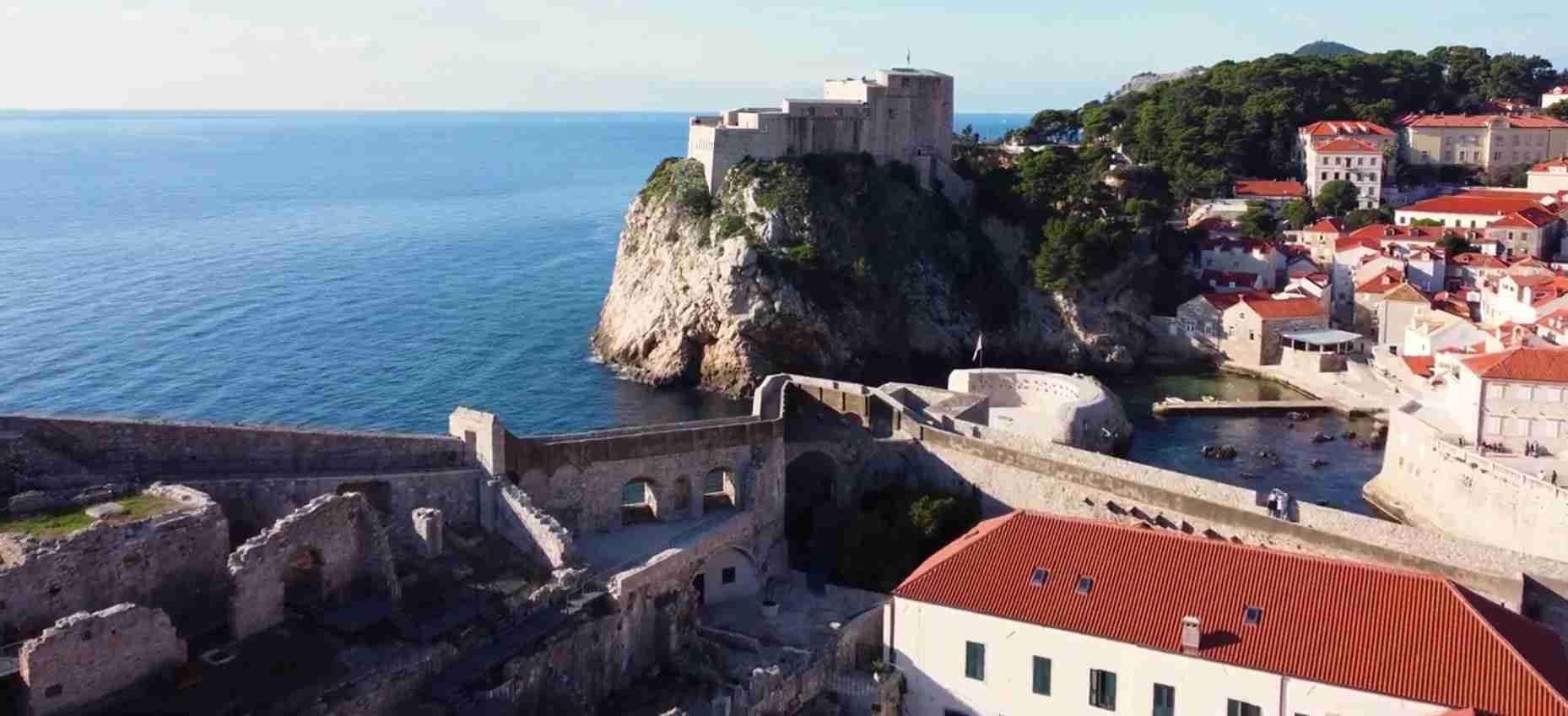
Dubrovnik Photography Guide: Best Viewpoints & Photo Spots
Dubrovnik’s UNESCO-listed Old Town presents photographers with Mediterranean Europe’s most concentrated collection of baroque architecture, medieval fortifications, and Adriatic coastal scenery. The city’s limestone walls, terracotta rooftops, and crystalline waters create compositions that remain compelling across all skill levels and equipment types, from smartphone captures to professional landscape work.
Key Takeaways
- The City Walls circuit provides 360-degree rooftop panoramas across 1.94 kilometers of elevated ramparts, offering constantly changing perspectives of Old Town architecture and coastal views
- Mount Srđ summit reaches 412 meters elevation, delivering the definitive wide-angle perspective of Dubrovnik’s urban layout against Lokrum Island and the Adriatic horizon
- Fort Lovrijenac’s terraced levels and the hillside approach path create the iconic fortress-over-harbor composition that defines Dubrovnik photography portfolios
- Morning golden hour (6:00-8:00 AM) and late afternoon light (4:00-6:00 PM) transform limestone surfaces from neutral gray to warm amber, while midday overhead sun flattens architectural detail
- Stradun’s polished limestone pavement reflects morning and evening light dramatically, creating high-contrast street photography opportunities impossible during midday hours
- Banje Beach eastern shoreline positions the complete Old Town walls as backdrop, with Fort Lovrijenac and Lokrum Island creating layered coastal compositions
People Also Ask About Dubrovnik Photography
What is the best viewpoint for photographing Dubrovnik Old Town?
Mount Srđ summit provides the definitive elevated perspective, capturing the complete Old Town peninsula from 412 meters above sea level. The cable car upper station viewpoint frames the walled city’s medieval grid layout against Lokrum Island and the Elaphiti Islands horizon, with the Adriatic Sea creating natural separation between architectural elements and background. Fort Lovrijenac terraces offer closer perspectives emphasizing the western walls and harbor area, while the City Walls themselves deliver intimate rooftop details impossible from external vantage points. Each location serves distinct compositional purposes—Mount Srđ for comprehensive establishing shots, Lovrijenac for fortress-harbor drama, and the walls for architectural texture and street life below.
When is the best time of day to photograph Dubrovnik?
Early morning golden hour between 6:00-8:00 AM provides optimal lighting conditions, with low-angle sunlight casting long shadows that define architectural relief while warming limestone from gray to amber tones. The City Walls open at 8:00 AM, allowing photographers to capture the first hour when pedestrian traffic remains minimal and soft directional light enhances texture. Late afternoon from 4:00 PM until the walls close between 5:00-7:30 PM (seasonal) offers similar warm light quality with added advantage of westward-facing perspectives over the Adriatic. Midday sun from 11:00 AM-3:00 PM creates harsh overhead lighting that flattens architectural detail and produces unflattering contrast, suitable only for graphic compositional experiments or overcast conditions when cloud cover diffuses light evenly.
Can I photograph inside Dubrovnik’s City Walls and attractions?
Personal photography remains permitted throughout Dubrovnik’s City Walls, Fort Lovrijenac, and public spaces within Old Town without restrictions or additional fees beyond entrance tickets. Commercial photography—defined as images intended for advertising, publication sales, or professional client work—requires advance permission from cultural heritage authorities managing each site. Tripods receive universal acceptance for personal use, enabling long-exposure techniques on the walls after crowds thin during final admission hours. Drone operations face strict prohibition across all UNESCO heritage zones including the walls, Old Town, and Mount Srđ vicinity due to airspace protection regulations and Fort Imperial military history. Standard smartphone and camera photography proceeds freely, with museum interiors like the Rector’s Palace occasionally restricting flash usage to protect artifacts.
What camera equipment works best for Dubrovnik photography?
A 24-70mm equivalent focal length covers 85% of Dubrovnik photography situations, from Stradun street scenes requiring 24-35mm width to rooftop details from the walls benefiting from 50-70mm compression. Mount Srđ panoramas favor ultra-wide 16-24mm lenses that capture the complete coastal sweep, while a 70-200mm telephoto isolates architectural elements from the walls and compresses perspective across terracotta layers. Smartphones with computational photography capabilities produce publication-quality images in optimal morning and evening light, particularly models offering 2x-3x optical zoom for rooftop detail from elevated positions. A circular polarizing filter reduces Adriatic water glare and enriches blue sky saturation against limestone buildings, while neutral density filters enable long exposures during busy midday periods when crowd-blurring techniques become necessary on the walls.
Extended multi-day tours – 5+ days
Featured Dubrovnik Multi-Day Tour Packages
5 days
5-day Dubrovnik to Split, Classic Plus, 18-35s
- ✓ Comprehensive Dubrovnik tour
- ✓ Expert local guides included
- ✓ All accommodation arranged
- ✓ Transportation provided
7 days
Explore Croatia
- ✓ Comprehensive Dubrovnik tour
- ✓ Expert local guides included
- ✓ All accommodation arranged
- ✓ Transportation provided
4 days
4-day Split to Dubrovnik, Premier Plus boat, 30-49s
- ✓ Comprehensive Dubrovnik tour
- ✓ Expert local guides included
- ✓ All accommodation arranged
- ✓ Transportation provided

7 days
Dubrovnik and Split, Private Tour
- ✓ Comprehensive Dubrovnik tour
- ✓ Expert local guides included
- ✓ All accommodation arranged
- ✓ Transportation provided
Multi-day tour packages powered by TourRadar. Prices and availability subject to change.
Introduction: Dubrovnik’s Photographic Landscape
Dubrovnik occupies a unique position in European photography destinations, combining UNESCO World Heritage architectural density with Mediterranean coastal geography that creates natural lighting advantages throughout the day. The city’s defensive walls—constructed continuously from the 13th through 17th centuries—form an intact 1,940-meter circuit elevated 3-25 meters above street level, providing photographers with perspectives impossible in most historic cities where wall systems were demolished or exist only in fragments. This accessibility to elevated viewpoints without requiring distant hilltop positions distinguishes Dubrovnik from comparable walled cities like Carcassonne or Ávila.
The Old Town’s limestone construction creates a monochromatic foundation that responds dramatically to changing light conditions. Morning sun transforms gray stone to warm cream tones, while afternoon light from the west emphasizes texture through shadow definition across baroque façades and romanesque churches. The terracotta roof tiles—replaced systematically after 1991-1992 war damage—present a uniform orange-red color palette that photographers can use as compositional anchor against the neutral stone base and blue Adriatic backdrop.
Geographic positioning amplifies photographic opportunities beyond the architecture itself. The city occupies a peninsula jutting into the Adriatic, surrounded by water on three sides that reflects light upward, filling shadows that would appear muddy in inland urban environments. Lokrum Island sits 600 meters offshore, providing mid-ground interest in coastal compositions, while the Elaphiti Islands chain creates horizon definition 13 kilometers distant. Mount Srđ rises 412 meters directly behind the Old Town, offering the elevated perspective that reveals the medieval street grid’s geometric organization impossible to perceive from ground level.
Photography infrastructure supports both casual visitors and serious practitioners. The City Walls admission includes unlimited time within the circuit during operating hours, eliminating pressure to rush through locations. Fort Lovrijenac provides three distinct terrace levels, each offering different compositional relationships between fortress architecture and Old Town backdrop. Mount Srđ accessibility via cable car removes the 45-60 minute hiking barrier, enabling photographers to reach summit viewpoints with equipment weight becoming negligible concern. Public access to these premium vantage points democratizes photography that in other historic cities might require special permissions or private property access.
The city’s photographic character shifts dramatically with seasonal and daily timing. Summer cruise ship arrivals between 8:00 AM-6:00 PM introduce crowd density that challenges composition on popular viewpoints, while shoulder seasons (April-May, September-October) provide ideal conditions combining favorable weather and reduced pedestrian traffic. Early morning hours before 8:00 AM offer completely empty streets within Old Town, creating opportunities for architectural photography without human presence—a scenario increasingly rare in major European heritage sites. Understanding these temporal patterns enables photographers to optimize their shooting schedules around light quality and crowd avoidance rather than accepting conditions as they find them.
City Walls Photography Circuit: Comprehensive Rooftop Perspectives
The Dubrovnik City Walls deliver an uninterrupted 1,940-meter elevated walkway that circles the entire Old Town peninsula, providing constantly changing perspectives across medieval architecture, baroque churches, and Adriatic coastal scenery. Walking the complete circuit requires 1.5-2 hours at standard pace, though photographers typically invest 2-3 hours stopping frequently for composition work at optimal positions along the ramparts. The walls rise between 3-25 meters above street level depending on terrain, with the highest sections at Minčeta Tower on the northwestern corner reaching sufficient elevation to photograph across multiple rooftop layers toward distant horizons.
Access points exist at three locations—Pile Gate (western entrance near Onofrio Fountain), Ploče Gate (eastern entrance), and St. John’s Fortress (southern harbor position)—with tickets valid for single-direction circuit completion without re-entry capability. The admission fee stands at €40 for adults, including Fort Lovrijenac access on the same day or within a 72-hour validity window depending on seasonal policies. Purchasing tickets at opening time (8:00 AM year-round) provides optimal lighting conditions and minimal crowd interference, while late afternoon entry 1-2 hours before closing captures warm directional light across westward-facing sections with the trade-off of increased pedestrian traffic from earlier entrants still completing their circuits.
Starting from Pile Gate entrance establishes efficient clockwise progression that encounters major photography positions in ascending dramatic sequence. The initial staircase climb opens immediately onto Stradun overview perspectives, with the polished limestone main street extending 300 meters eastward toward the clock tower framed between building facades. This elevated straight-down view works best with wide-angle 24-35mm focal lengths that include both street width and flanking architecture, creating leading-line compositions that draw viewers into the frame depth. Early morning light from the east illuminates building faces along Stradun’s northern side, while afternoon sun favors the southern facades, requiring photographers to consider timing against desired architectural emphasis.
The northwestern ramparts approaching Minčeta Tower transition from urban street views to comprehensive rooftop panoramas as elevation increases. Minčeta Tower itself reaches 25 meters height—the circuit’s highest accessible point—with 360-degree perspectives encompassing the complete Old Town, Mount Srđ backdrop, harbor installations, and western coastal approaches. The tower’s circular construction enables photographers to work around its circumference identifying optimal sun angles and background relationships. Northward views emphasize the Adriatic horizon with terracotta rooftops descending toward the coast, while southward perspectives layer rooftop levels against Mount Srđ’s limestone slopes. A 50-70mm focal length compresses these rooftop layers effectively, creating stacked perspective that emphasizes Old Town density, while ultra-wide 16-24mm captures the sweeping coastal context including Lokrum Island and distant Elaphiti Islands chain.
The eastern walls above the Old Harbor shift compositional focus from rooftop abstracts to maritime context, with the fortified harbor basin, St. John’s Fortress, and sailing vessels creating foreground interest against architectural backdrop. This section photographs most effectively during morning hours when eastward sun illuminates boat details and harbor water without creating harsh facade shadows on westward-facing walls. The harbor’s protective breakwater creates calm water surfaces that reflect morning light, adding luminosity to compositions that include water elements. Photographers working with polarizing filters can reduce water surface glare while intensifying blue sky saturation, though excessive polarization risks eliminating reflection details that add compositional interest.
The southern seaward walls between St. John’s Fortress and Fort Bokar provide the circuit’s most dramatic coastal perspectives, with ramparts projecting directly over the Adriatic where waves crash against foundation stones during moderate seas. These sections enable compositions combining defensive architecture in immediate foreground with open water extending to horizon, creating strong near-far relationships that convey the walls’ maritime defensive purpose. Fort Bokar’s western position delivers the definitive view toward Fort Lovrijenac across Pile Bay, with the detached fortress rising 37 meters on its rocky promontory. This perspective works best during afternoon light when westward sun illuminates Lovrijenac’s facade while side-lighting emphasizes the main walls’ texture. Long-exposure techniques using neutral density filters can smooth wave motion into misty fog effects around foundation stones, creating ethereal atmosphere contrasting with solid stone architecture.
Interior perspectives looking down into Old Town streets and squares provide intimate architectural detail impossible from external viewpoints. The walls’ elevation enables photographers to shoot straight down into narrow alleys, capturing geometric patterns created by perpendicular streets, cafe umbrellas, and pedestrian movement. These overhead compositions work particularly well with 35-50mm focal lengths that maintain natural perspective while including sufficient context. Late afternoon shadows cast by tall buildings create graphic diagonal elements across limestone pavement, adding compositional structure to otherwise flat surfaces. Timing these interior shots requires patience, waiting for pedestrian distribution that creates visual interest without cluttered confusion—typically achieved by observing traffic patterns and anticipating gaps in crowd flow.
Technical photography challenges on the walls include limited shade during summer midday hours and narrow rampart widths that restrict tripod positioning. The stonework creates uneven walking surfaces that make handheld stability difficult for photographers working with telephoto lenses or slower shutter speeds. Polarizing filters help manage Adriatic glare and enrich sky tones but require careful adjustment to avoid creating unnatural darkness gradients across wide-angle sky coverage. Compositional clutter from modern elements—satellite dishes, air conditioning units, contemporary window styles—requires careful framing that excludes anachronistic details, particularly in images intended to emphasize medieval character. Photographing at wall extremities where ramparts turn corners often provides cleaner sight lines past modern intrusions while offering unique angular perspectives impossible from straightaway sections.
Minčeta Tower Summit: Maximum Elevation Rooftop Photography
Minčeta Tower occupies the northwestern corner of the City Walls circuit, rising 25 meters to become the highest accessible point above Old Town street level. The tower’s circular construction with upper viewing platform delivers 360-degree perspectives unobstructed by architectural neighbors, enabling photographers to work completely around the circumference while sun angle and background relationships change with position. This mobility distinguishes Minčeta from fixed viewpoints, allowing compositional optimization through movement rather than accepting static perspective.
The northward view from Minčeta emphasizes Old Town’s relationship with the Adriatic coast, with terracotta rooftops descending in geometric layers toward the water’s edge. Morning light from the northeast illuminates building facades while creating shadow definition that reveals architectural relief and structural details. The limestone pavement of streets and squares appears as light-colored linear elements cutting through the orange roof mass, providing compositional structure that guides viewer attention through the frame. Lokrum Island sits 600 meters offshore in these northward compositions, creating mid-ground interest that prevents compositions from reading as flat two-dimensional patterns. The island’s forested profile adds dark green contrast against Adriatic blue and terracotta orange, enriching color palette beyond the stone-and-tile monotony that can flatten rooftop images.
Eastern perspectives from Minčeta layer the Old Town against Mount Srđ’s limestone slopes rising 412 meters behind the city. This view works particularly effectively during afternoon hours when westward sun side-lights Mount Srđ while front-lighting the rooftops, creating tonal separation between foreground architecture and mountain background. The mountain’s vegetation patterns—primarily low scrub and exposed limestone—create texture variation that prevents background from becoming featureless mass. Photographers working with 70-200mm telephoto focal lengths can compress the city-mountain relationship, making Srđ appear to loom dramatically over the urban fabric in ways impossible to perceive from ground-level human vision.
Southward compositions from Minčeta encompass the complete Old Town interior, with Stradun visible as a straight pale line bisecting the rooftop mass and the Rector’s Palace courtyard identifiable by its Renaissance arcade structure. These overhead views reveal the medieval street grid’s organic geometry—narrow irregular alleys connecting to small squares in patterns determined by topography rather than planned orthogonal design. The compositional challenge involves creating order from visual complexity, using the bell tower and major churches as vertical anchors while allowing the chaotic rooftop texture to provide surface interest without becoming incomprehensible clutter.
Westward views toward Fort Lovrijenac and the Adriatic horizon benefit from afternoon golden hour light that warms limestone surfaces while creating long shadows across terracotta tiles. The Elaphiti Islands appear as dark silhouettes 13 kilometers distant, providing horizon definition that strengthens coastal compositions. During summer months, the sun sets northwest over the Adriatic, creating potential for silhouette compositions with fort structures and rooftop profiles against colorful sky gradients—though the walls close between 5:00-7:30 PM depending on season, often before optimal sunset color development occurs.
Minčeta Tower includes a small café platform below the summit viewing level, providing shade and seating for extended photography sessions. Photographers working through multiple sun positions can rest here while monitoring light quality, then ascend quickly when conditions optimize. The tower’s position at the circuit’s approximate midpoint makes it natural pause location whether walking clockwise from Pile Gate or counterclockwise from Ploče Gate, allowing photographers to divide the wall circuit into manageable sessions rather than attempting continuous photography across the entire 1,940-meter distance.
Mount Srđ Elevated Perspectives: Definitive Panoramic Viewpoint
Mount Srđ rises 412 meters directly behind Dubrovnik’s Old Town, creating the definitive elevated perspective that reveals the complete urban geography in single comprehensive compositions. The cable car ascent from lower station near Pile Gate to summit takes under four minutes, covering vertical distance that would require 45-60 minutes hiking while eliminating equipment weight concerns that constrain photographers choosing the walking route. The upper station platform and surrounding viewpoints provide multiple compositional positions, with the primary overlook directly facing the Old Town peninsula below while eastern and western positions emphasize the coastal geography extending toward Elaphiti Islands and Croatian-Bosnian border regions.
The central viewpoint frames Dubrovnik’s Old Town as a compact walled peninsula extending into the Adriatic, with the medieval fortification circuit clearly visible as a continuous stone ribbon enclosing the terracotta roof mass. This perspective reveals spatial relationships impossible to perceive from ground level—the geometric organization of major streets, the strategic positioning of fortress bastions at vulnerable corners, the relationship between harbor installations and seaward defenses. Lokrum Island sits 600 meters offshore at perfect mid-ground distance, preventing compositions from collapsing into flat two-dimensional patterns while adding forested green contrast against urban orange-and-gray palette.
Morning photography from Mount Srđ delivers front-lit conditions on Old Town’s northern and eastern facades, with sun rising from behind the photographer’s position illuminating the city below with even directional light. This lighting reveals architectural detail clearly while the Adriatic water surface receives sufficient illumination to render as saturated blue rather than dark featureless mass. The morning atmosphere often includes slight haze that softens distant Elaphiti Islands into layered silhouettes, creating depth perception through atmospheric perspective that separates foreground city from background islands through tonal gradation. Photographers seeking maximum clarity prefer these morning conditions over afternoon when offshore wind sometimes introduces moisture that reduces visibility across the 13-kilometer distance to the island chain.
Late afternoon light from the west transforms the photographic character dramatically, with side-lighting across the Old Town emphasizing architectural relief through shadow definition while warming limestone from neutral gray toward amber tones. The sun’s low angle creates long shadows from bell towers and fortress turrets that stretch across rooftop planes, adding graphic elements to compositions that appear relatively flat under overhead midday sun. The Adriatic receives spectacular treatment during golden hour, with direct sun illumination creating intense blue saturation enhanced by polarizing filters, while wave patterns become visible as texture rather than merging into uniform surface.
The summit area extends beyond the cable car station platform, with walking paths leading to Fort Imperial (Museum of the Croatian War of Independence) to the east and the prominent white stone cross marking the summit high point. These peripheral positions offer alternative compositions emphasizing different aspects of the coastal geography. The fort approach provides perspectives that include the cable car infrastructure in foreground, creating human-scale reference that emphasizes the 412-meter elevation—though photographers preferring natural landscapes typically exclude these modern elements. The cross position delivers westward views along the Adriatic coast toward Fort Lovrijenac and the peninsula beyond, with late afternoon sun creating coastal silhouette opportunities that work particularly effectively as storm systems approach from the west across the open sea.
Ultra-wide focal lengths from 16-24mm equivalent capture the complete panoramic sweep, including Old Town, Lokrum Island, Elaphiti Islands horizon, and significant foreground/background landscape context. These extreme wide angles risk distortion that makes the Old Town appear diminished in frame, requiring careful composition that balances grand vista with sufficient Old Town emphasis to maintain subject primacy. A 35-50mm focal length isolates the Old Town more tightly while maintaining Lokrum Island context, creating cleaner compositions that work effectively for editorial or commercial applications requiring clear subject emphasis without panoramic complexity.
The cable car operates seasonally with extended hours during summer months—9:00 AM to midnight June through August—enabling sunset and blue hour photography impossible during winter closure (January-February) and shoulder season earlier closures (5:00-8:00 PM depending on month). Photographers planning sunset sessions should verify current operating hours rather than arriving to discover the cable car closed. The downhill hiking route remains available as alternative descent, though the trail involves loose rock surfaces and limited lighting that makes night hiking inadvisable without proper equipment and route familiarity.
Crowd management at the summit viewpoint becomes significant concern during cruise ship arrivals, when cable car queues extend 30-40 minutes and the platform becomes densely packed. Photographers seeking optimal conditions monitor the Port Authority cruise schedule and plan visits on non-cruise days or during early morning hours before ship passengers begin excursions. The summit cafe and restaurant provide comfortable waiting positions for photographers who arrive before optimal light develops, though commercial food pricing reflects captive audience positioning at the cable car terminus with no alternative options.
Fort Lovrijenac Perspectives: Fortress and Harbor Compositions
Fort Lovrijenac occupies a 37-meter limestone promontory jutting into the Adriatic 200 meters west of Pile Gate, creating the independent defensive position that controlled western maritime approaches to Dubrovnik. The fortress serves dual photographic functions—as elevated viewpoint toward the Old Town and as photographic subject when viewed from City Walls or hillside approaches. Entry to Lovrijenac includes in City Walls admission tickets with 72-hour validity, though photographers can access the exterior hillside approach path and lower viewpoints without purchasing tickets, with the fortress facade itself becoming the compositional element rather than utilizing its internal viewpoints.
The hillside approach path climbing from Pile Bay to Lovrijenac entrance provides the definitive exterior perspective, with the fortress rising dramatically above while the Old Town walls and terracotta rooftops create background context. The specific vantage point sits on the final staircase landing before the fortress entrance gate, elevated approximately 25 meters above sea level with clear sight lines across Pile Bay toward the western walls. This position enables compositions that layer the fortress in middle ground with Old Town backdrop, while Pile Bay and its characteristic red kayaks occupy immediate foreground—the kayaks launching from this beach create reliable color accent that photographers incorporate deliberately or work to exclude depending on desired aesthetic.
Morning light on this hillside position provides front-lighting on both Lovrijenac and the Old Town walls, rendering architectural detail clearly while the Adriatic water receives sufficient illumination to avoid appearing as dark void. The shadow definition remains moderate during morning hours, emphasizing form through light-shadow transition rather than creating harsh contrast. Afternoon light transforms the scene dramatically, with westward sun side-lighting Lovrijenac’s facade while illuminating the Old Town walls from behind the photographer’s position. The golden hour period 60-90 minutes before sunset produces warm color temperature that transforms limestone from gray-beige to amber-gold, though the fortress itself falls into shadow during the final 30 minutes before sunset when backlighting from the setting sun creates silhouette conditions.
The fortress interior provides three distinct terrace levels, each offering different elevations and perspectives toward the Old Town. The lowest terrace sits approximately 15 meters above sea level, with compositions emphasizing the western harbor area and nearby residential buildings. The middle terrace at 25 meters elevation delivers the classic perspective often featured in Dubrovnik promotional imagery, with sufficient height to see across multiple rooftop layers while maintaining close enough proximity that individual architectural details remain legible. The upper terrace reaches 37 meters, creating more compressed vertical perspective similar to City Walls photography though from external rather than internal vantage point.
Photography from Lovrijenac terraces works most effectively during afternoon hours when westward sun illuminates the Old Town facades while photographer position in the west remains well-lit. Morning light places the photographer in shadow while the Old Town receives front-lighting, creating exposure challenges when including foreground fortress elements with background city—the dynamic range often exceeds what single exposures can capture without graduated neutral density filters or HDR bracketing techniques. The fortress stone walls themselves provide compositional foreground framing elements, though photographers must avoid cliché archway-frame compositions that have become overly familiar in Dubrovnik photography portfolios.
The western coastal perspective from Lovrijenac reveals aspects of Dubrovnik geography obscured from other viewpoints, particularly the mainland residential areas extending beyond the Old Town peninsula. These neighborhoods climbing hillsides inland create context showing Dubrovnik as living city rather than museum piece, though many photographers prefer compositions that exclude modern development in favor of emphasizing heritage architecture. The Adriatic horizon extends unobstructed westward, creating opportunities for sunset silhouette compositions when cloud formations cooperate, though the fortress closes at variable hours (typically 5:00-7:00 PM) that sometimes prevent photographers from remaining through optimal sunset color development.
The fortress function as photographic subject rather than viewpoint platform deserves equal consideration. The City Walls western ramparts near Fort Bokar provide elevated perspective across Pile Bay toward Lovrijenac, with afternoon light creating ideal illumination on the fortress facade. This reverse view treats Lovrijenac as compositional center, with the Adriatic providing clean background that isolates the fortress profile against sky and sea rather than competing with landscape complexity. Long-exposure techniques during moderate wave action create misty water effects around the promontory base, emphasizing the fortress’s dramatic coastal positioning on its isolated rock outcrop.
Stradun Street Photography: Main Thoroughfare Compositions
Stradun extends 300 meters as Dubrovnik’s primary pedestrian corridor, connecting Pile Gate at the western entrance to Ploče Gate at the eastern boundary. The street’s unusual width for medieval urban fabric—approximately 10 meters including arcaded building faces—resulted from reconstruction after the 1667 earthquake that devastated the earlier narrower medieval layout. The limestone pavement polished smooth by centuries of foot traffic creates highly reflective surface during morning and evening hours when low-angle sun strikes the stone at acute angles, producing dramatic light pools and shadow patterns impossible on matte surfaces.
The elevated perspective from City Walls above Pile Gate delivers the definitive straight-down Stradun view, with the limestone corridor extending toward Orlando Column and Sponza Palace at the eastern terminus. This overhead composition emphasizes the street’s geometric linearity and the rhythmic repetition of baroque building facades flanking both sides. Early morning light from the east illuminates the northern building faces while creating shadow along the southern side, with the contrast defining architectural relief clearly. The polished pavement reflects morning sky light, creating luminous ground plane that prevents the street canyon from appearing dark despite shadowed building faces.
Ground-level photography along Stradun requires different technical approach than elevated perspectives, with the primary challenge involving pedestrian density that varies dramatically by time of day and season. Pre-dawn hours between 6:00-7:00 AM offer completely empty streets, enabling architectural compositions without human presence—though this also eliminates the life and scale reference that figures provide. The optimal compromise arrives during the first hour after City Walls opening (8:00-9:00 AM), when pedestrian traffic remains moderate and morning light quality peaks. Photographers working during these hours can time exposures to minimize pedestrian blur or use slower shutter speeds deliberately to convert moving crowds into ghostly transparency that suggests activity without showing individual faces.
The baroque building facades along Stradun create repeating architectural rhythm that can appear monotonous in compositions that include excessive length without compositional anchor. The bell tower at the eastern end provides vertical element that breaks horizontal dominance, while the Onofrio Fountain at the western entrance creates foreground interest for eastward-facing compositions. Side streets intersecting Stradun at perpendicular angles offer escape from the main corridor’s potentially overwhelming straightness, with narrow alleys providing compressed vertical perspective that contrasts with Stradun’s horizontal expanse.
Cafe culture along Stradun creates colorful umbrella patterns and seating arrangements that change seasonally but provide consistent human-scale elements distinguishing morning, afternoon, and evening atmosphere. Morning hours show cafes in setup phase with fewer patrons, creating cleaner architectural views, while afternoon and evening sessions fill completely with diners creating vibrant social scene that conveys Dubrovnik’s living character. Photographers must decide whether human activity enhances or detracts from their intended aesthetic—architectural purists prefer empty early morning compositions, while environmental portrait photographers embrace the crowded evening energy.
The polished limestone pavement creates technical challenges during midday when overhead sun produces minimal surface reflection, rendering the ground as flat gray expanse without tonal variation. Early morning and late afternoon low-angle light transforms the same pavement into dynamic element with highlight pools and shadow areas creating compositional structure. Rain intensifies this effect dramatically, with wet limestone becoming mirror surface that reflects building facades and sky—though rain also drives pedestrians to covered arcades, changing the street’s spatial character and creating different photographic opportunities than dry conditions provide.
Night photography on Stradun relies on architectural illumination from building fixtures and street lamps that create warm color temperature contrasting with blue twilight sky during the blue hour period 30-45 minutes after sunset. Tripods enable long exposures that blur pedestrian movement into ghostly streams while rendering illuminated architecture sharply. The challenge involves balancing exposure to maintain sky detail without allowing building lights to bloom excessively—typically requiring bracketed exposures or HDR techniques that capture both highlight and shadow detail across the extreme dynamic range.
Banje Beach Coastal Perspectives: Waterfront Viewpoint
Banje Beach occupies the eastern coastline 400 meters from Ploče Gate, creating the primary waterfront position where photographers can shoot westward toward the complete Old Town profile with the Adriatic providing foreground space. The beach itself consists of imported pebbles and concrete platforms rather than natural sand, with the swimming area extending 50-100 meters offshore where depth increases gradually. Photography positions exist both on the beach level and on the access road elevated 10 meters above the waterline, with each elevation offering different compositional relationships between water, beach facilities, and Old Town backdrop.
The elevated roadway position provides unobstructed sight lines across the beach and water toward the Old Town walls, with Fort Lovrijenac visible 1.2 kilometers distant on its western promontory. This perspective captures the complete defensive perimeter as unified composition rather than the fragmented views obtained while walking inside the walls themselves. Morning light from the east back-lights the Old Town, creating silhouette conditions that emphasize the fortress profile against sky while losing architectural detail on shadowed facades. Afternoon light front-lights the walls dramatically, revealing limestone texture and terracotta roof detail clearly, making this the preferred time for photographers seeking maximum architectural definition.
The beach-level perspective places photographers closer to water surface, creating lower camera angle that emphasizes the Adriatic as major compositional element rather than mere background. Incoming waves create foreground motion that long-exposure techniques can render as misty fog effects, adding dynamic element to otherwise static architectural vista. The concrete platforms and beach umbrellas create human-scale reference and contemporary elements that root compositions in present day rather than creating timeless historical ambiguity—photographers preferring pure heritage aesthetic typically shoot from elevated positions that exclude these modern beach facilities.
Lokrum Island appears prominently in compositions from Banje Beach, sitting between the photographer and Old Town at 600-meter distance that creates natural mid-ground layer. The island’s forested profile adds dark green mass that separates blue water from terracotta rooftops, preventing color palette from becoming overly simplified. Photographers working during morning hours when the island receives front-lighting can emphasize its vegetation detail, while afternoon backlight renders it as dark silhouette that adds compositional weight without demanding attention through detail.
The beach operates commercially during summer season with sunbed rentals, beach bars, and water sports concessions creating visual complexity that some photographers embrace as authentic contemporary character while others reject as commercial intrusion. Early morning access before facilities open (before 8:00 AM) provides cleanest compositions, while sunset hours maintain commercial activity but offer golden light quality that transforms the scene aesthetically. Winter months eliminate beach commercial operations entirely, creating stark minimal compositions that emphasize the relationship between stone fortifications and coastal environment without human presence mediating the connection.
Long-exposure seascape techniques work particularly effectively from Banje Beach during sunrise and sunset periods when low light enables extended shutter speeds without excessive neutral density filtration. The Adriatic’s relatively calm conditions (compared to Atlantic or Pacific coastlines) means wave motion remains subtle, requiring 10-30 second exposures to achieve noticeable smoothing effects rather than the 1-2 seconds sufficient on more dynamic coastlines. Cloud movement during these extended exposures creates additional motion blur in sky areas, adding ethereal quality that contrasts with static architectural elements.
Hidden Perspective Locations: Lesser-Known Vantage Points
Beyond the established viewpoints that concentrate tourist photography, Dubrovnik offers peripheral positions that deliver distinctive perspectives while avoiding crowd density that characterizes the City Walls and Mount Srđ platforms. These locations require more specific navigation and sometimes lack clear signage, but reward photographers with compositions unavailable from conventional vantage points.
The residential hillside east of Ploče Gate along Ulica Bruna Bušića creates elevated perspective overlooking Old Town from the opposite direction than typical western and northern viewpoints. This eastern approach reveals the Old Harbor area prominently, with St. John’s Fortress and the maritime defensive installations visible in detail. The perspective emphasizes Dubrovnik’s function as Adriatic port rather than just fortified city, with harbor basin, breakwater, and boat traffic creating compositional elements absent from land-focused viewpoints. Morning light illuminates the harbor perfectly from this eastern position, while afternoon creates challenging backlight situations as sun moves westward behind the Old Town creating silhouette conditions.
The parking area west of Fort Lovrijenac marked on mapping applications as “Houses and Fortress View” provides elevated platform approximately 50 meters above sea level with unobstructed sight lines toward both Lovrijenac and the Old Town beyond. This position creates layered composition with the fortress in middle ground and city walls as distant backdrop, separated by Pile Bay in the intervening space. The elevation suffices to shoot over foreground vegetation while maintaining close enough proximity that architectural detail remains visible rather than compressing into indistinct mass. Afternoon golden hour light works optimally from this location, with westward sun illuminating both fortress and city walls while photographer position remains well-lit for comfortable shooting conditions.
The Dominican Monastery cloister garden accessed through the monastery complex east of Ploče Gate offers architectural photography opportunities unavailable from public streets. The Renaissance cloister with its central well and surrounding arcades creates self-contained composition, while the monastery church interior preserves artwork that contextualizes Dubrovnik’s artistic heritage beyond the fortifications that dominate tourist photography. The monastery requires separate entrance fee and maintains restricted photography policies protecting religious functions, but permits photography in designated areas when approached respectfully. The architecture rewards patient composition work rather than quick snapshots, with the interplay between sunlit cloister courtyard and shadowed arcades creating dramatic light-shadow relationships.
The western coastal path extending beyond Fort Lovrijenac toward Dance Beach and the Church of St. Mary provides elevated perspectives along the Adriatic coastline with the Old Town visible across the bay. This route sees minimal tourist traffic compared to the central areas, creating quiet environment for landscape work combining coastal geology with distant architectural elements. The path involves uneven terrain with limited safety barriers on cliff sections, requiring attention to footing while managing camera equipment. The walk extends approximately 1 kilometer from Lovrijenac to the chapel, requiring 20-30 minutes each direction, making it commitment better suited to dedicated photography sessions rather than quick viewpoint visits.
The Buža Bar locations (Buža I and Buža II) on the southern seaward walls operate as commercial bars carved into the fortification cliffs, providing customers with seaside seating on concrete platforms and natural rock ledges. While these bars serve primarily social functions, they offer photography positions directly on the Adriatic with the walls rising immediately above. Access requires navigating through unmarked doorways in the walls—Buža means “hole” in Croatian—creating sense of discovery that appeals to photographers seeking locations beyond obvious tourist circuits. The bars charge for beverages consumed but don’t typically restrict photography, making drink purchase the effective location fee.
Golden Hour and Blue Hour Light Management
Golden hour and blue hour periods frame sunrise and sunset with optimal light quality for architectural and landscape photography, transforming Dubrovnik’s limestone surfaces through warm color temperature and directional illumination that reveals texture through shadow definition. Understanding these periods’ timing and characteristics enables photographers to plan shooting schedules that maximize favorable light while avoiding the harsh midday conditions that flatten architectural detail and create unflattering contrast.
Morning golden hour begins approximately 30 minutes before sunrise and extends 60-90 minutes after the sun clears the eastern horizon, depending on seasonal sun angle and atmospheric conditions. During this period, low-angle light strikes buildings at acute angles that emphasize architectural relief through shadow definition while warming neutral limestone from gray-beige toward amber-gold tones. The Adriatic water receives similar treatment, with the low sun angle creating surface sparkle and saturation that appears muted under overhead midday illumination. Photographers working the City Walls can enter at 8:00 AM opening and immediately capture the final hour of morning golden light across westward-facing perspectives before sun elevation increases overhead.
Evening golden hour develops during the 90 minutes before sunset, with light quality improving progressively as sun angle decreases and color temperature warms. The challenge in Dubrovnik involves the City Walls closing between 5:00-7:30 PM depending on season, often before optimal golden hour development during summer months when sunset occurs around 8:30 PM. Photographers must time entry to walls’ final admission hour, then work quickly through preferred positions as light quality peaks during the last 60 minutes before closure. Alternative locations like Fort Lovrijenac, Mount Srđ (summer only—extended hours until midnight), and street-level positions remain accessible through sunset regardless of walls closure.
Blue hour occurs during the transition between daylight and darkness, beginning approximately 30 minutes before sunrise and extending 30 minutes after sunset. During these periods, the sky maintains deep blue color from indirect sunlight while terrestrial surfaces require artificial illumination or long-exposure techniques to render adequately. Dubrovnik’s architectural lighting activates during evening blue hour, with building facades, street lamps, and wall illumination creating warm artificial light that contrasts dramatically against cool blue sky. The color temperature difference between warm tungsten/LED building lights and cool twilight sky creates visually striking compositions impossible during full daylight or complete darkness.
Photographing during blue hour requires technical adjustments beyond standard daylight shooting. Tripods become essential as light levels decrease, with exposure times extending from fractions of seconds to multiple seconds depending on desired depth of field and ISO sensitivity. The extreme dynamic range between illuminated buildings and darker sky areas often exceeds single exposure capability, requiring graduated neutral density filters that darken sky selectively or HDR bracketing that combines multiple exposures capturing different tonal ranges. White balance decisions become critical, with photographers choosing between accurate color rendition that maintains blue sky and warm lights, or adjusted white balance that shifts the entire scene toward warmer or cooler overall color cast.
Seasonal variation affects golden hour and blue hour timing significantly, with summer months providing extended periods starting around 6:00 AM and ending near 9:00 PM, while winter compresses these optimal windows into shorter timeframes between 7:00-8:00 AM and 4:00-5:00 PM. Photographers visiting during winter months face the advantage of optimal light coinciding with City Walls operating hours (typically 9:00 AM-3:00 PM winter), though the compressed timeline allows less experimentation than summer’s extended periods. Spring and autumn shoulder seasons offer ideal compromise between favorable light duration and moderate temperatures that make extended outdoor photography sessions comfortable.
Cloud coverage during golden hour and blue hour periods can enhance or diminish light quality unpredictably. Light cloud creates diffusion that softens harsh direct sun while maintaining warm color temperature, often producing superior results to perfectly clear skies. Heavy cloud eliminates golden hour color entirely, creating flat overcast conditions that lack directional quality regardless of sun position. Scattered clouds during blue hour provide canvas for color gradients as twilight develops, with the underside of clouds reflecting warm ground light while sky areas between clouds maintain cool blue tones. Photographers monitoring weather forecasts focus on cloud coverage predictions, seeking partially cloudy conditions rather than completely clear or overcast extremes.
Architectural Detail and Texture Photography
Dubrovnik’s architectural heritage extends beyond the dramatic fortification profiles and rooftop panoramas to encompass detailed elements that reveal construction methods, artistic traditions, and historical layering across seven centuries of continuous development. Photographing these details requires different approach than landscape-scale compositions, emphasizing close-range perspective, selective focus, and lighting that reveals texture and form.
Baroque doorways throughout Old Town display carved stone lintels, decorative keystones, and ornamental brackets that demonstrate 17th and 18th-century craftsmanship. These elements appear on virtually every street but receive insufficient attention from photographers focused on wide-angle vistas. Approaching doorways with 50-100mm focal lengths isolates decorative details while softening background through shallow depth of field, creating compositions that emphasize artistic merit without surrounding context becoming distraction. Side-lighting from morning or afternoon sun reveals carving depth through shadow definition, while overcast conditions provide even illumination that works better for documenting detail without dramatic light-shadow interplay.
The limestone building blocks comprising walls and structures show tool marks, weathering patterns, and repair patches that tell construction history through physical evidence. Photographing these surfaces requires very close range work with macro capability, revealing texture invisible to casual observation. The stone’s porosity becomes apparent at high magnification, with surface pits, mineral inclusions, and biological colonization creating complex patterns. These extreme close-up compositions abstract architecture into pure texture and pattern, creating images that function as graphic design rather than documentary record—though they document material reality more accurately than conventional architectural views that show only gross form.
Window grilles, shutters, and balcony railings demonstrate wrought iron work that varies from simple functional designs to elaborate decorative compositions. The metal elements weather differently than surrounding stone, with rust patterns, paint remnants, and repair interventions creating visual complexity. Photographing these details benefits from selective focus that isolates specific elements against softened background, using apertures around f/2.8-f/4 that create sufficient depth of field to render the ironwork sharply while preventing background stone patterns from competing for attention. The contrast between organic rust textures and geometric metalwork creates compositional tension that works effectively in close-range detail studies.
Church interiors preserve artistic heritage including paintings, sculptures, and architectural elements that contextualize Dubrovnik’s role as Catholic stronghold during Ottoman expansion periods. The Cathedral, Dominican Monastery Church, and Franciscan Monastery Church contain significant artworks, though photography restrictions vary by location and religious schedule. Where permitted, interior photography faces extreme contrast between window areas and shadowed spaces, requiring careful exposure that maintains detail in both highlights and shadows—typically achieved through bracketed exposures combined in post-processing rather than single-exposure compromise that sacrifices either highlight or shadow information.
The polished limestone pavement throughout Old Town creates reflective surface that transforms during wet conditions, with rain creating mirror effects that double architectural elements through reflection. Photographing these reflections requires low camera angles close to pavement surface, with compositions including both direct view and reflected image creating symmetrical arrangements or abstract patterns depending on framing choices. Puddle reflections work particularly effectively during evening hours when building lights create bright elements in reflected image while surrounding pavement remains dark, concentrating attention on the illuminated reflection rather than dispersing it across entire frame.
Defensive architectural elements including gun ports, machicolations, and arrow slits demonstrate military function through form, with these features designed for practical defensive capability rather than aesthetic purposes. Photographing these elements communicates the walls’ original purpose beyond their current tourist function. The challenge involves creating compositions that explain function visually without requiring captions—showing the narrow exterior opening widening to interior firing position, or the downward-facing machicolation that allowed defenders to drop objects on attackers at wall base. These technical details interest viewers beyond casual tourists, appealing to architecture and military history enthusiasts who appreciate functional design.
Seasonal Photography Considerations
Dubrovnik’s Mediterranean climate creates distinct seasonal characteristics that affect photography beyond simple weather patterns, including tourist density, light quality, vegetation state, and operational schedules for attractions and viewpoints. Understanding these seasonal variations enables photographers to select visit timing aligned with their specific priorities and aesthetic preferences.
Summer months (June-August) deliver maximum daylight duration with sunrise around 5:30 AM and sunset near 8:30 PM, creating extended shooting windows during golden hour periods. The intense blue sky and strong sunlight characteristic of Mediterranean summer work well for saturated color palette, though midday overhead sun creates harsh contrast that challenges exposure management. Tourist density peaks during these months, with cruise ship arrivals introducing thousands of daily visitors who concentrate in Old Town and on City Walls during 9:00 AM-5:00 PM period. Photographers seeking empty compositions must shoot before 8:00 AM or accept working around crowds, using techniques like long exposure to blur pedestrian movement into transparency.
The summer heat itself becomes photographic consideration, with temperatures regularly exceeding 30°C (86°F) and the City Walls offering minimal shade during the 1.5-2 hour circuit. Heat haze can reduce distant visibility particularly during midday hours, softening Mount Srđ and Elaphiti Islands into indistinct shapes. The Adriatic reaches warmest water temperature during August, creating conditions where swimmers and water activity become integral parts of coastal compositions rather than avoided elements—though this also means beach areas and swimming spots become more crowded with figures that may enhance or detract from desired aesthetic depending on photographer intentions.
Autumn shoulder season (September-October) maintains warm weather with reduced tourist density as European school holidays end, creating optimal balance between favorable conditions and manageable crowds. September preserves summer light quality with slightly shorter days, while October begins transitioning toward cooler atmospheric conditions that can introduce interesting cloud formations absent during summer’s typically stable high-pressure systems. The olive harvest occurs during October and November in surrounding countryside, adding agricultural activity to rural compositions for photographers exploring beyond Old Town boundaries.
Winter months (November-February) transform Dubrovnik dramatically, with tourist numbers dropping to small fractions of summer levels and many commercial establishments reducing hours or closing entirely. The City Walls maintain winter operation (9:00 AM-3:00 PM typically) though Mount Srđ cable car closes completely during January and February, eliminating the summit viewpoint unless photographers commit to the 45-60 minute hiking ascent. Winter light quality differs substantially from summer, with lower sun angle creating longer shadows and warmer color temperature even at midday, while storm systems introduce dramatic cloud formations and rough seas that add dynamic elements to coastal compositions.
The winter advantage for photography involves nearly empty streets and attractions during weekday mornings, creating opportunities for architectural compositions without human presence that become impossible during summer months. The Christmas market season (December) introduces decorative lighting and festive elements to Stradun and major squares, creating different aesthetic than the timeless historical character—photographers must decide whether these contemporary seasonal elements enhance or detract from their intended portfolio style. Winter storms can produce dramatic wave action against seaward fortifications, creating dynamic coastal imagery impossible during summer’s calm conditions, though rough weather also introduces equipment protection challenges from rain and spray.
Spring shoulder season (April-May) delivers rapidly improving weather as Mediterranean climate transitions from winter rain patterns to summer stability. Vegetation reaches maximum green intensity during spring following winter rainfall, creating richer color palette in coastal landscapes and Mount Srđ vegetation. Spring wildflowers appear on hillsides and in neglected urban areas, adding small-scale color details to compositions that emphasize natural elements. Tourist numbers build gradually through April and May, remaining below summer levels while weather reliability improves compared to winter variability.
Seasonal timing particularly affects photographers with specific portfolio goals. Those seeking dramatic storm imagery target winter months when rough seas and dynamic cloud formations peak, accepting equipment protection challenges and reduced operating hours. Photographers prioritizing empty architectural compositions choose winter weekdays when the Old Town approaches desertion. Those requiring reliable weather for time-limited visits select summer despite crowds, using crowd-management techniques like early morning shooting and long-exposure pedestrian blurring. Architectural purists targeting images without modern elements prefer winter when commercial beach operations close and cruise tourism disappears, removing contemporary intrusions from historical scenes.
Technical Camera Settings and Equipment Recommendations
Dubrovnik photography encompasses diverse situations from bright coastal landscapes to shadowed street alleys, requiring equipment versatility and technical understanding that adapts camera settings to varying conditions. While sophisticated gear expands creative options, the city’s photographic opportunities remain accessible to smartphone photographers who understand light quality and compositional principles.
A standard zoom lens covering 24-70mm equivalent focal length handles approximately 85% of Dubrovnik photography situations. The wide 24mm end captures City Walls panoramas and cramped street scenes where backing away becomes impossible due to architectural constraints, while the 70mm telephoto end isolates rooftop details and compresses layers of terracotta tiles into stacked patterns. This single lens eliminates the need for constant changes while walking the walls or exploring Old Town streets, keeping equipment weight manageable during extended shooting sessions in Mediterranean heat.
Ultra-wide lenses from 16-24mm excel for Mount Srđ panoramic compositions that emphasize the complete coastal sweep, though extreme wide angles risk making the Old Town appear diminished within vast landscape context. These focal lengths work particularly effectively for architectural interiors where wall proximity prevents wider framing with standard lenses. The distortion characteristic of ultra-wide optics requires careful leveling to avoid converging verticals that make buildings appear to lean, though this effect can be used deliberately for creative compositional impact rather than avoided as technical flaw.
Telephoto lenses extending 70-200mm enable selective isolation of architectural details from walls or Mount Srđ, compressing perspective to stack rooftop layers or pull distant Elaphiti Islands closer through magnification. The longer focal lengths introduce camera shake sensitivity requiring faster shutter speeds or image stabilization, while the narrow field of view demands precise composition since small position changes dramatically alter what appears in frame. These lenses work best on clear days when atmospheric haze doesn’t reduce contrast across the long distances they magnify, making them most effective during spring and autumn when air clarity typically exceeds summer conditions.
Circular polarizing filters reduce Adriatic water surface glare while enriching blue sky saturation, creating stronger color contrast against limestone buildings and terracotta roofs. The polarization effect maximizes when shooting perpendicular to sun direction (roughly 90 degrees from sun position), with minimal effect when shooting toward or away from sun. Photographers must rotate the filter to preview effect strength, seeking optimal polarization without creating unnatural darkness gradients across wide-angle sky coverage. The filter reduces light transmission by approximately 1.5-2 stops, requiring corresponding shutter speed or ISO adjustments to maintain exposure.
Neutral density (ND) filters enable long exposures during bright daylight conditions, smoothing water surfaces and blurring pedestrian movement into ghostly transparency. A 6-stop ND extends midday shutter speeds from 1/500 second to 1/8 second—sufficient to create noticeable motion blur on walking figures while maintaining sharp architecture. Stronger 10-stop ND filters extend exposures into 1-2 minute range, creating ethereal wave effects on the Adriatic and completely removing moving figures from busy street scenes. The extreme density makes composition and focusing difficult since the viewfinder becomes nearly black, requiring setup on tripod before attaching filter, then shooting without preview capability.
Tripods transform from optional to essential equipment as light levels decrease during morning and evening golden hour periods, with stable support enabling longer exposures that maintain image quality at lower ISO settings. The City Walls’ stone surfaces provide stable platform for tripod placement, though narrow rampart widths sometimes force positioning that partially blocks pedestrian flow—creating courtesy obligation to allow others to pass while temporarily interrupting composition work. Lightweight travel tripods sacrifice stability for portability, creating compromise between equipment weight during all-day walking and vibration resistance during exposure. Carbon fiber construction reduces weight significantly compared to aluminum alternatives while maintaining rigidity, though at substantially higher cost.
Smartphone cameras with computational photography capabilities produce publication-quality images in optimal lighting conditions, particularly models offering multiple focal length options through different lens modules. The phones’ small sensor size struggles in low light compared to larger camera sensors, showing noise and losing detail in shadows—though this primarily affects blue hour and interior photography rather than daylight outdoor shooting. Smartphone advantages include intuitive touchscreen controls, immediate image sharing capability, and minimal equipment weight that encourages spontaneous photography rather than planned formal sessions. The built-in HDR processing handles Dubrovnik’s high-contrast scenes effectively, automatically bracketing and combining exposures to maintain detail in both bright sky and shadowed buildings.
Camera settings for typical Dubrovnik daylight shooting include apertures around f/8-f/11 that provide sufficient depth of field to render foreground and distant elements sharply while maintaining image quality in the lens’s optical sweet spot. Shutter speeds vary with focal length following reciprocal rule—minimum 1/70 second for 70mm focal length, faster for telephoto work or moving subjects. ISO remains at base value (typically ISO 100-200) during daylight to maximize image quality, increasing only when maintaining desired shutter speed and aperture becomes impossible at lower ISO. Shooting RAW format rather than JPEG preserves maximum editing flexibility for exposure and color adjustments during post-processing, though larger file sizes require more storage capacity.
Composition Strategies and Visual Storytelling
Effective photography transcends technical competence in camera operation and requires deliberate compositional choices that guide viewer attention, create visual hierarchy, and communicate specific atmosphere or narrative. Dubrovnik’s architectural density and coastal geography provide rich compositional raw material, though the abundance of photogenic elements creates risk of cluttered frames lacking clear subject emphasis.
The rule of thirds remains relevant for Dubrovnik compositions despite its familiarity, with horizon placement at upper or lower third-line rather than center creating more dynamic balance between sky and terrestrial elements. Positioning architectural focal points like bell towers or fortress turrets at thirds-intersections rather than dead-center creates asymmetric tension that maintains viewer interest more effectively than centralized symmetry. The limestone pavement’s reflective quality during morning golden hour or wet conditions creates natural leading lines that can be positioned to guide attention from foreground toward background architectural elements, using the viewer’s natural tendency to follow implied directional flow.
Layering foreground, middle ground, and background elements creates depth perception that prevents compositions from collapsing into flat two-dimensional patterns. From Mount Srđ, this layering occurs naturally with vegetation or fortress elements in immediate foreground, Old Town forming middle ground layer, and Lokrum Island or Elaphiti Islands chain providing distant background. From street level within Old Town, doorway frames or archways can serve as foreground framing elements that create depth while adding context about the photographer’s position inside the architectural fabric. These framing devices work most effectively when they remain secondary to the actual subject rather than becoming dominant compositional elements that overwhelm what they’re meant to frame.
Vertical format orientation suits Dubrovnik’s defensive towers, bell campaniles, and compressed street perspectives, while horizontal format emphasizes the coastal panoramas and rooftop expanses. Many photographers default to horizontal shooting regardless of subject character, missing opportunities where vertical framing better suits tall narrow architecture or creates more dynamic composition through format choice alone. The decision between orientations should follow subject characteristics rather than equipment default position, with deliberate rotation to vertical creating instant compositional improvement for subjects with strong vertical emphasis.
Color palette management becomes crucial in Dubrovnik where orange terracotta, gray limestone, and blue Adriatic create the dominant triumvirate. Introducing complementary accent colors through careful inclusion of details like green shutters, red flowers, or blue painted doors adds visual variety without overwhelming the natural color harmony. Oversaturated post-processing that pushes these colors into artificial intensity undermines the Mediterranean authenticity that makes Dubrovnik distinctive—subtle enhancement maintains believability while extreme saturation creates garish results that sacrifice sophisticated palette for immediate pop.
Human figures within compositions serve multiple functions beyond simply showing scale reference. Carefully positioned figures create narrative elements that suggest story and invite viewer imagination about activities, relationships, or purposes. A solitary figure gazing from fortress wall toward horizon creates contemplative mood distinct from clusters of tourists examining maps, though both communicate valid aspects of contemporary Dubrovnik experience. The choice to include or exclude people determines whether images communicate timeless historical character or document present-day tourist reality—neither approach claims inherent superiority, but each creates different viewer response and serves different portfolio purposes.
Negative space—areas of relatively uniform tone and minimal detail—provides visual rest that prevents compositional overload. The Adriatic’s open water surface creates natural negative space that balances Old Town’s architectural complexity, while clear blue sky performs similar function above the urban fabric. Photographers sometimes fill frames completely with busy detail, creating energy through density, but compositions incorporating generous negative space often communicate more effectively by allowing subject breathing room and giving viewers’ eyes places to rest before returning to areas of complex detail.
Long-exposure techniques during daylight hours transform moving elements like pedestrians and waves into ethereal blur while static architecture remains sharp, creating dreamlike quality that suggests timelessness. The extended exposures of 10-30 seconds require neutral density filtration to prevent overexposure, but reward photographers with unique interpretations impossible through conventional short exposures. This technique particularly suits compositions where contemporary elements like tourists or modern boats become problematic—the motion blur renders them as ghostly transparency that suggests presence without showing specific individuals or objects that would otherwise date the image or introduce visual clutter.
Early Morning Photography Strategy
The pre-dawn and early morning hours before mass tourist arrival create Dubrovnik’s most favorable photography conditions, combining optimal light quality with minimal crowd interference and cooler temperatures that enable comfortable extended shooting sessions. Capitalizing on these hours requires advance planning that considers access timing, equipment preparation, and strategic location sequencing.
Pre-dawn street photography within Old Town begins as early as 5:30-6:00 AM during summer months when sufficient ambient light allows handheld shooting without artificial illumination. The streets remain completely empty during these hours, creating opportunities for architectural compositions showing timeless historical character without contemporary presence. The blue hour period before sunrise provides deep blue sky that contrasts with warm building lights still illuminated from overnight, creating color temperature drama impossible during full daylight. Photographing during these dark hours requires tripod for exposures extending into multiple seconds, with compositions including illuminated building faces against blue twilight sky creating classic blue hour aesthetic.
The City Walls open at 8:00 AM year-round, meaning photographers cannot access wall perspectives during actual sunrise but can arrive at opening to capture the final hour of morning golden light. Planning wall entry for 8:00 AM opening requires arriving 15-20 minutes early during summer months when lines form before gates open, while winter sees virtually no queue enabling arrival exactly at opening time. The efficient strategy involves entering at Pile Gate and proceeding clockwise to Minčeta Tower, capturing westward and northward views while morning light remains optimal, then continuing around the circuit as sun elevation increases and light quality becomes less critical.
Stradun and the main pedestrian corridors remain accessible throughout night hours though effective photography requires sufficient light for exposure. The period between 6:00-7:00 AM provides the sweet spot—sufficient natural light for reasonable shutter speeds while the streets maintain near-complete emptiness. Photographers working during this hour can shoot the length of Stradun without waiting for pedestrian gaps, creating clean architectural views that become impossible once cafes open and tourist activity begins around 8:00-9:00 AM.
The harbor area and waterfront Riva promenade east of Old Town capture sunrise directly during summer months, with the sun emerging from the Adriatic horizon creating direct sun-on-water reflections and silhouette opportunities. This requires positioning before sunrise to secure optimal vantage point and compose while sufficient pre-dawn light allows preview of framing choices. The challenge involves extreme contrast between bright sunrise and shadowed architecture, requiring graduated neutral density filters or HDR bracketing to maintain detail across the dynamic range. Single exposures typically sacrifice either sky detail (overexposed to white) or architectural detail (underexposed to black shadow).
Morning golden hour light transforms limestone surfaces that appear neutral gray under midday sun into warm amber-cream tones that photograph dramatically against cool blue sky. This color transformation peaks approximately 30-60 minutes after sunrise depending on atmospheric conditions, with the warm light lasting progressively longer as sun angle remains low. Photographers shooting the City Walls during opening hour capture this optimal lighting across westward-facing sections, while eastward-facing walls receive front-lighting throughout morning that reveals architectural detail clearly without dramatic shadow definition.
The practical challenges of early morning photography include reduced commercial services—cafes don’t open until 8:00-9:00 AM, limiting coffee availability for photographers needing caffeine before dawn sessions. The solution involves preparing coffee at accommodations or accepting delayed gratification until cafes open. Equipment preparation the night before eliminates fumbling with camera settings in pre-dawn darkness, with batteries charged, memory cards cleared, and camera bags organized for quick access to specific lenses and filters anticipated for morning shooting.
The psychological benefit of early rising extends beyond simply avoiding crowds. The quiet atmosphere and soft light create contemplative environment that encourages thoughtful composition work rather than hurried snapshots grabbed between other activities. Photographers investing effort to wake early and work systematically through locations often produce their strongest portfolio images during these sessions, not merely because technical conditions optimize but because the entire experience promotes careful considered approach rather than reactive shooting.
Crowd Management and Timing Strategies
Tourist density in Dubrovnik peaks during summer cruise ship arrivals, with multiple ships docking simultaneously and discharging thousands of passengers who concentrate in Old Town and on City Walls during midday hours. Managing crowd presence becomes central challenge for photographers seeking clean compositions without contemporary intrusions that undermine historical character or simply create compositional clutter through random pedestrian distribution.
Cruise ship schedules appear on Dubrovnik Port Authority website, listing daily arrivals with vessel names, passenger capacity, and docking times. Reviewing this schedule allows photographers to identify cruise-free days when tourist density drops dramatically, or to understand which days will see maximum crowding and plan accordingly. Typically ships arrive early morning (7:00-9:00 AM) and depart late afternoon (4:00-6:00 PM), meaning the midday period experiences peak density while early morning before disembarkation and late afternoon after re-boarding see reduced crowds even on cruise days.
The City Walls circuit becomes densely packed during 10:00 AM-4:00 PM periods on busy days, with pedestrian traffic moving in both directions creating continuous human presence in photographs. The solution involves either accepting crowds as contemporary reality and incorporating figures deliberately as part of the scene, or using long-exposure techniques with neutral density filters that blur moving pedestrians into ghostly transparency while static architecture remains sharp. The 10-30 second exposures required for effective crowd-blurring demand tripod stability and create technical challenge during bright midday conditions when even minimal apertures and low ISO require additional neutral density filtration to prevent overexposure.
Street-level photography within Old Town faces similar crowd challenges during peak hours, though the narrow alleys create bottleneck effects where waiting for pedestrian gaps becomes feasible. Positioning camera on tripod at desired composition, then waiting for temporary clearance enables capturing clean shots between pedestrian waves—though patience requirements increase substantially compared to early morning shooting when streets remain empty. Stradun’s width makes complete pedestrian clearance nearly impossible during busy periods, forcing photographers to either include figures or return during off-peak hours.
Fort Lovrijenac and Mount Srđ experience less severe crowding than the City Walls despite similar tourist appeal, possibly because these locations require separate travel rather than appearing as natural extension of Old Town exploration. Mount Srđ particularly offers escape from ground-level density, with the summit platform spacious enough that compositional angles exist avoiding other visitors even during busy periods. The cable car queue creates delay accessing the viewpoint during cruise ship days, though photographers arriving before 9:00 AM typically avoid significant wait times.
Seasonal crowd variation exceeds daily fluctuation, with winter months (November-March excluding holiday periods) seeing tourist numbers drop to small fractions of summer levels. Photographers visiting during these off-peak months encounter nearly empty attractions during weekday mornings, creating conditions where crowd management becomes non-issue. The trade-off involves reduced service availability, more variable weather, and shorter operating hours that compress available shooting time—but for photographers prioritizing empty compositions over convenience, winter provides ideal conditions despite these limitations.
The tactical approach to crowd management combines strategic timing (early morning, late afternoon, cruise-free days), technical solutions (long exposure pedestrian blur), and compositional adaptation (including figures deliberately rather than fighting their presence). Photographers fixated on completely empty historical scenes must commit to early rising and off-season travel, while those willing to document contemporary tourism reality find that well-composed images incorporating visitors communicate valid aspects of Dubrovnik’s present character. The choice reflects photographer intentions rather than absolute quality judgment—both approaches create legitimate photographic outcomes serving different purposes.
Post-Processing Workflow for Dubrovnik Images
Post-processing transforms raw camera captures into finished images through adjustments that optimize exposure, color balance, contrast, and detail rendering while maintaining realistic representation of Dubrovnik’s actual appearance. The workflow balances technical optimization with restraint that preserves authentic Mediterranean character rather than creating artificial hyper-saturated results that sacrifice believability for immediate visual impact.
RAW file processing begins with exposure correction, adjusting overall brightness to place the image’s tonal range optimally within the histogram without clipping highlights to pure white or crushing shadows to pure black. Dubrovnik’s high-contrast lighting situations—particularly when photographing from shadowed positions toward bright coastal views—often produce exposures that sacrifice either sky detail or architectural shadow detail. The RAW format’s extended dynamic range enables recovery of both within limits, using highlight recovery to restore overexposed sky while shadow lifting reveals detail in dark building areas. The challenge involves balancing these adjustments to create natural-looking result rather than the flat “HDR look” produced by excessive shadow lifting and highlight recovery.
White balance adjustment corrects color temperature to match scene reality or deliberately shift toward warmer or cooler overall cast. Dubrovnik’s limestone architecture photographs naturally neutral under daylight, requiring minimal white balance adjustment beyond correcting for camera’s automatic setting that sometimes misreads the scene. Golden hour shooting introduces warm color cast that typically benefits from minimal adjustment—excessive cooling that removes the natural warmth also eliminates the aesthetic quality that makes golden hour valuable. Selective white balance through masking enables cooling overheated areas like blown highlights while preserving warm tones in correctly exposed regions, creating more sophisticated result than global white balance shift applied uniformly across entire image.
Contrast adjustment adds punch to flat images or reduces harsh contrast in high-key situations, with the optimal level varying by subject and aesthetic intention. Dubrovnik’s Mediterranean light creates naturally high contrast between sunlit limestone and shadowed areas, requiring careful contrast management that preserves this character without creating harsh results where shadow detail disappears completely. The tone curve tool provides more nuanced contrast control than simple contrast slider, enabling separate adjustment of highlights, midtones, and shadows rather than uniform contrast increase across entire tonal range.
Color saturation enhancement increases color intensity modestly, making blues bluer and oranges more orange without crossing into artificial appearance. The temptation to maximize saturation creates garish results where Adriatic water becomes neon blue and terracotta roofs turn Day-Glo orange—visually striking but unrealistic and aesthetically crude. Subtle saturation increase of 10-20% enhances natural color while maintaining believability, while 50%+ increases create obviously processed appearance that undermines documentary credibility. Selective saturation adjustment targeting specific colors enables boosting the terracotta orange and Adriatic blue that define Dubrovnik’s color palette while leaving limestone neutral tones relatively unchanged, creating more refined result than global saturation increase.
Clarity and structure adjustments increase local contrast around edges and details, making textures and architectural elements appear crisper and more defined. This mid-tone contrast enhancement works particularly well for emphasizing limestone texture and terracotta tile detail, though excessive application creates harsh halos and unnatural appearance. The optimal clarity level varies by image, typically ranging from +10 to +30 on standard RAW processing scales, with higher values creating increasingly aggressive effect that crosses into obviously processed territory.
Lens corrections address distortion, vignetting, and chromatic aberration inherent to specific lenses, with modern RAW processing software automatically detecting lens model and applying appropriate corrections. Wide-angle lenses particularly benefit from distortion correction that straightens bent lines near frame edges, important for architectural images where barrel distortion makes buildings appear to bow outward. Vignetting correction eliminates darkened corners caused by lens design, creating more even illumination across the frame—though some photographers prefer retaining subtle vignetting as compositional device that draws attention toward frame center.
Cropping and straightening refine composition by removing extraneous elements at frame edges or correcting horizons that appear tilted. The temptation to crop dramatically often indicates compositional weakness in original capture rather than legitimate refinement—if significant cropping becomes necessary, the photographer missed opportunities during shooting to fill frame effectively with subject matter. Straightening corrects minor tilt that commonly occurs when handheld shooting, particularly on uneven surfaces like City Walls ramparts where maintaining level camera orientation becomes difficult. The goal involves subtle correction that prevents viewers noticing tilt rather than dramatic rotation that fundamentally alters composition.
Selective adjustments through masking or local adjustment tools enable different processing in specific image areas, creating sophisticated results impossible through global adjustments. Graduated filters darken bright skies while leaving foreground exposure unchanged, reducing dynamic range in-camera before post-processing. Radial filters create vignette effects or brighten/darken specific compositional areas to guide viewer attention. Brush adjustments allow complete localized control, enabling different exposure, saturation, and contrast in specific architectural elements or sky areas. These selective techniques distinguish sophisticated processing from the crude global adjustments applied uniformly across entire image.
Frequently Asked Questions About Dubrovnik Photography
Do I need photography permits to shoot in Dubrovnik?
Personal photography throughout Dubrovnik’s public spaces, City Walls, and cultural attractions requires no permits or special permissions beyond standard entrance ticket purchases. The City Walls admission (€40 adult) includes photography rights for personal use, as does Fort Lovrijenac access included with the same ticket. Commercial photography—defined as images created for advertising purposes, client assignments, or direct publication sales—requires advance permission from cultural heritage authorities managing each specific location. The application process involves contacting the institutions directly with detailed project descriptions, though enforcement focuses primarily on obvious commercial productions with lighting equipment, models, and crew rather than individual photographers whose images might later receive commercial use. Tripod usage remains permitted for personal photography without additional fees, enabling long-exposure techniques and landscape work. Drone operations face strict prohibition across all UNESCO heritage zones and require permits even for professional operators, with applications frequently denied due to airspace restrictions and cultural protection policies.
What is the best lens focal length for Dubrovnik photography?
A standard zoom covering 24-70mm equivalent handles the majority of Dubrovnik photography situations effectively, from Stradun street scenes requiring 24-35mm width to rooftop details from City Walls benefiting from 50-70mm compression. This single lens eliminates constant changes while walking extended circuits or exploring Old Town’s narrow alleys where backing away to reframe becomes impossible due to architectural constraints. Ultra-wide lenses from 16-24mm excel for Mount Srđ panoramic compositions emphasizing complete coastal sweep, though extreme wide angles risk diminishing Old Town within vast landscape context unless carefully composed. A 70-200mm telephoto enables selective isolation of architectural details and compresses rooftop layers into stacked patterns, though the longer focal length introduces camera shake sensitivity requiring faster shutter speeds or image stabilization. Smartphone photographers benefit from devices offering multiple focal length options through different camera modules, with wide and telephoto capabilities expanding creative options beyond single fixed lens limitations. The optimal focal length ultimately depends on specific photographic intentions—architectural detail work favors longer focal lengths, environmental context benefits from wider perspectives, while general documentation succeeds with standard zoom versatility.
How do I photograph Dubrovnik without crowds?
Eliminating crowds from Dubrovnik photography requires strategic timing that prioritizes early morning hours, cruise-free days, and off-season travel periods when tourist density drops dramatically. The City Walls open at 8:00 AM year-round, allowing photographers entering at opening to capture the final hour of morning golden light with minimal pedestrian interference before mid-morning crowds arrive. Street-level photography within Old Town achieves complete emptiness during the 6:00-7:30 AM period when sufficient natural light allows exposure while cafes and shops remain closed, creating timeless architectural scenes without contemporary presence. Monitoring cruise ship schedules via Dubrovnik Port Authority website identifies days when multiple large vessels dock simultaneously—avoiding these dates or scheduling photography before ship passenger disembarkation (typically 9:00-10:00 AM) reduces crowd density substantially. Winter months from November through March (excluding holiday periods) see tourist numbers fall to small fractions of summer levels, creating conditions where weekday morning photography proceeds with nearly empty attractions and streets. Technical solutions including long-exposure techniques using neutral density filters blur moving pedestrians into ghostly transparency during 10-30 second exposures while static architecture remains sharp, enabling crowd-free appearance even during busy periods—though this requires tripod stability and careful exposure management to prevent overexposure during bright daylight conditions.
What weather conditions create the best Dubrovnik photography?
Partially cloudy conditions with scattered clouds rather than clear skies or complete overcast create optimal photography weather, providing diffused light that softens harsh direct sun while maintaining directional quality that defines architectural relief through shadow. The clouds add compositional interest in sky areas that would appear as featureless blue under completely clear conditions, while during golden hour and sunset the cloud undersides reflect warm ground light creating dramatic color gradients impossible in cloudless conditions. Completely clear skies produce strong color saturation and sharp contrast that works well for graphic compositions emphasizing Dubrovnik’s Mediterranean character, though the harsh midday light from 11:00 AM-3:00 PM flattens architectural detail through lack of shadow definition. Overcast conditions eliminate dramatic light-shadow interplay but provide even illumination ideal for architectural documentation requiring consistent exposure across building facades without bright highlights and dark shadows. Light rain creates mirror effects on polished limestone pavement that double architectural elements through reflection, adding compositional complexity and transforming familiar scenes—though equipment protection from moisture becomes necessary concern. Winter storms produce dramatic wave action against seaward fortifications and dynamic cloud formations that convey Dubrovnik’s maritime defensive character more powerfully than calm summer conditions, though rough weather also introduces timing unpredictability and equipment challenges from wind and spray. The optimal weather ultimately depends on photographer intentions—dramatic atmospheric conditions suit moody landscape work, while clear stable weather enables consistent technical results across extended shooting sessions.
Can I photograph inside churches and museums in Dubrovnik?
Photography policies within Dubrovnik’s churches and museums vary by institution, with some locations permitting photography without restrictions while others prohibit cameras entirely or restrict flash usage to protect artwork and artifacts. The Cathedral allows photography during visitor hours though discourages flash that might damage paintings or disturb religious services, while the Rector’s Palace museum permits photography in most exhibition areas with specific galleries occasionally restricted due to artifact sensitivity. The Dominican Monastery and Franciscan Monastery churches maintain conservative photography policies respecting active religious function, typically allowing photography in architectural spaces while restricting or prohibiting images during masses and religious ceremonies. Checking current policies at ticket offices before photographing prevents conflicts and ensures compliance with institutional requirements. Interior photography faces technical challenges from extreme contrast between illuminated windows and shadowed spaces, typically requiring bracketed exposures combined through HDR processing rather than single-exposure compromise. Tripods receive inconsistent permission depending on location—some institutions allow tripods during quiet periods while prohibiting them during crowded times when they obstruct visitor flow, while others maintain universal tripod bans regardless of circumstances. The respectful approach involves asking permission before photographing, avoiding flash unless explicitly permitted, and recognizing that religious and cultural institutions prioritize preservation and worship functions over tourist photography convenience. Museums and churches throughout Croatia increasingly adopt permissive photography policies recognizing that visitors sharing images promotes cultural heritage appreciation, though individual institutional decisions ultimately determine specific allowances.
What is the best time of year to visit Dubrovnik for photography?
The shoulder seasons of April-May and September-October provide optimal balance between favorable weather conditions, reduced tourist density, and extended operating hours for attractions and viewpoints. Spring delivers rapidly improving weather as Mediterranean climate transitions from winter rain patterns toward summer stability, with vegetation reaching maximum green intensity following winter rainfall and wildflowers adding small-scale color details to landscape compositions. September maintains summer light quality with slightly shorter days while tourist numbers drop substantially as European school holidays end, creating manageable crowd levels without sacrificing weather reliability. October introduces interesting cloud formations and atmospheric conditions that add drama to coastal compositions while temperatures remain comfortable for extended outdoor photography sessions. Summer months (June-August) maximize daylight duration with sunrise around 5:30 AM and sunset near 8:30 PM, creating extended shooting windows during golden hour periods, though peak tourist density requires crowd management strategies and early morning shooting to achieve clean compositions. Winter months transform Dubrovnik through dramatically reduced tourist presence that creates nearly empty streets and attractions during weekday mornings—ideal for photographers prioritizing architectural documentation without contemporary intrusions despite shorter operating hours, Mount Srđ cable car closure (January-February), and variable weather introducing rain systems alongside occasional dramatic storm conditions. The optimal visit timing ultimately depends on photographer priorities: those seeking dramatic weather and empty compositions accept winter unpredictability, while those requiring reliable conditions and extended shooting hours target shoulder seasons balancing multiple factors effectively.
How long should I spend in Dubrovnik for comprehensive photography coverage?
Comprehensive photography coverage capturing the complete range of Dubrovnik locations, lighting conditions, and atmospheric variations requires minimum 4-5 full days allowing multiple visits to primary locations during different times and weather conditions. The City Walls alone justify repeated circuits—early morning for golden light and empty ramparts, late afternoon for warm directional illumination, and potentially under different cloud conditions that transform the coastal atmosphere. Mount Srđ benefits from visits during morning clarity and afternoon golden hour to capture the Old Town under contrasting light angles, while Fort Lovrijenac requires separate morning and afternoon sessions to photograph both the fortress views toward Old Town and the fortress exterior perspectives from hillside approaches. Street photography within Old Town rewards daily early morning sessions between 6:00-8:00 AM when empty streets allow architectural documentation, followed by return visits during active afternoon hours when cafe culture and pedestrian life communicate contemporary character. Hidden viewpoints including Banje Beach, residential hillside perspectives, and coastal paths demand dedicated exploration time beyond the concentrated Old Town and wall circuit. Weather variation across multi-day stays enables photography under both clear and dramatic cloud conditions that each create distinct aesthetic character. The ambitious photographer allocating 7-10 days can revisit locations multiple times, wait for optimal conditions rather than accepting what appears, and explore peripheral areas beyond the central Old Town concentration. Brief 2-3 day visits enable coverage of primary locations but force compromise on timing and repeat visits that distinguish comprehensive documentation from rapid survey coverage. Photographers visiting Dubrovnik as part of broader Croatian or Balkan itinerary must balance Dubrovnik’s photographic richness against other destinations, with 3-4 days representing reasonable allocation providing solid coverage without extending into diminishing returns where additional days yield progressively less unique content.
What unique perspectives differentiate Dubrovnik photography portfolios?
Unique Dubrovnik photography perspectives extend beyond the iconic views from Mount Srđ and City Walls to encompass lesser-known locations, unusual timing conditions, and creative techniques that distinguish portfolios from conventional tourist documentation. The residential hillside viewpoints east of Ploče Gate along Ulica Bruna Bušića provide eastern perspectives emphasizing Old Harbor area rarely featured in standard portfolio work, creating compositions that communicate Dubrovnik’s maritime character rather than just fortress architecture. Pre-dawn blue hour photography capturing building illumination against deep blue twilight sky before tourist arrival creates atmospheric character impossible during daylight hours, while winter storm photography emphasizes defensive architecture’s maritime function through dramatic wave action and cloud formations absent during calm summer conditions. Detail-oriented work focusing on architectural elements—baroque doorways, weathered limestone texture, wrought iron grilles—creates portfolio depth beyond landscape-scale vistas, demonstrating photographer attention to craftsmanship and material character. Long-exposure techniques that blur wave motion into misty effects around fortress foundations or render crowds as ghostly transparency introduce creative interpretation beyond straightforward documentation. Seasonal variation photography showing the same locations under different conditions—winter emptiness versus summer activity, calm seas versus storm surf, clear skies versus dramatic clouds—demonstrates commitment to location beyond single-visit coverage. Incorporating Dubrovnik within broader coastal context through compositions including Lokrum Island prominently or emphasizing Elaphiti Islands horizon creates geographic relationships often neglected in tightly-cropped Old Town focuses. Night photography extending beyond blue hour into complete darkness with star trails above illuminated fortifications introduces technical challenge and creates dramatic results impossible during standard operating hours. The most distinctive portfolios combine technical excellence in capturing conventional viewpoints with creative exploration of timing, weather, and perspective variations that reveal photographer vision beyond simple tourist documentation.
How do I protect camera equipment from Dubrovnik’s coastal environment?
Dubrovnik’s coastal location introduces salt spray, humidity, and occasional rain that threaten camera equipment functionality and longevity without proper protection and maintenance protocols. The primary concern involves salt spray from waves crashing against seaward fortifications, particularly during moderate seas when photographers working near Fort Bokar or along coastal paths encounter airborne moisture carrying corrosive salt particles. UV filters permanently attached to lenses provide first-line protection for front elements, absorbing salt deposits and scratches that would otherwise damage the lens itself—though filters require frequent cleaning with microfiber cloth and lens cleaning solution to maintain optical clarity. Weather-sealed camera bodies and lenses resist moisture intrusion more effectively than non-sealed equipment, though no system achieves complete waterproofing except dedicated underwater housings unnecessary for typical coastal shooting. Rain covers or plastic bags with lens opening provide emergency protection during unexpected precipitation, enabling continued photography without exposing equipment to direct water contact. Daily equipment maintenance after coastal shooting involves wiping exterior surfaces with slightly dampened cloth to remove salt deposits before they crystallize and work into crevices, followed by careful drying to prevent moisture accumulation. Silica gel packets stored in camera bags absorb ambient humidity during high-moisture conditions, though they require periodic regeneration through heating to restore absorption capacity. The Mediterranean climate’s summer humidity remains moderate compared to tropical environments, reducing mold and fungus concerns that plague equipment in rainforest or monsoon conditions. Equipment stored in air-conditioned accommodations during midday heat avoids thermal stress from temperature extremes, while allowing gradual temperature equalization before transitioning between cool indoors and warm exterior prevents condensation formation on cold surfaces. Camera bags with water-resistant construction and sealed compartments protect stored equipment during transport, though photographers should avoid leaving bags on wet surfaces where moisture wicks through base material. The combination of preventive protection through UV filters and weather sealing, active maintenance through regular cleaning, and environmental awareness avoiding unnecessary exposure creates equipment longevity despite coastal conditions that accelerate deterioration compared to dry inland environments.
What photography opportunities exist beyond Old Town Dubrovnik?
Photography opportunities extending beyond Dubrovnik’s Old Town concentration include coastal locations, island destinations, and regional sites that provide context for the city within broader Dalmatian coastal geography. Lokrum Island sits 600 meters offshore reached by frequent ferries from Old Port, offering forested landscapes, peacock populations, and coastal cliffs providing reverse perspectives photographing back toward Old Town from offshore position. The island’s Benedictine monastery ruins, botanical gardens, and Fort Royal summit create varied subject matter beyond Dubrovnik’s architectural focus. Cavtat, a coastal town 18 kilometers south, preserves quieter Mediterranean character with waterfront promenade, fishing harbor, and hillside cemetery providing coastal village atmosphere contrasting with Dubrovnik’s fortress monumentality. The Konavle region surrounding Dubrovnik features agricultural valleys, traditional stone villages, and coastal viewpoints along the road toward Montenegro border, enabling landscape work incorporating rural Croatian character. The Elaphiti Islands chain including Koločep, Lopud, and Šipan reached by ferry from Gruž harbor delivers car-free island environments with fishing villages, pine forests, and secluded beaches creating different aesthetic than urban Dubrovnik. The Pelješac Peninsula extending northwest features vineyard landscapes, hill towns including Ston with its medieval walls, and coastal roads providing elevated perspectives across island-studded waters. Mount Srđ hiking trails beyond the cable car summit lead to remote viewpoints and natural landscapes away from tourist concentration at the cable car platform, with the cross summit and Fort Imperial area providing peripheral vantage points. The Dubrovnik Riviera coastline extending both directions from the city includes small beaches, fishing villages, and coastal roads carved into limestone cliffs creating scenic drives with viewpoint opportunities. These peripheral locations require dedicated time allocation beyond Old Town coverage, with each destination justifying half-day to full-day excursions depending on photography thoroughness—but collectively they provide portfolio breadth showing Dubrovnik within regional coastal context rather than as isolated monument divorced from surrounding geography and culture.