
Bled Castle Complete Guide: Slovenia’s Oldest Castle on the Cliff
Perched 130 meters above the emerald waters of Lake Bled, this medieval fortress stands as Slovenia’s oldest documented castle, first mentioned in written records in 1011. Over a millennium of history unfolds within its Romanesque walls and Renaissance courtyards, offering visitors a journey through centuries of Central European heritage. The castle combines historical significance with breathtaking Alpine panoramas, creating one of Slovenia’s most visited cultural landmarks where medieval architecture meets natural splendor.
Key Takeaways About Bled Castle
- Historical Significance: Slovenia’s oldest castle, first mentioned in a 1011 donation deed when Emperor Henry II granted Castellum Veldes to the Bishops of Brixen, establishing over a thousand years of documented history on this strategic cliff-top location.
- Architectural Heritage: The castle showcases remarkable architectural evolution with original Romanesque walls and entrance tower, Gothic chapel featuring 16th-century construction and baroque illusionist frescoes, and Renaissance buildings arranged around two courtyards connected by an internal staircase.
- Museum Collection: The National Museum of Slovenia maintains a comprehensive exhibition across 14 chambers of former residential rooms, presenting over 400 original artifacts spanning geological formations, Ice Age settlements, medieval life, and the region’s transformation into a 19th-century health resort.
- Cultural Experiences: Visitors can participate in traditional activities including hand printing on handmade paper at the functioning printing workshop using 16th-century techniques, wine bottling and sealing in the castle cellar featuring descendants of Maribor’s 400-year-old grapevine, and blacksmithing demonstrations.
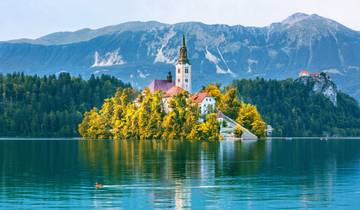
- Panoramic Views: The castle terraces provide unobstructed 360-degree views across Lake Bled with its iconic island church, the town below, and the Julian Alps with Mount Triglav, creating the postcard vista that inspired poet France Prešeren to describe the scene as a “vision of paradise.”
- Living Heritage: Beyond static exhibits, the castle functions as a vibrant cultural venue hosting medieval festivals, knight demonstrations, traditional weddings, concerts, and seasonal events that bring centuries-old traditions to contemporary life throughout the year.
People Also Ask About Bled Castle
Why is Bled Castle considered the oldest castle in Slovenia?
Bled Castle holds the distinction of being Slovenia’s oldest castle based on the earliest surviving written documentation. The castle first appears in historical records on May 22, 1011, in a deed of donation issued by German Emperor Henry II to Bishop Adelberon of Brixen. This document specifically references “Castellum Veldes” (Veldes being the German name for Bled) and granted the castle along with surrounding lands encompassing 30 royal farms between the two Sava Rivers to the diocese of Brixen.
While other fortifications in Slovenia may have existed earlier, Bled Castle possesses the earliest verifiable written record, establishing its position as the oldest documented castle in the country. A Romanesque tower likely already stood on the cliff when the 1011 deed was written, suggesting some fortification predated this first mention. The castle remained under the administration of the Bishops of Brixen for eight centuries, though the bishops themselves rarely visited, instead appointing ministeriales known as the Knights of Bled to manage the estate and fortress on their behalf.
The continuous occupation and documentation of Bled Castle from 1011 to the present day, combined with preserved Romanesque architectural elements and the castle’s strategic importance in controlling medieval trade routes through Carniola, cement its status as Slovenia’s most historically significant castle. The millennium celebration in 2011 commemorated this thousand-year documented history with major renovations and cultural events honoring the castle’s enduring legacy.
What architectural styles can visitors see at Bled Castle?
Bled Castle presents a fascinating architectural palimpsest where multiple building periods and styles coexist, creating a visual timeline of European architectural evolution from the 11th through 17th centuries. The oldest surviving elements are the Romanesque walls and entrance tower dating from the castle’s founding period around 1011, built in the characteristic thick-walled defensive style of early medieval fortifications with narrow windows and massive stone construction designed to withstand sieges.
The castle’s Gothic elements emerged during medieval expansions, most prominently in the 16th-century chapel in the upper courtyard. This chapel, dedicated to Bishops St. Albuin and St. Ingenuin, demonstrates classic Gothic architectural principles with pointed arches, ribbed vaulting, and vertical emphasis. At the end of the 17th century, baroque modifications added illusionist frescoes that create optical illusions of expanded space and architectural details that don’t physically exist, representing the theatrical sensibility of baroque art.
Renaissance architecture dominates most of the castle buildings visible today, particularly those arranged around the two courtyards. These structures feature the symmetry, rounded arches, and classical proportions characteristic of Renaissance design, dating primarily from reconstruction efforts following the devastating 1511 earthquake. The buildings showcase the Renaissance transition from purely defensive medieval castles to more comfortable residential spaces, with larger windows, decorative elements, and more refined interior spaces. The wooden defense corridors have been reconstructed based on original designs, and the internal staircase connecting the lower and upper courtyards exemplifies Renaissance engineering solutions for navigating the challenging cliff-top terrain. The present appearance of the castle largely reflects late 17th-century renovations, refined further by major restoration work undertaken in the 1950s that stabilized structures while respecting historical authenticity.
What makes the view from Bled Castle so special?
The view from Bled Castle’s terraces ranks among Europe’s most photographed landscapes, combining multiple elements that create an almost impossibly picturesque scene. From the castle’s 130-meter elevation on its dramatic limestone cliff, visitors command a complete panorama of Lake Bled’s distinctive emerald-green glacial waters, formed during the last Ice Age and fed by warm springs that maintain the lake’s famous clarity and swimming-friendly temperatures.
The perspective reveals the lake’s perfect teardrop shape with Bled Island positioned almost exactly in the center, crowned by the baroque Church of the Assumption with its distinctive red-tiled roof and 99-step staircase. This composition of castle, lake, and island church creates the iconic image that appears in virtually every Slovenia tourism publication and inspired countless artists and writers, including France Prešeren, Slovenia’s greatest poet, who immortalized the vista in his epic poem “The Baptism at the Savica.”
Beyond the immediate lake scene, the view extends across the entire Bled basin to the Julian Alps rising dramatically to the north. Mount Triglav, Slovenia’s highest peak at 2,864 meters and national symbol appearing on the country’s flag, dominates the alpine backdrop. The castle’s elevation provides a rare vantage point where visitors can simultaneously observe the interplay of geological features—glacial lake, limestone gorges, forested hills, and alpine peaks—that define this corner of Slovenia. Different times of day transform the scene: morning mist often shrouds the lake in ethereal mystery, midday sun illuminates the full alpine panorama, and sunset casts golden light across the water and mountains. Seasonal changes add further variety, from spring wildflowers and summer swimming scenes to autumn foliage and winter’s snow-covered landscape, ensuring the view never becomes static or repetitive despite the castle’s permanent position.
How long does it take to visit Bled Castle thoroughly?
A comprehensive visit to Bled Castle typically requires 90 minutes to two hours to fully experience all the castle’s offerings without rushing. This timeframe allows for the initial 10-15 minute uphill walk from Lake Bled’s center to the castle entrance, following the paved stone path that ascends through shaded forest with a steady incline. The walk itself becomes part of the experience, with partial views of the lake appearing through the trees and the anticipation building as the medieval walls emerge above.
Once inside the castle grounds, plan 60-90 minutes to explore the various attractions at a comfortable pace. The museum exhibition across 14 chambers deserves at least 30-40 minutes for visitors interested in reading the detailed information about regional history, examining the 400+ artifacts, and understanding the archaeological discoveries from Ice Age settlements through medieval periods. The printing workshop demonstration takes approximately 10 minutes, during which staff explain 16th-century printing techniques and visitors can print their own memorial document on handmade paper. The wine cellar experience, if you choose to bottle and seal your own wine, adds another 10-15 minutes.
However, many visitors spend the most time on the castle terraces, where the spectacular views invite extended contemplation and photography. Serious photographers often remain at various vantage points for 30-45 minutes or longer, capturing the scene in different light conditions and experimenting with compositions. The castle restaurant, if you choose to dine, extends the visit considerably—lunch or coffee with those views can easily add an hour or two. For visitors who want to simply walk through the courtyards, snap a few photos, and admire the view, a shorter 45-60 minute visit suffices. Medieval event days, which occur frequently in summer months, can extend visits to three hours or more as you watch knight demonstrations, medieval music performances, and craftspeople displaying traditional techniques. The castle’s compact size means you can see everything without exhausting walks between attractions, but the quality of each element rewards those who allocate sufficient time to engage deeply rather than rushing through.
Extended multi-day tours – 5+ days
Featured Slovenia Multi-Day Tour Packages
8 days
Stunning Slovenia
- ✓ Comprehensive Slovenia tour
- ✓ Expert local guides included
- ✓ All accommodation arranged
- ✓ Transportation provided

8 days
Walking in Slovenia
- ✓ Comprehensive Slovenia tour
- ✓ Expert local guides included
- ✓ All accommodation arranged
- ✓ Transportation provided

7 days
Slovenia: Hike, Bike & Raft
- ✓ Comprehensive Slovenia tour
- ✓ Expert local guides included
- ✓ All accommodation arranged
- ✓ Transportation provided
5 days
5 Day Zagreb Including Ljubljana & Lake Bled
- ✓ Comprehensive Slovenia tour
- ✓ Expert local guides included
- ✓ All accommodation arranged
- ✓ Transportation provided
Multi-day tour packages powered by TourRadar. Prices and availability subject to change.
Introduction: A Millennium on the Cliff
In the heart of Slovenia’s Julian Alps, where ancient glaciers carved a basin and left behind an emerald lake, a medieval castle has watched over changing landscapes and civilizations for more than a thousand years. Bled Castle stands not merely as a tourist attraction but as a living monument to Central European history, its weathered stones bearing witness to the rise and fall of empires, the evolution of architectural styles, and the transformation of a remote frontier outpost into one of Europe’s most photographed destinations.
The castle’s story begins in 1011, when German Emperor Henry II granted the fortress and surrounding estate to the Bishops of Brixen as a strategic holding in the contested lands of Carniola. That simple administrative act, preserved in a medieval deed of donation, established Bled Castle as Slovenia’s oldest documented fortification. From that moment, the castle became entangled in the broader currents of European history: medieval power struggles between ecclesiastical and secular authorities, Renaissance cultural flowering, devastating natural disasters, peasant rebellions, Napoleonic conquests, and the emergence of modern tourism that would eventually transform this military stronghold into a heritage site.
Today’s castle presents layers of history visible in its architecture. Romanesque walls from the founding period merge with Gothic additions from medieval expansions, Renaissance buildings reflect reconstruction after earthquakes, and baroque flourishes add decorative sophistication. This architectural accumulation creates a three-dimensional textbook of European building styles, where visitors can trace how each generation adapted the castle to contemporary needs while respecting what earlier centuries had created. The result is neither a single-period reconstruction nor a chaotic jumble, but rather a coherent ensemble that reveals how architecture evolves organically across centuries.
The castle’s position amplifies its impact. Perched on a 130-meter sheer cliff dropping directly to Lake Bled’s northern shore, the fortress commands views that have inspired poets, painters, and photographers since the first travelers began recording their impressions. From the castle terraces, the entire landscape unfolds as a composed scene: the teardrop lake with its island church, the town of Bled spreading along the shores, forested hills rising in gentle waves, and the dramatic wall of the Julian Alps culminating in Mount Triglav’s distinctive peak. This view alone explains why Bled became a destination for European nobility in the 19th century and remains one of Slovenia’s most visited locations today.
Yet Bled Castle offers more than passive observation of history and landscape. The castle functions as an active cultural institution where traditional crafts persist, medieval events bring historical periods to life, and museum exhibitions connect visitors to the deep time of geological formation and human settlement in the region. The printing workshop demonstrates 16th-century techniques that helped spread literacy and revolutionary ideas. The wine cellar maintains viticultural traditions stretching back centuries. The blacksmith forge showcases metalworking skills that once produced the weapons, tools, and decorative elements essential to medieval life. These living demonstrations transform the castle from a static monument into a place where historical knowledge is practiced rather than merely displayed.
Understanding Bled Castle requires grasping its dual nature. It is simultaneously a specific historical site with a documented millennium of existence and a symbolic representation of Slovenia’s broader national heritage. The castle appears on countless postcards, tourism materials, and cultural references as shorthand for Slovenian identity and Alpine beauty. This iconic status sometimes overshadows the castle’s complex reality, but visitors who look beyond the famous view discover a remarkably rich cultural institution where architecture, history, art, and tradition intersect in meaningful ways.
This guide explores Bled Castle in depth, examining its historical development from medieval fortress to modern heritage site, analyzing the architectural elements that make it unique, revealing the museum collections that preserve regional history, and providing practical information for planning a visit that goes beyond superficial tourism to genuine engagement with one of Central Europe’s most significant castles. Whether you approach as a history enthusiast, architecture scholar, photographer, or simply a traveler seeking to understand Slovenia’s cultural landscape, Bled Castle rewards attention with layers of meaning that unfold gradually, much as its architecture accumulated over centuries.
Historical Development: From Medieval Fortress to Cultural Heritage
Bled Castle’s documented history begins with remarkable precision on May 22, 1011, when German Emperor Henry II issued a deed of donation granting the castle and surrounding estate to Bishop Adelberon of Brixen. This transaction occurred against the backdrop of broader political maneuvering as Henry II consolidated Germanic control over northern Italy and sought to secure strategic positions in the alpine passes that connected German territories with the Italian peninsula. The Bishops of Brixen, who had supported Henry’s military campaigns, received Bled as compensation and acknowledgment of their political alliance.
The deed specifically references “Castellum Veldes” and describes lands extending across 30 royal farms in the region between the two Sava Rivers, indicating that some fortification likely already existed at the time of transfer. Archaeological evidence and architectural analysis of the Romanesque entrance tower suggest that a simple defensive structure may have been built on the cliff as early as the late 10th or very early 11th century, with the 1011 document representing formal transfer of an existing asset rather than authorization for new construction. The strategic value was immediately apparent: the cliff commanded views across the entire basin, controlling movement along the valley and providing advance warning of approaching armies or raiders.
For the next eight centuries, Bled Castle remained under the formal control of the Bishops of Brixen, though the bishops themselves rarely made the arduous six-day horseback journey from their Italian seat to this remote Carniolan holding. Instead, they appointed ministeriales—a class of unfree but militarily trained servants—known as the Knights of Bled to administer the estate. These knights, along with stewards and castellans operating under feudal arrangements, managed agricultural production, collected rents and taxes from peasant farmers, and maintained the castle’s defensive readiness. The castle functioned as an administrative and military center rather than a luxurious residence, explaining why it never developed the ornate private apartments characteristic of castles where nobility actually lived.
The 14th century brought significant changes when the Bishops of Brixen, finding direct management of distant properties increasingly burdensome, began leasing the Bled estate to local noble families. In 1371, they leased the entire holding to Konrad von Kreigh, beginning nearly two centuries of Kreigh family control. The Kreighs ruled harshly, extracting heavy feudal obligations from the peasant population. This oppression contributed to local participation in the great Slovenian peasant revolt of 1515, when farmers across Carniola and Styria rose against feudal masters in one of the largest popular uprisings in Central European history. The revolt ultimately failed, but it demonstrated the tensions simmering beneath the feudal order.
Just four years earlier in 1511, a massive earthquake struck the region, causing severe structural damage to Bled Castle. The disaster required extensive reconstruction, and much of the present appearance of the castle’s Renaissance buildings dates from this rebuilding effort in the decades following the earthquake. The reconstruction transformed the castle from its earlier medieval form into something more sophisticated architecturally, incorporating Renaissance design principles and creating more comfortable interior spaces while maintaining defensive capabilities. The earthquake inadvertently preserved the castle’s relevance by necessitating modernization that might not otherwise have occurred.
The 16th century also saw construction of the castle chapel, dedicated to Bishops St. Albuin and St. Ingenuin, in the Gothic style that was already somewhat archaic by that period. The chapel received baroque additions in the late 17th century, including the remarkable illusionist frescoes that create optical illusions of expanded architectural space. These baroque modifications reflected changing aesthetic sensibilities and the increasing emphasis on visual drama in religious spaces during the Counter-Reformation period.
Habsburg control over the region meant Bled Castle’s strategic importance declined somewhat as larger castles and fortifications took over key defensive roles. The castle transitioned gradually from military stronghold to administrative center and rural estate headquarters. During the brief period of Napoleonic control in the early 19th century, the castle passed through French hands before returning to Austrian administration after Napoleon’s defeat. Each change of ownership brought modifications and additions, creating the architectural layering visible today.
The late 19th and early 20th centuries marked the castle’s transformation from working estate to tourist attraction. Swiss physician Arnold Rikli established Bled as a health resort in 1855, promoting the lake’s warm springs and Alpine air as therapeutic. Wealthy Europeans began arriving for extended stays, and the castle became a standard excursion from the lakeside hotels. In the early 20th century, entrepreneur Ivan Kenda purchased the entire Bled estate including the lake, island, and castle with plans to develop it as a major tourist destination. Though Kenda’s hotel plans never fully materialized, his ownership marked the transition toward the castle’s modern role.
The Kingdom of Yugoslavia acquired the castle, and after World War II, the newly established socialist government of Yugoslavia recognized the castle’s cultural value. Major restoration work in the 1950s stabilized structures damaged by centuries of use and neglect, reconstructing elements like the wooden defense corridors based on historical evidence while carefully preserving authentic medieval and Renaissance elements. In 1957, authorities established the Museum at Bled Castle, creating professional curatorial oversight and beginning systematic presentation of the region’s history.
The museum exhibition underwent major renewal in 2008 when the National Museum of Slovenia redesigned the permanent exhibition across 14 chambers. This modernization introduced contemporary museological approaches while maintaining respect for the castle’s historical character, creating exhibition spaces that educate visitors about regional history without overwhelming the architecture that is itself an artifact. Today, Bled Castle functions as a complex cultural institution combining museum, event venue, restaurant, and workshop space, welcoming over 300,000 visitors annually who come to experience this millennium of accumulated history.
Architecture and Structure: Reading the Castle’s Building Layers
Bled Castle’s architectural significance lies not in stylistic purity but in the way multiple building periods coexist and interact, creating a three-dimensional historical document that reveals how each era addressed practical needs while respecting existing structures. Understanding the castle requires recognizing these distinct layers and how they relate to the dramatic cliff-top site that dictated many design decisions.
The oldest surviving elements are the Romanesque walls and entrance tower dating from the castle’s founding period in the early 11th century. Romanesque architecture emerged across Europe in the 9th-11th centuries as builders rediscovered Roman construction techniques and adapted them to Christian religious and secular needs. The style emphasizes massive stone walls, rounded arches, small windows, and an overall impression of solid permanence designed to withstand both time and sieges. Bled Castle’s Romanesque walls demonstrate these characteristics perfectly: thick stone construction with minimal openings, creating an almost impenetrable defensive barrier around the castle complex.
The entrance tower represents the most complete Romanesque survival, with its characteristic proportions and construction technique visible in the lower sections despite later modifications to upper levels. Medieval builders positioned the entrance strategically to maximize defensive advantage: attackers approaching the gate would expose their unshielded right sides to defenders on the walls, and the narrow passage could be easily blocked. The original drawbridge mechanism crossed a moat that has since been filled in, but the Gothic arch that replaced the simpler Romanesque entry demonstrates how defensive architecture evolved to become more sophisticated while maintaining the same basic function.
Gothic elements appeared during medieval expansions, most prominently in the 16th-century chapel in the upper courtyard. Gothic architecture revolutionized building by developing structural systems that concentrated weight on specific points rather than requiring continuous massive walls. This innovation allowed much larger windows and more vertical structures than Romanesque design permitted. The chapel at Bled Castle demonstrates classic Gothic features: pointed arches that direct weight downward more efficiently than rounded Romanesque arches, ribbed vaulting that creates decorative patterns while serving structural purposes, and an emphasis on vertical lines that draw the eye upward, reflecting Gothic architecture’s theological goal of directing contemplation toward heaven.
The chapel’s dedication to Bishops St. Albuin and St. Ingenuin acknowledges the castle’s founders and ecclesiastical connection. Original Gothic construction in the 16th century gave the chapel its basic form, but baroque modifications at the end of the 17th century added the illusionist frescoes that represent one of the castle’s most remarkable artistic features. These frescoes employ trompe-l’oeil techniques to create optical illusions: painted architectural details appear three-dimensional, false windows seem to open onto imaginary landscapes, and the actual small space of the chapel appears larger through clever manipulation of perspective and shading. Baroque artists across Europe perfected these techniques to create dramatic, theatrical religious spaces that engaged viewers emotionally rather than just intellectually.
Renaissance architecture dominates the majority of the castle buildings visible today, particularly those arranged around the two courtyards. Renaissance style emerged in 14th-century Italy as a conscious revival of classical Greek and Roman design principles, emphasizing symmetry, proportion, mathematical relationships between architectural elements, and the use of classical decorative motifs. Renaissance architects rejected the Gothic emphasis on verticality and mystery in favor of horizontal lines, clear spatial organization, and humanistic values that celebrated earthly beauty alongside spiritual concerns.
The castle’s Renaissance buildings date primarily from reconstruction after the devastating 1511 earthquake, when builders had to replace collapsed or damaged medieval structures. Rather than simply rebuilding in earlier styles, they incorporated contemporary Renaissance design while working within the constraints imposed by the castle’s cliff-top location and surviving Romanesque walls. The result shows how Renaissance principles adapted to practical requirements: buildings arranged around two courtyards use symmetrical planning where possible, windows are larger and more regularly spaced than in purely defensive structures, and decorative elements add visual interest without compromising structural integrity.
The two-courtyard arrangement represents an elegant solution to the challenging site. The cliff drops precipitously on the lake side, providing natural defense but making expansion in that direction impossible. Medieval and Renaissance builders instead developed the castle upward in two levels, creating a lower courtyard for service functions and an upper courtyard for residential and ceremonial uses. An internal staircase connects these levels, allowing movement within the castle without requiring inhabitants to exit the protective walls. This vertical organization transforms a constraint imposed by geology into an architectural feature that creates distinct spatial experiences as visitors ascend from one level to another.
The wooden defense corridors that run along sections of the walls represent careful historical reconstruction based on archaeological evidence and surviving elements at other medieval sites. These corridors allowed defenders to move along the walls under cover while maintaining firing positions through openings in the outer wall. The reconstruction undertaken in the 1950s aimed for historical accuracy while acknowledging that some details remained uncertain—the result is a plausible representation of how these features would have functioned, giving visitors a sense of medieval defensive architecture without claiming perfect authenticity.
The castle’s relationship with its cliff site deserves particular attention. The 130-meter limestone precipice provides the castle’s most dramatic feature and explains why this location was chosen despite the construction challenges it presented. Building on such terrain required sophisticated understanding of geology and structural engineering: foundations had to be anchored securely to bedrock, walls aligned to follow the cliff edge while remaining plumb and stable, and drainage systems designed to prevent water infiltration that could undermine structures. The builders’ success is evident in the castle’s survival for over a millennium despite earthquakes, weather extremes, and the constant stress that gravity exerts on structures projecting from cliff faces.
Modern visitors moving through the castle encounter these architectural layers in sequence, though often without recognizing the distinctions. The entrance through the Gothic archway leads first to the lower courtyard surrounded by Renaissance buildings with their regular fenestration and plastered facades. The internal staircase ascends to the upper courtyard where the Gothic chapel’s pointed rooflines contrast with Renaissance horizontality, and Romanesque walls form the backdrop for later constructions. The terraces extending to the cliff edge represent 20th-century additions that create viewing platforms where none existed historically, but their design respects the castle’s character by using simple railings and stone paving that don’t compete with historical architecture.
This architectural complexity makes Bled Castle valuable not just as a single monument but as a case study in how European architecture evolved across centuries. Each building period solved particular problems with available techniques and aesthetic preferences of that era, while respecting what previous generations had built. The result is architecture that accumulated organically rather than following a single master plan, creating the kind of complexity and layering that distinguishes medieval and Renaissance structures from modern buildings designed and constructed in single campaigns. Reading these layers requires attention and some architectural knowledge, but even casual visitors sense the depth of history embedded in the castle’s varied structures.
Museum Collection: History of the Region
The Bled Castle Museum, managed by the National Museum of Slovenia since 1957 and substantially renewed in 2008, presents a comprehensive exhibition on the history of Bled and its environs across 14 chambers of former residential rooms in the castle’s baroque section. Rather than focusing exclusively on castle history or medieval warfare, the exhibition takes an expansive approach that situates the castle within broader geological, archaeological, historical, and cultural contexts spanning millions of years to the present day.
The exhibition begins with the region’s geological foundations, essential for understanding why Lake Bled exists and how the landscape developed. Display cases present fossil remains discovered in the region, with animations illustrating the ancient flora and fauna that inhabited this area when it looked radically different from today’s Alpine landscape. These paleontological materials include evidence of tropical and subtropical species that lived here during warmer geological periods, demonstrating that the current Alpine environment represents just one phase in a long environmental history shaped by continental drift, mountain-building processes, and climatic changes including multiple ice ages.
The Ice Age receives particular attention because it directly created Lake Bled’s distinctive features. The exhibition explains how massive glaciers carved the basin, leaving behind the depression that filled with water after glacial retreat approximately 14,000 years ago. The warm springs that feed the lake and maintain its relatively comfortable swimming temperatures year-round result from geological features established during this formative period. Understanding this glacial origin helps visitors appreciate that the beautiful landscape they observe from the castle windows is not a timeless natural given but rather a relatively recent geological creation shaped by forces that continue to operate at slower speeds today.
Archaeological materials form the museum’s richest collection, reflecting that the Bled region ranks as Slovenia’s most thoroughly researched archaeological area. Excavations have revealed continuous human habitation from the Ice Age through successive cultural periods, providing an unusually complete record of how different societies utilized this strategic location. The earliest evidence dates to Paleolithic hunters who followed migrating game animals and established temporary camps in caves and rock shelters around the basin.
Neolithic farmers appeared around 6,000 years ago, bringing revolutionary changes as humans shifted from hunting and gathering to agriculture and permanent settlement. The museum displays stone tools, pottery, and other artifacts showing how these early farmers cleared forests, planted crops, domesticated animals, and created the first permanent structures in the region. This transition from mobile hunter-gatherers to sedentary agriculturalists represents one of humanity’s most significant cultural transformations, and the Bled collection illustrates it concretely through objects people actually made and used.
Bronze Age and Iron Age materials demonstrate increasing technological sophistication and cultural complexity. Bronze tools and weapons show mastery of metallurgy, requiring specialized knowledge of ore processing, alloy composition, and casting techniques. Iron Age artifacts reflect further technological advancement and increasing social stratification as certain individuals accumulated wealth and power while others remained in subordinate positions. Burial goods, jewelry, and weapons illustrate the emergence of social hierarchies that would eventually develop into the feudal systems of medieval Europe.
The Roman period brought the Bled region into the vast empire that dominated the Mediterranean and much of Europe for centuries. Roman artifacts in the museum collection include pottery, coins, jewelry, and tools showing how imperial trade networks connected this remote Alpine location to distant provinces. The Romans constructed roads through the passes, established administrative systems, and introduced architectural and engineering techniques that influenced building practices long after the empire’s collapse. Evidence of Roman villas and settlements around Lake Bled demonstrates that Romans recognized the location’s strategic and aesthetic appeal just as later generations would.
Late Antiquity and the Early Medieval period witnessed massive population movements and political upheavals as the Roman Empire fragmented and new groups migrated into Central Europe. The exhibition presents artifacts from this transitional era when Slavic peoples moved into the region, bringing new languages, cultural practices, and social organizations that would eventually coalesce into the ethnic identities recognizable today. This early Slavic material represents the ancestors of modern Slovenians, making it particularly significant for understanding regional cultural continuity.
Medieval artifacts connect directly to the castle’s role as an administrative and military center. Weapons, armor, agricultural tools, pottery, and everyday objects illustrate how medieval society functioned across different social classes from peasant farmers to knights and ecclesiastical administrators. The exhibition avoids romanticizing the medieval period, presenting evidence of both impressive craftsmanship and the harsh realities of feudal obligations, limited medical knowledge, and social structures that restricted most people’s opportunities based on birth rather than ability.
The castle’s own architectural history receives detailed treatment through models, drawings, and archaeological findings that reveal how the complex developed over centuries. Exhibition materials explain construction techniques, defensive systems, daily life within castle walls, and the roles of various buildings and spaces. This section helps visitors understand that the castle they walk through today represents accumulated layers of additions and modifications rather than a single coherent design, with each generation adapting structures to contemporary needs.
The 19th century transformation of Bled from rural estate to fashionable health resort receives substantial exhibition space, acknowledging this period’s importance in creating the modern tourism industry that defines Bled today. Central to this story is Swiss physician Arnold Rikli, who established his “natural healing” spa in 1855, promoting the therapeutic benefits of Lake Bled’s springs, Alpine air, sunlight, and healthy exercise. Rikli developed specific treatment regimens involving cold water immersion, sun baths, long walks, and moderate vegetarianism, attracting wealthy patients from across Europe seeking alternatives to conventional medicine.
Museum displays include a large copper bath used in Rikli’s treatments, photographs showing groups engaged in his prescribed exercises while wearing distinctive loose clothing he designed for his treatments, and images of the villas and hotels that wealthy visitors constructed around the lake. This material illustrates how 19th-century medical theory, emerging leisure culture, and Alpine tourism intersected to transform Bled from an obscure rural location into a destination featured in European travel literature. The exhibition acknowledges both the genuine health benefits that many visitors experienced and the commercial motivations that drove tourism development.
Exhibition rooms feature period furniture from the 19th century when the castle transitioned from practical estate headquarters to a site wealthy visitors toured as part of their Bled experience. This furniture, including beds, tables, chairs, and decorative objects, represents the comfortable bourgeois lifestyle that the emerging middle class enjoyed, contrasting with both the austere medieval period when the castle served military purposes and the aristocratic luxury of royal courts. The furniture’s modest elegance reflects the values and aesthetic preferences of the educated professional and merchant classes who formed the backbone of 19th-century European society.
One exhibition room contains what may be the castle’s most memorably positioned artifact: a toilet built into a niche that projects from the castle wall, featuring a small window that opens directly onto the view of Lake Bled with its island church far below. This toilet, dating from the castle’s residential period, offers quite literally the best toilet view in Slovenia if not Europe. While this feature amuses visitors, it also represents practical medieval and Renaissance engineering: the projecting niche meant waste fell directly down the cliff rather than collecting within the castle walls, solving sanitation problems through simple gravity. The survival of this feature and its modern presentation with a transparent plexiglass floor showing the drop beneath demonstrates how museums can present historical daily life alongside grand historical narratives.
Throughout the exhibition, the National Museum of Slovenia maintains professional standards of interpretation, providing detailed bilingual labels in Slovenian and English, clear chronological organization, and contextual information that helps visitors understand objects’ significance rather than just viewing them as curiosities. The exhibition design respects the historic rooms themselves, using display cases and mounting systems that don’t damage original architectural features while creating effective presentations that draw attention to important details visitors might otherwise overlook. Careful lighting protects sensitive materials from deterioration while ensuring visibility.
The museum collection serves multiple purposes simultaneously: it preserves important archaeological and historical materials, educates visitors about regional history, and demonstrates how professional museums approach the challenge of presenting complex subjects accessibly without oversimplification. For visitors willing to read the detailed information provided, the exhibition offers genuinely educational content that goes far beyond the superficial historical references common in many castle tourist attractions. Those preferring a quicker visit can still appreciate the visual impact of the displays and grasp the main chronological narrative from the exhibition’s clear organization. This multi-level approach reflects contemporary museological best practices that attempt to serve both serious students and casual tourists within the same exhibition space.
Cultural Significance and Symbolic Status
Bled Castle transcends its identity as a historical monument to function as one of Slovenia’s most powerful cultural symbols, appearing constantly in tourism marketing, serving as a national landmark recognized internationally, and representing Slovenian heritage in ways that extend far beyond its physical structures. Understanding this symbolic dimension requires examining how the castle has been perceived, represented, and utilized throughout its history and particularly since Slovenia achieved independence.
The castle’s iconic status developed gradually through literary and artistic representations that circulated images and descriptions to audiences far beyond those who could physically visit. Janez Vajkard Valvasor’s massive 1689 work “Glory of the Duchy of Carniola” included illustrations and descriptions of Bled Castle that introduced it to educated European readers interested in the geography and curiosities of distant regions. Valvasor’s encyclopedic approach combined accurate topographical information with legends and folklore, creating a romanticized image of Bled that influenced subsequent perceptions.
France Prešeren, Slovenia’s national poet and the figure whose portrait appears on Slovenian Euro coins, cemented Bled’s literary significance through references in his epic poem “The Baptism at the Savica.” Prešeren described the Bled landscape as a “vision of paradise,” explicitly connecting the physical beauty of the location with idealized conceptions of earthly perfection. This phrase has been quoted countless times in tourism literature and cultural commentary, establishing Bled and its castle as representing not just attractive scenery but something approaching an ideal landscape where nature and human creation achieve harmonious balance.
The development of photography in the 19th century proved crucial for disseminating Bled Castle’s image. Early photographers recognized the visual power of the composition: the teardrop lake, the island church perfectly positioned, and the castle crowning its cliff created a scene that appeared almost too perfectly arranged to be natural. These photographs circulated through postcards, travel books, and magic lantern shows, introducing Bled to mass audiences and creating expectations about what the location should look like. This photographic tradition continues today with millions of tourist photographs essentially recreating the same canonical composition, though each photographer imagines they’re discovering a unique perspective.
During the Habsburg period when the Bled region formed part of the Austrian Empire, the castle represented provincial charm and natural beauty at the empire’s periphery. The transformation of Bled into a health resort in the late 19th century brought aristocratic and wealthy bourgeois visitors who associated the castle with leisure, therapeutic treatments, and escape from urban industrial environments. This period established Bled’s reputation as a destination for sophisticated travelers rather than simply a remote rural location.
The Kingdom of Yugoslavia after World War I incorporated Bled into its territory, and the royal family utilized the castle and surrounding area for official functions and recreation. King Alexander built a summer residence at Bled, reinforcing the location’s status as a site of national importance. This royal connection elevated Bled’s profile within the new South Slavic state, though it also created associations with the controversial Yugoslav monarchy that would later complicate the location’s symbolic meaning.
Socialist Yugoslavia after World War II initially struggled with Bled’s heritage of aristocratic tourism and royal associations, which conflicted with egalitarian socialist ideology. However, pragmatic considerations prevailed: the castle and lake represented valuable assets for developing domestic and international tourism that could generate foreign currency and demonstrate Yugoslavia’s modernization. The 1950s restoration work and establishment of the museum reflected the socialist government’s decision to preserve cultural heritage while reinterpreting it for contemporary ideological purposes. The castle became a symbol of national patrimony belonging to all Yugoslavs rather than aristocratic privilege.
Slovenia’s achievement of independence in 1991 fundamentally transformed Bled Castle’s symbolic status. The castle became a symbol of specifically Slovenian rather than Yugoslav identity, appearing constantly in materials promoting the new nation to international audiences. As the oldest documented castle in Slovenia and possessor of the most recognizable view, Bled Castle functions as visual shorthand for the entire country in contexts where a single image must represent complex national identity. This is not unlike how the Eiffel Tower represents France or the Colosseum represents Italy, though Slovenia’s smaller size and population mean that Bled Castle carries even more concentrated symbolic weight.
Tourism marketing since independence has positioned Slovenia as a destination offering Alpine beauty, Central European sophistication, Mediterranean influence, and Slavic culture in a compact, accessible package. Bled Castle features prominently in this positioning because it visually demonstrates these claims: the castle itself represents Central European heritage and architecture, the Alpine setting is immediately apparent, the lake recalls Mediterranean leisure traditions, and the Slovenian management and interpretation express contemporary Slavic cultural identity. A single photograph of Bled Castle can communicate all these messages simultaneously, making it extraordinarily efficient for tourism branding purposes.
The castle serves practical diplomatic and cultural functions that reinforce its symbolic importance. State visits regularly include Bled Castle on itineraries, with foreign dignitaries photographed against the backdrop of lake and Alps. These official visits generate media coverage that associates Slovenia with the beautiful setting while the historical castle lends gravitas to diplomatic proceedings. The castle has hosted numerous conferences, concerts, and cultural events that attract international participants and media attention, each occasion amplifying Bled’s profile as a cultural destination.
Wedding ceremonies at Bled Castle represent another dimension of its cultural significance. The castle has become one of Slovenia’s most popular wedding venues, with couples attracted by the romantic setting, historical atmosphere, and photographic possibilities. These weddings range from local couples celebrating in a familiar landmark to international visitors choosing Bled Castle for destination weddings precisely because of its symbolic meaning and visual appeal. Each wedding reinforces the castle’s association with important life moments and positive emotional experiences, creating thousands of personal connections that diffuse the castle’s cultural meaning beyond abstract heritage into lived experience.
Medieval festivals and events held at the castle, particularly the annual Medieval Days, serve multiple cultural functions simultaneously. They entertain visitors with demonstrations of knightly combat, medieval music, and traditional crafts. They educate participants about historical periods and lifestyles. They generate media coverage and social media sharing that extends the castle’s visibility far beyond those physically present. And they assert that Slovenian cultural heritage includes the medieval European tradition, connecting contemporary Slovenia to broader European historical narratives rather than positioning it as peripheral or marginal to European civilization.
Art and popular culture continuously reproduce Bled Castle imagery in forms ranging from fine art paintings to mass-produced souvenirs. This reproduction across media and price points demonstrates the castle’s penetration into visual culture at multiple levels: museum-quality landscapes by serious artists, decorative paintings in hotel lobbies, postcards and calendars for modest budgets, and even refrigerator magnets represent the extreme popularization of the image. This range means that virtually everyone who engages with Slovenian tourism or culture encounters Bled Castle imagery repeatedly, reinforcing its status as the default visual representation of the country.
The castle’s symbolic power creates challenges as well as opportunities. The concentration of visitors at a single location creates management pressures including crowding, erosion from foot traffic, and the need to balance tourism revenue against preservation requirements. The castle’s fame can overshadow other important Slovenian cultural sites that receive less attention because they lack the same instant visual recognition. And the commercialization inherent in mass tourism can threaten the authentic historical character that made the castle significant in the first place.
Nevertheless, Bled Castle’s symbolic significance reflects genuine historical importance and aesthetic power rather than manufactured marketing. The castle earned its status through a millennium of actual history, architectural merit that survives professional scrutiny, and a natural setting of objective beauty. The symbolic meaning built on this foundation remains tied to reality rather than being purely invented for tourism purposes, giving it authenticity and staying power that empty promotional campaigns cannot match. Understanding Bled Castle’s cultural significance requires recognizing both its concrete historical reality and its constructed symbolic meanings, appreciating how these dimensions interact to create a monument that functions simultaneously as historical site, tourist attraction, national symbol, and lived cultural space.
Views and Photography: Capturing the Perfect Composition
The view from Bled Castle ranks among Europe’s most photographed scenes, attracting professional photographers, serious amateurs, and millions of tourists who all seek to capture the distinctive composition of lake, island church, and alpine peaks. Understanding what makes this view so compelling photographically requires examining composition, lighting conditions, seasonal variations, and the technical challenges of capturing a scene that appears deceptively simple but presents complex photographic decisions.
The castle’s 130-meter elevation provides the ideal vantage point for comprehending the entire Bled landscape. From the ground level around the lake, the teardrop shape is impossible to perceive and the island church appears from a less dramatic angle. From higher mountains in the region, the lake becomes a small element in a vast alpine panorama. The castle sits at the precise height that allows the lake to dominate the composition while showing its complete form and relationship to surrounding features. This fortunate coincidence of defensive castle placement and optimal photographic position explains why the view from the castle became the canonical representation of Bled rather than other possible perspectives.
The composition combines multiple classical photographic elements into a single frame. The lake provides a strong central element with its distinctive teardrop outline and emerald color that photographs beautifully in varying light conditions. Bled Island positioned slightly off-center creates visual interest through its placement and provides a focal point within the larger lake scene. The baroque Church of the Assumption with its red roof and bell tower adds a vertical accent that breaks the horizontal emphasis of lake and mountains. The Julian Alps form a dramatic backdrop that frames the scene and provides scale, making the lake and island appear intimate against the massive mountain wall.
Lighting transforms the scene throughout the day and across seasons, presenting photographers with endless variations on the basic composition. Morning light comes from the east, illuminating the island church and casting the castle’s shadow across the lake’s western end. The soft morning light reduces contrast and can create misty effects as overnight cool air mixes with warmer daytime temperatures, shrouding the lake in ethereal fog that gradually burns off. Photographers seeking this atmospheric effect must arrive at sunrise, particularly in autumn when temperature differentials maximize mist formation.
Midday sun from directly overhead produces the most even lighting across the entire scene but can create harsh contrasts and washed-out colors that challenge exposure decisions. Professional photographers often avoid midday shooting, but tourists visiting as part of day trips have no choice about timing and must work with available light. Using polarizing filters helps manage reflections on the water and increases color saturation in the sky, compensating somewhat for the difficult lighting conditions.
Afternoon and evening light approaching from the west strikes the castle and lake from behind photographers standing on the terraces, providing ideal illumination of the island church and mountains. The warm color temperature of late afternoon light, particularly in the hour before sunset, adds golden tones that enhance the scene’s beauty and create emotional warmth in photographs. The castle’s west-facing position means it receives this favorable light throughout the afternoon, explaining why many visitors report that afternoon visits provide the best photographic opportunities.
Sunset creates dramatic possibilities as the sky transitions through colors and the landscape below darkens into silhouette. The challenge is balancing exposure between the bright sky and darker foreground, often requiring graduated neutral density filters or HDR techniques to capture detail across the full dynamic range. The minutes after sunset during the “blue hour” when the sky remains illuminated but the sun has dropped below the horizon can produce stunning photographs with rich blue tones in the sky and artificial lights beginning to illuminate buildings around the lake.
Seasonal changes transform the scene more dramatically than many locations because the lake’s immediate surroundings include deciduous trees that provide contrasting foliage colors, and the mountains accumulate snow that remains visible for extended periods. Spring brings fresh green foliage and wildflowers that add foreground interest, though this season also brings rain that can obscure mountain views with clouds. The lake warms sufficiently for swimming by late May, adding human activity to compositions as colorful boats and swimmers populate the water.
Summer presents the fullest foliage and most active lake use with numerous boats, swimmers, and the distinctive pletna boats with their striped canopies ferrying tourists to the island. The vibrant scene reflects the tourist season’s peak, though some photographers prefer less crowded seasons. Summer also provides the longest daylight hours, allowing flexible timing for photography without requiring pre-dawn arrival or extended waiting for sunset.
Autumn transforms the surrounding forests with spectacular foliage colors, adding warm yellows, oranges, and reds that contrast beautifully with the lake’s blue-green water and the distant mountains. This seasonal color change typically peaks in mid-October, though exact timing varies by weather conditions in any particular year. Autumn also brings more frequent dramatic weather including storms that create moody atmospheres with dark clouds contrasting against illuminated foreground elements. Photographers seeking dramatic rather than pretty images often prefer autumn conditions that provide more visual tension.
Winter brings snow that transforms the landscape into a predominantly white and blue composition. The mountains receive heavy snow from November through April, creating a dramatic white backdrop that makes the red roof of the island church stand out even more vividly. The lake rarely freezes completely because of warm spring inflow, but the surrounding forests and town accumulate snow that softens forms and simplifies the composition. Winter photography requires attention to exposure compensation since snow’s brightness can trick camera meters into underexposing, producing gray snow rather than white. Overexposing by one or two stops typically produces more accurate results.
Technical considerations affect how successfully photographs capture the scene. The vast tonal range from dark foreground castle walls to bright sky and distant snow-covered peaks can exceed camera sensors’ dynamic range, requiring careful exposure decisions or technical solutions like graduated neutral density filters or HDR processing. Wide-angle lenses can capture the entire panorama but risk distortion at the edges. Telephoto lenses compress the distance between elements, making the mountains appear larger and closer, which can create dramatic images but sacrifices the sense of spatial depth that makes the view comprehensible.
The castle’s multiple terrace levels provide varied shooting positions. The lower terraces include more castle architecture in the frame, contextualizing the view within the castle setting and providing compositional elements in the foreground. The upper terraces offer cleaner compositions with less obstruction but fewer foreground elements to add depth. Photographers should explore different levels to discover which perspective best serves their vision for the image.
Crowds present challenges during peak tourist season as other visitors inevitably appear in frames and can make tripod setup difficult. Early morning visits before tour groups arrive provide the most space for setting up equipment and experimenting with compositions. Late afternoon as day-trippers depart offers another window for less crowded photography. Photographers must balance the desire for optimal light against crowd management, recognizing that the best lighting occurs during the same hours when most tourists visit.
Beyond the canonical view of the lake and island, the castle offers other photographic subjects including architectural details, the interior courtyards, the chapel’s frescoes, and the printing workshop’s demonstrations. These subjects provide variety beyond landscape photography and allow photographers to document the castle itself rather than just the view from it. Architectural photography benefits from the strong lines of the Renaissance buildings, the textural variety of stone, plaster, and wooden elements, and the interplay of light and shadow in the courtyards.
The popularity of Bled Castle photography has created a minor challenge for photographers seeking original interpretations. Millions of similar images exist online, making it difficult to create something that doesn’t simply replicate existing photographs. Overcoming this requires either accepting that one’s images will resemble others and focusing on personal documentation of the visit rather than professional originality, or deliberately seeking different perspectives, unusual weather conditions, or creative interpretations that deviate from the standard postcard view. Both approaches are valid depending on the photographer’s goals and expectations.
For visitors whose primary goal is simply capturing a nice photograph as a memory rather than creating art, the view from Bled Castle delivers reliably. The combination of dramatic natural setting and attractive built features means that even casual snapshots with smartphone cameras tend to produce pleasing results that effectively document the visit and communicate the location’s beauty to others. This accessibility explains why Bled Castle photographs flood social media platforms—the location makes amateur photographers look more skilled than they actually are by providing an inherently photogenic subject that’s difficult to photograph badly.
Castle Printing Workshop: Renaissance Technology in Action
The printing workshop represents one of Bled Castle’s most engaging attractions, demonstrating 16th-century printing technology with functioning replica equipment that produces actual printed documents visitors can take home. This working museum installation makes tangible the revolutionary impact of movable type printing that transformed European society by making written information accessible beyond elite classes who could afford hand-copied manuscripts.
Gutenberg’s development of movable type printing in the 1450s ranks among humanity’s most significant technological innovations, comparable to the internet’s impact on modern information dissemination. Before printing, every book required months or years of manual copying by scribes, making books so expensive that only wealthy institutions and individuals could afford libraries. Printing reduced costs dramatically by allowing unlimited reproduction from a single setting of type, democratizing access to information and enabling the spread of literacy, scientific knowledge, religious reformation, and political ideas that would have been impossible under the manuscript system.
The workshop’s printing press operates on principles unchanged from Gutenberg’s original design: movable metal type pieces each bearing a single letter are arranged to form words and sentences, locked into a frame, inked, and pressed against paper to transfer the image. This process appears simple conceptually but requires significant skill to execute well. Type must be set backwards so the printed image reads correctly, spacing between letters and words must be adjusted to create visually pleasing text blocks, ink consistency must be controlled to ensure even coverage without bleeding, and pressure must be calibrated to transfer ink without damaging paper.
The workshop particularly emphasizes the technology’s significance for Slovenian cultural history through its connection to Primož Trubar, who published the first books in the Slovenian language in the 16th century. Before Trubar’s work, Slovenian existed only as a spoken language while Latin and German dominated written communication in the region. Trubar’s decision to publish religious texts in Slovenian represented both a linguistic innovation and a theological statement aligned with Protestant Reformation principles that scripture should be accessible in languages ordinary people actually spoke rather than reserved for educated Latin readers.
The Abecedarium, Slovenia’s first book, taught basic literacy using Slovenian orthography that Trubar developed. Creating standardized spelling and grammar rules for a language that had existed only in various oral dialects represented a massive intellectual undertaking comparable to what linguists faced when creating written forms for previously unwritten languages in colonial contexts. Trubar’s orthographic decisions influenced Slovenian language development for centuries, making him a founding figure in Slovenian national consciousness.
Workshop demonstrations begin with staff explaining the historical context and printing process basics. Visitors observe how individual type pieces are selected from storage cases organized by letter frequency—frequently used letters like ‘e’ occupy easily accessible positions while rare letters like ‘z’ sit in corner cases. The type setter demonstrates arranging letters into words with proper spacing, a process that required years of apprenticeship to master quickly and accurately. Observing this detailed work helps visitors appreciate the labor and skill that made books in the early modern period, even after printing dramatically reduced production time compared to hand copying.
Once type is set and locked into the frame, ink application represents the next critical step. Traditional printing ink used linseed oil mixed with lampblack and other pigments to create a thick paste with specific viscosity and drying properties. The demonstration uses ink formulated according to historical recipes though with modern pigments safer for contemporary use. Staff apply ink to the type surface using leather daubers, demonstrating how even coverage requires the right amount of ink—too much causes smearing, too little produces faint impressions.
The actual printing happens when paper is positioned over the inked type and the press’s screw mechanism lowers a platen that applies pressure to transfer ink to paper. The dramatic mechanical action as the pressman turns the large screw and the press frame creaks under pressure gives visitors a visceral sense of printing as physical labor requiring strength and coordination alongside intellectual skills. The printed sheet emerges with crisp black text on handmade paper, demonstrating the quality that made printed books not just cheaper than manuscripts but often more legible with their consistent letterforms.
Visitors can print their own memorial documents on handmade paper as a souvenir. The text typically consists of a certificate-style document in Slovenian and English commemorating the visit to Bled Castle, laid out with decorative borders and flourishes that showcase the printing’s capability for ornamental work beyond simple text. Taking the paper sheet still slightly damp with fresh ink creates a tactile connection to historical printing practices and provides a unique memento more meaningful than mass-produced souvenirs.
The workshop displays examples of Trubar’s publications along with other significant early Slovenian printed works that depended on printing technology for their creation and dissemination. These historical volumes, shown in protective cases, illustrate the evolution of Slovenian printing from Trubar’s pioneering efforts through subsequent development of more sophisticated typography, illustration techniques, and binding practices. Comparing these early works to contemporary printed materials highlights how far printing technology advanced from its 16th-century origins while the fundamental principles remained unchanged until digital technology replaced physical type entirely.
Educational materials explain printing’s broader impact on European society beyond the mechanics of the technology itself. The Reformation depended critically on printing’s ability to disseminate Luther’s theses, vernacular Bible translations, and theological arguments to mass audiences. Without printing, the Reformation likely would have remained a local protest rather than transforming European Christianity. Scientific revolution similarly required printing to share discoveries, enable peer review, and build cumulative knowledge across generations and geographic distances. The Enlightenment’s spread of rationalist philosophy and political theories that would eventually produce democratic revolutions relied on printed books and pamphlets reaching educated audiences across national boundaries.
The workshop also addresses how printing technology created new professions and economic structures. Type foundries manufactured and sold type to printers. Paper mills supplied the voracious demand for sheets. Booksellers developed networks for distributing printed works. Authors and printers negotiated over intellectual property rights, establishing precedents for modern copyright law. Censorship systems attempted to control what could be printed, demonstrating that authorities recognized printing’s power to spread ideas they considered dangerous. This economic and social ecosystem around printing technology illustrates how major technological innovations ripple through society far beyond their immediate technical applications.
For modern visitors accustomed to digital information instantly available on smartphones, the printing workshop provides perspective on how recently humans developed the information systems we now take for granted. The five and a half centuries from Gutenberg’s invention to the present represent a tiny fraction of human history, yet those centuries saw the transition from a world where most people could not read and books were rare treasures to one where literacy is expected and information superabundance creates new problems of filtering and evaluation. The workshop’s functioning equipment makes this history tangible rather than abstract, creating memorable understanding that purely textual explanations rarely achieve.
Wine Cellar and Viticultural Heritage
The castle wine cellar offers visitors an opportunity to engage with Slovenia’s viticultural heritage through wine tasting and the unique experience of bottling wine and sealing bottles with wax in the traditional manner. This attraction operates at the intersection of heritage preservation, cultural tourism, and commercial wine promotion, creating an experience that educates about historical wine production while encouraging appreciation for contemporary Slovenian wines.
Slovenia possesses a long viticultural history despite its small size and northern location where climate conditions challenge grape growing. The region around Bled historically supported limited viticulture in favorable microclimates, though the immediate lakeside area’s elevation and climate made it marginal for grape production compared to more favorable wine regions in southern Slovenia. The castle’s wine cellar reflects this heritage while acknowledging that modern Slovenian viticulture centers on regions with better conditions for producing quality wines.
In 2011, as part of the castle’s millennium celebration, authorities planted a descendant of the Old Vine of Maribor, which has been growing in Maribor for over 400 years and holds the Guinness World Record as the world’s oldest producing grapevine. This symbolic planting connects Bled Castle to Slovenia’s broader viticultural heritage and provides a living connection to centuries of grape cultivation. The descendant vine grows in the castle grounds and contributes small quantities of grapes to wine production, though more as heritage preservation than commercial agriculture. Visitors can view the vine and learn about its remarkable parent plant that has survived wars, diseases, and climate extremes while continuing to produce grapes.
The wine cellar experience centers on the ritual of bottling and sealing wine, which for most participants represents their only opportunity to perform these traditional operations. Modern wine bottling happens in mechanized facilities where machines fill, cork, label, and package thousands of bottles per hour with precision impossible through manual methods. The castle’s manual process shows how wine was prepared for storage and sale before mechanization, requiring skilled labor and considerable time to produce finished bottles.
Participants select a bottle of Slovenian wine from options representing different varieties and regions. Staff provide a brief explanation of the wine’s characteristics, grape variety, and region of origin, offering context that helps visitors understand Slovenia’s viticultural diversity despite the country’s small size. Slovenia’s wine regions include Primorska near the Adriatic coast with Mediterranean influences, Posavje in the southeast, and Podravje in the northeast, each producing distinctive wines reflecting terroir and microclimate differences.
The bottling process begins with using a hand-operated device to drive a cork into the bottle neck, requiring more physical effort than visitors typically expect—the tight fit that keeps wine sealed demands significant force to install. This moment often produces laughter and surprise as participants discover that even apparently simple tasks required considerable effort before mechanization. Successfully corking a bottle provides a small sense of accomplishment and appreciation for workers who performed this task repeatedly throughout workdays.
Sealing the cork with melted wax adds both practical protection and decorative appeal. Traditional wax seals prevented air infiltration that could oxidize wine and provided tamper evidence showing whether bottles had been opened. The castle uses colored wax that participants drip over the cork and bottle neck, watching it harden into a seal. This step appeals to visitors’ desire to create something with their hands rather than just observing, and the resulting sealed bottle serves as a personalized souvenir that participants packed themselves.
Wine tasting accompanies the bottling experience for visitors interested in evaluating wine rather than just participating in the manual process. The cellar offers selections from various Slovenian wine regions, allowing comparison between styles and grape varieties. Staff explain tasting techniques including visual evaluation of color and clarity, swirling to release aromatic compounds, nosing to identify scent components, tasting to evaluate flavor profile and structure, and spitting or swallowing while noting the finish. For novices unfamiliar with formal wine tasting, this instruction provides an introduction to appreciating wine as something more complex than simply alcoholic beverage.
The cellar environment contributes to the experience through its atmospheric underground location with stone walls, vaulted ceilings, and controlled temperature that naturally maintains conditions favorable for wine storage. The space conveys a sense of age and tradition even though the current cellar configuration and use represent modern heritage tourism rather than historical wine storage. This type of curated authenticity characterizes many heritage tourism experiences—the setting and activities evoke historical practices while serving contemporary tourism purposes rather than continuing original functions unmodified.
Displays and information materials in the cellar explain Slovenian wine production including the total vineyard area, major grape varieties, quality designations, and the industry’s economic importance. Slovenia produces relatively small quantities of wine compared to major wine countries like France, Italy, or Spain, but focuses on quality rather than volume and has developed a reputation for distinctive wines that reflect the country’s position at the crossroads of Central European, Mediterranean, and Balkan influences. Indigenous varieties like Zelen and Pinela alongside internationally known varieties like Chardonnay and Merlot create diversity that prevents Slovenian wines from being easily categorized or confused with production from neighboring countries.
The wine cellar experience raises interesting questions about authenticity and heritage interpretation in tourism contexts. The bottling activity represents an authentic historical practice even though visitors perform it as recreation rather than labor. The wines are genuinely Slovenian products even though they weren’t produced at the castle. The descendant grapevine carries authentic genetic heritage from the world’s oldest vine even though it only recently began growing at Bled. These layers of authenticity—some historical, some biological, some simply experiential—combine to create an experience that participants find meaningful even though it doesn’t represent unbroken continuation of historical practices at this specific location.
For visitors particularly interested in Slovenian wine, the castle experience serves as an introduction that might motivate further exploration of wine regions where production actually occurs. Slovenia’s compact size allows wine tourism as day trips from Ljubljana or Bled, making it feasible to visit vineyards, meet winemakers, and taste wines at their source. The castle experience functions as gateway rather than comprehensive wine education, providing enough information and experience to pique interest without attempting to substitute for actual vineyard visits.
Visiting Bled Castle: Practical Information
Planning a visit to Bled Castle requires understanding operational details, access options, facilities available, and strategies for optimizing the experience based on personal interests and time available. This practical information helps visitors make informed decisions and avoid common frustrations that can diminish enjoyment of this remarkable site.
The castle opens daily throughout the year with seasonal hours that reflect daylight availability and visitor patterns. From April through October during the main tourist season, the castle operates from 08:00 to 20:00, providing 12 hours of access that accommodates visitors with various schedules. During winter months from November through March, reduced hours of 08:00 to 18:00 reflect shorter days and lower visitor volumes. The castle closes 30 minutes before the stated closing time, meaning the last entry occurs at 19:30 in summer and 17:30 in winter. These hours apply to the entire castle complex including museum, courtyards, terraces, printing workshop, and wine cellar.
Admission tickets purchased at the entrance cost €19 for adults, €11.50 for students with valid student identification, €7 for children aged 6-14, €16 for seniors 65 and older and visitors with disabilities, and free entry for children under 6. A family discount provides free admission for one child aged 14 or younger when accompanied by two paying adults. Tickets grant access to all castle facilities including the museum exhibition, courtyards, terraces, chapel, printing workshop, and wine cellar basic access. Bottling wine in the cellar and printing a memorial document at the workshop may incur small additional charges for materials.
Tickets can be purchased at the ticket office just inside the castle entrance using credit cards or cash in Euros. Online advance purchase is available through the castle’s official website, which can save time during peak season when ticket office queues develop. However, the ticket office typically processes visitors efficiently even during busy periods, so advance purchase provides convenience rather than being strictly necessary. The ticket grants single-day admission and does not allow re-entry after exiting the castle grounds.
Reaching the castle from Lake Bled’s center requires ascending the cliff via a paved walking path that gains 130 meters of elevation over approximately one kilometer of distance. The walk takes 10-15 minutes for visitors with average fitness walking at moderate pace, though those less mobile or carrying small children may require 20-25 minutes. The path consists of stone steps and paved sections with a steady incline rather than flat sections alternating with steep stairs. The route passes through forested areas that provide shade during summer heat but can be slippery when wet or icy.
Multiple starting points at lake level provide access to the castle path. The most direct route begins near the junction of Grajska cesta and Rečiška cesta at the lake’s northwest corner, clearly marked with signs indicating “Blejski Grad.” Alternative routes exist from other parts of town but involve longer walks without significantly reducing the climbing portion. Visitors should wear comfortable walking shoes with good traction—the stone steps become slippery when wet, and sandals or flip-flops present unnecessary risk. Handrails exist along steeper sections to assist with balance.
Driving to the castle is possible with limited parking available in a small lot immediately adjacent to the castle entrance at the top of Grajska cesta. This parking option appeals to visitors with mobility limitations who cannot easily walk the cliff path or prefer to minimize walking. However, the parking capacity is quite limited and fills quickly during peak season, particularly midday. Vehicles arriving later may find the lot full and must park in town and walk up regardless. The lot charges parking fees collected at machines accepting credit cards. From the parking lot, only a short walk remains to reach the ticket office and castle grounds.
Taxi service from Bled’s center to the castle entrance costs €5-10 depending on pickup location and negotiation with drivers. This option suits visitors who want to ascend by vehicle but descend on foot, enjoying the view during the downhill walk without the exertion of climbing. Conversely, some visitors prefer walking up as exercise and taking a taxi down if tired after several hours at the castle. Local taxi drivers familiar with tourist patterns often wait near the castle entrance, making arrangement of return trips straightforward without advance reservation.
Accessibility for visitors with mobility limitations presents challenges due to the castle’s medieval architecture and cliff-top location. The walking path from town involves stairs and inclines unsuitable for wheelchairs. Driving to the upper parking lot eliminates this barrier but the castle grounds themselves include stairs between different levels and courtyards. The museum exhibition occupies former residential rooms on multiple floors connected by staircases without elevator access. The terraces providing the famous views require navigating to the castle’s outer walls. Visitors using wheelchairs or having difficulty with stairs can access the lower courtyard and some ground-level areas from the parking lot entrance, but cannot experience the full castle without ascending stairs.
Facilities within the castle include the museum exhibition, printing workshop, wine cellar, chapel, and restaurant. Restrooms are available and generally well-maintained. The gift shop offers souvenirs ranging from standard tourist items like postcards and magnets to higher-quality crafts, books about the castle and region, and special items like the memorial documents printed at the workshop. Water fountains provide drinking water, though visitors may want to carry water bottles during summer heat since food and drink vending machines are not present throughout the grounds.
The castle restaurant occupies a prime location on the upper terrace with panoramic views across the lake and mountains. The restaurant serves traditional Slovenian cuisine alongside international options, with menu prices reflecting the premium location. Reservations are strongly recommended during peak summer season when the restaurant operates at capacity for most lunch and dinner periods. The restaurant provides indoor and outdoor seating, with the outdoor terrace offering superior views but exposure to weather. Dining at the castle restaurant extends visit duration considerably—allow 90 minutes to two hours for full meal service.
Photography is permitted throughout the castle grounds, terraces, and courtyards without restriction. Museum exhibition rooms allow photography without flash to protect light-sensitive artifacts. The printing workshop and wine cellar welcome photography of demonstrations and activities. Professional photography requiring tripods or specialized equipment may require permission from castle administration, particularly if the shoot could interfere with other visitors or if commercial use is intended. The castle hosts wedding photography regularly, with couples paying fees for exclusive access to certain areas during photo sessions.
Guided tours in multiple languages are available by arrangement for groups, providing deeper historical and architectural context than self-guided visits offer. Individual visitors can join scheduled guided tours when available or use audio guides that provide similar information at their own pace. However, the museum exhibition’s comprehensive labeling in Slovenian and English allows self-guided visitors to understand everything without necessarily requiring additional interpretation, making guided tours optional rather than essential for comprehension.
Visit duration depends on individual interests and pace. A brief visit focusing mainly on the view and quick walk through the courtyards requires 45-60 minutes. A typical visit including the museum exhibition, printing workshop demonstration, time on the terraces, and exploring all areas takes 90 minutes to two hours. Visitors dining at the restaurant, participating in wine cellar activities, and spending extended time photographing or simply absorbing the atmosphere may remain three hours or longer. The castle’s compact size means that even thorough visits don’t require exhausting amounts of walking—the experience is intensive rather than extensive.
Seasonal considerations affect visit planning. Summer brings the most visitors, creating crowds that can diminish the experience particularly in confined spaces like the museum exhibition rooms and on the terraces. However, summer also provides the longest opening hours, best weather reliability, and most active cultural programming. Spring and autumn offer moderate crowds and beautiful seasonal scenery with spring wildflowers or autumn foliage, though weather becomes less predictable. Winter presents the quietest period with minimal crowds but shorter hours, cold temperatures on the exposed terraces, and the possibility of snow or ice making the access path more challenging.
Time of day significantly impacts the experience. Morning visits before 10:00 encounter fewer visitors as tour groups haven’t yet arrived. The walk up is cooler during morning hours. Morning light provides good photography conditions though not the warm afternoon light many photographers prefer. Midday brings peak crowds from 11:00-14:00 when tour groups and day-trippers concentrate their visits. Late afternoon after 15:00 sees crowds begin diminishing as tour groups depart, while the golden afternoon light creates optimal photography conditions. Visiting in the final two hours before closing provides the quietest experience with excellent light but limits time available if the museum exhibition’s comprehensive information interests you.
Combined tickets or passes offering access to multiple Bled attractions including the castle, island church, Vintgar Gorge, and others provide modest savings for visitors planning to experience several sites. The Julian Alps Card offers discounts at the castle and numerous other attractions throughout the region, potentially worthwhile for visitors staying multiple days and planning extensive sightseeing. However, visitors focusing primarily on the castle need not feel obligated to purchase bundled tickets that include attractions they won’t use.
Planning visits around special events can enhance or complicate the experience depending on preferences. Medieval Days in early June bring knight demonstrations, medieval music, craftspeople, and festive atmosphere that many visitors enjoy, but also create maximum crowding and modify access to some areas used for performances. Similar events occur throughout summer months, announced on the castle website’s event calendar. Wedding ceremonies at the castle, particularly on summer weekends, may temporarily restrict access to certain areas during ceremonies and photography sessions, though staff generally accommodate tourists in other sections.
Medieval Events and Living History
Bled Castle functions not only as a static museum but as a venue for living history events that bring medieval and Renaissance periods to life through demonstrations, performances, and participatory activities. These events serve multiple purposes: they entertain visitors, educate about historical periods, generate media attention and social media sharing, and reinforce the castle’s identity as a vibrant cultural institution rather than merely a historical artifact to be passively observed.
Medieval Days represents the castle’s flagship annual event, typically occurring over the first weekend of June. This multi-day festival transforms the castle grounds into a recreation of medieval life with knights in armor demonstrating combat techniques, ladies in period dress, craftspeople displaying traditional trades, merchants selling wares, musicians performing on period instruments, and theatrical performances dramatizing medieval stories. The event attracts participants from Slovenia and neighboring countries who belong to medieval recreation societies and possess authentic replica equipment, costumes, and weapons.
Knight demonstrations form the centerpiece of Medieval Days, with armored combatants engaging in choreographed but physically authentic fighting using blunt weapons that demonstrate actual medieval combat techniques. These demonstrations are not fully realistic combat since participant safety requires certain modifications, but they show how medieval weapons and armor functioned and the physical skills required to fight effectively while wearing 15-25 kilograms of armor. The loud clang of sword on armor and the exertion visible in fighters’ movements convey the intensity of medieval warfare far more effectively than static displays of weapons and armor in museums.
Tournaments on horseback represent particularly spectacular elements of Medieval Days when space and participant availability permit. Jousting requires significant skill, specialized equipment including appropriately trained horses, and considerable open space that the castle’s courtyards cannot provide, so full jousting competitions occur less frequently than ground combat demonstrations. However, displays of mounted combat and horsemanship showcase another dimension of medieval military culture when cavalry dominated battlefields and aristocratic identity centered on mounted warfare skills.
Craftspeople demonstrate traditional trades that sustained medieval society: blacksmiths forge metal objects using period tools and techniques, potters shape clay vessels on wheels powered by foot treadles, weavers create fabric on looms, basket makers work with willow, leatherworkers produce belts and bags, and woodworkers carve using hand tools. These demonstrations accomplish several educational goals simultaneously. They show that medieval life involved sophisticated technical knowledge even without industrial machinery. They reveal the labor intensity of producing ordinary objects that modern people obtain cheaply through mechanized production. And they create appreciation for specialized skills that required years of apprenticeship to master.
Period music performed on instruments like lutes, harps, recorders, bagpipes, and percussion instruments provides atmospheric soundtrack throughout Medieval Days. The musicians often wear period-appropriate clothing and explain instruments’ construction and the types of music popular in different historical periods and social contexts. Hearing these instruments played by skilled musicians rather than just viewing them in museum displays demonstrates that medieval music was not primitive or crude but sophisticated within its different aesthetic framework and technical limitations compared to modern instruments and musical styles.
Food and drink vendors offering period-inspired cuisine allow visitors to taste approximations of medieval flavors and dishes. Medieval European cuisine differed substantially from modern preferences in its liberal use of spices in both sweet and savory dishes, prevalence of stews and pottages, reliance on preserved foods particularly during winter, and complete absence of New World ingredients like tomatoes, potatoes, and chocolate that now seem fundamental to European cooking. Vendors cannot recreate authentic medieval meals precisely since modern health regulations prevent certain practices and contemporary palates find some medieval flavor combinations unpleasant, but they offer interpretations that suggest medieval food culture.
Beyond Medieval Days, the castle hosts smaller events throughout summer months including concerts of early music, theatrical performances, storytelling sessions, and craft demonstrations. These events vary in scale from intimate performances for dozens of spectators to major productions attracting hundreds. The castle’s courtyards and terraces provide atmospheric settings for performances that benefit from the medieval architecture creating a sense of place and historical depth. Outdoor performances face weather uncertainty—rain forces cancellations or moves events to covered areas with reduced capacity—but successful events on clear evenings with sunset light across the lake create memorable experiences impossible in conventional performance venues.
The Knight Gašper Lambergar Theatre Group serves as the castle’s resident historical performance ensemble, named after a 16th-century knight and administrator. This group specializes in recreating medieval court life through demonstrations, theatrical performances, and interactive programs. Their repertoire includes demonstrations of courtly etiquette, medieval dance, period music, and dramatizations of historical events and legends associated with the castle and region. The group performs regularly for state visits, special events, and as part of the castle’s standard programming during peak season.
These performances serve educational purposes while acknowledging their inherent limitations as entertainment rather than academic historical reconstruction. The armor, weapons, and costumes represent careful replicas based on historical research, but performers must balance authenticity against practical requirements of safety, comfort during extended wear, and visual appeal for audiences. The scripts and scenarios draw on historical sources but include dramatization, simplified dialogue for comprehension, and sometimes anachronistic elements that make performances accessible to contemporary audiences unfamiliar with medieval worldviews and cultural assumptions.
The events’ value lies less in perfect historical accuracy than in making history tangible and engaging rather than abstract knowledge read in books. Watching a blacksmith forge a nail using period techniques creates understanding of the skill and labor involved that cannot be conveyed through text alone. Hearing medieval music performed on period instruments demonstrates that historical people created sophisticated culture with different but not inferior aesthetic values. Observing combat demonstrations reveals that medieval warfare required athletic skill, strategic thinking, and physical courage alongside the technology of weapons and armor. These multisensory experiences create memories and understanding that persist far longer than factual information from museum labels.
Social media has amplified these events’ impact as visitors photograph and share their experiences, creating viral marketing that reaches audiences far beyond those physically present. A dramatic photograph of knights fighting with the lake and mountains in the background exemplifies the visually striking content that platforms like Instagram reward with attention and shares. The castle benefits from this organic promotion as each visitor’s shared content introduces the castle to their social networks, creating awareness and desire to visit among people who might not otherwise have considered Bled as a destination.
Wedding ceremonies at the castle represent another form of living event, though not historical recreation. The castle has become one of Slovenia’s most popular wedding venues with dozens of ceremonies held annually in the chapel, on the terraces, or in the courtyards. These contemporary uses connect the castle to current life rather than treating it solely as a historical artifact. The choice of a medieval castle for a 21st-century wedding reflects how historical architecture provides emotional resonance and symbolic weight for important life transitions that contemporary buildings often lack.
The wedding ceremonies generate controversy among some cultural heritage professionals who argue that private events restrict public access and potentially damage historical structures through intensive use. However, supporters note that wedding fees generate revenue supporting castle maintenance, the ceremonies create positive associations with the castle for participants and their families, and the high-profile nature of weddings with their professional photography and social sharing produces valuable marketing. This tension between heritage preservation and contemporary use exists at many historical sites worldwide, reflecting broader questions about whether cultural heritage should be preserved as static artifact or maintained as living space serving contemporary needs.
The Castle and Lake Bled’s Tourism Development
Understanding Bled Castle requires recognizing its role in the broader tourism ecosystem that transformed Lake Bled from an obscure rural location into one of Europe’s most recognizable destinations. The castle and lake operate symbiotically: the castle provides the elevated vantage point that reveals the lake’s beauty, while the spectacular lake view justifies the effort and expense of visiting the castle. This relationship has shaped tourism development patterns and created the contemporary experience millions of annual visitors encounter.
Bled’s emergence as a tourist destination began in the mid-19th century when Swiss physician Arnold Rikli established his natural healing spa in 1855. Rikli promoted what would now be called wellness tourism or health tourism, arguing that the combination of Lake Bled’s warm springs, Alpine air, moderate climate, and natural beauty provided therapeutic benefits for various ailments. His treatment regimen emphasized natural elements: cold water bathing, sunbathing, long walks, simple diet, and psychological benefits of beautiful surroundings. These ideas aligned with broader 19th-century movements questioning industrial urban life and seeking reconnection with nature.
Wealthy Europeans suffering from what Victorian medicine termed neurasthenia—chronic fatigue, anxiety, and vague physical complaints attributed to the stress of modern life—flocked to Rikli’s spa. Their extended stays required accommodations, dining facilities, and entertainments, creating service infrastructure that outlasted Rikli’s specific treatments when medical science moved on. The aristocratic and bourgeois visitors established Bled’s reputation as a sophisticated destination attracting educated, cultured tourists rather than mass working-class excursionists. This positioning has persisted in Bled’s somewhat upscale character compared to other resort destinations.
The castle became a standard excursion for spa guests who spent weeks or months at Bled. The uphill walk provided healthy exercise prescribed by physicians, the views offered aesthetic pleasure considered therapeutically valuable, and the castle itself represented cultural education and romantic historical atmosphere valued by educated middle-class visitors. Early tourism guides emphasized the castle’s medieval character and spectacular position, establishing narrative frameworks that continue to shape how the castle is presented and perceived today.
The Kingdom of Yugoslavia’s designation of Bled as a royal summer residence in the interwar period elevated its status and spurred infrastructure development. King Alexander constructed Vila Bled on the lakefront, bringing royal court members and international diplomatic visitors to the area. This royal patronage generated publicity and required hotels, restaurants, and transportation sufficient to serve aristocratic standards. The infrastructure investments benefited general tourism even after the monarchy’s abolition following World War II.
Socialist Yugoslavia maintained Bled’s tourism significance despite initial ideological discomfort with its aristocratic heritage. The government recognized that the location generated valuable foreign currency from Western tourists and presented an image of Yugoslavia as modern and sophisticated rather than a backward Balkan country. State investment in the 1950s restored the castle to high preservation standards while developing the museum exhibition that educated visitors about regional history within socialist interpretive frameworks. Hotels built in the socialist modernist style expanded capacity while the Old Town and lakefront retained historical character.
The castle’s museum received professional management from the National Museum of Slovenia, ensuring curatorial standards met international expectations. The 1957 establishment of permanent exhibitions marked the transition from ad hoc tourism operation to serious cultural institution. The museum exhibitions served propaganda purposes by emphasizing working people’s history and socialist achievements while downplaying feudal oppression and religious themes, but they also preserved valuable historical materials and established professional practices that would outlast socialist ideology.
Slovenia’s independence in 1991 transformed Bled from a domestic Yugoslav resort also attracting foreign visitors into an international destination representing the new nation. Tourism marketing emphasized Slovenia’s combination of Alpine, Mediterranean, and Central European influences, positioning the country as offering diverse experiences in a compact, accessible package. Bled Castle became the visual symbol most frequently used to represent Slovenia internationally, appearing in guidebooks, tourism websites, social media, and promotional materials far more prominently than any other single location or monument.
The concentration of Slovenia’s limited tourism marketing budget on promoting a few iconic sites including Bled proved effective in generating international awareness but created imbalance where Bled receives the vast majority of tourist visits while equally worthy destinations throughout Slovenia remain obscure. This imbalance generates tension between maximizing tourism revenue by concentrating promotion on proven attractions versus distributing benefits more evenly across the country and preventing over-tourism at popular sites.
Contemporary Bled faces challenges typical of destinations that achieve major international recognition. The volume of visitors, while economically beneficial, strains infrastructure including parking, public transportation, and pedestrian traffic on the castle path and in the narrow castle courtyards. Peak season crowds diminish the experience for visitors who encounter queues and congestion rather than the serene beauty suggested by marketing photographs. Local residents experience mixed impacts as tourism generates employment and prosperity but also creates traffic, noise, parking shortages, and conversion of residential housing to tourist accommodation that displaces long-term residents.
The castle’s management faces the perpetual challenge of balancing public access against preservation requirements. Over 300,000 annual visitors create constant wear on floors, stairs, walls, and furnishings. Human traffic, touching surfaces, temperature and humidity changes from opening doors, and occasional accidental damage accumulate into significant preservation challenges. Completely restricting access would eliminate these pressures but would also eliminate the educational and cultural exchange purposes that justify preserving heritage sites in the first place. Finding the appropriate balance requires ongoing assessment and adjustment based on monitoring physical condition and visitor behavior.
Revenue generation from tourism supports castle maintenance and operations but also creates pressure to prioritize commercial viability over other values. The restaurant, wine cellar, gift shop, printing workshop, and event hosting generate substantial income that funds preservation work and staff salaries. This economic model works well when visitor volumes and spending remain stable but creates vulnerability during downturns like the COVID-19 pandemic that dramatically reduced international tourism. The dependence on tourism revenue makes heritage sites economically unstable in ways that direct government funding would avoid but that contemporary fiscal pressures make increasingly necessary.
Digital technology has transformed how visitors experience and share Bled Castle. Social media platforms filled with Bled photographs create awareness but also generate pressure to capture the “perfect” photograph that matches iconic images seen online. Visitors spend significant time photographing rather than simply experiencing the place, creating scenes where dozens of people simultaneously photograph the same view while looking at phone screens rather than directly observing the landscape. This behavior represents broader cultural changes in how people engage with travel and heritage sites, prioritizing documentation for social sharing over unmediated experience.
The castle has embraced digital engagement through professional photography for marketing, active social media presence, virtual tours during pandemic closures, and digital exhibition enhancements that provide additional information via smartphones. These digital tools expand access for those unable to visit physically and create marketing content that reaches global audiences. However, digital engagement cannot substitute for physical presence at sites where architecture, views, atmosphere, and embodied experience in place constitute the essential value. The challenge is using digital tools to enhance rather than replace physical visitation.
Environmental sustainability has become an increasing concern as awareness grows about tourism’s carbon footprint from international aviation, energy consumption, waste generation, and impacts on local ecosystems. Bled Castle has implemented various sustainability measures including energy-efficient lighting, waste sorting for recycling, water conservation, and encouraging public transportation use. However, the fundamental issue remains that mass international tourism inherently conflicts with environmental sustainability goals, creating ethical dilemmas without easy resolution. Visitors travel from distant countries to spend a few hours at the castle before moving to other destinations, generating carbon emissions far exceeding what sustainable limits would allow.
Looking forward, Bled Castle faces questions about how tourism should develop in coming decades. Should capacity be limited to preserve both the physical site and visitor experience quality, even if this means some potential visitors cannot access the castle? Should pricing increase substantially to manage demand and generate more revenue from fewer visitors? Should marketing shift from growth-focused promotion to maintenance-focused communication that emphasizes responsible visitation and sets appropriate expectations? These questions lack simple answers and require balancing competing values of accessibility, preservation, economic benefit, environmental sustainability, and cultural significance.
The Castle in Slovenian Cultural Identity
Bled Castle occupies a unique position in Slovenian national consciousness as both a historical monument and a contemporary symbol that represents Slovenia’s identity to domestic and international audiences. Understanding this symbolic significance requires examining how the castle has been imagined, represented, and utilized in constructing Slovenian cultural identity particularly since independence in 1991.
Slovenia’s relatively recent emergence as an independent nation-state after centuries under Habsburg rule, brief interwar Yugoslav kingdom, socialist Yugoslav federation, and finally independence in 1991 meant that constructing distinct national identity required identifying cultural symbols that could represent Slovenian-ness as opposed to broader Yugoslav, Habsburg, or generic European identity. Bled Castle provided an ideal symbol because it combined ancient documented history with specifically Slovenian geographic location and aesthetic appeal that differentiated it from castles in neighboring countries.
The castle’s millennium of documented history from 1011 to the present creates temporal depth that connects contemporary Slovenia to medieval Europe’s political and cultural systems. This deep historical continuity matters for national identity because it establishes that Slovenian territory and people possess their own significant history rather than existing only as peripheral margins of larger political entities. The fact that the castle is specifically Slovenia’s oldest documented castle rather than merely one among many competing for that distinction reinforces its unique status as a foundational monument.
The castle’s association with the Bishops of Brixen and subsequent Habsburg administration could potentially complicate its use as a symbol of Slovenian national identity since it represents centuries of foreign control rather than indigenous Slovenian power. However, national identity construction typically incorporates ambiguous or even contradictory elements into coherent narratives that serve contemporary purposes. The castle’s foreign associations can be reinterpreted as evidence that Slovenian territory was valuable enough to attract powerful outside interests while the castle’s survival demonstrates cultural continuity that outlasted various political regimes.
The castle’s dramatic clifftop position and association with Lake Bled’s extraordinary natural beauty create powerful emotional connections that strengthen its symbolic effectiveness. National symbols work partly through aesthetic appeal that generates positive feelings which become associated with national identity itself. The beauty of Bled Castle and its setting creates pride among Slovenians who can claim this remarkable place as their national heritage, and creates favorable impressions among international audiences who encounter the castle as their introduction to Slovenia.
Tourism promotion has deliberately leveraged the castle as Slovenia’s primary visual symbol in international marketing. Virtually every tourism advertisement, brochure, website, and promotional material features the castle and lake prominently, often as the single image chosen to represent the entire country. This ubiquity in tourism marketing means that for many international visitors, Bled Castle essentially equals Slovenia in their mental maps—they may visit other destinations and appreciate other aspects of Slovenian culture, but Bled Castle remains the defining image that comes to mind when Slovenia is mentioned.
This intense association with a single monument creates both benefits and challenges. The benefits include instant recognition that helps Slovenia compete for tourist attention against larger countries with more varied and famous attractions. A single powerful image that everyone recognizes is more effective for marketing than diverse images that dilute impact. However, the concentration on Bled Castle risks creating a reductive understanding of Slovenia that ignores the country’s actual diversity of landscapes, cultures, and historical experiences. A single symbol cannot capture national complexity, and over-reliance on that symbol can become a constraint that limits how the nation is understood.
Within Slovenia, the castle functions as a site of domestic tourism where Slovenian citizens visit to experience their own heritage and share it with visitors from abroad. School groups visit as part of educational programs about national history, creating generational transmission of cultural knowledge and shared national memory. Families visit on weekends and holidays, performing national identity through tourism practices that connect them to other Slovenians engaging in the same cultural ritual. These domestic uses of the castle as a site for collective national identity formation differ from international tourism where the castle represents exotic foreign culture to be consumed during a brief visit.
The castle serves as a venue for state functions including diplomatic receptions, official welcomes for foreign dignitaries, and cultural events with national significance. These uses reinforce the castle’s status as a national symbol by associating it with state power and official representation. When international media photograph Slovenian officials hosting foreign guests at Bled Castle with the lake and mountains behind them, these images communicate multiple messages simultaneously: Slovenia possesses historical depth, natural beauty, cultural sophistication, and integration into European diplomatic networks. The castle’s symbolic power amplifies the impact of these diplomatic events.
Cultural events including concerts, theatrical performances, and medieval festivals reinforce the castle’s role as a living cultural center rather than a static monument. These events create ongoing cultural production associated with the castle that gives it relevance beyond historical preservation. Contemporary Slovenians experience the castle not just as ancestral heritage but as a venue for current cultural participation, strengthening identification with the castle as part of living culture rather than dead past.
Educational institutions incorporate Bled Castle into curricula as a case study for teaching about Slovenian history, medieval architecture, tourism development, and heritage preservation. Students learn about the castle in ways that connect personal experience to academic knowledge, creating deeper engagement than purely textual learning allows. Field trips to the castle make abstract historical knowledge concrete and memorable, contributing to the formation of informed citizens who understand their cultural heritage and can contextualize Slovenia’s position in broader European history.
Artistic representations of Bled Castle by Slovenian painters, photographers, poets, and writers continue to produce creative works that interpret the castle through contemporary artistic sensibilities. These ongoing artistic engagements prevent the castle from becoming fixed in a single historical moment or interpretive framework, allowing it to maintain relevance as different artistic movements and cultural concerns emerge. The castle becomes a recurring motif that different generations reinterpret according to their own aesthetic and intellectual preoccupations while acknowledging its foundational cultural importance.
Commercial uses of the castle’s image on products ranging from postcards to consumer goods demonstrate how deeply the symbol has penetrated popular culture. While some heritage professionals express concern about commercial exploitation of cultural symbols, these uses reflect the castle’s success in becoming a widely recognized symbol that carries positive associations valuable for marketing purposes. Commercial reproduction in various media keeps the castle’s image circulating widely, maintaining awareness even among people who may never visit physically.
The castle’s significance in Slovenian cultural identity demonstrates how heritage sites function in national communities. They serve multiple purposes simultaneously: preserving physical evidence of history, providing venues for cultural activities, generating economic benefits through tourism, creating symbols that represent collective identity, and offering sites where national communities enact shared values and memories. These functions sometimes conflict—commercialization through tourism can threaten preservation, symbolic uses can oversimplify complex history, and concentration on famous sites can neglect equally worthy but less photogenic heritage.
Managing these tensions requires acknowledging that heritage sites serve contemporary needs rather than existing purely as scientific historical artifacts. The castle’s physical preservation matters not primarily because of some abstract obligation to the past but because contemporary Slovenians value the castle’s continued existence and the various roles it plays in their collective life. This present-focused understanding of heritage preservation recognizes that heritage sites must earn their continued preservation by serving living communities, not just by representing past events or architectural styles.
Conservation Challenges and Preservation Strategies
Preserving Bled Castle for future generations requires ongoing conservation work that addresses structural stability, material deterioration, climate impacts, visitor wear, and the challenge of maintaining historical authenticity while meeting contemporary safety and accessibility standards. The castle’s exposed cliff-top location, medieval construction techniques, centuries of modifications, and intensive visitor traffic create a complex preservation challenge that requires specialized expertise and substantial ongoing investment.
The fundamental structural challenge stems from the castle’s position on a 130-meter limestone cliff where geological stability directly affects building stability. Limestone is relatively soft and porous rock that erodes through water infiltration, freeze-thaw cycles, and chemical weathering. The cliff face has maintained its general form for millennia, but slow erosion continues as water seeps into cracks, freezes in winter expanding and widening fissures, and chemical dissolution gradually removes material. Buildings constructed at the cliff edge experience stresses as foundations shift imperceptibly over decades and centuries, creating cracks, misalignments, and potential structural failures if not actively managed.
Regular structural monitoring uses precision instruments to measure building movements and cliff stability, detecting changes that would be invisible to casual observation but indicate developing problems. These measurements create baseline data that allow conservation engineers to distinguish between minor seasonal movements that pose no danger and progressive shifts that require intervention. Early detection allows preventive reinforcement rather than reactive repairs after damage becomes severe, saving both money and historical fabric.
Water management represents a critical preservation concern because water causes the majority of building deterioration in temperate climates. Rain falling on the castle must be channeled away from buildings and foundations through drainage systems that prevent accumulation and infiltration. Medieval builders understood this principle and incorporated drainage in their designs, but systems designed for smaller buildings and different roof materials may not adequately serve modified structures. Modern restoration work includes updating drainage systems using contemporary materials and engineering while hiding visible elements to maintain historical appearance.
Roof maintenance prevents water entering buildings from above, protecting interior spaces, furnishings, and structural timbers from rot. The castle’s various roofs reflect different construction periods and use different materials including traditional clay tiles and modern replacements that match historical appearance while offering superior durability. Maintaining these roofs requires regular inspection to identify damaged or displaced tiles, blocked gutters, and deteriorating flashing where roofs meet walls. Repairs use historically appropriate materials where possible but incorporate modern improvements that reduce maintenance frequency without visibly compromising historical character.
Wall preservation addresses deterioration of stone masonry and plaster surfaces that protect structural walls from weather exposure. Limestone and sandstone used in castle construction are relatively porous and absorb water that brings dissolved salts into the stone. As water evaporates, salts crystallize inside the stone, creating pressure that breaks off surface layers in a process called spalling or salt weathering. Plaster surfaces similarly deteriorate as water infiltration causes plaster to separate from walls and cracks to develop. Conservation treatments stabilize these surfaces through careful cleaning, salt reduction, consolidation of friable areas, and new plaster patches that match original materials and techniques.
The wooden elements including the reconstructed defense corridors, stair railings, doors, and structural timbers in roofs require different preservation approaches than stone and plaster. Wood deteriorates through biological attack by fungi and insects that consume wood as food, and through mechanical damage from use and weathering. Preventing biological attack requires controlling moisture levels since wood-destroying organisms require water to survive. Protective coatings and treatments can slow deterioration, but wooden elements typically have shorter lifespans than masonry and require periodic replacement when deterioration advances beyond repair. Balancing historical authenticity with practical durability requires judgment about when to use traditional materials and techniques versus incorporating modern improvements.
Climate change creates new preservation challenges as temperature and precipitation patterns shift beyond the historical ranges for which buildings were designed and have adapted. Increased precipitation intensity means drainage systems designed for historical rainfall patterns may become overwhelmed during extreme events. More frequent freeze-thaw cycles accelerate mechanical weathering of stone and masonry. Warmer average temperatures may seem beneficial but can enable insect and fungal pests that previously couldn’t survive local climate conditions, requiring new approaches to biological control. Conservation planning must account for these changing conditions rather than assuming historical climate stability will continue.
Visitor traffic creates substantial physical wear through the cumulative effect of hundreds of thousands of people annually walking on floors, touching walls for balance, leaning on railings, and simply occupying spaces with the moisture, heat, and carbon dioxide that human presence introduces. Stone steps wear down where millions of footfalls concentrate forces on the same surfaces. Wooden floors develop hollow wear patterns that eventually require replacement. Wall surfaces touched repeatedly become polished and abraded. Museum artifacts exposed to frequent temperature and humidity fluctuations from opening doors and large visitor groups deteriorate faster than if held in stable climate-controlled storage.
Managing visitor impact requires a combination of physical barriers, circulation patterns, and behavioral guidance that protect vulnerable areas without making visitors feel excessively restricted. Barriers that look heavy-handed or prison-like diminish the visitor experience and create resentment, while insufficient protection allows damage to accumulate. Effective management uses subtle barriers that gently guide traffic away from vulnerable areas, provides clear signage explaining why certain behaviors are prohibited, and employs staff or volunteers who can politely redirect problematic behavior before damage occurs.
The museum exhibition’s lighting systems require special attention because light causes irreversible damage to organic materials including textiles, paper, wood, and leather through photochemical reactions that break down molecular structures. Historical artifacts intended to survive for centuries cannot be displayed under bright lights that allow easy viewing because that very illumination causes deterioration. Conservation lighting compromises between visibility and preservation by using minimum light levels adequate for viewing, filtering ultraviolet and infrared wavelengths that cause maximum damage, and rotating displays so artifacts spend periods in dark storage allowing partial recovery.
Contemporary safety and accessibility standards pose challenges for historical buildings designed without modern codes for fire safety, emergency egress, accessibility for persons with disabilities, and structural loading. Meeting code requirements often conflicts with preservation principles that oppose modifying historical fabric. Compromises involve installing fire suppression systems in ways that minimize visual impact and avoid damaging architectural features, providing emergency lighting that remains unobtrusive during normal operation, and accepting that some accessibility limitations are inevitable in structures built before contemporary standards existed. Total accessibility would require modifications so extensive they would destroy historical character, so preservation codes typically allow reduced standards for historical buildings while requiring reasonable accommodations where possible.
The professional expertise required for castle preservation includes structural engineers specializing in historical masonry, conservators trained in stone and plaster treatment, specialists in historical wooden structures, museum conservators expert in artifact preservation, architects knowledgeable about historical construction techniques, and craftspeople skilled in traditional trades like stone carving and lime plastering. This interdisciplinary team approach reflects the reality that no single expertise suffices for complex historical structures where different materials and systems interact.
Funding preservation work requires sustained commitment from government agencies, tourism revenue, grants from heritage organizations, and occasionally private donations. The cyclical nature of preservation means that needs never end—completing one round of essential work simply means other areas now require attention. The financial burden never disappears but merely distributes across time. Justifying ongoing expenditure requires demonstrating that preservation serves public purposes including education, tourism economy, cultural identity, and maintaining physical testimony to historical events and lifeways that abstract records cannot capture.
Documentation forms a critical but often invisible aspect of preservation work. Detailed records of all conservation interventions including condition before treatment, techniques and materials used, and results achieved create institutional memory that guides future work and allows assessment of different approaches’ effectiveness. Photography, written reports, and increasingly digital 3D scanning create permanent records of the castle’s condition at specific moments, allowing future conservators to understand what has changed and why. This documentation also serves research purposes as scholars study how historical buildings age and how different conservation approaches perform over decades.
Balancing preservation and use remains the fundamental challenge. Completely sealing the castle and preventing all visitor access would minimize physical deterioration but would eliminate the educational, cultural, and economic purposes that justify preservation investment. Unlimited access maximizes immediate public benefit but accelerates deterioration that eventually requires expensive restoration or results in permanent loss of historical fabric. The practical compromise allows carefully managed access while implementing conservation measures that slow deterioration to rates that can be addressed through ongoing maintenance rather than requiring periodic major interventions.
Frequently Asked Questions
What is the historical significance of Bled Castle?
Bled Castle holds the distinction of being Slovenia’s oldest documented castle, first mentioned in written records on May 22, 1011, when German Emperor Henry II granted Castellum Veldes to the Bishops of Brixen. This written documentation, preserved in a medieval deed of donation that describes both the castle and surrounding lands encompassing 30 royal farms between the two Sava Rivers, establishes over a thousand years of continuous historical record. While other fortifications in Slovenia may have existed earlier, Bled Castle possesses the earliest verifiable written evidence, making it the country’s most historically significant castle for documented continuous existence.
Beyond age alone, the castle’s significance stems from its role in regional history over the millennium since that first documented mention. The castle served as a strategic defensive position controlling movement through the alpine passes connecting Central Europe with the Italian peninsula, administered by the Bishops of Brixen and their ministeriales for eight centuries, survived medieval earthquakes and peasant uprisings, passed through Habsburg imperial control, experienced Napoleonic occupation, transitioned through Kingdom of Yugoslavia and Socialist Yugoslavia periods, and ultimately became a symbol of independent Slovenia after 1991. This continuous adaptation to changing political circumstances while maintaining its physical presence demonstrates resilience and cultural importance that transcend any single historical period.
How long does it take to walk to Bled Castle from the lake?
The walk from Lake Bled’s center to the castle entrance requires 10-15 minutes for visitors with average mobility walking at moderate pace. The paved path ascends 130 meters of elevation over approximately one kilometer of distance, consisting of stone steps and inclined paved sections through forested areas that provide shade during summer months. The steady uphill gradient means the walk requires moderate physical effort comparable to climbing 40 flights of stairs, though the gradual incline distributed over the entire distance makes it less strenuous than that comparison might suggest.
Visitors with limited mobility, those carrying small children, or individuals unaccustomed to uphill walking may require 20-25 minutes and should plan accordingly. The path includes handrails along steeper sections and benches at intervals for rest stops. Wearing comfortable walking shoes with good traction is essential since stone surfaces become slippery when wet from rain or morning dew. Alternative access via vehicle to the upper parking lot eliminates this walk but the limited parking capacity means spaces fill quickly during peak season. Descending takes less time at 8-12 minutes for most visitors since gravity assists the downhill walk, though caution remains necessary to prevent slipping on the downward slope.
Can you visit Bled Castle in winter?
Bled Castle welcomes visitors throughout the year including winter months, operating with reduced hours from 08:00 to 18:00 daily from November through March compared to summer’s 08:00-20:00 schedule. Winter visits offer distinct advantages including dramatically reduced crowds compared to peak summer season when hundreds of tour groups create congestion, snow-covered mountains providing spectacular alpine backdrop for photography, and the possibility of seeing the lake and surrounding landscape transformed by snow that occasionally blankets the valley. The castle’s heated museum exhibition rooms provide comfortable refuge from cold outdoor temperatures while exploring the historical collections.
Winter visitors should prepare appropriately for challenging conditions. The stone path ascending from town becomes slippery when wet or icy, requiring footwear with aggressive tread and potentially crampons or traction devices during icy conditions. The castle terraces where visitors enjoy the panoramic views become quite cold with exposure to winter wind, necessitating warm layered clothing, hats, and gloves for extended outdoor time. Daylight hours are limited with sunset occurring around 16:30 in midwinter, so planning visits for midday hours maximizes available light for views and photography. Weather can be unpredictable with fog occasionally obscuring mountain views, though clear winter days often provide exceptionally crisp visibility that reveals distant peaks invisible through summer haze.
What architectural styles are represented in Bled Castle?
Bled Castle presents a remarkable architectural palimpsest where multiple European building styles from the 11th through 17th centuries coexist and interact, creating a three-dimensional history of architectural evolution. The oldest surviving elements are Romanesque walls and entrance tower from the castle’s founding period around 1011, characterized by massive stone construction, thick walls with minimal windows, rounded arches, and an emphasis on defensive strength over aesthetic refinement. This Romanesque foundation provided the defensive framework within which later generations built additional structures.
Gothic elements emerged during medieval expansions, most prominently in the 16th-century chapel dedicated to Bishops St. Albuin and St. Ingenuin. The chapel demonstrates classic Gothic architectural features including pointed arches that distribute weight more efficiently than Romanesque rounded arches, ribbed vaulting creating both structural support and decorative patterns on ceilings, and vertical emphasis directing viewers’ attention upward. Renaissance architecture dominates the majority of visible buildings, particularly those surrounding the two courtyards. These structures date primarily from reconstruction after the devastating 1511 earthquake and reflect Renaissance design principles including symmetry, classical proportions, larger regularly-spaced windows, and horizontal emphasis contrasting with Gothic verticality. Baroque modifications appeared in the late 17th century, most notably the illusionist frescoes in the chapel that use trompe-l’oeil techniques to create optical illusions of expanded space and false architectural details that don’t physically exist. This architectural layering where each generation adapted the castle to contemporary needs while respecting existing structures creates the complex character that makes the castle architecturally significant beyond any single stylistic period.
Are there restaurants or cafes at Bled Castle?
The Bled Castle Restaurant occupies a prime location on the upper terrace with panoramic views across Lake Bled and the Julian Alps, providing dining experiences where the spectacular setting competes with the food for attention. The restaurant serves traditional Slovenian cuisine including dishes like Carniolan sausage, beef soup, buckwheat dishes, and potica (traditional nut roll) alongside international options that cater to varied dietary preferences. The menu emphasizes regional ingredients and preparations while acknowledging that international visitors may prefer familiar dishes.
Dining at the castle restaurant significantly extends visit duration with full meal service typically requiring 90 minutes to two hours including ordering, food preparation, eating, and payment. Reservations are strongly recommended during peak summer season from June through September when the restaurant operates near capacity throughout lunch hours from 12:00-15:00 and again during dinner service. The restaurant offers both indoor seating in the historical building and outdoor terrace seating where weather permits. The outdoor terrace provides superior views but exposes diners to sun, wind, and temperature extremes that can be uncomfortable during midday summer heat or cool spring and autumn weather. Menu prices reflect the premium location with meals costing more than equivalent restaurants in Bled town below, though many visitors consider the view justifies the premium. The restaurant welcomes walk-in visitors if tables are available but advance reservations avoid disappointment during busy periods when all tables may be occupied.
What makes the museum exhibition at Bled Castle unique?
The Bled Castle Museum distinguishes itself through comprehensive scope that contextualizes the castle within broad geological, archaeological, and cultural history spanning millions of years rather than focusing exclusively on medieval castle history as many castle museums do. Managed by the National Museum of Slovenia and renewed with modern curatorial approaches in 2008, the exhibition occupies 14 chambers of former residential rooms and presents over 400 original artifacts alongside interactive displays, animations, and detailed interpretive materials that create engaging educational experiences.
The exhibition’s chronological organization begins with geological formation of the landscape and Lake Bled during Ice Age glaciation, proceeds through archaeological materials documenting continuous human habitation from Paleolithic hunters through Neolithic farmers, Bronze Age and Iron Age societies, Roman occupation, Early Slavic settlement, medieval feudalism, and the 19th-century transformation into a health resort frequented by European aristocracy. This expansive temporal scope helps visitors understand how the castle fits into broader patterns of human adaptation to this Alpine landscape across millennia rather than treating the castle as an isolated medieval monument disconnected from deeper history. The exhibition’s interpretive labels in Slovenian and English provide detailed contextual information that explains not just what objects are but what they reveal about how people lived, worked, believed, and organized their societies. The professional curatorial standards ensure historical accuracy while maintaining accessibility for general audiences without specialized knowledge. These qualities create a museum experience that genuinely educates rather than just displaying objects as curiosities, distinguishing the Bled Castle Museum from many castle museums that offer superficial presentations focused primarily on weapons, armor, and romanticized medieval narratives.
How does Bled Castle handle large crowds during peak season?
Bled Castle experiences significant crowding during peak summer season from June through August when daily visitor numbers can exceed 2,000 people concentrated primarily during midday hours when tour groups and day-trippers overlap. The castle’s relatively compact size and medieval architecture never designed for modern mass tourism mean that courtyards, museum exhibition rooms, and terraces become congested during peak periods, creating queues for photo positions at prime viewpoints and making it difficult to view museum displays without crowds blocking access.
The castle manages crowds through a combination of strategies though none completely eliminate congestion during peak periods. Extended opening hours from 08:00 to 20:00 in summer distribute visitors across 12 hours rather than concentrating them in shorter time windows. Early morning visits before 10:00 and late afternoon visits after 15:00 encounter substantially fewer visitors than midday peaks. The museum exhibition’s one-way circulation path through connected rooms prevents bottlenecks that would occur if visitors could move in both directions simultaneously. Staff monitor visitor flow and can temporarily limit entry to specific areas if safety or preservation concerns require reducing numbers in confined spaces. The multiple terrace levels provide varied positions for viewing the lake panorama, distributing photographers across different elevations rather than concentrating everyone at a single optimal viewpoint. Castle management has explored implementing timed entry tickets that would spread arrivals more evenly throughout the day and potentially limit total daily visitors to sustainable numbers, though as of the latest information no mandatory timed entry system has been implemented. Visitors can substantially improve their experience by timing visits strategically for early morning or late afternoon rather than arriving during midday peak hours when crowding is most severe.
What special events occur at Bled Castle throughout the year?
Bled Castle hosts numerous special events that bring medieval and Renaissance periods to life while creating vibrant cultural programming that attracts both tourists and local residents. Medieval Days represents the flagship annual event, typically occurring over the first weekend of June with multi-day festivities transforming the castle grounds into a recreation of medieval life featuring knights in armor demonstrating combat techniques, craftspeople displaying traditional trades including blacksmithing and leatherworking, merchants selling wares, musicians performing on period instruments, and theatrical performances dramatizing historical stories. This event attracts medieval reenactment societies from Slovenia and neighboring countries who possess authentic replica equipment and costumes.
Throughout summer months from May through September, the castle schedules smaller events including concerts of early music performed on historical instruments, theatrical performances taking advantage of the atmospheric medieval setting, storytelling sessions, and various craft demonstrations. The Knight Gašper Lambergar Theatre Group performs regularly as the castle’s resident historical performance ensemble, recreating medieval court life through demonstrations of courtly etiquette, medieval dance, and dramatizations of historical events associated with the castle and region. State visits and diplomatic events occur when Slovenia hosts foreign dignitaries, with the castle serving as a prestigious venue that showcases national heritage to international guests. Wedding ceremonies represent another category of events with dozens of marriages held annually in the chapel, on the terraces, or in the courtyards, making the castle one of Slovenia’s most popular wedding venues. The castle publishes an event calendar on its official website with specific dates and times for scheduled programs, allowing visitors to plan their visits to coincide with events of particular interest or to avoid event days when parts of the castle may have restricted access during performances or private ceremonies.
Is Bled Castle suitable for visitors with mobility limitations?
Bled Castle presents significant accessibility challenges for visitors with mobility limitations due to the medieval architecture, cliff-top location, and multiple levels connected by stairs without elevator alternatives. The walking path from Lake Bled’s center to the castle involves stairs and steep inclines totaling 130 meters of elevation gain that would be difficult or impossible for wheelchair users or those unable to climb extended staircases. Driving to the upper parking lot adjacent to the castle entrance eliminates this barrier and provides relatively flat access from the parking area to the castle ticket office and lower courtyard.
However, within the castle grounds themselves, accessibility remains limited. The museum exhibition occupies rooms on multiple floors connected by staircases, with no elevator access to upper levels where significant portions of the exhibition are displayed. The famous terraces providing the spectacular views over Lake Bled require navigating to the castle’s outer walls and involve stairs between different terrace levels. The chapel, printing workshop, and wine cellar similarly involve stairs or uneven stone surfaces challenging for mobility-impaired visitors. Wheelchair users can access the lower courtyard and some ground-level areas from the upper parking lot entrance, but cannot experience the full castle including most museum rooms and the primary viewing terraces without ability to climb stairs. Visitors with limited mobility who can walk short distances but have difficulty with extended walking or many stairs should assess whether the partial castle experience accessible without extensive stair climbing justifies the visit, recognizing that the most famous views and substantial museum content would remain inaccessible. The castle’s management acknowledges these limitations imposed by historical architecture not designed for contemporary accessibility standards and makes reasonable accommodations where possible, but cannot modify medieval structures extensively enough to achieve full accessibility without destroying the historical character that makes the castle significant.
How has Bled Castle been used throughout its history?
Bled Castle’s functions have evolved dramatically across its millennium of existence, reflecting changing military technologies, political systems, economic structures, and cultural values that transformed the castle from medieval fortress to contemporary heritage tourism site. During its first centuries following the 1011 founding, the castle served primarily as a defensive military stronghold and administrative center for the Bishops of Brixen, who controlled the estate but rarely visited personally. The castle’s strategic position on a cliff controlling the valley made it valuable for monitoring and potentially blocking hostile forces moving through the region, while the fortress provided security for agricultural revenues collected from the surrounding estate’s peasant farmers.
Medieval modifications expanded defensive capabilities with additional towers and fortifications, responding to evolving siege warfare techniques and periodic threats from various military campaigns that swept through the region during conflicts between Habsburg emperors, Venice, and other Central European powers. The castle never experienced a famous siege that entered historical legend, but its very existence as a formidable fortress likely deterred attacks that might otherwise have occurred. The earthquake of 1511 and subsequent reconstruction shifted the castle’s character somewhat from purely military fortress toward more comfortable residence incorporating Renaissance architectural principles, though defensive capabilities remained important in an era when local conflicts and brigandage posed ongoing threats.
The 18th and 19th centuries saw military relevance decline as larger fortress systems and changing warfare technology made small castles like Bled tactically obsolete. The castle transitioned toward primarily administrative and symbolic functions as the physical headquarters for estate management, though it never became a luxurious aristocratic residence like some castles that noble families rebuilt as palaces. The emergence of tourism in the late 19th century created a new function as a picturesque destination for visitors to Arnold Rikli’s health spa, establishing the castle’s role in the tourism economy that would eventually become its primary purpose. The 20th century through Kingdom of Yugoslavia, World War II, and Socialist Yugoslavia periods brought state ownership and gradual transformation from working estate building to cultural monument and museum. The major 1950s restoration stabilized structures and established professional museum management, marking the definitive transition to heritage site rather than practical building. Contemporary use combines museum and cultural programming, tourism attraction generating economic benefits, event venue hosting weddings and performances, and national symbol representing Slovenia in tourism marketing and diplomatic contexts.