
Best Time to Visit Tenerife & the Canary Islands: Seasonal Guide
Positioned in the Atlantic approximately 100 kilometers off northwestern Africa, the Canary Islands form an eight-island Spanish archipelago where temperatures rarely dip below 17°C in winter or exceed 29°C in summer — a climatic stability that has made them Europe’s most consistent year-round sun destination. Yet timing still matters: beach conditions, hiking quality, crowd density, cultural events, and accommodation costs shift considerably depending on the month chosen and the island visited. This guide provides the seasonal framework to match every type of traveler with precisely the right visiting window.
Key Takeaways
- The Canary Islands enjoy a mild subtropical climate year-round, with average daytime temperatures ranging from roughly 18–22°C in winter to 24–29°C in summer on the south coasts, moderated by the northeast trade winds and the cool Canary Current.
- March through May and October through November offer the strongest all-around visiting windows across most islands — warm and stable weather, noticeably fewer tourists than the twin peaks, and lower accommodation rates.
- December through February is the peak winter-sun season driven by northern European demand, filling Tenerife’s south coast, Gran Canaria, Lanzarote, and Fuerteventura and pushing prices to their annual highs.
- Tenerife is the most climatically diverse island, dividing sharply into a sunny, rain-shadowed south coast and a greener, cloudier north, with Mount Teide’s high-altitude interior forming a third alpine zone above 2,000 meters.
- The Carnival of Santa Cruz de Tenerife — typically held across two weeks in February — is among the largest street carnival celebrations in the world, driving the strongest single-event accommodation crunch of the year.
- Whale and dolphin watching off Tenerife’s southwest coast is productive year-round thanks to a resident population of short-finned pilot whales, with the widest species diversity occurring in spring and autumn.
People Also Ask About Tenerife & the Canary Islands Seasonal Travel
When is the best time to visit Tenerife?
March through May and October through November consistently deliver the best balance of conditions on Tenerife: south coast temperatures in the 20–25°C range, calm seas, accessible hiking trails through Teide National Park and the Anaga Rural Park, and tourist numbers well below the December–February and July–August peaks. Spring is particularly rewarding for nature lovers, as endemic wildflowers bloom across the volcanic landscape of the high plateau and whale-watching productivity increases off the southwest coast. Autumn extends summer’s warmth into October with a further drop in visitors. Winter (December–February) is reliable for beach sun and is the culturally unmissable Carnival season in February; summer (July–August) is hottest and most crowded in the southern resort zones, with domestic Spanish tourism supplementing the European influx.
What is the weather like in the Canary Islands in winter?
Winter across the southern and eastern Canary Islands is mild by any European standard — daytime temperatures on the south coasts of Tenerife, Gran Canaria, Lanzarote, and Fuerteventura hover around 18–22°C through December, January, and February, dropping to roughly 14–16°C overnight. Rain is uncommon on the southern and eastern coasts but more regular in the northern highlands of the larger islands and on the verdant western islands of La Palma, La Gomera, and El Hierro. Mount Teide’s summit above 3,000 meters may carry snow from December through March, creating the spectacular sight of a snow-capped volcano above a subtropical coastline. Sea temperatures fall to around 18–20°C in winter — cool but swimmable for most visitors — and the trade winds continue to blow reliably, keeping conditions at El Médano and Fuerteventura’s windsurf beaches active throughout the season.
Are the Canary Islands crowded year-round?
Visitor numbers vary significantly by season and by island. Tenerife receives more than five million visitors annually with the heaviest concentration in the southern resort corridor of Playa de las Américas, Los Cristianos, and Costa Adeje during December through February and July through August — the two main peak periods. Gran Canaria, Lanzarote, and Fuerteventura follow similar patterns. The western islands — La Palma, La Gomera, and El Hierro — attract far smaller numbers and feel genuinely quiet in all but the most unusual weeks. June and September are the archipelago’s true low-season months, when accommodation availability is high, queues at popular attractions are short, and the resort zones feel noticeably calmer. Even on Tenerife, north-coast destinations such as Puerto de la Cruz and La Laguna attract a different and generally smaller visitor demographic than the southern resorts, offering a less crowded experience in almost every season.
What month is cheapest to visit the Canary Islands?
June and September consistently offer the lowest accommodation and flight prices of the year across the Canary Islands, falling between the winter-sun peak (December–February) and the summer holiday rush (July–August). Hotel rates in Tenerife’s south coast resort zones can fall 30–45% below December peaks during these months. September is particularly attractive: the sea retains maximum summer warmth (around 23–24°C), air temperatures remain generous, hiking conditions are excellent, and the drop in visitor numbers from August is immediate and sharp. The exception to the low-season rule is Carnival week in February, when hotels in Santa Cruz de Tenerife spike to their highest prices of the year even within the broader winter peak — advance booking of six months or more is essential if attending the Carnival.
Extended multi-day tours – 5+ days
Featured Tenerife Multi-Day Tour Packages
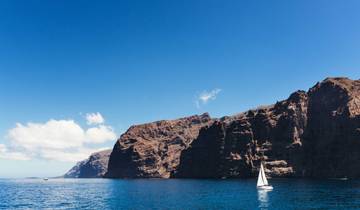
7 days
Sailing the Canary Islands
- ✓ Comprehensive Tenerife tour
- ✓ Expert local guides included
- ✓ All accommodation arranged
- ✓ Transportation provided
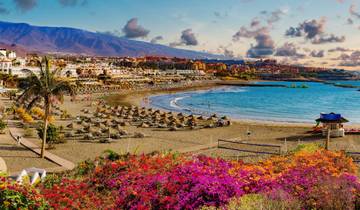
7 days
Hike The Canary Islands
- ✓ Comprehensive Tenerife tour
- ✓ Expert local guides included
- ✓ All accommodation arranged
- ✓ Transportation provided

6 days
Tasting the South of Tenerife
- ✓ Booking needs min. 2 travelers
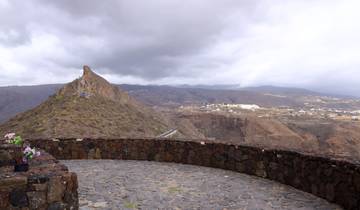
7 days
Tenerife Firsthand – 7 Days Among Volcanoes, Ocean and Adventure
- ✓ Booking needs min. 2 travelers
Multi-day tour packages powered by TourRadar. Prices and availability subject to change.
Understanding the Canary Islands Climate
Why the Canary Islands Stay Warm Year-Round
The Canary Islands’ extraordinary climatic stability — the quality that led ancient writers to imagine these islands as the mythical Fortunate Islands or Elysian Fields — derives from two interlocking geographic factors that work together to moderate both summer heat and winter cold. The first is latitude: the archipelago sits between approximately 27° and 29° North, close enough to the Tropic of Cancer to receive strong, near-perpendicular solar radiation throughout the year, but far enough from the equator to avoid the extremes of equatorial heat and humidity. The second factor is oceanic: the Canary Current flows southward along the West African coast before curving westward around the islands, carrying cool sub-surface water that moderates summer sea surface temperatures and prevents the kind of winter cooling that strips the warmth from Mediterranean destinations at similar latitudes.
Layered over these two baseline mechanisms are the northeast trade winds — known locally as the alisios — which blow with remarkable consistency from the northeast across the Atlantic for most of the year. These winds carry moisture gathered during their long Atlantic crossing, and when they meet the high central peaks of the larger islands they are forced upward, cooling and condensing into cloud and rain on the windward northeastern and northern slopes. The leeward southern and southwestern slopes are rain-shadowed, receiving a fraction of the north’s rainfall and significantly more sunshine. This division — a single island presenting two distinct climatic personalities separated by a central spine — is the defining characteristic of Tenerife, La Palma, La Gomera, and Gran Canaria, and it has profound implications for choosing both an island and a specific base within that island.
Microclimates Across the Archipelago
The eight islands of the Canary archipelago — Tenerife, Gran Canaria, Lanzarote, Fuerteventura, La Palma, La Gomera, El Hierro, and La Graciosa — occupy very different positions on a spectrum from near-desert to laurel-forest rainforest, and the choice of island shapes the visitor’s weather experience at least as much as the choice of month. The eastern islands, Lanzarote and Fuerteventura, sit closest to the African coast at uniformly low elevations: without significant peaks to trigger orographic rainfall, the trade winds arrive warm and dry, and both islands are essentially semi-arid, receiving under 150–200 millimeters of annual rainfall. These are the archipelago’s sunniest and driest destinations in every month of the year.
Tenerife and Gran Canaria occupy the middle of the diversity spectrum. Each presents a dramatic contrast between a damp, mist-shrouded north — with banana plantations and laurel woodland reaching up steep valleys — and a bright, arid, sun-baked south. Both have high interior peaks that create alpine conditions above 2,000 meters, with snow possible in winter. La Palma, La Gomera, and El Hierro are the most verdant of the eight, their cloud forests and laurisilva ecosystems sustained by persistent mist and cloud on northern slopes and by comparatively high rainfall totals. El Hierro, the smallest and most westerly of the main islands, holds UNESCO Biosphere Reserve status and remains one of the least-visited corners of the archipelago. La Graciosa, the eighth island lying just north of Lanzarote, has no paved roads, a tiny permanent population, and a climate matching Lanzarote’s in its aridity and consistent sunshine.
Calima: The Saharan Wind Event
A recurring weather phenomenon that visitors to the eastern Canary Islands should understand is the calima — a period during which the prevailing northeast trade winds are displaced by winds arriving from the Sahara Desert to the southeast. When a calima establishes, temperatures can rise 5–10°C above seasonal averages within hours, air humidity drops sharply, and fine Saharan dust fills the atmosphere, reducing visibility dramatically and turning the sky a distinctive orange-grey. Dust settles on every surface; extended outdoor activity becomes uncomfortable and inadvisable for visitors with respiratory sensitivities; and the sea loses the vivid blue clarity that normally characterizes these Atlantic waters.
Calima events are inherently unpredictable and can occur in any month, though they are statistically most common in late summer (August) and late winter (January–February) when pressure patterns most frequently allow Saharan air to dominate. They typically last between two and five days before the trade winds reassert and clear conditions return with notable swiftness. Lanzarote, Fuerteventura, and eastern Gran Canaria experience the most severe calima episodes due to their low elevation and proximity to the African coast; the western and higher islands, particularly El Hierro and La Gomera, are affected less frequently and less intensely. A calima is not a reason to avoid the islands but it is worth understanding when planning outdoor-focused itineraries, particularly for the eastern islands in high summer.
Month-by-Month Guide to the Canary Islands
January and February in the Canary Islands
January is the peak of the European winter-sun season in the Canary Islands, and it shows. Airlines from northern Europe — the UK, Germany, Scandinavia, Benelux — run maximum-frequency services to Tenerife South, Gran Canaria, Lanzarote, and Fuerteventura, and the resort zones along the southern coasts fill with package holiday visitors. Daytime temperatures of 20–22°C on the south coast feel intensely appealing against the backdrop of a northern European January, and with the sun typically shining for seven or more hours daily even in winter, the beaches of Costa Adeje, Playa del Inglés, Puerto del Carmen, and Morro Jable are busy from mid-morning onwards. Accommodation rates are at or near their annual highs throughout January, and the quality of the visitor experience in the main resorts correspondingly more crowded than at any other time of year.
February is defined, for much of the archipelago, by Carnival. The Carnival of Santa Cruz de Tenerife — celebrated across approximately two weeks centered on the weekend before Ash Wednesday — is among the largest street carnival events in the world by attendance, drawing visitors from across Spain and northern Europe. The centerpiece events include the election of the Carnival Queen in her extraordinary tiered costume (an engineering and design feat that can reach several meters in height), themed street parades spread across multiple days and nights, open-air concerts in the main plazas, and the Burial of the Sardine on Ash Wednesday evening — a ceremonial street procession that marks the carnival’s formal close. Las Palmas de Gran Canaria holds its own significant Carnival celebrations in parallel. Santa Cruz de Tenerife is difficult to navigate by car during Carnival, and accommodation anywhere on the island — not just in Santa Cruz — commands the year’s highest rates. For those not attending Carnival, February is paradoxically a reasonable time to visit the western islands (La Palma, La Gomera, El Hierro) where the season’s larger crowds do not reach.
In nature terms, February brings one of Tenerife’s most photogenic natural displays: the almond blossom in the municipality of Vilaflor and the valleys around Santiago del Teide reaches its peak, covering the hillsides in soft white and pink flowers at elevations between 800 and 1,500 meters. The contrast between snow on Teide above and almond blossom in the middle band is one of the island’s defining winter images.
March and April in the Canary Islands
March and April are widely regarded by returning visitors as among the finest months across the entire archipelago, combining warm and stable weather with a gradual reduction in crowd density from the January peak. Easter is the major exception: Semana Santa (Holy Week) brings its own visitor surge and accommodation price rise, concentrated particularly around the Palm Sunday through Easter Monday period. The Semana Santa processions in Las Palmas de Gran Canaria and in La Laguna on Tenerife are ceremonially elaborate and worth experiencing, but the increased visitor numbers around Easter can be substantial.
Beyond Easter, the spring shoulder delivers temperatures rising from 20°C in early March to 23–24°C by late April on south coasts, seas warming from 19°C toward 21°C, and the most visually spectacular wildflower season of the year on the higher-altitude islands. On Tenerife, the endemic tajinaste rojo — the Tenerife tower of jewels (Echium wildpretii) — begins its flowering in late April and early May, its flame-red spikes reaching up to two meters in height across the slopes of the Teide caldera. This plant is endemic to the Canary Islands and concentrated in the volcanic highland, making it one of the most distinctive natural sights the archipelago offers. The Anaga Rural Park on Tenerife’s northeast tip is at its most atmospheric in spring, when the laurel-forest canopy has fully leafed and coastal viewpoints across the Macizo de Anaga are free of summer haze. For whale and dolphin watching, spring marks one of the year’s productivity peaks off Tenerife’s southwest coast as migratory cetacean species join the resident pilot whale population in the deep-water channel between Tenerife and La Gomera.
May and June in the Canary Islands
May consolidates spring’s favorable conditions with further warming and a continued easing of visitor pressure outside the most popular resort zones. South coast temperatures typically reach 23–26°C by mid-May, and the sea, at around 21–22°C, is comfortable for swimming without requiring the psychological resilience needed in January. Hiking conditions across all elevation zones are excellent: above 2,000 meters in Teide National Park, the recent snow has retreated and the permitted trail to the summit crater becomes more accessible before the summer rush for permits begins in earnest. In La Gomera’s Garajonay National Park — a UNESCO World Heritage Site inscribed in 1986, recognized for its outstanding preservation of laurisilva laurel forest ecosystem — spring remains one of the most rewarding seasons for walking the forest trails, when the misty atmosphere is at its most atmospheric and mosses and ferns glow a vivid green.
The Corpus Christi celebrations in La Orotava and La Laguna on Tenerife represent one of the most elaborately beautiful street festivals in the islands, held in May or June depending on the liturgical calendar. The tradition involves constructing intricate carpets of flower petals, volcanic sand, and salt in a spectrum of colors across the main squares and streets — a display that may take communities days to prepare and which lasts only as long as the procession passes over it. June follows with a further temperature increase and the most pronounced drop in visitor numbers of the year outside the winter-to-summer transition: the European school holiday season has not yet begun, the Carnival crowds are long gone, and northern European traveler demand shifts back toward domestic and Mediterranean destinations. Accommodation rates in June reach their annual low alongside September, making it one of the clearest value windows of the year. The principal caveat is that June can bring the first serious calima episodes of the summer season as Saharan wind patterns become more established, particularly on the eastern islands.
July and August in the Canary Islands
July and August bring the second high-season peak, driven primarily by Spanish domestic tourism — families from mainland Spain who regard the Canary Islands as a natural, close-to-home summer destination — supplemented by continued European visitors. The character of the resort zones shifts somewhat from the winter pattern: a younger, more family-oriented, later-eating Spanish holiday culture overlays the northern European package-holiday demographic that dominates January and February. South coast temperatures reach 26–29°C on average, occasionally surging above 35°C during calima episodes that, in high summer, can arrive with little warning. Sea temperatures climb to around 23–24°C, the clearest and warmest of the year for swimming.
The practical challenges of summer are concentrated in the main resort zones and at the most popular natural attractions. Teide National Park receives its highest visitor numbers of the year in July and August, and the Teleférico cable car to the upper station at 3,555 meters operates at full capacity, requiring early-morning arrivals or advance online booking of time-slot tickets. The permit required for the final stretch to the summit crater at 3,715 meters books out months in advance for summer dates; visitors who have not secured this permit in advance will be turned back at the upper station barrier. Beyond these logistical pressures, summer on Tenerife’s north coast and in the western islands presents a genuinely different and often more rewarding experience: Puerto de la Cruz operates at a more relaxed pace than the southern resorts, the historic center of La Laguna (a UNESCO World Heritage Site since 1999, recognized for its intact Renaissance urban planning) is best explored in early morning before the heat builds, and the relative cloud cover on the northern slopes of the island provides some natural relief from summer temperatures. For scuba diving and snorkeling, summer offers optimal conditions: water clarity is at its highest, sea conditions on southern coasts are reliably calm, and visibility at depth is generally excellent.
September and October in the Canary Islands
September is the month that experienced Canary Islands travelers most frequently cite as their personal preference when asked: it combines the sea temperatures of high summer (23–24°C), air temperatures that remain warm and stable (24–27°C on south coasts), excellent conditions for hiking and outdoor activities, and a visitor population that drops noticeably as the European school holiday season ends. Accommodation rates fall sharply from August — often by 25–40% in the main resort zones — while the quality of weather barely changes. For visitors with flexibility in their schedules, September represents one of European travel’s clearest value opportunities: high-season conditions at low-season prices.
October is the transition month, with temperatures beginning to moderate (south coast highs typically 23–25°C) and the first more substantial rainfall returning to the northern highlands and the western islands. The natural landscape takes on an autumnal richness in October: the Anaga Rural Park’s laurel canopy deepens in color and texture, views from the high ridgelines of La Palma and La Gomera become cleaner as summer haze dissipates, and the volcanic plateau of Teide National Park glows with the amber and ochre tones that the bleaching midsummer sun tends to wash out. October is widely considered one of the best months for high-altitude hiking on Tenerife, when summit temperatures are cool and invigorating, crowds have thinned substantially, and the Teide crater permit is considerably easier to obtain than in summer. Whale-watching productivity off the southwest coast reaches a second annual peak in September and October as migratory cetacean species move through the deep-water channel in both directions.
November and December in the Canary Islands
November marks the beginning of the winter high-season buildup. Airline seat capacity from northern Europe increases week by week through November, and the southern resort zones transition from shoulder-season tranquility to the fuller, busier atmosphere of peak winter. Weather remains excellent for beach purposes on south coasts and across the eastern islands — temperatures averaging 20–22°C by day with reliable sunshine — though the northern highlands and the western islands see increasing rainfall, and occasional stronger Atlantic weather systems can affect ferry services and, more rarely, flight operations. Accommodation prices climb steadily through November toward the December–January peak, but early November retains much of October’s more relaxed character and pricing.
December is the most popular and most expensive month to visit the southern resort islands, with Christmas and New Year periods seeing accommodation at peak rates across Tenerife’s south coast, Gran Canaria’s Playa del Inglés and Maspalomas zone, Lanzarote’s Puerto del Carmen, and Fuerteventura’s Corralejo and Morro Jable. The proposition of Christmas Day spent on a warm, sunny beach under subtropical skies drives enormous demand from visitors leaving cold northern European winters behind, and the resort infrastructure handles this demand with the efficiency of long practice. For budget-conscious travelers, December is the single most expensive month and is best avoided if flexibility exists. For visitors who prioritize the warmth, the resort atmosphere, and the cultural contrast of a subtropical Christmas, December on Tenerife’s south coast or on Lanzarote delivers its promise reliably.
Tenerife by Season: A Detailed Island Guide
Tenerife is the largest island in the Canary archipelago, the most visited, and the most climatically complex. Any seasonal guide to Tenerife must account for the three distinct climatic zones that exist on this single island: the sunny, arid south coast stretching from Los Cristianos and Playa de las Américas through Costa Adeje to El Médano; the verdant, cloudier north encompassing Puerto de la Cruz, the Orotava Valley, La Laguna, and the Anaga peninsula; and the high-altitude volcanic interior of Teide National Park, where conditions above 2,000 meters bear almost no resemblance to the subtropical coast below. A visitor spending a week on the south coast experiences a categorically different Tenerife from one hiking the Anaga ridge trails or ascending the Teide massif, even in the same week of the same year.
Tenerife in Spring
Spring is the season most consistently recommended by naturalists, hikers, and repeat visitors to Tenerife who have experienced all four seasons. The trade winds blow reliably from the northeast, pushing cloud onto the Anaga and Teno massifs in the early part of each day but clearing through the afternoon; the south coast is reliably sunny and warm; and the high plateau of the Teide caldera transitions from winter dormancy into one of its most spectacular natural displays. The endemic tajinaste rojo blooms from late April through early June, transforming the slopes of Las Cañadas with thousands of its two-meter red spikes — a sight that has no close equivalent anywhere else in the world. Hiking conditions on the high plateau are ideal: temperatures in the 12–18°C range at the cable car upper station provide comfortable exertion, and the long sightlines across the caldera and down to the coast are at their clearest before summer haze builds.
On the north coast, Puerto de la Cruz enjoys its most animated spring season: the Orotava Valley below the town is in full banana-plantation growth, the botanical garden in the lower town is at peak flowering, and the historic upper town with its 18th-century colonial architecture and dragon tree gardens is best explored in the cooler temperatures of a spring morning. The Anaga Rural Park is outstanding in spring — the oldest volcanic massif on Tenerife and home to some of the best-preserved laurel forest outside La Gomera, its network of GR trails through the ridge-line villages offers views that range from the black-sand coves of Benijo to the sea cliffs above Taganana. Day visitors to Anaga from the south coast have the option of combining the park with the historic city of La Laguna in a single northern loop.
Tenerife in Summer
Summer on Tenerife is a tale of two islands. The south coast resort corridor — Playa de las Américas, Los Cristianos, Costa Adeje — operates at full intensity through July and August: the sea is warm, the beaches are crowded from mid-morning, and the resort entertainment, dining, and commercial infrastructure run at maximum capacity. For families with school-age children, summer may be the only practical visiting window, and the south coast is genuinely well-equipped for this demographic. The drawbacks are the cost, the crowd density at popular sites, and the occasional calima spike above 35°C that can make afternoon beach time uncomfortable even with sun protection.
The north of the island in summer is substantially calmer. Puerto de la Cruz attracts a more Spanish and culturally engaged visitor demographic than the southern resorts; the town maintains its Atlantic character and its cafés and squares retain a local flavor even at the height of the season. El Médano on the southeast coast, sheltered from the main resort crowds but positioned in the trade-wind acceleration zone past Punta Roja, is the home of Tenerife’s windsurfing and kitesurfing culture — summer is when the winds are most powerful and consistent, making this the best season for watersport enthusiasts while simultaneously making it the least appealing month for anyone hoping to sunbathe undisturbed. For those planning a Teide excursion in summer, the logistical requirements are significant: Teleférico time slots must be pre-booked online, the summit permit must be secured months in advance through the official national park reservation system, and the approach to the park via the TF-21 road from the south can see significant midday traffic.
Tenerife in Autumn
The autumn shoulder — September through November — is the period when Tenerife most clearly rewards travelers who have done the basic research to know about it. September’s combination of maximum sea temperature, generous air warmth, and sharply reduced visitor numbers from the August peak creates conditions that the island’s tourism professionals privately acknowledge as some of the most pleasant of the year. The south coast beaches remain genuinely hot through September and into October, the Teleférico queue at Teide is manageable without pre-dawn starts, and the Anaga trails are comfortably walked without the summer heat that can make the south-facing sections punishing at midday.
October brings a rich, lower-angle light across the volcanic landscape that photographers consistently favor over summer’s bleaching overhead sun. The Teide plateau in October, with the summit population minimal and the caldera colors deepening toward their ochre and rust tones, is arguably the most visually compelling the park ever looks. The north coast takes on a deeper green as the first autumn rains feed the laurel forest, and the thermal springs resort area around Los Realejos and the Orotava Valley’s agricultural terraces are particularly atmospheric in the October light. November begins the transition back to peak season, with prices rising gradually toward the December maximum, but the first half of November retains much of October’s character — arguably the last quiet moment before the winter-sun crowds fully reassert themselves.
Tenerife in Winter
Winter on Tenerife is a season of contrasts so extreme as to feel almost theatrical: it is simultaneously the busiest, most expensive, most crowded season on the south coast and the most atmospherically dramatic and least visited season on the northern and high-altitude zones. The south coast resort experience in December and January is well-defined and consistent: abundant winter sun, warm beach days, a dense resort infrastructure, and prices that reflect the enormous northern European demand. This is the Tenerife that package-holiday itineraries were built around, and it delivers its proposition reliably. For visitors whose primary goal is winter warmth and beach access, there is nothing to criticize about Tenerife’s south coast in January.
Meanwhile, Mount Teide’s summit — visible from the coast on clear days — may carry a genuine snowcap from December through March, and the road to the base of the volcano through the volcanic desert of Las Cañadas passes through a landscape that feels genuinely other-worldly in winter light. The Teleférico ascent to the upper station above the snowline on a clear winter day delivers one of the most extraordinary views in Europe: an ocean of cloud at mid-altitude, with the islands of La Palma, El Hierro, La Gomera, and Gran Canaria visible in a full 360-degree panorama. Hiking the marked trails around the caldera in winter requires layers and some awareness of ice conditions on shaded sections, but the rewards for properly equipped visitors are significant. The Carnival period in February transforms the north coast city of Santa Cruz de Tenerife into a festival environment incomparable in Spain and widely considered among the finest street carnivals on earth.
Island-by-Island Seasonal Guide
Best Time to Visit Gran Canaria
Gran Canaria is frequently described as a continent in miniature — an island of just over 1,500 square kilometers that ranges from the immense sand-dune system of Maspalomas and the Saharan-feeling southeastern coast through subtropical ravines and banana valleys to a mountainous interior topping out near 1,950 meters at the Pico de las Nieves. Las Palmas de Gran Canaria, the island’s capital and the most populous city in the Canary Islands, sits on the northeast coast with its own excellent urban beach at Las Canteras — a long, protected reef-sheltered bay swimmable year-round.
The seasonal pattern on Gran Canaria closely parallels Tenerife’s: the south and southeast coasts (Playa del Inglés, Maspalomas, Puerto Rico, Puerto Mogán) see maximum demand from December through February and again in July and August, with shoulder months of March–May and September–November offering the most rewarding balance. Las Palmas is relatively less affected by the winter-sun package-holiday dynamic and is worth visiting in any month for its historic Vegueta neighborhood — one of the oldest colonial urban cores in the Atlantic — its port energy, and its year-round cultural calendar. The Carnival of Las Palmas de Gran Canaria, held simultaneously with Tenerife’s, is a significant independent festival in its own right and draws a substantial number of visitors specifically for this event. Windsurfers and kitesurfers favor the Pozo Izquierdo area on the southeast coast, where trade-wind conditions are most consistent from May through September.
Best Time to Visit Lanzarote
Lanzarote is the driest and sunniest island in the archipelago and is the closest the Canary Islands come to a year-round sun guarantee. Receiving under 150 millimeters of annual rainfall on average — less than some Saharan oases — the island essentially has no rainy season in the conventional sense, and the question for visitors is not “when will it be dry?” but rather “when are crowds and prices at their lowest?” The answer to that question is June and September, with the December through February peak making the island’s resort zones (Puerto del Carmen, Playa Blanca, Costa Teguise) particularly busy and expensive.
Lanzarote’s principal attractions — Timanfaya National Park (the volcanic Fire Mountains from the eruptions of 1730–1736), the Jameos del Agua volcanic cave and salt lake complex, the Cueva de los Verdes lava tube, and the remarkable suite of buildings designed by the Canarian artist César Manrique working with the volcanic landscape — are best visited on weekday mornings in the shoulder months when coach-group tourism has not yet arrived at peak volume. The César Manrique Foundation, housed in five volcanic bubbles that Manrique incorporated into his own home, is consistently cited among the most extraordinary domestic architectural spaces in Spain. Calima events affect Lanzarote most intensely of all the islands due to its low elevation and easterly position; they are most common in late summer and early spring, though they can occur at any time.
Best Time to Visit Fuerteventura
Fuerteventura has the finest beaches in the Canary Islands by sheer scale and sand quality. The Corralejo Dunes in the north — a protected natural park of Saharan-scale white sand rippling down to an azure shallow sea — and the Sotavento Lagoon and Jandía peninsula in the south represent two of the Atlantic’s most celebrated beach environments. The island’s flat, low-profile terrain and proximity to the African coast produce conditions similar to Lanzarote in their aridity and sunshine, with UNESCO Biosphere Reserve designation partly reflecting the ecological value of its unique desert landscape and the fossilized sand-dune system inland from Betancuria.
Wind defines Fuerteventura more than any other island. The consistent and often powerful trade-wind flow across the island has made it one of Europe’s — and arguably the world’s — leading windsurfing and kitesurfing destinations. The Professional Windsurf Association and International Kiteboarding Association have held world-class competition events at Sotavento, and the island’s windsurf schools and rental operations are among the most extensive in the Atlantic. Wind-sport visitors prioritize June through September when the alisios blow most reliably and strongly. Beach holiday visitors seeking calm conditions, manageable crowds, and lower prices generally favor March through May and October through November. The Jandía peninsula’s southern beaches, particularly Cofete beach on the remote windward coast, reward the effort of reaching them with a scale of empty, wild beach that has essentially disappeared from most European coastal destinations.
Best Time to Visit La Palma
La Palma rises from the Atlantic with remarkable abruptness — from sea level to 2,426 meters at the Roque de los Muchachos observatory summit across a horizontal distance of less than 20 kilometers — and this extreme topographic relief drives one of the most intense versions of the trade-wind climate pattern in the archipelago. The northeastern slopes receive extraordinary rainfall that sustains Canary Island pine forest at middle elevations and dense laurel cloud forest at higher altitudes. The leeward western coast at sea level is sun-drenched, with the most extensive black-sand beach system in the Canary Islands at Puerto Naos and Charco Verde.
La Palma’s Roque de los Muchachos Observatory, operated by the Instituto de Astrofísica de Canarias, is home to the Gran Telescopio Canarias (GTC), one of the largest single-aperture optical telescopes on Earth at the time of its completion, alongside the William Herschel Telescope, the Nordic Optical Telescope, and Cherenkov gamma-ray telescope arrays. The island’s Starlight Reserve designation recognizes its exceptional dark sky quality, making it one of Europe’s most significant stargazing destinations. Public access programs at the observatory are periodically offered — checking the IAC’s official website for current visitor dates before travel is advisable, as schedules change.
Spring (March–May) and autumn (September–November) are the most rewarding seasons for visiting La Palma. The Caldera de Taburiente National Park trail system — a vast collapsed volcanic caldera accessible by a network of marked paths — is most comfortable outside the peak summer heat. The 2021 eruption of the Cumbre Vieja volcano in the island’s south deposited lava flows across agricultural and residential land before stopping at the coast, and the island’s infrastructure and visitor services have recovered progressively. Visitors intending to hike in the southern municipalities (Fuencaliente, El Paso, Tazacorte) should verify current trail access conditions, as monitoring of the post-eruption landscape is ongoing and some paths in the southern sector may have restricted access at any given time. The northern and western parts of La Palma were entirely unaffected by the eruption.
Best Time to Visit La Gomera
La Gomera is perhaps the most dramatic of the western islands in the literal sense — a roughly circular island centered on a high plateau deeply dissected by steep ravines radiating like wheel spokes from the central tableland — and it is home to Garajonay National Park, a UNESCO World Heritage Site inscribed in 1986 for its outstanding preservation of laurisilva laurel forest. This forest ecosystem, a relic of the subtropical woodlands that covered much of southern Europe and North Africa before the Pleistocene cooling, is sustained by the persistent cloud and mist that condenses against the Garajonay plateau, creating a permanently damp and otherworldly forest interior of extraordinary biological richness.
Garajonay is accessible in every season but is at its most spectacular in spring, when mosses, ferns, and woodland flowers are at maximum vibrancy. The mist that characterizes the forest is present year-round as a function of the cloud inversion, but spring light filtering through the laurel canopy in beams has a particular quality that walkers consistently report as among the most memorable natural experiences in the Canary Islands. Summer brings slightly more visitors to La Gomera but the island never approaches the crowd density of Tenerife or Gran Canaria. The island is most easily accessed by the Fred. Olsen fast ferry from Los Cristianos on Tenerife (approximately 50 minutes) and also has an airport with limited scheduled services. San Sebastián de La Gomera, the island’s main town and port, is associated historically with Christopher Columbus’s last stop before his Atlantic crossing in 1492, and the Torre del Conde and the church where he reportedly prayed are among the town’s most visited historic landmarks.
Best Time to Visit El Hierro and La Graciosa
El Hierro, the smallest and most westerly of the eight main islands, offers an experience that is genuinely unlike anything else in the archipelago. It has no significant resort area, no cruise ship pier, a population of approximately 11,000, and an ambition to be the first island territory to operate entirely on renewable energy — a goal pursued through a hybrid wind-hydroelectric system that has at times supplied the entire island’s electricity demand from zero-carbon sources. El Hierro holds UNESCO Biosphere Reserve designation, and its Mar de las Calmas marine reserve on the island’s sheltered southern coast is widely regarded as one of the finest snorkeling and diving environments in the Spanish Atlantic.
El Hierro is rewarding in every month for visitors seeking tranquility, hiking, and marine wildlife, but spring and autumn are most comfortable for walking the ancient caminos (paths) that criss-cross the island, including the Camino de la Virgen and the coastal routes above the remarkable El Golfo embayment on the north coast — a vast ancient volcanic collapse that created a nearly enclosed valley-and-sea landscape unlike anything else in the Canary Islands.
La Graciosa, lying off the northeastern tip of Lanzarote, is accessible only by ferry from Órzola and has no paved roads. Its two tiny settlements, Caleta del Sebo and Pedro Barba, are connected to each other and to the island’s beaches by sandy tracks traversable on foot, bicycle, or the island’s few four-wheel-drive taxis. The climate matches Lanzarote’s in its aridity and year-round sunshine, and the beaches — particularly Playa de las Conchas on the island’s northern shore — are pristine and lightly visited even at peak times. La Graciosa is at its quietest from September through early December, when the summer influx from Lanzarote has passed and the winter-sun package-holiday demand has not yet fully arrived.
Best Time for Specific Activities in the Canary Islands
Best Time for Beach and Swimming
For swimming and beach-focused holidays, the optimal months are May through October, when sea temperatures are warmest and most inviting. The Canary Islands’ sea temperature follows a gentle annual cycle: approximately 18–19°C at its winter minimum in January and February, rising to 23–24°C at the summer maximum in August and September, with the warmth lingering into October before declining. The distinction matters more to swimmers than to sunbathers: January and February are perfectly warm for sunbathing on sheltered south-facing beaches but the 19°C sea requires some resolve for more than a brief dip. From May onward, swimming conditions improve significantly for most visitors.
Sea conditions also vary by coast and season: the south and west-facing beaches of all islands are protected from the dominant northeast swell by the islands’ own terrain and offer consistently calm water for swimming throughout the year. North and east-facing beaches are exposed to Atlantic swells that vary in height seasonally — larger in autumn and winter, smaller in summer — and can produce strong shore-break at exposed spots. Fuerteventura’s vast Jandía and Sotavento beaches are among the finest swimming beaches for calm summer conditions; Tenerife’s volcanic black-sand beaches at Benijo and Playa Jardín in Puerto de la Cruz offer a more dramatic aesthetic year-round, best visited in spring and autumn for comfortable temperatures without the summer crowds.
Best Time for Hiking and Nature
Hiking season in the Canary Islands is determined less by season in the absolute sense and more by target terrain and elevation. For the high-altitude trails of Teide National Park above 2,000 meters, spring (April–May) and autumn (September–October) offer the ideal balance of comfortable temperatures, good visibility, and manageable permit and Teleférico demand. The summit permit for the final stretch from the upper cable car station to the Pico del Teide crater rim should be reserved through the national park’s official online booking system well in advance regardless of season, but June through August represents the hardest period in which to secure a desired date.
For the northern laurel forest trails on Tenerife’s Anaga peninsula — some of the oldest volcanic land in the archipelago, accessible via the GR-131 and a network of local marked paths — the best conditions run from March through May and September through November, though the trails are walkable in every month. Winter rain and mist in Anaga add atmosphere rather than danger for prepared walkers. La Gomera’s Garajonay forest trails are excellent year-round, with spring offering the most vibrant vegetation and the most photogenic misty-forest atmosphere. La Palma’s caldera rim trails are best in spring and autumn. El Hierro’s coastal and interior paths are particularly rewarding in spring when endemic wildflowers are at peak bloom and the island’s giant lizard population is most active on the coastal lava fields.
Best Time for Whale and Dolphin Watching
The deep-water channel between Tenerife and La Gomera is one of Europe’s most reliably productive cetacean environments, and the short-finned pilot whale (Globicephala macrorhynchus) is its defining species. Unlike the seasonal cetacean populations of most European whale-watching destinations, pilot whale groups are resident in these waters year-round, present in the deep off-shore channel in stable social groupings and routinely observable from commercial whale-watching boats operating from Los Gigantes and Los Cristianos on Tenerife’s south coast. This residency means any month of the year is a viable whale-watching window — a significant advantage for visitors who cannot choose their travel dates freely.
However, cetacean species diversity is highest in spring (March–May) and autumn (September–November), when migratory species moving between Atlantic feeding and breeding grounds pass through the channel. Common dolphins, bottlenose dolphins, striped dolphins, sperm whales, and — less frequently — fin whales have all been recorded in these waters during the migration periods. Responsible operators adhere to Spanish regulations governing approach distances, maximum vessel time near individual animals, and engine-off protocols in proximity to cetaceans; choosing operators with environmental certification (the ADDEF Code of Conduct or equivalent) is advisable. Rough sea conditions, which can reduce departure frequency, are most likely in winter and least likely in summer.
Best Time for Carnival and Cultural Events
The Carnival of Santa Cruz de Tenerife is the undisputed cultural peak of the archipelago’s annual calendar, typically celebrated across two weeks in February (occasionally extending into early March in years when Easter falls late in the calendar). The main set-piece events — the Carnival Queen election and her extraordinary tiered costume, the Masquerade parade on the weekend before Ash Wednesday, the murga (satirical choir) competitions, and the Burial of the Sardine on Ash Wednesday evening — have their own dedicated audiences of returning visitors. The Burial of the Sardine, a surreal ceremonial street procession in which a papier-mâché sardine of enormous proportions is mourned through the streets of Santa Cruz before a ceremonial burning, is one of the most unusual civic rituals in European cultural life.
Beyond Carnival, Corpus Christi in La Orotava and La Laguna (May or June, date varies annually) produces the Canary Islands’ most artistically elaborate street displays, with communities spending weeks constructing floral carpets of extraordinary precision. The Romería de San Roque in Garachico in August is among the most authentic of Tenerife’s rural festivals, a pilgrimage celebration marked by processions in traditional costume, decorated ox-carts, and communal singing through the streets of one of the island’s most historic towns — notably, one that survived the destructive lava flow of 1706 in parts and rebuilt around its volcanic landscape. La Palma’s Bajada de la Virgen de las Nieves is a major processional festival held every five years; those interested in attending should verify the current cycle and dates through the Cabildo de La Palma official sources well in advance, as the festival requires significant advance planning and accommodation booking.
Best Time for Diving and Watersports
Diving conditions in the Canary Islands are strong year-round, benefiting from the generally clear Atlantic water and the dramatic volcanic underwater topography across all islands. Visibility is highest in summer and early autumn (July–October) when sea conditions are calmest and seasonal plankton blooms are minimal; in winter, rougher seas can reduce visibility on exposed dive sites but the cooler water brings different marine species and the absence of summer crowds at popular dive spots is a genuine advantage. The temperatures are mild enough year-round — 18–24°C depending on season — that either a 3mm or 5mm wetsuit suffices for most divers, with no drysuit requirement.
El Hierro’s Mar de las Calmas marine reserve is consistently cited among Spain’s finest dive sites, offering extraordinary marine biodiversity including endemic species of fish, invertebrates, and the El Hierro giant lizard on the rocky shores above. Lanzarote’s dive scene includes the wrecks and the underwater statue park at Playa Honda. Tenerife’s west coast, near Los Gigantes and the cliffs of Teno, offers dramatic wall dives in deep water. For conventional surfing, the optimal season runs from October through April when Atlantic groundswells reach the north and west-facing coasts of Tenerife, Lanzarote, and Fuerteventura; La Santa on Lanzarote is among Spain’s most established surf spots. Wind sports (windsurfing and kitesurfing) peak June through September across the entire archipelago.
Best Time for Stargazing
La Palma’s designation as a Starlight Reserve — a certification recognizing its outstanding dark sky quality — and the presence of the Roque de los Muchachos Observatory complex at 2,426 meters make the island the archipelago’s premier stargazing destination. The observatory sits above the cloud inversion layer that forms at mid-altitude on winter nights, placing observers in clear, dry air above a sea of cloud that itself blocks light pollution from the coastal settlements below. The combination of high altitude, consistent atmospheric transparency, low humidity, and minimal local light pollution produces night sky quality that ranks among the finest accessible to the general public anywhere in the Northern Hemisphere.
Stargazing is most productive from October through March, when nights are longest and the Milky Way is positioned favorably in the sky. New moon periods in any of these months offer optimal conditions; checking a lunar calendar when planning a dedicated stargazing visit is worth the few minutes it takes. Tenerife’s Teide National Park also has dedicated stargazing facilities — the Observatorio del Teide hosts public observation programs — and the altitude above 2,000 meters provides a similar above-cloud-inversion advantage. Public access to the professional telescopes at Roque de los Muchachos is limited and by appointment only; checking the Instituto de Astrofísica de Canarias website for current public programs before travel is the most reliable approach.
Peak Season, Shoulder Season, and Low Season
High Season: December to February and July to August
The Canary Islands operate on a twin-peak tourism model that distinguishes them from most European sun destinations, which peak only in summer. The first and larger peak runs from December through February, powered by northern European demand for winter warmth. Flight frequencies from UK, German, Scandinavian, and Benelux airports reach their annual maximums, and the resort zones of Tenerife’s south coast, Gran Canaria’s Playa del Inglés, Lanzarote’s Puerto del Carmen, and Fuerteventura’s Corralejo fill substantially. Accommodation rates in these resort zones are at their annual highs, popular beaches are busy during midday hours, and popular attractions such as Timanfaya National Park and the Teide Teleférico experience their highest visitor densities. The Carnival period in February adds a sharp single-event spike within this winter high season.
The summer peak (July–August) is somewhat smaller in absolute visitor numbers across the archipelago as a whole but is concentrated particularly heavily in the southern resort zones, with the additional characteristic of being domestically Spanish in character. Family groups from Madrid, Barcelona, and other mainland cities fill hotels that in winter hosted northern European package tourists. Summer peak prices in popular coastal hotels approach or occasionally exceed winter high-season rates on the highest-demand weeks in late July and early August. Both high-season windows mean longer airport check-in queues (Tenerife South and Gran Canaria airports are among Spain’s busiest), higher car rental demand and prices, and the need to book popular restaurants, activities, and transport in advance.
Shoulder Season: March to May and October to November
The shoulder seasons are the periods when the Canary Islands most consistently reward visitors who have researched their timing. March through May offers warm and stable weather with the archipelago still reasonably active — particularly around Easter — but without the January crowd density. Accommodation rates in the main resort zones typically run 20–35% below December peaks, though the Easter week spike can be substantial at popular mid-range hotels. The natural landscape is at its most spectacular, hiking conditions are optimal, and a far wider range of accommodation and activity options has immediate availability than in high season.
October and November mirror spring’s advantages with a different calendar rhythm: October’s sea temperatures remain at summer levels (23–24°C), air warmth is generous, and the summer visitor population has departed. November begins the gradual return toward peak pricing and visitor numbers as the first winter-sun travelers arrive on advance bookings, but early November is effectively an extended shoulder month with October’s favorable character. For the western islands (La Palma, La Gomera, El Hierro), the shoulder months are the definitive best visiting windows — enough warmth for comfortable outdoor activity, the fewest visitors of the year (already a small number by eastern-islands standards), and a level of access to wild landscape and local culture that peak-season volumes simply do not permit.
Low Season: June and September
June and September are the genuine low-season months of the Canary Islands calendar, falling between the twin peaks and seeing annual low points in both visitor numbers and accommodation prices. Neither month offers poor weather by any reasonable assessment: June is warm and mostly sunny, and September has the warmest sea temperatures of the year alongside generous air warmth. What they lack compared to other months is primarily the high-season energy of the resort zones — a smaller proportion of the resort restaurant and entertainment options may operate at reduced hours or close temporarily in the lull between peaks.
September is the month that most travel writers and long-term Canary Islands travelers cite as their personal preference when asked to name the single best visiting month, and the case is compelling: high-season conditions (sea temperature, air warmth, hiking accessibility, whale watching) at low-season prices. The contrast in accommodation rates between August and September can be dramatic and immediate, driven by the European school-holiday calendar. June is equally good value and offers similar weather benefits, though the sea is somewhat cooler than in September. Both months are essentially unavailable to families constrained by school terms, which partly explains why they remain low season despite their genuinely excellent conditions — creating a consistent opportunity for flexible independent travelers.
Flights, Accommodation, and Practical Planning by Season
Seasonal price variation for both flights and accommodation across the Canary Islands is significant and worth factoring into itinerary planning well in advance. The general pattern for accommodation in the main resort zones follows the crowd curve closely: December through February at annual highs (with Carnival week the sharpest single spike); March and April moderating somewhat outside Easter; May through early June falling toward the low-season trough; July and August rising sharply toward near-peak; September falling back toward the annual low; October and November occupying a comfortable middle range before November climbs toward December’s peak again.
Flight pricing from northern European hub airports follows a broadly parallel curve, with December, January, July, and August commanding premium fares — sometimes substantially higher than shoulder-month equivalents on the same route — and June, September, and mid-May offering the most economical alternatives. Booking domestic inter-island flights within the Canary Islands (operated primarily by Binter Canarias and Canary Fly) requires considerably less advance planning than international flights, though the December and summer peaks create elevated demand on routes serving the smaller islands. Ferry services between the islands — operated principally by Fred. Olsen Express and Naviera Armas, with multiple sailings daily between Tenerife and La Gomera and regular services connecting all islands — are generally bookable with a few days’ notice outside peak periods, but advance booking is strongly advisable for high season travel and for sailings at popular departure times.
Rental cars are in high demand throughout the peak winter and summer seasons, and rates on the most popular weeks in January and August can be significantly elevated above the shoulder-month baseline. Booking well in advance — ideally at the time of booking flights — is advisable for anyone planning to drive independently during high season. The western islands have smaller rental fleets and fewer operators, making early booking even more important for La Palma, La Gomera, and El Hierro.
Packing Guide for the Canary Islands by Season
The Canary Islands’ microclimate diversity means that what to pack depends on the destination island, the planned activities, and the elevation range to be visited as much as on the month. A visitor spending a week on Fuerteventura’s southern coast in any month needs principally summer clothing plus a light layer for evenings; a visitor planning to hike the Caldera de Taburiente rim trails on La Palma in April needs proper waterproof hiking boots, warm insulating layers, and waterproofs for above 2,000 meters where temperatures can fall to 4–8°C even in spring. A visitor combining Tenerife’s south coast beach week with a Teide excursion in August needs both lightweight beach clothing and a windproof jacket for the cable car upper station at 3,555 meters, where temperatures average around 8°C regardless of the baking heat on the coast 3,000 meters below.
Year-round essentials for any Canary Islands destination include high-factor sun protection rated SPF 30 or above (the subtropical latitude delivers noticeably stronger UV radiation than at equivalent latitudes in Europe, and the atmospheric clarity at altitude amplifies this further), quality sunglasses, a light layer for air-conditioned interiors and evenings, and robust walking shoes for cobbled historic centers and uneven volcanic tracks. For winter travel to the south coast resorts, a light-to-mid-weight jacket for evenings suffices; for the northern highlands of Tenerife or the western islands in winter, waterproofs are an indispensable precaution rather than an optional addition. For summer hiking above 2,000 meters, take significantly more cold-weather clothing than the coastal temperature would suggest: the temperature gradient from sea level to Teide summit is approximately 20°C on a typical summer day. Calima preparedness — a lightweight long-sleeved layer, sunglasses, and awareness that outdoor activity may be inadvisable for one to three days at a time — is a sensible addition particularly for the eastern islands in summer and late winter.
Frequently Asked Questions
Which Canary Island has the best weather year-round?
Lanzarote and Fuerteventura are the driest and sunniest islands in the archipelago for every month of the year. Lanzarote in particular averages under 150 millimeters of annual rainfall — less than some Saharan locations — and its low elevation and proximity to the African coast mean no meaningful rainy season exists. For visitors whose primary metric is guaranteed sunshine hours, these two eastern islands will consistently outperform the others on statistical grounds. If “best weather” is understood more broadly to mean “mild and pleasant” rather than purely “hot and dry,” Tenerife’s south coast and the lower elevations of Gran Canaria offer an equivalent proposition with the additional dividend of more diverse landscape, altitude-accessible highland escape from summer heat, and greater cultural variety.
Can you swim in the sea in the Canary Islands in winter?
Yes, with some qualification depending on individual preference. Sea temperatures in December through February range from approximately 18°C to 20°C across the Canary Islands — noticeably cooler than the 24°C summer maximum but within the range that many regular open-water swimmers find acceptable, particularly for swimming of moderate duration in sheltered, sunny conditions. Many British and Scandinavian winter-sun visitors swim in these temperatures without wetsuits; visitors accustomed to warmer Mediterranean summer conditions may find a short dip preferable to extended swimming. Surfers and divers generally use light wetsuits (3mm) in winter for extended water time. The south-coast beaches of all islands offer calmer conditions for winter swimming than north or east-facing coasts, which may see larger Atlantic swells through winter and early spring.
Is Tenerife worth visiting in summer?
For beach holidays, watersports, and resort-based relaxation, Tenerife in summer delivers reliably: the sea is at its warmest, evening temperatures are perfect for outdoor dining, and the south coast infrastructure operates at full capacity. Families with school-age children who cannot travel in shoulder months will find summer a perfectly capable visiting window. The main drawbacks are concentrated in the main resort zones and at Teide National Park: crowd density in Playa de las Américas and Los Cristianos is significant, the Teleférico requires advance booking, and summit permits must be reserved months ahead. Visitors willing to explore the north of the island — Puerto de la Cruz, La Laguna, the Anaga Rural Park — will find these areas significantly calmer than the south in summer and rewarding in their own right. On balance, September is a materially better choice than August for visitors who have scheduling flexibility, offering essentially the same weather at noticeably lower cost and with fewer crowds.
What is the calima and when does it affect the Canary Islands?
Calima is the term for a weather event in which the prevailing northeast trade winds are temporarily displaced by winds arriving from the Sahara Desert to the southeast. During a calima, temperatures can spike 5–10°C above seasonal averages within hours, fine Saharan dust fills the air and reduces visibility dramatically, and the sky turns a characteristic orange-grey. Fine dust settles on every surface; the combination of heat, reduced air quality, and dust makes extended outdoor activity uncomfortable, particularly for visitors with respiratory sensitivities. Calima events are statistically most common in late summer (August) and late winter (January–February) but can occur in any month; they typically persist for two to five days before the trade winds clear the atmosphere. Lanzarote, Fuerteventura, and eastern Gran Canaria experience the most intense calima events due to their low elevation and proximity to Africa. A calima is worth understanding and factoring into contingency planning — particularly for the eastern islands in summer — but it is not a sufficient reason to avoid these destinations entirely.
Is Teide National Park worth visiting in winter?
Teide National Park in winter is a strikingly different experience from a summer visit, and many visitors rate it more highly. From December through March, the summit may carry a genuine snowcap — visible from the Tenerife coast and from neighboring islands — that creates an extraordinary visual contrast with the subtropical beaches 3,000 meters below. On clear winter days the 360-degree panorama from the Teide upper cable car station encompasses the coasts of multiple islands, the Atlas Mountains of Morocco, and an unobstructed horizon. The cold at altitude (temperatures at the Teleférico upper station average around 4–8°C in winter with possible frost on shaded sections) requires proper layering but is entirely manageable for prepared visitors. Winter weekday mornings are among the least crowded times to visit the national park, and the volcanic landscape in low winter light has a quality — particularly in the dawn hours before the cable car opens — that summer’s bleaching overhead sun does not replicate.
How far in advance should I book for Carnival in Tenerife?
For Carnival in Santa Cruz de Tenerife, advance booking of at least six months is strongly advisable for accommodation, and many returning visitors book twelve months ahead. Hotels within the Santa Cruz municipality fill extremely rapidly once the carnival dates are announced and command the year’s highest rates. The exact carnival dates — which vary annually because they are set by the Easter calendar and span approximately two weeks from Saturday through Ash Wednesday — are announced by the Cabildo de Tenerife (Tenerife island government) approximately four to six months before the event; checking the official Cabildo website for the current year’s calendar is the most reliable source of confirmed dates. Flights into Tenerife South (and to a lesser extent Tenerife North, which is closer to Santa Cruz) are in high demand during Carnival week; early booking of both flights and accommodation is the most effective way to secure a viable visit.
Are the western Canary Islands (La Palma, La Gomera, El Hierro) worth the extra effort?
For visitors whose priorities are landscape, hiking, wildlife, and experiencing the Canary Islands outside the resort-holiday model, the western islands are not merely worth the extra logistics — they represent the most memorable part of a comprehensive Canary Islands visit. La Palma’s caldera and forest scenery, La Gomera’s Garajonay National Park laurel forest, and El Hierro’s marine reserve and lunar volcanic landscapes are each exceptional in ways that the eastern and southern islands simply do not replicate. The western islands require ferry connections from Tenerife (a frequent, comfortable service from Los Cristianos to La Gomera and from Santa Cruz de Tenerife to La Palma and El Hierro) or domestic flights — logistics that add roughly half a day to an itinerary. La Palma and El Hierro have airports with scheduled services from the mainland and from the main islands. The trade-off is entirely worthwhile for any visit of more than five or six days that combines a resort base with genuine natural exploration.
What is La Laguna and why is it historically significant?
San Cristóbal de La Laguna is Tenerife’s historic former capital, situated in the northeastern interior plateau at around 550 meters elevation, and it holds UNESCO World Heritage Site designation awarded in 1999. The inscription recognizes La Laguna’s exceptional preservation of its original Renaissance urban plan, laid out in the late 15th and early 16th centuries and based on a planned grid of streets without defensive walls — a model that subsequently influenced Spanish colonial city planning across Latin America. The surviving historic fabric is among the most intact of any Spanish colonial city: colonnaded streets of 16th-to-18th-century townhouses with internal courtyards, a cathedral, several large convents and churches, and a uniformly low-rise historic core essentially undisrupted by modern construction. La Laguna is now primarily a university city — the Universidad de La Laguna is one of Spain’s oldest — and its student population gives the historic center a year-round intellectual and cultural energy distinctly different from the beach-resort atmosphere of Tenerife’s south coast. It is accessible from Santa Cruz de Tenerife by tram in under 30 minutes and makes a straightforward day excursion from any base in the north of the island.
Is it safe to swim at wild beach spots in the Canary Islands?
Swimming safety in the Canary Islands depends primarily on location, conditions, and local knowledge rather than on the season. The resort beaches of the southern and eastern islands — Playa de las Américas, Maspalomas, Puerto del Carmen, Corralejo — are managed with lifeguard services and flag warning systems (green: safe; yellow: caution; red: no swimming) that operate during the main season and should always be respected. These managed beaches are safe for competent swimmers in the vast majority of conditions. Wild coastal spots — the coves of Anaga, the lava-rock pools of northern Lanzarote, the Cofete beach on Fuerteventura’s Jandía peninsula, the steep-entry sea pools of El Hierro — present a different picture: these locations are unguarded, often have no posted warnings, and some harbor rip currents or powerful surge conditions that are not apparent from shore until a swimmer is already in the water. The safe approach is to observe conditions carefully for several minutes before entering, to note where waves are breaking and whether water is being pulled back quickly between wave sets, and to ask local residents or accommodation staff about specific spots. The western islands’ fishing communities have detailed local knowledge of which coves are safe and which are not, and this knowledge is typically shared freely with visitors who ask.
Can I island-hop across the Canary Islands, and what is the best order?
Island-hopping across the Canary Islands is a well-established and logistically straightforward travel model, particularly for visits of two weeks or more. The Fred. Olsen Express and Naviera Armas ferry networks connect all the main islands with multiple services daily; domestic inter-island flights (Binter Canarias and Canary Fly) offer a faster alternative where ferry times are prohibitive, particularly for the longer crossings to El Hierro and for accessing La Graciosa from Lanzarote. The most coherent island-hopping sequence for a first visit is typically: Tenerife (largest island, most diverse, best logistics base) → La Gomera (short ferry from Tenerife’s Los Cristianos, most dramatic laurel forest) → La Palma (longer crossing from Tenerife’s Santa Cruz port, extraordinary landscape diversity) → Gran Canaria (return via air or direct ferry, most varied cultural and landscape offering after Tenerife) → Lanzarote (outstanding volcanic landscape, driest climate) → Fuerteventura (finest beaches, most arid). El Hierro is best treated as a dedicated visit rather than a stop in a quick circuit; La Graciosa is a natural day-trip or overnight extension from Lanzarote. The entire circuit comfortably occupies three weeks or can be condensed to ten to twelve days with focused itineraries and advance booking of ferries and flights.