
Berlin Wall History Guide: Cold War Landmarks & Division
Key Takeaways
- Physical Division: The Berlin Wall’s 155-kilometer barrier system divided the city from August 1961 to November 1989, creating a fortified border through neighborhoods, streets, and even buildings, separating families and friends for nearly three decades.
- Dual Border System: The Wall consisted of two parallel concrete barriers separated by a death strip containing tank traps, guard towers, attack dogs, and sand raked daily to reveal footprints—creating an almost insurmountable obstacle to escape attempts.
- Human Cost: At least 140 people died attempting to cross the Berlin Wall between 1961-1989, with victims including children, elderly citizens, and border guards who refused to shoot fleeing citizens, representing the Cold War’s tragic human toll.
- Creative Resistance: Despite constant surveillance and deadly force authorization, over 5,000 successful escape attempts occurred through tunnels, hot air balloons, concealed car compartments, and even a zipline, demonstrating human determination against totalitarian control.
- Peaceful Revolution: The Wall’s fall on November 9, 1989 resulted from peaceful mass protests, diplomatic pressure, and bureaucratic confusion rather than military conflict, marking one of history’s most significant non-violent political transformations.
- Preservation Balance: Modern Berlin preserves approximately 1.4 kilometers of original Wall sections as memorials while allowing most structures to be removed, creating tension between remembrance, urban development, and moving beyond Cold War divisions.
Understanding the Berlin Wall’s Historical Context
The Berlin Wall’s construction on August 13, 1961 represented the physical manifestation of ideological divisions that emerged from World War II’s conclusion. Germany’s defeat resulted in occupation by four Allied powers—the United States, Soviet Union, Britain, and France—with Berlin similarly divided despite lying deep within the Soviet occupation zone. The 1948-49 Berlin Blockade, when Soviet forces cut land access to West Berlin and Western Allies responded with a massive airlift, established the city as a Cold War flashpoint where superpower tensions crystallized into concrete confrontation.
Migration between East and West Berlin remained relatively open throughout the 1950s, creating a hemorrhage of talent and labor from communist East Germany. Between 1949 and 1961, approximately 2.7 million East Germans fled to the West, representing 20% of the population and disproportionately including skilled workers, professionals, and young people seeking economic opportunities and political freedom. This brain drain threatened the German Democratic Republic’s economic viability and legitimacy, prompting desperate measures to stem the exodus.
The Wall’s overnight construction began with barbed wire barriers and checkpoints, evolving into sophisticated fortification systems over subsequent years. The initial barriers caused immediate chaos as workers couldn’t reach jobs, families were separated mid-visit, and transportation networks were severed. Border guards received orders to prevent crossings by any means necessary, with shoot-to-kill authorization creating an atmosphere of terror along the barrier. The construction transformed Berlin into the Cold War’s most visible symbol—a city literally divided by concrete and ideology.
People Also Ask About Berlin Wall History
Why was the Berlin Wall built in 1961?
The German Democratic Republic constructed the Berlin Wall to halt mass emigration from East to West Berlin, which threatened the communist state’s economic and political stability. Between 1949 and 1961, approximately 2.7 million East Germans fled westward through Berlin, the last remaining relatively open border between communist Eastern Europe and democratic Western Europe. This exodus included disproportionate numbers of doctors, engineers, teachers, and skilled workers—precisely the professionals essential for building socialism according to East German ideology.
The emigration crisis created multiple problems for the GDR leadership. Labor shortages crippled industrial production and agricultural output, while the constant flow of refugees provided Western propaganda with powerful evidence of communism’s failure. Young people leaving reduced the future workforce and military recruitment pool, threatening long-term state viability. Walter Ulbricht, the East German leader, received Soviet Premier Nikita Khrushchev’s reluctant permission to seal the border after arguing that without dramatic action, the GDR would collapse within months.
The timing of construction reflected careful calculation. August 13, 1961 fell on a Sunday when fewer people would be traveling across sector boundaries, reducing immediate chaos. Western Allied leaders were away on vacation or weekend retreats, delaying coordinated responses. The operation began at midnight with barbed wire barriers erected along the 43-kilometer boundary dividing East and West Berlin sectors. Construction teams worked continuously, replacing temporary barriers with permanent concrete walls, tank obstacles, and guard towers over subsequent weeks and months.
How did people live in divided Berlin?
Daily life in divided Berlin created surreal situations where families lived blocks apart yet couldn’t visit for decades. West Berliners enjoyed prosperity, democratic freedoms, and access to consumer goods from market economies, while East Berliners experienced rationing, surveillance, and restricted travel. The contrast was stark enough that East Berlin residents could see Western advertising, hear Western radio broadcasts, and sometimes even observe West Berlin activity from elevated positions—constant reminders of the parallel world existing beyond the concrete barrier.
West Berlin developed a unique island mentality, requiring crossing through East German territory to reach West Germany proper. Allied military presence provided security guarantees, while special transit agreements allowed sealed trains and autobahn corridors connecting West Berlin to West Germany. West Berliners received subsidies and tax benefits encouraging residence in the isolated city, with young men exempt from West German military service if they lived in Berlin. Cultural institutions including opera houses, theaters, and universities flourished with government support, making West Berlin a vibrant cultural center despite its geopolitical vulnerability.
East Berlin served as the GDR capital, receiving investment in showcase architecture and cultural institutions designed to demonstrate socialism’s superiority. Alexanderplatz redevelopment featured the Television Tower—the tallest structure in Germany—along with modernist hotels, department stores, and government buildings. However, chronic housing shortages, limited consumer goods, and omnipresent Stasi surveillance created daily frustrations. Special shops accepting Western currency provided better goods for party elites, creating resentment among ordinary citizens who queued for basic necessities while officials enjoyed privileges.
How many people died trying to cross the Berlin Wall?
At least 140 people died attempting to cross the Berlin Wall between 1961 and 1989, according to research by the Berlin Wall Memorial Foundation. These deaths occurred through gunfire, accidents during escape attempts, and suicides when capture seemed imminent. The actual number may be higher, as some incidents were never documented and bodies may have been secretly buried by East German authorities to conceal the human cost of their border regime.
Peter Fechter’s death in August 1962 became internationally notorious when the 18-year-old bricklayer was shot attempting to climb the Wall and left bleeding in the death strip for over an hour while guards from both sides refused to provide medical assistance. His agonized cries were heard by witnesses on both sides, with Western photographers documenting his suffering. East German guards eventually removed his body, but the incident generated worldwide condemnation and became symbolic of the Wall’s brutality.
Victims included children as young as one year old who died when parents attempted crossings, elderly citizens seeking to reunite with families, and border guards who refused to shoot fleeing citizens and were subsequently executed by their own side. Chris Gueffroy, aged 20, became the last person killed attempting to cross in February 1989—just nine months before the Wall’s fall. His death during the Gorbachev era, when Cold War tensions were easing, sparked particular controversy and contributed to pressure for reform.
What were the most creative escape attempts from East Berlin?
Tunnel escapes represented the most common successful method, with over 70 tunnels dug between 1961 and 1989. The most successful tunnel, dug in 1964, evacuated 57 people through a 145-meter passage from a disused bakery in East Berlin to a toilet in a West Berlin building. Excavation took months, with diggers working in shifts and disposing of tons of dirt secretly. The operation required careful planning to avoid detection by Stasi surveillance, which monitored suspicious activity around border areas.
Hot air balloon escapes achieved legendary status, particularly the Strelzyk and Wetzel families’ successful flight in September 1979. After months of secret preparation, they constructed a balloon from fabric scraps and launched from a forest clearing at night. The balloon drifted over the border fortifications, though it deflated before reaching West Germany, forcing the families to make a dangerous nighttime trek to Western territory. Their escape became subject of books and films, symbolizing human ingenuity triumphing over totalitarian restrictions.
Vehicle modifications concealed escapees in hidden compartments within cars, fuel tanks, and even engine blocks. Heinz Meixner drove a convertible Austin-Healey Sprite under a checkpoint barrier with the windscreen lowered, his low-slung sports car fitting beneath the descending gate. Other successful methods included swimming through canals, using forged documents, bribing corrupt officials, and even a zipline strung from a building window across to West Berlin territory. Each successful escape prompted East German authorities to add new security measures, creating an escalating technological arms race between escapees and border guards.
Extended multi-day tours – 5+ days
Featured Berlin Multi-Day Tour Packages

3 days
Berlin 3-Day Discovery Tour
- ✓ Comprehensive Berlin experience
- ✓ Expert local guides included
- ✓ All accommodation included
- ✓ Transportation provided
5 days
Berlin 5-Day Highlights Experience
- ✓ Comprehensive Berlin experience
- ✓ Expert local guides included
- ✓ All accommodation included
- ✓ Transportation provided
7 days
Berlin 7-Day Cultural Journey
- ✓ Comprehensive Berlin experience
- ✓ Expert local guides included
- ✓ All accommodation included
- ✓ Transportation provided

10 days
Berlin 10-Day Complete Adventure
- ✓ Comprehensive Berlin experience
- ✓ Expert local guides included
- ✓ All accommodation included
- ✓ Transportation provided
Multi-day tour packages powered by TourRadar. Prices and availability subject to change.
Construction and Evolution of the Border Fortifications
The initial August 1961 barriers consisted of barbed wire fencing and wooden posts, hastily erected overnight by East German soldiers and construction workers. Streets were torn up, streetcar lines severed, and subway connections blocked—all within hours. Border guards stood at intervals, enforcing the new prohibition on crossing between sectors. Within days, construction began on more permanent concrete block walls, replacing the improvised barriers with structures designed to withstand escape attempts.
The Wall system evolved through four generations of increasingly sophisticated barriers. The first generation used concrete blocks and bricks cemented together, reaching heights of 3-4 meters. The second generation introduced prefabricated concrete panels mounted on steel frames, standardizing construction and accelerating installation. The third generation featured L-shaped concrete segments with rounded tops making them difficult to grip or scale. The fourth and final generation, installed from 1975 onward, utilized 3.6-meter-high prefabricated concrete sections with steel reinforcement and smooth surfaces preventing handholds.
The death strip between the two parallel wall sections created a killing zone optimized for observation and interdiction. Tank traps consisting of crossed steel beams prevented vehicle breakthrough attempts, while trenches and beds of nails stopped cars that bypassed the barriers. Guard towers positioned every 250 meters provided overlapping fields of fire, with guards authorized to shoot anyone entering the death strip. Attack dogs on running chains patrolled between towers, while floodlights illuminated the zone at night. The eastern edge featured a contact alarm fence triggering alerts at control centers when touched.
The total border fortification system stretched 155 kilometers, surrounding West Berlin completely. The 43-kilometer section dividing East and West Berlin sectors received the most attention and heaviest fortification, while the 112-kilometer section separating West Berlin from surrounding East German territory utilized similar barriers. This outer ring prevented East Germans from reaching West Berlin through routes avoiding the most heavily fortified city-center sections. The system required approximately 11,000 East German border guards for continuous monitoring and maintenance.
Specific architectural features reflected lessons learned from escape attempts. The concrete barriers lacked handholds or footholds, with rounded tops preventing rope attachment. The eastern side included a second fence set back several meters, creating an additional obstacle and extending the death strip depth. Observation bunkers provided protected positions for guards monitoring specific high-risk zones. Special obstacles including spring guns, tripwires, and anti-vehicle ditches augmented the basic wall-and-fence combination at particularly vulnerable points.
Daily Life Along the Border
Border residents experienced unique hardships from living adjacent to the fortifications. East Berliners near the Wall faced constant surveillance from guard towers observing both the death strip and nearby streets and buildings. Windows facing the Wall were bricked up to prevent escape attempts or signaling to Western contacts. Entire buildings were demolished when deemed too close to the border, creating cleared zones preventing escapees from using rooftops or upper floors to reach the West.
Bernauer Strasse exemplified the Wall’s human impact, with the street marking the exact border between East and West Berlin sectors. Buildings on the southern side stood in East Berlin with windows opening to West Berlin sidewalks. Dramatic escapes occurred when residents jumped from windows to fire brigade nets held by West Berlin firefighters, while border guards attempted to prevent jumps by boarding windows and posting guards inside apartments. Eventually, residents were forcibly relocated and the buildings demolished, creating the death strip visible today at the Bernauer Strasse Memorial.
West Berliners near the Wall constructed observation platforms allowing glimpses into East Berlin and the death strip. Tour buses brought visitors to these platforms, creating a macabre tourism industry around viewing the division. Western activists painted graffiti on their side of the Wall, covering the concrete with political messages, artwork, and personal expressions—in stark contrast to the eastern side’s pristine white surface that East German guards kept clear of any markings to better spot escapees.
Border crossings at checkpoints created bureaucratic nightmares and surveillance opportunities. Checkpoint Charlie, the American sector crossing point, became famous through spy novels and films, but the crossing experience involved hours-long waits, intensive document checks, and vehicle searches. East German guards used mirrors on poles to inspect car undersides, while thorough questioning attempted to identify smuggling attempts or detect defection intentions. The psychological pressure of crossing, knowing refusal of entry could result in arrest, deterred many visits between sectors.
Special permits allowed limited cross-border contact. West Berliners could obtain day passes for East Berlin visits, though East Berliners faced severe restrictions on westward travel. Elderly East Germans occasionally received permission to visit West Berlin relatives, since their defection would not harm the state’s labor force. Humanitarian agreements allowed some family reunification cases, though applications involved extensive Stasi investigation and frequent denials. These limited contacts provided glimpses of life on the other side while emphasizing the barrier’s fundamental separation of populations.
Checkpoint Charlie and Border Crossing Points
Checkpoint Charlie served as the principal crossing point for Allied military personnel, diplomats, and foreigners between American and Soviet sectors. The checkpoint’s name derived from the NATO phonetic alphabet—Checkpoint C in the sequence of Allied crossing points. The simple wooden guard booth and basic barriers contrasted dramatically with the geopolitical significance of superpower confrontations that occasionally occurred at this location, particularly during the 1961 tank standoff when American and Soviet tanks faced each other across the border for 16 hours.
The checkpoint’s basic infrastructure reflected its original temporary nature, as Allied powers never formally recognized the border’s legitimacy. American military police operated the western side, checking documents of personnel crossing into East Berlin, while East German guards controlled the eastern side, conducting intensive searches and interrogations. The lack of elaborate structures on the Western side represented deliberate policy—acknowledging the Wall’s existence through permanent architecture might imply acceptance of the division.
Crossing procedures varied by nationality and purpose. Allied military personnel simply showed identification and crossed without East German interference, reflecting Four Power occupation rights. Western civilians required visas obtained through complex application processes, with approval subject to East German political calculations. East Germans seeking to cross westward faced near-total prohibition except for authorized officials, elderly citizens granted occasional visits, or the few defectors who received permission after years of applications and Stasi vetting.
The Friedrichstrasse Station operated as the main railway crossing point, with elaborate security systems preventing unauthorized access to trains departing for West Berlin or West Germany. The building was divided into separate paths for eastbound and westbound passengers, with East Germans prohibited from entering sections accessed by Western travelers. Elaborate mirror systems allowed guards to observe passengers from concealed positions, while currency exchange requirements ensured financial monitoring of all Western visitors.
Lesser-known crossing points including Heinrich-Heine-Strasse and Invalidenstrasse served specific functions including commercial traffic and diplomatic travel. Each checkpoint featured similar security elements—multiple document inspection points, vehicle search areas, barriers preventing rapid passage, and guard towers monitoring approaches. The cumulative psychological impact of navigating these checkpoints deterred casual cross-border contact, reinforcing the division even for those legally permitted to cross.
Escape Attempts and Border Security Evolution
Early escape attempts exploited weaknesses in hastily constructed barriers. In the first weeks after the Wall’s construction, people jumped from windows, rammed barriers with vehicles, and simply ran across areas not yet fully fortified. Wolfgang Engels drove a group of refugees through a barrier in a bus, while Conrad Schumann, a 19-year-old East German border guard, famously jumped over barbed wire barriers in August 1961—an escape immortalized in photographs that became iconic Cold War images.
Tunnel construction became a sophisticated resistance method, with West Berlin students and escape assistance organizations funding excavation projects. Tunnels typically started from basement locations near the border, extending under the Wall to emerge in East Berlin cellars or yards. The longest tunnel, completed in 1964, stretched 145 meters and evacuated 57 people before discovery. Tunnel detection prompted East German counter-measures including ground vibration sensors, acoustic monitoring equipment, and systematic basement inspections of buildings near the border.
Swimming and diving attempts utilized waterways crossing the border, particularly the Spree River and various canals. Escapees faced strong currents, cold water temperatures, and armed guards monitoring shorelines. Some attempts used homemade diving equipment for underwater approaches, though guards learned to detect these methods through surface ripples and suspicious activity. Border fortifications were extended into waterways through underwater barriers, wire meshes, and motion sensors, making aquatic escapes increasingly difficult as security evolved.
Vehicle concealment methods grew increasingly sophisticated as guards developed detection techniques. Early attempts simply hid passengers in car trunks or rear seats, but systematic searches defeated these simple methods. Engineers developed elaborate hidden compartments within fuel tanks, dashboards, and engine blocks. Heinz Meixner’s sports car dash under a checkpoint barrier succeeded because guards expected concealed escapees rather than open-air escape attempts. Each successful innovation prompted security upgrades including improved inspection equipment and more thorough search procedures.
Shooting incidents created international controversies, particularly when victims died slowly within view of Western observers who could provide no assistance. Guards received orders to shoot escapees, with successful interdictions earning commendations and failed vigilance resulting in punishment. This incentive structure encouraged deadly force even in ambiguous situations. Some guards defected rather than shoot fleeing citizens, risking their own lives to avoid becoming accomplices to murder. The last fatal shooting in February 1989 demonstrated the system’s brutality persisted even as political reforms accelerated.
The Fall of the Berlin Wall
The peaceful revolution leading to the Wall’s fall began with reform movements within East Germany and broader Eastern European communist states. Mikhail Gorbachev’s policies of glasnost (openness) and perestroika (restructuring) in the Soviet Union created space for political discussion previously prohibited. The opening of Hungary’s border with Austria in May 1989 provided an alternative escape route, with thousands of East Germans traveling to Hungary on vacation and then crossing into Austria. This exodus through Hungary demonstrated that the Wall could be circumvented, undermining the GDR’s authority.
Mass protests erupted across East German cities in autumn 1989, with weekly Monday demonstrations in Leipzig growing from hundreds to hundreds of thousands of participants. Protesters chanted “Wir sind das Volk” (We are the people), challenging the regime’s claim to represent popular will. The demonstrations remained peaceful despite police presence and the real possibility of violent suppression. The regime’s decision not to use deadly force against protesters marked a crucial turning point, as leaders realized that Chinese-style Tiananmen Square responses would not be tolerated by Gorbachev or Western powers.
The actual fall occurred through bureaucratic confusion rather than planned policy. On November 9, 1989, Günter Schabowski, an East German Politburo member, announced at a press conference that new travel regulations would allow East Germans to cross borders. When asked when the policy would take effect, he hesitantly said “immediately, without delay”—an inaccurate statement, as the regulations were supposed to begin the following day with proper procedures. Television broadcast Schabowski’s announcement, prompting thousands of East Berliners to converge on border crossings demanding to pass.
Border guards, lacking clear orders and faced with overwhelming crowds, made individual decisions to open gates rather than use deadly force against peaceful citizens. At Bornholmer Strasse crossing point, guards eventually lifted the barriers around 11:30 PM, allowing crowds to stream through to West Berlin. Other checkpoints followed within hours, creating spontaneous celebrations as East and West Berliners met at the Wall. People danced on top of the Wall, spray-painted graffiti, and began physically dismantling sections with hammers and chisels—the “Mauerspechte” (wall woodpeckers) who claimed souvenir pieces.
The subsequent days saw continued celebrations and gradual opening of additional crossing points. Official demolition of the Wall began in June 1990, using heavy equipment to remove the concrete sections that had divided the city for 28 years. Segments were sold to museums, collectors, and institutions worldwide, with artists decorating some sections for preservation. The rapid demolition reflected both practical needs—reuniting the city’s infrastructure—and symbolic desires to eliminate the division’s physical manifestation as quickly as possible.
Remaining Wall Sections and Memorial Sites
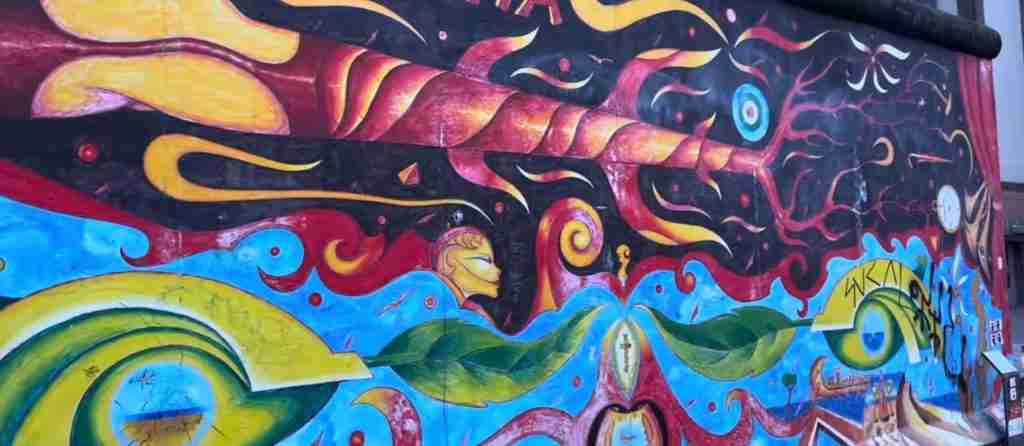
The East Side Gallery preserves the longest remaining Wall section at 1.3 kilometers along Mühlenstrasse. In 1990, artists from around the world painted murals on the eastern side of this section, transforming the barrier into an open-air gallery. Famous works include Dmitri Vrubel’s “Fraternal Kiss” depicting the kiss between Brezhnev and Honecker, and Birgit Kinder’s “Trabant Breaking Through the Wall.” The Gallery faced demolition threats in 2013 when developers sought to remove sections for luxury apartment construction, prompting protests that successfully preserved most of the memorial.
The Berlin Wall Memorial at Bernauer Strasse provides the most comprehensive documentation and preservation of the border fortification system. The memorial preserves an authentic 60-meter section showing the complete barrier system including both walls, the death strip, guard tower, and lamp posts. The Documentation Center features observation platforms allowing views over the memorial grounds, while exhibitions explain construction methods, escape attempts, and daily life in divided Berlin. The Chapel of Reconciliation, built where a church demolished for border expansion once stood, provides space for contemplation and remembrance.
Checkpoint Charlie exists primarily as a tourist attraction, with the original guard booth removed to a museum and a replica installed for photographs. The Checkpoint Charlie Museum, privately operated since 1962, documents escape attempts through exhibits including original vehicles with hidden compartments, tunneling equipment, and hot air balloon remains. The surrounding area has become heavily commercialized with actors in Allied military uniforms posing for tourist photos—a development that critics argue trivializes the Wall’s historical significance.
The Topography of Terror includes a 200-meter Wall section along Niederkirchnerstrasse, one of few central Berlin remnants accessible without tourist infrastructure. This section serves dual memorial purposes—representing both Nazi and Cold War histories, as the site housed Gestapo headquarters during the Third Reich. The unadorned concrete preserves graffiti from the early 1990s, creating a palimpsest of historical layers and responses to dictatorship across different eras.
Individual stolpersteine (stumbling stones) mark locations of Wall victims throughout the city, providing decentralized commemoration integrated into daily urban experience. Bronze plaques embedded in sidewalks display names, dates, and circumstances of deaths, ensuring pedestrians encounter reminders of the Wall’s human cost during routine activities. Additional markers including crosses along the Spree River commemorate specific victims who died attempting water crossings.
Photography Guide: Documenting Cold War Landmarks
The East Side Gallery offers the most photographically diverse Wall remnant, with 105 colorful murals providing varied compositions. Wide-angle shots capture multiple murals in context, while tight framing isolates specific artworks against sky. Early morning photography avoids crowds that gather throughout the day, particularly around famous murals like the “Fraternal Kiss.” The Gallery’s east-west orientation means morning light illuminates the painted eastern side, with afternoon light creating challenging contrast conditions.
The Bernauer Strasse Memorial requires different photographic approaches for its authentic preservation section and documentation center. The intact border fortification system photographs best from the Documentation Center’s observation platform, providing elevated views showing the spatial relationships between barrier elements. Ground-level photography captures the imposing scale of the concrete walls and the intimidating death strip expanse. The rust-colored steel memorial wall creates strong graphic elements, particularly when photographed against blue sky or with sunset backlighting.
Checkpoint Charlie’s touristy atmosphere presents challenges for meaningful historical photography. The replica guard booth in the middle of a busy intersection creates difficult composition situations with constant vehicle traffic. Morning hours before tourist crowds arrive allow cleaner compositions, though the commercial surroundings remain unavoidable. Black and white photography can reduce the visual impact of modern signage and tourist infrastructure, evoking historical precedents more effectively than color images.
Remaining wall fragments scattered throughout the city offer opportunities for discovering lesser-known sites. The Invalidenfriedhof cemetery wall section preserves authentic 1980s border fortifications including guard tower and death strip remnants, with minimal tourist presence allowing contemplative photography. The Potsdamer Platz markers indicating former Wall routes create before-and-after perspectives when compared with historical photographs of the heavily fortified but now completely built-over area.
Detail photography captures overlooked elements revealing construction techniques and historical layers. Close-ups of prefabricated concrete panel joints show assembly methods, while weathering patterns document material degradation. Graffiti preservation on some sections provides cultural archaeology of responses to division, with layers of paint revealing different eras and artistic movements. Rust patterns on steel reinforcement bars and mounting hardware create abstract compositions while documenting physical deterioration of preserved sections.
The Wall’s Legacy in Contemporary Berlin
Physical traces of the Wall remain visible throughout Berlin despite demolition of most structures. A double row of cobblestones marks the former barrier’s route through streets and plazas, creating a subtle memorial integrated into urban paving. These markers allow tracing the Wall’s complete path, revealing how it severed neighborhoods and created the serpentine border dividing the city. Some sections follow streets, while others cut through parks or building sites, demonstrating the arbitrary nature of Cold War divisions.
Urban development patterns still reflect the Wall’s former presence through infrastructure gaps and planning discontinuities. Subway lines that crossed the border remained closed until reunification, with some stations serving as ghost stations where West Berlin trains passed through without stopping while East German guards prevented unauthorized access. The gradual reconnection of these networks continues decades after reunification, with some lines only recently restored to full operation.
Real estate values and demographic patterns show lingering east-west disparities. Former East Berlin neighborhoods experienced gentrification as investors recognized undervalued properties near the city center, though income levels and property ownership rates remain lower than in former West Berlin areas. The term “Ostalgie” (nostalgia for East Germany) describes cultural phenomena including preference for certain East German product brands and restaurants serving GDR-era cuisine—indicating that division’s cultural impacts persist beyond political reunification.
Annual commemoration events mark significant dates including the August 13 construction anniversary and November 9 fall celebration. The Lichtgrenze (Border of Light) installation in 2014 recreated the Wall’s route through 8,000 illuminated balloons, making the division visible again before releasing the balloons in a symbolic liberation. These temporary installations remind younger Berliners of the barrier’s scale and impact while avoiding permanent reconstruction that might celebrate division.
Educational programs use remaining Wall sections and memorial sites to teach Cold War history to generations born after reunification. School groups visit the Bernauer Strasse Memorial and Checkpoint Charlie Museum, while digital archives provide access to historical documents and oral histories. The challenge of maintaining historical memory as eyewitnesses age requires innovative approaches including virtual reality reconstructions and interactive exhibitions making abstract historical events tangible for young audiences.
Preservation Debates and Urban Development Conflicts
Tensions between preservation and development created controversies over remaining Wall sections. The East Side Gallery faced partial demolition threats in 2013 when developers sought to remove 20 meters for luxury apartment access roads. International protests highlighted conflicts between commercial development pressures and historical preservation imperatives. The compromise solution preserved most of the Gallery while allowing some modifications demonstrated ongoing challenges in balancing urban growth with memorial responsibilities.
Questions about how much Wall should be preserved lack clear answers. Removing all physical traces risks allowing historical amnesia, while extensive preservation might perpetuate division or create sanitized tourism attractions trivializing the Wall’s brutality. Berlin’s approach preserves representative sections showing different aspects—the East Side Gallery for cultural response, Bernauer Strasse for authentic fortification systems, and scattered fragments for decentralized remembrance—rather than attempting comprehensive reconstruction.
The Mauerpark (Wall Park) transformed former death strip territory into recreational space, erasing physical traces while maintaining the name’s historical reference. The park hosts Sunday flea markets and karaoke events, representing successful land reclamation from Cold War divisions. Critics argue this celebratory usage minimizes the trauma experienced by those who lived under the Wall’s shadow, while supporters see transformation of death strips into life-affirming public spaces as appropriate responses to overcoming dictatorship.
Private Wall ownership complicates preservation efforts. Some property owners possess Wall segments on their land, with unclear legal obligations regarding maintenance or public access. Segments have been removed for safety reasons, sold to collectors, or demolished for construction projects without coordination with memorial organizations. Establishing protective designation for remaining fragments requires identifying and documenting all existing sections—an incomplete inventory decades after reunification.
Future preservation strategies must address material deterioration of concrete, steel, and painted surfaces exposed to weather without maintenance. The East Side Gallery’s murals require periodic restoration as pigments fade and vandalism damages surfaces. Conservation specialists debate appropriate intervention levels—whether to restore murals to original appearance, maintain current weathered state, or allow continued deterioration as authentic historical process. These technical decisions carry symbolic weight regarding how societies should maintain difficult historical memories.
Frequently Asked Questions
Can you walk the entire length of the former Berlin Wall?
Yes, the Berlin Wall Trail (Berliner Mauerweg) follows the former border’s complete 160-kilometer route through a combination of paved paths, trails, and marked streets. The trail divides into 14 sections manageable as individual walks or combined into multi-day journeys. Markers including information panels, preserved Wall fragments, and historical photographs document the border’s route and explain specific locations’ significance. The trail passes through diverse landscapes including urban centers, suburban neighborhoods, forests, and former farmland, demonstrating the Wall’s impact across varied environments.
The trail’s northern and western sections traverse less-visited areas where East-West Berlin border met surrounding East German territory. These sections provide different perspectives than the central city Wall, showing rural and suburban division impacts. Some areas preserve authentic border fortification elements including guard towers, signal fences, and patrol roads. The complete walk typically requires 5-7 days of continuous hiking, though most visitors explore individual sections based on specific interests or proximity to other attractions.
What happened to all the concrete from the demolished Wall?
The vast majority of Wall concrete was crushed and recycled for road construction throughout Berlin and eastern Germany. Demolition crews removed approximately 45,000 sections of the fourth-generation Wall, each weighing 2.6 tons, along with countless earlier-generation structures. The recycled concrete provided convenient aggregate material for reunified Berlin’s infrastructure projects, including road repairs, building foundations, and public works construction.
Significant sections were sold intact to museums, institutions, and private collectors worldwide. The Reagan Presidential Library in California displays a section, while segments stand in corporate headquarters, university campuses, and public parks across dozens of countries. Artists decorated some sections before sale, creating valuable collectibles. Smaller fragments were sold as souvenirs, though many “authentic” pieces available in tourist shops are questionable origin, as deliberate Wall destruction by souvenir hunters was relatively limited compared to official demolition.
Were there successful escapes over the Berlin Wall?
Yes, over 5,000 successful escape attempts occurred between 1961 and 1989 despite elaborate security systems and shoot-to-kill orders. Early escapes exploited construction gaps and improvised security, with people jumping from windows, ramming barriers, and running across incompletely fortified sections. As security improved, successful escapes required increasingly sophisticated planning and execution.
Tunnel escapes represented the most consistently successful method, with over 70 tunnels facilitating escapes despite extensive East German counter-measures. These operations typically originated in West Berlin with excavation proceeding eastward to emerge in East Berlin basements or yards. The largest single tunnel evacuation brought 57 people to freedom in 1964. Other successful methods included hiding in vehicles (over 600 successful car escapes), swimming through waterways, forged documents, bribed officials, and elaborate schemes including hot air balloons and ultralight aircraft.
How did the Berlin Wall affect daily life for ordinary citizens?
The Wall created profound daily inconveniences and psychological impacts extending far beyond simple travel restrictions. West Berliners living near the Wall experienced constant surveillance from East German guard towers overlooking their streets and buildings. The barrier’s presence created dead-end streets, severed subway connections, and blocked previously direct routes, forcing circuitous journeys around fortifications. Noise from guard tower spotlights, patrol vehicles, and occasional gunfire disrupted sleep in border neighborhoods.
East Berliners faced more severe restrictions including prohibited zones near the Wall requiring special permits for residents to access their own homes. Employment restrictions prevented East Berliners from jobs near the border, while mandatory reporting to authorities created constant surveillance pressure. Families were separated with minimal contact opportunities, as West Berliners could visit East Berlin only through complex permit processes, while East Berliners faced near-total prohibition on westward travel.
The psychological impact of permanent separation affected family relationships, career prospects, and personal development. Young people in East Berlin grew up knowing education, travel, and professional opportunities available to Western counterparts would remain forever closed to them. The contrast between ideological promises of socialist prosperity and visible evidence of Western consumer society created cynicism and resentment. Fear of Stasi informers created social paranoia where friendships and family relationships carried risks of denunciation.
What was the death strip and how did it function?
The death strip (Todesstreifen) consisted of the cleared zone between the two parallel concrete walls forming the Berlin Wall system. This zone varied from 30 to 160 meters wide depending on available space, creating an exposed killing zone where escapees could be easily observed and shot. The strip contained multiple obstacles including anti-vehicle trenches, beds of nails to puncture tires, and steel tank traps preventing vehicle breakthrough attempts.
The ground surface was typically gravel or sand raked daily in parallel lines, allowing guards to detect footprints immediately and determine when intrusions occurred and their direction. Guard towers positioned every 250 meters provided overlapping fields of fire across the entire strip. Attack dogs on running chains between towers created additional deterrents, while floodlights illuminated the zone at night for continuous observation. Trip wires and signal fences along the inner edge triggered alarms at control centers when touched, alerting guards to potential escape attempts.
The eastern wall facing East Berlin incorporated a contact alarm fence sending electronic signals to guard posts when touched or cut. This fence stood 3 meters high with barbed wire top sections, forcing escapees to make noise and trigger alarms during any crossing attempt. Guard patrols walked or drove along service roads in the death strip, maintaining randomized schedules to prevent escapees from predicting guard absence. The psychological impact of this elaborate obstacle system deterred many potential escape attempts before they began.
Are there any original guard towers remaining from the Berlin Wall?
Several original guard towers remain preserved at memorial sites and scattered locations throughout Berlin. The Bernauer Strasse Memorial preserves an authentic watchtower within its memorial grounds, maintained in original condition to demonstrate border surveillance capabilities. Visitors can view the tower from ground level and observation platforms, understanding the psychological impact of constant surveillance on border neighborhood residents.
The Schlesischer Busch tower in Treptow serves as a museum with interior access allowing visitors to climb into the observation room where guards once monitored the border. Exhibits explain tower operation, guard rotation schedules, and the shoot-to-kill orders that made towers symbols of fear. The Berlin Wall Memorial Foundation maintains several other towers at locations including Potsdamer Platz and Erna-Berger-Strasse, though most remain closed to interior access while serving as external historical markers.
The vast majority of approximately 300 guard towers were demolished during Wall removal operations. Concrete observation posts were destroyed with heavy equipment, while steel-framed towers were dismantled and scrapped. Some communities in former East Germany requested towers for installation as local memorials, while a few entered private ownership and were relocated to museums or collector properties. The limited number of preserved towers reflects deliberate policies to remove most physical evidence of the border fortification system.
What role did Checkpoint Charlie play in spy operations?
Checkpoint Charlie served as a principal location for Cold War spy exchanges, where captured intelligence agents were traded between East and West. The most famous exchange occurred in February 1962 when U-2 pilot Francis Gary Powers was exchanged for Soviet spy Rudolf Abel on the Glienicke Bridge—though Checkpoint Charlie served for smaller exchanges and covert operations. The checkpoint’s status as the sole crossing point for Allied personnel and diplomats made it a natural location for intelligence activities.
The checkpoint facilitated covert communication between intelligence services through established protocols and unofficial channels. Western intelligence agencies including the CIA and West German BND monitored East German border procedures, photographed guards and officials, and tracked patterns indicating security changes. East German Stasi likewise observed Western personnel crossing into East Berlin, attempting to identify intelligence officers and recruit potential informants among visitors.
Escape assistance operations occasionally utilized Checkpoint Charlie’s Western side as coordination points where refugees received final instructions or forged documents. Western intelligence services sometimes facilitated escapes of valuable East German defectors including scientists and officials with classified knowledge. These operations required careful planning to avoid compromising broader intelligence relationships or triggering diplomatic incidents. The checkpoint’s symbolic significance as the Cold War’s most visible confrontation point made it attractive for spy novel dramatization, though actual intelligence work occurred more quietly through less conspicuous crossing points and underground networks.
How does Berlin commemorate August 13, the Wall’s construction anniversary?
August 13 observances include memorial ceremonies at the Bernauer Strasse Memorial and other significant sites, with political leaders, diplomats, and survivors participating in wreath-laying and speeches. The events emphasize remembrance of Wall victims and recognition of those who resisted division. Moment-of-silence observances mark specific times when construction began or particular victims died, creating solemn reflection on the Wall’s human cost.
Educational programs intensify around the anniversary date, with museums offering special exhibitions, panel discussions with eyewitnesses, and guided tours explaining construction circumstances and impact. Schools organize field trips to memorial sites, while media coverage features interviews with survivors and historical documentaries. These programs target younger generations lacking personal Wall memories, ensuring historical knowledge transmits across generational gaps.
The anniversary receives more subdued commemoration compared to November 9 fall celebrations, reflecting the day’s traumatic significance versus the fall’s celebratory liberation. Some survivors and victim families find August 13 events emotionally difficult, as they revive memories of sudden separation and lost opportunities. The emphasis on education and remembrance rather than celebration acknowledges ongoing pain while ensuring historical understanding of how quickly democratic societies can be divided by authoritarian actions.
What is the “Ostalgie” phenomenon and how does it relate to the Wall?
Ostalgie (nostalgia for East Germany) describes cultural phenomena where former East Germans express selective positive memories of GDR-era life despite the regime’s repressive nature. Manifestations include preference for certain East German product brands that survived reunification, restaurants serving traditional GDR cuisine, and museums preserving everyday objects from socialist-era daily life. The phenomenon partly reflects genuine nostalgia for youth and familiarity, while also representing resistance to Western cultural dominance post-reunification.
Critics argue Ostalgie trivializes the Wall’s brutality and the regime’s human rights abuses by focusing on superficial consumer culture rather than systematic repression. Museums like the DDR Museum in Berlin present East German daily life through interactive exhibits including authentic apartment furnishings and Trabant cars, creating entertainment from historical tragedy. This commercialization troubles survivors who remember constant Stasi surveillance, travel restrictions, and the Wall’s deadly enforcement.
Supporters counter that Ostalgie allows space for complex historical memories acknowledging that ordinary East Germans experienced both repression and normalcy. Not every aspect of GDR life was terrible, and recognizing positive elements alongside condemnation of the regime provides more nuanced historical understanding. The phenomenon also reflects economic anxieties from reunification’s chaotic impacts, including factory closures, unemployment, and devaluation of East German professional qualifications.
Will any sections of the Berlin Wall be reconstructed for educational purposes?
No large-scale reconstruction projects are planned, with preservation philosophy emphasizing authentic remaining sections rather than rebuilding demolished structures. The Bernauer Strasse Memorial’s preserved 60-meter authentic border system provides sufficient educational documentation of fortification components without requiring reconstruction. Museum models, digital visualizations, and virtual reality experiences offer alternative methods for understanding the Wall’s scale and complexity without physical rebuilding.
Arguments against reconstruction include concerns that rebuilt sections would lack authentic historical connection, potentially creating sanitized attractions that minimize the Wall’s brutality. The considerable expense of accurate reconstruction competes with needs for contemporary social programs and education initiatives. Some preservation advocates worry reconstruction might normalize the division or create confusion between authentic and rebuilt sections in public understanding.
The existing preservation approach balances multiple goals—maintaining authentic fragments for tactile historical connection, documenting complete border systems at key memorial sites, and allowing former death strip redevelopment for housing and parks. This mixed strategy preserves sufficient evidence for education while permitting urban evolution beyond Cold War divisions. Future technologies including augmented reality applications overlaying historical Wall positions on contemporary street views may provide educational value without physical reconstruction requirements.