Arezzo Day Trips 2026: Best Excursions & Planning
Arezzo’s position at the heart of eastern Tuscany makes it one of the most versatile bases for day excursions in Italy. Within a 90-minute radius by public transport lie Etruscan hilltop towns, Renaissance masterpieces, Gothic cathedral complexes, Umbrian sacred cities, and medieval fortresses set inside ancient forests — most reachable by train or regional bus without a car. This guide covers every major excursion, with verified 2026 transport times, ticket prices, and practical planning advice for each destination.
- Best nearby excursion: Cortona — 30 minutes by regional train, with Etruscan heritage, a world-class archaeology museum, and some of Tuscany’s most dramatic hilltop scenery.
- Best Piero della Francesca trail: Combine Monterchi (Madonna del Parto, €7) and Sansepolcro (the Resurrection, ~€10–12) on a single day along the Valtiberina valley.
- Best cultural city day: Florence — regional train from €9 one way (33–70 minutes), Uffizi from €25 day-of or €16 after 4 PM, under-18s free year-round.
- Day trip costs in 2026: Budget nearby town trips run €25–60 per person (transport, one attraction, lunch). Mid-range Florence or Siena days with a major museum and restaurant lunch run €75–125 per person. Premium guided days reach €135–215 per person.
- Transport tip: All destinations in this guide are reachable by Trenitalia regional trains or Autolinee Toscane buses without a car. A rental car unlocks the Valtiberina road circuit (Monterchi–Sansepolcro–Anghiari) in a single half-day, but public transport covers the same ground across a full day.
People Also Ask About Arezzo Day Trips 2026
What is the best day trip from Arezzo in 2026?
Cortona is the single easiest and most rewarding day trip from Arezzo in 2026 — just 30 minutes by regional train (€6 one way), with a dramatic hilltop position, exceptional Etruscan archaeology at the MAEC museum (€10), and one of the most atmospheric medieval town centres in Tuscany. For art-focused travellers, the Valtiberina circuit combining Monterchi’s Madonna del Parto and Sansepolcro’s Resurrection by Piero della Francesca stands apart as the most intellectually rewarding single day in the region. Florence is the most popular city excursion, with the Uffizi reachable in 33–70 minutes by train from €9 one way.
How much does a day trip from Arezzo cost in 2026?
Costs vary significantly by destination and style. Budget day trips to nearby towns such as Cortona, Sansepolcro, or Poppi run €25–60 per person (return transport, one paid attraction, a simple lunch, and coffee). Budget days in major cities — Florence, Siena, or Perugia — using free attractions and a modest lunch run €40–70 per person. Mid-range city days that include a museum ticket (Uffizi, OPA SI Pass, or Galleria Nazionale) and a sit-down restaurant lunch run €75–125 per person. Premium days with private guides and upscale dining reach €135–215 per person.
Can you visit Florence as a day trip from Arezzo in 2026?
Yes — Florence is one of Arezzo’s most popular day trips in 2026 and works comfortably as a full day. The fastest Frecciarossa services cover the 61 km in 33 minutes; regional trains take 50–70 minutes. Trains run multiple times per hour from early morning until late evening, with return fares starting at €9 per person on regional services. Advance Uffizi booking is essential between April and October, when day-of tickets often sell out by mid-morning. The Uffizi ticket costs €25 at the door or €29 booked in advance; after 4 PM it drops to €16.
Is Siena reachable by day trip from Arezzo in 2026?
Siena is very manageable as a day trip from Arezzo in 2026, and the direct bus route is the most practical option. Autolinee Toscane’s direct service (line 138/Siena–Ambra–Monte San Savino–Arezzo) covers the journey in about one hour, with only two or three departures per day — so check the Autolinee Toscane timetable and plan your return carefully. The train route from Arezzo requires a change at Chiusi-Chianciano Terme and takes over two hours each way, making it less convenient than the bus. Siena’s OPA SI Pass (€16) covers seven Cathedral complex sites including the Duomo, Baptistery, Crypt, and Facciatone viewpoint.
Extended multi-day tours – 5+ days
Featured Arezzo Multi-Day Tour Packages
7 days
Tuscany Walking, Cooking & Yoga Tour
- ✓ Comprehensive Arezzo tour
- ✓ Expert local guides included
- ✓ All accommodation arranged
- ✓ Transportation provided
5 days
Tuscany Private Experience: Food and wine among villages and art
- ✓ Booking needs min. 2 travelers
7 days
Tuscany Absolute
- ✓ Comprehensive Arezzo tour
- ✓ Expert local guides included
- ✓ All accommodation arranged
- ✓ Transportation provided

7 days
7-Day Italy, France and Swiss Circular Bus Tour from Paris
- ✓ Comprehensive Arezzo tour
- ✓ Expert local guides included
- ✓ All accommodation arranged
- ✓ Transportation provided
Multi-day tour packages powered by TourRadar. Prices and availability subject to change.
What Makes Arezzo the Perfect Day Trip Hub in 2026
Arezzo occupies a strategic position that few Italian cities can match for day-trip diversity. It sits where the Valdichiana, Valtiberina, Casentino, and Valdarno valleys converge, at the point where Tuscany and Umbria meet. The national main rail line between Florence and Rome runs directly through Arezzo, connecting it to Florence in as little as 33 minutes and to Rome in around 1 hour 20 minutes. Radiating from that main axis are regional services and bus lines that reach the Casentino to the north, the Valtiberina to the east, the Valdichiana to the south, and Umbria across the border to the southeast.
The result is a geographic position that is genuinely unusual in central Italy. From Arezzo, travellers can reach Cortona in 30 minutes, Perugia in 47 minutes, the hilltop wine town of Montepulciano in under two hours, and Florence in a single fast train hop. The Foreste Casentinesi National Park — one of Italy’s largest primary forests — is accessible by a scenic local railway. The three key sites of the Piero della Francesca trail lie within a 45-minute bus ride. Siena, though less directly connected, is reachable by a direct bus in about an hour.
Arezzo also functions as a base for Umbria, which is often overlooked by travellers who assume the region requires a separate overnight stay. From Arezzo station, direct trains reach Perugia’s main station in as little as 47 minutes, opening up day access to Perugia’s extraordinary Galleria Nazionale dell’Umbria and the medieval streetscape of Corso Vannucci. Assisi, with Giotto’s frescoes in the Basilica di San Francesco, is a further 30–40 minutes from Perugia by bus or train.
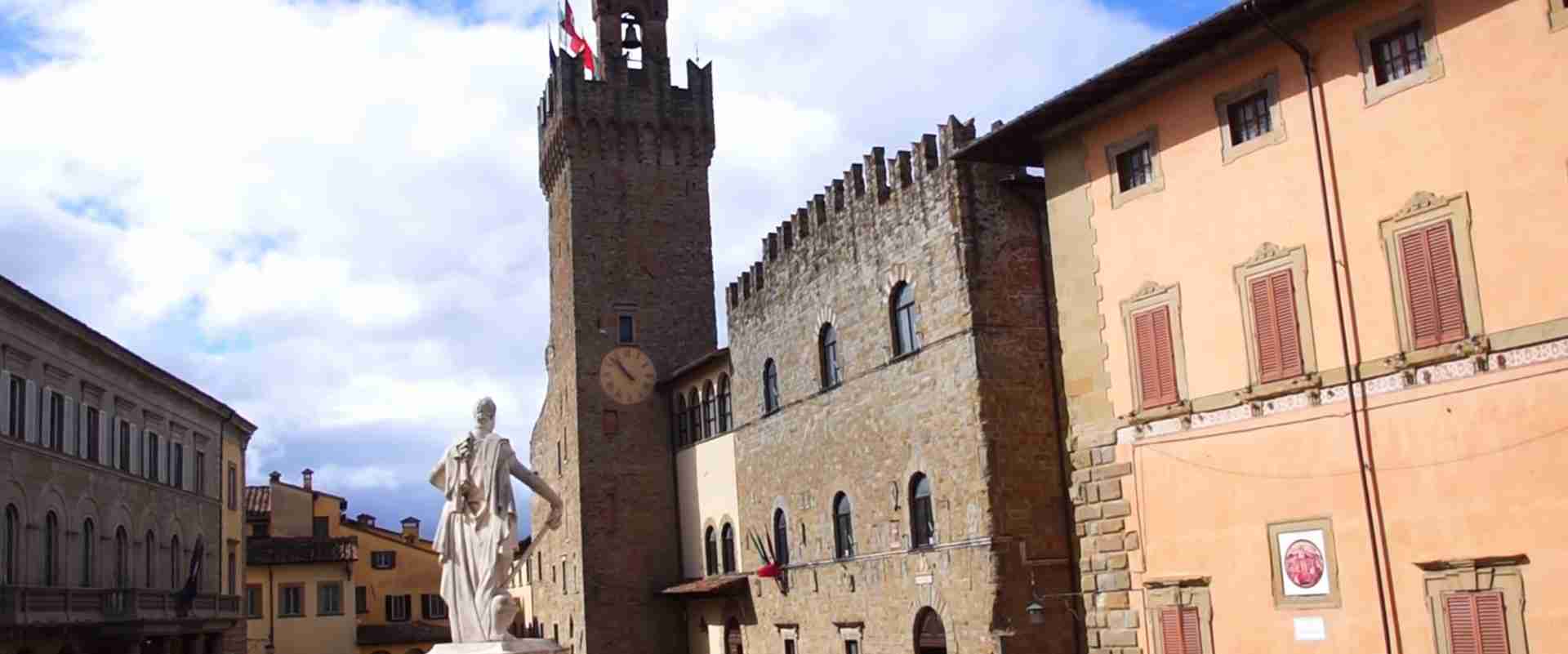
Arezzo itself is no mere transit point. The city’s own centre holds Piero della Francesca’s fresco cycle The Legend of the True Cross in the Basilica di San Francesco (advance reservation required), Giorgio Vasari’s unreformed neighbourhood around his Casa Vasari, and the magnificent Piazza Grande — the sloping medieval square used as the backdrop for Roberto Benigni’s film La Vita è Bella and the stage for the Giostra del Saracino jousting tournament each June and September. Travellers who use Arezzo as a base rather than a destination in itself miss significant rewards, but those who combine a day or two exploring Arezzo with outward excursions find the arrangement exceptionally efficient.
Cortona Day Trip from Arezzo 2026: Tuscany’s Etruscan Hilltop
Cortona is the closest and most immediately rewarding excursion from Arezzo in 2026. The regional train departs Arezzo station frequently throughout the day, reaching either Camucia-Cortona station (25 minutes, €6 one way) or the slightly more distant Terontola-Cortona station. From Camucia-Cortona, an integrated bus ticket carries you to the Cortona town centre (Piazza del Mercato or Piazza Garibaldi) for an additional €2, purchased as a single ticket at the Trenitalia booking point. From Terontola-Cortona, the same connection costs €3. Holders of Trenitalia regional or Frecciarossa tickets to either station receive a reduced-price entry at the MAEC museum — a useful saving on arrival.
The bus deposits visitors at the foot of Cortona’s medieval centre, from which the city rises steeply through stone-paved streets toward the Fortezza del Girifalco at the summit. The walk from Piazza Garibaldi to the top of the town takes roughly 20 minutes at a steady pace and rewards with sweeping views over the Valdichiana plain and, on clear days, to Lake Trasimeno and the hills of Umbria beyond.
Cortona’s primary cultural draw is the MAEC — the Museo dell’Accademia Etrusca e della Città di Cortona — housed in the thirteenth-century Palazzo Casali on Piazza Signorelli. The standard full-price ticket costs €10; the reduced rate (€7) applies to groups of 15 or more, FAI members, Unicoop Firenze members, Tuscan university students, and holders of a Fortezza del Girifalco ticket. Holders of a valid Trenitalia ticket to either Cortona station pay the reduced rate; under-18s enter free. The museum opens daily from 10:00 to 19:00 between April and mid-October, and on Fridays, Saturdays, and Sundays only from 10:00 to 17:00 between mid-October and March. A combined ticket covering both the MAEC and the Parco Archeologico del Sodo costs €13 (reduced €8). The first Sunday of each month, the archaeological park offers free admission from April through October.
The MAEC collection spans Etruscan archaeology from the surrounding territory alongside the historic holdings of the Accademia Etrusca, founded in 1727 by local noble scholars. The Etruscan bronze chandelier (lampadario etrusco) from the fourth century BCE is the museum’s most celebrated object — a single large circular lamp unlike any other Etruscan bronze known — and is displayed prominently on the main floor. Other highlights include the Tabula Cortonensis, the third-longest Etruscan text ever discovered, inscribed on a bronze tablet in the second century BCE. The museum also holds an Egyptian section with objects dating from 2000 BCE, a collection of medieval and Renaissance painting including Luca Signorelli’s circular Madonna and Child, and works by the Futurist painter Gino Severini, a Cortona native. The underground floors contain finds from the two large Etruscan tumuli (burial mounds) excavated at Le Sodo just outside the city walls, including elaborate funerary goods from elite Etruscan burials.
Above the MAEC, Cortona’s medieval streets repay extended wandering. The Romanesque church of San Francesco holds a Byzantine ivory reliquary said to contain a fragment of the True Cross, donated by Elias of Cortona, the companion of Saint Francis. The church of Santa Margherita, set near the summit of the hill, contains the intact body of the city’s patron saint, who died in 1297; her gilded Gothic reliquary is displayed in the left-hand chapel. The Fortezza del Girifalco (€8 adults) offers the broadest views in the province and was rebuilt by Cosimo de’ Medici in the sixteenth century over earlier Etruscan fortifications. The free mirador at Piazza Garibaldi, close to the bus stop, provides comparable views over the Valdichiana without the entrance fee.
Cortona has significant dining options well calibrated for a day trip. The area around Piazza della Repubblica and Via Nazionale holds a range of options from simple osterie to full restaurants. Expect €15–25 for a two-course lunch with house wine at a local trattoria, and €30–45 at the more established restaurants around Piazza Signorelli. The local pasta specialty is pappardelle al cinghiale (broad pasta with wild boar ragù), common to the entire Arezzo province.
Cortona is also the site of the Cortona on the Move photography festival each summer, running from mid-July through mid-October across multiple venues including the Fortezza del Girifalco. The festival full pass costs €18 (standard) or €15 (reduced); holders of a MAEC ticket or Trenitalia regional ticket receive a discounted rate. COTM exhibition tickets are also valid for reduced-price MAEC entry. Summer visitors arriving during the festival should factor both sets of exhibitions into their planning.
The Valtiberina Day Trips from Arezzo 2026: Sansepolcro, Monterchi, and Anghiari
The Valtiberina — the upper Tiber valley east of Arezzo — holds the most concentrated accumulation of Piero della Francesca masterworks in the world. Sansepolcro, Monterchi, and Arezzo itself form the three nodes of a trail through which Piero moved between commissions in the 1450s and 1460s, leaving behind works of such concentrated quality that the Art Historian Aldous Huxley called the Resurrection in Sansepolcro “the greatest painting in the world.” Day trippers from Arezzo can cover all three nodes in a single long day, or dedicate a focused afternoon to Sansepolcro and Monterchi alone.
Getting there: Autolinee Toscane bus line SI381 departs from Arezzo Terminal (the bus station adjacent to the main train station) and runs directly to Sansepolcro, passing through Monterchi (alight at “Monterchi Mercatale” for the Madonna del Parto museum, a 10-minute walk uphill from the stop). The journey to Monterchi takes approximately 35–40 minutes; to Sansepolcro approximately 55–60 minutes. Services run roughly hourly on weekdays and on Saturdays, though less frequently on Sundays. The one-way fare is approximately €3–5, payable on board or at the Arezzo Terminal ticket office. The same bus continues beyond Sansepolcro to Città di Castello in Umbria.
Monterchi and the Madonna del Parto (Museo Civico): The Museo Civico di Monterchi houses Piero della Francesca’s Madonna del Parto, an approximately 200 × 200 cm fresco painted around 1455–1465, depicting the pregnant Virgin Mary in a ceremony of remarkable intimacy — flanked by two mirror-image angels drawing back a curtain to reveal her. The image is unique in Italian Renaissance art: no other major painting of the period shows the Madonna in visible late pregnancy, and none achieves Piero’s extraordinary balance of geometric rigour with emotional directness. The museum is small and designed entirely around this single work, with a multimedia introduction in an adjacent room before visitors enter the climate-controlled chamber where the fresco is preserved behind protective glass. The ticket price is €7 for adults and €5 for students aged 14–25, groups of 15 or more, and pilgrims. Children under 14 are free, as are pregnant women (a deliberately poetic exemption). The ticket also includes the Museo delle Bilance (Weights and Scales Museum) in the nearby Palazzo Massi — though visits to the scales museum require advance group booking for the current period. Opening hours: daily 9:00–13:00 and 14:00–19:00 from March through September; 10:00–13:00 and 14:00–17:00 from October through February. Check the official site for current rates before visiting.
Anghiari: Between Monterchi and Sansepolcro, the bus passes through Anghiari (alight at “Anghiari Centro”), a fortified hilltop town whose name is inseparable from Leonardo da Vinci’s lost Battle of Anghiari painting — the most sought-after lost work in Western art, commissioned for the Sala del Gran Consiglio in Florence’s Palazzo Vecchio and believed by some researchers to lie beneath Vasari’s fresco on the same wall. The town itself is compact but well-preserved, its medieval lanes lined with artisan workshops and small palaces. The Museo della Battaglia di Anghiari documents the 1440 battle in which Florentine forces defeated Milan, charging a modest entry fee of around €4–6. The panoramic views from Anghiari’s walls over the Tiber plain are among the best in the province and entirely free.
Sansepolcro and the Museo Civico: Sansepolcro is Piero della Francesca’s birthplace and the city where his most celebrated work remains in situ. The Museo Civico Piero della Francesca occupies the medieval Palazzo della Residenza at Via Niccolò Aggiunti 65. The museum’s defining masterpiece is the Resurrezione — the Resurrection of Christ — an approximately 225 × 200 cm fresco painted directly onto the wall of the former council chamber around 1460. Christ rises from a sarcophagus with a commanding frontality that Piero’s geometry transforms into something absolute: the landscape behind him shifts from winter to spring as the eye moves left to right across the composition, a device of extraordinary subtlety. The same museum holds the Polittico della Misericordia, a large altarpiece in which the Madonna of Mercy shelters kneeling confraternity members beneath her mantle, and the recently attributed San Giuliano discovered in the 1950s. The full-price admission to the museum is approximately €10–12 (verify current rates at museocivicosansepolcro.it before visiting); a reduced rate applies for groups, seniors over 65, and students aged 19–25. Under-10s are free. Opening hours are 10:00–13:30 and 14:30–19:00 in summer (June 15–September 15), and 10:00–13:00 and 14:30–18:00 in winter.
Beyond the Museo Civico, Sansepolcro’s compact historic centre holds the Romanesque Cattedrale di San Giovanni Evangelista (free), the Palazzo Pretorio with its painted and ceramic heraldic shields, and the Fondazione Palazzo Albizzini Collezione Burri — a dedicated museum of Alberto Burri’s work in nearby Città di Castello, approximately 15 km further along the SI381 bus line, whose presence makes Città di Castello worth including if the budget allows a longer day in the Valtiberina.
Florence Day Trip from Arezzo 2026: Renaissance Masterpieces Within Reach
Florence is Arezzo’s most popular day trip destination in 2026 and one of the most natural pairings in Italian travel: a city of Renaissance masterworks within 33–70 minutes on a train that departs Arezzo station multiple times per hour throughout the day. Regional trains (Trenitalia Regionale Veloce) run the route in 50–70 minutes and cost approximately €9–10 one way. Frecciarossa and Intercity services reach Florence Santa Maria Novella in 33–45 minutes from €13–20 one way, but require booking in advance, while regional trains accept walk-up purchase. The last trains back from Florence depart after 10 PM, giving substantial flexibility for the return.
The Uffizi Gallery in 2026: The Uffizi is the world’s most important collection of Italian Renaissance painting and the first destination on virtually every Florence day trip from Arezzo. From January 2026, a new afternoon ticket has been introduced for entry from 4 PM onwards: €16 at the door on the day, or €20 purchased in advance before the visit date. The standard full-price ticket remains €25 at the ticket office on the day of the visit, or €29 when booked in advance online (the €4 premium covers the booking fee and guarantees a timed slot). Under-18s of any nationality enter free with valid ID. The first Sunday of each month, admission is free for all visitors, but reservations are not accepted on free-admission days. The gallery opens Tuesday through Sunday from 8:15 to 18:30 (last entry 17:30); it closes on Mondays, January 1, and December 25. Book at uffizi.it — the official booking site opened for April–December 2026 visits on February 2, 2026. Check the official site for current ticket prices and availability before your visit.
The Uffizi’s holdings include Botticelli’s Birth of Venus and Primavera (both in Room 10–14), Leonardo da Vinci’s Annunciation (Room 35), Michelangelo’s only completed panel painting, the Doni Tondo (Room 41), Raphael’s portraits of Leo X and the Duke of Urbino’s court, Caravaggio’s Medusa (Room 90), and Titian’s Venus of Urbino (Room 83). A two-hour focused visit can cover the primary rooms comfortably; a comprehensive survey of the collection requires four hours or more. The rooftop café opens in summer and offers direct views over Piazza della Signoria.
Other Florence essentials: Adjacent to the Uffizi, the Palazzo Vecchio (€13 standard entry) dominates Piazza della Signoria, whose open-air loggia (the Loggia dei Lanzi) displays Cellini’s bronze Perseus with the Head of Medusa and Giambologna’s Abduction of a Sabine Woman without any admission charge. The Accademia Gallery, home to Michelangelo’s original David, charges a similar ticket price to the Uffizi (€16–20 depending on time of year) and similarly requires advance booking in high season — book at accademia.org. The Duomo complex is free to enter for the cathedral interior, while the full complex pass covering the Cupola, Campanile, Baptistery, Museo dell’Opera del Duomo, and Crypt costs €20 and is available at the cathedral ticket office or online at operaduomo.firenze.it. Visitors pressed for time find the free exterior circuit — Duomo facade, Baptistery east doors, Giotto’s Campanile viewed from street level — rewarding without the ticket investment. The Ponte Vecchio and the Oltrarno neighbourhood across the Arno are free to explore and offer a quieter, less crowded alternative to the tourist-dense museum corridor north of the river.
Practical logistics: Florence Santa Maria Novella (SMN) station is within a 15-minute walk of the Uffizi and Piazza del Duomo, so city transport is not essential for a focused day trip. During April through October, advance Uffizi reservations are strongly recommended as tickets regularly sell out by late morning. The afternoon ticket (entry from 4 PM, €16 at door) is the best single money-saving option for flexible travellers, reducing the admission cost while delivering the full collection with noticeably thinner crowds. Florentine ZTL (Limited Traffic Zone) regulations make driving inadvisable; trains are the only practical option from Arezzo.
Siena Day Trip from Arezzo 2026: Gothic Splendor and Medieval Passions
Siena is a more logistically involved destination than Florence or Cortona from Arezzo, but it rewards the extra planning. The most practical route in 2026 is the direct Autolinee Toscane bus service (line SIENA–AMBRA–MONTE SAN SAVINO–AREZZO, operated via the Via Veneto 66/A stop in Arezzo), which covers the 47 km in approximately one hour and runs two to three times per day. The one-way bus fare is approximately €5–8; check the current timetable at at-bus.it before departing, as the limited frequency makes missing a connection costly. The train alternative requires a change at Chiusi-Chianciano Terme and takes around two and a half hours each way, making it impractical for a day trip.
Siena’s historic centre has been a UNESCO World Heritage Site since 1995, inscribed for the city’s “exemplary” state of preservation as a medieval urban environment and its decisive influence on Italian architecture and art during the thirteenth and fourteenth centuries. The city’s identity is inseparable from its horse race, the Palio, run in Piazza del Campo each July 2 and August 16 — the most intense and dangerous bareback race in the world, run by ten of Siena’s seventeen medieval contrade (neighbourhoods). Outside the Palio period, Piazza del Campo is a broad shell-shaped expanse of medieval civic grandeur, free to enter at all hours.
The Cathedral Complex and OPA SI Pass: Siena’s Cattedrale di Santa Maria Assunta is the centrepiece of any visit, and the OPA SI Pass (€16 standard; €18 during the annual uncovering of the marble inlaid floor, June 27–July 31 and August 18–November 15) provides the most comprehensive access. The pass is valid for three consecutive days and covers seven sites: the Cathedral itself, the Piccolomini Library (frescoes by Pinturicchio depicting the life of Pope Pius II), the underground Crypt (discovered in 1999 after being sealed for seven centuries, containing an extraordinary thirteenth-century fresco cycle), the Baptistery of San Giovanni, the Museo dell’Opera del Duomo, the panoramic Facciatone terrace (the unfinished New Cathedral facade), and the Oratorio di San Bernardino. The Porta del Cielo pass (€23) adds the Gate of Heaven rooftop experience — a sequence of walkways inside and over the dome — and is the recommended option for travellers with time; book in advance as capacity is strictly limited. Cathedral-only admission (without museums and crypt) costs €5–8 depending on floor uncovering period. Check operaduomo.siena.it for current official prices.
The Cathedral interior deserves its reputation as the most visually overwhelming Gothic church interior in Italy. The nave pillars, walls, and floor are clad in alternating bands of black and white marble — the colours of the city’s medieval coat of arms — which give the interior a dazzling, almost hallucinatory visual rhythm. The marble inlaid floor, composed of 56 mosaic scenes created by around forty artists between the fourteenth and sixteenth centuries and described by Vasari as “the most beautiful floor ever made,” is fully visible for only a few weeks each year during the periods above. The Piccolomini Library, entered from within the Cathedral, contains Pinturicchio’s ten narrative fresco panels depicting the life of Enea Silvio Piccolomini from his birth to his death as Pope Pius II. The panel colours retain their original intensity — a visual brilliance that makes the room among the most beautiful painted spaces in Europe.
Palazzo Pubblico and Torre del Mangia: On Piazza del Campo, the thirteenth-century Palazzo Pubblico houses the Museo Civico (entry approximately €9–12), which contains Simone Martini’s Maestà and Ambrogio Lorenzetti’s extraordinary Allegory of Good and Bad Government — the most important surviving secular fresco cycle of the medieval period. The Torre del Mangia, at 102 metres one of the tallest secular medieval towers in Italy, can be climbed for approximately €10–15; the views over the city’s terracotta roofscape and the Sienese hills are exceptional. Neither the Museo Civico nor the Torre del Mangia is included in the OPA SI Pass, but both are within a five-minute walk of the Cathedral and easy to include in a single day.
Siena’s historic streets — particularly Via di Città and Via Banchi di Sopra — hold excellent food shops, enotecas, and restaurants. A full sit-down lunch of local pasta, cured meats, and local Chianti or Sangiovese runs €25–40 per person at a mid-range trattoria; a more formal restaurant with a full wine pairing doubles that figure. Siena’s characteristic pici (thick hand-rolled pasta) with wild boar sauce or aglione (a large, mild garlic traditional to the Valdichiana) is the dish to seek out.
Perugia and Assisi Day Trips from Arezzo 2026: Umbria’s Sacred and Secular Treasures
Perugia and Assisi both lie in Umbria, just across the regional border from Arezzo, and both are reachable in under two hours from Arezzo station. The surprising ease of this connection is one of the least-publicised advantages of using Arezzo as a base. Direct trains from Arezzo to Perugia run approximately every one to two hours, with the fastest Frecciarossa and Intercity services covering the 57 km in 47–53 minutes; regional trains take 1 hour to 1 hour 15 minutes. One-way fares start at €8–10. From Perugia Fontivegge station, buses operated by Busitalia cover the 25 km to Assisi in approximately 30–40 minutes (approximately €3–4 one way), making Assisi accessible as an extension of a Perugia day at a combined return transport cost of approximately €22–30 per person from Arezzo.
Perugia’s Galleria Nazionale dell’Umbria: Italy’s richest collection of Umbrian art, and one of the finest medieval and Renaissance collections in the country, occupies the upper floors of the thirteenth-century Palazzo dei Priori on Corso Vannucci. The gallery’s full-price admission is €12 (reduced €5 for EU citizens 18–25 and those qualifying for concessions); under-18s enter free. Opening hours are Tuesday through Sunday 8:30–19:30 (ticket office closes 18:30). The collection spans 800 years of Italian art in 40 rooms and 3,500 square metres, with masterworks including a Madonna with Child by Duccio di Buoninsegna, the Polittico Guidalotti by Fra Angelico, the Pala della Sapienza Nuova by Benozzo Gozzoli, and the Polittico di Sant’Antonio by Piero della Francesca — making Perugia an unexpected extension of the Piero trail begun in Arezzo and continued in Sansepolcro. The gallery’s rooms dedicated to Pinturicchio and Perugino are among the most important anywhere for understanding Umbrian Renaissance painting at its peak.
Perugia’s city centre is navigated easily on foot from Piazza IV Novembre at the summit of the hill, around which the Palazzo dei Priori, the Fontana Maggiore, and the Gothic Cattedrale di San Lorenzo cluster. The Fontana Maggiore (1278, designed by Nicola and Giovanni Pisano) is widely considered the finest medieval public fountain in Italy and stands in the middle of the piazza without charge. The Rocca Paolina, a vast underground Papal fortress built over the medieval Baglioni family palace by Cosimo de’ Medici in 1543 and now entered via escalators from Piazza Italia, is free and gives access to a labyrinthine excavated city-within-a-city. The Minimetrò — Perugia’s automated cable-car system connecting the valley car parks with the historic centre — costs approximately €2 per ride and is necessary only if arriving by car at the Pian di Massiano park below.
Assisi and the Basilica di San Francesco: Assisi is the most visited religious site in Umbria and one of the most important pilgrimage destinations in the Christian world. The Basilica di San Francesco, built over the tomb of Francis of Assisi between 1228 and 1253, is free to enter and requires only appropriate dress (covered shoulders and knees). The basilica consists of two superimposed churches: the Lower Basilica contains Cimabue’s famous vault frescoes of the Four Evangelists and Simone Martini’s narrative cycle of the life of Saint Martin; the Upper Basilica holds Giotto’s twenty-eight fresco scenes from the life of Saint Francis — the foundational works of Western narrative painting, in which Giotto established the conventions of spatial recession, individual characterisation, and emotional expression that shaped European art for two centuries. Photography is permitted without flash in most areas. The adjacent Treasury and Perkins Collection (separate admission, approximately €5) displays silver reliquaries, vestments, and paintings donated to the basilica over centuries.
Assisi’s other key sites are free or low cost: the Basilica di Santa Chiara (free), which holds the original San Damiano Cross that tradition records as having spoken to Francis; the Eremo delle Carceri (free), a hermitage 4 km from town set into the forested slopes of Monte Subasio, accessible by taxi or on foot; and the Basilica di Santa Maria degli Angeli (free), in the valley below Assisi and adjacent to the train station, which encloses the tiny original Porziuncola chapel of Francis. The pilgrimage atmosphere of Assisi distinguishes it from the other towns on this list — quieter in the early morning and late afternoon, intense with tour groups between 10:00 and 16:00 in high season.
The Casentino Valley Day Trip from Arezzo 2026: Medieval Castles and Ancient Forests
The Casentino — the valley of the upper Arno north of Arezzo — offers a day trip unlike any other in the region: medieval castles, Romanesque churches, Franciscan and Camaldolese monasteries, and the Foreste Casentinesi National Park, one of Italy’s largest areas of primary beech and silver fir forest, with ancient trees dating back centuries and wildlife including wolves, roe deer, and eagles. The Casentino is the least internationally touristed of Arezzo’s major day trip directions, which means its hilltop villages and forested trails are experienced primarily by Italian visitors rather than tourist crowds.
Getting there in 2026: The TFT (Trasporto Ferroviario Toscano) local train departs Arezzo station and serves the Casentino valley, stopping at Poppi (approximately 40 minutes from Arezzo), Bibbiena, and Pratovecchio-Stia. The combined Trenitalia + TFT ticket can be purchased at Arezzo station as a single journey. Important 2026 notice: from June 15 to August 8, 2026, the rail section from Arezzo to Rassina (the valley’s lower stretch) is replaced by Tiemme buses, after which normal train service continues from Rassina to Pratovecchio-Stia. Travellers planning Casentino visits during this period should check the updated timetable at trasportoferroviariotoscano.it and account for the bus section in their journey planning. Outside this period, the train runs on a scenic track alongside the Arno.
Castello dei Conti Guidi, Poppi: Poppi’s castle is the most photogenic sight in the Casentino and one of the best-preserved medieval castles in Tuscany. The Castello dei Conti Guidi was built by the powerful Guidi family, whose domain stretched across the central Apennines, and substantially expanded in 1274 under Simone Guidi. The architect of the later reconstruction is believed to have been Lapo di Cambio, father of Arnolfo di Cambio, who went on to design Florence’s Palazzo Vecchio — a structural similarity visible even to untrained eyes. Dante Alighieri was a guest of the Guidi family at Poppi between 1307 and 1311 during his Florentine exile, and the castle is mentioned in the Divina Commedia. The interior preserves its original medieval arrangements: a covered courtyard with heraldic coats of arms, a Gothic library containing illuminated manuscripts and autograph letters, a council chamber where the last Guidi count surrendered to Florence in 1440, and a chapel entirely frescoed by Taddeo Gaddi — Giotto’s most trusted pupil. The standard admission is €7 for adults, €5 for under-18s, over-70s, and groups; opening hours vary seasonally, with summer opening Monday–Thursday 10:00–19:00 and Friday–Sunday and holidays 10:00–20:00. Check castellopoppi.it for current rates and hours.
La Verna: Fifteen kilometres above Bibbiena by road (reachable by occasional bus or taxi from Bibbiena station), the Santuario della Verna is the most significant Franciscan site in Tuscany. It was here that Francis of Assisi received the stigmata in September 1224, and the cluster of medieval chapels and the simple rock where he prayed have been a pilgrimage destination ever since. The sanctuary is free to visit; the complex includes the large Basilica, the smaller chapel of the Stimmate built over the rock of the stigmata, and the Corridoio delle Stimmate, a long cloistered passage lined with Della Robbia ceramic reliefs. The setting on a forested crag at 1,283 metres is extraordinarily dramatic, with beech and silver fir forests dropping away on three sides.
Camaldoli Monastery: Further into the forest from La Verna, the Monastero di Camaldoli was founded in 1012 by Saint Romuald as the mother house of the Camaldolese order. The lower monastery (Eremo di Camaldoli) is a working religious community set in a broad forested clearing; the hermitage (Sacro Eremo) above it, where individual monks live in separate stone cells within a walled enclosure, is one of the most contemplative monastic environments in Italy. Both are free to visit during opening hours, with modest dress expected. The monastery’s pharmacy, a centuries-old operation selling herbal liqueurs, creams, and medicines made by the monks, is a unique retail experience.
The Foreste Casentinesi National Park encompasses the forests surrounding these sanctuaries and extends north toward Emilia-Romagna. The park has no general admission charge and is crossed by well-marked hiking trails ranging from easy circular routes of two to three hours to multi-day ridge walks. The park visitor centres at Pratovecchio and Badia Prataglia provide trail maps and wildlife information. Visitors who arrive by train to Pratovecchio-Stia find the trailhead for several forest walks within walking distance of the station.
Anghiari, Monterchi, and the Piero della Francesca Trail 2026
The Piero della Francesca trail connecting Arezzo, Monterchi, Sansepolcro, and Anghiari is one of the most coherent and rewarding single-day cultural routes in Italy. Three of the master’s greatest surviving works are concentrated within a 45-km radius of Arezzo, linked by an accessible public bus that passes through or near all four sites. Travellers who have already visited Arezzo’s own Piero works — the Legend of the True Cross in San Francesco and the Maddalena fresco in the Duomo — complete an extraordinary survey of the artist’s mature career in a single day’s excursion.
The optimal public-transport sequence from Arezzo is: take the morning SI381 bus from Arezzo Terminal, alight at Monterchi (approximately 35–40 minutes), visit the Madonna del Parto museum (€7, open from 9:00), continue by the next bus to Sansepolcro (a further 20 minutes), visit the Museo Civico including the Resurrection (~€10–12), and take the afternoon bus back via Anghiari (alight for an hour’s exploration of the medieval town, then continue to Arezzo). The complete circuit occupies a full day. Travellers with a car can do the same circuit in half a day, combining Monterchi and Sansepolcro in a morning and returning via Anghiari in the early afternoon.
The specific Piero works seen on this route form a coherent visual argument. The Resurrection in Sansepolcro (c. 1460) shows Christ at the moment of rising, frontally posed with a mathematical compositional confidence that feels outside normal time. The Madonna del Parto in Monterchi (c. 1455–1465) turns the same geometric intelligence toward domestic intimacy. Together with the Arezzo fresco cycle, they demonstrate the full range of Piero’s ambition: monumental narrative history, devotional image, and civic allegory, all governed by the same underlying geometry of light.
Anghiari itself repays the brief stop beyond its connection to Leonardo. The town is listed among the borghi più belli d’Italia (most beautiful villages in Italy) and occupies a promontory with extraordinary views over the Valtiberina plain. Its lanes hold several artisan workshops, including woodworkers continuing a craft tradition associated with the town since the medieval period. The Battle of Anghiari Museum documents the 1440 engagement with models and contemporary documents, and addresses the Leonardo question with appropriate scholarly balance — the evidence for the concealed painting remains significant but unresolved.
Montepulciano and the Val di Chiana 2026: Wine Country and Southern Tuscany
Montepulciano is the finest Renaissance hill town in southern Tuscany, and one of the most visited wine destinations in Italy. The town produces Vino Nobile di Montepulciano, one of Italy’s three great Sangiovese-based wines alongside Chianti Classico and Brunello di Montalcino. Unlike Cortona or Sansepolcro, Montepulciano requires more transit effort from Arezzo — but for travellers interested in wine and Renaissance architecture, the effort is amply rewarded.
Getting there: Autolinee Toscane buses cover the route from Arezzo to Montepulciano with a change at Sinalunga or Bettolle (Piazza del Popolo). The total journey takes approximately 1 hour 45 minutes to 2 hours 30 minutes depending on connections, with three services per day from Arezzo. The one-way fare runs approximately €8–12. Alternatively, take the Trenitalia regional train from Arezzo to Chiusi-Chianciano Terme (approximately 35–45 minutes, €7–9 one way) and connect by local bus to Montepulciano town centre from Chiusi station or Montepulciano Stazione, a separate stop some 10 km from the hilltop town. Check current Autolinee Toscane and Trenitalia timetables before visiting, as connections are limited and the return must be planned carefully.
The town and its cantinas: Montepulciano’s main street spirals up through the town from the lower Porta al Prato to the summit Piazza Grande and the Duomo di Santa Maria Assunta, whose interior holds a masterpiece altarpiece by Taddeo di Bartolo. The civic buildings around the piazza — designed in the early sixteenth century by Antonio da Sangallo the Elder at the commission of Florentine-aligned patrons — form the most coherent Renaissance planning exercise in a Tuscan hill town, conceived as a unified ensemble rather than assembled piecemeal. The town’s cantinas — wine cellars operated by producers including Contucci (beneath the main piazza), Avignonesi, Boscarelli, and Poliziano — offer free or low-cost tastings throughout the day, charged at €10–25 per person for a guided tasting flight depending on the cellar and wines selected. Montepulciano is also the birthplace of the Renaissance poet and humanist Angelo Poliziano (Politian), whose house on Via Poliziana is marked by a plaque.
The Val di Chiana immediately south of Arezzo contains several small towns worth brief exploration: Castiglion Fiorentino (15 km, accessible by regional train in 10 minutes, €3–4 one way), a compact hill town with a Pinacoteca holding works by Bartolomeo della Gatta and a cylindrical loggia by Vasari; and Lucignano (accessible by Autolinee Toscane bus from Arezzo via Monte San Savino), a perfectly elliptical medieval town whose Museo Civico holds the Albero di Lucignano, a 1.5-metre Gothic reliquary tree in gilded silver, one of the most extraordinary pieces of medieval metalwork in Italy. Both are manageable as half-day excursions rather than full days.
Day Trip Cost Breakdown from Arezzo 2026: What to Budget by Destination
The following cost estimates are per person, based on verified 2026 prices. All figures include return transport, typical attraction admission, a standard lunch, and coffee or snacks. Accommodation is excluded as all day trips return to Arezzo the same day.
Budget day trips to nearby towns (Cortona, Sansepolcro, Anghiari/Monterchi, Castiglion Fiorentino, Poppi): Plan on €25–60 per person. At the low end, this covers a return train or bus ticket (€6–18), a free or low-cost attraction (€0–10), a simple café lunch or trattoria fixed menu (€15–20), and coffee or gelato (€5–10). At the upper end, it covers the MAEC in Cortona (€10), the Madonna del Parto in Monterchi (€7), or the Castello dei Conti Guidi in Poppi (€7) alongside a more substantial lunch at a local restaurant.
Budget major city day trips (Florence, Siena, Perugia — minimal paid attractions): Plan on €40–70 per person. Return train or bus fares to these cities run €16–20; free attractions (Piazza del Campo, Piazza della Signoria, Piazza IV Novembre, city streets) keep admission costs at €0–12; a simple trattoria lunch or quick osteria meal runs €18–28; coffee and snacks add €8–12.
Mid-range major city day trips (including a main museum and a sit-down restaurant lunch): Plan on €75–125 per person. Return transport runs €18–30 depending on train type; a major museum ticket — Uffizi (€25–29), OPA SI Pass Siena (€16–18), or Galleria Nazionale dell’Umbria (€12) — adds €12–29; a proper restaurant lunch runs €30–45; coffee, aperitivo, and gelato add €12–20.
Premium guided days: Plan on €135–215 per person. Return Frecciarossa or private transport runs €25–40; a private or small-group guided museum tour including admission costs €50–80; an upscale restaurant lunch with wine costs €45–70; extras run €15–25. Guided options through GetYourGuide or Viator for the Uffizi with an expert art historian start at €68 per person including admission.
Costs on a specific day trip by destination:
- Cortona (budget): Train return ~€12, bus to centre ~€3, MAEC ~€10, lunch ~€20, coffee ~€8 = approximately €55 per person
- Sansepolcro + Monterchi trail: Bus return ~€10, Madonna del Parto ~€7, Sansepolcro museum ~€12, lunch in Sansepolcro ~€20, snacks ~€8 = approximately €55–60 per person
- Florence (budget, regional train, afternoon Uffizi): Train return ~€18, Uffizi afternoon €16, simple lunch ~€22, coffee/gelato ~€12 = approximately €70 per person
- Florence (mid-range, advance Uffizi + restaurant): Train return ~€18, Uffizi advance €29, restaurant lunch ~€35, coffee/aperitivo ~€15 = approximately €100 per person
- Siena (bus + OPA SI Pass + trattoria): Bus return ~€12, OPA SI Pass €16, trattoria lunch ~€28, coffee/snacks ~€10 = approximately €65–70 per person
- Perugia (day trip, Galleria Nazionale + lunch): Train return ~€18, Galleria Nazionale €12, restaurant lunch ~€30, coffee ~€10 = approximately €70 per person
- Perugia + Assisi (combined day): Train return Arezzo–Perugia ~€18, bus return Perugia–Assisi ~€8, Galleria Nazionale €12, lunch in Assisi ~€25, coffee ~€10 = approximately €75 per person
Transport Guide for Arezzo Day Trips 2026: Trains, Buses, and Driving Options
Arezzo station (Stazione di Arezzo) is on the main Florence–Rome high-speed and intercity rail corridor, which makes it one of the best-connected provincial stations in central Italy. The station itself is compact and easily navigated; the bus terminal (Terminal Interno) for regional Autolinee Toscane services is directly adjacent, and tickets for many destinations can be purchased at the same windows.
Trenitalia regional trains: Regional services (Regionale and Regionale Veloce) operate without advance booking and accept walk-up purchase at ticket machines, the station window, or the Trenitalia app. These are the cheapest option for Florence (€9–10 one way), Cortona (€6 one way, continuing to Terontola for Cortona and beyond to Chiusi-Chianciano Terme for onward connections), and Perugia (€8–10 one way on direct services). Trenitalia Frecciarossa and Intercity trains are faster to Florence (33–45 minutes) but require advance booking and cost €13–20 one way.
Autolinee Toscane buses: Regional buses operated by Autolinee Toscane cover routes not served by train. The most useful for day trips from Arezzo are: SI381 (Arezzo–Anghiari–Sansepolcro–Città di Castello, roughly hourly on weekdays, approximately €3–5 one way); the Siena–Ambra–Monte San Savino–Arezzo service (two to three times daily, approximately €5–8 one way to Siena); and the Montepulciano connection via Sinalunga. All services depart from the Arezzo Terminal bus station adjacent to the train station. Timetables are available at at-bus.it; the website also offers a journey planner. Bus tickets are purchased at the terminal ticket office, at tobacconists (tabaccai), or via the Autolinee Toscane app.
The TFT train to the Casentino: The local TFT (Trasporto Ferroviario Toscano) service runs from Arezzo through the Casentino valley to Pratovecchio-Stia, stopping at Poppi and Bibbiena. Tickets are sold as an integrated Trenitalia + TFT ticket at the Arezzo station windows and at Trenitalia self-service machines. As noted above, between June 15 and August 8, 2026, the lower section between Arezzo and Rassina operates as a bus replacement rather than train service; from Rassina, normal train service continues through Poppi to Pratovecchio-Stia. The full Arezzo–Pratovecchio journey takes approximately 55–65 minutes in normal operation; the Arezzo–Poppi leg approximately 40 minutes.
Car rental: A rental car from Arezzo station significantly expands day-trip options, particularly for the Valtiberina road circuit (Monterchi–Sansepolcro–Anghiari) and for La Verna and Camaldoli in the Casentino, both of which are difficult to reach by public transport. Major car hire desks at Arezzo station include Avis, Budget, and Maggiore. Trenitalia CartaFRECCIA holders receive discounts with Avis and Maggiore. Day rates from Arezzo start at €35–50 per day for a small car with basic insurance. Driving in Florence’s historic centre is prohibited without a ZTL permit; Siena’s parking is concentrated in peripheral car parks with escalator and shuttle access; most smaller towns have free parking just outside the historic walls.
Journey times and fares at a glance (one way per person):
- Cortona (Camucia station): regional train ~25–35 min, €6; bus to centre €2
- Florence (SMN): regional train 50–70 min, €9–10; Frecciarossa 33–45 min, €13–20
- Siena: direct bus ~1 h, €5–8; train via Chiusi ~2h30, €15+
- Sansepolcro: bus SI381 ~55–60 min, €3–5
- Perugia: regional train 47–75 min, €8–10 direct
- Assisi (via Perugia): train + bus ~1h45–2h, ~€11–15
- Poppi (Casentino): TFT train ~40 min, ~€5–7
- Montepulciano: bus via Sinalunga ~1h45–2h30, €8–12
Seasonal Planning for Arezzo Day Trips 2026
Each season brings different advantages and tradeoffs for day excursions from Arezzo, and the choice of destination genuinely varies by time of year.
Spring (April–June): The most uniformly excellent season for day trips. Temperatures are comfortable (15–24°C), the countryside is at its most photogenic — lavender in the Val di Chiana, flowering vines and poppies along the Valtiberina — and tourist density is moderate outside Easter week and Italian public holidays. April and May are optimal for Florence, where Uffizi queues are manageable before peak summer volume, and for the Casentino, where the forest emerges from winter and the hiking trails are clear and well-signed. The Siena Cathedral floor is covered during spring, so those specifically wanting to see the marble inlay should plan a summer or autumn visit.
Summer (July–August): The hottest and most crowded season. Florence becomes genuinely congested in July and August; Uffizi tickets often sell out days in advance, and the city’s ZTL zone prevents driving near the museum. The Siena Cathedral floor is uncovered from June 27 through July 31 (€18 OPA SI Pass during this period), making July a prime time for Siena despite the heat. The Foreste Casentinesi offers a cool alternative to the valley floor — the forests around Camaldoli and La Verna sit at altitude and are 5–10°C cooler than Arezzo. The Cortona on the Move photography festival launches in mid-July, adding cultural programming to the standard Cortona day trip. The Palio di Siena runs on July 2 and August 16 — extraordinary to witness, but requiring Siena overnight stays rather than a day trip. June 15 to August 8 brings the TFT train disruption on the Casentino line; use the Tiemme bus replacement or a rental car for this period.
Autumn (September–October): Arguably the finest season overall. Temperatures drop to comfortable levels (16–22°C in September, cooler in October), harvest activity fills the vineyards of Montepulciano and the olive groves around Cortona, and the Foreste Casentinesi turns gold and red. The Siena Cathedral floor remains uncovered through mid-November, and the OPA SI Pass special pricing applies. The Sansepolcro Palio della Balestra crossbow tournament runs on the second Sunday of September — a vivid medieval re-enactment drawing serious archery teams from San Sepolcro and Gubbio. The Cortona photography festival continues through mid-October. Autumn is the best single season for combining a day in Montepulciano’s cantinas with the harvest atmosphere of southern Tuscany.
Winter (November–March): Many attractions maintain reduced but consistent hours; the MAEC in Cortona opens Friday through Sunday only from mid-October to March (10:00–17:00). Florence is at its least crowded, and Uffizi walk-up tickets are available before 10:00 and after 16:00. The winter landscape of the Valtiberina is atmospheric and often misty, which suits the austere quality of Piero della Francesca’s paintings well — many visitors to Sansepolcro in winter find the Resurrection more powerful for the grey quality of the December light outside the museum windows. Montepulciano’s cantinas hold tastings throughout the year and are fully operational in winter.
Frequently Asked Questions About Arezzo Day Trips 2026
What is the most beautiful day trip from Arezzo?
Cortona consistently receives this designation for its hilltop position, atmospheric streets, and views over the Valdichiana. The MAEC museum is one of the finest archaeological collections in Tuscany, and the town’s medieval scale makes it easy to explore on foot. For sheer scenic impact, the Casentino valley in autumn — with the chestnut and beech forest above Poppi and the dramatic approach to La Verna — rivals anything in the region. Among cultural day trips, Florence or Siena each offers a density of world-class art and architecture that is impossible to match elsewhere.
How far is Florence from Arezzo?
Florence is 61 km from Arezzo by rail. The fastest Frecciarossa trains cover this in 33 minutes; regional trains take 50–70 minutes depending on the service. Trains run approximately every 20–30 minutes throughout the day, with more frequent departures at peak hours. The road distance is approximately 87 km via the A1 motorway; journey time by car is around 60–75 minutes depending on traffic.
Can you do Siena and Florence in the same day from Arezzo?
Doing justice to both Florence and Siena in a single day from Arezzo is logistically difficult and not recommended. Each city warrants at least four to six hours for a meaningful visit; combined with transit time, a double city day stretches to 14–16 hours and leaves both destinations feeling rushed. A better approach is to assign Florence to one day and Siena to another. If a combined experience is necessary, Florence works well in the morning (arriving by the 8–9 AM regional train, visiting the Uffizi until noon), and Siena can follow for an afternoon Piazza del Campo and Cathedral visit — but the direct Autolinee Toscane bus between Florence and Siena (approximately 1.5 hours) rather than the Arezzo detour makes this pairing more practical when based in Florence itself.
Is Assisi worth visiting as a day trip from Arezzo?
Yes — Assisi is entirely manageable as a day trip from Arezzo, particularly for visitors with a focused interest in Giotto’s Basilica frescoes or the Franciscan pilgrimage tradition. The total journey from Arezzo takes approximately 1 hour 45 minutes to 2 hours (regional train to Perugia, then bus from Perugia Fontivegge to Santa Maria degli Angeli station, then a short ride or walk to the hilltop town). The Basilica di San Francesco is free to enter; the Lower Basilica contains Cimabue and Simone Martini’s work, while the Upper Basilica holds Giotto’s twenty-eight fresco panels. Morning arrival is recommended to see the church before tour group volumes peak around mid-morning.
What day trips can you do from Arezzo without a car?
The majority of this guide’s recommended day trips are fully accessible by public transport. Cortona, Florence, Perugia, and Assisi are reached by Trenitalia regional trains; Sansepolcro, Anghiari, and Monterchi are covered by the Autolinee Toscane SI381 bus; Siena is served by a direct Autolinee Toscane bus; Poppi and the Casentino are reached by the TFT local train (or replacement bus during June 15–August 8, 2026); Montepulciano requires a bus change but is doable. Destinations requiring a car for practical access include Camaldoli, La Verna (reachable by infrequent bus from Bibbiena but easier by car), specific wine estates in Montepulciano, and some of the smaller hamlets in the Casentino and Valtiberina hills.
What is the Piero della Francesca trail from Arezzo?
The Piero della Francesca trail connects three towns where the master’s greatest surviving works are located. In Arezzo: the Basilica di San Francesco holds the Legend of the True Cross fresco cycle (advance reservation required, approximately €12–15); the Duomo holds the detached fresco of the Maddalena (free). In Monterchi: the Museo Civico holds the Madonna del Parto (€7). In Sansepolcro: the Museo Civico holds the Resurrection, the Polittico della Misericordia, and several smaller works (~€10–12). All three towns are accessible by public transport from Arezzo in a single day, though combining Arezzo’s own sites with the Valtiberina museums effectively requires an early start and careful timetable planning.
When is the best time to visit Cortona from Arezzo?
Late spring (April–early June) and early autumn (September–October) offer the best combination of comfortable temperatures, manageable crowds, and scenic beauty. July and August are hotter and busier; the Cortona on the Move photography festival (mid-July to mid-October) adds interest for those attracted by contemporary photography but also increases visitor numbers in the town. The MAEC museum has reduced winter hours (Friday–Sunday only from mid-October to March), making spring and autumn the most reliable seasons for an unrestricted visit. The town is also notably atmospheric in autumn when the chestnut harvest fills the markets and the Valdichiana plain takes on its characteristic golden haze.
What free attractions are there on day trips from Arezzo?
Many of the most memorable experiences on day trips from Arezzo carry no admission charge. In Florence: Piazza della Signoria, the Loggia dei Lanzi with Cellini’s Perseus, Ponte Vecchio, Piazzale Michelangelo viewpoint, and the Cathedral exterior are all free. In Siena: Piazza del Campo, the Campo’s shell-shaped medieval flagstones, and the exterior of the Cathedral are free. In Perugia: Piazza IV Novembre with the Fontana Maggiore, Corso Vannucci, and the Rocca Paolina underground city are all free. In Cortona: the town’s lanes, the mirador at Piazza Garibaldi, and the Etruscan city walls are free. In Sansepolcro: the Cathedral interior and the historic centre are free. In Assisi: the Basilicas of San Francesco and Santa Chiara are free. The Camaldoli and La Verna monasteries in the Casentino are free to visit during opening hours.
Can you combine Perugia and Assisi in a single day from Arezzo?
Yes, Perugia and Assisi work well as a combined day trip from Arezzo, though the schedule requires early departure and efficient movement. Take the 7:00–8:00 AM regional train from Arezzo to Perugia (47–75 minutes), spend the morning at the Galleria Nazionale dell’Umbria (€12, 2–3 hours), take a light lunch on Corso Vannucci (€15–25), then board the afternoon bus from Perugia Fontivegge to Assisi (30–40 minutes, approximately €3–4). In Assisi, the Basilica frescoes require a minimum of 90 minutes to absorb properly. Return from Assisi to Perugia by bus, then direct Trenitalia train back to Arezzo. The total day runs approximately 11–12 hours and costs approximately €75 per person at mid-range (transport, Galleria Nazionale, lunch, coffee, and snacks).
Is it better to book Uffizi tickets in advance for a day trip from Florence?
Yes, and booking in advance is strongly recommended for all visits between April and October. During this period, day-of tickets at the Uffizi sell out regularly by late morning, and walk-up queues on busy days can run 90 minutes or more. The advance online ticket (€29 versus €25 at the door) includes a timed entry slot and effectively eliminates queuing. The official booking channel is uffizi.it; bookings for 2026 visits from April through December opened on February 2, 2026. Between November and March, walk-up purchase is available before 10:00 or after 16:00 without advance booking. The afternoon discount ticket (€16 at door for entry from 4 PM, €20 booked in advance) is the best value option for flexible visitors during any season, combining the lowest available price with noticeably thinner afternoon crowds.