10 Free Things to Do in the Azores 2026: Budget-Friendly Adventures
The Azores archipelago offers spectacular natural wonders and cultural attractions without requiring substantial financial investment, making these Portuguese islands ideal for budget-conscious travelers in 2026. From volcanic viewpoints and black sand beaches to forest trails and geothermal pools, the nine Atlantic islands provide dozens of completely free experiences that showcase their dramatic landscapes, unique geology, and authentic island culture.
Key Takeaways: Free Azores Experiences 2026
- Viewpoint Access 2026: All scenic miradouros across the Azores remain free to visit, with some requiring small parking fees during peak summer months but pedestrian access always unrestricted
- Natural Swimming 2026: Most beaches and natural lava pools charge no admission, though facilities at developed sites like Biscoitos may request voluntary contributions for maintenance
- Hiking Trail Network: The official Azores trail system provides over 450 marked hiking routes at no cost, with only Mount Pico summit requiring a permit and guide fee
- Cultural Sites: Historic churches, city gates, harbors, and town centers across all islands welcome visitors without admission charges throughout 2026
- Transportation Consideration: While attractions are free, reaching them typically requires car rental as public transportation remains limited, particularly on smaller islands
- Seasonal Access: Some coastal natural pools and hiking trails close during winter months due to rough Atlantic conditions, making May through September the optimal window for accessing all free attractions
People Also Ask About Free Activities in the Azores 2026
Are the famous Azores viewpoints really free to visit in 2026?
All scenic viewpoints across the Azores archipelago remain free to access in 2026. Vista do Rei overlooking Sete Cidades, Miradouro da Boca do Inferno, Pico da Barrosa at Lagoa do Fogo, and dozens of other miradouros charge no admission fees. Some popular viewpoints introduced hourly parking fees during 2025 summer months, with Vista do Rei charging approximately €2 per hour, but pedestrians and cyclists always access viewpoints without cost. Most roadside miradouros offer free parking year-round, and all viewpoints remain accessible 24 hours daily regardless of parking fees.
Can you swim for free in the Azores natural pools in 2026?
The vast majority of Azores beaches and natural pools remain free in 2026. Ponta da Ferraria’s geothermal ocean pool on São Miguel, Mosteiros natural pools, Caloura swimming area, and Praia de Santa Bárbara beach all charge no admission. Biscoitos natural pools on Terceira and some developed beach facilities may request small voluntary contributions for changing room and shower maintenance, but swimming access itself stays free. Parking at beach areas is typically free except during July and August peak season when some locations charge €1-2 hourly. Winter months see temporary closures at exposed coastal pools due to dangerous Atlantic swells.
Which hiking trails in the Azores are completely free in 2026?
All official Azores hiking trails except Mount Pico summit remain free to access in 2026. The 450-plus marked trails across nine islands, including Sete Cidades crater rim, Salto do Prego waterfall route, Serra do Topo coastal path on São Jorge, and Fajã de Lopo Vaz descent on Flores, require no permits or fees. Trails remain well-marked with official Regional Government signage and downloadable GPX files available through trails.visitazores.com. Mount Pico requires a climbing permit and certified mountain guide, with combined costs around €20-30 per person, making it the only trail in the archipelago with mandatory expenses.
Are there free cultural attractions in Ponta Delgada in 2026?
Ponta Delgada offers numerous free cultural experiences in 2026. The historic Portas da Cidade city gates, dating to the 18th century defensive fortress, welcome visitors without charge throughout the day. Walking the Old Town pedestrian streets, visiting the harbor and marina, exploring the public gardens at Jardim António Borges, and viewing the exterior architecture of churches like Igreja Matriz de São Sebastião costs nothing. The Saturday farmers market at Mercado da Graça charges no entry fee for browsing local produce and crafts. Free pineapple plantation tours at Ananases Arruda provide greenhouse access and pineapple cultivation demonstrations without requiring purchases.
Extended multi-day tours – 5+ days
Featured Azores Archipelago Multi-Day Tour Packages

3 days
Azores Archipelago 3-Day Discovery Tour
- ✓ Comprehensive Azores Archipelago experience
- ✓ Expert local guides included
- ✓ All accommodation included
- ✓ Transportation provided
5 days
Azores Archipelago 5-Day Highlights Experience
- ✓ Comprehensive Azores Archipelago experience
- ✓ Expert local guides included
- ✓ All accommodation included
- ✓ Transportation provided
7 days
Azores Archipelago 7-Day Cultural Journey
- ✓ Comprehensive Azores Archipelago experience
- ✓ Expert local guides included
- ✓ All accommodation included
- ✓ Transportation provided
10 days
Azores Archipelago 10-Day Complete Adventure
- ✓ Comprehensive Azores Archipelago experience
- ✓ Expert local guides included
- ✓ All accommodation included
- ✓ Transportation provided
Multi-day tour packages powered by TourRadar. Prices and availability subject to change.
Introduction: Discovering Free Azores Adventures in 2026
The Azores archipelago stands as one of Europe’s most budget-friendly destinations for outdoor enthusiasts and nature lovers, offering spectacular volcanic landscapes, pristine Atlantic coastlines, and authentic Portuguese island culture without the admission fees, resort charges, or commercialization found in many Mediterranean destinations. Unlike Madeira or the Canary Islands where major attractions increasingly charge substantial entrance fees, the Azores maintain a refreshingly uncommercial approach to tourism in 2026, with the Regional Government’s sustainable tourism policy deliberately limiting development and preserving free public access to natural wonders.
This commitment to accessibility reflects both the archipelago’s geographic isolation 1,500 kilometers from mainland Portugal and its relatively recent emergence as a major tourist destination. The nine volcanic islands rising from the mid-Atlantic Ridge developed their tourism infrastructure primarily over the past two decades, building on foundations of sustainable ecotourism rather than mass-market beach resort models. The result creates ideal conditions for budget travelers who prioritize authentic experiences over luxury amenities.
Free activities dominate the Azores experience because the islands’ greatest attractions are geological rather than manufactured. Volcanic craters formed over millennia, coastal cliffs shaped by Atlantic storms, endemic forest ecosystems existing nowhere else on Earth, and geothermal features created by ongoing tectonic activity require no human intervention to inspire wonder. The archipelago’s compact size enables visitors to access multiple spectacular natural sites daily without costly transportation, guided tours, or entrance fees.
Budget-conscious travelers choosing the Azores in 2026 discover that limiting accommodation and meal expenses while focusing on free outdoor activities creates a profoundly rewarding experience. Days spent hiking volcanic crater rims, swimming in natural lava pools, photographing dramatic coastal viewpoints, and exploring historic town centers cost nothing beyond basic transportation fuel, yet provide memories and Instagram-worthy moments rivaling any expensive European vacation. The islands’ year-round mild climate extends the window for these free activities beyond typical summer tourism seasons, with spring wildflowers, autumn hydrangea blooms, and winter waterfall maximums each offering distinct seasonal advantages.
This guide identifies ten completely free activities representing the best the Azores offer without requiring any admission fees, tickets, or paid tours. Each activity showcases different aspects of the archipelago’s unique character while remaining accessible to travelers on the tightest budgets. From São Miguel’s iconic twin lakes to Flores’ remote hiking trails, these experiences demonstrate why savvy travelers increasingly choose the Azores for exceptional value combined with extraordinary natural beauty.
Spectacular Miradouros: Free Volcanic Viewpoints Across the Azores 2026
The Azores archipelago features over 100 designated scenic viewpoints known as miradouros, each offering panoramic vistas of volcanic landscapes, Atlantic coastlines, and pastoral valleys without charging admission fees. These carefully positioned lookout points capitalize on the islands’ dramatic topography, with many situated at volcanic crater rims, coastal cliff edges, or mountain summits providing 360-degree perspectives impossible to appreciate from ground level. The Regional Government maintains these viewpoints as free public resources, with paved parking areas, safety railings, and interpretive signage at major sites.
São Miguel Island alone contains more than 40 official miradouros, making viewpoint-hopping a completely free full-day activity. Vista do Rei above Sete Cidades remains the archipelago’s most photographed viewpoint in 2026, positioned directly opposite the abandoned Monte Palace Hotel on the EN9-1A highway. This dramatic perch overlooks the twin crater lakes Lagoa Azul and Lagoa Verde, whose contrasting blue and green waters create the Azores’ most iconic landscape. The viewpoint sits 565 meters above sea level, requiring a modest 15-minute uphill walk from the parking area to reach the main observation platform. Weather permitting, visitors see across the entire Sete Cidades caldera to the Atlantic Ocean beyond, with the twin lakes appearing to merge at their connecting channel.
Lagoa do Fogo viewpoints provide equally spectacular free vistas of São Miguel’s Lake of Fire, a pristine crater lake protected within a nature reserve. Miradouro do Pico da Barrosa at 947 meters elevation offers the highest and most comprehensive view, reached via a steep paved road that also provides access to hiking trails descending to the lakeshore. The viewpoint looks down on turquoise waters surrounded by native vegetation and volcanic ash beaches, with northern coastal views extending to the Atlantic. Access restrictions between June and September limit vehicle entry from 9 AM to 7 PM for non-residents, but pedestrians and cyclists access the viewpoint freely during all hours.
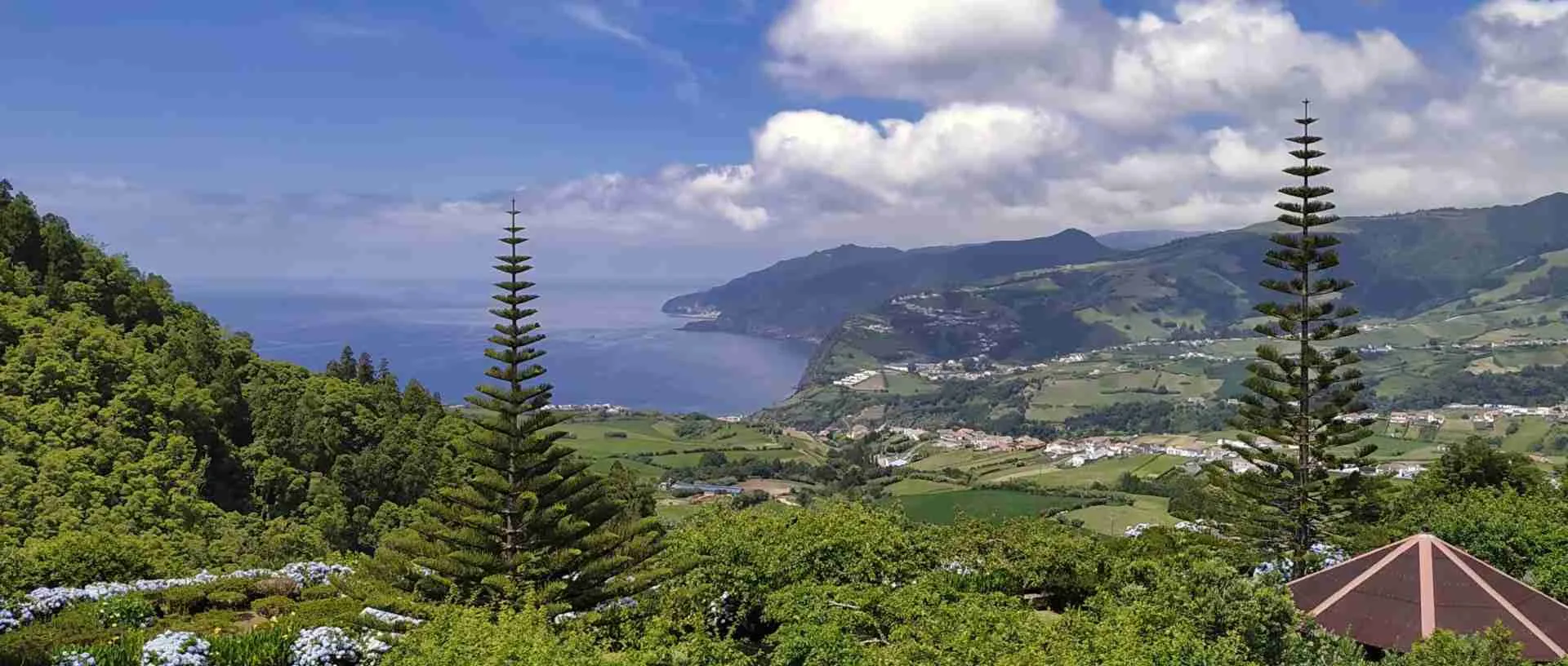
The northern coast’s Miradouro da Ponta do Sossego near Povoação creates a botanical garden atmosphere with its hillside gardens surrounding the viewpoint pavilion. Manicured lawns, flowering hydrangeas, and stone pathways lead to observation platforms overlooking the rugged Atlantic coastline and pastoral valleys inland. This picturesque setting combines natural scenery with landscaped gardens, making it popular for photography and picnicking despite its free admission.
Miradouro do Pico do Carvão at 800 meters elevation provides panoramic views encompassing São Miguel’s north and south coasts simultaneously, revealing the island’s narrow width and volcanic cone-dotted landscape. Clear days allow views of Pico Island’s 2,351-meter summit 140 kilometers across the ocean, demonstrating the archipelago’s dramatic topography. The viewpoint’s exposed location makes it ideal for sunrise and sunset photography, with golden hour light illuminating the island’s green pastures and dark volcanic soil in striking contrast.
Eastern São Miguel’s remote viewpoints reward adventurous travelers willing to navigate narrow roads through the sparsely populated Nordeste region. Miradouro da Vigia das Baleias near Algarvia served historically as a whale-spotting station during the archipelago’s whaling era, with vigias scanning the ocean for sperm whale pods. Today this clifftop viewpoint offers unobstructed Atlantic vistas and occasional whale sightings during migration seasons, while the adjacent Oratório de Nossa Senhora de Fátima chapel adds cultural interest. The viewpoint’s eastern orientation makes it exceptional for sunrise photography, with dawn light illuminating the dramatic coastline and agricultural terraces carved into steep hillsides.
Beyond São Miguel, each Azores island maintains free viewpoints showcasing distinct landscapes. Faial’s Caldeira rim viewpoints peer 400 meters into a crater filled with endemic vegetation and small lakes, while Pico’s Miradouro das Bandeiras overlooks UNESCO-protected vineyard landscapes where grapes grow in black lava rock corrals. Flores Island’s numerous clifftop viewpoints reveal some of the Atlantic’s most dramatic coastal scenery, with waterfalls plunging directly into the ocean from heights exceeding 300 meters.
Parking considerations represent the only potential cost at popular viewpoints during 2026 summer months. Vista do Rei and Lagoa do Fogo implement hourly parking fees from June through September, typically charging €2 per hour to manage crowds and fund maintenance. However, visitors arriving outside peak hours, walking or cycling to viewpoints, or parking along adjacent roads avoid these modest fees entirely. Most roadside miradouros offer unlimited free parking year-round, with only the handful of extremely popular sites implementing seasonal parking management.
Weather significantly impacts viewpoint experiences in the Azores, where Atlantic weather systems create rapidly changing conditions. Morning fog frequently obscures crater lakes and coastal views, burning off by mid-morning to reveal spectacular vistas. Savvy travelers check live webcams on Spotazores.com before departing for viewpoints, avoiding frustrating trips into complete fog. Multiple visits to the same viewpoint often prove worthwhile, as different weather conditions create dramatically different photographic opportunities.
Natural Swimming Pools and Black Sand Beaches: Free Coastal Access 2026
The Azores coastline provides dozens of free swimming opportunities in natural lava rock pools, black volcanic sand beaches, and sheltered coves carved by centuries of Atlantic wave action. Unlike many European beach destinations charging for sunbed rentals, parking, and facility access, Azorean beaches and natural pools remain predominantly free to use throughout 2026, with only occasional small voluntary contributions requested for changing room maintenance at the most developed sites.
Ponta da Ferraria on São Miguel’s northwestern coast offers the archipelago’s only free geothermal ocean swimming experience, where volcanic hot springs mix with Atlantic seawater in a natural rock fissure. The thermal water temperature varies with tides and wave action, creating optimal swimming conditions during low tide when volcanic heat concentrates in protected rock pools. High tide brings cooler Atlantic water surging into the thermal area, reducing temperatures significantly. Local swimmers recommend visiting two hours before or after low tide for the warmest water, though safety considerations require monitoring wave conditions carefully as dangerous swells occasionally close the site entirely.
The natural pool area at Ferraria remains accessible 24 hours daily without admission charges, though the adjacent Termas da Ferraria spa facility charges for access to its controlled-temperature pools and changing facilities. Budget travelers using the free natural ocean pools should bring water shoes for navigating slippery volcanic rocks, towels, and waterproof bags for valuables as no secure storage exists. The site attracts both tourists and local families, particularly during calm summer afternoons when conditions prove ideal for extended soaking sessions.
Mosteiros natural pools on São Miguel’s western coast create some of the archipelago’s most photogenic swimming spots, with crystal-clear Atlantic water filling volcanic rock basins surrounded by dramatic black basalt formations. The offshore Mosteiros islets rising from the ocean provide a distinctive backdrop for photography, particularly during golden hour when evening light illuminates the volcanic rocks. Multiple pool sizes accommodate different swimming preferences, from shallow children’s areas to deeper pools suitable for serious swimming.
Access remains completely free year-round, with ample parking available near the pools at no cost except during July and August when parking attendants may request small voluntary contributions. The pools close during winter months when Atlantic storms create dangerous wave conditions, with official swimming season typically running June through September. Even during official closure periods, calm winter days see local residents swimming in the more protected pools, though visitors should exercise extreme caution and respect posted warning signs.
Praia de Santa Bárbara on São Miguel’s northern coast ranks among Europe’s premier surfing beaches, hosting stages of the World Surf League championship while remaining completely free for swimmers, surfers, and beachgoers. The extensive black volcanic sand beach stretches for hundreds of meters, providing ample space even during peak summer weekends. Strong Atlantic swells create challenging conditions unsuitable for inexperienced swimmers, but the dramatic wave action attracts surfers from across the archipelago.
Facilities at Santa Bárbara include free parking lots, outdoor showers for rinsing off sand and salt, changing rooms, and public restrooms maintained by the municipality at no cost to users. A restaurant operates at the beach entrance, but visitors bringing food and beverages face no restrictions. The exposed northern location means cooler water temperatures year-round compared to protected southern coast beaches, with summer water reaching 19-21°C rather than the 22-24°C common on southern shores.
Ribeira Quente on São Miguel’s southeastern coast combines a sandy beach with underwater geothermal springs that warm the water several degrees above typical Atlantic temperatures. These volcanic hot spots create pleasant swimming conditions even during cooler months, though pinpointing their exact locations requires local knowledge or trial-and-error swimming. The small fishing village atmosphere and dramatic mountainous backdrop add to the beach’s appeal, making it popular with local families seeking warmer water without paying for commercial thermal facilities.
Terceira Island’s Biscoitos natural pools rank among the archipelago’s most iconic swimming areas, featuring multiple interconnected lava rock pools filled with impossibly clear turquoise water. The volcanic basalt formations create varied pool depths suitable for children, casual swimmers, and serious lap swimmers simultaneously. Blue Flag certification confirms water quality and safety standards, while facilities including changing rooms, showers, a small bar, and free parking enhance the experience without requiring admission fees.
Some visitors report small voluntary contribution requests during peak summer season, typically €1-2 per person, which funds facility maintenance and lifeguard services. These contributions remain voluntary rather than mandatory, with no enforcement preventing free access to those declining to pay. The pools’ north coast location means occasional winter closures during rough weather, with optimal swimming conditions from May through October when Atlantic conditions calm and water temperatures reach 20-22°C.
Graciosa Island’s Porto do Carapacho natural pools provide year-round swimming in protected rock basins filled with water believed to contain therapeutic properties due to thermal influence. Low volcanic rock walls shelter the pools from rough ocean swells, creating calm conditions suitable for families with young children. The adjacent Termas do Carapacho thermal spa charges admission, but the natural ocean pools remain free to access with simple parking and changing facilities available.
São Jorge Island’s coastal fajãs feature remote natural swimming areas accessible via hiking trails or scenic coastal roads. Fajã da Caldeira de Santo Cristo’s protected lagoon offers calm swimming conditions in a dramatically isolated setting, while Fajã dos Cubres’ ocean-fed pools provide more adventurous swimming experiences. These remote locations lack developed facilities but reward adventurous travelers with pristine natural swimming environments rarely found elsewhere in Europe.
Practical considerations for free beach and natural pool visits include bringing all necessary supplies as many locations lack nearby shops or restaurants. Water shoes protect feet from sharp volcanic rocks and sea urchins common in natural pools. Waterproof phone cases or dry bags secure valuables and electronics in environments lacking secure storage. Biodegradable reef-safe sunscreen protects both swimmers and sensitive marine ecosystems, with conventional sunscreens increasingly discouraged at natural pools to preserve water quality.
Hiking the Official Trail Network: Free Azores Trails 2026
The Azores official trail system provides over 450 marked hiking routes across nine islands without requiring permits, guide fees, or entrance charges, making hiking the archipelago’s premier free outdoor activity. The Regional Government of the Azores maintains these Pedestrian Routes (PRs) with standardized signage, downloadable GPX files, difficulty classifications, and regular trail maintenance, creating hiking experiences rivaling paid guided tours while costing nothing beyond transportation to trailheads.
Trail classification follows a three-tier difficulty system helping hikers select appropriate routes for their fitness levels and experience. Easy trails feature well-maintained paths, minimal elevation gain, and shorter distances typically under 5 kilometers. Moderate trails include more challenging terrain, greater elevation changes, and distances ranging 5-12 kilometers. Hard trails tackle steep mountainous terrain, significant cumulative elevation gain, and distances sometimes exceeding 15 kilometers. All classifications appear on trail markers and official trail descriptions, enabling informed route selection.
São Miguel Island’s trail network includes routes showcasing every landscape type from coastal cliffs to volcanic craters, forest reserves to agricultural valleys. The Sete Cidades crater rim trail ranks among the archipelago’s most spectacular free hikes, circumnavigating the twin lakes via a 12-kilometer path that gains 400 meters elevation. Starting at Lagoa do Canário parking area, the trail follows the crater rim through native laurel forest, past multiple viewpoints overlooking both Lagoa Azul and Lagoa Verde, before descending to Sete Cidades village. The route takes 4-5 hours for most hikers, with the final descent requiring attention on loose gravel surfaces.
Salto do Prego waterfall trail near Faial da Terra provides an easy 4-kilometer forest hike through exotic vegetation to a 10-meter waterfall cascading into a natural swimming pool. The well-maintained dirt path follows a stream valley, passing abandoned agricultural terraces and endemic plant species before reaching the waterfall. Swimming in the pool costs nothing and provides welcome refreshment after the modest uphill return hike. This trail remains one of São Miguel’s most popular free activities, attracting families and casual hikers seeking accessible natural beauty.
Lagoa do Fogo descent trails offer free hiking access to the pristine crater lake protected as a nature reserve. Multiple routes descend from the crater rim viewpoints to the lakeshore, with the most popular trail starting at Miradouro da Lagoa do Fogo and following a rocky 3-kilometer path losing 350 meters elevation. The descent takes 45 minutes, with the return climb requiring 60-75 minutes for most hikers. The lake’s remote shoreline provides swimming opportunities unavailable to visitors who only view from the rim viewpoints, rewarding hikers willing to make the challenging ascent back to their vehicles.
Flores Island contains the archipelago’s most dramatic hiking trails, with routes traversing waterfall-fed valleys, coastal cliffs, and endemic forest ecosystems found nowhere else on Earth. Fajã de Lopo Vaz trail plunges 400 meters down the island’s southern coast via a steep but well-maintained path, reaching an isolated pebble beach accessible only by foot or boat. The challenging 5-kilometer round-trip hike rewards adventurous travelers with complete solitude and pristine Atlantic coastlines, though the steep return climb tests fitness levels significantly. Trail conditions vary with weather, as rain makes the exposed cliff path slippery and potentially dangerous.
Poço da Alagoinha to Poco do Bacalhau trail connects two of Flores’ most impressive waterfalls via an 8-kilometer moderate hike through valley forests and pastures. The route passes multiple smaller cascades before reaching 90-meter Poco do Bacalhau, the island’s tallest waterfall. This waterfall plunges directly from pastureland into a narrow gorge, creating a spectacular sight particularly dramatic after heavy rainfall. The trail requires no fees, permits, or guides, with well-marked paths and reasonable terrain making it accessible to moderately fit hikers.
São Jorge Island’s fajã trails provide coastal hiking unmatched elsewhere in the Azores, following clifftop paths high above the Atlantic before descending to isolated coastal flats formed by prehistoric landslides. The Serra do Topo trail traverses 11 kilometers of dramatic coastline, connecting Fajã da Caldeira de Santo Cristo to Fajã dos Cubres. The 4-5 hour hike passes through traditional pastoral landscapes, crosses multiple streams, and provides constant ocean views from heights reaching 300 meters. The trail’s moderate difficulty and spectacular scenery make it São Jorge’s most popular free hiking route.
Terceira Island’s Algar do Carvão area offers short free trails exploring volcanic features including the famous Algar do Carvão lava tube cave. While the cave interior requires paid admission, surrounding trails including the Mistérios Negros volcanic cone trail remain completely free. This 6-kilometer circular route crosses recent lava flows, climbs volcanic cones, and passes fumarole fields demonstrating ongoing geothermal activity. The exposed high-elevation terrain provides panoramic island views on clear days, with the dark volcanic rock creating moonscape-like landscapes unique within the archipelago.
Pico Island trails include routes through UNESCO-protected vineyard landscapes where traditional viticulture continues in black lava rock corrals. The Paisagem da Cultura da Vinha trail explores these historic vineyards via an easy 8-kilometer path connecting traditional wine-producing villages. Interpretation panels explain the unique growing techniques developed over centuries to protect vines from Atlantic winds while utilizing volcanic soil’s mineral richness. The trail costs nothing to hike, though wine tasting opportunities along the route involve optional purchases.
Mount Pico ascent represents the Azores’ only hiking trail requiring paid permits and certified mountain guides, with combined costs typically around €20-30 per person. This regulation protects both climber safety and the fragile high-elevation ecosystem surrounding Portugal’s highest peak at 2,351 meters. All other trails across the archipelago remain free to hike independently without guides, permits, or access fees.
Trail preparation essentials include downloading GPX files from trails.visitazores.com before departing, as mobile phone coverage remains unreliable in many hiking areas. The Azores weather changes rapidly, requiring layered clothing, rain gear, and sun protection regardless of morning conditions. Sturdy hiking boots prove essential for volcanic rock trails and muddy forest paths. Carrying sufficient water and snacks becomes critical on longer trails, as most routes pass no facilities or water sources.
Safety considerations include checking weather forecasts before committing to exposed coastal or high-elevation trails, as fog, wind, and rain create dangerous conditions quickly. The Spotazores website and app provide current weather conditions and webcam views helping hikers make informed decisions. Some trails close temporarily after heavy rainfall due to landslide risks or flood dangers, with current closure information available through local tourism offices. Hiking alone on remote trails carries additional risks, with the recommendation to inform accommodation hosts of planned routes and expected return times.
Pineapple Plantation Tours: Free Agricultural Heritage Experience 2026
São Miguel Island’s pineapple greenhouses offer free guided tours demonstrating the unique cultivation methods used to grow Azorean pineapples in volcanic soil under glass, providing insight into the archipelago’s only indigenous tropical fruit production. Ananases Arruda plantation in Fajã de Baixo, just minutes from Ponta Delgada, welcomes visitors throughout the year for complimentary greenhouse tours explaining the two-year growing process from planting to harvest.
The plantation operates continuously since 1894, maintaining traditional cultivation techniques while incorporating modern agricultural practices. Free tours guide visitors through multiple greenhouses containing pineapple plants at various growth stages, from initial planting through flowering to final fruit maturation. The unique cultivation method uses individual plants growing in beds of volcanic soil and dried grass, with smoke from burning grass historically used to force flowering at desired times. Modern growers maintain these traditional techniques, creating a living museum of Azorean agricultural heritage.
Tour guides explain how São Miguel’s volcanic soil, stable year-round temperatures, and high humidity create ideal pineapple growing conditions despite the Azores’ latitude far north of typical tropical fruit regions. The greenhouses maintain warm humid environments mimicking Caribbean or Brazilian conditions, with natural sunlight filtered through glass roofs providing necessary photosynthesis while protecting plants from Atlantic winds and occasional cool temperatures. The two-year growing cycle from planting to harvest far exceeds the 18-month cycles common in true tropical regions, but produces exceptionally sweet concentrated fruit highly prized locally.
The tour concludes at the plantation shop where visitors can sample fresh pineapple, pineapple juice, and value-added products including pineapple liqueur, jam, vinegar, and dried fruit. While purchases are encouraged, no pressure to buy exists and sampling remains complimentary. The shop also sells small potted pineapple plants as souvenirs, though agricultural import restrictions prevent most international travelers from legally transporting live plants home.
Multiple pineapple plantations across São Miguel offer similar free tours, though Arruda remains the largest and most visited. Augusto Arruda plantation near Lagoa and smaller family operations in Fajã de Baixo all welcome visitors without appointments or admission fees. Each plantation maintains slightly different varieties and cultivation techniques, making visits to multiple operations interesting for agricultural enthusiasts seeking deep understanding of Azorean pineapple production.
The free tour experience typically lasts 20-30 minutes, with enthusiastic guides answering questions and encouraging photography throughout the greenhouses. Peak visiting hours occur mid-morning and early afternoon when tour groups arrive, while early morning or late afternoon visits often provide more personalized attention from guides. The plantation operates throughout the year with no seasonal closures, though harvest periods in late summer see the greatest variety of mature fruit visible in greenhouses.
Photography opportunities abound in the greenhouses, with rows of spiky pineapple plants creating geometric patterns against the glass structures. The distinctive growing method with plants emerging from mounded volcanic soil and dried grass creates visually interesting compositions unavailable in conventional tropical plantations. Natural light filtering through greenhouse roofs during morning hours provides optimal photography conditions, while afternoon sunlight can create harsh shadows and glare.
Educational value extends beyond simple agricultural tourism, as the tours explain broader themes of Azorean adaptation to geographic isolation, the importance of greenhouse agriculture in sustaining island economies, and the cultural significance of locally-produced foods in Portuguese cuisine. The pineapple industry’s survival despite global competition from lower-cost tropical producers demonstrates the value consumers place on locally-grown specialty produce, providing lessons applicable to agricultural economics globally.
Practical considerations for visiting include allowing time for the shop experience even without purchase intentions, as sampling fresh pineapple provides a delicious conclusion to the educational tour. Bringing reusable shopping bags proves useful if purchasing pineapple products, which make excellent souvenirs and gifts. The plantations have free parking but limited spaces during peak tour bus hours, with morning visits avoiding the largest crowds. Wheelchair accessibility varies by plantation, with Arruda offering reasonable access through most greenhouse areas.
Historic Churches and Religious Sites: Free Cultural Heritage 2026
The Azores archipelago contains dozens of historic churches, chapels, and religious sites open to visitors without admission charges, providing free access to centuries of Portuguese Catholic architectural heritage and artistic traditions. These religious buildings span styles from simple 15th-century village chapels to elaborate 18th-century baroque churches adorned with gilded altarpieces, azulejo tile panels, and carved woodwork created by master craftsmen.
Ponta Delgada’s Igreja Matriz de São Sebastião stands as São Miguel’s most significant religious building, its Gothic-Manueline façade dominating the city’s main square since the 16th century. The church interior features an ornate gilded main altar, multiple side chapels containing baroque altarpieces, and historic azulejo tile panels depicting religious scenes. Visitors enter freely during non-Mass hours, typically mid-morning through early afternoon, to view the artistic treasures and architectural details. The adjacent square provides pleasant surroundings for photography and relaxation, making the church part of a larger free Old Town walking experience.
Igreja do Santo Cristo dos Milagres in Ponta Delgada houses the revered statue of Senhor Santo Cristo dos Milagres, the focus of the archipelago’s largest religious festival each May. The church’s baroque interior contains exceptional carved and gilded woodwork, with the statue housed behind an ornate metal screen in a special chapel. Outside major festival periods, the church welcomes visitors throughout the day for free viewing of its artistic heritage and quiet contemplation. The annual Santo Cristo procession in May 2026 occurs May 8-14, when massive crowds of pilgrims arrive from across the archipelago and diaspora communities.
Nossa Senhora da Paz viewpoint chapel above Vila Franca do Campo combines religious architecture with spectacular natural scenery, sitting atop a volcanic cone accessed via a 215-meter climb up a grand staircase. The whitewashed chapel contrasts dramatically with green hillsides and blue Atlantic waters visible in all directions. While the hilltop setting and chapel exterior provide the primary attractions, the chapel interior opens irregularly for Mass and special occasions. The staircase ascent and panoramic viewpoints remain accessible 24 hours daily at no cost, making this a popular free activity combining exercise, views, and cultural heritage.
Ermida de Nossa Senhora de Fátima near the Vigia das Baleias viewpoint in Algarvia honors the famous Fátima apparitions through a small hilltop shrine accessible via stairs inscribed with prayers. The simple chapel sits at the highest point of the coastal viewpoint, with its white walls and blue trim creating classic Azorean religious architecture against the dramatic Atlantic backdrop. The site remains free to visit throughout the day, with the combination of religious heritage and coastal scenery making it worth the brief walk from the main viewpoint parking area.
Angra do Heroísmo on Terceira Island contains the archipelago’s highest concentration of historic churches, with the entire city center designated as a UNESCO World Heritage Site. The Sé Cathedral, multiple baroque churches, and numerous chapels scattered through narrow streets all permit free entry during visiting hours. Walking tours exploring the religious architecture cost nothing beyond comfortable footwear for navigating cobblestone streets and steep hillside neighborhoods. The cathedral’s renaissance and baroque elements combine with its historic significance as the seat of the Diocese of Angra, making it Terceira’s most important religious building.
Igreja da Misericórdia churches exist in major towns across all islands, each representing the historic Portuguese Misericórdia charitable brotherhood dedicated to caring for the poor and sick. These typically feature baroque architecture and artistic decoration reflecting each community’s historic wealth and importance. All permit free entry for cultural visits outside Mass times, with no donations required though contribution boxes exist for those wishing to support ongoing maintenance.
Ermidas (small chapels) dot rural landscapes across all islands, many dating from the 16th and 17th centuries when Portuguese settlers established agricultural communities. These simple structures often sit in scenic locations along historic paths or at coastal viewpoints, providing rest stops for hikers and cultural interest for those exploring back roads. Most remain unlocked during daylight hours, allowing brief interior visits to view simple altars and religious paintings maintained by local communities. Their rural locations mean no facilities or parking lots exist, with visitors simply stopping alongside roads to explore these architectural reminders of settlement history.
Festival periods transform churches from quiet cultural sites to vibrant centers of community celebration, with the archipelago’s famous Espírito Santo (Holy Spirit) festivals occurring throughout May and June. These celebrations include processions, traditional sopas (free communal meals), and elaborate floral decorations transforming church exteriors. While festival attendance is free, visitors should respect religious ceremonies and local customs, asking permission before photographing people or entering private festival spaces.
Photography inside churches requires sensitivity to religious settings and other visitors engaged in prayer or quiet contemplation. Many churches prohibit flash photography to protect historic artwork and maintain contemplative atmospheres. Visiting during mid-morning or early afternoon hours typically provides good natural light through windows while avoiding interference with Mass schedules. Modest dress standards apply in religious buildings, with shoulders covered and shorts or short skirts discouraged, though enforcement varies by location and occasion.
Town Centers and Harbor Promenades: Free Urban Exploration 2026
Ponta Delgada’s historic center on São Miguel provides hours of free walking exploration through pedestrianized streets, waterfront promenades, public squares, and architectural heritage spanning five centuries of Portuguese settlement. The compact Old Town centers around Praça Gonçalo Velho Cabral and the adjacent marina, with black-and-white mosaic sidewalks, traditional buildings with ornate façades, and numerous churches creating a pleasant urban environment for aimless wandering.
The Portas da Cidade (City Gates) stand as Ponta Delgada’s most iconic landmark, three baroque arches originally part of the city’s 18th-century defensive walls. These whitewashed structures sit at the waterfront near the marina, providing the classic photo opportunity representing São Miguel Island. The gates remain freely accessible 24 hours daily, with the surrounding plaza offering benches, shade trees, and views across the harbor to offshore islets. Golden hour lighting conditions during sunrise or sunset create particularly dramatic photographs, with side-lighting emphasizing the gates’ architectural details against blue Atlantic backgrounds.
The marina and harbor promenade stretch north from the city gates, providing a pleasant waterfront walking route past fishing boats, leisure craft, and the busy commercial port. Walking the full harbor circuit takes 30-45 minutes, passing seafood restaurants, marine services businesses, and viewpoints overlooking offshore Ilhéu da Vila Franca. The promenade remains popular with local families during early evening hours, creating a lively social atmosphere particularly during summer months when warm temperatures encourage outdoor recreation.
Jardim António Borges, a public garden near the city center, offers free admission to landscaped grounds featuring exotic vegetation, winding paths, artificial grottos, and a small lake. The romantic-era garden design dates from the 19th century when wealthy estate owners created elaborate parks around their mansions. The garden provides shady walking routes, benches for relaxation, and occasional duck feeding opportunities, making it a pleasant respite from urban exploration during hot afternoons.
The Saturday morning Mercado da Graça farmers market operates in a historic covered market building near the Old Town, offering free browsing of local produce, fish, flowers, and handicrafts. While purchases support local vendors, simply walking through the market observing vendors arranging displays, housewives selecting produce, and fishermen selling the morning’s catch provides authentic cultural experience without spending money. The market’s busiest hours occur 9-11 AM, with vendors packing up by early afternoon.
Angra do Heroísmo on Terceira Island provides the archipelago’s finest urban heritage experience, with its entire historic center recognized as a UNESCO World Heritage Site since 1983. The compact downtown area contains Renaissance and Baroque architecture, traditional Portuguese squares with mosaic sidewalks, elaborate churches, and waterfront fortifications all accessible for free walking exploration. The Jardim Duque da Terceira public garden at the city center offers shaded pathways, peacocks, and views over the historic downtown to Monte Brasil volcanic cone dominating the harbor.
Horta on Faial Island centers around its famous marina, where transatlantic yachtsmen paint colorful murals on the harbor walls before continuing their journeys. Walking the marina examining hundreds of painted panels from sailors worldwide costs nothing and provides endlessly entertaining artistic documentation of global sailing routes. The nearby Peter’s Café Sport, while primarily a commercial establishment, displays a free museum upstairs containing scrimshaw artwork and maritime artifacts collected over decades.
Smaller island capitals including Vila do Porto on Santa Maria, Velas on São Jorge, and Santa Cruz on Flores each offer free walking exploration through traditional Portuguese Atlantic architecture, public gardens, harborfront promenades, and local markets. These quieter towns lack Ponta Delgada’s tourist infrastructure but provide authentic island life experiences without crowds or commercialization.
Urban parks and forest reserves near major towns provide free natural spaces within easy reach of accommodations. São Miguel’s Pinhal da Paz forest park near Ponta Delgada features paved walking trails, a large playground, picnic areas, and friendly animals including deer, pigs, and chickens. The park charges no admission and includes free parking, making it popular with local families seeking outdoor recreation without traveling to more distant natural attractions. Visiting during weekday mornings provides quieter experiences, while weekends see heavy local use particularly during pleasant weather.
Coastal Paths and Seaside Walks: Free Atlantic Promenades 2026
The Azores coastal regions feature numerous free walking paths following clifftops, harborsides, and beach areas without requiring hiking expertise or significant physical fitness. These leisurely promenades provide ocean views, fresh Atlantic breezes, and opportunities to observe local life while remaining accessible to all ages and fitness levels. Unlike formal hiking trails requiring proper footwear and preparation, coastal walks typically follow paved or improved surfaces suitable for casual footwear.
Vila Franca do Campo’s coastal promenade on São Miguel runs several kilometers along the southern shoreline from the town center toward the natural swimming pools at Água d’Alto. The paved pathway includes benches, decorative paving, and landscaped areas overlooking the Atlantic and offshore Ilhéu de Vila Franca. Walking the full route takes 45-60 minutes one way, though most visitors explore shorter sections near town. The promenade sees heaviest use during early evening hours when local residents take their passeggiata stroll, creating a pleasant social atmosphere particularly during summer months.
Ribeira Grande’s coastal walkway on São Miguel’s northern coast provides dramatic Atlantic views from a clifftop path connecting the town center to beaches and natural pools. The walking route passes traditional neighborhoods, small chapels, and viewpoints overlooking crashing waves against black volcanic rocks. The exposed northern location means rougher ocean conditions and cooler temperatures compared to southern coast walks, but the dramatic seascape creates powerful natural scenery particularly during winter storm seasons when massive swells pound the coastline.
Mosteiros village on São Miguel’s western tip features a short coastal path connecting the natural swimming pools to the village center and church plaza. The walk provides constant views of the distinctive offshore rock formations rising from the ocean, with sunset lighting creating spectacular photography conditions. The path’s modest length makes it suitable for all fitness levels, while the wild Atlantic setting and relatively few tourists create an authentic local experience.
Caloura’s fishing harbor on São Miguel’s southern coast offers a pleasant circular walk around the small port and adjacent natural swimming area. The compact route takes just 15-20 minutes, passing colorful fishing boats, traditional boat houses carved into volcanic rock, and several small seafood restaurants. The walk provides insight into traditional Azorean fishing communities while remaining easily accessible from the EN1-1A highway.
Santa Cruz on Flores Island’s waterfront promenade runs along the harbor from the ferry terminal to the natural swimming pools at Poco da Ribeira do Ferreiro. The walk passes the compact town center, small botanical garden, and viewpoints overlooking the dramatic coastal cliffs characteristic of Flores’ western Atlantic position. The promenade’s excellent maintenance and level surface makes it suitable for wheelchairs and strollers, providing rare accessibility in the mountainous archipelago.
Velas on São Jorge features a harbourside walking route from the town center to the recreational port and natural lava pools. The path provides views across the canal to Pico Island’s volcanic cone dominating the skyline 15 kilometers across the water. The walk remains relatively quiet outside ferry arrival times, creating a peaceful waterfront experience typical of São Jorge’s unhurried pace.
Praia da Vitória on Terceira Island offers the archipelago’s longest beach promenade, stretching over 3 kilometers along the Grande Beach. The paved pathway includes bicycle lanes, exercise equipment, playgrounds, and numerous benches facing the Atlantic. The beach’s dark volcanic sand and protected bay position create safer swimming conditions than most Azores beaches, while the promenade’s excellent facilities make it popular with local families. Walking the full route takes 45-60 minutes one way, with the ability to return along the parallel beachfront road creating circular route options.
Horta’s marina waterfront on Faial provides leisurely walking along both the commercial port and leisure harbor, examining the famous painted murals while watching yachts come and go from transatlantic passages. The walk extends to Monte da Guia volcanic cone at the harbor entrance, where a mostly flat road leads to panoramic viewpoints. The route combines urban waterfront, maritime heritage, and natural scenery in a compact easily-walked area.
Practical considerations for coastal walks include checking weather forecasts before committing to exposed clifftop routes, as strong winds and rain make some paths unpleasant or dangerous. The Atlantic position means windy conditions occur frequently even during otherwise pleasant weather. Bringing light windbreaker jackets proves wise even during warm sunny days. Sunset walks provide spectacular lighting but require flashlights for return journeys if darkness falls, as most coastal paths lack artificial lighting.
Furnas Valley: Free Geothermal Landscape Exploration 2026
Furnas valley on São Miguel’s southeastern coast provides free access to active geothermal features including fumaroles, boiling mud pools, hot springs, and steam vents demonstrating the ongoing volcanic activity beneath the Azores archipelago. While the commercial thermal spa complexes charge admission, walking through the valley observing geothermal phenomena and exploring the small village costs nothing beyond transportation to reach the area.
The Furnas village center contains free geothermal viewpoints where visitors observe locals preparing cozido das Furnas, the traditional stew cooked underground using volcanic heat. The caldeiras (cooking pits) sit in a public area beside Lagoa das Furnas, with steam rising from dozens of pots lowered into holes in the ground where temperatures reach 90-100°C. Watching families and restaurants prepare their cozidos provides authentic cultural experience, though actually eating the stew requires purchasing from a restaurant or preparing one’s own.
Walking paths around Lagoa das Furnas provide free access to the crater lake’s shoreline, passing fumaroles, steam vents, and areas where volcanic gases bubble up through the lake water. The 6-kilometer lakeside circuit takes 90-120 minutes, following mostly level paths suitable for casual walking. The path passes Terra Nostra botanical garden, though entering the garden and pools requires admission fees. Multiple viewpoints along the route provide photography opportunities of the steaming lake, particularly dramatic during cool mornings when temperature differences between water and air create maximum vapor effects.
Poça da Dona Beija thermal pools in Furnas village charge admission, but the surrounding area includes free viewpoints where visitors observe the hot spring-fed pools and gardens without paying entry fees. The iron-rich thermal water creates distinctive orange coloring in stream channels, while dense steam rising from the pools adds to the geothermal atmosphere. These observations provide a taste of Furnas’ thermal features for budget travelers unwilling to pay pool admission fees.
The Caldeiras das Furnas geothermal field on the valley floor offers the most dramatic free geothermal viewing, with dozens of fumaroles creating constant steam clouds, boiling mud pools bubbling aggressively, and mineral deposits painting rocks in yellow, orange, and red hues. Warning signs and barriers mark dangerous areas where ground temperatures can cause burns, though viewing from safe distances remains completely free. The mineral-rich steam creates distinctive sulfurous odors throughout the area, an inescapable aspect of Furnas’ geothermal character.
Chapel and church visiting in Furnas village provides free cultural activities between geothermal site visits. The neo-gothic Nossa Senhora das Vitórias chapel completed in 1886 features elaborate stonework and stained glass windows overlooking the Lagoa das Furnas. The parish church in the village center represents more modest architectural traditions, though both welcome visitors outside Mass times. The combination of religious architecture and geothermal features creates Furnas’ unique character as both cultural destination and geological showcase.
Hiking trails from Furnas village lead into surrounding mountains, providing free alternatives to paid thermal spa experiences. The Salto do Rosal waterfall trail climbs through native forest to a 30-meter cascade, requiring 45-60 minutes each direction on moderately steep terrain. Pico do Ferro viewpoint trail ascends to a dramatic crater rim overlook of Furnas valley, revealing the entire geothermal field, village, and lake from 500 meters elevation. Both trails remain free to hike without guides or permits.
Practical considerations for Furnas valley visits include spending a full day in the area to justify the 45-minute drive from Ponta Delgada. The valley’s elevation and inland position create different microclimates from coastal areas, often featuring fog or light rain when coastal regions enjoy sun. This weather actually enhances geothermal viewing by increasing steam visibility and creating atmospheric conditions for photography. Morning visits provide quieter experiences before tour buses arrive mid-day. Bringing a picnic lunch enables spending extended time in the valley without restaurant expenses, with multiple scenic spots around the lake suitable for outdoor dining.
Photography at Golden Hour: Free Landscape Documentation 2026
The Azores’ dramatic volcanic landscapes, coastal cliffs, crater lakes, and agricultural valleys provide exceptional photography opportunities requiring no special permits, access fees, or guided tour participation. Budget travelers carrying even basic smartphone cameras capture professional-quality landscape images during golden hour periods when angled sunlight illuminates the islands’ green vegetation, dark volcanic rock, and blue Atlantic waters in spectacular contrast.
Golden hour occurs twice daily in the Azores, with sunrise and sunset periods offering optimal lighting conditions for landscape photography. The islands’ Atlantic position and northern latitude create extended golden hour periods during summer months, with quality light lasting 45-60 minutes around sunrise and sunset rather than the brief 20-30 minute windows common in tropical latitudes. Winter months see shorter golden hour periods but lower-angled sunlight throughout the day, creating interesting side-lighting effects even during mid-day hours typically avoided by photographers in other destinations.
Sete Cidades twin lakes photograph exceptionally well during morning golden hour when eastern sunlight illuminates the crater’s western walls while keeping the lakes in partial shadow, creating depth and dimension difficult to achieve during midday overhead lighting. Arriving at Vista do Rei viewpoint 45-60 minutes before sunrise positions photographers for optimal lighting as the sun rises behind them, progressively illuminating the scene. The famous color contrast between blue Lagoa Azul and green Lagoa Verde intensifies during golden hour periods when the angle of sunlight enhances rather than washes out color differences.
Lagoa do Fogo photographs best during late afternoon golden hour when western sunlight illuminates the crater’s eastern wall and highlights the turquoise lake water against dark volcanic sand beaches. The elevated viewpoint positions create top-lighting effects during midday hours that flatten the scene’s three-dimensional character, but side-lighting during golden hour reveals texture, depth, and color gradients invisible during other times. Patient photographers waiting for optimal lighting conditions create significantly superior images compared to rushed midday snapshots.
Coastal viewpoints facing west provide exceptional sunset photography opportunities, particularly Ponta do Escalvado on São Miguel watching the sun descend toward the Atlantic horizon with Mosteiros village and offshore islets silhouetted in the foreground. The volcanic rock formations create dramatic foreground interest, while the limitless ocean horizon provides clean backgrounds for sunset compositions. Arriving 30-40 minutes before sunset allows setup time and captures the progression from daylight through golden hour into blue hour twilight.
Agricultural landscapes featuring the distinctive Azorean field patterns divided by hedgerows and stone walls photograph particularly well during golden hour when angled sunlight emphasizes the topographic relief and geometric patterns. The patchwork fields of different crops create natural color variety, enhanced by golden hour lighting that adds warmth to green pastures and highlights the textures of volcanic rock walls. These quintessentially Azorean scenes cost nothing to photograph beyond transportation to reach scenic rural areas.
Weather considerations significantly impact photography opportunities in the Atlantic archipelago, where fog, clouds, and rain create challenges for traditional landscape photography but also provide atmospheric conditions for moody dramatic images unavailable during clear weather. Fog lifting from crater lakes during morning hours creates mystical scenes worth capturing, while storm clouds building over volcanic peaks add drama to otherwise conventional landscape compositions. Savvy photographers embrace variable Azores weather rather than waiting for perfect clear conditions that may never arrive.
Church architecture and historic buildings in town centers photograph effectively during golden hour when warm sunlight illuminates colorful façades, creating richer tones than harsh midday lighting provides. The white-washed churches common across the archipelago particularly benefit from golden hour lighting, with side-lighting revealing architectural details and creating shadows that add depth to two-dimensional surfaces. The Igreja de Nossa Senhora da Paz above Vila Franca do Campo becomes a glowing beacon during sunset golden hour, with the whitewashed walls contrasting against deep blue evening sky.
Waterfall photography benefits from overcast conditions that eliminate harsh shadows and create even lighting across scenes often spanning bright highlights and deep shadows. Many Azores hiking trails lead to waterfalls accessible without fees, with optimal photography conditions occurring during cloudy weather that disappoints traditional landscape photographers seeking dramatic skies. Understanding that different subjects require different lighting conditions helps photographers maximize limited time in the archipelago.
Photography equipment needs remain minimal for the Azores, where smartphone cameras capture excellent images during golden hour conditions and landscape subjects generally favor wide-angle perspectives rather than requiring expensive telephoto lenses. A small tripod enables longer exposures during blue hour twilight or waterfall photography in shaded forest locations, while polarizing filters reduce reflections on water surfaces and enhance blue sky contrast during sunny conditions. These modest equipment investments prove worthwhile for photographers, though basic smartphone photography produces satisfying results for travelers not pursuing professional-quality images.
Festivals and Traditional Events: Free Cultural Celebrations 2026
The Azores archipelago maintains rich traditions of community festivals and religious celebrations throughout the year, with most events free to attend and welcoming visitor participation. These celebrations provide authentic cultural experiences showcasing Portuguese Catholic heritage, traditional music, local cuisine, and community bonds that define island life. The 2026 festival calendar includes major events on all islands, with timing influenced by the early April 5 Easter date shifting some celebrations earlier than typical years.
Santo Cristo dos Milagres festival in Ponta Delgada ranks as the archipelago’s largest religious celebration, occurring May 8-14 in 2026 following the early Easter. The week-long event centers around processions carrying the venerated statue of Senhor Santo Cristo through flower-carpeted streets, with elaborate petal designs created overnight by local families. The main procession on Sunday May 11 attracts tens of thousands of participants and spectators, creating an atmosphere of mass devotion rarely witnessed in modern Europe. All festival events remain free to attend, though securing viewing positions along the procession route requires arriving hours early during peak crowds.
Espírito Santo (Holy Spirit) festivals occur across the archipelago during May and June, with each village celebrating on designated weekends. These community events include religious processions, traditional sopas distribution, bullfights on Terceira, and street parties featuring traditional music and dancing. The sopas meals served freely to all comers represent the festivals’ charitable heritage, with beef stew, bread, and wine distributed in community halls regardless of religious affiliation or residency status. Visitors respectful of local customs are welcomed to participate, though understanding appropriate behavior helps avoid inadvertent offense.
Sanjoaninas festival in Angra do Heroísmo on Terceira Island occurs throughout June, celebrating São João with bullfights, street parties, folk dancing, and traditional games. The festival’s 2026 dates run approximately June 20-29, with the gap between Santo Cristo and Sanjoaninas creating a distinct split in the spring festival season. Street activities, processions, and entertainment remain free to attend, while ticketed events like bullfights require advance purchase. The festival atmosphere transforms the UNESCO World Heritage city center into a vibrant celebration of Terceira culture.
Tremor Festival on São Miguel represents the archipelago’s contemporary arts scene, occurring March 24-28, 2026 in locations across the island. This avant-garde music and arts festival uses volcanic landscapes as stages, with concerts in crater locations, thermal pools, and forest reserves creating unique performance environments. While many events require tickets sold months in advance, some outdoor performances and art installations remain free to attend, with the festival creating a cosmopolitan atmosphere contrasting with traditional religious celebrations.
Local festivals celebrating patron saints occur on all islands throughout summer months, with each village dedicating a weekend to their saint’s feast day. These smaller celebrations maintain traditional elements including processions, brass band music, fireworks, and community meals served in church halls. Visitors encountering these spontaneous festivals while traveling the islands should embrace the opportunity to participate, as the authentic local character provides deeper cultural insight than major tourist-focused events.
The 50th Anniversary of Azorean Autonomy in 2026 adds special significance to celebrations throughout the year, with enhanced festivities planned across the archipelago. This milestone commemorates the 1976 establishment of the Azores’ autonomous regional government within Portugal, marking a crucial moment in the islands’ modern political development. While specific anniversary events remain under development as of early 2026, increased festival energy and cultural programming is expected across all islands.
Practical considerations for festival attendance include booking accommodations months in advance for major events like Santo Cristo and Sanjoaninas, as hotels and vacation rentals fill completely during these periods. Festival crowds transform normally quiet islands into bustling destinations, creating both excitement and logistical challenges. Traffic congestion, parking difficulties, and restaurant wait times increase substantially, though the cultural authenticity and community atmosphere justify these inconveniences. Budget travelers willing to stay in less central locations or accept hostel accommodations find festival attendance feasible despite accommodation challenges.
Photography during festivals captures authentic cultural moments unavailable at other times, though sensitivity to religious ceremonies and local customs remains essential. Requesting permission before photographing people closely, avoiding flash during church services, and respecting barriers around procession routes demonstrate appropriate visitor behavior. Festival atmosphere makes people generally receptive to photography, with colorful traditional costumes, elaborate floral decorations, and dramatic religious imagery providing exceptional subjects.
Frequently Asked Questions About Free Azores Activities 2026
Do you need to pay to enter Sete Cidades crater area in 2026?
No admission fees exist for Sete Cidades crater area in 2026. The twin lakes, surrounding hiking trails, village streets, and all viewpoints remain free to access throughout the year. Vista do Rei viewpoint charges hourly parking fees from June through September (approximately €2 per hour), but pedestrians and cyclists access the viewpoint without cost. Alternative viewpoints around the crater rim offer free parking year-round. Walking into Sete Cidades village from any viewpoint eliminates parking fees entirely while providing excellent hiking experiences.
Are there any free thermal pools in the Azores that don’t require admission?
Ponta da Ferraria on São Miguel provides the only completely free geothermal swimming experience in the Azores where volcanic hot springs mix with ocean water in natural rock pools. The thermal ocean pools remain accessible 24 hours daily without admission charges, though the adjacent spa facility charges for its controlled-temperature pools. Optimal swimming conditions occur during low tide when volcanic heat concentrates in protected pools. All other major thermal facilities including Poça da Dona Beija, Terra Nostra, and Caldeira Velha charge admission fees ranging €6-10 per person.
Can you hike to the top of Mount Pico without paying for a guide?
No, Mount Pico ascent requires both paid permits and certified mountain guides in 2026. This regulation protects climber safety and the fragile high-elevation ecosystem surrounding Portugal’s 2,351-meter highest peak. Combined permit and guide costs typically total €20-30 per person. All other hiking trails across the Azores archipelago remain free to hike independently without guides, permits, or fees. The over 450 marked trails on other islands provide exceptional hiking experiences without the costs and regulations associated with Pico summit.
Is parking free at Azores beaches and viewpoints?
Most Azores beaches and viewpoints offer free parking year-round, with parking fees implemented only at the most popular tourist sites during summer peak season. Vista do Rei at Sete Cidades, Lagoa do Fogo viewpoints, and some developed beach facilities charge approximately €1-2 per hour from June through September. The majority of viewpoints, beaches, and natural pools maintain free parking throughout the year. Arriving outside peak mid-day hours, walking or cycling to popular sites, or using less-crowded alternative viewpoints avoids the modest parking fees entirely.
Are museums in the Azores free to visit?
Most Azores museums charge modest admission fees ranging €2-5 per person in 2026, though some smaller municipal museums and cultural centers offer free admission. The Portas do Mar maritime museum in Ponta Delgada, various church museums, and some folk heritage centers welcome visitors without charges. Museum admission costs remain significantly lower than mainland European standards, making cultural tourism affordable even for budget-conscious travelers. Churches and religious buildings typically allow free cultural visits outside Mass times, providing free access to architectural heritage and religious art collections.
Can you visit pineapple plantations without buying anything?
Yes, pineapple plantations including Ananases Arruda offer completely free greenhouse tours throughout the year without requiring purchases. The guided tours explain cultivation methods, growth cycles, and historical significance while welcoming visitors to photograph plants at various growth stages. The plantation shops encourage product sampling and purchases but apply no pressure, making the entire experience genuinely free. Visitors appreciating the free tour often purchase pineapple products, jam, or liqueur as gestures of appreciation, but no obligation exists.
Are there free activities in the Azores suitable for families with young children?
Numerous free Azores activities accommodate families with young children. Pinhal da Paz forest park near Ponta Delgada features paved walking trails, large playgrounds, friendly farm animals, and picnic areas all free to use. Beach visits to Praia da Vitória or protected bays like Caloura provide safe swimming at no cost. Short easy hiking trails like the Salto do Prego waterfall walk or lakeside paths at Sete Cidades suit children’s shorter attention spans. Pineapple plantation tours engage children with exotic plants in greenhouse settings. Coastal promenades in town centers offer pleasant walking suitable for strollers with ocean views and ice cream shops along routes.
Do you need to pay to access Furnas geothermal areas?
Walking through Furnas valley observing fumaroles, boiling mud pools, and geothermal cooking pits remains completely free in 2026. The Caldeiras das Furnas geothermal field offers unrestricted viewing from safe distances behind barriers, with the dramatic steam vents and mineral deposits accessible without fees. The lakeside walking path around Lagoa das Furnas provides free access to more geothermal features. However, entering commercial thermal spa facilities including Poça da Dona Beija, Terra Nostra pools, and Caldeira Velha requires admission fees. Budget travelers enjoy extensive free geothermal viewing while foregoing the paid swimming pool experiences.
Are there free whale watching viewpoints in the Azores?
Multiple coastal viewpoints historically used as whale spotting stations during the archipelago’s whaling era provide free ocean observation opportunities where patient visitors occasionally see whales, dolphins, or other marine life. Miradouro Vigia das Baleias locations on São Miguel, Santa Maria, and São Jorge offer elevated coastal positions where whales sometimes pass close to shore. However, guaranteed whale sightings require paid boat tours with success rates approaching 95 percent. Free viewpoint watching succeeds occasionally during migration seasons but cannot match the reliability and close encounters provided by commercial whale watching excursions costing €55-75 per person.
Can you swim in crater lakes for free?
Swimming in Azores crater lakes is largely restricted or prohibited in 2026 regardless of fees. Lagoa do Fogo prohibits swimming to protect the nature reserve’s water quality and endemic species. Sete Cidades lakes permit swimming from designated beach areas at Lagoa Azul, accessible via hiking trails descending from crater rim viewpoints. No fees apply for swimming, though reaching the lakeshore requires at least 30 minutes hiking down steep trails from the nearest road access. Lagoa das Furnas permits swimming though the geothermal influences and murky water make it less appealing than ocean beaches or natural pools.